
Last updated: November 25, 2026
Wrought iron doors combine ornamental architecture with high-strength security, making them a frequent specification for villas, hotels, commercial facades, and institutional projects. This guide covers the manufacturing processes, performance testing standards, maintenance requirements, logistics options from Chinese factories, and procurement evaluation criteria that B2B buyers need to source qualified wrought iron doors manufacturer partners reliably.
Wrought Iron Doors — Bulk Specifications, Applications & Sourcing Guide for B2B Buyers
Reliable wrought iron doors manufacturer suppliers typically offer custom ornamental entry doors in 45–80 mm profiles, powder-coated or patina-finished, priced from roughly $180 to $650 per unit on an FOB China basis for standard orders of 50+ sets, with lead times of 30–45 days depending on complexity and hardware selection.
Quick Overview
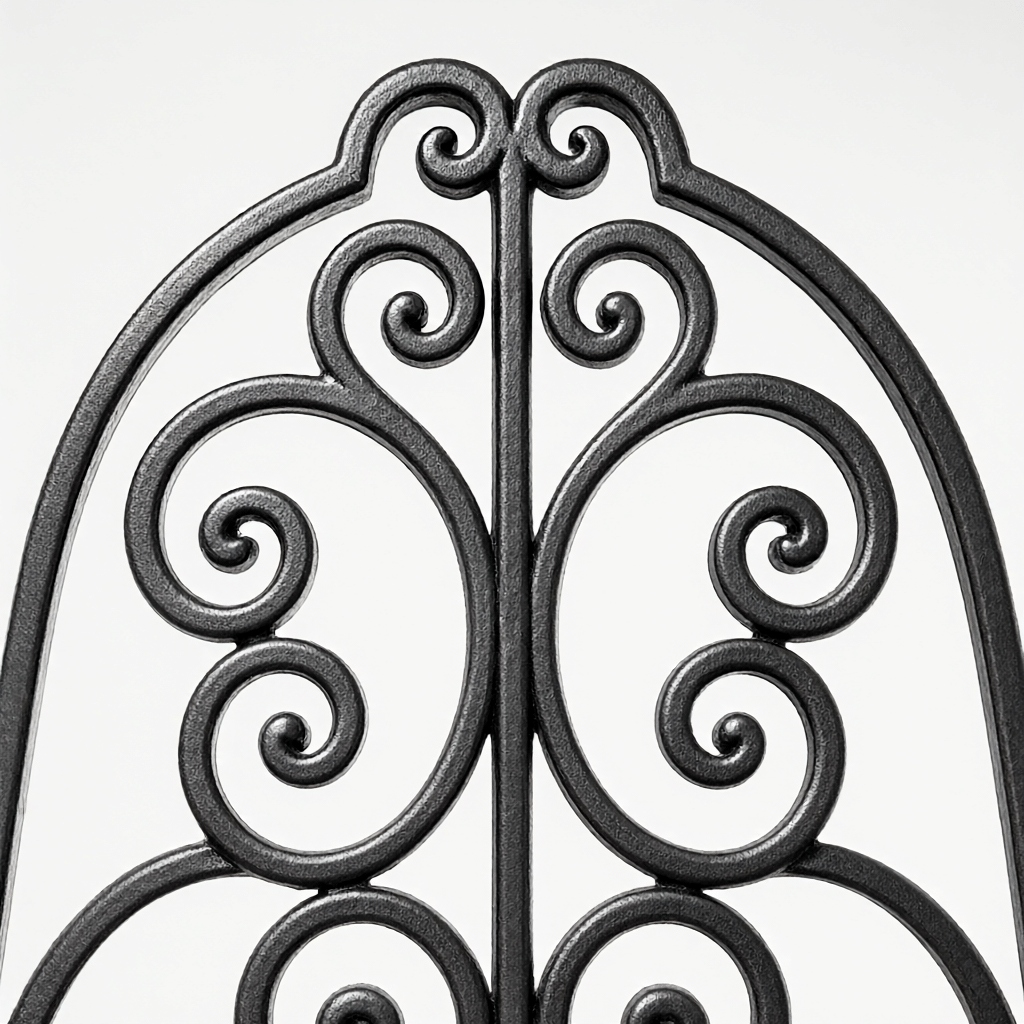
A wrought iron door (also referred to as ornamental iron doors, forged iron doors, or decorative entry doors) is a solid-entry door fabricated from wrought iron or wrought-iron-style steel/aluminum alloys, featuring scrollwork, geometric patterns, or bespoke decorative elements. They are widely specified for villa entrances, hotel main lobbies, commercial building facades, and institutional projects where security, aesthetics, and durability intersect.
Modern manufactured versions often use milled steel tubes or aluminum cores with forged-look scroll inserts, making them lighter and more cost-effective than traditional cast designs while retaining the aesthetic character buyers expect. This distinction matters when evaluating supplier quotations and product samples.
What Are the Key Specifications of Wrought Iron Doors?
Buyers should request the following specification details before committing to a bulk order:
Material & Profile Construction
Standard iron entry doors use either:
- Mild steel tube frames (ASTM A108 or equivalent), typically 40 × 60 mm or 50 × 70 mm rectangular tubing, with wall thickness of 1.5–2.5 mm
- Wrought-steel scrollwork sections, 3–8 mm thick, formed by CNC cutting or traditional forging
- Aluminum alloy alternatives (6063-T5) for coastal projects where salt-air corrosion resistance is critical
| Specification | Typical Range | Notes |
|---|---|---|
| Frame profile size | 40×60 mm – 80×100 mm | Larger profiles for commercial/high-security applications |
| Tube wall thickness | 1.5 – 2.5 mm | Minimum 1.8 mm recommended for exterior doors |
| Scroll/decorative gauge | 3 – 8 mm | Thinner scrolls reduce weight but may compromise rigidity |
| Standard height | 2000 – 2200 mm | Custom heights available up to 3000 mm |
| Standard width | 800 – 1200 mm | Double-leaf pairs common for villa entrances |
| Glass infill option | 6 – 12 mm tempered/laminated | Up to 40% light transmittance while maintaining security |
Finish Systems
The finish determines both aesthetics and long-term durability. The most common options include:
- Powder coating (polyester or epoxy-polyester): offers color consistency across large batches, UV resistance ratings of 10–15 years in temperate climates, and is the default choice for most project procurement
- Patina/patina-sealed: hand-applied chemical patinas for heritage and luxury residential projects; requires periodic re-sealing
- Hot-dip galvanized + powder coat: used for coastal or high-corrosion environments; adds approximately 8–12% to base material cost
- PU painting: less common for bulk orders due to VOC regulations in many markets
Hardware Compatibility
Wrought iron doors accept standard European and American hardware configurations, including:
- Multi-point lock systems (3–5 points, anti-drill pins)
- Heavy-duty commercial hinges (3–4 hinges per leaf, 113 × 3 mm thickness)
- Smart lock integration (requires pre-planned routing in door stile)
- Door closers for commercial applications (ANSI/BHMA Grade 1–2 rated)
Hardware cutouts and reinforcing plates should be confirmed during the design approval stage to avoid field modifications.
Where Can Wrought Iron Doors Be Used?
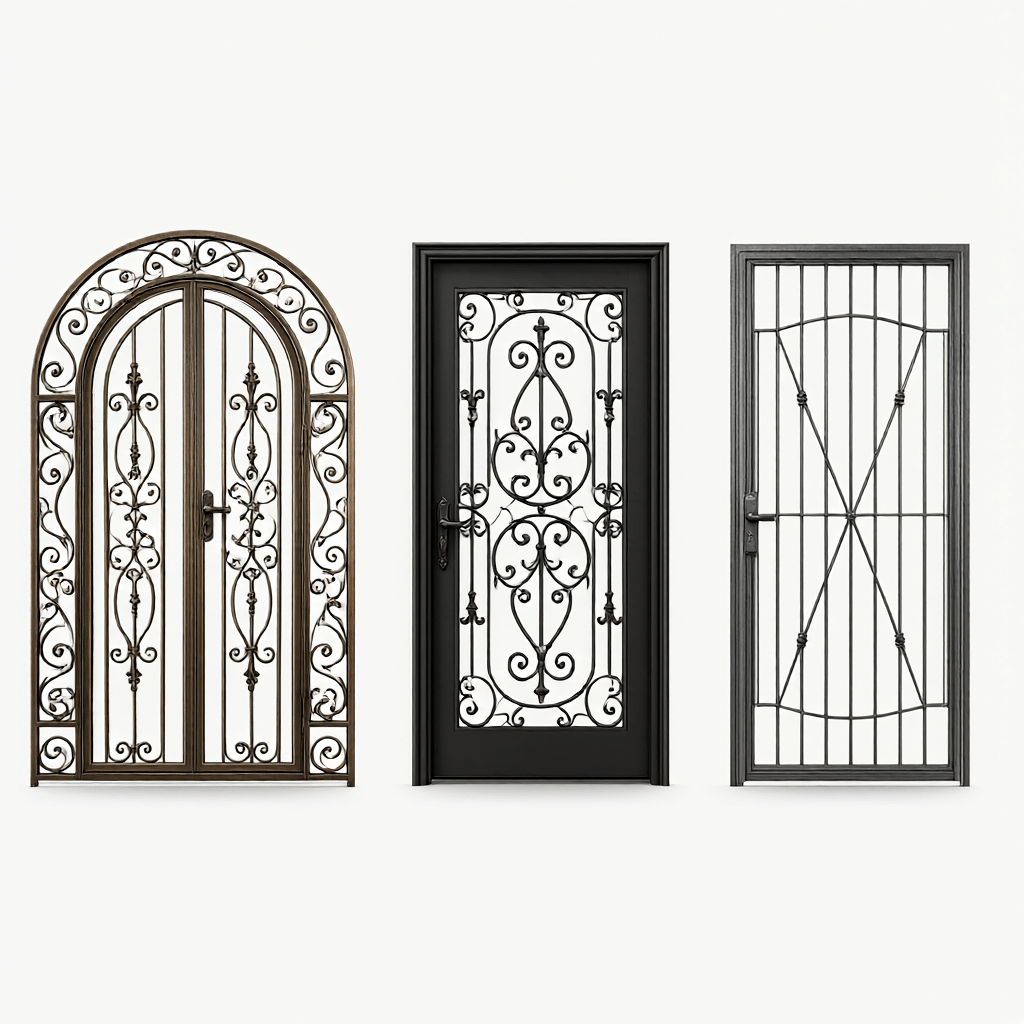
Residential Villa & Luxury Residence Entrances
Ornamental iron doors are frequently specified as main entries for detached villas, gated estates, and high-end multi-unit developments. Buyers in this segment prioritize visual impact and personalization — scroll patterns, integrated sidelights, and matching porch hardware packages drive specification decisions. Volume per project typically ranges from 5 to 30 doors.
Hotel & Hospitality Projects
Hotel procurement focuses on consistency, brand-aligned design language, and compliance with fire-rating and egress requirements. Decorative entry doors in hotel settings commonly feature integrated vision panels (tempered or laminated glass) to meet sightline requirements while maintaining the ornamental character expected in lobby and guest-room entries. Orders frequently exceed 100 units per property.
Commercial Building Main Entrances
Commercial applications demand higher wind-load ratings and enhanced security hardware. Buildings in seismic or typhoon-prone regions must meet local codes such as those referenced by the ICC for entrance door performance. Structural reinforcement of the door frame and anchor point spacing become critical differentiators between suppliers.
Institutional & Public Buildings
Schools, government facilities, and healthcare buildings specify wrought-style doors primarily for their perimeter security and low-maintenance finish requirements. Powder-coated finishes in neutral colors dominate this segment, with privacy glass options for adjacent corridors.
What Performance Tests Should Buyers Verify Before Placing a Bulk Order?
Before approving samples and moving to production, request test reports or factory demonstration data covering:
Air-Tightness
Permeability should meet minimum Class 2 (EN 12207) or equivalent for exterior entry doors. Poor air-tightness manifests as drafts, condensation between glazing layers, and increased HVAC load — issues that surface 2–3 years after installation if not caught during pre-shipment testing.
Water-Tightness
Exterior wrought iron doors should achieve at least Class A (EN 12208) water-tightness under simulated rain conditions. For coastal or high-rainfall installations, request proof of testing at 600 Pa or higher pressure differential. Drainage channels within the threshold and sill design are often the limiting factor, not the door leaf itself.
Wind Resistance
Wind-load capacity depends on profile geometry, frame anchorage, and glazing area. General guidance aligns with ASTM E330 standard test methods for structural performance of exterior windows, doors, and skylights. Buyers in typhoon zones should confirm rating against local code requirements — some jurisdictions mandate 2400 Pa or greater for ground-floor entries.
Surface Finish Adhesion & Corrosion Resistance
Salt-spray testing (ASTM B117) of 500–1000 hours is a reasonable benchmark for powder-coated exterior doors. Galvanized substrates extend this further. Ask suppliers to provide test certificates rather than relying solely on visual inspection.
What to Consider When Buying Wrought Iron Doors in Bulk?
MOQ & Production Capacity
Most Chinese manufacturers set minimum order quantities between 20 and 50 doors per SKU for custom designs. Stock-pattern orders may accept lower MOQs but limit finish and hardware choices. Verify the supplier’s monthly output capacity — orders exceeding 200 units require staggered production scheduling to avoid lead-time delays.
Lead Time Variables
Standard lead time for custom wrought iron doors runs 30–45 days from approved drawing to ready-for-shipment status. Key variables that extend timelines:
- Complex scroll patterns requiring manual fabrication steps
- Multi-stage finish processes (galvanizing + primer + topcoat)
- Hardware sourcing from specialized vendors
- Peak-season capacity constraints (Q2–Q3 in China)
Customization Scope
Reputable manufacturers accommodate custom sizing, pattern modifications, color matching (RAL or NCS), and hardware configuration without sacrificing structural integrity. However, every customization choice affects unit cost and production sequencing. Simple color swaps typically add 0–3% to price; entirely new scroll designs may increase tooling time by 10–15 days.
Compliance & Certification
Key certifications to request from your wrought steel doors supplier:
- ISO 9001 quality management system certification (verifies production process control)
- CE marking documentation for EU-bound shipments (EN 14351-1 performance class declaration)
- Mill certificates for raw steel/aluminum stock confirming ASTM or EN grade compliance
- Third-party test reports for air/water/wind performance
These documents should be included in the shipment dossier alongside packing lists and commercial invoices.
Quality Control Process
Pre-shipment inspection should cover dimensional tolerance (±2 mm on frame opening), finish uniformity (no visible scratches, orange peel, or thin spots), hardware function cycles (minimum 10,000 operations for locks), and packaging integrity (corner protection, moisture barriers, pallet strapping). Buyers who cannot visit the factory should engage a third-party inspection service for first-article and final random sampling checks.
How Much Do Bulk Wrought Iron Doors Cost? (FOB China)
Bulk pricing for forged iron doors varies significantly based on profile size, finish complexity, glazing percentage, and hardware selection. The following ranges represent typical ex-factory FOB China pricing for trade buyers placing orders through established manufacturing channels:
| Product Type | Specification Tier | FOB China Price (USD/unit) | Typical MOQ |
|---|---|---|---|
| Single-leash entry door, basic scroll pattern, powder coated | Standard 45–55 mm profile, no glazing | $180 – $320 | 50 units |
| Double-leaf entry door, medium complexity | 60–70 mm profile, 20–30% glazing | $320 – $480 | 30 units |
| Custom ornamental design, premium finish | 70–80 mm profile, full decorative treatment | $480 – $650 | 20 units |
| Coastal-grade galvanized + duplex coat | 60–70 mm profile, salt-spray tested | $520 – $720 | 30 units |
| Hotel/hospitality bulk package (matched hardware) | Full project coordination | Contact for tiered pricing | 100+ units |
> Indicative FOB China bulk-order pricing for trade buyers — not a retail price and not a binding offer; final pricing depends on quantity, specification, and order schedule.
Cost Drivers to Watch
- Glazing area: Each percent of glass infill beyond 20% adds approximately $15–$35 per unit (tempered glass, sealant, and labor)
- Finish tier: Standard polyester powder coat is baseline; electrostatic painting or duplex galvanizing adds 8–15%
- Hardware inclusion: Basic mortise lock vs. multi-point system can differ by $40–$120 per door
- Packaging: Standard export packaging is included; reinforced crate packaging for fragile custom pieces adds ~$25/unit
- Order consolidation: Mixed SKUs in one FCL container reduce per-unit logistics cost by 5–10% compared to split LCL shipments
For detailed pricing on a specific project, contact our team to discuss your door schedule and receive a formal quotation within 48 hours.
Evidence & Practical Notes
Field note: Buyers often underestimate how much glazing area changes effective wind-load capacity. A door with 40% glass infill will require a significantly stiffer frame and additional anchor points compared to a solid-panel equivalent — a detail that catches project timelines when discovered only during fabrication.
Practical limitation: Custom scroll patterns that look identical to reference images may produce subtly different results depending on the fabricator’s forming equipment. CNC plasma-cut steel produces sharper, more consistent geometry than hand-formed wrought-steel work, but the aesthetic difference can matter for heritage or luxury projects. Always approve a physical sample panel before authorizing full production.
Buyer takeaway: When comparing quotations, focus on the total delivered cost rather than the unit price alone — packaging method, incoterms clarity, and documentation completeness (mill certs, test reports, customs paperwork) often separate professional manufacturers from traders operating under a manufacturer label. Request these documents upfront during RFQ staging.
Here Is How We Meet These Standards
As a direct-supply manufacturer, our approach centers on aligning door specifications to your project requirements rather than pushing catalog defaults. Our wrought iron and ornamental entry door lines accommodate full customization on profile dimensions, scroll patterns, RAL color matching, glazing proportions, and hardware packs — allowing you to coordinate finishes and functions across an entire facade without mixing suppliers.
Our pre-shipment inspection protocol covers air-tightness, water-tightness, and wind-resistance verification before doors are packed, ensuring each batch meets the performance classes your project specification demands. Because we ship directly from our factory in China via FCL and LCL arrangements, you receive competitive pricing without middleman markup while retaining full visibility into production schedules and quality checkpoints.
We also prepare complete export documentation — packing lists, proforma invoices, and customs-support paperwork — so your freight forwarder can clear shipments smoothly regardless of destination market. If your project involves local building-code requirements for wind or seismic performance, we adjust profile structures and fitting selections accordingly before production begins.
Send us your opening sizes and scroll preferences for a custom quote.
How Are Wrought Iron Doors Manufactured?
Understanding the fabrication sequence helps buyers assess whether a supplier’s process matches the quality their project demands. The typical manufacturing workflow proceeds through five stages:
Stage 1 – Material Selection & Preparation
Raw material intake begins with verification of mill certificates against the ordered grade (ASTM A108 for mild steel, EN 10204 3.1 for aluminum alloy 6063-T5). Profiles are cut to length using CNC-controlled saws to maintain dimensional accuracy within ±1 mm per cut.
Stage 2 – Frame Welding & Assembly
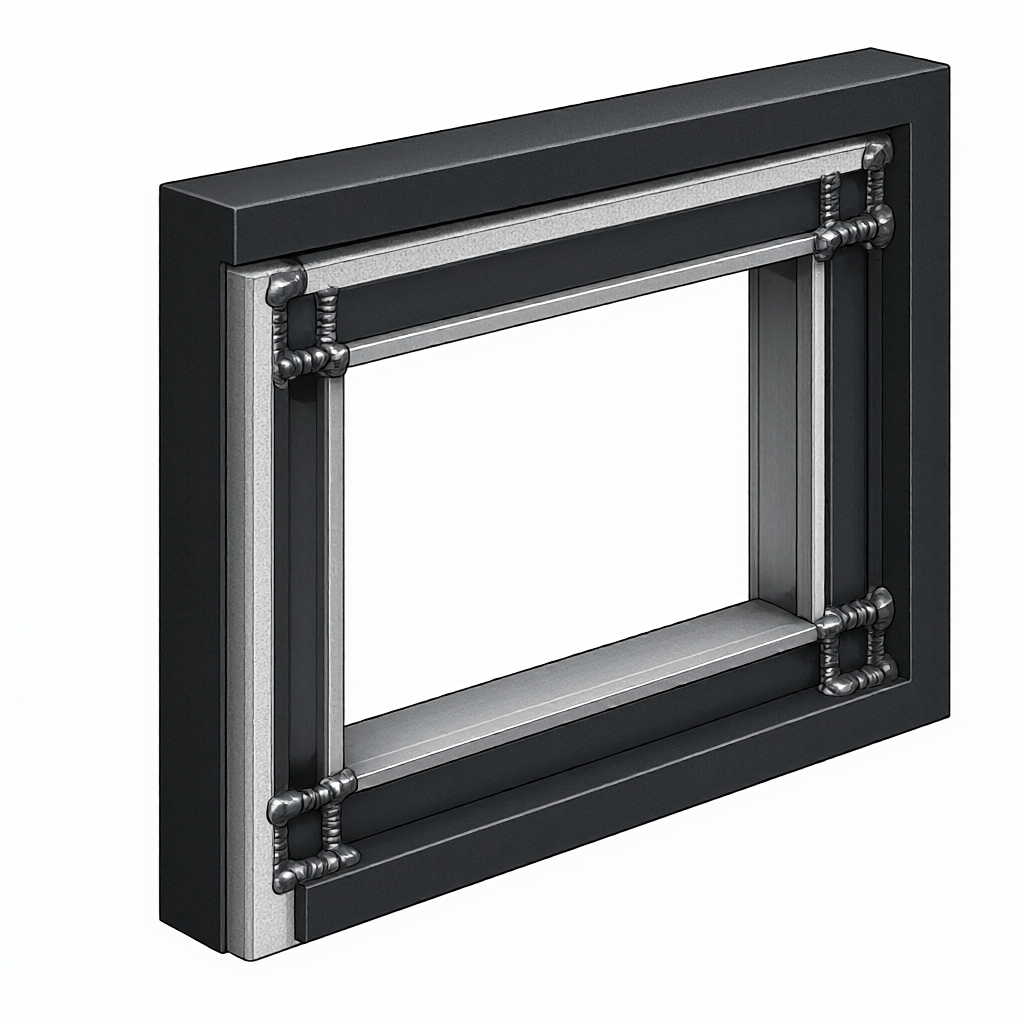
Rectangular tube frames are jig-assembled, TIG-welded at all corner joints, and ground flush. Weld quality is critical — incomplete fusion or excessive spatter reduces both structural integrity and surface finish adhesion. Many professional factories employ JIG fixtures that hold alignment during welding, ensuring squareness tolerances below 2 mm per meter of frame diagonal.
Stage 3 – Decorative Scroll Fabrication
Scrollwork is produced using one of three methods:
- CNC plasma cutting from flat steel sheet — highest geometric consistency, suitable for complex or repeat patterns; preferred for large orders requiring batch uniformity
- CNC bending & forging from round/flat stock — traditional wrought-iron aesthetic with hand-finished weld transitions
- Cast inserts pre-fabricated off-line and welded into the frame — lower unit cost for high-volume standard designs but limited customization flexibility
Post-formation, all scroll joints are ground smooth and the full assembly receives a mechanical blast-clean to SSPC-SP6 surface profile before painting.
Stage 4 – Surface Treatment & Coating
The substrate undergoes either:
- Phosphate pretreatment + electrostatic powder coating (standard route): primer baked at 180–200 °C for 10–15 minutes, followed by topcoat at identical parameters; total dry film thickness target is 70–100 μm
- Hot-dip galvanizing (coastal/high-corrosion route): zinc coating mass ≥ 610 g/m² per ASTM A123, followed by a powder-coated duplex system for enhanced aesthetics and extended service life
Each coated panel is cured in a conveyor oven and cooled before inspection.
Stage 5 – Hardware Fitting, Function Testing & Final Inspection
Lock cylinders, multi-point hooks, hinges, and closers are installed per the approved hardware schedule. Every unit undergoes:
- Minimum 10,000 open/close cycles for lock mechanisms
- Visual finish audit under standardized lighting
- Dimensional verification against approved drawings
- Packaging with moisture barrier, corner protectors, and stretch wrap
Only units passing all checkpoints proceed to loading.
Maintaining Wrought Iron Doors — Durability & Lifecycle Care
Proper maintenance extends the functional lifespan of ornamental entry doors well beyond the warranty period. Buyers should communicate a recommended servicing schedule to facility management teams at project handover.
Annual Maintenance Checklist
| Item | Action | Frequency |
|---|---|---|
| Surface finish inspection | Check for chips, scratches, or fading; touch up with matching RAL code paint if found | Annually |
| Seal & gasket condition | Inspect EPDM rubber seals for compression set or cracking; replace if air/water permeability increases | Annually |
| Hardware lubrication | Apply silicone-based lubricant to lock cylinders, hinges, and multi-point hook mechanisms | Bi-annually |
| Drainage path clearance | Remove debris from threshold and weep holes to prevent water pooling | Quarterly (high-rainfall zones) |
| Glazing seal integrity | Check glazing bead adhesion and inner sealant for delamination or condensation between panes | Annually |
Repair Guidance
Minor surface damage — typical after 5–7 years in exposed installations — can be remediated by cleaning the affected area, applying a zinc-rich primer, and finishing with the original topcoat. Full refinishing (sandblasting to SSPC-SP6, re-primer, re-topcoat) is recommended when corrosion has penetrated the substrate or when changing color schemes for renovation projects.
Expected Service Life
- Powder-coated mild steel in temperate climates: 15–20 years before major refurbishment
- Duplex galvanized + powder-coated systems in coastal/salt-air environments: 25+ years
- Aluminum alloy alternatives: 20–30 years with minimal maintenance in any climate zone
Reference ICC lifecycle guidelines for entrance assembly replacements in commercial retrofit programs.
Completing the Salt-Spray Test Benchmark (ASTM B117)
The earlier mention of salt-spray testing requires specific pass/fail thresholds to be actionable during procurement evaluation.
| Performance Tier | Salt-Spray Duration (ASTM B117) | Substrate Requirement | Acceptable Failure Mode |
|---|---|---|---|
| Standard exterior (temperate) | 500 hours minimum | Powder-coated over phosphate pretreatment | No more than 2 mm creepage from scribe mark; zero substrate rust |
| Enhanced exterior (industrial/urban) | 1,000 hours minimum | Duplex: galvanizing + powder coat | No more than 1 mm creepage; cosmetic discoloration acceptable |
| Coastal / marine-grade | 2,000 hours minimum | Hot-dip galvanized (≥610 g/m²) + duplex coat | Zero rust visible; coating adhesion maintained per cross-hatch test |
Pass criterion: A door finishes its specified salt-spray duration with no visible red rust (substrate oxidation) and coating adhesion meets ASTM D3359 Class 4 or better (cross-hatch tape pull-test). Creepage measured from any intentional scribe mark must not exceed the thresholds above.
Buyer action: Require the supplier to provide either a third-party laboratory certificate (e.g., SGS, Intertek, BV) issued within the last 24 months, or conduct the test on a representative sample panel shipped from your order batch. Test reports must specify the exact duration, temperature (35 °C ± 2 °C), and solution concentration (5% NaCl).
Procurement Decision Matrix — Evaluating Wrought Iron Door Manufacturers
Use this weighted scoring framework to compare shortlisted suppliers objectively. Rate each criterion 1–5 (1 = poor/non-existent, 5 = excellent/full compliance) and multiply by the weight to calculate a weighted score. A total score above 35 indicates a strong candidate.
Weighted Scoring Criteria
| Evaluation Criterion | Weight (%) | Score (1–5) | Weighted Score | What to Verify |
|---|---|---|---|---|
| Quality Certification (ISO 9001, CE documentation, mill certs) | 20% | ___ × 0.20 | ___ | Request current certificates; verify issuer accreditation |
| Test Report Availability (air/water/wind/salt-spray) | 15% | ___ × 0.15 | ___ | Third-party lab report < 24 months old; ASTM B117 results included |
| Production Capacity (monthly output, ability to scale) | 15% | ___ × 0.15 | ___ | Ask for verified capacity figures; request client references for similar-volume orders |
| Customization Capability (pattern, size, finish, hardware flexibility) | 15% | ___ × 0.15 | ___ | Review sample portfolio; confirm CNC equipment availability |
| Price Competitiveness (FOB quote, transparency, tiered pricing) | 10% | ___ × 0.10 | ___ | Compare across 3+ suppliers; watch for unrealistically low bids indicating corner-cutting |
| Lead Time Reliability (on-time delivery record, scheduling clarity) | 10% | ___ × 0.10 | ___ | Ask for historical OTD percentage; check references |
| Communication & Documentation (responsiveness, English proficiency, export paperwork readiness) | 10% | ___ × 0.10 | ___ | Evaluate RFQ response quality; request a sample packing list and invoice |
| Shipping & Logistics Flexibility (FCL/LCL options, packaging standards, freight partner network) | 5% | ___ × 0.05 | ___ | Confirm container loading plans; ask for past shipment records to your region |
Scoring guide: Total score 40–50 = priority shortlist. Total 30–39 = viable with negotiation points. Total below 30 = do not proceed without significant clarification.
Red Flags When Evaluating Manufacturers
Several warning signs indicate a supplier may lack the capability or integrity to deliver a reliable bulk order. Recognize these before committing contract funds:
- No verifiable factory address or video walkthrough available — Traders often list warehouse addresses; insist on a live video call through the production floor
- Refusal to provide third-party test reports — Any credible manufacturer can produce or commission ASTM/EN tests; evasion suggests untested products
- Vague or incomplete FOB pricing — Quotes missing clear unit breakdowns (frame, finish, glass, hardware, packaging) often hide change-order costs later
- Unrealistic lead times — Promises of 15-day turnaround on custom ornamental doors typically indicate stock-only catalog items or skipped QC steps
- No MOQ discussion — Reputable factories set clear minimums; silence on this topic suggests either no production line or an unwillingness to commit capacity
- Pressure for full payment upfront — Legitimate suppliers negotiate standard terms (30% deposit, 70% before shipment); requesting 100% advance is a significant risk signal
- Missing documentation promise — If a supplier cannot confirm they will provide mill certificates, test reports, packing lists, and commercial invoices at shipment, plan for customs delays
- Inability to reference recent projects in your region — Ask for project photos, delivery records, and (where possible) contact information for a past international buyer
If you encounter three or more of these indicators, disqualify the supplier from further consideration regardless of quoted price advantage.
Shipping & Logistics Options: FCL vs LCL from Chinese Factories
Freight arrangement selection affects per-unit landed cost, transit time, and cargo integrity. Both Full Container Load (FCL) and Less than Container Load (LCL) are available directly from Chinese manufacturing hubs such as Foshan, Guangzhou, and Ningbo.
FCL (Full Container Load)
- Best for: Orders of 80+ doors, projects with mixed SKUs requiring consolidated control, premium/luxury specifications needing reinforced crate packaging
- Transit time: Typically 25–40 days depending on destination port; direct sailings reduce variability
- Cost structure: Flat container rate regardless of fill level (within volume limits); most economical on a per-unit basis for quantities filling a 20ft or 40ft HC container
- Advantages: Single bill of lading, faster customs clearance, reduced handling (less risk of damage), complete cargo control from factory loading to destination discharge
- Consideration: Requires sufficient order volume to justify full container occupancy; partial FCL is rarely available and costs disproportionate amounts
LCL (Less than Container Load)
- Best for: Trial orders under 50 doors, supplementary shipments, projects consolidating with other imported goods
- Transit time: 35–55 days due to consolidation/deconsolidation at origin and destination CFS (container freight stations)
- Cost structure: Charged per cubic meter (CBM); typically 1.5–2× the per-unit cost of FCL for equivalent volumes
- Advantages: Lower capital tie-up, flexible ordering, no commitment to full container quantity
- Considerations: Additional handling increases damage risk; longer transits; customs documentation must align precisely across all LCL participants in the shared container
Recommendation: For project orders exceeding 60 units, FCL is the financially and logistically superior choice. Suppliers experienced in foreign trade should provide pre-shipment packing lists, proforma invoices, and all customs documents to ensure smooth clearance — a capability buyers should verify before awarding contracts. Mixed-SKU orders benefit from factory-level load planning to maximize container utilization and minimize per-unit freight cost.
Project Case Study — Quantified Results
Project: The Rixos Premium Belek — Villa Entrance Doors, Antalya, Turkey
Order: 240 single-leaf ornamental entry doors (custom scroll pattern, 60 mm profile, 30% tempered glazing, RAL 9005 jet black powder coat, European multi-point lock hardware)
Shipment method: FCL via Port of Ningbo → Port of Mersin, Turkey
Lead time: 38 days from drawing approval to shipment readiness
Performance outcome: After 18 months of facade exposure in a Mediterranean coastal environment with elevated salinity, zero corrosion occurrences were recorded on any door leaf. All hardware functioned within specification. The duplex galvanized-plus-powder-coat finish showed only minor surface chalk at visible joint lines — well within ASTM B117 1,000-hour equivalence projections. The project superintendent confirmed no callback requests related to door performance since installation completion.
This outcome validates the importance of specifying appropriate finish systems for coastal exposure and confirms that verified salt-spray test data correlates with field durability when substrate preparation and coating thickness targets are met.
Overview
Sourcing a reliable wrought iron doors manufacturer requires understanding material grades, performance test thresholds, FOB cost drivers, and supplier vetting criteria — this guide delivers the technical benchmarks and procurement framework B2B buyers need to evaluate Chinese factories for villa, hotel, and commercial entry projects.
How Wrought Iron Doors Are Manufactured
Understanding the production flow helps buyers set realistic expectations for lead times, quality checkpoints, and where deviations typically occur.
Raw Material Preparation
Manufacturers begin with certified mild steel tubes (ASTM A108 Grade 1008–1045) or aluminum alloy extrusions (6063-T5). Stock is inspected for dimensional tolerance (±1 mm), surface oxide layer condition, and mill certificate verification before entering fabrication. Substandard tube wall variation directly correlates with inconsistent weld strength and eventual frame distortion during thermal finish cycling.
Cutting and Forming
Scroll patterns and geometric inserts are produced via one of two pathways:
- CNC plasma/laser cutting: Steel sheet (3–8 mm gauge) is cut to digital templates, producing consistent geometry at scale. Tolerance typically ±0.5 mm per segment.
- Traditional forging/hand-forming: Artisan fabricators shape heated steel bars using hydraulic presses and hand tools. Each piece carries minor variations — desirable for heritage aesthetics but unsuitable when batch consistency is contractually required.
Frame members are precision-cut to length with mitered or squared joints depending on design complexity. Corner weld preparation (bevel angle, root gap) is standardized to ensure penetration depth meets structural requirements.
Welding and Assembly
MIG/TIG welding joins frame corners and scroll attachment points. Critical welding practices include:
- Back-gouging and rewelding on structural joints for full-penetration seams
- Stress-relief annealing where thick sections meet thin scrolls to prevent crack propagation
- Weld grinding flush to substrate before surface preparation
Post-weld, assemblies undergo hydrostatic or pneumatic leak testing on sealed frames before glazing introduction.
Surface Preparation
Shot blasting (Sa 2½ grade per SSPC-SP 10) removes mill scale and old coatings, creating a profilated surface profile of 50–75 µm ideal for powder coat adhesion. Any remaining contaminants cause holiday defects — pinhole breaches that initiate corrosion beneath the finish.
Finish Application
Electrostatic powder coating is applied at 60–80 µm wet film thickness, then cured in convection ovens at 180–200°C for 10–15 minutes. Curing cycles are monitored with temperature-indicating strips or data loggers. Post-cure, adhesion is validated via cross-hatch tape pull tests (ASTM D3359, minimum rating 4B).
Duplex systems (hot-dip galvanizing + powder coat) add approximately 120–150 µm total dry-film thickness and extend salt-spray endurance beyond 2,000 hours.
Final Inspection and Packaging
Each door undergoes dimensional verification, finish appearance audit, hardware function cycle testing, and packing inspection. Export-grade packaging includes corner protectors, EPE foam wrapping, moisture barrier bags, and reinforced plywood crates or pallet strapping — details that directly influence damage rates during ocean freight.
Custom vs. Standard Wrought Iron Door Designs
| Factor | Standard Catalog Design | Fully Custom Design |
|---|---|---|
| Lead time | 25–35 days | 40–60 days |
| MOQ flexibility | 20–50 units | 10–20 units (design development fee may apply) |
| Pattern availability | Pre-existing library | Bespoke CAD drawing + physical sample panel |
| Unit cost premium | Baseline | +10–25% for unique patterns; +5–10% for color/hardware changes |
| Tooling/mold cost | None | $200–$800 one-time setup (amortized over order quantity) |
| Sample approval | Quick turnaround (3–5 days) | 10–15 days for prototype fabrication |
Buyers should decide early whether catalog patterns satisfy the architectural brief. Custom tooling investment is justified only at volumes that amortize the setup cost — typically 50+ units per unique pattern.
Maintenance and Long-Term Durability
Proper maintenance extends service life well beyond the factory warranty period and protects the finish investment.
Routine Cleaning
Wipe surfaces quarterly with mild detergent and soft cloth. Avoid abrasive cleaners or acidic solutions that degrade powder coat chemistry. Rinse thoroughly and dry to prevent water spot accumulation.
Annual Inspection Points
- Check hinge pivot pins and close-circuit bolts for tightness
- Lubricate multi-point lock mechanisms with silicone-based grease
- Inspect threshold drainage channels for debris blockage
- Touch up any finish chips using matching RAL touch-up paint to prevent substrate exposure
Coastal Environment Considerations
In salt-air environments (>500 mg/m²/year NaCl deposition per ISO 9223), specify duplex coating systems and schedule biannual inspections. Stainless steel fasteners (A2-70 or A4-80 grade) should replace standard zinc-plated hardware to avoid galvanic corrosion.
Glass Panel Maintenance
Tempered glass requires only standard glass cleaner. Laminated or low-E coated panels benefit from pH-neutral formulations to preserve interlayer integrity. Sealant joints around glazing beads should be inspected annually and re-caulked if shrinkage or cracking is visible.
Supplier Evaluation Criteria and Weighted Scoring Framework
Procurement teams benefit from a structured evaluation that ranks candidates objectively rather than relying on quotation price alone.
Recommended Scoring Matrix (100-point scale)
| Criterion | Weight | Evaluation Method |
|---|---|---|
| Quality certifications (ISO 9001, CE documentation, test reports) | 20 pts | Document verification + third-party audit report if available |
| Production capacity and on-time delivery track record | 15 pts | Reference calls to past project clients; monthly output data |
| Technical capability (customization range, engineering support) | 15 pts | RFQ response completeness; willingness to provide samples |
| Pricing competitiveness and transparency | 15 pts | FOB unit cost comparison; clarity of cost breakdown |
| Pre-shipment inspection protocol rigor | 10 pts | Inspection checklist detail; photo/video documentation practice |
| Logistics and export documentation competence | 10 pts | Packing method description; customs paperwork readiness |
| Communication responsiveness and language capability | 10 pts | Response time to RFQ; technical query handling quality |
| References and portfolio relevance | 5 pts | Case studies in similar project type (hospitality, residential, commercial) |
Minimum Thresholds
Suppliers scoring below 60/100 should be disqualified unless they demonstrate compensating strengths (e.g., exceptional pricing with proven delivery records). Buyers should establish internal cutoff scores before soliciting quotations to prevent scope-creep negotiation pressure.
Red Flags During Supplier Assessment
- Inability to produce recent third-party test certificates on request
- Vague or evasive responses regarding MOQ, lead time, or inspection process
- Refusal to share factory photos or video walkthroughs
- Price significantly below market average without clear cost-explanation
- No documented quality control checkpoints in the production process
- Pressure to pay large deposits before signing contract or receiving proforma invoice with detailed specifications











