
Last updated: November 25, 2026
Sourcing bulk architrave trim from a reliable architrave manufacturer requires understanding material specifications, dimensional tolerances, finish durability, and pre-shipment inspection standards — not just unit price. Buyers supplying villa, hotel, and development projects face real cost risk when trim arrives with warpage, mismatched tones, or insufficient documentation. This guide breaks down the technical specs, sourcing evaluation framework, and procurement checklist you need to confirm quality before payment releases.
Quick Overview
A reliable architrave manufacturer delivers trim that fits precisely, finishes consistently, and arrives on schedule — because a single mismatched batch can stall a room turnover or a whole project phase. An architrave (also called door frame casing or door surround) is the trim component that bridges the gap between door frame and wall, concealing joints while providing a clean architectural edge. For bulk buyers, the difference between a good supplier and a problematic one shows up in dimensional tolerance, surface consistency, and documentation accuracy. This guide covers the specifications, quality checkpoints, and price factors that determine whether your order runs smoothly.
Specifications
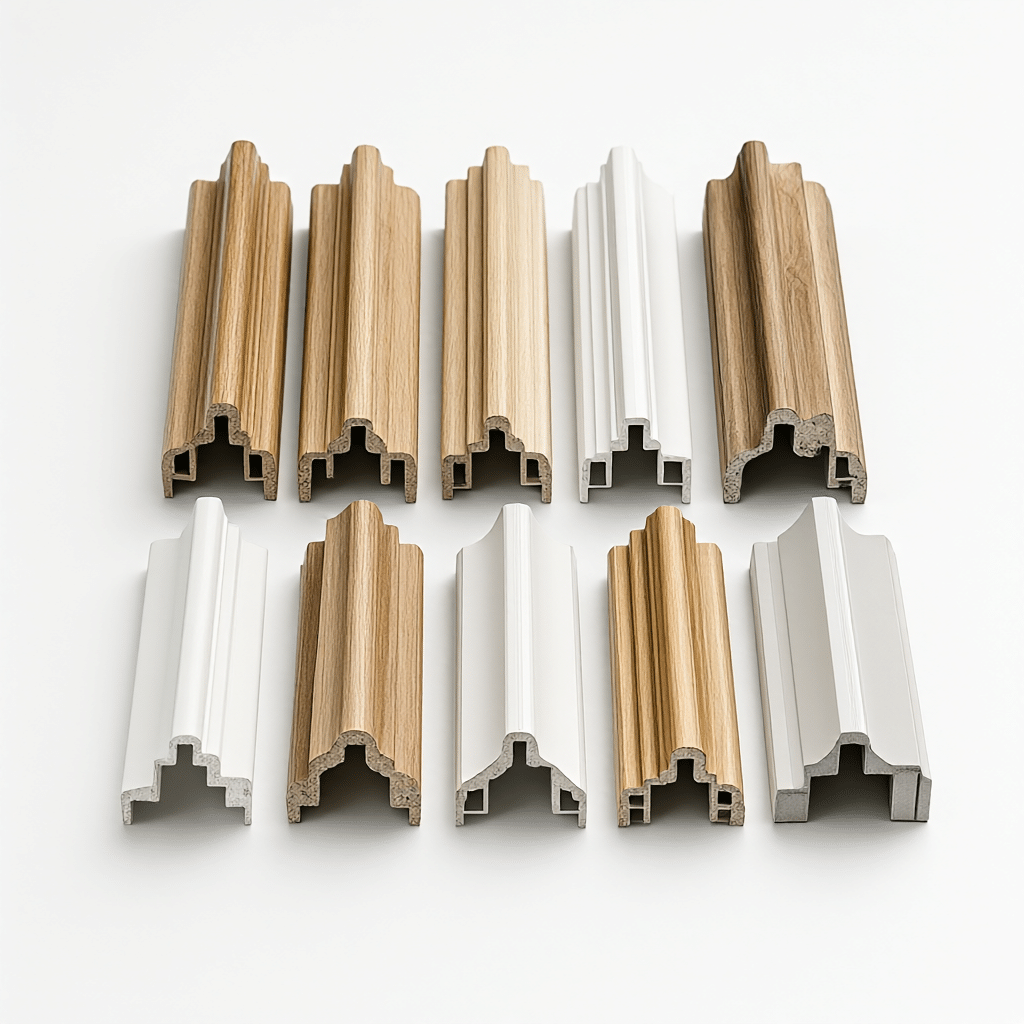
What are the key specifications of bulk architrave orders?
Buyers typically define architrave orders around five parameters: material, profile geometry, dimensions, finish, and compliance documentation. Below is the standard specification framework used across B2B procurement.
| Parameter | Common Range / Options | Notes |
|---|---|---|
| Material | Solid wood (pine, poplar, oak, mahogany), PVC, aluminum-clad wood | Wood offers premium finish; PVC suits moisture-heavy zones; aluminum-clad combines durability with wood aesthetics |
| Profile style | Standard flat-back casing, ogee, bullnose, colonial, shaker-style | Match profile to door style and regional design preference |
| Width | 50–120 mm typical | Wider trims suit larger reveals; narrower suits slim-frame systems |
| Depth / reveal coverage | 10–25 mm | Depends on wall thickness and joint tolerances |
| Length per piece | 2000–3000 mm standard | Custom lengths available for large-format openings |
| Surface finish | Primer-coated, painted, veneered, lacquered, natural oil | Finish must align with local climate and project specification |
| Moisture content (wood) | 8–12% for interior use | Critical for preventing warpage after installation |
| Tolerance | ±1 mm on width/length, ±0.5 mm on profile depth | Tighter tolerances reduce on-site adjustment time |
When evaluating an architrave manufacturer, ask for their documented tolerance range and whether they provide pre-shipment measurement reports rather than relying solely on visual inspection. For projects requiring precision matching across hundreds of doors, requesting actual sample measurements before full production reduces risk significantly.
Profile compatibility matters as much as dimensions. A door frame manufactured to a particular cross-section needs a corresponding architrave rebates and returns. Mismatched profiles create gaps that no amount of sealant can disguise. Always confirm the intended door frame system before finalizing architrave profiles
Applications
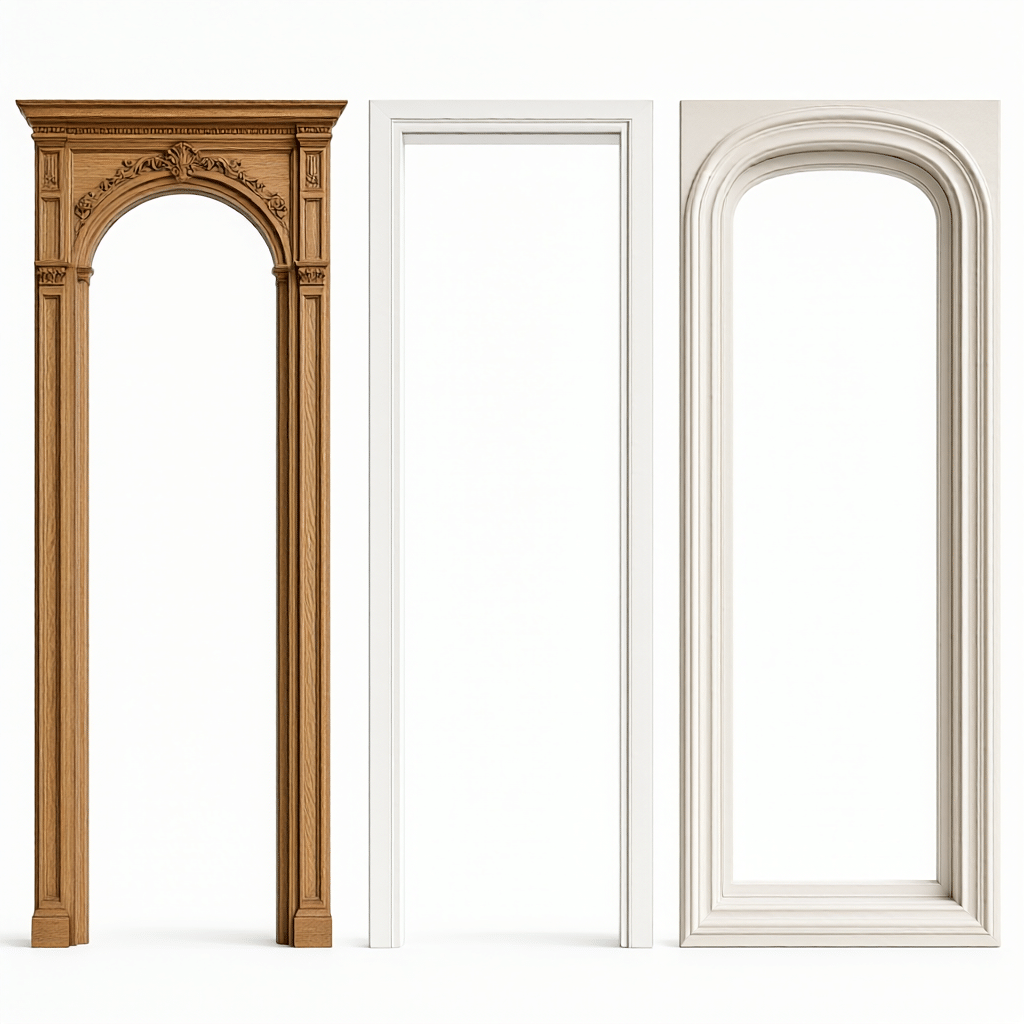
Where can architraves be applied?
Architraves appear in nearly every enclosed-door application, but the material and finish requirements shift depending on the environment.
Villa and residential project supply — High-end residences typically specify solid wood architraves in matched tones to door leaves. Consistency across repeated door openings is essential; buyers often source from a single production batch to avoid visible shade variation between units.
Hotel room bulk orders — Hotels require durable, low-maintenance finishes that withstand high turnover. PVC or painted solid wood profiles dominate here, with emphasis on scratch resistance and consistent color across batches. Lead time predictability matters more than bespoke finishes because room-by-room handover schedules are fixed.
Residential development projects — Volume-driven developments prioritize cost efficiency and standardized profiles. Aluminum-clad wood or primed pine architraves are common choices, balancing appearance expectations against unit economics. Uniform packaging and damage prevention during transit are critical at this scale.
OEM/ODM custom orders — Private-label buyers commission architraves under their own brand, specifying unique profiles, colors, and hardware integration points. Manufacturers with ODM capability adapt profile tooling quickly and provide technical drawings for approval before tooling commitment.
Buying Factors
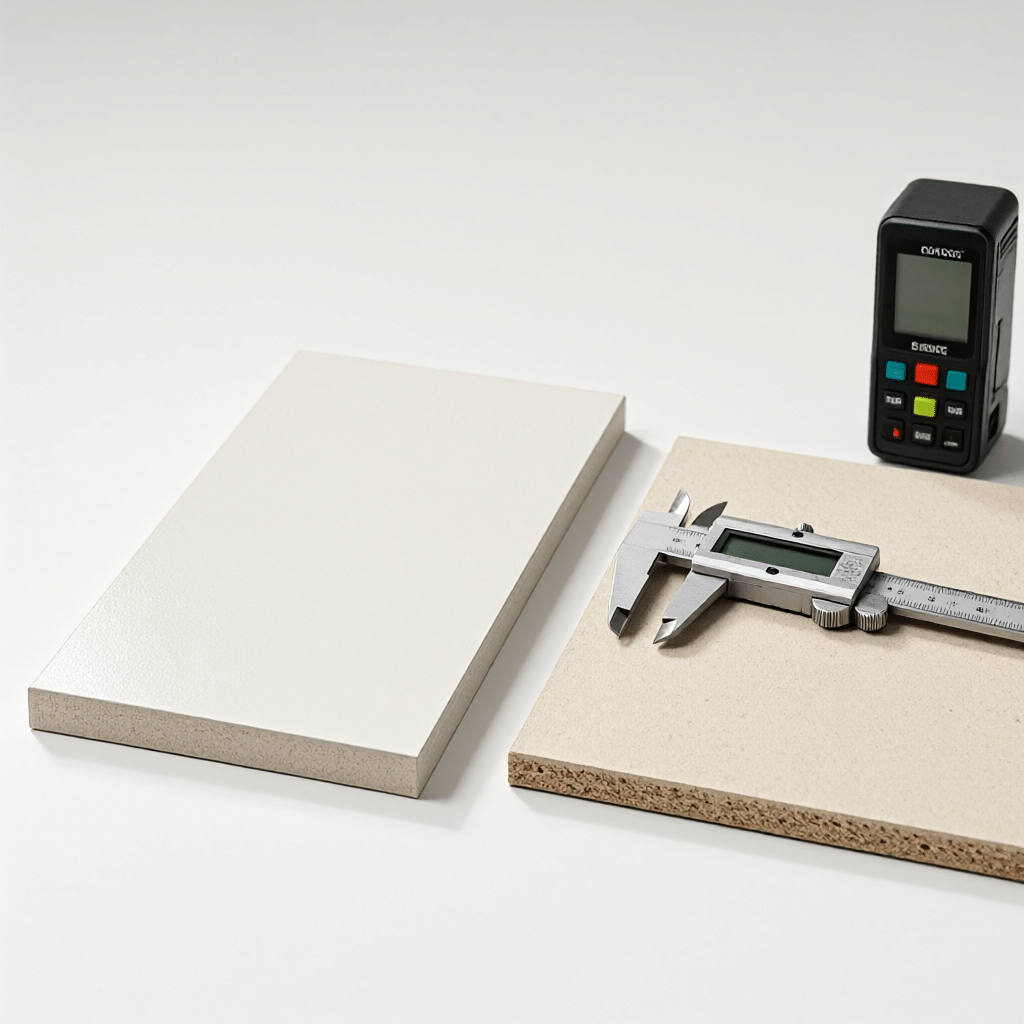
What to consider when buying architrave in bulk?
Several factors separate orders that arrive ready-to-install from those that trigger costly rework on site.
Dimensional consistency across pieces — Ask whether the manufacturer measures each piece or only samples. Inconsistent widths force installers to adjust reveal coverage, creating visible irregularities. Request production batch sampling records before authorizing full shipment.
Moisture management — Wood architraves shipped without proper kiln drying absorb ambient humidity at the destination, causing expansion and joint separation months after installation. Verify that the factory documents moisture content at the point of packing, not merely at the point of fabrication.
Finish durability for local climate — Paint adhesion, UV stability, and scratch resistance vary by region. Coastal projects demand higher corrosion protection on any metal hardware contact points; arid interiors may allow thinner finish layers. Confirm the finish specification matches the target market conditions.
Documentation completeness — International shipments require packing lists, proforma invoices, and customs documentation prepared accurately. Errors delay clearance and add storage fees. Experienced exporters maintain document templates aligned with common importing country requirements.
Customization flexibility — Buyers who adjust profile structures or fittings to match local building codes reduce installation friction. Confirm the manufacturer’s willingness to modify extrusion dies or cutting jigs for code-specific requirements before committing to volume.
Price & Cost
How much do bulk architraves cost? (FOB China)
Pricing for architraves depends primarily on material choice, finish complexity, order volume, and whether the profile requires custom tooling. Below are indicative wholesale price ranges for trade buyers placing bulk orders from China.
| Product Category | FOB China (USD per linear meter) | Typical MOQ Reference |
|---|---|---|
| PVC architrave (standard profile, white) | 1.5 – 3.5 | 500+ meters |
| Primed pine architrave (standard profile) | 3.0 – 6.0 | 300+ meters |
| Veneered hardwood architrave (oak, walnut) | 8.0 – 18.0 | 200+ meters |
| Aluminum-clad wood architrave | 10.0 – 22.0 | 200+ meters |
| Custom profile, solid wood (project-specific) | 12.0 – 28.0 | Negotiable per project |
These figures reflect bulk-order reference pricing for trade buyers — not retail prices and not binding offers. Final pricing depends on exact quantity tiers, specification variations, current material costs, and order scheduling.
Several variables shift these ranges. Larger orders benefit from optimized production runs and reduced per-unit tooling amortization. Complex profiles that require new die creation or special finishing sequences carry setup premiums that diminish at higher volumes. Rush schedules and expedited shipping change total landed cost even when unit price remains stable.
Request a bulk FOB quotation with your opening sizes and finish requirements to receive project-specific pricing.
Evidence & Practical Notes
Field note: On a recent villa project spanning forty-eight exterior doors, two suppliers delivered architraves that measured within specification individually but varied in tone across production batches — installing them side by side revealed shade differences that required reordering from a single batch to correct. Consistent color and grain selection practices separate reliable producers from inconsistent ones.
Practical limitation: Even tight-tolerance architraves cannot compensate for poorly squared door frames. If the rough opening or frame installation has deviated beyond standard plumb tolerances, the architrave reveal will be uneven regardless of product quality. Proper framing is a prerequisite for trim to perform as designed.
Buyer takeaway: Prioritize manufacturers who measure and report dimensions per batch rather than trusting lot-level averages. Request proof of moisture-content testing and batch sampling before releasing payment for the full order — these checks catch problems before goods leave the factory.
Evaluating an Architrave Manufacturer
How do you evaluate and select an architrave manufacturer?
Selection comes down to three verifiable capabilities: precision in production, consistency across batches, and readiness to support documentation and customization for international markets.
An architrave manufacturer that understands bulk procurement provides measurable tolerances rather than vague quality claims. They should publish their acceptable deviation ranges and show how they verify dimensions before goods are packed. For wood-based products, moisture control procedures and kiln-drying verification should be routine practice, not exceptions.
Pre-shipment inspection is another strong signal. Reputable factories test critical performance attributes such as dimensional accuracy, surface finish adhesion, and profile squareness before release. Some manufacturers also conduct functional checks including air-tightness, water-tightness, and wind-resistance verification — tests originally developed for window and door assemblies but equally applicable to ensuring that fitted trim performs reliably once installed. These procedures align with internationally recognized frameworks such as those maintained by ISO, which publishes standards covering quality management systems and performance testing referenced across the construction sector.
Customization responsiveness distinguishes manufacturers who simply produce from those who partner on projects. When a buyer needs profiles adjusted to match local building codes or distinct architectural styles, the ability to modify tooling and validate changes with technical drawings before full production is essential. ODM capability indicates the factory has invested in flexible production setups rather than rigid dedicated lines.
International experience matters for logistics accuracy. Buyers supplying overseas projects need partners who prepare complete documentation — packing lists, proforma invoices, and customs paperwork — without requiring constant clarification. Smooth export processes prevent delays that cascade into idle labor on site.
As a manufacturer, our approach to this is grounded in direct factory supply without middleman markup, ensuring competitive pricing while maintaining full control over the production chain. We offer complete customization on size, color, glass options, and hardware accessories to match each project’s requirements. Every batch undergoes strict pre-shipment inspection covering air-tightness, water-tightness, and wind resistance performance. Our team has extensive foreign-trade experience and prepares all standard shipping and customs documentation, supporting both FCL and LCL shipments directly from our facility. We also adjust profile structures and fittings to align with the building code requirements of your target market.
Contact Our Team to discuss your project specifications and receive a tailored proposal.
Quality Standards & Pre-Shipment Inspection Criteria
Which industry standards govern architrave quality?
Architrave quality is benchmarked against performance standards originally developed for window and door assemblies — because architraves are installed adjacent to those same openings and must perform coherently with them. The most relevant referenced standards include:
| Standard | Region | Key Requirement Relevant to Architrave |
|---|---|---|
| EN 14351-1 | Europe | Air-tightness, water-tightness, and wind-resistance classification for doors and windows; architrave fit must not compromise these ratings post-installation |
| BS 8211 | United Kingdom | Code of practice for installation of wooden doors, frames, shutters, and architraves — specifies reveal coverage, fixings, and finishing tolerances |
| JIS A 5908 | Japan | Performance testing standards for timber joinery products, including dimensional stability and surface quality acceptance criteria |
| ASTM E283 / E331 | United States | Laboratory methods for air leakage and water penetration testing of exterior windows, doors, and skylights — relevant when architrave seals interface with weather-resistant barriers |
Buyers should request that suppliers demonstrate conformance to at least one of these frameworks and provide test certificates or internal reports referencing the applicable standard number. Vague claims such as “meets international standards” without citing a specific standard number are insufficient for project specification compliance.
ISO maintains the broader quality management system standards (ISO 9001 series) that underpin certified manufacturing processes, while WTO frameworks govern the trade documentation and customs compliance that international buyers depend on for smooth cross-border delivery.
What quality checks should a buyer require before shipment?
Pre-shipment verification is the most effective control point for catching defects before they reach your project site. Below is a practical checklist of tests and inspections every buyer should require:
| Check Item | Method | Acceptance Criterion |
|---|---|---|
| Dimensional measurement | Caliper / tape per piece or batch sampling | Width ±1 mm; length ±1 mm; profile depth ±0.5 mm |
| Moisture content | Kiln-dried documentation + spot-check with moisture meter | 8–12% for interior wood products at packing |
| Surface finish adhesion | Cross-hatch tape test (per ISO 2409 equivalent) | No lifting or flaking at scored cuts |
| Color consistency | Visual comparison against approved sample panel | Delta E ≤ 2.0 between batches (spectrophotometer preferred) |
| Squareness / flatness | Straight-edge check across face and rebate | Gap ≤ 1 mm over 1 m length |
| Air-tightness (for fitted assemblies) | Factory test chamber pressurization | Leak rate within EN 14351-1 class threshold |
| Water-tightness (for exterior-grade) | Artificial rain test per standard procedure | No water penetration at joints under specified pressure |
| Wind resistance | Structural loading test on assembled frame + trim | Deflection within standard limits under design load |
These tests mirror the pre-shipment inspection protocols used by manufacturers serving international villa, hotel, and development projects — because defects discovered on site are exponentially more expensive to replace than defects caught before the container is sealed.
We recommend requesting a photo report or third-party inspection certificate (SGS, BV, or equivalent) for orders exceeding $10,000 FOB value. Many disputes originate from undetected moisture content shifts during transit — confirming drying status at the factory gate prevents costly claims months later.
Procurement Framework & Buyer Checklist
How do you assess supplier readiness beyond product samples?
A robust procurement decision requires evaluating the supplier’s process controls, not just the final appearance of a sample piece. Use this decision framework when shortlisting architrave manufacturers:
Technical readiness — Does the supplier publish measurable tolerances? Can they provide batch-level dimension reports, moisture content certificates, and finish adhesion test records? Suppliers who rely on verbal assurances rather than documented verification create downstream risk.
Quality management maturity — ISO 9001 certification indicates a structured quality management system, but the deeper signal is whether the factory performs pre-shipment functional testing (air-tightness, water-tightness, wind-resistance checks) as routine practice, not as exceptional requests. These tests are standard in window and door manufacturing and are equally applicable when evaluating architrave-trim fitment integrity.
Customization responsiveness — Projects frequently require profile adjustments to match local building codes or architectural specifications. Confirm whether the manufacturer modifies extrusion dies or cutting jigs for code-specific requirements and validates changes with technical drawings before committing to volume production.
Documentation readiness — International shipments require accurate packing lists, proforma invoices, and customs documentation. Suppliers experienced in foreign trade prepare complete paperwork aligned with importing country requirements, preventing clearance delays and demurrage charges.
Red flags that indicate supplier risk
| Red Flag | Risk Implication | Mitigation |
|---|---|---|
| No published tolerance ranges | Unpredictable fit; on-site rework required | Require written tolerance commitment with each quotation |
| Moisture content not tested at packing | Warpage and joint failure after installation | Specify kiln-dry certification at shipment date, not fabrication date |
| Batch-to-batch color variation unaddressed | Visible shade mismatch across doors | Require spectrophotometer Delta E reports; mandate single-batch ordering per project phase |
| Vague export documentation process | Customs delays, demurrage fees | Confirm packing list, PI, and customs document templates before order placement |
| Refusal to share pre-shipment inspection photos | Hidden defect risk; no audit trail | Make photographic or third-party inspection report a contract condition |
| No ODM/custom tooling capability | Limited adaptability to project-specific codes | Prioritize suppliers with flexible die-cutting and profiling equipment |
Quick procurement decision guide
- Define project requirements — material type, profile, dimensions, finish, target market building codes
- Request supplier specification sheets — tolerances, testing methods, standards cited
- Order physical samples — verify fit against your door frame system before full production authorization
- Confirm pre-shipment inspection protocol — dimensional, moisture, finish, and functional test coverage
- Validate documentation capability — packing list, invoice, customs format alignment with destination country
- Lock batch sequencing — for large projects, specify single-batch production for visible-face doors to ensure tone uniformity
- Engage third-party inspection — for high-value orders, commission SGS/BV inspection prior to container loading
Submit Inquiry with your project specification sheet to receive a matched supplier proposal with documented quality checkpoints built in.
Manufacturer Integration
As a manufacturer, our approach to this is grounded in direct factory supply without middleman markup, ensuring competitive pricing while maintaining full control over the production chain. We offer complete customization on size, color, glass options, and hardware accessories to match each project’s requirements — and every batch undergoes strict pre-shipment inspection covering air-tightness, water-tightness, and wind resistance performance. Our team has extensive foreign-trade experience and prepares all standard shipping and customs documentation, supporting both FCL and LCL shipments directly from our facility. We also adjust profile structures and fittings to align with the building code requirements of your target market.
Contact Our Team to discuss your project specifications and receive a tailored proposal.
Sources & References
- ISO — www.iso.org
- villa doors and windows — doorwoodendoors.com
- WTO — www.wto.org
- Submit Inquiry — doorwoodendoors.com











