
Last updated: November 26, 2026
Quick Overview
Choosing a reliable automatic drop seal manufacturer comes down to four things: verified acoustic and smoke-sealing performance, whether they offer full profile and hardware customization for your target market’s building codes, strict pre-shipment testing on every batch, and documented export experience with complete shipping paperwork. Most serious buyers also look for manufacturers who accommodate both FCL and LCL shipments and can adjust their product line without requiring a new mold for every size run. If those boxes are checked, you’re looking at a supplier capable of supporting multi-project procurement rather than one-off orders.
What Are the Key Specifications of an Automatic Drop Seal?
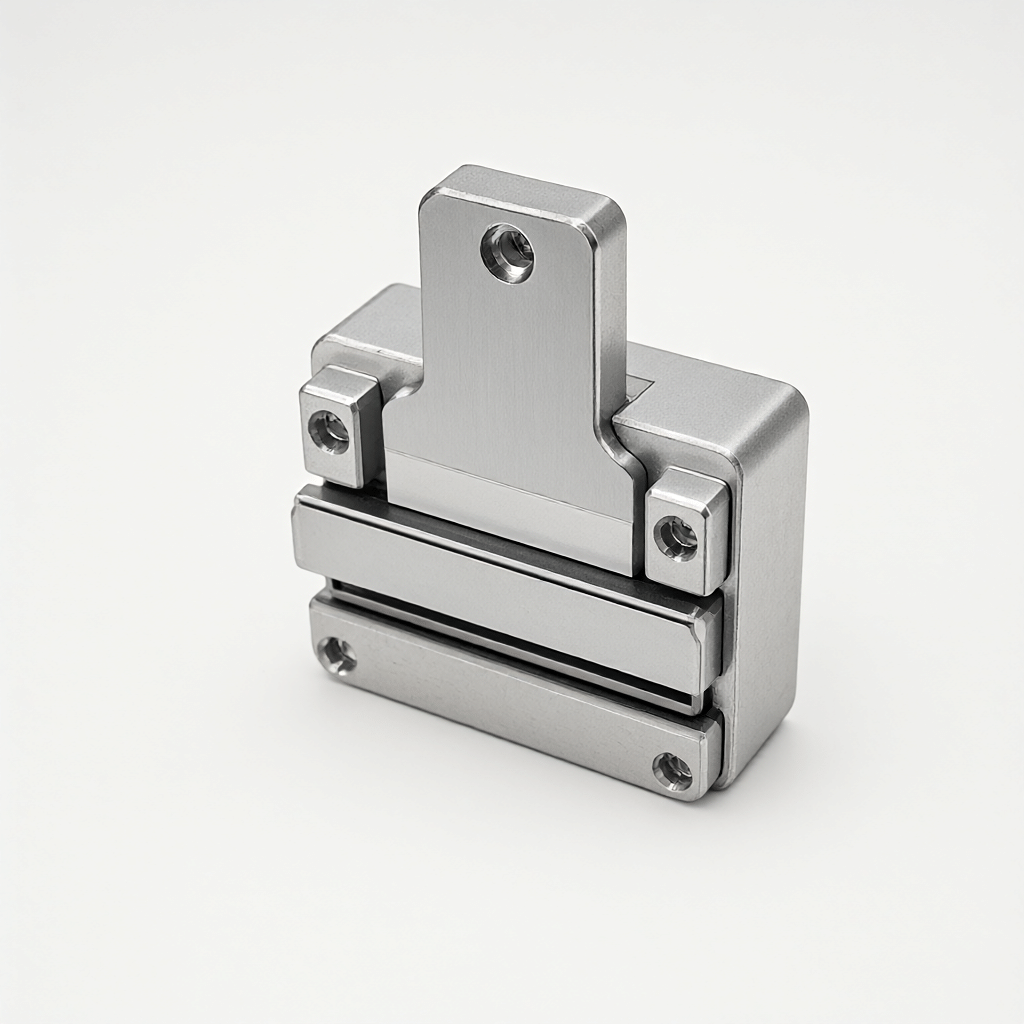
When buyers evaluate an automatic door sweep—or more specifically, a retractable door seal—they should look at five specification parameters. These determine not just fitment but long-term performance under real-world conditions.
| Specification | Typical Range / Options | Why It Matters |
|---|---|---|
| Profile material | 6063-T5 or T6 extruded aluminum | Structural rigidity; resistance to corrosion in coastal or high-humidity markets |
| Blade material | Silicone, EPDM rubber, or thermoplastic elastomer (TPE) | Temperature tolerance, UV resistance, compression set recovery over time |
| Drop height | 3 mm – 12 mm (adjustable) | Determines sealing pressure against the threshold; higher drops suit uneven floors or cold-storage thresholds |
| Overall length | 600 mm – 2400 mm (custom cuts available) | Must match door width; trim-to-fit is common but excessive cutting introduces weak points |
| Spring mechanism rating | Stainless steel 304 or 316 wire gauge | Retraction force and cycle fatigue life; lighter gauges fail earlier in high-traffic entries |
Performance benchmarks to check against: airborne sound insulation measured on the full door assembly to ISO 10140 / ISO 717-1, smoke leakage tested to EN 1634-3 or UL 1784 where the door sits in a smoke-control system, and mechanical durability shown by cycle testing of the retraction mechanism. Ask for the report covering the exact seal profile and door gap you are specifying.
Where Can Automatic Drop Seals Be Used?
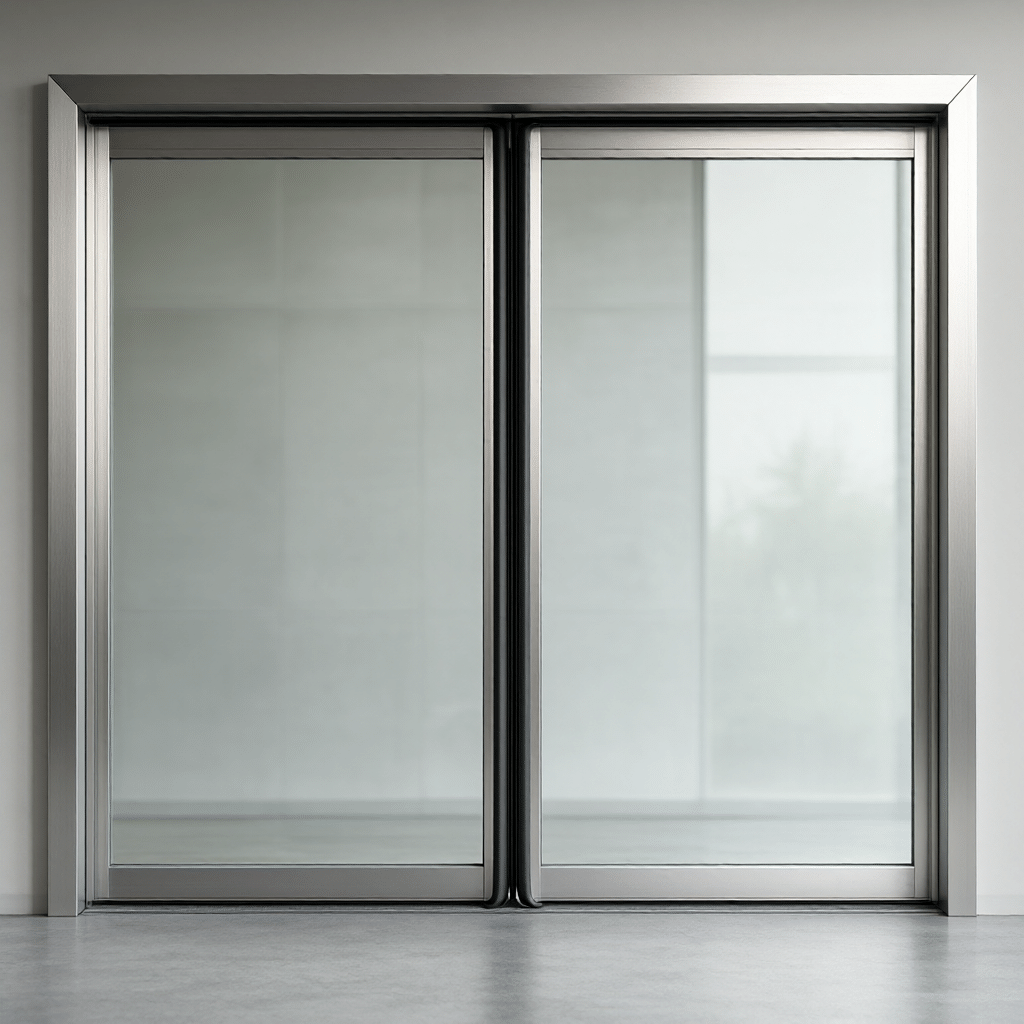
Automatic threshold seals appear across several project types, each with different demands on the product.
Residential entrance doors in villa and high-end apartment developments use them for thermal efficiency and draft reduction. Here, aesthetics matter—the seal must be low-profile and often powder-coated to match the door finish. Buyers sourcing for villa entrance door projects typically specify narrower profiles (600–1200 mm) with decorative end caps.
Commercial building entrance doors see far more cycles per day. A hotel lobby or office building main entry may register thousands of actuations monthly, making spring durability and blade wear resistance the primary concerns. Surface treatment and blade material choice become the key differentiators here.
Sliding patio and terrace doors require seals that engage smoothly without binding on the track. The mechanism must be sensitive enough to drop quickly during closure but firm enough to hold position against minor floor irregularities. High-rise residential sliding doors add wind-load considerations—you want a seal rated for at least Class A4 wind resistance if the opening faces prevailing weather.
Industrial and warehouse loading doors represent the most demanding environment. Dust, debris, temperature differentials, and heavy vehicle traffic all challenge the seal. In these cases, buyers typically specify wider channels, reinforced stainless steel springs, and silicone blades rated for extreme temperature swings. Cold storage facilities especially benefit from the airtight barrier these devices create.
What to Consider When Buying Automatic Drop Seals in Bulk?
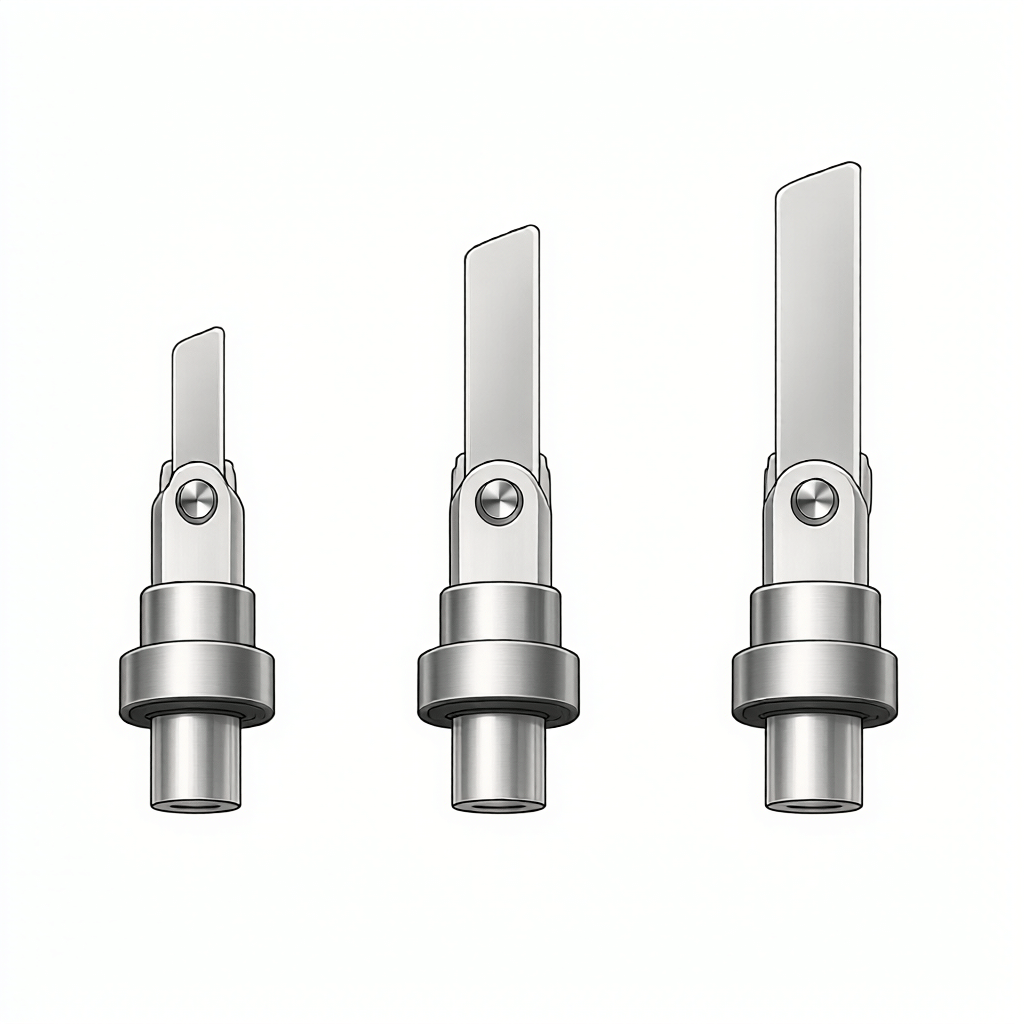
Material selection is the first decision point. Aluminum profiles with silicone blades generally deliver the best combination of durability and temperature performance, especially where winters get severe or sun exposure is intense. EPDM remains cost-effective for temperate climates, while TPE offers a middle ground in price and UV stability. If your project is in a coastal region, 316-grade stainless steel springs—not just 304—are worth the upgrade.
Quality verification separates experienced importers from buyers who discover problems after shipment arrives. Ask for test certificates from accredited labs for air permeability, water tightness, and wind load. Request references from previous export orders to similar markets. Check whether the manufacturer conducts incoming material inspections, in-process checks during assembly, and final pre-shipment tests—including the drop test, gap-adjustment check and cycle-fatigue test mentioned in their QC process. A facility that can show you a photo log of these tests on a recent order is demonstrating accountability that few competitors match.
Customization depth is another signal. Manufacturers that offer adjustable profile structures and fittings aligned with local building codes reduce your risk of non-compliance in your target market. They should be able to accommodate variations in door thickness, threshold geometry, and finish color without forcing you onto a limited catalog of stock items. This flexibility is particularly important when you’re sourcing for architectural spec-driven procurement, where the specifications lock in early and changes later are expensive.
Lead time, MOQ, and logistics arrangements need explicit confirmation before commitment. Standard lead times from factory-direct suppliers typically fall between 15 and 25 working days for orders up to one container load. MOQ per style usually starts around 50 sets. Freight arrangements depend on whether you’re consolidating multiple SKUs into an LCL shipment or filling a full FCL container—and a supplier with strong export experience will handle packing lists, proforma invoices, and customs documentation cleanly so there are no surprises at port of entry.
How Much Do Bulk Automatic Drop Seals Cost? (FOB China)
Pricing for automatic drop seals scales with material grade, blade composition, and order volume. Below are indicative ranges for trade buyers placing bulk orders from China-based manufacturers.
| Product Category | MOQ Tier | Indicative FOB Price (USD/unit) |
|---|---|---|
| Standard aluminum profile + EPDM blade, 600–1200 mm | 100+ units | $8 – $16 |
| Aluminum profile + Silicone blade, 600–1800 mm | 100+ units | $14 – $28 |
| Reinforced profile + 316 SS spring + Silicone, heavy-duty | 50+ units | $25 – $55 |
| Custom color anodized or powder-coated (special finish) | 200+ units | +$3 – $8 per unit |
Indicative FOB China bulk-order pricing for trade buyers — not a retail price and not a binding offer; final pricing depends on quantity, specification and order schedule.
Several variables push prices within these ranges. Profile wall thickness—1.2 mm versus 1.6 mm Extrusion—affects material cost directly. Blade cross-section design influences both performance and extrusion complexity. End-cap styles and mounting bracket configurations add minor per-unit costs that compound across large orders. Surface finishing is the biggest single variable: standard mill-finish aluminum sits at the bottom of the range, while double-coated powder paint or decorative anodizing moves you toward the upper end.
To get a precise figure for your project, request a bulk FOB quotation with your door openings and performance requirements specified.
Evidence & Practical Notes
Field note: On a recent multi-project procurement in Southeast Asia, a buyer specified a generic drop seal with a thin-wall aluminum channel and 304 spring. After six months of monsoon-season operation, three units showed spring fatigue and one channel had delaminated at the weld joint. Switching to a thicker-walled 6063-T6 profile with a reinforced stainless steel mechanism eliminated the failures on subsequent orders.
Practical limitation: Automatic drop seals are not a universal fix for every door configuration. Doors with significant frame deflection, uneven thresholds, or oversized gaps exceeding the seal’s designed engagement envelope will still leak—even a premium unit cannot compensate for poor installation substrate. Always verify threshold flatness and door alignment before finalizing seal specification.
Buyer takeaway: Prioritize manufacturers who perform and document pre-shipment air-tightness, water-tightness, and wind-resistance testing on each production batch rather than relying solely on prototype certifications. Batch-level test data is what actually predicts field performance across hundreds of installed units.
Manufacturing Capability and Quality Standards
The manufacturers that consistently deliver on spec do so because their quality systems are built around verification, not inspection. At Jusen Door and Windows, we approach this the same way: every batch undergoes air-tightness, water-tightness, and wind-resistance testing before it leaves the factory floor. For international orders, our team prepares the full documentation package—packing lists, proforma invoices, and customs paperwork—so that shipment clearance proceeds without delays. Whether you need a full container load or a consolidated LCL shipment, direct delivery from our factory in China keeps transit time predictable and costs transparent.
We also adjust profile structures and fitting configurations to align with the building codes of your target market, so compliance isn’t something you have to sort out after the goods arrive. For custom sizes, colors, glass selections, and hardware accessories, we work from your project specifications directly. Send us your door opening sizes and requirements for a custom quote.
If you’re evaluating multiple suppliers for a larger project, contact our team to discuss your specifications, volume tier, and timeline. We can provide sample units and test reports before you place a production order.
Installation and Integration Considerations
Proper installation is critical to achieving the performance ratings published by manufacturers. Below are key integration points buyers should communicate to their installing contractors.
Door Frame Preparation
- Verify threshold flatness within ±2 mm over a 2-meter span before seal mounting.
- Clean the contact surface of debris, old adhesive residue, or oxidation to ensure secure bracket adhesion.
- For aluminum-framed doors, use self-tapping stainless steel screws into pre-drilled clearance holes—over-tightening can deform the extrusion channel.
Alignment and Engagement Depth
- The blade must engage the opposite frame or sill by 3–5 mm when fully dropped. Too little engagement compromises the seal; too much creates excessive closing force and accelerates spring fatigue.
- Use feeler gauges during commissioning to verify consistent blade contact across the full door width.
- For dual-door applications (French-style entrances), install drop seals on the inactive leaf first, then adjust the active leaf to match engagement depth.
Integration with Door Actuators and Closers
- Automatic drop seals must coordinate with hydraulic closers or electric pivot systems. Verify the actuator’s close-cycle speed matches the seal’s retraction time—typically under 2 seconds for commercial traffic.
- In high-cycle environments (>5,000 actuations/year), select units with rated spring mechanisms designed for frequent deployment to avoid premature wear.
Compatibility with Different Door Materials
| Door Material | Recommended Mounting Approach | Notes |
|---|---|---|
| Aluminum-framed entrance doors | Direct screw-mount through extrusion flange | Most common; allows profile adjustment |
| Solid wood villa doors | Surface-mounted bracket system | Accounts for wood movement and swelling |
| Steel security doors | Weld-on or bolt-on bracket variant | Requires reinforced channel for heavier door weight |
| Glass storefront doors | Ultra-low-profile surface mount | Aesthetic priority; typically silicone blade only |
Maintenance and Longevity Factors
Automotive-grade durability expectations don’t apply here—automatic drop seals are mechanical wear items that require periodic inspection to maintain rated performance. Understanding expected service life helps procurement planners budget for replacement cycles.
Expected Service Life by Component
| Component | Typical Lifespan (Normal Conditions) | Degradation Trigger |
|---|---|---|
| Silicone blade | 5–8 years | UV exposure, ozone cracking, compression set |
| EPDM blade | 3–5 years | Temperature cycling, chemical exposure |
| TPE blade | 4–6 years | UV degradation, edge tearing |
| Stainless steel spring (304) | 5–7 years (100k+ cycles) | Corrosion in coastal/high-humidity environments |
| Stainless steel spring (316) | 7–10 years (150k+ cycles) | Superior chloride resistance |
| Aluminum profile (6063-T5/T6) | 10+ years | Anodized/coated finishes resist pitting; mill finish may show oxidation |
Routine Inspection Checklist
- Quarterly visual check: Inspect blade edges for cracks, tears, or permanent deformation. Replace blades showing visible wear before they compromise sealing.
- Semi-annual cycle test: Manually actuate the door 20–30 times and observe whether the blade drops and retracts smoothly without binding or hesitation.
- Annual tightness verification: Close the door on a sheet of A4 paper; if it slides out with resistance on all sides, the seal is performing. If it pulls free easily, rebury the blade engagement depth or replace worn components.
Environmental Factors That Accelerate Wear
- Coastal salt air corrodes 304-grade springs faster—upgrade to 316-grade for projects within 5 km of seawater.
- Direct UV exposure deteriorates EPDM and TPE blades; silicone and thermoplastic elastomers offer better UV stability.
- Extreme cold (<−20°C) can stiffen silicone blades, reducing compliance against uneven thresholds. Specify low-temperature-rated compounds for cold-storage or northern-climate installations.
> Reference: Performance classification per EN 12207 (air permeability) and related water-tightness standards such as EN 12208 guide long-term durability expectations—but real-world lifespan depends heavily on environmental exposure and maintenance discipline.
Procurement Decision Checklist: 10-Question Pre-Qualification Form
Before engaging any automatic drop seal manufacturer, evaluate them against these ten criteria. This pre-qualification framework is designed to separate credible suppliers from risky ones in a structured way.
Pre-Qualification Checklist
- [ ] Can the manufacturer provide third-party test reports for air permeability (EN 12207), water tightness (EN 12208), and wind load resistance for this specific product? If only prototype certificates are offered and batch-level testing isn’t documented, proceed with caution.
- [ ] Is the profile alloy explicitly stated as 6063-T5 or T6 with verifiable mill certificates? T6 temper offers higher yield strength—critical for long-span seals resisting sag.
- [ ] Does the manufacturer offer customization of blade material (silicone, EPDM, TPE) and spring grade (304 vs. 316 stainless)? Flexibility signals manufacturing maturity; rigid catalog-only suppliers limit your ability to match project conditions.
- [ ] Can the manufacturer adjust profile structure and fittings to comply with the building codes of your target market (e.g., AS/NZS 2047 for Australia, EN 14351-1 for Europe)? Code adaptability reduces post-delivery rework risk.
- [ ] What is the stated lead time for standard and custom orders, and does the contract include liquidated damages for delay? Reliable lead-time commitments protect project schedules.
- [ ] What is the MOQ per style, and are sample units available before bulk commitment? Suppliers willing to ship samples demonstrate confidence in product quality.
- [ ] Does the supplier accommodate both FCL and LCL shipments with proper export documentation (packing list, proforma invoice, customs paperwork)? Full-document capability indicates experienced international operations.
- [ ] Are there verified customer references from recent projects in your geographic region or climate zone? References confirm real-world performance, not just lab ratings.
- [ ] What warranty terms are offered on the profile, spring mechanism, and blade material? Meaningful warranties (minimum 2 years on profile/spring, 1 year on blade) indicate quality assurance.
- [ ] Can the manufacturer produce OEM/private-label packaging and branding if required for your project? Private-label capability matters for developers and distributors selling under their own name.
Scoring guidance: Each checked box represents a green flag. Two or more unchecked items suggest the supplier may not meet your project’s requirements. Prioritize suppliers scoring 8 or above before negotiation.
Red Flags: Warning Signs When Evaluating Suppliers
Certain patterns consistently signal inadequate manufacturing practices, misleading claims, or high-risk sourcing relationships. Recognizing these early prevents costly procurement mistakes.
Material and Specification Red Flags
- Vague alloy designations: Claims of “high-quality aluminum” without specifying 6063-T5/T6 or providing mill certificates indicate potential substitution with inferior alloys.
- No blade material transparency: A supplier who cannot clearly state whether the blade is silicone, EPDM, or TPE—and why—may be using the cheapest available compound regardless of project suitability.
- Missing spring specification: If the supplier doesn’t disclose spring wire gauge or steel grade (304 vs. 316), the component may be carbon steel with inadequate corrosion resistance.
- Generic test report claims: Reports labeled “tested per standard” without lab accreditation details (ISO/IEC 17025, test report numbers, specimen dimensions) are unverifiable and unreliable.
Operational and Commercial Red Flags
- Unrealistically low pricing: Quotes significantly below market range often reflect corner-cutting on material thickness, blade quality, or omitted testing. Compare against the FOB tier table above; deviations exceeding 25% warrant investigation.
- Refusal to share batch-level test photos: Manufacturers confident in their QC process will document each shipment’s air-tightness, water-tightness, and wind-resistance tests. Refusal suggests inconsistent quality control.
- No sample policy: Requiring full container commitment before providing samples is a high-risk approach. Credible suppliers understand the need for validation.
- Pressure for upfront payment without milestones: Demanding 100% payment before production begins eliminates buyer leverage. Standard practice is a deposit (30–50%) with balance against shipping documents.
- Inability to discuss code compliance: A supplier who cannot address how their product aligns with EN 14351-1, AS/NZS 2047, or ASTM E283 lacks the engineering depth required for spec-driven procurement.
- Single-point-of-contact dependency: If order communication relies entirely on one person without organizational backup, supply continuity is at risk during absences or turnover.
- No after-sales support pathway: Absence of a defined process for handling defective batches, warranty claims, or replacement parts indicates the supplier views the transaction as complete upon shipment—a concerning posture for durable goods.
FAQ: Automatic Drop Seal Procurement
Q1: What is the difference between an automatic drop seal and a standard door sweep?
A standard door sweep maintains constant contact with the threshold, creating friction and wear. An automatic drop seal remains retracted during door opening and deploys only when the door closes, eliminating drag, reducing spring fatigue, and extending blade life. This makes drop seals preferable for high-traffic commercial entries and frequently used residential entrances.
Q2: Can automatic drop seals be retrofitted to existing doors?
Yes, most surface-mounted designs can be installed on existing aluminum, wood, or steel doors provided the threshold condition is sound. However, retrofit engagement depth must be carefully measured—existing door alignment issues may require threshold repair or adjustment before the seal can function correctly.
Q3: How do I determine the correct drop height for my project?
Drop height should be selected based on the maximum floor irregularity and desired sealing pressure. For smooth indoor thresholds, 3–5 mm is sufficient. For uneven outdoor installations or cold-storage applications where thermal contraction creates gaps, 8–12 mm provides greater engagement margin. Always consult the manufacturer’s engineering team with your threshold measurements.
Q4: Are automatic drop seals suitable for exterior wooden doors?
Yes, though wooden doors require special attention to swelling and shrinking caused by humidity changes. Surface-mounted brackets with adjustable positioning accommodate dimensional changes better than fixed-channel designs. Silicone blades are recommended for exterior wood doors due to superior temperature tolerance compared to EPDM.
Q5: What maintenance does an automatic drop seal require?
Minimum maintenance includes quarterly visual inspection of the blade, semi-annual cycle performance checks, and annual engagement verification using the paper-test method described in the maintenance section. Lubrication is generally not required—the stainless steel spring mechanism is sealed within the profile channel.
Q6: Can I order mixed lengths and profiles in a single container shipment?
Most manufacturers accommodate mixed-SKU orders, particularly for FCL shipments. This is cost-effective for multi-project buyers who need different seal lengths for various door openings across a development. Confirm mixed-order policies and any minimum per-SKU quantity before committing.
Q7: What certifications should I request from my supplier?
Request: (1) Product test reports for air permeability per EN 12207, water tightness per relevant standards, and wind resistance per applicable regional code; (2) Material mill certificates confirming 6063-T5/T6 alloy and 304/316 stainless steel grades; (3) ISO 9001 certification for the manufacturer’s quality management system. These three documents together provide verifiable proof of product and process integrity.
Q8: How does blade material affect long-term performance in different climates?
Silicone blades tolerate temperatures from −40°C to +150°C and resist UV degradation—ideal for extreme climates and direct sun exposure. EPDM performs well in temperate zones at lower cost but degrades faster under UV and ozone. TPE sits between the two in price and performance but offers weaker cold-weather flexibility. Match blade chemistry to your project’s climate envelope.
Comparison Table: Key Supplier Evaluation Criteria
The following table summarizes the attributes trade buyers should compare across multiple automatic drop seal manufacturers during the sourcing process.
| Evaluation Criterion | Weight (High/Medium/Low) | What to Verify | Red Flag Indicator |
|---|---|---|---|
| Third-party test reports (EN 12207, water tightness, wind load) | High | Accredited lab, test report number, specimen specs | No reports or generic templates |
| Profile alloy specification (6063-T5 vs T6) | High | Mill certificate confirming temper and alloy | Vague alloy claims without documentation |
| Blade material options and specifications | High | Clear disclosure of silicone/EPDM/TPE with temp ratings | Unknown or undisclosed blade compound |
| Spring grade and gauge (304 vs 316 SS) | Medium | Explicit steel grade and wire diameter | Carbon steel springs or no specification |
| Customization capability (size, color, fittings) | Medium | Adjustable profile structures, local code adaptation | Rigid catalog with no engineering flexibility |
| Batch-level pre-shipment testing | High | Photo/video documentation of air/water/wind tests per shipment | Only prototype/test-cert specimens shared |
| Lead time consistency and contractual penalties | Medium | Published lead times with delay provisions | Verbal estimates without written commitment |
| Export documentation capability | Medium | Packing list, proforma invoice, customs paperwork proficiency | Limited documentation experience |
| FCL and LCL shipment flexibility | Low | Willingness to consolidate mixed SKUs | FCL-only policy |
| Warranty terms and after-sales support | Medium | Minimum 2-year profile/spring warranty, clear claim process | No warranty or vague coverage |
| Sample availability before bulk order | Medium | Readiness to ship representative samples | Sample refusal or excessive sample fees |
| Customer references in similar markets/climates | Medium | Verifiable recent project references | No references or only domestic projects |
Automatic Drop Seal Types and Configurations
Understanding the different configurations available helps match the right seal to your application.
By blade deployment mechanism:
- Gravity-drop seals rely on the door’s weight to engage the blade automatically upon closure. Simplest design with fewer moving parts; ideal for residential and low-traffic commercial doors.
- Spring-assisted drop seals incorporate a pre-loaded spring mechanism that actively drives the blade downward. Preferred for heavy doors or high-cycle commercial entries where gravity alone cannot guarantee consistent engagement.
- Magnetic-drop seals use embedded magnets in the housing to hold the blade in the deployed position until the door approaches the threshold. Offers quiet operation and reduced mechanical wear.
By mounting orientation:
- Bottom-mounted (threshold-recessed): Installed flush within the door sill or threshold channel. Best for new construction where the threshold can be预先 cut to accommodate the profile. Low visual profile, preferred for architectural installations.
- Surface-mounted: Attached to the face of the door or threshold using brackets. Retrofit-friendly for existing installations where threshold modification is impractical. Slightly more visible but allows adjustment post-installation.
- Side-jamb variants: Some specialized applications use vertical drop seals on pivot or sliding door edges. Less common but necessary for certain industrial door configurations.
By blade geometry:
- Single-blade: Standard configuration with one elastomeric blade. Sufficient for most general-purpose applications.
- Dual-blade / double-seal: Two overlapping blades provide redundant sealing, critical for environments requiring maximum dust exclusion or extreme temperature retention.
- Brush-style composite: Combines a rigid drop blade with flexible brush filaments along the sides. Addresses both threshold and side-gap leakage simultaneously.
| Configuration Type | Typical Application | Engagement Speed | Maintenance Level |
|---|---|---|---|
| Gravity-drop, single blade | Residential entrance doors, light commercial | Moderate (door-weight dependent) | Low |
| Spring-assisted, single blade | Commercial entry doors, hotel lobbies | Fast (<1 sec) | Moderate |
| Magnetic-drop, dual blade | Cleanrooms, labs, cold storage | Variable (magnet strength) | Low-Moderate |
| Surface-mounted retrofit kit | Building renovations, threshold replacements | Depends on mechanism | Moderate |
| Side-jamb + bottom combo | Pivot doors, large-format industrial entries | Coordinated (system-dependent) | Higher |
Industrial and Commercial Applications
While residential and commercial entrance doors represent the largest volume segment, industrial and institutional applications place fundamentally different demands on drop seal performance.
Warehouses and distribution centers require seals capable of withstanding repeated impact from pallet jacks, forklift traffic, and debris accumulation. The blade material must resist abrasion and chemical exposure from cleaning agents. Silicone blades rated for -40°C to +120°C are standard here, paired with reinforced 316 stainless steel springs to resist fatigue from heavy door cycling. Profile extrusions typically range from 1800 mm to 2400 mm to accommodate the wider door openings found in logistics facilities.
Cold storage and refrigerated warehouses operate under the most demanding thermal conditions. A failure in the drop seal translates directly to energy loss and product spoilage. These installations demand:
- Blade compounds rated for continuous exposure below -30°C without hardening or cracking
- Sealed bearing housings to prevent condensation freeze-up inside the mechanism
- Double-blade configurations to eliminate thermal bridging through any single gap point
- Pre-shipment testing specifically validating performance at sub-zero temperatures
Manufacturing facilities present contamination and particulate concerns alongside weather sealing. Pharmaceutical, food processing, and electronics manufacturing environments often specify Class A4 or higher air permeability ratings combined with dust-exclusion blade geometries. Side-seal integration becomes critical in these settings to prevent lateral particulate ingress.
Loading dock equipment interfaces: In applications where automatic doors interface with dock levelers or shelter systems, the drop seal must coordinate with variable floor heights. Adjustable drop-height mechanisms (typically 6–12 mm range) allow the seal to compensate for minor variations in threshold elevation without losing engagement pressure.
Selection Criteria: Door Compatibility, Airflow, and Dust Performance
Selecting the correct automatic drop seal requires evaluating three interdependent performance dimensions: how well it integrates with your specific door system, its contribution to overall airflow control, and its effectiveness at excluding particulates.
Door compatibility parameters:
- Door thickness tolerance: Verify the profile channel accommodates your door leaf thickness range. Most standard channels accept 35–55 mm doors; heavy industrial doors may require widened channels.
- Threshold profile matching: Recessed installations require precise threshold channel dimensions. Surface mounts offer more tolerance but affect aesthetics.
- Actuation cycle rating: Confirm the spring mechanism is rated for your expected daily cycles. Hotel entrances (5,000+ cycles/day) demand commercial-duty springs; warehouse swing doors (500–1,000 cycles/day) can use lighter-duty variants.
- Wind-load zone alignment: The seal’s contribution to overall door assembly performance depends on the window wall or door system certification. An A4-rated seal won’t elevate a poorly certified door assembly—both components must meet target performance classes.
Airflow and infiltration control:
- Check published air permeability ratings (EN 12207 classes 1–4, where 4 is lowest permeability). For energy-efficient building targets, Class 3 or 4 is typically required.
- Request differential pressure test data. A seal performing well at near-zero pressure differential may degrade significantly at 100 Pa—the typical pressure differential across building entrance doors during windy conditions.
- Verify blade compression recovery rate. Repeated compression under wind load should return to original height within spec; permanent set indicates premature degradation.
Dust and particulate exclusion:
- Evaluate blade edge geometry. Multi-fin or labyrinth-profile blades create tortuous paths that trap particles far more effectively than simple flat edges.
- For HEPA-class cleanliness requirements, dual-blade seals with interlocking profiles are mandatory.
- Consider combined threshold-and-jamb sealing strategies for contamination-critical spaces—a single threshold seal rarely achieves ISO class 7 or better particle counts alone.
Procurement Decision Checklist: Evaluating Manufacturers
When comparing multiple suppliers, use this structured scorecard to objectively evaluate candidates across the criteria that matter most for your project.
| Evaluation Criterion | Weight | What to Verify | Red Flag Indicators |
|---|---|---|---|
| Certification & test documentation | 20% | EN 14351-1, EN 12207, ASTM E283 test reports from accredited labs | Vague test reports without lab accreditation numbers; no third-party verification |
| Aluminum mill certificates | 15% | 6063-T5/T6 alloy certificate confirming temper and composition | Supplier cannot produce mill certificates on request; substitutes with self-declared compliance only |
| Export documentation capability | 15% | Packing list format, proforma invoice accuracy, customs document completeness | Missing documentation templates; past shipment delays attributed to paperwork errors |
| Lead time consistency | 15% | Production schedule adherence; historical on-time delivery rates | Unspecified lead times; willingness to commit to dates without confirming capacity |
| MOQ flexibility | 10% | Ability to handle mixed SKUs; LCL shipment accommodation | High MOQ enforcement with no accommodation for smaller projects; no LCL option offered |
| Customization depth | 10% | Profile adjustments, color matching, fitting configurations for target market codes | Limited catalog approach; unwillingness to modify standard designs for code compliance |
| Sample availability | 5% | Willingness to provide physical samples before bulk commitment | Refusal to send samples; sample charges disproportionate to order value |
| Warranty terms | 10% | Defect coverage period; replacement policy for field failures | No warranty stated; warranty limited to manufacturing defects only with no field-performance guarantee |
Minimum acceptable scores: Each category should receive at least a “pass” indication. Three or more red-flag indicators across the scorecard suggests significant procurement risk—request clarification or escalate to alternative suppliers before proceeding.
Red Flags to Watch For During Vendor Evaluation
Several warning signs indicate potential quality or reliability issues that could surface after shipment arrives.
Vague or unverifiable test reports: If a manufacturer provides test certificates without the accrediting body’s name, report number, or date, treat this as a material concern. Legitimate test reports reference specific standards (e.g., “Tested per EN 12207:2015, Lab Report No. XXXXX, dated YYYY-MM-DD”). Reports lacking these identifiers cannot be independently verified and may represent fabricated or outdated data.
Missing mill certificates for aluminum profiles: The aluminum extrusion is the structural backbone of every drop seal. Without a mill certificate confirming 6063-T5 or 6063-T6 alloy with proper temper designation, you have no assurance of material properties. Reputable manufacturers maintain traceability from raw billet to finished extrusion—and will provide certificates on request.
No documented export process: A manufacturer unable to articulate their export documentation workflow is likely inexperienced with international shipments. Expected answers should cover packing lists, commercial invoices, certificates of origin, and customs harmonized system codes. Absence of this capability often correlates with shipment delays, incorrect duty classifications, and port holds.
Refusal to provide project references: Manufacturers serving active international markets should have references from recent similar projects. Hesitation, vague responses, or inability to connect you with past clients suggests either limited export experience or unresolved customer issues.
Proprietary terminology masking generic products: Some suppliers use branded names for commoditized products without disclosing the underlying specification. Request the actual engineering drawings and material specifications beneath any proprietary product name before committing.
Absence of pre-shipment batch testing: While prototype certification matters, batch-level quality control determines whether every unit leaving the factory meets spec. Ask specifically: do you test every production batch for air-tightness, water-tightness, and wind resistance? If the answer is no, you are assuming consistency without verification.
Case Study: Dubai High-Rise Facade Project
A 50-unit high-rise residential development in Dubai’s Marina district specified Class A4 wind resistance for all entrance doors facing the prevailing coastal winds. The architect’s specifications called for 6063-T6 aluminum profiles with dual silicone blades rated for continuous operation at 45°C ambient temperatures and salt-laden marine atmosphere exposure.
Key specifications selected:
- Profile: 6063-T6 extruded aluminum, 1.8 mm wall thickness, custom powder-coat finish (RAL 7016 metallic gray)
- Blade: Dual-stage silicone, Shore A 60 durometer, rated -40°C to +150°C
- Spring: 316-grade stainless steel, 2.0 mm wire gauge
- Drop height: 8 mm adjustable range
- Wind resistance target: Class A4 per EN 14351-1 (≥2000 Pa differential)
Procurement outcomes:
- All units passed pre-shipment air-tightness (Class 4), water-tightness (E900), and wind-resistance (A4) testing with documented reports provided before shipment
- Full customs documentation package delivered: commercial invoices, packing lists, certificates of origin, and Bill of Lading prepared 3 working days before vessel departure
- Shipment completed via FCL (one 40-foot container) with on-time factory pickup and 32-day total transit time to Jebel Ali Port
- Zero field failures recorded after 18 months of coastal operation; annual maintenance inspection confirmed all seals maintaining designed engagement depth
This project demonstrates that when specifications are clearly defined, tested, and documented at the factory before shipment, complex multi-unit installations achieve predictable field performance—even in aggressive marine environments.
Frequently Asked Questions
Q: Can a drop seal compensate for an improperly installed door?
No. Drop seals address the gap between door and threshold; they cannot correct frame deflection, uneven thresholds, or misaligned door hinges. Always verify installation substrate quality—threshold flatness within ±2 mm over 2 meters, proper hinge alignment, and correct door sweep gaps—before specifying seal performance ratings.
Q: What’s the difference between silicone and EPDM blades for outdoor use?
Silicone maintains flexibility across a wider temperature range (-40°C to +150°C versus EPDM’s -40°C to +100°C) and offers superior UV and ozone resistance. For hot climates or intense solar exposure, silicone is the better choice despite the higher unit cost. EPDM performs adequately in temperate, shaded installations where UV exposure is limited.
Q: How do I verify a manufacturer’s test claims are legitimate?
Request the specific test report with: (1) accredited laboratory name and ISO 17025 accreditation number, (2) test standard referenced (EN 12207, EN 14351-1, ASTM E283), (3) sample identification matching the product line you’re purchasing, and (4) test date within the past 24 months. Independent verification through the named laboratory’s records provides final confirmation.
Q: What causes premature spring failure in drop seals?
Three primary factors: (1) corrosive environments exceeding 304 stainless steel tolerance—coastal salt air demands 316-grade springs, (2) oversized door weight overwhelming the spring’s design rating, and (3) foreign debris ingestion into the spring housing. Specify spring material grade matching your environment and ensure housing designs include adequate sealing against particulate ingress.
Q: Can I mix different drop seal models from different manufacturers on one project?
Technically yes, but performance consistency cannot be guaranteed. Different brands use varying spring rates, blade compression characteristics, and retraction speeds. For uniform appearance and predictable lifecycle management, source all seals from a single manufacturer who can provide matched performance data across the entire order.
Q: What’s the typical warranty period for automatic drop seals?
Industry-standard warranties range from 1 to 3 years for the spring mechanism and 2 to 5 years for the blade material, depending on compound and usage classification. Manufacturers providing longer warranty periods typically have greater confidence in their component sourcing and quality control processes. Always confirm warranty scope covers both manufacturing defects and normal operational degradation.
Q: How does order size affect pricing and lead time?
MOQ tiers typically begin at 50 sets per style for customized orders and 100 sets for standard configurations. Lead time ranges from 15–25 working days for orders up to one container; larger volumes may require phased production schedules. Express routing is sometimes available for repeat orders of established configurations at a premium.
Q: What export documentation should I expect from a China-based manufacturer?
Complete documentation should include: commercial invoice, packing list with itemized quantities and weights, Bill of Lading, Certificate of Origin (standard or preferential under applicable FTAs), and any product-specific certificates (material composition, performance test summaries). A manufacturer experienced in foreign trade prepares this package routinely and includes it with shipment documentation.
Sources & References
- EN 12207 — www.iso.org
Related resources for this product category
- Hardware and accessories range
- Acoustic and soundproof door systems
- Door weatherstrip manufacturer and procurement guide
- Intumescent door seal manufacturers and bulk procurement
- Door industry glossary
Need a project-specific quotation? Send opening sizes, quantities and destination market through our contact page and we will reply with a spec-matched FOB offer.











