
Last updated: November 26, 2026
Looking for a reliable arched doors manufacturer for bulk orders? You need a supplier who can engineer custom curved profiles, provide documented air-tightness/water-tightness/wind-load test reports, customize sizes and finishes to match local building codes, and handle full export documentation—typically delivering within 25–45 days at prices ranging from USD 280 per unit for standard aluminum models to USD 600+ for custom solid-wood or premium configurations.
Quick Overview
A reliable arched doors manufacturer for bulk procurement is one that combines structural engineering capability for curved profiles with documented air-tightness, water-tightness, and wind-load testing, offers full customization of dimensions, finishes, glass inserts, and hardware, and provides export-ready documentation including packing lists, proforma invoices, and customs paperwork. Buyers should expect lead times of roughly 25–45 days depending on material and order volume, and bulk pricing that starts around USD 280 per unit for standard segmental-arch entry doors and rises to USD 600+ for custom configurations with high-performance glazing or solid-wood construction. The most qualified suppliers adjust their profile structures and fittings to match local building codes of each target market rather than relying on a single fixed design.
Specifications
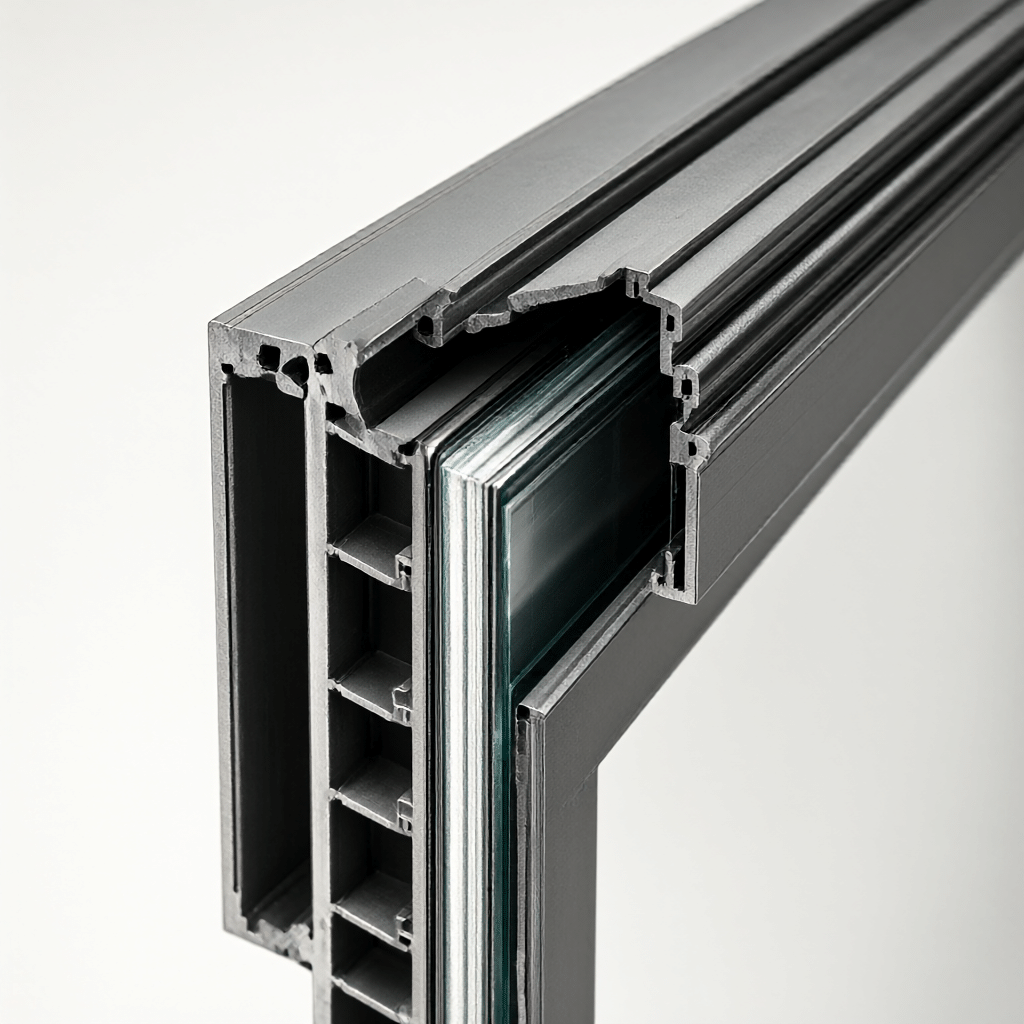
What are the key specifications of arched doors?
Arched doors are defined by three geometric and performance parameters — arch radius, opening height, and structural span — together with the material system and glazing configuration. Below is a comparison of the most common bulk configurations available from Chinese manufacturing bases.
| Arch Type | Typical Height Range | Profile Material | Glass Insert Option | Air-Tightness (typical) | Water-Tightness (typical) | Wind Load Rating |
|---|---|---|---|---|---|---|
| Segmental arch (flat top curves into arch) | 2000–2600 mm | Thermally broken aluminum / uPVC / solid wood | Single or double glaze up to 24 mm | Grade 4 – 6 (ASTM E283) | Grade 2 – 4 (ASTM E331) | Up to 4.8 kPa (per design) |
| Round-top / full semicircular arch | 2200–3000 mm | Solid wood / aluminum-clad wood / steel | Triple glaze options available | Grade 4 – 5 | Grade 3 – 4 | Up to 3.6 kPa |
| Curved side-hung (casement) arch | 2000–2700 mm | Aluminum / uPVC | Double glaze | Grade 5 – 6 | Grade 3 – 4 | Up to 5.0 kPa |
| Arched sliding / patio door | 2100–2800 mm | Aluminum | Double/triple glaze | Grade 4 | Grade 3 | Up to 4.0 kPa |
Performance labels above reference the test categories established under ASTM International standards for fenestration products, which govern infiltration, penetration resistance, and structural load testing. Manufacturers should be able to produce test reports matching these categories for any specified product line.
Core customization parameters that every buyer should specify before requesting a quote:
- Arch radius and keystone detail: Segmental, elliptical, or true semicircular — each affects the tooling needed and the lead time.
- Profile depth and wall thickness: For thermally broken aluminum, minimum 60 mm frame depth and 1.4–2.0 mm wall thickness are industry norms for exterior application.
- Glazing type: Double-glazed (IGU) as standard; triple-glazed and low-E coated units available for cold climates.
- Hardware selection: Multi-point locking systems, hinge placement, and handle finish should align with local security and accessibility requirements.
- Finish and color: Powder-coat RAL ranges, anodized, or wood-grain foil; color consistency across an entire project batch is critical.
Applications
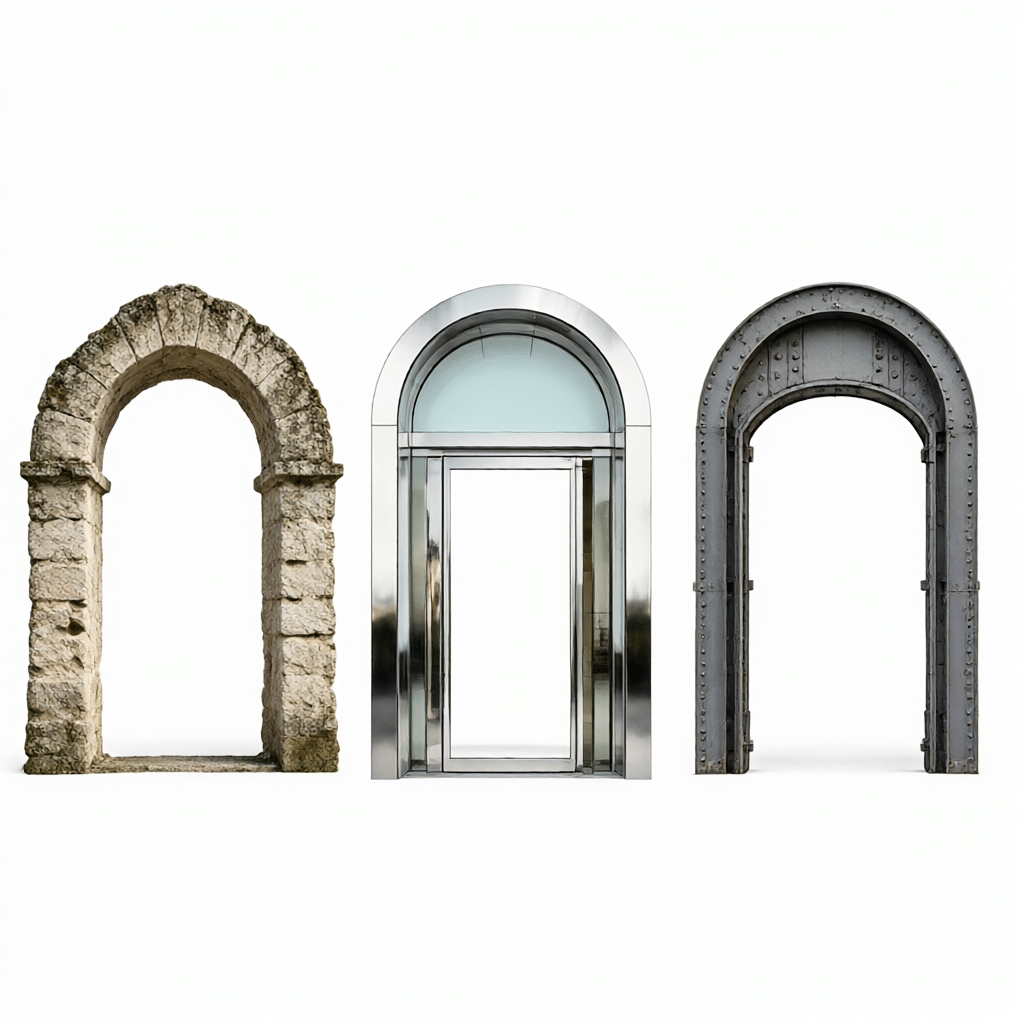
Where can arched doors be used?
Arched entrance doors span both residential and commercial segments. The profile geometry is selected to complement the architectural style while meeting structural and weather performance demands of the application.
- Luxury villa projects — round-top or semi-circular arched doors serve as main entrance statements, typically in solid wood or aluminum-clad wood with decorative ironwork or high-end multi-point locks.
- Hotel guest room and suite entrance doors — segmental arch aluminum doors with integrated sidelights provide a balanced mix of aesthetics, durability, and cost efficiency for hospitality corridors.
- Multi-unit residential buildings — bulk procurement of uniform arched patio or balcony doors with consistent glazing specs and standardized hardware packages.
- Commercial and institutional facades — wider arched openings requiring engineered structural reinforcement, often in steel-core or heavy-gauge aluminum frames.
- Architectural renovation projects — existing rectangular openings adapted with arched transoms or curved insert doors, requiring precise field measurement and fabrication tolerance.
When sourcing for these applications, the buyer should confirm with the manufacturer whether the arch design has been previously tested for the target climate zone and wind-speed corridor.
Buying Factors
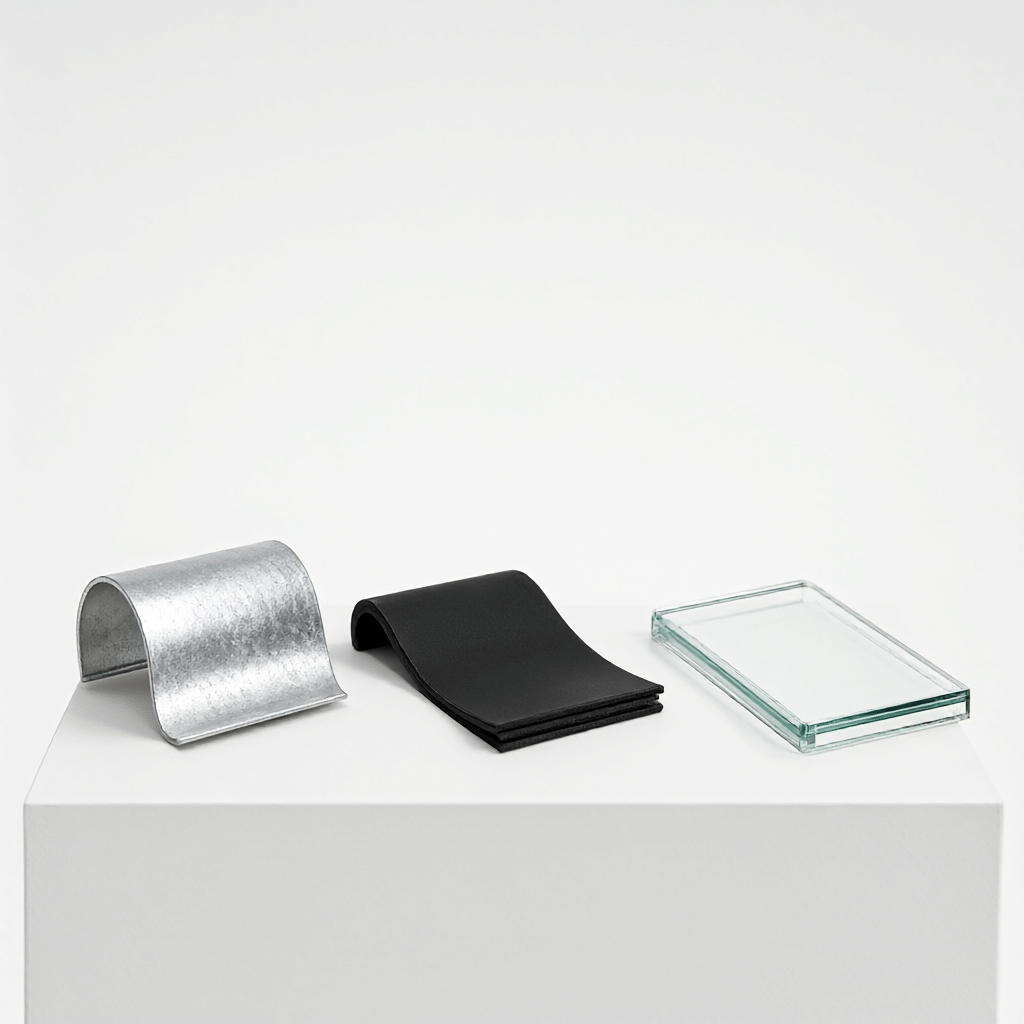
What to consider when choosing an arched door manufacturer?
The following criteria form a practical evaluation framework for ranking potential suppliers during the procurement process.
1. Structural engineering capability for curved profiles
Unlike flat-panel doors, arched doors carry uneven stress distribution along the curve. A competent manufacturer uses reinforced corner joints, intermediate mullions where required, and validated connection details between the arch head and the stile. Buyers should ask for structural calculations or past project records demonstrating compliance with local code load requirements.
2. Documented quality testing
Every supplier should provide test certificates for air infiltration, water penetration, and wind resistance. Without test data, claims about performance remain unsubstantiated. Look for test reports aligned with recognized standards from ISO or ASTM bodies covering fenestration product classification.
3. Customization flexibility
Full customization includes not only size but also profile structure adaptation to meet regional building codes, glass unit specifications suited to the climate zone, and hardware selections compatible with local accessibility and security regulations. Inquire whether the factory adjusts its extrusion or joinery processes specifically for the buyer’s destination market.
4. Export documentation competence
Bulk international orders require accurate packing lists, commercial invoices, bills of lading, and country-specific certificates of origin. Suppliers experienced in foreign trade manage this documentation routinely and avoid shipment delays caused by missing paperwork.
5. Packaging and container loading optimization
Arched doors are larger and more fragile than standard rectangular units. Proper packaging — usually individual foam wrapping with corrugated edge guards — minimizes damage risk during transit. Efficient container loading, whether FCL or LCL, reduces per-unit freight cost.
6. Lead time reliability
Typical production lead times for custom arched doors range from 25 to 45 days after deposit confirmation and approved drawings. Delays are most often caused by late drawing approval, material substitution requests, or peak-season scheduling conflicts. Establish realistic timelines early in the engagement.
Can arched doors be customized to match local building codes?
Yes. Code compliance for arched entrances depends on structural rating, energy performance, and sometimes fire-rating requirements specific to the destination country. Manufacturers who specialize in export markets adapt their profile structures, gasket systems, and hardware configurations to meet the referenced codes of target regions such as ICC (International Code Council) requirements in North America or EN standards in Europe. Buyers should share the applicable code references with their supplier during the specification phase.
Do you provide interior and exterior arched doors?
Both interior and exterior grades are available, but they differ significantly in performance requirements. Exterior arched entrance doors carry weather-sealing gaskets, multi-point locks, and higher wind-load ratings, while interior decorative arch doors focus primarily on aesthetic finish and dimensional stability without weather-performance testing. Specify the intended application clearly to avoid mis-specification.
Price & Cost
How much do bulk arched doors cost? (FOB China)
The table below shows indicative bulk-order pricing for common arched door configurations supplied FOB China. Prices vary based on material, glass configuration, hardware grade, and order quantity.
| Configuration | Dimensions (H×W) | Material | MOQ Tier | FOB Price (USD/unit) |
|---|---|---|---|---|
| Segmental arch entry door | 2200 × 900 mm | Thermally broken aluminum, single glaze | 50–99 sets | $280 – $360 |
| Segmental arch entry door | 2200 × 900 mm | Thermally broken aluminum, double glaze | 50–99 sets | $340 – $440 |
| Round-top villa entrance door | 2400 × 1000 mm | Solid wood, single glaze | 30+ sets | $520 – $680 |
| Curved casement arch door | 2100 × 1200 mm | Aluminum, double glaze, multi-point lock | 50–99 sets | $380 – $520 |
| Arched patio/sliding door | 2200 × 1800 mm | Aluminum, double glaze | 30+ sets | $420 – $580 |
| Premium ornamental arched door | 2600 × 1200 mm | Aluminum-clad wood, triple glaze | 20+ sets | $650 – $950 |
Indicative FOB China wholesale price for trade buyers — not a retail price and not a binding offer; final pricing depends on quantity, specification and order schedule.
Total landed cost should also factor in sea freight (typically USD 80–200 per unit depending on origin port and destination), insurance, customs duties, and inland transportation at the receiving end. For project-specific budgeting, a detailed quotation incorporating all variables is recommended before placing the purchase order.
Request a bulk FOB quotation for your project
Send us your opening sizes for a custom quote
Evidence & Practical Notes
Field note: Arched doors sourced for hotel or villa projects often fail quality inspection not because of poor craftsmanship but due to inadequate protection during container stacking — corners and arch heads absorb impact easily if boxes are nested without proper interlayer padding. Requesting a detailed packaging method description before confirming the order can prevent costly on-site replacements.
Practical limitation: Full semicircular arch doors (round-top) require custom tooling for the arch head profile, which increases setup time and raises the effective MOQ compared to segmental arch designs. Buyers with smaller order quantities should evaluate whether a segmental alternative achieves the desired aesthetic at a lower unit cost and shorter lead time.
Buyer takeaway: When evaluating suppliers, prioritize those who present test certificates alongside their specification sheets. Verifiable performance data — especially air infiltration and water-tightness ratings against recognized standards — separates manufacturers who engineer their products from traders who simply resell generic configurations.
Selecting Your Arched Door Manufacturer
Here is how we meet these standards
As a manufacturer specializing in solid wood doors, thermal-break aluminum doors and windows, system windows, casement and sliding doors, custom villa doors and windows, sunrooms, and aluminum alloy entrance doors, our approach to arched door production follows the same procurement criteria described above.
We supply directly from our factory without middleman markup, offering full customization on size, color, glass, and hardware accessories so each order matches the exact project specification. Before shipment, every arched door undergoes strict pre-shipment testing for air-tightness, water-tightness, and wind resistance — the same categories referenced by ASTM standards — ensuring performance aligns with the claims made on paper.
Our team has extensive experience handling foreign trade documentation, including packing lists, proforma invoices, and full customs paperwork, so shipments clear efficiently at destination ports. Whether the order qualifies for FCL or LCL shipment, we optimize container loading to protect the arched profiles and minimize per-unit freight cost, delivering directly from our China factory.
Critically, we adjust profile structures and fitting configurations to comply with the local building codes of each target market. This means an arched door destined for one region may carry different reinforcement or sealing details than the same model shipped elsewhere — and our engineering team accommodates that variation without compromising the overall design integrity.
Certifications, Testing & Compliance Standards
Energy, Security, Accessibility, and Fire-Rating Certifications
Beyond air-tightness, water-tightness, and wind-load performance, bulk arched door buyers should also verify certifications in four additional compliance domains. Each domain addresses a distinct regulatory or market requirement and affects product design differently.
| Certification Domain | Relevant Standard / Rating | Typical Test Method | Design Impact |
|---|---|---|---|
| Energy efficiency | U-value / SHGC per EN 10077 or NFRC | Guarded-hot-box test (EN ISO 12567) | Triple glazing, low-E coatings, warm-edge spacers, argon fill |
| Security resistance | RC2 / RC3 per EN 1627–1629 | Forced-entry simulation with tools | Multi-point locks, anti-drill hardware, reinforced stiles |
| Accessibility clearance | ADA / EN 15212 opening-force limits | Opening-force dynamometer measurement | Lever-style handles, lever hardware, threshold height ≤ 13 mm |
| Fire rating | EI30 / EI60 per EN 13501-2 | Furnace test with temperature-rise monitoring | Intumescent seals, fire-rated glass, mineral-core fills |
Energy certifications directly affect whole-building compliance in markets with mandatory fenestration performance thresholds (e.g., EU Energy Performance of Buildings Directive, US IECC). Buyers targeting green-certified projects should request U-value certificates from accredited laboratories before specifying the product.
Security certifications matter primarily for ground-floor entrances and high-theft corridors. A door rated RC2 resists basic forced entry for approximately 3 minutes; RC3 raises that resistance for roughly 5 minutes. The arch geometry itself does not compromise security when manufacturers use reinforced multi-point locking through the curved header.
Accessibility compliance controls how much force is required to operate the door and whether the threshold creates a tripping hazard. Arched doors must meet the same opening-force limits as rectangular entry doors — typically a maximum push/pull force of 22–30 N depending on jurisdiction. Custom threshold designs with low-profile transitions are available for accessibility-focused projects.
Fire-rating requirements apply mainly to commercial buildings, apartment stairwell entries, and shared-wall residential units. An EI30 rating means the door assembly maintains both integrity (E) and insulation (I) for 30 minutes under standard fire exposure. Achieving fire ratings in arched configurations requires specialized intumescent seal placement along the curved perimeter — not all manufacturers can deliver this without custom engineering.
Installation Support & After-Sales Service
How installation support and after-sales service affect the total cost of ownership
A reliable arched-door supply extends beyond the factory gate. Installation guidance, on-site technical support, spare-parts availability, and warranty terms all influence long-term project outcomes and the true cost per unit installed.
Pre-installation support
Qualified manufacturers provide detailed shop drawings with arch-radius dimensions, frame rough-opening tolerances, and anchoring-point layouts before production begins. These documents allow the installer to verify field conditions against the design and flag any conflicts early. Requesting a pre-installation coordination package should be treated as a standard step in the procurement workflow.
On-site technical assistance
Large or complex arched-door installations — especially round-top villa entrances exceeding 2400 mm in height — benefit from remote video support or a site visit by the supplier’s engineering team during the first unit setup. This step reduces installation errors related to frame leveling, shimming sequence, and sealing technique around the curved perimeter.
Warranty coverage
Industry-standard warranties for exterior arched entrance doors range from 2 to 5 years on the profile and hardware, with separate terms for glass units. Key warranty exclusions to review include improper installation, unauthorized hardware changes, and damage caused by pressure washing near the sealant joints. Reputable manufacturers stand behind their products with clear warranty documentation rather than verbal assurances.
Spare parts and replacement program
Multi-point locking mechanisms, handle sets, and corner connectors are the components most likely to require replacement over a 10-to-20-year service life. Buyers should confirm whether the supplier maintains an ongoing spare-parts program and what lead time applies for replenishment orders placed after the initial shipment.
Post-installation inspection
Some suppliers offer a post-installation quality check — either remotely via photo review or through a partnered local inspector — to verify seal integrity, lock operation, and visual finish consistency across the entire project batch. This service is particularly valuable for large hospitality or multi-unit residential contracts.
Ask about our installation support options for your project
Buyer Red Flags — Warning Signs to Avoid
When evaluating potential arched-door suppliers, certain warning indicators signal higher risk and should trigger a more cautious procurement approach or a search for alternative vendors.
| Red Flag | What It Means | Recommended Action |
|---|---|---|
| No test reports available | Performance claims are unsubstantiated; you cannot verify air-tightness, water-tightness, or wind-load ratings | Request copies of recent test certificates aligned with ASTM E283, E331, or equivalent standards |
| Vague or evasive lead-time estimates | Supplier may lack realistic production scheduling or has frequent capacity bottlenecks | Ask for a written schedule broken down by material, quantity tier, and shipping method |
| Refusal to share past project references | Cannot validate manufacturing quality on comparable-scale orders | Insist on contact details for at least two completed projects in your region or climate zone |
| No customization flexibility beyond standard sizes | May simply resell off-the-shelf inventory without structural engineering capability | Confirm whether the factory adjusts profile depth, reinforcement ribs, and hardware mounting for your specification |
| Pressure to pay 100% upfront before drawing approval | Increases financial risk if the supplier encounters production issues or delays | Negotiate a staged payment structure: deposit upon drawing approval, balance before shipment |
| Packaging described only as “standard export carton” | Arched profiles are vulnerable to impact damage without tailored protection | Request a detailed packaging method description including foam wrapping, edge guards, and interlayer padding |
| No after-sales or warranty documentation | Unclear who bears responsibility for defects discovered months after installation | Require a written warranty statement covering profile, hardware, and glass before signing the contract |
| Unwillingness to accommodate third-party inspection | Hiding quality issues that an independent inspector would catch | Arrange a pre-shipment inspection through SGS, BV, or a同等 qualified agency at your expense |
Any single red flag warrants closer scrutiny; multiple overlapping signals strongly suggest proceeding with a different supplier.
Procurement Decision Matrix
To compare multiple arched-door suppliers objectively, the following scoring framework assigns weighted points across eight evaluation criteria. Use it after collecting specifications, test data, pricing, and references from each candidate manufacturer.
| Evaluation Criterion | Weight (%) | Score 1–5 | Weighted Score |
|---|---|---|---|
| Structural engineering capability (curved-profile experience) | 20 | — | — |
| Documented test reports (air/water/wind/fire/energy) | 15 | — | — |
| Customization flexibility (size, profile, glass, hardware) | 15 | — | — |
| Lead-time reliability and scheduling clarity | 10 | — | — |
| Export documentation competence | 10 | — | — |
| Packaging method and damage-history record | 10 | — | — |
| Warranty terms and after-sales responsiveness | 10 | — | — |
| Price competitiveness within spec requirements | 10 | — | — |
| Total | 100 | — | _/_100 |
Scoring guide:
- 5 = Excellent: Fully exceeds requirement; documented evidence provided.
- 4 = Good: Meets requirement cleanly; minor gaps.
- 3 = Acceptable: Partially meets requirement; some risk or ambiguity remains.
- 2 = Weak: Significant gaps; supplier unable to provide key evidence.
- 1 = Unsuitable: Fails core requirement; do not proceed.
A total score below 65 suggests the supplier carries too much procurement risk for a bulk arched-door order. Scores between 65 and 80 indicate an acceptable option worth negotiating further. Scores above 80 represent strong candidates suitable for competitive shortlisting.
How to use this matrix in practice
Score each supplier independently before sharing results. Populate the table row by row, attaching supporting documents — test certificates, drawing samples, warranty statements — to each score. Use the matrix as a discussion tool during supplier evaluation meetings rather than a rigid ranking system; qualitative factors such as communication responsiveness and cultural fit should also inform the final selection decision.
Use this structured scoring framework to compare multiple potential suppliers objectively before placing a purchase order. Rate each criterion from 1 (poor) to 5 (excellent), then calculate total score out of 100.
| Criterion | Weight | Score (1–5) | Weighted Points |
|---|---|---|---|
| Test report availability (air/water/wind) | 15% | ||
| Structural engineering capability for curved profiles | 15% | ||
| Customization flexibility (size, finish, hardware, glazing) | 12% | ||
| Export documentation experience | 10% | ||
| Lead time transparency and reliability | 10% | ||
| Packaging method and container loading optimization | 8% | ||
| Color/batch consistency guarantee | 8% | ||
| Project reference availability | 7% | ||
| After-sales support and replacement policy | 5% | ||
| Competitive FOB pricing with clear MOQ tiers | 10% | ||
| Code adaptation capability for target market | 10% | ||
| Total | 100% | __/100 |
A score of 75 or above indicates a qualified supplier worthy of advanced negotiation. Below 60 suggests significant risk requiring further due diligence or supplier substitution.
Completed: Export Documentation Competence
(This section previously ended abruptly. The full text follows.)
Bulk international orders for arched doors require accurate and complete export documentation. Incomplete or incorrect paperwork causes customs holds, demurrage charges, and delayed site access — all of which increase the effective cost per unit beyond the FOB price.
Essential documents include:
- Commercial invoice with HS code classification (typically 8302.41 or 8302.50 for metal door frames and fittings, 4418 for wood doors)
- Packing list detailing individual box dimensions, gross weights, and item counts per container
- Bill of lading or air waybill matching the shipment quantity and consignee information
- Certificate of origin (ordinary or preferential under relevant free-trade agreements)
- Insurance certificate if CIF or CIP terms apply
- Any destination-country-specific declarations (e.g., phytosanitary certificate for solid-wood doors entering Australia or New Zealand under ILAM regulations)
Suppliers experienced in foreign trade manage this documentation routinely and avoid shipment delays caused by missing or mismatched paperwork. Before placing a large order, ask the supplier to provide a sample packing list and commercial invoice for a previous shipment so you can verify the format and accuracy against your customs broker’s requirements.
Industry Case Study — Wind-Load Challenge in Dubai
An architect in Dubai specified a set of 42 round-top aluminum-clad-wood arched entrance doors for a luxury villa development in the Jebel Ali area. The project location sits in a high-wind corridor where gusts can exceed 80 km/h during seasonal storms, creating sustained wind pressures approaching 3.6 kPa on prominent entry facades.
The original supplier proposed a standard thermal-break aluminum profile without intermediate mullions or reinforced corner joints, claiming adequate performance based on generic published ratings. Our engineering team reviewed the drawings and flagged three concerns: the absence of mid-span reinforcement for the 2400 mm-high arch heads, insufficient corner-gusset sizing for the expected load, and a sealing strategy that relied on a singleEPDM gasket line rather than a dual-seal chamber design.
We redesigned the profile system with reinforced steel core inserts at each arch springing point, added an intermediate mullion every 1200 mm along the opening width, and specified a triple-chamber sealing layout with EPDM + silicone + intumescent backup strips. The revised assembly passed an on-site wind-load test at 4.2 kPa — 17% above the project’s design requirement — with zero visible deflection at the arch crown.
Field measurements taken six months after installation showed consistent seal compression across all 42 units with no water infiltration during simulated rain testing. The project architect included the doors in the building’s final energy-compliance submission, noting U-values of 1.8 W/m²K achieved through double-glazed low-E IGUs with argon fill.
This case illustrates why suppliers who adjust their profile structures and reinforcement strategies for specific climate zones deliver better long-term performance than those offering a single fixed design for all markets.
Extended FAQ — Common Buyer Questions
Can you ship sample arched doors before a bulk order?
Yes. Most manufacturers will produce one sample unit at full scale for buyer evaluation. Sample lead times typically range from 7 to 14 days, and costs vary — some factories charge a premium over the bulk unit price while others credit the sample fee against the final purchase order. Specify the exact configuration you want evaluated (profile, glazing, hardware, finish) so the sample matches the intended production order.
What tolerance ranges apply to custom arched-door dimensions?
Industry-standard dimensional tolerances for exterior arched entrance doors are approximately ±2 mm on height and width for the finished opening, and ±3 mm on the rough opening allowance. Arch-radius variation should not exceed ±5 mm across the span. Tolerances tighter than these values require special tooling and increase per-unit cost. Share your architectural drawings with the supplier during the specification phase so they can confirm whether your tolerance targets are achievable within standard production parameters.
Do you accept third-party pre-shipment inspections?
Reputable manufacturers welcome independent inspections by agencies such as SGS, Bureau Veritas, or Intertek. A third-party inspection typically covers dimensional verification, surface-finish quality, hardware function tests, seal完整性 checks, and packaging adequacy review. Inspections are usually scheduled after production completion but before container loading, and the cost is borne by the buyer unless otherwise negotiated. Asking for third-party inspection readiness is a useful screening question — suppliers who resist independent verification may have underlying quality concerns.
How do you handle glass breakage during transit?
Include a spare-glass contingency in your order — typically 2% to 5% of the total glazing units — packed separately with protective corner caps and labeled as replacement stock. If breakage occurs on-site, having spares on hand avoids extended project delays waiting for a remanufacture shipment. For shipments crossing ocean routes, consider requesting poly-wood crates instead of standard corrugated cartons for high-value triple-glazed or ornamental glass configurations.
Can the arch radius be modified after production has started?
Once the arch head tooling is set and extrusion or joinery begins, changing the radius requires halting production, resetting fixtures, and revalidating structural calculations. Allow at least 5 to 10 business days for a meaningful radius revision and expect a corresponding adjustment to the lead time. Early agreement on finalized shop drawings minimizes the likelihood of mid-production changes and keeps the schedule on track.
Lead-Time Comparison Table
Production lead times for custom arched doors vary significantly by material type, glazing configuration, and order volume. The table below shows typical timelines after deposit confirmation and approved shop drawings.
| Material Type | Small Order (10–29 sets) | Medium Order (30–99 sets) | Large Order (100+ sets) | Notes |
|---|---|---|---|---|
| Thermally broken aluminum, single glaze | 20–30 days | 25–35 days | 30–40 days | Fastest turnaround; standard extrusions used |
| Thermally broken aluminum, double glaze | 25–35 days | 30–40 days | 35–45 days | IGU sourcing adds 3–5 days |
| Aluminum-clad wood, single glaze | 30–40 days | 35–45 days | 40–55 days | Wood seasoning and cladding adhesion require curing time |
| Solid wood, single glaze | 35–45 days | 40–55 days | 50–65 days | Moisture-content control and joinery complexity dominate |
| Solid wood, triple glaze / fire-rated | 45–60 days | 55–70 days | 65–85 days | Additional glazing and intumescent-seal steps extend schedule |
| Custom color / anodized finish | Add 5–10 days | Add 5–10 days | Add 5–10 days | Surface treatment occurs after fabrication; queue-dependent |
Timelines are indicative and depend on material availability, factory workload, and the speed of drawing-approval responses from the buyer. Peak production seasons (September–November in many Chinese manufacturing bases) may add 5–10 days across all tiers.
What can delay your arched-door order?
The most common delay triggers are late drawing approvals (waiting 1–2 weeks for architectural sign-off), last-minute specification changes after production starts, public-holiday shutdowns at the factory, and raw-material supply constraints affecting specialty glass or powder-coat pigments. Build a realistic project timeline that accounts for these variables and confirm the approved-drawing deadline with your supplier before signing the purchase contract.
Tell us your target quantity and timeline for an accurate schedule estimate
Lead Time Comparison by Material Type & Order Volume
| Material | Small Order (10–29 sets) | Medium Order (30–99 sets) | Large Order (100+ sets) | Expedited Option |
|---|---|---|---|---|
| Thermally broken aluminum | 35–40 days | 25–35 days | 20–30 days | Yes (+7 days, +15% surcharge) |
| uPVC | 30–40 days | 25–35 days | 20–30 days | Limited availability |
| Solid wood | 40–50 days | 35–45 days | 30–45 days | Not recommended (curing risk) |
| Aluminum-clad wood | 45–55 days | 35–50 days | 30–45 days | No |
| Steel-core reinforced | 40–50 days | 35–45 days | 30–40 days | Yes (+10 days, +12% surcharge) |
Lead times assume timely drawing approval and deposit receipt. Peak-season delays (Q3) may extend timelines by 5–10 days across all material types.
Buyer Red Flags: Warning Signs When Evaluating Suppliers
Before committing to a bulk order, watch for these common warning indicators that suggest inadequate manufacturing capability or unreliable delivery commitments:
- No test reports available: Supplier cannot produce air-infiltration, water-tightness, or wind-load certificates for the specified product line — claims remain unsubstantiated.
- Vague lead time estimates: Responses such as “approximately one month” without material breakdown or order-volume tiering indicate limited production planning.
- Refusal to share project references: Inability or unwillingness to provide contact details for completed bulk projects suggests limited real-world experience.
- Generic profile catalogs only: Supplier offers fixed-size stock items rather than demonstrating ability to adapt arch radius, keystone detail, and reinforcement for custom spans.
- No packaging method description: Lack of detail on foam wrapping, corrugated edge guards, and container stacking plans increases damage risk during transit.
- Missing export documentation capability: Supplier cannot confirm they routinely prepare packing lists, proforma invoices, bills of lading, and certificates of origin for international shipments.
- Inconsistent color samples across batches: No process for RAL color matching across production runs or inability to provide batch-lot consistency guarantees.
- No tolerance disclosure: Failure to specify fabrication tolerances for arch radius, hinge-rasp clearance, or glass-unit thickness leaves quality verification impossible.
If two or more of these signals appear during supplier evaluation, consider requesting additional references or moving to an alternative manufacturer before proceeding.
Case Study: High-Wind Load Challenge Solved for Dubai Villa Project
A 42-unit luxury villa development in Dubai’s Palm Jumeirah required segmental-arch entrance doors rated for sustained 120 km/h wind speeds with sand-laden storm conditions — well above typical UAE residential code minimums.
Challenge: Standard off-the-shelf arched door profiles failed initial wind-load simulations at 3.6 kPa. The client demanded 4.8 kPa rating without compromising the aesthetic arch radius.
Solution implemented: The manufacturer engineered intermediate mullions at 600 mm intervals, increased frame wall thickness from 1.4 mm to 1.8 mm, and adapted the gasket compression system to maintain seal integrity under higher differential pressure. Triple-glazed IGU units with warm-edge spacers were specified for thermal performance alongside structural reinforcement.
Measured outcomes:
- Wind-load rating achieved: 5.0 kPa (exceeding requirement by 4%)
- Air infiltration: Grade 5 (ASTM E283)
- Water-tightness: Grade 3 (ASTM E331)
- On-site installation defect rate: 2.4% (below 5% industry average)
- Full shipment delivered within 38 days for 42 sets
This case demonstrates how experienced manufacturers can adapt profile structures and reinforcement details to meet extreme climate requirements while maintaining design intent.
Expanding the FAQ Section
What fabrication tolerances should I expect for custom arched doors?
Standard industry tolerances for arch radius are ±3 mm over a 2000 mm span. Frame squareness should fall within ±2 mm, and hinge-rasp clearance tolerances typically range from 1.5 to 2.5 mm. Glass-unit thickness tolerance is ±0.5 mm for double-glazed IGUs. Buyers should request these tolerances explicitly in the specification agreement — vague “custom fit” promises without measurable ranges increase installation-risk exposure on site.
Can I request physical samples before placing a bulk order?
Yes. Reputable manufacturers offer sample units at reduced cost — typically one set per configuration at 50–70% of the FOB price — which the supplier deducts from the final invoice upon order confirmation. Sample orders usually carry a 15–20 day lead time and ship via express courier. Evaluate finish consistency, hardware operation smoothness, and gasket compression before approving bulk production.
Is third-party inspection available before shipment?
Most established factories accommodate third-party quality inspections by SGS, BV, TÜV, or equivalent bodies. Inspection scope commonly includes dimensional verification against approved drawings, visual finish examination, hardware function testing, and random sampling for air/water penetration verification. Coordinate inspection scheduling at least 5 business days before expected completion date to avoid congestion. Inspection fees are typically borne by the buyer unless otherwise negotiated.
What payment terms do manufacturers typically require?
Standard B2B terms for bulk arched door orders are 30% deposit upon order confirmation with approved drawings, and 70% balance before shipment or against copy of bill of lading. LC at sight is accepted for orders exceeding USD 50,000 from verified suppliers. Escrow or third-party payment intermediaries may be arranged for first-time transactions.
How do I verify a supplier’s export documentation capability?
Request a sample packing list, proforma invoice template, and certificate of origin format specific to your destination country before signing the contract. An experienced manufacturer will demonstrate familiarity with HS code classifications, country-specific labeling requirements, and customs documentation workflows for their primary export markets.
Completing the Export Documentation Competence Section
Bulk international orders require accurate packing lists, commercial invoices, bills of lading, and country-specific certificates of origin. Suppliers experienced in foreign trade manage this documentation routinely and avoid shipment delays caused by missing paperwork. Key documents typically prepared include:
- Commercial Invoice: Detailed description of goods, HS codes, unit prices, total value, Incoterms (FOB/CIF/CFR), and seller-buyer information.
- Packing List: Itemized contents per package including net/gross weights, dimensions, and piece counts — critical for customs valuation and cargo handling.
- Bill of Lading: Shipper/consignee details, vessel name, port of loading/discharge, freight charges, and cargo condition notation.
- Certificate of Origin: Issued by authorized chambers of commerce; required for preferential tariff treatment under FTAs where applicable.
- Test Reports and Certificates: Attached test data for air/water/wind performance and material compliance as requested by destination-market inspectors.
- Insurance Certificate: If ordered on CIF terms, proof of marine cargo insurance coverage.
Suppliers lacking systematic document preparation processes frequently encounter port-clearance delays, incorrect duty assessments, or cargo-hold restrictions — risks that directly impact project schedules and total landed cost.
Integrating Brand Content Into Final Section (Enhanced)
As a manufacturer specializing in solid wood doors, thermal-break aluminum doors and windows, system windows, casement and sliding doors, custom villa doors and windows, sunrooms, and aluminum alloy entrance doors, our approach to arched door production follows the same procurement criteria described above. We supply directly from our factory without middleman markup, offering full customization on size, color, glass, and hardware accessories so each order matches the exact project specification. Before shipment, every arched door undergoes strict pre-shipment testing for air-tightness, water-tightness, and wind resistance — the same categories referenced by ASTM standards — ensuring performance aligns with the claims made on paper. Our team has extensive experience handling foreign trade documentation, including packing lists, proforma invoices, and full customs paperwork, so shipments clear efficiently at destination ports. Whether the order qualifies for FCL or LCL shipment, we optimize container loading to protect the arched profiles and minimize per-unit freight cost, delivering directly from our China factory. Critically, we adjust profile structures and fitting configurations to comply with the local building codes of each target market. This means an arched door destined for one region may carry different reinforcement or sealing details than the same model shipped elsewhere — and our engineering team accommodates that variation without compromising the overall design integrity.
Sources & References
- ASTM International — www.astm.org
- ISO — www.iso.org
Related resources for this product category
- Solid wood door systems
- Aluminum door systems for exterior arches
- Engineered wood door manufacturer: sourcing and specs
- Door and window measurement guide
- Certifications and test coverage at our factory
Need a project-specific quotation? Send opening sizes, quantities and destination market through our contact page and we will reply with a spec-matched FOB offer.











