
Soundproof Doors: Acoustic Door Solutions for Commercial & Residential Projects
Why Standard Doors Fail at Sound Isolation
A standard hollow-core door provides STC 20-25. True soundproofing requires an engineered system: high-mass core, perimeter acoustic seals, automatic bottom seal, and sealed frame-to-wall connections. Jusen engineers each element to hold its rated performance.
Understanding STC Ratings
| STC Rating | Performance Level | Typical Application |
|---|---|---|
| STC 25-30 | Basic | Standard interior doors |
| STC 30-35 | Moderate | Residential bedrooms |
| STC 35-40 | Good | Hotel guest rooms |
| STC 40-45 | Very Good | Hotel corridors, conference rooms |
| STC 45-50 | Excellent | Recording studios, luxury suites |
| STC 50+ | Professional | Broadcast facilities, music studios |
STC vs. OITC: Why One Number Is Not Enough
STC (Sound Transmission Class, ASTM E90 / E413) measures isolation of mid- and high-frequency sound - conversation, television, music. It does not capture low-frequency energy such as road traffic, aircraft, HVAC plant, bass from music venues or elevator machinery. For those sources, specifiers use OITC (Outdoor-Indoor Transmission Class, ASTM E1332), which weights the 80-4000 Hz range toward low frequencies.
Because OITC emphasizes low-frequency performance, a door can rate STC 45 yet only OITC 30. Whenever the noise source is traffic, rail, aviation or mechanical plant - the most common complaints in hotels, apartments and offices - specify OITC, not STC alone.
| Rating | Standard | Frequency Focus | Best For |
|---|---|---|---|
| STC | ASTM E90 / E413 | Mid-high (speech, TV) | Offices, conference rooms, residences |
| OITC | ASTM E1332 | Low-mid (traffic, aircraft, machinery) | Street-facing facades, airports, plant rooms, music venues |
| Rw | ISO 10140 / ISO 717 | Mid-high (European equivalent) | EU / international specifications |
How Acoustic Door Performance Is Measured
Every JuSen acoustic door model is tested by an independent, accredited laboratory. An acoustic rating is meaningless without the test standard behind it - here is what we certify to:
Transmission Loss by Frequency
Sound transmission loss (TL) varies by frequency. The table below shows representative third-octave band performance for our standard acoustic door constructions; confirm exact figures against the test report for your specified model.
| Construction | 125 Hz | 250 Hz | 500 Hz | 1000 Hz | 2000 Hz | 4000 Hz | STC |
|---|---|---|---|---|---|---|---|
| STC 32 door | 23 | 26 | 31 | 36 | 39 | 42 | 32 |
| STC 40 door | 28 | 32 | 38 | 44 | 47 | 49 | 40 |
| STC 45 door | 31 | 36 | 43 | 49 | 52 | 54 | 45 |
| STC 52 door | 35 | 41 | 49 | 55 | 58 | 60 | 52 |
Door Construction vs. STC Performance
Acoustic performance is driven by mass, stiffness and airtight sealing. Use the table below as a first-pass selector before confirming details with our engineering team.
| Construction | Leaf Thickness | Core | Typical STC | Typical Weight |
|---|---|---|---|---|
| Solid-core wood | 1-3/4 in (44 mm) | Particleboard / mineral | STC 30-36 | ~45-60 kg |
| Acoustic wood / veneer | 2-1/4 in (57 mm) | High-density mineral + mass layer | STC 40-46 | ~75-95 kg |
| Acoustic steel | 1-3/4 in (44 mm) | Insulated steel + damping | STC 40-50 | ~65-90 kg |
| Double-leaf assembly | 2 x 1-3/4 in | Air gap + perimeter seals | STC 48-52+ | ~120-160 kg |
How Our Acoustic Doors Are Engineered
High-Mass Core Construction
High-density particleboard, mineral-filled composite, or laminated timber. Acoustic door weights range from 60-120 kg.
Perimeter Acoustic Seals
Compression gaskets around all four edges. Even a 1mm gap can reduce STC by 10 points.
Automatic Bottom Seals
Drop-down seals that create an airtight barrier at the threshold. Essential for STC 40+.
Heavy-Duty Ball-Bearing Hinges
Ball-bearing hinges rated for 100+ kg ensure smooth operation and maintain seal alignment.
Acoustic Thresholds
Tight seal at the bottom without impeding wheelchair access. ADA-compliant options.
Sealed Frame-to-Wall Connection
Acoustic caulk prevents flanking sound transmission. Installation instructions specify sealant types.
Combined Fire-Rated Acoustic Door Assemblies
Many sound-isolation locations - stairwells, plant rooms, hotel corridors, mechanical floors - also require a fire rating. Our acoustic doors can be supplied as combined fire-and-acoustic assemblies, tested to both acoustic and fire standards without sacrificing either performance.
Acoustic Door Applications by Industry
Hotels & Hospitality
Guest room doors STC 35-40, corridor doors STC 40-45, ballroom partitions STC 48-52.
Office & Commercial
Executive offices STC 40-45, medical and legal offices STC 45+ for confidentiality.
Residential
Home theaters, music rooms, and work-from-home spaces benefit from STC 35-45 doors.
Recording Studios & Venues
Professional audio environments require STC 50+ double-door assemblies.
Acoustic Door Product Range
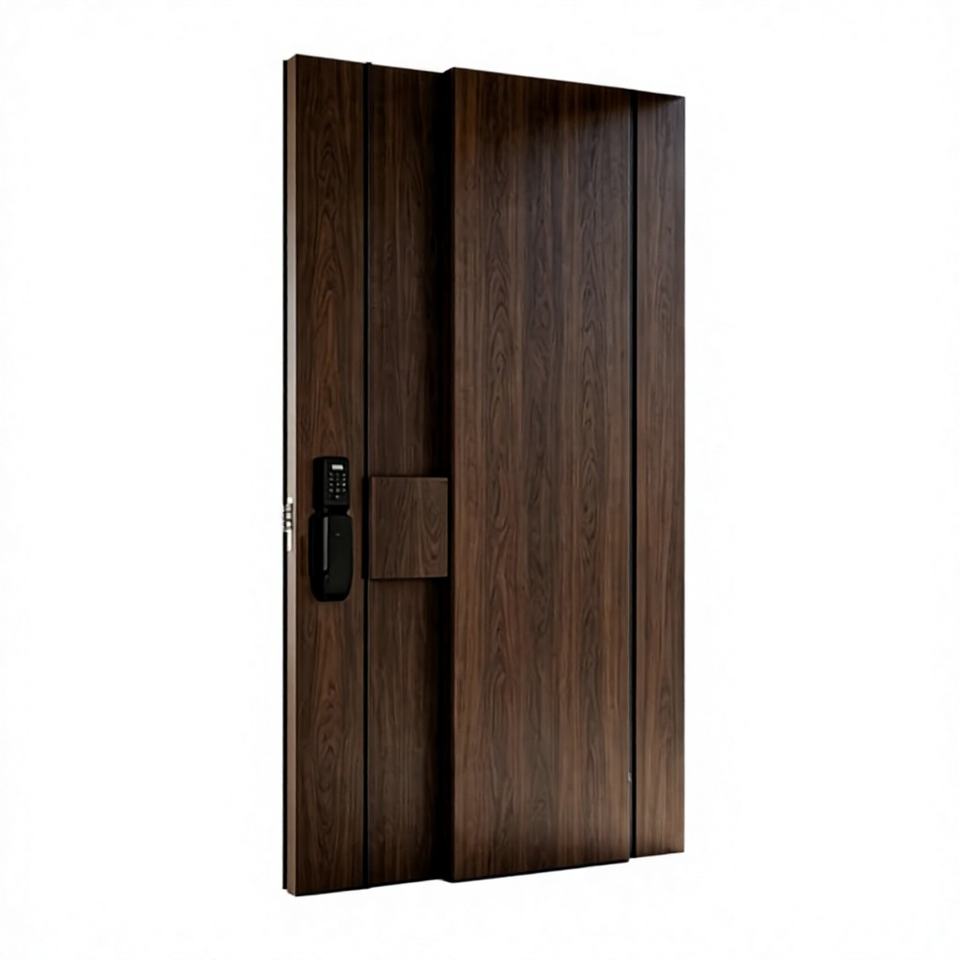
Wood Veneer Acoustic Doors
Walnut, oak, mahogany, custom veneers. STC 35-48.
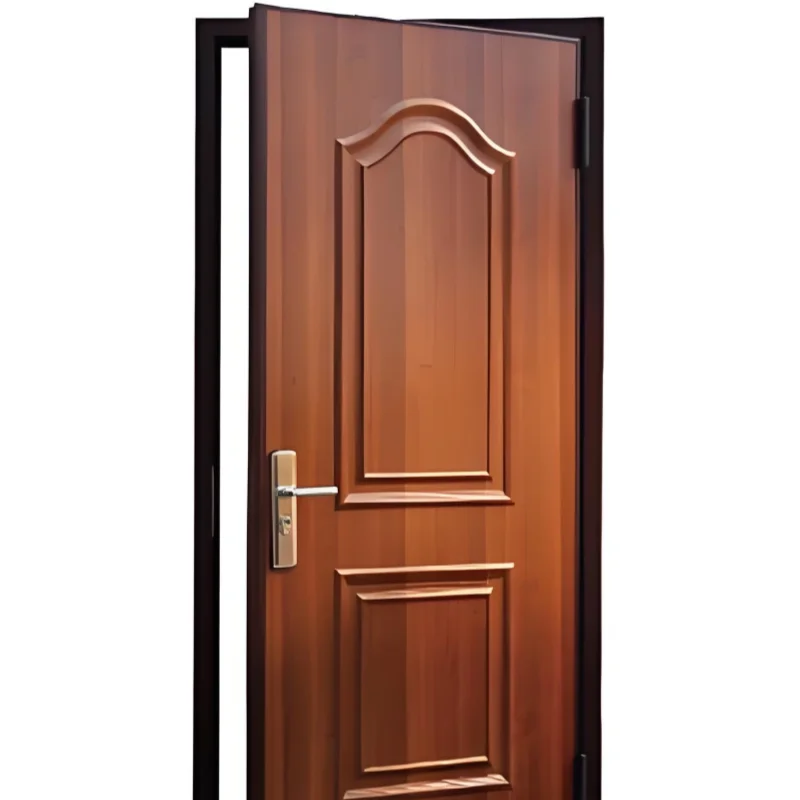
Painted Flush Acoustic Doors
Any RAL/Pantone color. STC 35-45.
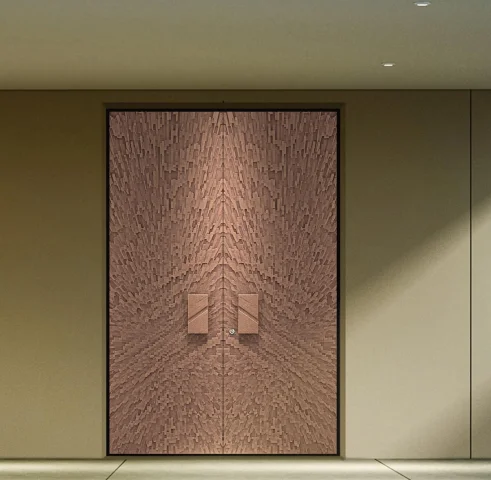
Steel Acoustic Doors
Heavy-gauge steel. STC 40-52.
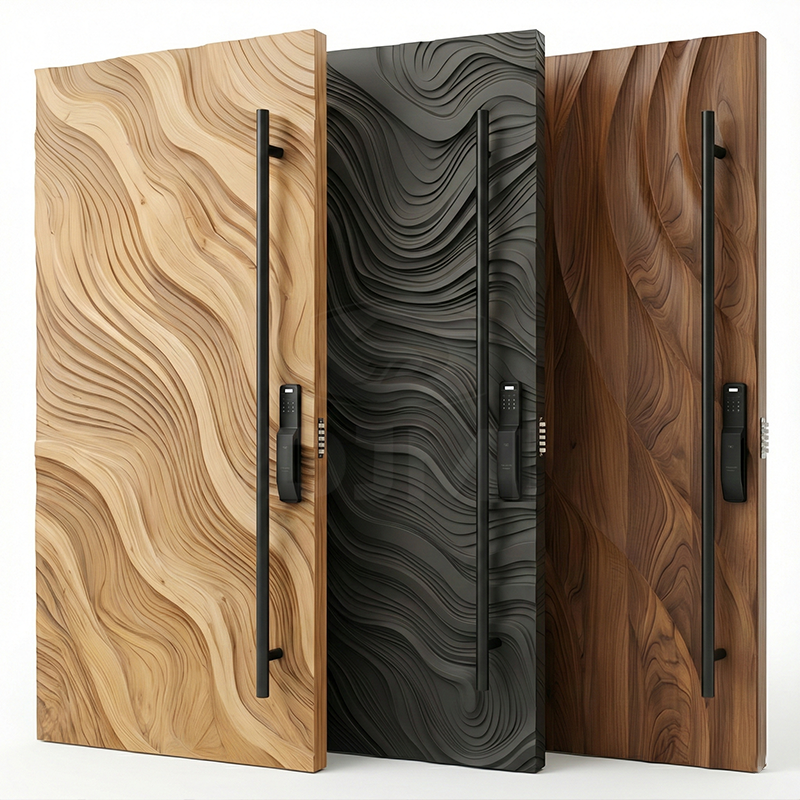
Double-Leaf Acoustic Assemblies
Paired doors with air gap. STC 48-52.
Acoustic Door Type Comparison
| Door Type | Best For | Max STC | Notes |
|---|---|---|---|
| Single swing | Offices, hotel guest rooms | STC 50 | Simplest, lowest cost |
| Double leaf | Corridors, studios, plant rooms | STC 52+ | Best high-performance option |
| Sliding acoustic | Partitions, space-saving | STC 40-45 | Sealing more critical |
| Glazed acoustic | Visual connection + isolation | STC 35-42 | Glass reduces rating ~3-5 pts |
What Determines Acoustic Door Cost
STC / OITC Rating
Higher ratings demand denser cores, better seals and heavier construction - the single largest cost driver.
Fire Rating
Combined fire-and-acoustic assemblies add intumescent seals and fire-rated hardware.
Size & Configuration
Oversized, double-leaf or glazed doors increase material and hardware cost.
Finish & Hardware
Wood veneer, stainless cladding, automatic operators and access control add cost.
Quantity
Bulk and project orders benefit from factory-direct pricing and lower unit cost.
Certification
Independent lab testing per model and region adds documentation cost but de-risks the spec.
Installation & Sealing: The Weakest-Link Principle
An acoustic door is only as good as its weakest path. A door rated STC 45 can perform at STC 30-35 if installed poorly - a 3 mm gap around the perimeter can drop performance by 10 points or more. Our engineered approach controls every leak path:
Perimeter acoustic seals
Compression gaskets on the head and jambs close the frame-to-leaf gap.
Automatic drop seal
A concealed bottom seal drops on closing to seal the threshold gap.
Acoustic threshold
Recessed or surface thresholds mate with the drop seal for a continuous barrier.
Sealed frame-to-wall
Acoustic caulk and backer rod close the frame-to-wall cavity to stop flanking.
We ship each assembly with a written installation and sealing guide, and our engineers support site teams on high-STC and fire-rated projects.
What Our Clients Say
“We field-tested Jusen's STC 45 doors and they exceeded the lab rating by 2 points.”
“Our recording studio needed STC 52 doors. Jusen achieved STC 53 in independent testing.”
“The combined fire-acoustic doors passed both UL fire and ASTM E90 acoustic tests on first submission.”
Frequently Asked Questions
What is the difference between STC and Rw ratings?
Can I upgrade an existing door to improve its STC rating?
Do you provide lab test reports?
What is the MOQ for acoustic doors?
How important is installation quality?
Can acoustic doors include glass panels?
What is OITC and when should I specify it?
Related Product Categories
Each solution maps to specific product lines — follow a category to view specifications, available configurations and factory-direct pricing.
Need Acoustic Doors for Your Project?
Tell us your STC requirements, application, and quantity. Receive a technical proposal within 48 hours.