
Last updated: November 26, 2026
Sourcing bulk custom MDF doors requires knowing exactly how construction type, core density, and surface finish affect performance, lead time, and total landed cost. This guide breaks down hollow-core versus solid-core MDF doors, each finish option, key specifications buyers must lock in before ordering, how to evaluate manufacturers, and what to expect from pricing and lead times — so you can issue a purchase order with confidence rather than discover critical gaps after the deposit is paid.
Quick Overview
Sourcing a reliable custom mdf doors manufacturer for bulk procurement means specifying construction type, surface finish, core density, fire/acoustic ratings, and hardware integration upfront — then verifying the supplier’s ability to hold those tolerances across production runs and ship via FCL or LCL with full documentation. A dependable factory-direct supplier should hold core density, panel thickness and finish tolerances across production runs, run door-specific pre-shipment checks (dimension, squareness, hinge and lock-bore alignment, finish adhesion), and provide OEM or private-label options when you need them.
Specifications
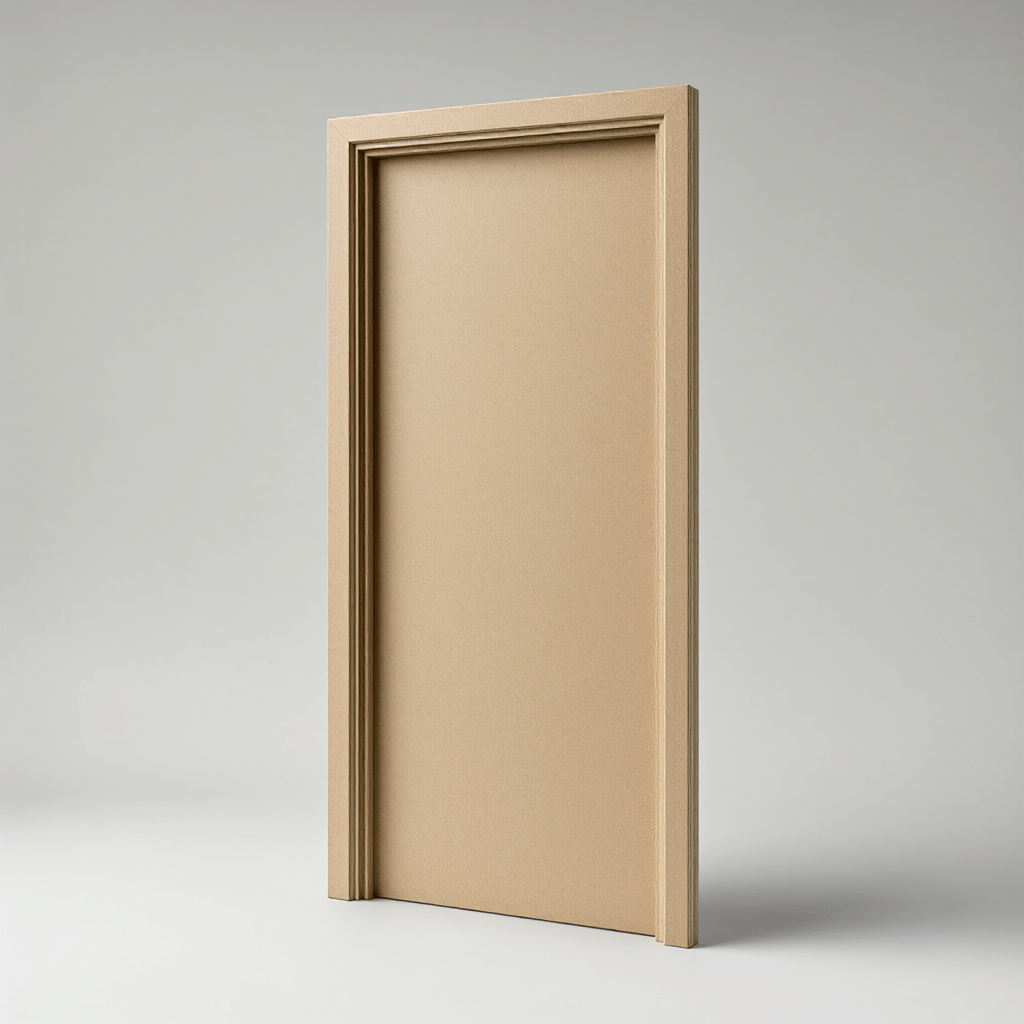
What are the key specifications of custom mdf doors?
Buyers should define the following parameters before issuing a purchase order:
| Parameter | Typical Range | Notes |
|---|---|---|
| Door thickness | 35 mm (solid core), 28–30 mm (hollow core) | Thicker cores improve acoustic performance but add weight and hardware load |
| Width × Height | Up to 1200 mm × 2400 mm (custom sizes available) | Oversized panels require reinforced core and heavier hinges |
| Core density | 650–750 kg/m³ (standard), 750–850 kg/m³ (high-density) | Higher density reduces sagging and improves screw-holding capacity |
| Formaldehyde emission | CARB Phase 2 / EN 14342 Class E1 minimum | Required for most North American and EU markets; E0 available for stricter jurisdictions |
| Fire rating | 20 / 30 / 45 / 60 minutes (tested and certified products only) | Fire-rated mdf doors use specially formulated core and intumescent seals, not standard core |
| Acoustic rating | RW 27–35 dB (varies with core + seal design) | Solid-core doors with perimeter gaskets achieve higher ratings |
| Surface finish | PVC wrap, thermofoil, veneer, laminate, painted | Finish choice affects moisture resistance and cost |
| Edge banding | PVC, ABS, or melamine tape | Visible edges require matched edge-banding for a clean appearance |
When evaluating an OEM mdf door supplier, request documented test reports — not just verbal claims — for formaldehyde emissions, fire rating, and acoustic performance, particularly for multi-unit residential and hospitality projects. You can also review comparable sourcing guides to understand how specification rigor varies across product categories.
Applications
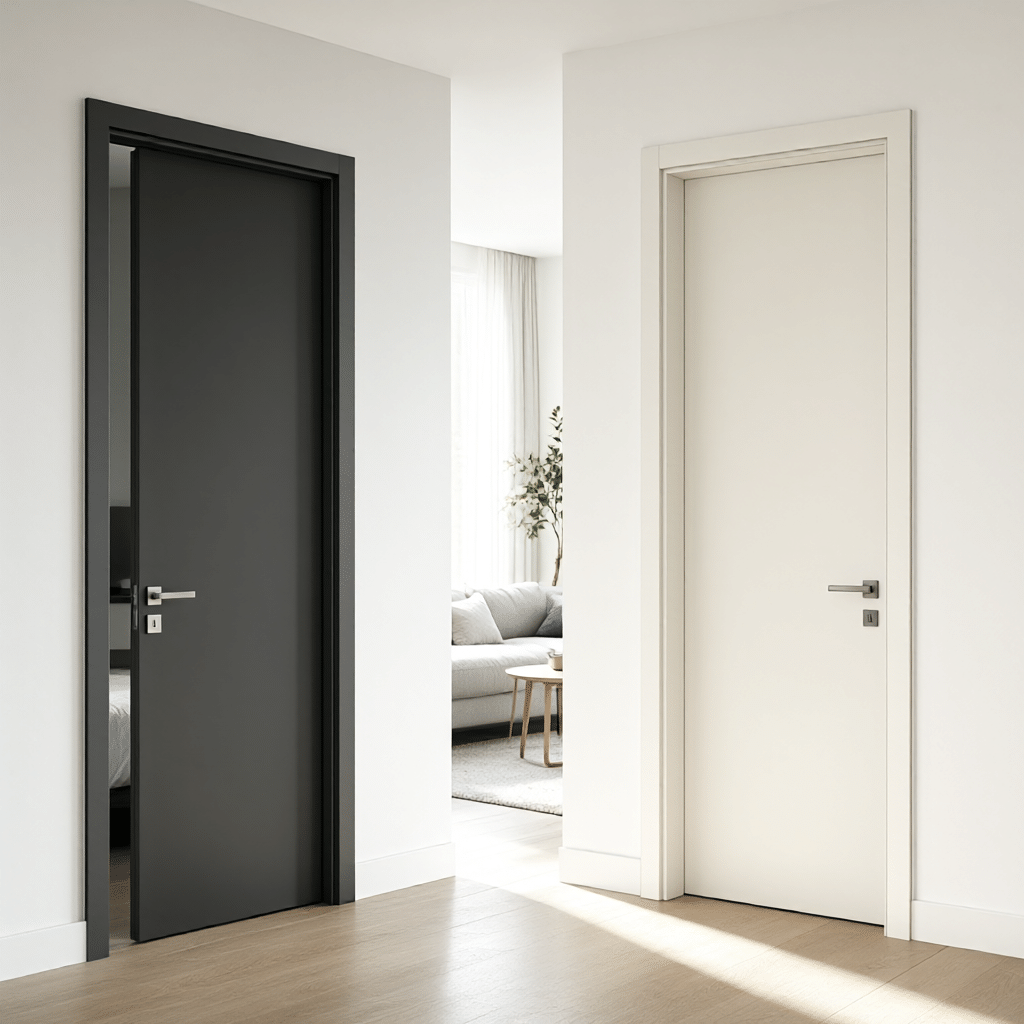
Where can custom mdf doors be used?
Custom fiberboard doors and engineered wood doors are widely specified across several project types:
- Hotel guest room corridors and rooms — hollow-core or solid-core panel doors with thermofoil or PVC wrap finishes, often specified for cost efficiency across 200+ unit runs.
- Multi-unit residential developments — interior bedroom and bathroom doors where sound privacy and fire separation matter; solid-core options are common.
- Commercial renovation contractors — office suite entry doors, closet doors, and fixture panels requiring consistent color and size across large batches.
- Villa and boutique developer projects — veneered or painted mdf doors tailored to architectural aesthetics without the cost premium of solid hardwood.
MDF doors are suitable for interior applications in standard dry environments. Moisture-resistant MDF (MR-MDF), which contains wax additives, is appropriate for bathrooms and laundry areas but should not replace properly rated exterior door assemblies. For projects requiring exterior-rated solutions, consider thermal-break aluminum doors and windows alongside interior panel doors.
Buying Factors
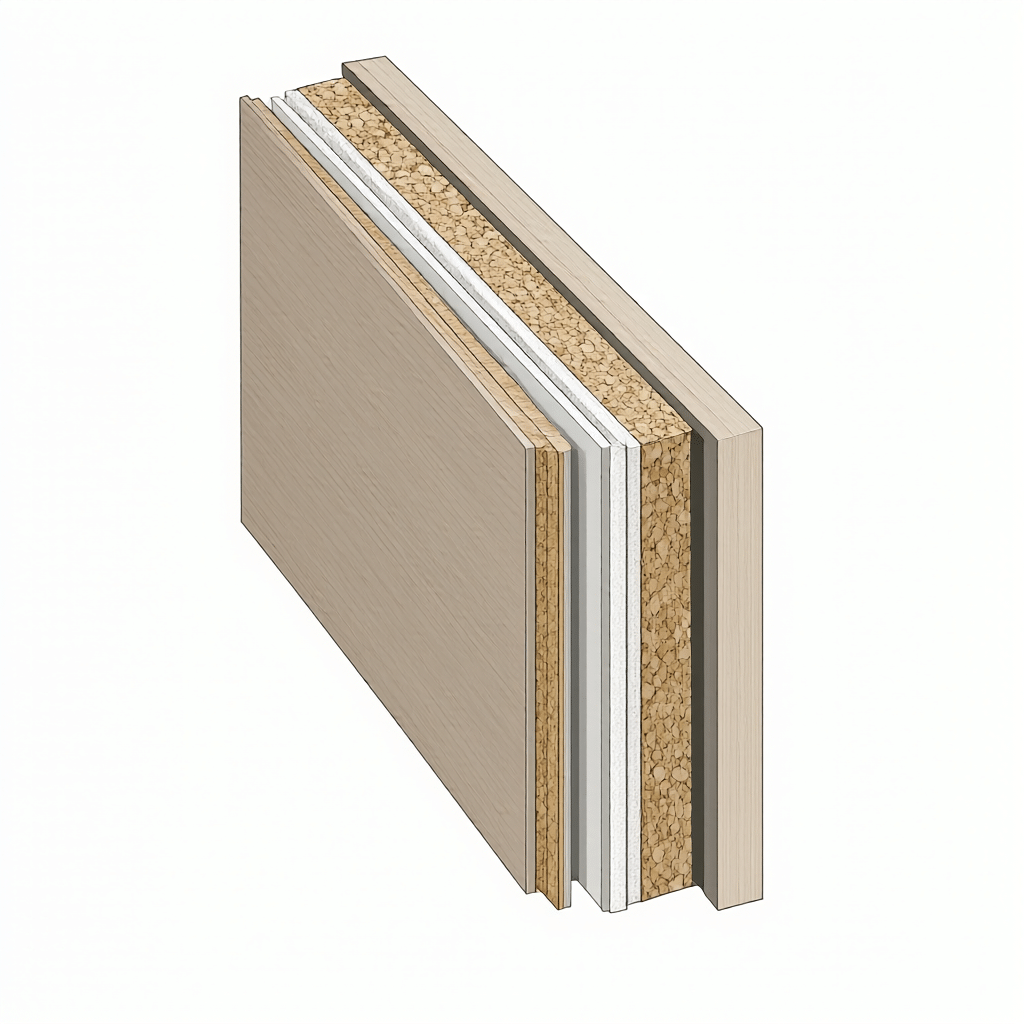
What to consider when buying custom mdf doors in bulk?
Three decision areas dominate the sourcing process:
1. Manufacturer evaluation criteria. Look for verifiable evidence of quality control rather than generic capability statements. Ask the supplier to share their pre-shipment testing protocol — specifically whether they conduct air-tightness, water-tightness, and wind-resistance tests on finished doors. Check whether they hold CARB Phase 2 or EN 717-2 formaldehyde certification and whether fire-rated products come with third-party test certificates from labs such as those referenced by ASTM International. Review samples for surface consistency, edge-band adhesion, and core density uniformity before approving mass production.
2. Customization depth. A capable china mdf door exporter should adjust profile structures, hinge mortise positions, and locking-bore dimensions to match local building codes and hardware standards. If you’re supplying windows or glazed doors alongside doors, discuss glazing inserts and hardware accessorization early so the same profile family can be maintained across the project.
3. Logistics and compliance. Confirm FCL and LCL shipping options, packaging method (corner protection, edge wrapping, palletizing), lead time per cubic meter, and documentation support including packing lists, proforma invoices, and customs paperwork. For North American buyers, ensure the supplier understands state-level CARB enforcement; for European buyers, confirm EN classification compliance.
Price & Cost
How much do bulk custom mdf doors cost? (FOB China)
Pricing depends on construction type, finish, thickness, and order volume:
| Product Type | FOB China Range (per unit) | Key Cost Drivers |
|---|---|---|
| Hollow-core, PVC-wrap, standard size | $18 – $32 | Simple construction, high output, minimal hardware prep |
| Solid-core, thermofoil, standard size | $35 – $58 | Denser core, sealed edges, better acoustic performance |
| Solid-core, veneered or painted, custom size | $55 – $95 | Natural veneer or multi-coat paint adds material and labor cost; non-standard sizes reduce line throughput |
| Fire-rated (30–60 min), solid-core | $75 – $140+ | Certified core material, intumescent seals, third-party testing amortization |
| Glazed or hardware-integrated variants | +$8 – $25 per door | Glass insert cutting, gasket channel, lock-prep boring |
These are typical FOB China reference ranges for bulk orders. Final pricing requires exact dimensions, finish specification, hardware cutouts, and destination port for freight calculation.
Can an oem mdf door supplier adjust profiles to local building codes?
Yes — a manufacturing partner that understands export compliance will adapt profile cross-sections, hinge reinforcement zones, and lock-bore dimensions to your market’s requirements. This includes adjusting jamb profiles for regional framing conventions and ensuring that any fire-rated assembly retains its tested configuration after customization. Verify this capability during the quotation stage; not all factories have the engineering flexibility to make structural adjustments without extending lead time significantly.
Evidence & Practical Notes
Field note: Buyers frequently discover after sample approval that surface finish consistency varies between production lots when the supplier relies on uncontrolled resin batch changes. Requiring a signed physical sample held as the acceptance baseline prevents this dispute.
Practical limitation: Solid-core mdf doors weigh noticeably more than hollow-core alternatives, which means standard residential hinges may undersize quickly under repeated use. Always confirm the hinge load rating matches the door weight, especially for solid-core doors above 35 mm thick.
Buyer takeaway: Prioritize suppliers who publish their pre-shipment testing protocol and formaldehyde-certification documents upfront. Factories confident in their QC will share this without prompting — those that hesitate often defer critical questions until after deposit payment.
Here Is How We Meet These Standards
As a manufacturer specializing in engineered wood and aluminum door systems, our approach to bulk custom mdf door procurement focuses on the specifications and verification steps that matter on the factory floor: we offer full customization on size, color, glass inserts, and hardware accessories; we maintain adjustable profile structures so that door assemblies comply with the building codes of your target market; and every shipment undergoes pre-shipment inspection covering air-tightness, water-tightness, and wind-resistance performance. We supply directly from our factory, handling both FCL and LCL shipments with complete export documentation including packing lists and proforma invoices. If you’re evaluating a custom mdf doors manufacturer for a hotel, residential, or commercial project, contact our team with your opening sizes and finish requirements so we can prepare a targeted quotation.
## Manufacturing Process Overview ###
How are custom mdf doors manufactured? Understanding the production pipeline helps buyers set realistic expectations and verify supplier capability during factory audits.
MDF (Medium-Density Fiberboard) doors begin with wood fibers that are refined, mixed with resin binders, and formed into mats under heat and pressure. The resulting panels are cut to size, routed for profile details, and assembled either as solid-core or hollow-core constructions. Solid-core doors typically use a honeycomb or block-board infill wrapped with MDF skins; hollow-core doors employ a lighter lattice or cardboard-honeycomb interior sandwiched between two MDF faces. After assembly, doors pass through surface preparation — sanding, priming, and finishing — which may include PVC wrapping, thermofoil application, veneer adhes ion, or multi-coat painting depending on the specified finish.
Factory-audit questions to ask during a sourcing visit:
| Audit Topic | What to Verify | Why It Matters |
|---|---|---|
| Resin source & batch control | Are formaldehyde-emission tests run per resin lot? | Uncontrolled resin batches cause VOC spikes between production runs |
| Core assembly method | Is the honeycomb/block-core machine automated or manual? | Manual glue application creates density variation and weak points |
| Press cycle parameters | Can the supplier show press temperature/time logs? | Under-cured boards sag over time; over-cured boards become brittle |
| Surface-finishing line | Does the line include UV-cured primer + topcoat? | Cured finishes resist moisture better and hold color consistency |
| QC inspection checkpoints | Are doors measured and tested at each stage? | Early detection prevents defective units from reaching final packing |
| Sample retention policy | Do they keep signed physical samples in archive? | Signed samples prevent scope-dispute disagreements after deposit |
Buyers reviewing factory capabilities can cross-reference how rigorous manufacturers handle these stages. See our shower filter manufacturer sourcing guide for an example of how specification depth varies across categories.
## Benefits vs Solid Wood and Other Materials ###
Why choose custom mdf doors over solid wood, hollow-core engineered wood, or PVC doors? The decision depends on project budget, aesthetic requirements, and environmental conditions.
| Attribute | MDF Door (Solid Core) | Solid Hardwood Door | PVC/Vinyl Door | Hollow-Core Engineered Door |
|---|---|---|---|---|
| Material cost (per unit) | $18 – $95 FOB | $80 – $250+ FOB | $25 – $60 FOB | $12 – $25 FOB |
| Weight (35 mm, standard size) | 18 – 28 kg | 25 – 40 kg | 10 – 18 kg | 8 – 14 kg |
| Dimensional stability | Excellent (resists warping/swelling) | Good (may expand/contract with humidity) | Excellent | Moderate |
| Surface smoothness | Very smooth — ideal for painted/foiled finishes | Natural grain texture requires staining/oiling | Uniform but limited texture options | Smooth but thinner face |
| Acoustic performance (RW) | 30 – 35 dB (solid core) | 32 – 40 dB | 25 – 32 dB | 22 – 27 dB |
| Moisture resistance | MR-MDF available for bathrooms | Requires sealing treatment | Inherently water-resistant | Poor unless coated |
| Fire rating potential | 30 – 60 min achievable with certified core | Naturally slower burn but lower rated without treatment | Limited fire certification options | Not suitable for fire-rated applications |
| Screw-holding capacity | Good (750+ kg/m³ density supports hinges/locks) | Excellent (natural fiber interlock) | Poor (plastic deforms under torque) | Fair (lightweight cores strip easily) |
| OEM/private-label readiness | High — uniform surfaces accept any finish | Lower — natural variations complicate brand consistency | Moderate | High |
| Environmental certification | CARB Phase 2 / EN 14342 E1 widely available | FSC-certified options exist | Recycled-content options | Limited certification pathways |
For hospitality developers balancing cost against acoustic privacy, solid-core mdf doors deliver 80–90% of the performance of solid hardwood at one-third the price. For exterior-facing applications in high-humidity climates, MR-MDF or aluminum-clad variants are preferable. For ultra-budget entry-level apartments, hollow-core thermofoil doors meet basic code requirements at minimal cost.
## Molded Panel vs Flat Panel Selection Guide (Hollow-Core vs Solid-Core) ###
Which construction type suits your project? Use this decision flowchart to match door type to application.
STEP 1: What is the installation environment?
├── Dry interior (bedrooms, living rooms, offices)
│ → Hollow-core PVC-wrap acceptable for budget projects
│ → Solid-core thermofoil recommended for acoustic privacy
├── High-moisture interior (bathrooms, laundry rooms)
│ → MR-MDF solid-core with sealed edges required
│ → Avoid hollow-core — water ingress destroys honeycomb fill
└── Exterior or semi-outdoor (patio entries, sunroom thresholds)
→ Do NOT specify mdf — use thermal-break aluminum or solid hardwood
→ See our thermal-break aluminum doors and windows guidance
STEP 2: What is the acoustic requirement?
├── Standard privacy (RW ≥ 30 dB) → Solid-core, perimeter gasket seals
├── Enhanced privacy (RW ≥ 35 dB) → Solid-core + automatic drop seal at threshold
└── No special requirement → Hollow-core meets basic code minimums
STEP 3: What is the fire-separation requirement?
├── Corridor/ stairwell separation → 30-minute rated mdf door, certified core
├── Individual room partition → 20-minute rated or non-rated per local code
└── No fire rating needed → Standard solid or hollow-core
STEP 4: What is the hardware load?
├── Heavy commercial lever sets / dual-point locks → Solid-core (35 mm minimum)
├── Standard residential knob/handle → Solid-core 35 mm or reinforced hollow-core
└── Light closet/pantry door → Hollow-core acceptable
STEP 5: What is the aesthetic target?
├── Painted (any RAL color) → Smooth MDF surface accepts primer and topcoat uniformly
├── Veneer look → Natural wood veneer applied to solid-core substrate
├── Thermofoil molded profile → Hollow or solid-core with routed grooves for foil wrap
└── PVC wrap (single-color, consistent) → Any core type; solid-core preferred for durability
A downloadable version of this decision tree can be requested from our team. When specifying for multi-unit developments, we recommend running a mock-up panel through the full environment test before approving mass production — this catches issues with hinge sag, finish blistering, or core delamination early.
## Red Flags: Warning Signs of Unreliable Suppliers ###
What indicators suggest a supplier cannot be trusted? Buyers should treat these signals as reasons to request additional evidence or pivot to alternative vendors.
| Red-Flag Signal | What It Means | Recommended Action |
|---|---|---|
| Cannot produce third-party test certificates (formaldehyde, fire, acoustic) | Testing may never have been conducted; claims are unverifiable | Request certificate numbers and verify directly with issuing lab |
| Refuses sample orders or demands full payment before shipping samples | Supplier has low confidence in product consistency | Walk away — reputable factories ship samples for a nominal fee |
| Certification claims cite only generic terms (e.g., “ECO-friendly,” “green certified”) without standard numbers like CARB Phase 2, EN 14342, ISO 14001 | Marketing language, not verifiable compliance | Ask for the exact standard number and test report reference |
| No signed physical sample retention policy | Risk of acceptance disputes after bulk delivery | Require a counter-sample signed by both parties before PO issuance |
| Lead-time estimates vary by ±50% between quotation and contract | Production scheduling is uncontrolled or speculative | Demand a written commitment with penalty clauses for delays |
| Packaging described vaguely (“standard export packing”) without detail on corner protectors, edge wrapping, palletizing | Doors arrive damaged; claims of transit damage are blamed on buyer | Specify packaging protocol in the PO and photograph incoming goods |
| Pressure to pay 50–70% deposit before any quality evidence is shared | Cash-flow risk if factory fails to deliver or delivers substandard goods | Negotiate 30% deposit with balance against BL copy; use LC for large orders |
| Cannot explain their pre-shipment inspection process or deflects testing questions | Likely skipping critical QC checkpoints | Require a written inspection protocol as part of the contract |
| No ability to adjust profile structures for regional building codes | One-size-fits-all approach; non-compliant installations | Confirm engineering flexibility during the quotation call |
When evaluating multiple suppliers, score each against this red-flag checklist. Factories that clear 8 or more items without objection demonstrate mature quality systems.
## Pre-Order Buyer Verification Checklist ###
Use this bullet-point checklist before signing the purchase agreement to avoid costly post-order surprises.
Documentation & Certification
- [ ] Request and independently verify CARB Phase 2 or EN 14342 E1 formaldehyde test reports
- [ ] Obtain third-party fire-rating certificates (ASTM E152 or equivalent) if fire separation is required
- [ ] Ask for acoustic test reports (ASTM E90 or EN 10140) for solid-core products
- [ ] Confirm certification documents list specific standard numbers, not just brand names
Sample Approval
- [ ] Order at least one full-size sample per finish variant before bulk PO
- [ ] Inspect sample for surface defects, edge-band adhesion, core density feel, and hardware bore alignment
- [ ] Sign and date a counter-sample; retain it as the accepted baseline
- [ ] Test sample in actual installation environment (humidity, temperature cycling) if possible
Factory Audit (Virtual or On-Site)
- [ ] Review production-line photos or video showing core assembly, pressing, and finishing stages
- [ ] Ask for pre-shipment inspection protocol document
- [ ] Confirm QC checkpoints at incoming-material, in-process, and final-inspection stages
- [ ] Verify ability to conduct air-tightness, water-tightness, and wind-resistance tests on finished doors
Commercial Terms
- [ ] Confirm MOQ per design/color — some factories require 200+ units per variant
- [ ] Clarify lead time per CBM and whether expedited production is available
- [ ] Negotiate payment terms: 30% deposit / 70% against BL copy is industry standard
- [ ] Specify packaging requirements: corner protectors, edge wrap, master-carton labeling
Logistics & Compliance
- [ ] Confirm FCL or LCL availability based on order volume
- [ ] Verify customs-documentation support: packing list, proforma invoice, certificate of origin
- [ ] Check destination-port restrictions or import-tax classification for engineered wood products
- [ ] Ensure supplier can adjust profile structures to match target-market building codes
This checklist can be expanded into a formal factory-audit questionnaire upon request.
### Additional Cost Context
The FOB ranges listed above assume standardized sizes and finishes ordered in volume. Non-standard dimensions, rare veneer species, custom paint colors, integrated glazing inserts, and heavy-commercial hardware prep all push pricing toward the upper bound or beyond. Freight costs from Chinese ports to North America or Europe typically add $800–$2,500 per 20-foot container (FCL) depending on origin port, fuel surcharges, and destination — LCL shipments are priced per cubic meter at roughly $60–$150/CBM plus terminal handling charges. Buyers should request a landed-cost estimate that includes freight, insurance, and import duties before making final budget decisions.
## Updated End Section ###
## Surface Finishing Options Explained ###
What finishes are available for custom MDF doors, and how do they differ in durability, moisture resistance, and cost?
| Finish Type | Description | Moisture Resistance | Cost Tier | Best For |
|---|---|---|---|---|
| PVC wrap (rigid film) | Polyvinyl chloride film heat-applied over primed MDF surface; comes in solid colors, wood-grain prints, and matte/gloss textures | Moderate — suitable for dry interiors; not recommended for high-humidity bathrooms unless edges are sealed | $ | Budget hotel rooms, closets, interior partitions |
| Thermofoil (soft-touch vinyl) | Thermoplastic film fused under vacuum pressure; offers seamless wrapped edges and consistent color across large batches | Low to moderate — edges are sealed but prolonged water exposure causes delamination | $$ | Modern residential bedrooms, office suites, painted-look aesthetics without actual paint labor |
| Veneer (natural or engineered) | Thin slice of real wood (or wood-derived composite) adhered to MDF substrate; sanded and stained or clear-coated | Low unless top-coated with high-build lacquer; vulnerable to humidity-induced swelling at seams | $$$ | High-end villa projects, hospitality lobbies, bespoke architectural designs |
| Laminate (high-pressure) | Compact laminate sheet bonded under extreme pressure; extremely scratch- and stain-resistant | High — suitable for high-traffic commercial corridors and healthcare environments | $$$ | Hospitals, schools, airports, heavy-use commercial doors |
| Painted (primer + topcoat) | MDF primed and hand-sprayed or machine-sprayed with acrylic, PU, or UV-cured coatings | Variable — depends on coating system; multi-coat PU provides good moisture barrier | $$–$$$ | Custom color-matched projects, heritage/restoration aesthetics, deep RAL/Pantone specifications |
Finish-selection tip: Always verify whether the quoted price includes edge banding on all four sides or only visible faces. Unbanded edges expose the raw MDF core, which absorbs ambient moisture and swells within weeks in humid climates. For bathroom or laundry-room applications, specify full-perimeter edge sealing regardless of finish type.
## Quality Inspection Standards Before Shipment ###
What pre-shipment inspections should every bulk MDF door order include before payment is released?
A dependable manufacturer tests finished doors against internationally recognized benchmarks before they leave the factory floor. Below are the inspection categories buyers should require documented proof for:
| Inspection Category | Test Method / Standard Reference | Acceptance Criteria (Typical) |
|---|---|---|
| Air-tightness | ISO 10291 / ASTM E283 | Pressure differential ≤ 10 Pa; leakage rate < 0.5 m³/(m·h) |
| Water-tightness | EN 12208 / ASTM E1105 equivalent | No visible water penetration after 24-hour static exposure test |
| Wind resistance | EN 12210 / regional code equivalent | Deflection < L/175 under design wind load; no structural failure at hardware points |
| Formaldehyde emission | CARB Phase 2 (USA) / EN 14342 Class E1 (EU) / JFST (Japan) | ≤ 0.124 ppm (CARB) or ≤ 0.1 mg/m³ (E1); E0 available at ≤ 0.05 mg/m³ |
| Fire rating | UL 10C / BS 476 Part 22 / AS 1530.4 | Retains integrity and insulation for rated duration (20/30/45/60 min) |
| Dimensional tolerance | Internal QC gauge per drawing | Width/height ±1.0 mm; thickness ±0.5 mm; diagonal difference < 2.0 mm per door |
| Surface defect audit | Visual inspection under D65 lighting at 1 m distance | Max 2 minor blemishes per m²; zero cracks, delamination, or discoloration |
| Hardware bore alignment | Template check +试装 | Lock-bore centered ±1.0 mm; hinge mortise depth matches hinge leaf thickness |
Buyers should request third-party test certificates for fire-rated and formaldehyde-certified products — not in-house lab reports alone. Certificates should reference specific standard numbers (e.g., “EN 13501-2” rather than vague “fire tested”) and show the exact door configuration that was tested.
For additional context on how rigorous suppliers handle specification verification across product lines, see our shower filter supplier sourcing guide.
## Customization Dimensions Available ###
How much flexibility exists in size, color, glass inserts, and hardware accessories when working with a custom MDF door factory?
Customization depth separates a commodity supplier from a true manufacturing partner. Below is a practical breakdown of what adjustable parameters look like on the factory floor:
| Customization Parameter | Typical Range / Options | Engineering Impact |
|---|---|---|
| Door size (W × H) | 600–1200 mm wide × 1800–2400 mm tall; oversized up to 1400 × 2600 mm on special order | Oversized panels require reinforced core (block-board infill instead of honeycomb) and wider stiles/rails |
| Color (RAL / NCS / Pantone) | Any RAL color via painted finish; wood-grain and solid tones via PVC/thermofoil | Custom colors require a dedicated spray batch run (minimum 50 doors) or are stocked from previous orders |
| Glass inserts | Fixed lite, side-lite, or transom; single or double glazing; clear, frosted, textured, low-E | Cutouts reduce core continuity — reinforced perimeter frame required around glass channel |
| Hardware accessories | Concealed hinges, semi-concealed, surface-mounted; European-style locksets; magnetic catches; closers | Bore patterns must match local hardware standards (e.g., ANSI BHMA for North America, DIN/BS for Europe) |
| Edge treatment | Square, rounded (R3/R5), beveled, or profiled (Shaker-style raised panel) | Profiled edges increase machining time by ~30% but significantly elevate perceived quality |
| Glazing style integration | Same profile family used for both doors and adjacent windows/doors | Enables visual consistency throughout the project; reduces on-site fitting adjustments |
When evaluating a china mdf door exporter, ask specifically whether they have produced doors for your target market before. Factories familiar with your region’s building codes will already have adjustable hinge reinforcement zones and jamb profiles for common framing systems (wood stud, steel stud, or masonry).
## Red Flags — Warning Signs of an Unreliable Supplier ###
What red flags should trigger immediate caution when vetting a potential MDF door manufacturer?
Not all factories advertise capabilities they cannot consistently deliver. Watch for these warning signs during supplier evaluation:
- Cannot produce third-party test certificates — Suppliers who offer verbal assurances about fire ratings or formaldehyde emissions but cannot provide certificates with specific standard numbers (e.g., “UL 10C,” “EN 13501-2,” “CARB Phase 2”) are likely making unsubstantiated claims.
- Refuses sample orders — A credible factory welcomes sample requests because confidence in their QC process means samples reflect production-quality units. Refusals often indicate inconsistent output.
- Vague certification claims — Phrases like “CE certified,” “ISO approved,” or “eco-friendly” without citing specific standard versions are meaningless. Legitimate certifications name the document, issuing body, and test report number.
- No signed physical sample retention policy — If the supplier cannot confirm they archive a buyer-signed sample as the acceptance baseline, disputes over finish色差 or dimensional variance become impossible to resolve objectively.
- Unwilling to share pre-shipment testing protocol — Factories that deflect questions about air-tightness, water-tightness, or wind-resistance testing are hiding QC gaps that usually surface as field failures.
- Extremely aggressive lead-time promises — Quotes of 15–20 days for 500+ custom doors with multiple finish variants are unrealistic for a properly operated factory and signal either substandard QC or outsourced work.
- No FCL/LCL logistics experience documentation — Suppliers unfamiliar with packing-list preparation, proforma invoicing, and customs documentation will create delays at your destination port.
A practical mitigation strategy is to include a pre-order verification step in your procurement workflow — we outline one below.
## Buyer Pre-Order Verification Checklist ###
Use this actionable checklist before placing any bulk MDF door order to avoid costly post-delivery disputes.
Certification Validation
- [ ] Request CARB Phase 2 or EN 14342 E1 test certificate with report number
- [ ] Verify certificate is issued by an accredited laboratory (not self-declared)
- [ ] Confirm fire-rated doors carry third-party certificates (UL, WarringtonFR, BRE) referencing the tested door configuration
- [ ] Cross-check certificate validity dates — expired certificates are commonly reused
Sample Approval
- [ ] Order a full-size production-representative sample (not a cut-down piece)
- [ ] Inspect surface finish for color consistency, edge sealing, and defect-free panels
- [ ] Measure thickness, width, height, and diagonals with calipers and tape
- [ ] Test screw-holding by driving a hinge screw and lock-bore screw into the sample core
- [ ] Sign and date the sample; agree it becomes the binding quality baseline for mass production
Factory Audit Questions
- [ ] Can you show press temperature and cure-time logs for our production batch?
- [ ] What is your resin batch-testing frequency — per lot or per month?
- [ ] How many QC checkpoints exist between core assembly and final packing?
- [ ] What is your rework rate, and how is it tracked?
- [ ] Do you conduct air-tightness, water-tightness, and wind-resistance tests on finished doors? May we review recent test data?
- [ ] Can you customize hinge mortise depth and lock-bore diameter for our target-market hardware?
- [ ] How do you handle packaging for LCL consolidation — corner protection and edge wrapping specifications?
Commercial Terms
- [ ] Is FOB China pricing inclusive of edge banding on all four sides?
- [ ] Are custom colors subject to a minimum order quantity, and what is that MOQ?
- [ ] What is the penalty clause for dimensional non-compliance detected at destination?
- [ ] WhichIncoterms apply (FOB, CIF, CFR), and does the supplier handle export customs clearance?
Completing this checklist before committing capital dramatically reduces the risk of receiving non-conforming cargo. If you would like a templated version of this audit for your procurement team, reach out through our contact page.
## Decision Flowchart — Hollow-Core vs Solid-Core Selection Guide ###
Which construction type fits your application? Follow this selection path:
STEP 1: What is the installation environment?
├── Dry interior (bedrooms, living rooms, offices)
│ ├── Budget priority → Hollow-core PVC-wrap ($18–$32/unit)
│ └── Acoustic privacy needed (RW ≥ 30 dB) → Solid-core thermofoil ($35–$58/unit)
├── High-humidity interior (bathrooms, laundry)
│ └── Must specify MR-MDF core + full-perimeter edge sealing
└── Commercial corridor / hotel public area
└── Solid-core laminate or painted finish for durability ($55–$95/unit)
STEP 2: What is the fire-rating requirement?
├── No fire rating required (interior closet, bedroom partition)
│ └── Standard solid-core or hollow-core OK
├── 20–30 min fire rating required
│ └── Certified solid-core with intumescent seal per door (see Price table above)
└── 45–60 min fire rating required
└── Only specify doors with documented third-party UL or EN 1634-1 test certificates
STEP 3: What is the hardware load expectation?
├── Lightweight interior door (closet, pantry)
│ └── Hollow-core acceptable with standard 2× 3.5-inch butt hinges
├── Heavy solid-core door (>25 kg)
│ └── Minimum 3× concealed hinges rated 30 kg each; reinforce stile around hinge mortises
└── Access-controlled door (electric strike, magnetic lock)
└── Solid-core mandatory; recommend 45 mm thickness for secure strike-box mounting
Quick-reference comparison:
| Scenario | Recommended Construction | Finish | Target Price (FOB) |
|---|---|---|---|
| Economy apartment bedroom doors | Hollow-core | PVC wrap | $18 – $32 |
| Hotel guest room doors (acoustic focus) | Solid-core | Thermofoil | $35 – $58 |
| Luxury villa interior doors | Solid-core | Veneer or painted | $55 – $95 |
| Hospital corridor doors | Solid-core | High-pressure laminate | $65 – $110 |
| Fire-rated stairwell doors | Solid-core (certified) | Painted with intumescent seal | $75 – $140+ |
Sources & References
- ASTM International — www.astm.org
- thermal-break aluminum doors and windows — doorwoodendoors.com
- shower filter manufacturer sourcing guide — zooshen.com
- shower filter supplier sourcing guide — zooshen.com
- Contact Our Team — doorwoodendoors.com
Related resources for this product category
- Composite and engineered wood doors
- Interior door range
- China MDF doors manufacturer: B2B sourcing and pricing
- WPC vs MDF doors: comparative buying guide
- Door and window measurement guide
Need a project-specific quotation? Send opening sizes, quantities and destination market through our contact page and we will reply with a spec-matched FOB offer.











