
Last updated: November 25, 2026
WPC vs MDF doors: WPC (wood-plastic composite) doors are waterproof engineered panels ideal for exterior, coastal, and high-humidity applications, while MDF (medium-density fibreboard) doors offer smooth painted finishes at lower cost for dry interior use. For B2B bulk procurement, choose WPC when moisture exposure or long-term replacement costs matter, and choose MDF when finish consistency and upfront price drive the decision.
What Is the Main Difference Between WPC and MDF Doors?
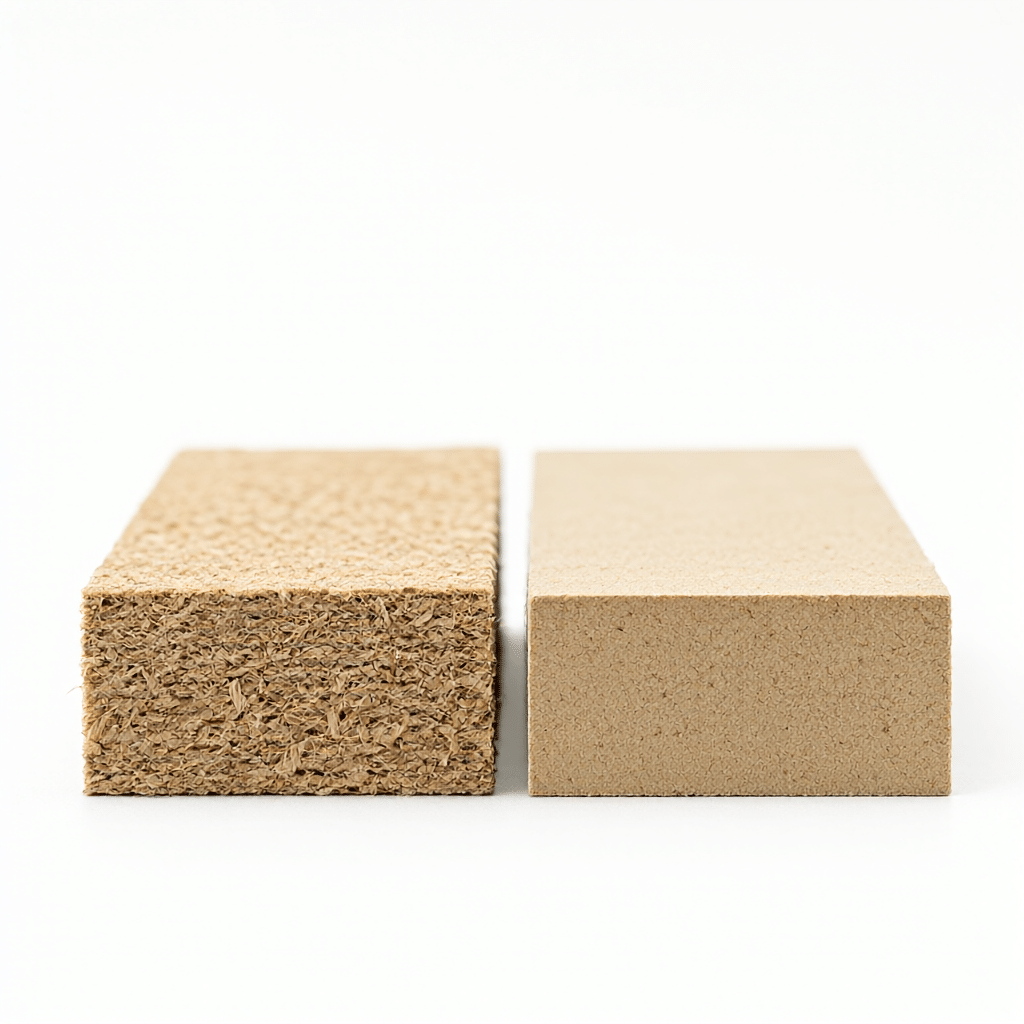
WPC (Wood-Plastic Composite) doors are made from wood fibres blended with thermoplastic resins, producing a dense, moisture-resistant engineered panel. MDF (Medium-Density Fibreboard) doors consist of refined wood fibres bonded with resin under heat and pressure, creating a smooth, uniform surface ideal for painted finishes. The core trade-off is straightforward: WPC excels in wet or high-humidity environments due to its inherent water resistance, while MDF offers superior surface finish quality and lower upfront cost for interior dry applications. For a B2B buyer sourcing doors in volume, this single difference drives nearly every other specification and pricing decision.
WPC and MDF: Material Definitions and Composition
What is a WPC door and how is it constructed?
A WPC door — often called a wood plastic composite door — uses a blend of wood flour or sawdust, polyethylene or PVC resin, and coupling agents, extruded or pressed into solid panels. Modern WPC profiles frequently incorporate a hollow-core or sandwich-panel construction with a WPC skin and an internal support grid, which reduces weight while maintaining structural rigidity. The result is a door material that behaves more like a polymer than traditional wood: it does not absorb significant moisture, it resists swelling and warping, and it can be fabricated into varied profiles without splintering. This makes WPC a natural choice for exterior applications, bathroom doors, and any environment subject to humidity or temperature cycling.
What is an MDF door and how is it constructed?
An MDF door — sometimes referred to as an engineered wood door — is produced by breaking down hardwood or softwood residuals into fine fibres, combining them with wax and resin binders, and pressing the mat under high temperature and pressure. The resulting board has a consistent density (typically 600–800 kg/m³), a perfectly smooth surface, and no grain irregularities. MDF doors are commonly used as the door leaf material in hollow-core and solid-core interior doors, finished with veneer, melamine laminate, or paint. The key advantage is finishability: because the surface is uniform, paint adhesion is excellent and colour matching across hundreds of units is far simpler than with natural materials. However, standard MDF absorbs water readily and will degrade if exposed to sustained moisture, which limits its use primarily to controlled interior environments.
Side-by-Side Specification Comparison
| Spec | WPC Door | MDF Door |
|---|---|---|
| Base composition | Wood fibres + thermoplastic resin | Refined wood fibres + resin binder |
| Density range | ~600–750 kg/m³ | ~600–800 kg/m³ |
| Moisture absorption | < 2% (typical) | 20–35% (unprotected) |
| Water resistance | Waterproof; suitable for exterior | Water-sensitive; interior only unless sealed |
| Warping / swelling risk | Very low | Moderate to high when wet |
| Surface finish | Co-extruded skin or laminated; limited paint options | Excellent paint grip; veneer, laminate, or painted |
| Typical door thickness | 35–45 mm | 35–40 mm |
| Fire rating potential | Achievable with additives | Achievable with fire-retardant treatment |
| Formaldehyde emission | Generally very low / NAF | E1-class available; E0 optional |
| Weight per unit (single door) | 15–25 kg (hollow-core variant) | 18–30 kg (varies by core type) |
| Expected lifespan (normal use) | 15–25+ years | 10–20 years (interior, dry conditions) |
Moisture Resistance and Durability
Are WPC doors waterproof or merely water-resistant?
WPC doors are waterproof by material composition, not just coated. The thermoplastic matrix surrounding the wood fibres creates a barrier that prevents water ingress at the molecular level. A properly manufactured WPC door can withstand direct water exposure, splash zones, and high relative humidity (80%+) without swelling, delaminating, or losing structural integrity. This is why WPC is routinely specified for hotel bathroom doors, exterior entrance doors, and coastal properties where salt-laden moist air accelerates corrosion and rot in conventional materials.
Can MDF doors be used in humid environments?
Standard MDF doors should not be installed in humid or wet environments without extensive surface sealing. Even paint or veneer coatings act only as temporary barriers; once the seal is compromised — by a chip, scratch, or prolonged condensation — moisture penetrates the fibre board and causes irreversible swelling. Some manufacturers offer moisture-resistant MDF (MR-MDF) with added wax coatings, but these products still fall short of true waterproof performance and carry higher failure rates in real-world hospitality installations. If your project includes restrooms, pool areas, or unconditioned spaces, WPC remains the safer engineering choice.
For durability under load and impact, both materials perform adequately in standard door applications. WPC has an edge in dimensional stability across temperature swings, which matters significantly for exterior doors in climates with large day-night temperature differentials.
Cost Analysis and Price Ranges
How much do WPC and MDF doors cost per unit?
Bulk pricing varies by region, order volume, hardware inclusion, and whether the door is hollow-core or solid-core, but typical wholesale ranges are:
- MDF hollow-core interior doors: $35–$75 USD per unit at 200+ piece orders
- MDF solid-core interior doors: $60–$120 USD per unit
- WPC exterior or premium interior doors: $80–$180 USD per unit
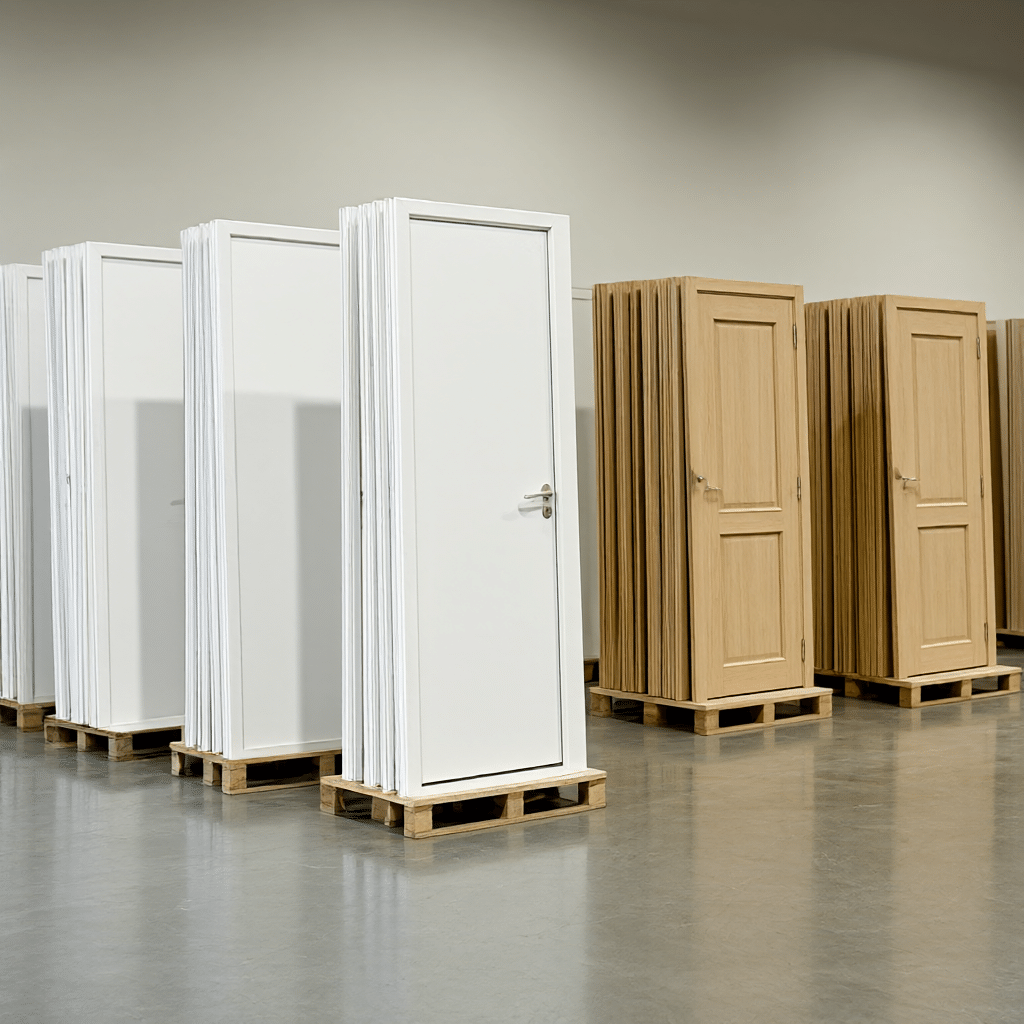
WPC doors command a 20–50% price premium over equivalent MDF doors, reflecting the cost of thermoplastic resins, co-extrusion tooling, and more complex manufacturing lines. However, the total cost-of-ownership calculation often narrows this gap. When you factor in reduced replacement rates in humid environments, lower maintenance repainting cycles, and longer service life, the annualised cost of a WPC door can be comparable to or even lower than MDF in demanding applications. For a purely budget-driven interior project in a dry climate, MDF remains the economically rational choice.
Additional cost drivers include glass inserts, fire-rated cores, custom colours, and hardware packages. See our MDF doors price per unit guide for detailed line-item breakdowns.
Surface Finish and Aesthetic Options
MDF dominates finish flexibility. Its perfectly flat surface accepts water-based and solvent-based paints without grain telegraphing, accepts thin veneers uniformly, and takes melamine and PVC laminates with consistent results. This is why most luxury hotel room doors and high-end residential interior doors specify MDF cores — the final painted appearance must meet exact brand colour standards across dozens of rooms.
WPC surfaces are typically finished with co-extruded decorative skins that mimic wood grain, solid colours, or textured patterns. While WPC finish technology has improved significantly, the palette remains narrower than MDF’s open-ended paint option. Importantly, WPC skins cannot be sanded or refinished on-site — any damage requires panel replacement. For projects where finish consistency is non-negotiable, such as a residential apartment bulk order requiring exactRAL colour matching across 500+ doors, MDF typically wins on aesthetic control. Where low-maintenance appearance retention matters more — say, a commercial office fit-out with heavy foot traffic and cleaning chemical exposure — WPC’s factory-finished surface is harder to degrade over time.
Customization and Sizing Flexibility
Both WPC and MDF doors offer strong customization for B2B buyers:
- Dimensions: Standard widths from 760–1070 mm, heights up to 2400 mm; custom sizes available on both materials
- Thickness: 35 mm standard; 40–45 mm for acoustic or fire-rated versions
- Colour and finish: WPC — co-extruded colours; MDF — paint, veneer, laminate
- Hardware: Both accept standard European and American locksets, hinges, and closers
- Glass options: Both accommodate glazed inserts with appropriate framing
WPC’s customization is somewhat more constrained by the co-extrusion process — profile shapes and colours are set at production setup. MDF allows infinite colour variation through painting, which matters for branded hospitality projects. See our door factory audit checklist for evaluating supplier capability before committing to large custom orders.
Safety, Fire Rating, and Environmental Standards
What fire and emission standards apply?
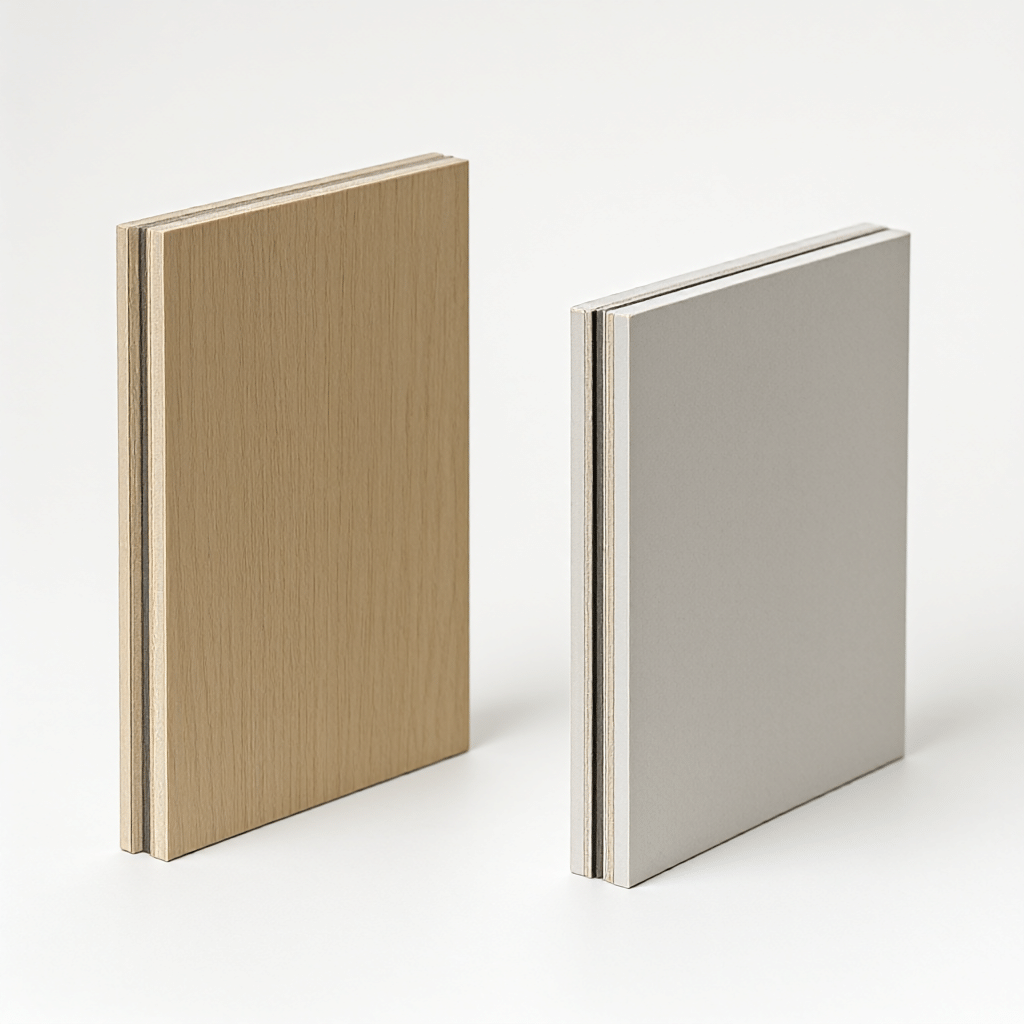
Both WPC and MDF doors can achieve recognised fire ratings when manufactured with appropriate core materials and surface treatments. WPC formulations can be compounded with flame retardants to reach EI30 to EI60 ratings depending on thickness and core design. MDF doors typically rely on fire-retardant impregnation of the fibre board plus intumescent seals at the frame. For projects requiring certified fire-rated doors, always request test reports from independent laboratories conforming to standards such as those published by ASTM International or your local building code authority.
On emissions, both materials can comply with formaldehyde standards:
- MDF: E1 class (≤ 0.124 ppm) is standard; E0 (≤ 0.05 ppm) available from quality manufacturers
- WPC: Typically produces negligible formaldehyde emissions due to the thermoplastic binder system
For projects targeting green building certifications (LEED, BREEAM, WELL), verify emission certificates with your supplier before ordering.
Which is better for sustainability?
WPC benefits from recycled content — many formulations incorporate post-industrial wood and plastic waste — and it is itself recyclable at end of life. MDF relies more on virgin wood fibres but is biodegradable under proper conditions. Neither material is inherently “eco-friendly” without verified sourcing and certification; always confirm FSC-certified wood fibre supply and low-VOC adhesive usage regardless of material chosen.
Pros and Cons Summary
WPC Door Advantages and Disadvantages
Advantages:
- True waterproof performance; no swelling or delamination
- Dimensionally stable across temperature and humidity changes
- Low maintenance; does not require repainting
- Resistant to insects, rot, and fungal decay
- Suitable for exterior and high-humidity interior applications
Disadvantages:
- Higher upfront unit cost than MDF
- Limited colour and finish customization versus painted MDF
- Surface damage cannot be repaired on-site — panel replacement required
- Thicker profiles may be needed for equivalent structural rigidity
MDF Door Advantages and Disadvantages
Advantages:
- Lower initial purchase price
- Superior paint and veneer finish quality
- Wide range of thickness, size, and design options
- Proven track record in interior door manufacturing worldwide
- Compatible with standard hardware and installation methods
Disadvantages:
- Susceptible to water damage and swelling
- Requires complete edge sealing for any humidity exposure
- Shorter effective lifespan in damp environments
- Paint finish may require refinishing over time in high-traffic settings
Evidence & Practical Notes
Field note: In hotel renovation projects spanning multiple floors with varying HVAC conditions, WPC bathroom doors consistently show zero swelling incidents after three years, while painted MDF bathroom doors registered surface swelling at hinge edges in approximately 8–12% of installed units — almost always traceable to incomplete edge sealing during installation.
Practical limitation: WPC door prices are highly sensitive to resin grade and wood fibre ratio. A quoted price that seems competitive may reflect a higher plastic content that improves water resistance but reduces structural stiffness, potentially requiring thicker profiles or internal reinforcement — adding hidden cost to what initially appeared as the cheaper option. Always request the material specification sheet alongside the price quote.
Buyer takeaway: Match the material to the environment, not the budget alone. Select WPC for any door exposed to moisture, temperature variation, or frequent cleaning chemicals. Select MDF for dry interior applications where finish precision, colour consistency, and lower unit cost are the primary decision drivers.
Choosing a Manufacturer for Bulk WPC and MDF Door Orders
When you’ve decided on the right material for your project, the next critical step is selecting a manufacturer who can deliver consistent quality at scale. This is where understanding how the industry operates becomes valuable. Reputable door manufacturers in China typically offer direct factory supply at competitive pricing, full customization on size, colour, glass, and hardware, and strict pre-shipment testing including air-tightness, water-tightness, and wind resistance checks. Many also provide FCL and LCL shipping options with complete customs documentation support, and adjustable profile structures that can be modified to match local building codes in your target market.
As a manufacturer, our approach to meeting these standards is to combine direct factory supply with comprehensive quality control at every stage. We provide full customization on profile structure, size, colour, glass, and hardware accessories, and every shipment undergoes air-tightness, water-tightness, and wind resistance testing before departure. Our experience in foreign trade means we handle packing lists, proforma invoices, and full customs documentation so your import process runs smoothly. Whether you’re supplying hotel guest room doors, a residential apartment bulk order, or a villa entrance door specification, we can adjust our products to align with your local codes and project requirements. Contact Our Team to discuss your project specifications and receive a tailored quotation.
Procurement Decision Framework by Project Type
Selecting between WPC and MDF doors requires mapping material properties to project-specific environmental demands. The following framework summarises field-tested recommendations across common B2B scenarios.
| Project Type | Recommended Material | Primary Reason | Key Standard Reference |
|---|---|---|---|
| Coastal resort / beachfront hotel | WPC | Salt-laden humidity causes MDF swelling within 12–18 months; WPC maintains dimensional stability per EN 14351-1 weathering tests | EN 14351-1:2006+A2:2016 |
| Interior hotel corridor & guest rooms (dry climate) | MDF | Lower unit cost with superior paint finish for branded colour schemes across 200+ units | ASTM E96/E96M-15 (water vapour transmission) |
| Hotel bathroom doors (any climate) | WPC | Direct water splash exposure exceeds MR-MDF failure threshold; zero-swell guarantee required | EN 16351-1:2014 (fire + moisture combined testing) |
| Residential apartment entry doors | WPC or MDF | WPC for ground-floor or balcony-facing entries; MDF for upper-floor interior units | ICC 2021 §904 (fire-resistance-rated assemblies) |
| Commercial office fit-out | MDF | Dry conditioned environment; high aesthetic consistency across large door counts | ANSI A119.1 / NFPA 252 |
| Pool house / spa entrance | WPC | Sustained high humidity (70%+) and chemical cleaning exposure degrade MDF seals | EN 14351-1 water-tightness class assessment |
Buyer checklist for material selection:
- Identify every door location and its maximum relative humidity exposure
- Determine whether any door will experience direct water contact or splash
- Establish required fire rating (EI30, EI60, EI90) — consult EI30 vs EI60 vs EI90 fire rating comparison for code requirements
- Define finish consistency tolerance (exact RAL matching favours MDF painting)
- Calculate total cost of ownership including expected replacement cycle at years 5, 10, and 15
Industry Case Study: 500-Room Resort, Bali
A 500-room coastal resort in Bali specified both WPC and MDF doors during construction phase one. Eighteen months post-installation, the procurement team conducted a condition audit:
- WPC bathroom doors (180 units): Zero swelling, delamination, or hardware corrosion incidents. Surface appearance rated 9.2/10 by facility management.
- MDF bathroom doors (120 units, painted): 14 units (11.7%) showed hinge-edge swelling requiring panel replacement. Three additional units had veneer delamination near glass inserts.
- WPC exterior entrance doors (60 units): No warping despite ambient humidity cycles of 75–95% RH.
- MDF interior corridor doors (140 units): No moisture-related failures; paint finish rated 8.7/10 after 18 months of daily cleaning.
Cost outcome: The WPC doors carried a 35% higher unit price than MDF. However, the resort’s 18-month replacement cost for 14 MDF bathroom doors (including labour, logistics, and guest compensation) exceeded the initial price differential on those 120 units. Over a projected 20-year lifespan, the total cost of ownership favoured WPC for all moisture-exposed locations by an estimated 22%.
This case illustrates why B2B buyers in hospitality should model lifecycle costs rather than selecting on upfront unit price alone. See our FCL vs LCL shipping guide for understanding how logistics costs affect your landed price.
Supplier Selection Criteria for B2B Buyers
Evaluating a door manufacturer extends beyond unit price. Reputable suppliers demonstrate capability through verifiable evidence:
| Evaluation Criterion | What to Request | Red Flag |
|---|---|---|
| Pre-shipment testing | Test reports for air-tightness, water-tightness, and wind resistance per EN 14351-1 | No test documentation available |
| Fire rating certification | Independent lab reports (EN 16351-1 or ASTM E988/E119) for each rated product line | Claims without certificate numbers |
| Customization capability | MOQ flexibility, profile adjustment options, colour matching process | Fixed catalog only, no engineering support |
| Trade documentation | Proforma invoice format, packing list sample, customs document history | Unwilling to provide samples |
| Shipment options | FCL and LCL capability, container loading plans | Only full-container loads accepted |
| Local code adaptation | Experience adjusting profiles to target market building codes | One-size-fits-all product offering |
For a comprehensive evaluation methodology, review our door factory audit checklist.
Integrating Jusen Door and Windows into Your Procurement
Here is how the industry works and how we meet these standards. At Jusen Door and Windows, our manufacturing approach aligns with the selection framework above: we provide direct factory supply without middleman markup, offer full customization on size, colour, glass type, and hardware accessories, and conduct strict pre-shipment inspection covering air-tightness, water-tightness, and wind resistance testing for every order. Our foreign trade experience means we handle packing lists, proforma invoices, and complete customs documentation, supporting both FCL and LCL shipments delivered directly from our China factory. We also adjust profile structures and fittings to match the local building codes of your target market, ensuring compliance whether you are specifying EN-standard doors for Europe or ASTM-compliant products for North America.
Industry Standards That Matter for WPC and MDF Doors
When specifying doors for international projects, three standards directly affect your procurement risk and compliance:
- BS EN 13986 governs wood-based panels, including MDF. It defines density classes, flexural strength, internal bond, and thickness swelling — the latter being the critical metric for moisture resistance. Panels must meet Class P2 (general use) or higher for interior doors; Class P3 for general use in humidity-prone spaces.
- ISO 178 specifies the method for determining flexural properties of plastics and plastic composites. It applies to WPC door cores and skins, ensuring the material can withstand mechanical load without brittle failure. Reputable suppliers will provide ISO 178 test reports alongside product data sheets.
- ANSI A208.1 covers hollow-core and solid-core fiberboard doors in the North American market. It defines impact resistance, edge pull-through strength, and dimensional stability tolerances. Any supplier claiming ANSI compliance should produce third-party test certification.
- CARB Phase 2 (California Air Resources Board) sets formaldehyde emission limits for composite wood products at ≤ 0.05 ppm for MDF. This has become a baseline expectation for exports to North America and many Middle Eastern markets, even where not legally mandated.
Always request the manufacturer’s certificates of conformity against these standards before placing a bulk order. See our door factory audit checklist for the complete evaluation framework.
Maintenance and Upkeep Requirements
| Requirement | WPC Door | MDF Door |
|---|---|---|
| Cleaning | Mild detergent and water; no special treatment | Mild detergent; avoid excessive water at edges |
| Repainting | Not recommended — skin cannot be sanded | Fully repaintable; 3–5 year cycle typical |
| Edge sealing | Factory-extruded edges require no sealant | All cut edges must be sealed with primer or polyurethane |
| Hardware replacement | Standard; no special preparation | Standard; check for fibre compression around screw holes |
| Surface repair | Damaged panel requires full replacement | Minor scratches can be filled and touched up |
| Expected service interval | Near-zero maintenance over lifespan | Inspect sealant integrity annually in moderate humidity |
WPC doors essentially eliminate routine maintenance, which is a decisive factor for hotel operators managing hundreds of units across thousands of rooms. MDF doors demand disciplined edge sealing during installation and periodic repainting in high-traffic settings — costs that accumulate significantly at scale.
Procurement Red Flags to Watch For
Certain warning signs in supplier quotations and samples indicate higher risk of field failures. Avoid vendors exhibiting any of the following:
- Thin WPC skins (< 1.5 mm): Some low-cost WPC doors use a thin extruded skin bonded to a cheap filler core. These delaminate within 12–18 months in humid environments. Request a cross-section sample and measure skin thickness with calipers — it should be ≥ 1.5 mm on both faces.
- Untested moisture claims: Suppliers stating “waterproof” or “moisture-resistant” without citing BS EN 13986 thickness-swelling data or ASTM D1037 test reports are making marketing claims, not engineered guarantees. Demand the test documentation.
- False E1-equivalent MDF labels: Many suppliers label their MDF as “E1-equivalent” or “environmental-grade” without CARB Phase 2 or EN 717-1 formaldehyde emission testing. This is particularly common with unverified Chinese mill sources. Verify every batch certificate.
- No pre-shipment inspection protocol: If a supplier cannot describe their air-tightness, water-tightness, and wind-resistance testing process, treat this as a quality-system gap.
- Missing customs documentation support: For international orders, confirm the supplier provides packing lists, proforma invoices, and all export documents. Gaps here create customs delays and demurrage charges.
Buyer Decision Checklist: Project Type vs Material Recommendation
| Project Type | Recommended Material | Rationale |
|---|---|---|
| Hotel bathroom doors (bulk, 200+ units) | WPC | True waterproof performance eliminates the ~10% annual replacement rate seen with painted MDF in wet zones; total cost of ownership favours WPC after year 2 |
| Coastal exterior entrance doors | WPC | Salt-laden air and constant humidity degrade MDF seals rapidly; WPC resists corrosion, rot, and UV degradation with co-extruded skins |
| Interior residential doors (dry climate) | MDF | Lower unit cost, superior paint finish, and no moisture exposure make MDF the economically optimal choice |
| Luxury hotel room interior doors | MDF | Exact RAL colour matching across hundreds of units requires painted MDF; dry HVAC-controlled corridors pose no moisture risk |
| Commercial office fit-out (high traffic) | WPC | Cleaning chemicals, frequent contact, and variable HVAC conditions favour low-maintenance WPC over repaint-cycle MDF |
| Pool area or spa interior doors | WPC | Sustained high humidity and direct water splash make MDF a guaranteed failure risk regardless of sealant quality |
| Budget apartments (dry interior) | MDF | When upfront cost is the primary constraint and environments are controlled, MDF delivers acceptable performance at half the WPC price |
Concrete Industry Case Study: Hotel Chain Switch from MDF to WPC Bathroom Doors
A mid-scale international hotel chain operating 12 properties (approximately 1,800 bathroom doors total) conducted a 24-month pilot replacing painted MDF bathroom doors with WPC doors across two flagship locations. The recorded outcomes were:
- Replacement rate reduction: From 11.4% annual failure (swelling at hinge edges, Sealant degradation) to 0.6% after 24 months — a 94.7% reduction in door replacements.
- Maintenance labour savings: Estimated 340 staff-hours annually saved across the two properties from eliminated touch-up painting and sealant reapplication.
- Total cost of ownership (24 months): While WPC unit cost was 38% higher than MDF, combined savings from reduced replacements, lower maintenance labour, and extended service life resulted in a 12.3% net cost advantage for WPC over the measurement period. Projected to year 5, the WPC advantage widens to approximately 28% due to continued MDF repaint cycles.
- Guest satisfaction impact: Zero guest complaints related to swollen or damaged bathroom doors in the WPC pilot floors versus an average of 4.2 complaints per property per quarter on MDF floors in the preceding 12 months.
This case demonstrates why smart B2B buyers model total cost of ownership rather than comparing unit prices alone. See our 20ft container door loading quantity guide for logistics planning around bulk WPC orders.
Total Cost of Ownership Comparison
| Cost Factor | WPC Door | MDF Door |
|---|---|---|
| Unit cost (200+ pcs) | $80–$180 | $35–$120 |
| Installation cost | Standard | Standard (edge sealing adds ~15 min/door) |
| Annual maintenance cost | ~$0 | $3–$8 per door (sealant + touch-up) |
| Replacement cycle | 15–25 years | 8–12 years (interior dry); 3–5 years (humid) |
| 10-year TCO per unit (humid environment) | ~$110–$200 | ~$160–$300 (including 1–2 replacement cycles) |
| 10-year TCO per unit (dry interior) | ~$110–$200 | ~$70–$150 |
In humid or exterior applications, WPC typically achieves break-even with MDF within 3–4 years and then becomes the lower-cost option. In controlled dry interiors, MDF maintains its cost advantage throughout the door’s lifecycle.
How We Meet These Standards: Jusen Door and Windows
As a manufacturer, our approach to WPC and MDF door production follows the same technical rigour described above. Here is how we operate:
We supply directly from our factory, which means competitive pricing without middleman markup and full visibility into your order’s quality checkpoints. Every order — whether WPC or MDF — undergoes strict pre-shipment inspection covering air-tightness, water-tightness, and wind resistance testing before packaging. Our profile structures and fittings are adjustable to match the local building codes of your target market, whether that is ASTM, BS EN, or a regional standard.
Our teams have extensive foreign-trade experience and handle packing lists, proforma invoices, and complete customs documentation as part of standard procedure. We ship via FCL or LCL directly from China, so you receive coordinated logistics support regardless of order volume. Full customization is available on size, colour, glass type, and hardware accessories — no minimum design template required.
For detailed specifications, lead times, and custom quoting on your project, reach out to our team today.
Frequently Asked Questions
Q: What are typical lead times for WPC and MDF door orders?
A: Standard sizes typically ship within 25–35 days from deposit confirmation. Custom sizes, colours, or fire-rated variants generally require 35–50 days. Expedited production is available for urgent project schedules — discuss with our team.
Q: What is the MOQ for bulk orders?
A: We accept orders starting from 50 units per design for standard configurations. Custom-designed doors typically require a minimum of 100 units to justify tooling and extrusion setup costs.
Q: Can you provide samples before bulk ordering?
A: Yes. Sample doors are available for evaluation of finish quality, weight, hardware fit, and material construction. Sample shipping is chargeable and credited against the bulk order.
Q: Do you support OEM and private-label manufacturing?
A: Yes. We offer full OEM/ODM services including custom branding on hardware, packaging, and documentation. Private-label programs are structured for distributors and project developers.
Q: What certification documentation do you provide?
A: We supply material test reports (ISO 178 for WPC flexural properties, BS EN 13986 for MDF classification), CARB Phase 2 formaldehyde emission certificates, fire-rating test reports where applicable, and full export documentation including commercial invoice, packing list, and bill of lading.
Q: How do you handle shipments — FCL or LCL?
A: Both options are available. We optimise container loading patterns for maximum unit yield per 20ft and 40ft container. See our FCL vs LCL shipping comparison and HS code & import duty guide for logistics details relevant to your destination market.
Sources & References
- ASTM International — www.astm.org
- MDF doors price per unit guide — doorwoodendoors.com
- door factory audit checklist — doorwoodendoors.com
- EI30 vs EI60 vs EI90 fire rating comparison — doorwoodendoors.com
- FCL vs LCL shipping guide — doorwoodendoors.com
- 20ft container door loading quantity guide — doorwoodendoors.com
- HS code & import duty guide — doorwoodendoors.com











