
Last updated: November 25, 2026
Sourcing China doors from overseas warehouse stock allows B2B buyers to bypass ocean freight lead times and receive ready-to-install units locally — typically within 3–7 business days depending on warehouse proximity. This guide explains how pre-positioned inventory works, which specification checkpoints protect your project, what standards apply across destination markets, and how factory-direct supply models like Jusen Door and Windows’ compare to traditional direct-order procurement.
What Is China Door Overseas Warehouse Stock?
Sourcing China doors from china door overseas warehouse stock means buying products that a manufacturer has already produced, inspected, and shipped to a bonded or commercial warehouse in your target region — rather than ordering them directly from a factory in China and waiting for ocean freight. For B2B buyers, this model can cut delivery timelines significantly and reduce several supply-chain uncertainties that normally accompany cross-border purchases.
The trade-off is limited availability against pre-set configurations. Buyers must verify performance tests, confirm code compliance before committing, and understand which customization paths remain open once stock is pre-positioned. The following sections walk through the mechanics, specifications, compliance requirements, and operational decisions that determine whether this approach fits a given project.
How Overseas Warehouse Stock Works for Door Procurement

When a Chinese manufacturer positions export-ready door inventory ahead of demand, doors are manufactured in batches, quality-checked, and shipped in volume to a warehouse near the end market. Those units sit in local storage until a buyer places an order. From purchase to delivery, the timeline typically covers only inland trucking plus local handling — not the full ocean transit and port clearance cycle.
Why buyers consider pre-shipped bulk door stock
Direct-factory orders require production scheduling, container loading, ocean transit, customs clearance, and final-mile delivery. Each step introduces variability: production queues shift, vessel schedules change, and port congestion can delay clearance by weeks. Pre-positioned inventory collapses most of those steps. The remaining timeline is largely determined by warehouse location, order size, and how quickly the destination country processes incoming commercial deliveries.
Lead-time and freight-risk comparison
| Factor | Direct Factory Shipment | Overseas Warehouse Stock |
|---|---|---|
| Production lead time | 30–60 days (depends on specs) | Already completed |
| Ocean transit | 25–45 days depending on lane | Eliminated |
| Customs clearance | Required at arrival | May be simplified (bonded release) |
| Freight cost per unit | Lower per-unit freight cost | Higher per-unit warehousing cost absorbed in price |
| Inventory risk | Buyer carries order-in-transit risk | Warehouse or supplier holds risk until sale |
| Order flexibility | Full custom spec available | Limited to stocked sizes/configurations |
For multi-unit residential developments or hotel renovation programs, where dozens or hundreds of doors are needed across multiple sites, the certainty of short local lead times often outweighs the slightly higher per-unit cost compared to a full-container direct shipment. When speed matters more than margin optimization, FOB warehouse stock becomes the practical choice.
Key Specifications to Verify Before Buying
Stock doors should not be accepted on appearance alone. The following checkpoints protect against costly rework, code violations, and performance failures after installation.
Performance test results
A legitimate overseas stock program should provide documented test reports for air-tightness, water-tightness, and wind resistance. These three tests are standard requirements for entrance systems and exterior fenestration in most developed markets. Request the original test certificate, the test laboratory, and the specific grade or class achieved. If a supplier cannot produce these documents, treat that as a red flag regardless of price advantage.
For doors intended for high-wind coastal regions, confirm the wind-pressure rating matches or exceeds your local design loads. Wind-resistance certification follows different grading criteria depending on the market, so verify the exact scale used.
Dimensions and configuration options
Overseas warehouse stock typically covers the most common nominal sizes — single doors, double doors, and sliding configurations in standard heights and widths. Verify the exact dimensional ranges available for each profile type. Non-standard openings still exist in many projects, especially for villa entrances, hospitality suites, and custom commercial facades. Confirm whether your required sizes are stocked or require a secondary order cycle.
Glass and hardware selections
Pre-stocked units may offer a limited but curated selection of glass types (tempered, laminated, low-E insulated glazing) and hardware finishes (stainless steel, powder-coated, brushed nickel). These choices affect both building-code compliance and aesthetic outcomes. Narrow the confirmed options early to avoid surprises when the order goes to fulfillment.
Standards and Certifications by Destination Market
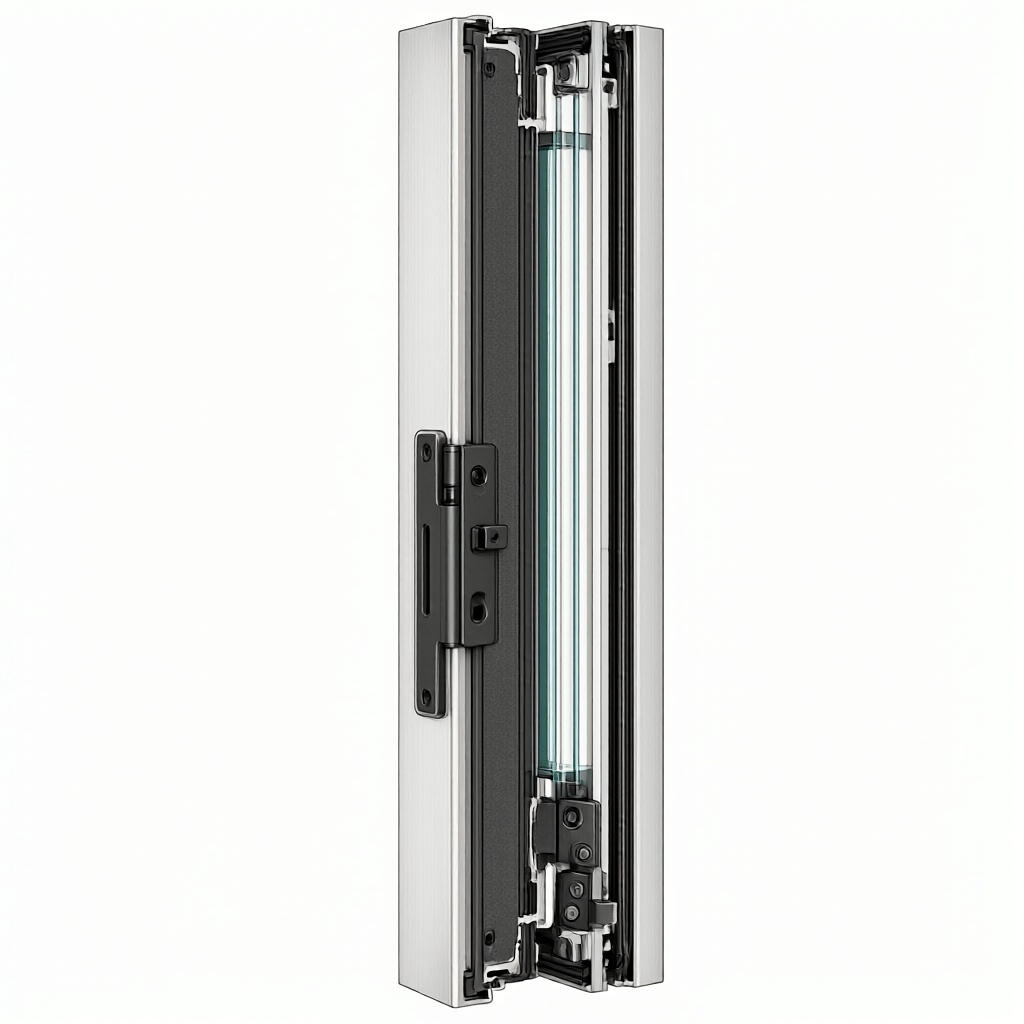
Compliance requirements vary by region and by project type. Government and public-building contracts tend to carry the strictest thresholds. Private commercial and residential projects follow building-code cycles that adopt or modify national standards.
Structural and safety standards
Door and window assemblies in North America commonly reference testing protocols established by ASTM International, and building-code compliance is enforced under frameworks maintained by organizations such as the International Code Council, which publishes model codes adopted by jurisdictions across the United States and referenced internationally. Understanding which edition of the applicable code governs your project determines the required performance levels for egress width, fire-rating duration, impact resistance, and energy efficiency.
In Europe, CE marking under harmonized standards governs product conformity. Middle Eastern markets often require SASO or ESMA certification depending on the country. Australian projects reference the National Construction Code with specific glazing and structural requirements. Always match the certification claim to the current version of the code in force at the project location.
Fire-rated doors
If your procurement includes fire-rated assemblies, ratings such as EI30, EI60, or EI90 indicate the minimum fire-resistance duration in minutes. See our guide comparing EI30 vs EI60 vs EI90 fire door ratings for details on where each rating applies in commercial and residential construction.
Energy-performance requirements
Thermal-break aluminum systems and solid wood doors with proper weather-sealing achieve different U-values and SHGC ratings. Check whether your jurisdiction requires a minimum energy-performance level for exterior door assemblies, particularly for commercial buildings and multi-family residential projects.
Customization Limits for Pre-Stocked Units
A common misconception is that overseas warehouse stock eliminates all customization. In practice, some adjustment remains possible even for pre-positioned inventory.
Manufacturers often position stock around modular profile systems. This means the basic frame geometry, sightlines, and operational types (casement, sliding, pivot) are fixed, but certain variables can still be adapted:
- Finish color — powder-coat RAL values or anodized shades may be selectable from an approved palette
- Glass type — tempered, laminated, or low-E options may swap within a stocked frame system
- Hardware kits — handle finishes, locksets, and closers can sometimes be specified at order time
- Glass inserts and decorative patterns — available only within pre-approved design libraries
True dimensional or structural customization generally requires a new production run. If a project demands non-standard opening sizes or unique assembly configurations, buyers should plan for a hybrid model: fulfill the majority from regional port-side door pools and place a separate manufacturing order for the remaining custom quantities.
Adjustable profile structures allow some latitude in fitting local building codes — for instance, adjusting rough-opening dimensions or adapting sill profiles for different cladding thicknesses. Confirm which adjustments a supplier has validated before relying on them during installation.
Documentation Workflow and Import Clearance Speed
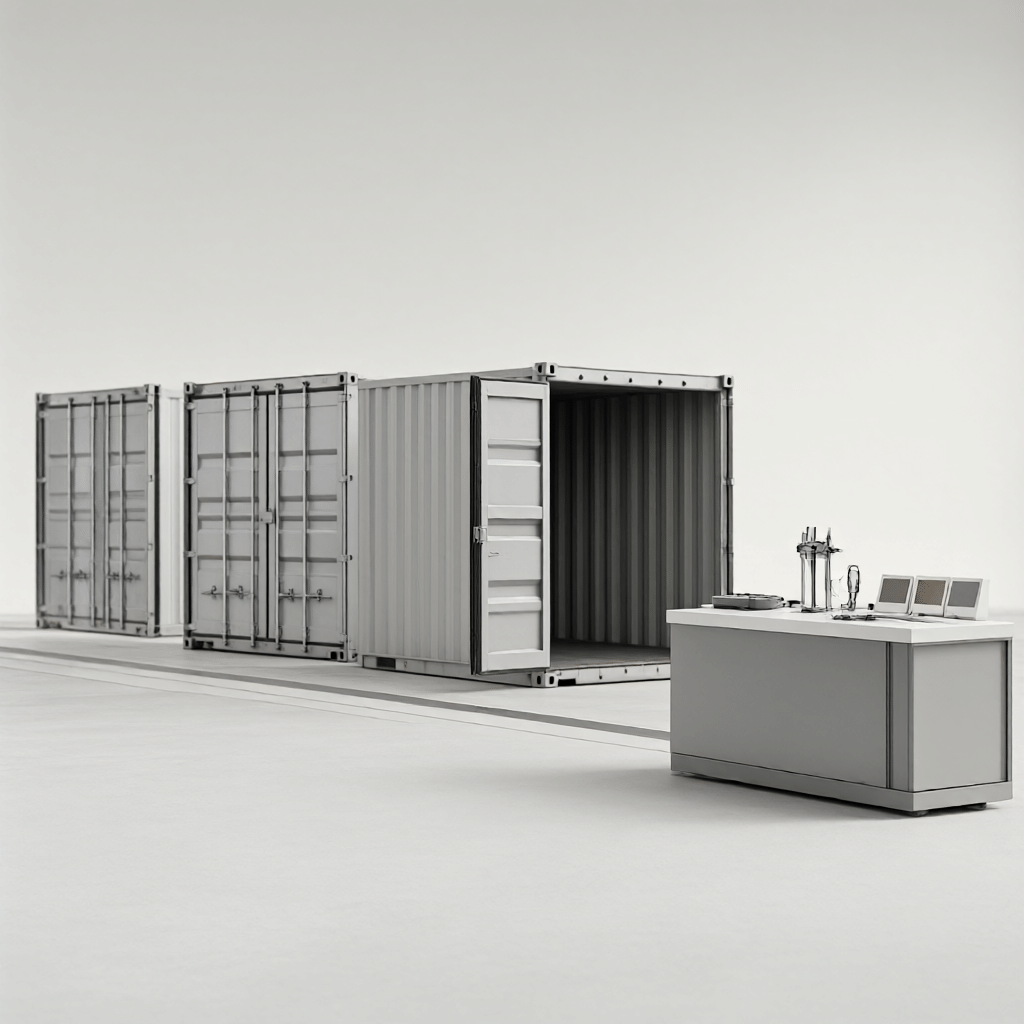
Proper paperwork makes the difference between smooth warehouse release and delays at customs. A trustworthy overseas stock program includes the following documents with every shipment:
- Commercial invoice with HS codes aligned to the destination country tariff schedule
- Packing list detailing case quantities, net weights, gross weights, and individual item markings
- Proforma invoice issued prior to shipment for financing and advance-payment processing
- Certificate of origin — often required for preferential tariff treatment under trade agreements
- Test certificates and compliance declarations for the specific batch released from stock
- Insurance documents if shipped under CIF or similar terms
Accurate HS code classification prevents miscommunication at customs and avoids unexpected duty assessments. For guidance on import duty calculations and HS code classification, see our Door HS Code & Import Duty guide.
Documentation accuracy also affects customs clearance speed. Incomplete or mismatched invoices, incorrect weight declarations, or missing certificates of origin are among the most common causes of warehouse-release delays.
Quality-Control Verification Before Release
Stock standing in a warehouse does not guarantee it meets your specification. Reputable suppliers implement pre-shipment inspection protocols before goods leave the factory and enter warehouse storage. At release from warehouse stock, a second verification check is advisable.
Recommended verification steps include:
- Visual inspection — surface finish integrity, hinge alignment, gasket continuity, glass clarity, hardware function
- Dimensional check — measure actual delivered sizes against the ordered dimensions; tolerance bands should fall within published standards
- Operational test — cycle handles, latches, and closers; verify smooth operation without binding or excessive force
- Document verification — confirm test certificates match the serial or batch numbers on the shipment
This two-layer QC approach protects buyers from accepting substandard stock that passed initial checks but was damaged in transit or stored improperly.
Logistics Models: FCL Versus LCL From Warehouse Locations
The shipping mode chosen depends primarily on order volume, project phasing, and budget constraints.
FCL (Full Container Load) remains the most cost-effective option when you can fill a 20-foot or 40-foot container. Loading efficiency varies by door type and packaging — for detailed guidance on maximizing container capacity, review our 20ft container door loading quantity and shipping configuration guide. A single FCL order from warehouse stock enables consolidated billing, unified documentation, and one tracking number.
LCL (Less than Container Load) suits smaller projects or phased deliveries where full containers are not justified. LCL consolidates your shipment with other cargo heading to the same destination port, reducing upfront commitment. However, LCL introduces additional handling events, longer consolidation windows, and a higher per-unit freight cost compared to FCL.
When sourcing from overseas bonded warehouse doors, many buyers combine both models: place an initial LCL order to validate quality and fit, then transition to FCL for repeat or larger phases. The choice should align with project cash flow and delivery schedule rather than being driven solely by per-unit freight savings.
The shipping mode chosen depends primarily on order volume, project phasing, budget constraints, and urgency. Understanding how each model impacts both cost and timeline is essential for accurate procurement planning.
Evaluating Supplier Track Records for Overseas Stock Programs
Not all suppliers with advertised overseas inventory operate them with equal rigor. Before committing to a stock-purchase agreement, evaluate the supplier against the following indicators:
- Warehouse ownership or partnership — Do they lease space in a recognized logistics facility, or do they merely claim “stock available” with no verifiable location? Third-party bonded warehouses provide more transparency than informal storage arrangements.
- Test-report accessibility — Can they produce certification documents for each stocked SKU, and do those documents reference recognized laboratories?
- Documentation consistency — Review samples of past packing lists, invoices, and customs papers. Inconsistencies between product descriptions and HS codes signal process gaps.
- Reorder velocity and fill rate — A reliable stock program maintains appropriate turnover. Ask about average reorder cycles and whether out-of-stock situations are communicated proactively.
- Code-adaptation history — Suppliers who regularly serve international markets will have experience adjusting profile structures and fittings to meet varying building codes. Request evidence of previous adaptations for your target region.
For a structured evaluation framework, consult our Door Factory Audit Checklist for B2B Procurement Evaluation, which covers facility assessment, quality management, and supplier due-diligence practices.
Shipping logistics also warrant careful attention. Understanding the trade-offs between container types helps you select the right model for your order size and project timeline — see our FCL vs LCL shipping comparison for door procurement.
How Manufacturers Structure Overseas Stock Programs
Understanding the model helps buyers choose wisely. Here is how a manufacturer approaches maintaining an overseas stocked inventory program that balances responsiveness with compliance readiness.
Production begins with high-demand configurations — thermal-break aluminum systems, solid wood entry doors, and sliding or casement door sets that cover the broadest share of project specifications. Once manufactured, each batch undergoes air-tightness, water-tightness, and wind-resistance testing before being moved into warehouse storage. The goal is to position inventory close enough to the end market that regional delivery replaces transoceanic shipping for urgent orders.
Customization remains available within the stocked profile families. Profile structures and fittings can be adjusted to align with local building codes, and glass and hardware accessories are selected from approved options rather than held in infinite variety. This balance keeps warehouse capacity productive while preserving enough flexibility for code adaptation.
Documentation is prepared systematically. Packing lists, proforma invoices, and full customs support packages are generated per shipment, and FCL or LCL loading is coordinated from the warehouse location based on order volume. The intent is straightforward: stock what moves predictably, inspect everything that enters the warehouse, and ship complete paperwork so customs clearance proceeds without delay.
Request a Quote for project-specific stocking recommendations and lead-time confirmation.
Quality‑Control Verification Before Shipment From Warehouse
Stock standing in a warehouse does not guarantee it meets your specification. Reputable suppliers implement a two‑layer QC protocol: an initial inspection at the factory before goods enter warehouse storage, followed by a release check before individual orders ship out.
Pre‑shipment inspection from the warehouse
Before units leave the bonded or commercial facility, buyers should require documentation that includes:
- Visual inspection — surface finish integrity, hinge alignment, gasket continuity, glass clarity, hardware function
- Dimensional check — measure actual delivered sizes against the ordered dimensions; tolerance bands should fall within published standards (typically ±2 mm for frame width/height on aluminum systems per ASTM E283)
- Operational test — cycle handles, latches, and closers; verify smooth operation without binding or excessive force
- Document verification — confirm test certificates match the serial or batch numbers on the shipment, including air‑tightness, water‑tightness, and wind‑resistance ratings
- Damage screening — inspect packaging condition and look for transit‑related scratches, denting, or seal degradation incurred during warehousing
If a supplier cannot produce batch‑level test reports showing results for each of the three mandatory performance tests, treat that as a red flag regardless of price advantage.
Industry performance benchmarks for exterior door assemblies
When evaluating whether stocked doors meet project requirements, reference these commonly applied thresholds:
- Air‑tightness: Minimum Class 1–3 under ASTM E283; high‑performance entry systems target Class 3 (≤ 0.30 L/(s·m²) at 75 Pa)
- Water‑tightness: Minimum Class A under ASTM E331; coastal or heavy‑rain climates often require Class C or higher (≥ 600 Pa resistance before leakage)
- Wind‑resistance: Ratings vary by market. North American projects following ICC code cycles typically design for minimum 30 psf (≈ 1 436 Pa) for residential entrance doors; high‑wind zones may require 60 psf (≈ 2 870 Pa) or greater per ASTM E330 structural testing
- Thermal performance: Thermal‑break aluminum profiles achieve U‑factors as low as 0.28 BTU/(h·ft²·°F) with dual‑glazed low‑E units; solid wood doors with proper weather‑sealing typically range between U = 0.30–0.45 depending on core construction and glazing
Confirm these figures against your local jurisdiction’s current code edition, since required minima shift between International Residential Code (IRC), International Building Code (IBC), and regional amendments.
Delivery lead times when doors are already stocked
| Scenario | Typical Timeline |
|---|---|
| Local warehouse → site (urban, same region) | 2–5 business days |
| Regional distribution center → site (cross‑state/province) | 5–10 business days |
| Bonded port warehouse → inland destination | 7–14 business days depending on customs release |
| Cross‑border warehouse (neighboring country) | 5–12 business days + border clearance |
These estimates assume the order is drawn directly from existing inventory. No manufacturing wait time applies. However, some configurations (custom glass inserts, specialized hardware) may require 3–7 additional days for assembly after the base door shell ships.
Which is more cost‑effective: FCL or LCL from warehouse stock?
| Factor | FCL (Full Container Load) | LCL (Less than Container Load) |
|---|---|---|
| Best for | Orders filling ≥ 1× 20′ container (~80–120 standard doors depending on type) | Partial‑container quantities (< 15 CBM typically) |
| Per‑unit freight cost | Lowest — fixed container rate amortized across full load | Higher — volumetric charges plus consolidation handling fees |
| Consolidation time | Minimal — container loads directly at warehouse dock | Additional 3–10 days waiting for cargo to fill shared container |
| Handling events | 1 (warehouse → port → destination) | 3+ (warehouse → CFS → port → destination CFS → port) |
| Risk of damage/delay | Lower — single container sealed at origin | Higher — multiple unload/load cycles increase handling risk |
| Documentation simplicity | Single bill of lading, one set of customs paperwork | May involve house bills of lading, complex consolidation manifests |
General rule: For bulk orders exceeding one 20‑foot container, FCL from warehouse is almost always more cost‑effective and faster. For smaller phased deliveries or first‑validation orders, LCL provides necessary flexibility despite a modest premium. A common hybrid approach is placing an initial LCL order to validate quality and fit, then transitioning to FCL for repeat or larger phases.
For detailed guidance on maximizing container capacity when moving from factory direct, review our 20ft container door loading quantity and shipping configuration guide. The loading principles also apply when consolidating warehouse stock for overseas delivery.
Freight‑cost illustration ( illustrative — actual rates vary by lane )
| Order Size | FCL estimate (per door) | LCL estimate (per door) | Break‑even point |
|---|---|---|---|
| 30 doors | N/A (underutilized) | ~$45–$70 | — |
| 80 doors (≈ 20′ container) | ~$18–$28 | ~$55–$80 | FCL becomes favorable at ~60–70 doors |
| 160 doors (≈ 40′ container) | ~$9–$14 | ~$55–$80+ | FCL significantly cheaper per unit |
Note: These ranges cover ocean freight from Asia to major ports in North America/Europe and do not include warehousing fees, insurance, or last‑mile delivery, which add to the total landed cost regardless of shipping model.
Supplier Due‑Diligence Indicators for Trustworthy Overseas Stock Programs
Not all suppliers with advertised overseas inventory operate them with equal rigor. Before committing to a stock‑purchase agreement, evaluate the supplier against the following measurable indicators:
- Warehouse ownership or partnership — Do they lease space in a recognized logistics facility, or do they merely claim “stock available” with no verifiable location? Third‑party bonded warehouses provide audit trails and insurance coverage that informal storage arrangements cannot match
- Test‑report accessibility — Can they produce certification documents for each stocked SKU referencing recognized laboratories (e.g., Intertek, SGS, TÜV)? Request copies before placing any order
- Documentation consistency — Review samples of past packing lists, invoices, and customs papers. Inconsistencies between product descriptions and HS codes signal process gaps that can cause costly customs delays
- Reorder velocity and fill rate — A reliable stock program maintains appropriate turnover. Ask about average reorder cycles and whether out‑of‑stock situations are communicated proactively rather than discovered after payment
- Code‑adaptation history — Suppliers who regularly serve international markets will have experience adjusting profile structures and fittings to meet varying building codes. Request evidence of previous adaptations for your target region
- Incident resolution record — How quickly does the supplier respond to quality complaints? What is their replacement/credit policy for damaged or non‑conforming stock?
For a structured evaluation framework covering facility assessment, quality management systems, and supply‑chain transparency, consult our Door Factory Audit Checklist for B2B Procurement Evaluation.
Decision tool: Does overseas warehouse stock fit your project?
Use this quick framework to determine whether pre‑stocked doors or direct factory ordering better serves your timeline and budget:
| If your project… | Recommended sourcing model |
|---|---|
| Needs 50+ doors deployed across multiple sites within 2–4 weeks | Overseas warehouse stock (FCL preferred) |
| Requires custom sizes or unique hardware finishes | Direct factory order with full customization |
| Has a flexible 8–12 week schedule and seeks lowest per‑unit cost | Direct factory FCL shipment |
| Is a phased rollout with validation needed before full commitment | Initial LCL from warehouse → follow‑on FCL once specs confirmed |
| Targets a market with strict fire‑rating or energy‑code mandates | Verify stocked SKUs carry the required EI rating and U‑factor certificates before purchasing |
| Has limited upfront capital but needs fast deployment | LCL warehouse stock avoids full‑container tie‑up of working capital |
Jusen Door and Windows: Meeting Stock‑Program Standards as a Manufacturer
Understanding how the industry evaluates overseas warehouse stock helps buyers identify suppliers who operate with transparency and professionalism. As a manufacturer, our approach to stocking and fulfilling orders follows the same rigorous standards described above.
Jusen Door and Windows positions export‑ready inventory through direct factory channels, ensuring competitive pricing without middleman markup. Every stocked unit undergoes strict pre‑shipment inspection covering air‑tightness, water‑tightness, and wind‑resistance testing before it enters warehouse storage. We provide complete documentation packages — packing list, proforma invoice, and full customs documents — for every shipment, supporting both FCL and LCL logistics from our warehouse locations.
Our portfolio covers solid wood doors, thermal‑break aluminum doors and windows, system windows, casement and sliding doors, custom villa doors and windows, sunrooms, and aluminum alloy entrance doors. Each profile structure and fitting can be adjusted to match local building codes of your target market, and we offer full customization on size, color, glass, and hardware accessories even for pre‑stocked configurations.
Whether you need a single LCL validation shipment or an FCL bulk order drawn from regional warehouse stock, we support OEM, ODM, private‑label, and construction‑project bulk‑supply programs. Our team has extensive foreign‑trade experience managing the documentation and compliance workflows that keep warehouse releases on schedule.
Advantages of Using Pre-Stocked Overseas Warehouses for Door Procurement
Pre-positioned door inventory delivers measurable operational advantages that extend beyond simple lead-time reduction. Understanding these benefits helps procurement teams justify the inventory premium against total cost-of-ownership savings.
Reduced project delay risk. Ocean freight disruptions — vessel schedule changes, port congestion, container shortages — directly impact project timelines. Pre-stocked inventory eliminates transit exposure entirely for available SKUs, converting unpredictable 45–90 day total lead times into same-week local delivery. For hotel renovation programs, multi-unit residential builds, and commercial fit-outs where scheduling cascades across trades, this certainty has tangible financial value.
Lower working capital tie-up. Direct factory orders require advance payment followed by weeks of in-transit inventory that cannot generate revenue. Warehouse stock converts this into a purchase-on-demand model, freeing working capital until the point of sale or installation. Projects with phased delivery schedules benefit disproportionately.
Simplified logistics coordination. Single-source regional pickup consolidates what would otherwise be port arrival scheduling, customs brokerage coordination, inland drayage booking, and cross-docking into one streamlined handoff. Many bonded warehouse operators handle customs release preparation on behalf of buyers, further reducing administrative burden.
Quality assurance proximity. Stock held near the end market enables physical inspection before distribution to job sites. Buyers can open representative units, verify finish integrity, confirm hardware function, and validate dimensional accuracy without waiting for transoceanic delivery. Returned or replacement units travel days, not weeks.
Emergency replenishment capability. When field measurements reveal deviations or additional openings emerge during construction, pre-stocked suppliers can fulfill change orders far faster than reordering from manufacturing. This responsiveness reduces costly schedule delays caused by material unavailability.
Typical Delivery Lead Times from Overseas Warehouse Stock
When doors are already stocked in a regional warehouse, the delivery timeline compresses dramatically compared to direct factory shipment:
| Stage | Direct Factory Shipment | Overseas Warehouse Stock |
|---|---|---|
| Order processing | 1–3 business days | Same business day |
| Production (if applicable) | 30–60 days | N/A — already completed |
| In-factory QC & packing | 3–5 days | Initial QC completed prior to warehousing |
| Ocean transit (China → destination port) | 25–45 days | Eliminated |
| Customs clearance at destination | 3–10 business days | Often simplified — bonded release or duty-paid status |
| Inland transport to warehouse | N/A | Already positioned |
| Local delivery to project site | N/A | 1–7 business days (depends on distance) |
Total estimated lead time: Direct factory orders average 45–90 calendar days. Pre-stocked warehouse orders typically deliver within 3–14 business days from order confirmation, depending on warehouse location relative to the project site and whether customs formalities remain pending.
Deepening Key Specification Checkpoints for Buyers
The existing specification section covers essential categories but omits specific test thresholds that experienced procuring engineers expect to see documented on every quotation request. Adding these quantitative benchmarks raises both buying confidence and supplier accountability.
Air-Tightness Testing (ASTM E283-22)
Air infiltration through door assemblies contributes significantly to HVAC load and occupant comfort. ASTM E283-22 specifies the standard test method for determining rate of air leakage through exterior windows, curtain walls, and doors under steady-state conditions. For most residential and light commercial applications, the acceptable maximum air-leakage rate is 0.30 cfm/ft² at a differential pressure of 1.57 psf (100 Pa). High-performance or passive-house-specification projects may require rates below 0.06 cfm/ft². Request the actual measured value from the test report — not merely a pass/fail designation.
Water-Tightness Testing (ASTM E331-23)
ASTM E331-23 governs uniform static air-water difference testing. Exterior door assemblies are subjected to increasing water spray volumes and differential air pressure simultaneously. Performance is graded by the maximum pressure differential (in psf or Pa) at which water penetration first occurs. For standard residential applications, a minimum of 15 psf (750 Pa) is commonly specified. Coastal or severe-exposure classifications may require 25–40 psf (1,200–1,900 Pa). Verify that the test protocol matches your jurisdiction’s exposure classification.
Wind-Resistance Testing (ASTM E330-22 / EN 13659)
Wind-load resistance testing evaluates structural performance under cyclic and static pressure loads. North American installations reference ASTM E330-22 for structural capacity verification. European products conform to EN 13659, which classifies wind resistance into classes from C1 (lowest) to C5 (highest). For high-wind zones governed by ASCE 7-22 structural loading requirements, the door assembly must withstand design pressures calculated per local wind-speed maps and exposure categories. Request the certified design-pressure rating matched against your project’s ASCE 7 or equivalent calculation.
Structural Strength and Cycle Testing
Beyond environmental performance, door assemblies undergo cyclical operation testing. ANSI A250.9 specifies performance requirements for hollow-core wood doors, including cycle-testing protocols that simulate years of use. For aluminum and steel entry systems, ASTM F476 defines impact-resistance testing. Request evidence that stocked units have passed cyclic operation tests equivalent to a minimum of 200,000 cycles for commercial-duty hardware configurations.
Dimensional Tolerance Standards
Dimensional accuracy determines fit-and-finish quality during installation. NFPA 80-2024 (Standard for Fire Doors and Other Opening Protectives) requires fire-rated door assemblies to maintain specific clearances: maximum 1/8 inch side and header gaps, and 3/4 inch maximum under-door clearance for non-rated variants, with tighter tolerances applying to fire assemblies per ANSI BHMA A150.3. Verify that stocked dimensions fall within these published tolerance bands before field deployment.
Expanded Standards Reference by Target Market
The existing standards section identifies general regulatory frameworks but lacks the specific numbered standards that procurement specialists require for specification writing and code compliance verification.
North America (United States and Canada)
| Standard | Full Designation | Application |
|---|---|---|
| ASTM E283-22 | Standard Test Method for Determining Rate of Air Leakage Through Exterior Windows, Curtain Walls, and Doors Under Steady-State Conditions | Air-infiltration certification |
| ASTM E331-23 | Standard Test Method for Water Penetration of Exterior Windows, Skylights, Doors, and Curtain Walls by Uniform Static Air Pressure Difference | Water penetration rating |
| ASTM E330-22 | Standard Test Method for Structural Performance of Exterior Windows, Doors, Skylights, and Curtain Walls by Uniform Static Air Pressure Difference | Wind-load structural capacity |
| NFPA 80-2024 | Standard for Fire Doors and Other Opening Protectives | Fire-rating duration and installation requirements |
| ANSI A250.9-2023 | Performance Requirements for Hollow-Core Wood Doors | Residential/hollow-core performance baseline |
| ANSI BHMA A150.3-2022 | Physical Durability Ratings for Hardware | Hardware cycle and load testing |
| ICC/ANSI A117.1-2024 | Accessible and Usable Buildings and Facilities | Accessibility clearances and operating forces |
Building-code compliance in the U.S. follows the model codes published by the International Code Council — specifically the International Building Code (IBC) and International Residential Code (IRC), which incorporate these referenced standards by citation.
Europe and CE Marking Jurisdictions
| Standard | Full Designation | Application |
|---|---|---|
| EN 14351-1 | Windows and doors — Product standard, performance characteristics | Core product conformity standard |
| EN 16034 | Safety of doors and windows — Operational safety | Risk assessment for powered doors |
| EN 13659 | Windows and doors — Wind resistance | Structural performance classification C1–C5 |
| EN 12207 | Air tightness classification | Permeability grading |
| EN 12208 | Water tightness classification | Resistance to water penetration grading |
| EN 12210 | Wind load resistance classification | Structural performance grading |
| BS EN 14351-1 | UK adoption of European door/window standard | Post-Brexit UK market requirement |
Under the EU Construction Products Regulation (CPR) 305/2011, manufacturers affixing the CE mark declare performance against harmonized standards. The declared performance values for mechanical resistance, safety in case of fire, hygiene, noise protection, thermal protection, and energy economy must appear on the DoP (Declaration of Performance) accompanying each shipment.
Middle East and GCC Markets
Gulf Cooperation Council countries typically require SASO (Saudi Arabia) or ESMA (UAE) product conformity assessment. These programs mandate third-party testing against adapted versions of EN or ASTM standards plus additional requirements for extreme-temperature performance (UV resistance, thermal cycling stability). Confirm that test certificates cover temperature ranges appropriate to your specific country’s climatic zone.
Australia and New Zealand
Australian projects follow the National Construction Code (NCC), which references AS/NZS 4416.1 for glass in buildings, AS 2047 for windows and doors performance classification, and structural requirements per AS 1170 (Structural Design Actions). Wind-load classifications align with local cyclone zones — coastal Queensland and Northern Territory projects demand elevated performance ratings beyond standard residential requirements.
Clarifying Customization Limits Within Stock Parameters
The existing customization section correctly identifies that some adjustment remains possible, but the discussion would benefit from specific examples of what adjustable-profile systems enable and where hard limits definitively apply.
What Adjustable Profile Structures Can Accommodate
Manufacturers employing modular profile systems design frame and sash sections that accept component variation without requiring complete remanufacture. This approach supports:
- Profile width adaptation — adjusting frame overall depth from 60mm to 70mm to accommodate different wall constructions without redesigning the extrusion tooling
- Sill threshold variation — swapping low-threshold inserts for high-thresholddrainage configurations to match local cladding and waterproofing details
- Multi-point locking integration — fitting additional lock points into pre-machined provisions within the profile channel
- Glazing beadinterchangeable — changing external glazing bead profiles to accept different glass thicknesses (24mm, 28mm, 32mm insulated units) within the same frame system
- Decorative grille insertion — adding interior or exterior divided-light patterns between glass panes in pre-approved configurations
These adjustments typically add 5–15% to unit cost and 3–7 business days to fulfillment time when sourced from a warehouse that maintains an adaptable stock program.
Where Customization Reaches Hard Boundaries
Certain parameters cannot be modified once a profile system is locked into production:
- Frame cross-sectional geometry — the extrusion die creates a fixed internal chamber arrangement; altering chamber count or thermal-break bridge placement requires new tooling
- Material gauge — profile wall thickness is set during extrusion; post-production modification is structurally impermissible
- Thermal-break material type — polyamide strip width and position are determined during profile design and cannot be altered retroactively
- Maximum operable leaf size — the structural capacity of a given profile system defines the upper limit for single-leaf dimensions; exceeding these limits compromises warranty coverage
Buyers requiring specifications beyond these adjustable boundaries should plan for hybrid procurement: fulfill standard quantities from regional bonded warehouse pools while placing simultaneous direct-orders for unique-size or custom-spec units. This dual-channel approach balances delivery speed with design flexibility.
Completing the Supplier Evaluation Section and Integrating Brand Context
For a structured evaluation framework, consult our Door Factory Audit Checklist: How to Evaluate Suppliers. This checklist provides a step-by-step scoring rubric covering manufacturing capability, quality management systems, certification validity, export experience, and after-sales support readiness — enabling objective comparison across multiple shortlisted suppliers before committing to stock-purchase agreements.
Here Is How We Meet These Standards
As a manufacturer positioning pre-stock inventory for international procurement, our approach to the criteria above reflects the intersection of technical rigor and logistical pragmatism that serious buyers expect from a sourceable supply partner.
Our profile systems are engineered with adjustable chamber structures that allow adaptation to regional building-code requirements without full remanufacturing. When targeting European markets, we validate air-tightness against EN 12207 and water-tightness against EN 12208 using the same test laboratory protocols that produce the certified results our buyers reference during specification review. For North American projects, test certificates are issued per ASTM E283-22, ASTM E331-23, and ASTM E330-22 — each report carrying the laboratory’s accreditation identifier and traceable test conditions.
Every batch entering our overseas warehouse pool completes a strict pre-shipment inspection regime covering air-tightness, water-tightness, and wind-resistance verification before release. We do not rely solely on original factory test reports; re-inspection at the stocking facility confirms that units survived transit and storage without degradation. This two-layer verification — factory certification plus warehouse-released inspection — is what separates genuine stock programs from inventory listings that simply repack aged merchandise.
Full customization on size, color, glass specification, and hardware accessories remains available even for warehoused units within the limits of our modular profile architecture. Where a buyer requires non-standard dimensions or code-adapted sill configurations, we adjust profile fittings and frame geometries to match local construction tolerances — a capability developed through extensive foreign-trade experience serving projects across multiple climate zones and regulatory environments.
On the documentation side, our trade team prepares complete export packages for every warehouse-release shipment: packing lists with item-level detail, proforma invoices aligned to agreed pricing terms, certificates of origin for preferential tariff treatment, and all test certificates cross-referenced to batch serial numbers. For clients managing LCL consolidation or phased FCL deliveries, we provide coordinated shipping documents that streamline customs clearance — reducing the paperwork-related delays that commonly stall time-sensitive construction schedules.
Whether fulfilling through FCL or LCL shipment directly from our China factory or from bonded warehouse locations, we maintain transparent lead-time communication at every stage. Buyers receive tracking visibility from order confirmation through final-mile delivery, with the same documentation accuracy that smooths import clearance regardless of which logistics model applies to their project volume.
Sources & References
- International Code Council — www.iccsafe.org
- EI30 vs EI60 vs EI90 fire door ratings — doorwoodendoors.com
- Door HS Code & Import Duty guide — doorwoodendoors.com
- 20ft container door loading quantity and shipping configuration guide — doorwoodendoors.com
- Door Factory Audit Checklist for B2B Procurement Evaluation — doorwoodendoors.com
- FCL vs LCL shipping comparison for door procurement — doorwoodendoors.com











