
Last updated: November 25, 2026
Quick Answer
Incoterms risk transfer for fragile glazing determines exactly who bears the cost when doors, windows, or curtain wall panels are damaged during international transport — and the transfer point changes dramatically depending on which Incoterm you choose. Under FOB, risk passes once goods are loaded aboard the vessel at the origin port. Under CIF and CFR, the same sea-port loading point governs risk, even though the seller pays freight (and insurance, in CIF). Under DAP or DPU, risk stays with the seller until delivery at the named destination. For fragile insulated glass units, glazed fenestration, and pre-fabricated glazing assemblies, DAP provides the strongest buyer protection because the seller carries transit risk across the full journey; FOB exposes the buyer to breakage from the moment cargo crosses the ship’s rail, regardless of whose insurer files a claim.
Detailed Explanation

How does risk transfer work under Incoterms 2020?
Incoterms 2020 defines eleven rules, each assigning a specific moment when the legal responsibility for loss or damage shifts from seller to buyer. That moment is separate from who pays shipping costs or arranges insurance — two distinct obligations that are often confused on purchase orders. Risk transfer answers the question: if a container of aluminum-framed windows cracks mid-voyage, who eats the replacement cost? The answer depends entirely on the Incoterm written on the contract.
For fragile glazing specifically, the high-risk classification comes from three material characteristics: laminated or tempered glass panels are heavy, sensitive to flexure, and prone to edge chipping under stacking pressure. Thermal-break aluminum frames can be dented by impact. Insulated glass units (IGUs) with gas fill can lose integrity if seals fail from temperature cycling or mechanical shock. Because carriers routinely treat glass-laden containers as standard dry cargo rather than fragile-specific freight, the probability of transit damage is materially higher than for most door types.
Why is fragile glazing classified as high-risk cargo under standard Incoterms?
Glass products do not fall under a dedicated hazardous-material or special-handling schedule in the ICC Incoterms framework. They are treated as general cargo, which means the baseline carrier liability under the Hague-Visby Rules applies — and that regime limits recovery per package to relatively low figures unless the shipper declares value. In practice, a cracked IGU arriving at a commercial project site after an FCL container shipment is far more likely to trigger a gap in coverage than a solid-core or steel door shipment, because the per-unit value is higher and damage is frequently partial rather than total. This is why procurement teams buying curtain wall systems or thermal-break aluminum windows need to scrutinize the Incoterm choice before signing.
When does risk pass under FOB for glazing exports?
Under FOB (Free On Board), risk transfers at the exact moment the goods are placed on board the nominated vessel at the named port of shipment. Before that point — while pallets sit on the factory dock, move through the terminal gate, or load onto the truck heading to the quay — the seller retains risk. After the cargo clears the vessel’s rail, the buyer assumes all subsequent loss, including damage caused by improper stowage, container handling, or seawater exposure.
This matters acutely for fragile glazing because the loading sequence itself introduces risk. Containers carrying glass are typically bottom-loaded, and upper tiers may be positioned before lower ones are fully secured. If the seller’s inward-bound trucking or terminal drayage is arranged poorly, damage incurred before onboard loading remains the seller’s problem — but any harm occurring during sea transit falls to the buyer. Buyers should confirm that the supplier arranges stuffing and lashing, or that their own freight forwarder takes control before the carrier issues the on-board bill of lading. See our FCL vs LCL shipping comparison for how consolidation amplifies handling risk for fragile loads.
Does CIF give the buyer stronger protection because the seller buys insurance?
No. This is the single most common misconception among glazing importers. Under CIF (Cost, Insurance and Freight), the seller procures marine insurance and covers the premium, but risk still passes at the same sea-port loading point as FOB. The buyer becomes the insured party once the cargo is on board — meaning any claim for broken glass filed against the policy must originate from the buyer, using the seller’s original cover note as supporting evidence.
Furthermore, CIF requires only minimum-class coverage (typically Institute Cargo Clauses C), which excludes many causes of glass damage such as breakage from vibration, sweat condensation inside the container, or inadequate lashing. A more comprehensive All Risks policy is available but costs extra and is not mandatory under CIF. The net effect is that CIF shifts administrative convenience to the seller without shifting risk — and buyers purchasing high-value glazing often regret selecting CIF because they assumed insurance meant risk was covered throughout transit.
How does CFR differ from CIF on risk versus cost allocation?
CFR (Cost and Freight) mirrors CIF identically on risk transfer: it passes at the port of shipment when cargo boards the vessel. The sole difference is cost, not risk. Under CFR the seller pays ocean freight to the destination port, but the buyer must arrange their own insurance from the loading point onward. Under CIF the seller also arranges and pre-pays the insurance, albeit at a minimum level.
For fragile glazing, CFR is actually riskier for the buyer than CIF precisely because there is no automatic insurance backstop — the buyer must secure coverage themselves before the cargo departs. If the buyer neglects this step, they carry both the freight cost and full uninsured risk.
What risk remains with the seller under DAP and DPU?
Under DAP (Delivered at Place) and DPU (Delivered at Place Unloaded), risk stays with the seller until the goods arrive at the named destination — either ready for unloading (DAP) or actually unloaded (DPU). This makes DAP/DPU the most protective Incoterms for buyers importing fragile glazing, because the seller bears the financial consequence of any damage occurring in transit, including long-haul trucking at the destination country, port congestion delays, and multiple transshipment handlers.
The trade-off is price: sellers embed transit risk and insurance cost into the unit price, which raises the landed cost compared to FOB or CIF. Buyers must weigh whether the added expense is worth eliminating uncertainty on a project-specification install where replacement lead times run 4–8 weeks.
What packing and documentation measures affect risk allocation?
Risk boundaries assume the goods were properly prepared at the point of transfer. If glass arrives damaged and the root cause is inadequate crate design, insufficient corner protection, or missing dunnage, the seller may argue the defect existed before the risk-transfer point — even under DAP. Conversely, if the seller packed correctly and damage occurred because the buyer instructed an unauthorized on-carrier load shift at an intermediate port, the buyer cannot redirect the claim back to the seller.
Documentary evidence that protects both parties includes: a packing list itemizing each glazed panel with dimensions and orientation, a pre-shipment inspection certificate issued by a recognized third-party inspector, and photographs taken immediately before container stuffing showing intact packaging. Under CIF and FOB, the on-board bill of lading timestamp combined with these photos establishes an evidentiary chain that insurers rely on when adjudicating breakage claims. For guidance on what customs documents glass imports require, see our Door HS Code & Import Duty guide.
How do pre-shipment inspections and test certificates shift perceived risk?
An independent inspection conducted before loading creates a contemporaneous record that the glazing met specification at the time of transfer. While Incoterms themselves do not mandate inspection, many purchase agreements do — and when they do, the inspection report effectively resets the burden of proof. If the inspector certifies condition at the factory gate and damage appears upon arrival, the presumption favors transit-caused loss. If the inspector notes pre-existing edge chips or seal defects, the buyer’s claim weakens regardless of which Incoterm governs.
Some inspectors also verify compliance with relevant packaging benchmarks such as those referenced in ASTM C1036 for flat glass, or structural performance expectations aligned with EN 12600 for glazing assembly strength. Including a requirement for a third-party pre-shipment visual and dimensional check in your contract gives you a defensible position if breakage occurs mid-transit.
Which Incoterm gives buyers the strongest protection for fragile glazed products?
DAP or DPU offers the clearest risk allocation for buyers because the seller carries transit risk across the entire door-to-door leg. However, “strongest protection” must be balanced against cost and complexity: DAP requires the buyer to handle customs clearance and import duties at destination, while DDP (not discussed in depth here) would push even more obligation onto the seller but is rarely offered for glazing due to varying local tariff schedules and regulatory testing requirements at entry.
For most project-based window supply orders entering FCL container shipments, DAP represents the pragmatic sweet spot — meaningful transit risk stays with the seller, and the buyer retains control over local customs and final-mile delivery coordination.
Key Specifications
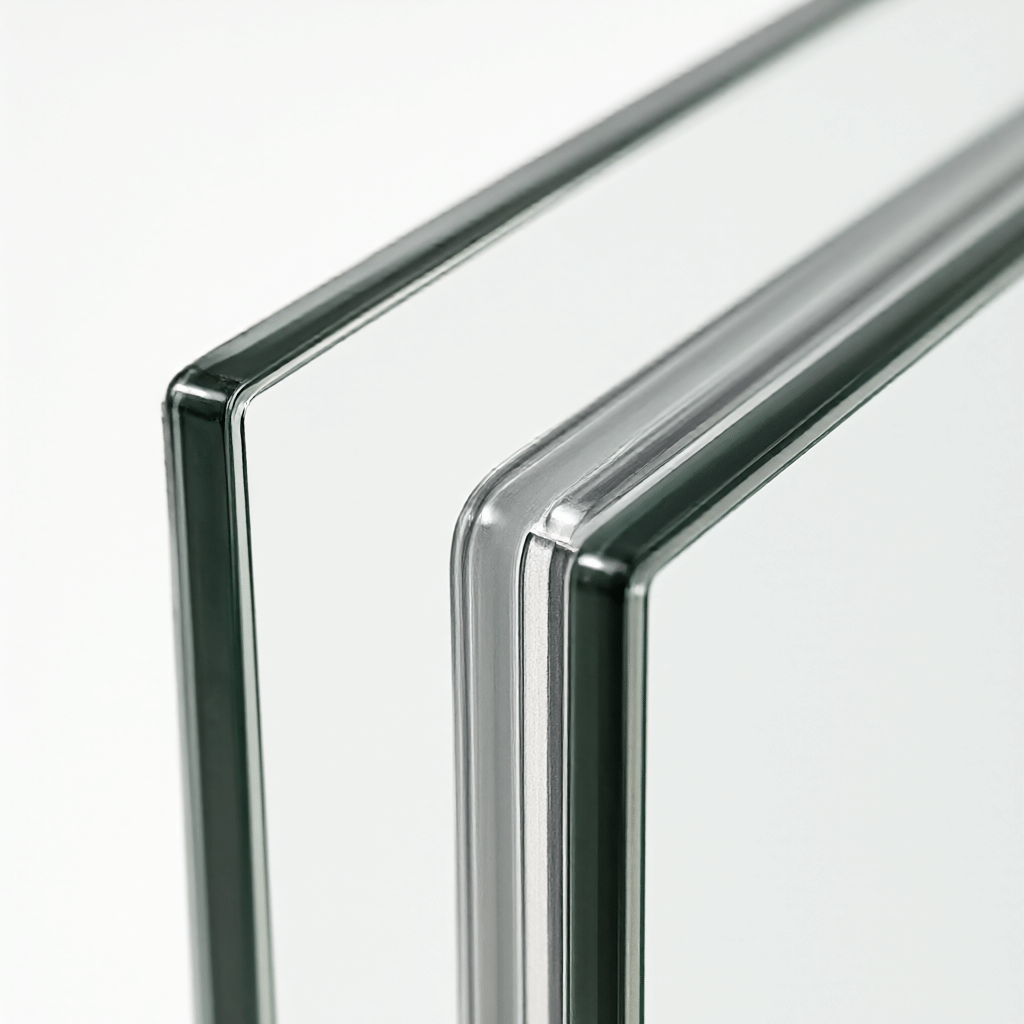
The following table summarizes the risk-transfer point, cost allocation, and insurance implication for each major Incoterm as it applies to fragile glazing shipments.
| Incoterm | Risk Transfer Point | Seller Pays Freight | Seller Arranges Insurance | Best Fit Scenario |
|---|---|---|---|---|
| FOB | Port of shipment, once on board | No | No | Buyer controls carriage and insurance |
| CFR | Port of shipment, once on board | Yes | No | Buyer comfortable managing own insurance |
| CIF | Port of shipment, once on board | Yes | Yes (minimum cover) | Simplified procurement, moderate-risk tolerance |
| DAP | Named destination place | Yes | No | Maximum transit-risk protection for buyer |
| DPU | Named destination, after unloading | Yes | No | Buyer wants seller responsible until offloaded |
Insurance class selection under CIF significantly influences actual recovery. Minimum clause coverage excludes many common glazing damage modes. Upgrading to All Risks narrows the gap between contractual risk transfer and practical financial protection — but upgrading still does not move the formal risk-transfer date backward.
Standards & Requirements

Several industry standards shape what constitutes acceptable preparation of fragile glazing for export and, indirectly, how risk disputes are resolved when damage occurs:
- EN 12600 specifies impact resistance requirements for glazing materials and assemblies, establishing a baseline that inspectors reference when assessing whether damage is transit-related or indicative of substandard product. Products tested to this standard provide stronger evidence that observed damage exceeded design tolerances.
- ISTA 3A (International Safe Transit Association) defines drop, vibration, and compression test profiles commonly used for individually packaged retail glazing and architectural units. Compliance with ISTA 3A helps demonstrate that packaging was engineered for the intended supply-chain environment.
- ASTM C1036 governs visual and dimensional quality for flat glass and is frequently cited in arbitration to distinguish manufacturing defects from handling damage.
Procurement contracts for insulated glass units and thermal-break aluminum windows should reference at least one of these frameworks so that an inspector or adjuster has an objective benchmark rather than relying solely on subjective ” arrived damaged” observations.
Related Considerations
Several practical factors modify the theoretical risk-transfer points described above and deserve attention before finalizing any glazing purchase agreement.
Carrier liability and Incoterms overlap. Incoterms do not override the terms printed on the bill of lading. If a carrier admits fault for improper stowage causing glass breakage, the insurance payout and subsequent subrogation proceed independently of whichever Incoterm governs the buyer-seller contract. In practice, this means the Incoterm determines who files the claim, not whether the claim succeeds.
Partial damage is the hardest scenario to resolve. A container of thirty window units arriving with four cracked IGUs triggers different questions than total loss. Who decides whether the seller replaces just the damaged panels or the entire order? Most supplier contracts remain silent on partial damage, leaving the resolution to negotiation. Explicitly agreeing on a replacement ratio — for example, allowing a 2–3 % spare allowance at no additional cost, with the seller absorbing re-shipping — prevents friction later.
Documentation must travel with the cargo. Beyond the commercial invoice and packing list, consider attaching a photo log signed by the loader, a materials compliance statement referencing applicable standards, and a letter of indemnity from the forwarder confirming proper container sealing. These documents collectively anchor the risk-transfer timeline and make any downstream claim far easier to substantiate.
Packaging inspection timing matters. An inspection performed at the factory entrance, before goods enter the container, cannot verify that the supplier stuffed and blocked the load correctly. A second checkpoint at stuffing completion — ideally witnessed by the inspector — closes that gap. For mixed-container orders consolidating different glazing types, see our guide on 20ft container loading configuration to understand how segregation affects vulnerability.
As a manufacturer, our approach to this starts with ensuring the product meets the relevant shipping standards before it ever enters a container. We perform pre-shipment checks covering air-tightness, water-tightness, and wind-resistance for each order, document every panel with photos at the point of loading, and offer inspection certificates that clarify the condition boundary at handover. We ship via FCL or LCL from our factory, provide complete customs documentation including proforma invoices and packing lists, and adapt profile structures and fittings to match the building codes of your target market. Request Quote
Packing and Inspection Requirements Before Risk Passes Under FOB/CIF
Under both FOB and CIF, risk formally passes when the cargo crosses the vessel’s rail at the port of shipment. However, this handoff only operates fairly if the seller has fulfilled all pre-transfer obligations. Buyers should require three concrete conditions before accepting a FOB or CIF shipment:
- Packing standard verification — glass panels must meet flat-glass dimensional tolerances per EN 12150:2000 (±0.2 mm for tempered sheets up to 25 mm thick), and IGU spacer/seal assemblies must demonstrate thermal-cycle resistance per ASTM E2190 (-40°C to +85°C cycling) or equivalent ISO 12543 series performance. Transit shock absorption ratings from verified ISTA 3A or equivalent testing provide defensible proof that packaging was engineered for ocean-freight handling.
- Pre-shipment inspection report — an independent inspector must certify that panels, frames, and hardware match the purchase-order specification before the container is sealed. This report creates a contemporaneous record that shifts the burden of proof toward the carrier or insurer if damage surfaces later.
- Container seal and stuffing documentation — a dated, numbered container seal applied at the factory gate, together with photographs of every layer stuffed (including strapping points and corner guards), establishes the chain of custody from production floor to on-board loading.
If the seller cannot produce these items before presenting the bill of lading, the buyer has grounds to treat the risk-transfer event as contested — not because the Incoterm changed, but because the prerequisite conditions for that Incoterm were never satisfied.
Documentation Required to Clarify Risk Boundaries at Customs and Insurance Claims
Fragile glazing shipments carry a higher probability of partial damage disputes, and the documentary trail determines which party bears the loss. Buyers should ensure the following documents travel with the shipment and are filed in parallel with the insurance claim if breakage occurs:
- Commercial invoice — states the declared customs value and the Incoterm used; serves as the baseline for any insurance claim valuation.
- Detailed packing list — itemizes each glazed panel by dimensions, glass thickness, IGU spec, orientation marking, and weight. Insurers cross-reference this to determine whether the shipment was loaded within engineering limits.
- Certificate of origin — confirms eligibility for preferential tariff treatment under any applicable free-trade agreement and supports country-of-origin claims at customs.
- Bill of lading (on-board notation) — the timestamped on-board B/L proves that the carrier accepted the goods in apparent good order. Any clean-on-board notation strengthens the buyer’s position against a seller who might otherwise argue pre-loading damage.
- Third-party inspection certificate — a signed report from an authorized inspector (e.g., SGS, Bureau Veritas, or equivalent) certifying product conformity and packaging adequacy at the point of origin.
- Pre-loading photographic log — sequential images of crate assembly, corner protection installation, dunnage placement, and final container closure. When paired with the inspection certificate, these photos form a legally coherent evidentiary package that customs officers and marine insurers accept as objective proof.
- Letter of credit (if applicable) — a bank-issued LC that requires presentation of all above documents before payment releases adds a further contractual safeguard.
Missing any one of these documents does not automatically void the buyer’s claim, but it significantly raises the difficulty of proving whether damage originated before or after the risk-transfer point.
Buyer Inspection and Receiving Checklist for Fragile Glazing Shipments
A systematic inspection protocol reduces ambiguity when breakage appears at destination. Apply this checklist at both the factory gate (pre-loading) and the warehouse (post-delivery):
Pre-loading verification (at seller’s facility):
- [ ] Confirm container floor is dry, flat, and free of protruding fasteners.
- [ ] Verify wall-panel strength and that corner posts are rated for the planned stacking height.
- [ ] Inspect dunnage material: foam edging, cardboard corners, and polyethylene straps must match the agreed packing specification.
- [ ] Photograph each crate layer from multiple angles, focusing on strap tension and edge-contact points.
- [ ] Record the container number and apply a tamper-evident seal; photograph the seal number.
- [ ] Request the inspector’s signed conformity statement before the container is sealed.
Post-delivery receiving inspection:
- [ ] Visually inspect the container seal for tampering before opening; photograph any discrepancies against the Bill of Lading.
- [ ] Check interior walls and ceiling for moisture stains, condensation residue, or salt deposits indicating prior water intrusion.
- [ ] Survey the unstacked cargo for visible shifting, compression crush marks, or displaced strapping.
- [ ] Unpack units in a controlled sequence (outside-in), photographing each panel before removal from its crate.
- [ ] Measure and record glass thickness, frame width, and IGU depth on a statistically representative sample.
- [ ] Compare received quantities and orientations against the packing list; note any short or mislabeled units.
- [ ] Document all damaged panels with close-up photos showing chip location, crack propagation path, and affected spacers.
- [ ] Have the warehouse supervisor or receiving agent sign the delivery receipt with written notation of every observed defect before the truck departs.
Retaining these records for at least 12 months after delivery is advisable, as some IGU seal failures manifest only after prolonged thermal cycling.
Red Flags That Indicate Weak Risk Allocation in Glazing Procurement Contracts
Buyers should treat the following signals as immediate warnings that the supplier may be attempting to shift undue transit risk onto the purchaser:
- Seller refuses DAP terms outright. A supplier unwilling to offer Delivered at Place likely lacks confidence in their packaging or transit experience, or they expect the buyer to absorb every handling-stage cost.
- Mandatory minimum Clauses C insurance with no upgrade option. Institute Cargo Clauses C excludes breakage, sweating, and handling damage — the three most common causes of glazing loss. A supplier insisting on Clauses C without discussing All Risks coverage is prioritizing their own premium savings over your protection.
- No pre-shipment inspection clause in the purchase order. Blanket statements such as “goods shipped as-is” remove your ability to create an objective condition record before risk transfers.
- Ambiguous lashing or restraint responsibility. Contracts that fail to specify who is responsible for securing stacked glazing inside the container leave the buyer vulnerable to carrier-defense arguments at claim time.
- Absence of documented glass thickness tolerances or IGU thermal-cycle test data. If a supplier cannot reference EN 12150:2000 or ASTM E2190 when questioned about product spec, their quality system is likely informal and their claims harder to verify in arbitration.
- No third-party inspection certification offered. Suppliers that rely solely on internal QC without independent verification provide weaker evidence in any subsequent dispute.
How Jusen Door and Windows Approaches Risk Mitigation for Fragile Glazing Orders
As a manufacturer, our approach to fragile glazing procurement focuses on embedding quality and transparency at every stage before the cargo reaches the port. We conduct strict pre-shipment inspection covering air-tightness, water-tightness, and wind-resistance testing on every order, ensuring that IGU performance aligns with recognized international benchmarks. Our full-customization capability means we adjust profile structures, glass specifications, and hardware fittings to match the local building codes of your target market, reducing the chance that non-compliant products trigger rejection or rework at destination.
We pack every container with detailed loading diagrams, edge-protection dunnage, and multi-layer strapping calibrated for ocean-freight shock loads. Each shipment is accompanied by a complete packing list, proforma invoice, and the full customs document set required by import authorities — giving you clear evidentiary support regardless of whether your contract uses FOB, CIF, or DAP terms. Our FCL and LCL shipment options allow direct delivery from our China factory, and our experienced foreign-trade team prepares all export paperwork so that risk-transfer documentation is complete before the vessel departs.
For buyers managing project-spec window or door orders, pairing these manufacturer practices with the inspection and documentation guidelines above creates a practical risk-management framework that extends well beyond the Incoterm label on your purchase order.
Incoterms risk transfer for fragile glazing establishes exactly who financially absorbs breakage, edge chipping, or seal failure during international transit — and the answer shifts dramatically depending on which rule appears on your purchase order. Under FOB and CIF/CFR, risk passes at the origin port once cargo boards the vessel; under DAP or DPU, the seller retains transit risk all the way to the buyer’s doorstep. For insulated glass units, curtain wall panels, and thermal-break aluminum windows, selecting the right term is often the single most impactful procurement decision because carrier liability under Hague-Visby is low and standard marine insurance excludes many glazing-specific damage modes.
Decision Matrix — Which Incoterm Should You Choose for Fragile Glazing Procurement?
When evaluating FOB, CIF, CFR, DAP, and DPU for glazed fenestration orders, buyers should run their shipment through the following side-by-side framework before signing the contract.
| Decision Factor | FOB | CFR | CIF | DAP | DPU |
|---|---|---|---|---|---|
| Risk passes at | Port of shipment, on board | Port of shipment, on board | Port of shipment, on board | Named destination place | Named destination, after unloading |
| Who arranges/main freight | Buyer | Seller | Seller | Seller | Seller |
| Who procures insurance | Buyer | Buyer | Seller (minimum cover) | Buyer | Buyer |
| Insurance adequacy for glazing | Buyer chooses level | Buyer chooses level | Usually insufficient (Clause C) | Buyer chooses level | Buyer chooses level |
| Customs clearance responsibility | Buyer at destination | Buyer at destination | Buyer at destination | Buyer at destination | Buyer at destination |
| Typical breakage-rate impact on landed cost | +1.5–4 % | +1.5–4 % | +1.0–3 % (partial coverage gap) | +0.5–1.5 % | +0.5–2 % |
| Best suited for | Buyers with strong forwarder relationships | Same as FOB | Small orders, moderate value | Large project shipments, high-value IGUs | Orders requiring seller-controlled unloading |
Rule of thumb: If your glazing order exceeds USD 25 000 in cargo value or targets a project with tight installation schedules, DAP usually delivers the lowest total cost of risk despite a higher unit price. For smaller replacement orders where you maintain an established freight relationship, FOB remains economical provided you upgrade insurance to Institute Cargo Clauses (A).
Industry Case Study — How Incoterm Choice Determined Claim Recovery on a Curtain Wall Shipment
A U.S. general contractor ordered 48 thermal-break aluminum casement windows and two curved glass curtain wall panels from a Guangdong manufacturer for a coastal Florida renovation. The contract stipulated CIF Miami with minimum Institute Cargo Clauses C coverage.
During trans-Pacific transit the container experienced severe temperature cycling between the South China Sea and the North Pacific. Two IGU units developed seal failure (argon loss and internal fogging), and one curved panel suffered a hairline fracture along the temper-induced stress zone near the corner bracket. Upon arrival, the buyer filed a claim with the insurer.
Outcome breakdown:
- The fractured panel was covered under Clause C, yielding a partial settlement of USD 3 200 against a replacement cost of USD 7 800.
- The two IGU seal failures were explicitly excluded by Clause C (vapor ingress from temperature cycling is a standard exclusion). The insurer declined those lines entirely.
- Total claim recovery: USD 3 200 of USD 18 400 in direct damages — a 17 % recovery rate.
- The contractor absorbed USD 15 200 in losses, endured a six-week delay waiting for replacement panels manufactured and shipped under FCL, and incurred additional site-idle labor costs estimated at USD 9 000.
If the same order had been placed under DAP Jacksonville, the seller would have borne the financial consequence of both the panel fracture and the IGU failures. Replacement sourcing under DAP typically runs faster because the seller controls the outbound logistics chain. The lesson: CIF’s apparent convenience masks a substantial coverage gap for fragile glazing precisely because the mandatory minimum insurance class excludes the very failure modes most likely to occur during ocean transit.
See our 20ft container door loading guide for guidance on how stowage configuration influences breakage rates inside glazed containers.
Buyer Checklist & Red Flags — Incoterm Selection Pitfalls for Fragile Glazing
Before finalizing an Incoterm on any glazing purchase agreement, verify each item below. Skipping even one creates exposure.
Pre-contract checklist
- [ ] Confirm whether the supplier offers DAP/DPU to your target port or warehouse — and request a side-by-side price quote under both FOB and DAP.
- [ ] Verify the insurance class under CIF: if the contract only references “minimum cover” or Institute Cargo Clauses C without an upgrade clause, negotiate inclusion of Clauses (A) or at minimum (B).
- [ ] Require a pre-shipment inspection certificate from a recognizedthird-party inspector (SGS, BV, or equivalent) covering visual condition, dimensional tolerances, and IGU seal integrity at the factory gate.
- [ ] Specify packing standards in the contract — reference ISTA 3A or an equivalent crate-design benchmark — and require photographic evidence before stuffing.
- [ ] Agree on a spare-parts ratio (industry norm: 2–3 % of total panels) and clarify who funds re-shipping of damaged replacements under each Incoterm scenario.
- [ ] Confirm the supplier can provide a full customs document package: commercial invoice, packing list, bill of lading, certificate of origin, and materials compliance statement signed by the loader.
Red-flag signals
- The supplier insists on CIF but will not disclose the insurance policy wording or insurer name.
- No provision for a third-party pre-shipment inspection — the supplier argues “we’ve never had a problem,” which is irrelevant to contractual risk allocation.
- The quotation excludes lashing and dunnage costs under FOB, shifting loading-sequence risk entirely to the buyer’s forwarder.
- Partial-damage language is absent from the contract, leaving you to negotiate replacements ad hoc after breakage occurs.
- Lead-time estimates ignore the 4–8 week manufacturing window for custom-sized IGUs and thermally broken frames, compressing your schedule unrealistically.
- The supplier cannot produce photographs taken at the point of container stuffing — this is the primary evidentiary source for any transit-damage claim.
For more on preparing suppliers for audit before contracting, review our Door Factory Audit Checklist.
How We Meet These Standards — Jusen Door and Windows
As a manufacturer, our approach to fragile-glazing risk transfer aligns directly with the standards outlined above. Here is how we structure our exports to protect both parties regardless of the chosen Incoterm.
Every shipment of solid wood doors, thermal-break aluminum doors and windows, system windows, casement and sliding doors, custom villa fenestration, sunrooms, and aluminum alloy entrance doors undergoes a strict pre-shipment inspection covering air-tightness, water-tightness, and wind-resistance testing before packaging begins. Our packing protocols follow ISTA-aligned crate design for glass-laden loads, with corner protection, dunnage specifications, and orientation markings on every panel. Before any container is sealed, our quality team documents the load with timestamped photographs — creating the evidentiary chain that insurers and inspectors rely on.
Because we offer FCL and LCL shipment directly from our China factory, we support buyers under FOB, CFR, CIF, DAP, and DPU — and we adjust profile structures and fittings to match local building codes of your target market. We provide a complete packing list, proforma invoice, and full customs documentation on every order, including materials compliance statements referencing EN 12600 impact-resistance performance and relevant glazing-strength benchmarks.
When buyers select CIF, we do not default to minimum-class coverage alone — we recommend upgrading to All Risks and will facilitate that amendment before the cargo departs. When DAP is preferred, our team coordinates destination-handling instructions so that unloading sequences respect the fragility profile of IGUs and curved glazing. For partial-damage scenarios, we include a 2–3 % spare-panel allowance in our standard quote structure and absorb re-shipping for verified transit-caused defects, eliminating the kind of dispute that left the case study above with only a 17 % insurance recovery.
If you are planning a project-based glazing import and want to discuss which Incoterm best fits your shipment profile, budget, and timeline, contact us directly.
Sources & References
- curtain wall systems — doorwoodendoors.com
- FCL vs LCL shipping comparison — doorwoodendoors.com
- Door HS Code & Import Duty guide — doorwoodendoors.com
- EN 12600 — www.nsf.org
- 20ft container loading configuration — doorwoodendoors.com
- Door Factory Audit Checklist — doorwoodendoors.com











