
Last updated: November 26, 2026
Quick Overview
Kitchen cabinet doors manufactured in China are typically supplied as bulk slab or shaker-style door sets with customizable thickness, panel profile, core material, surface finish and hardware, priced on an FOB basis per unit or per container depending on order volume and specification complexity. For professional buyers, the decision hinges on three linked variables: the core substrate that drives dimensional stability and cost, the surface finish system that determines durability and aesthetics, and the quality-control and documentation setup that determines whether shipments arrive within tolerance and pass customs smoothly. A clear procurement strategy pairs spec-first inquiry with factory capability verification, then compares equivalent options across materials rather than defaulting to the lowest headline price.
Specifications
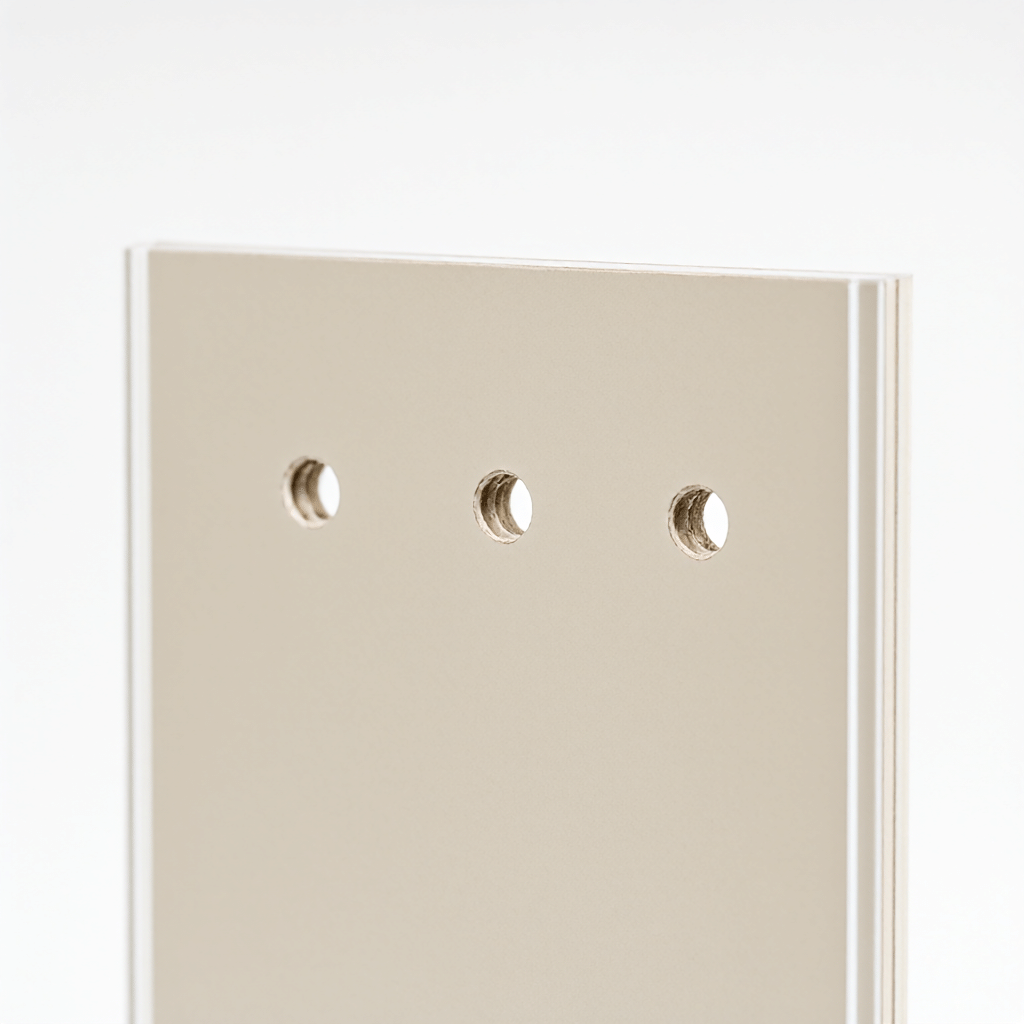
What are the key specifications of kitchen cabinet doors sourced from China?
Buyers should evaluate these specification domains together because each domain affects cost, warranty exposure and installation performance.
Core material options. Common substrates include medium-density fiberboard (MDF), particleboard, plywood, solid wood and composite blends. MDF and engineered panels deliver consistent machining and stable flatness for modern slab and frameless cabinet doors, while solid wood offers a premium aesthetic and higher material cost. Core selection directly influences screw-holding strength, edge-band durability and warpage risk under humidity variation.
Standard and custom thickness/sizing ranges. Typical cabinet door thicknesses span 16 mm to 25 mm, with 18 mm and 20 mm being common base choices for modern kitchens and cabinetry systems. Standard widths and heights vary by supplier capacity but generally cover approximately 300 mm to 900 mm width and 400 mm to 2400 mm height; larger formats are achievable through custom millwork processes and may carry longer lead times and higher freight density. Slab-style doors without face frames suit contemporary installations, while shaker style doors remain common for traditional and transitional projects.
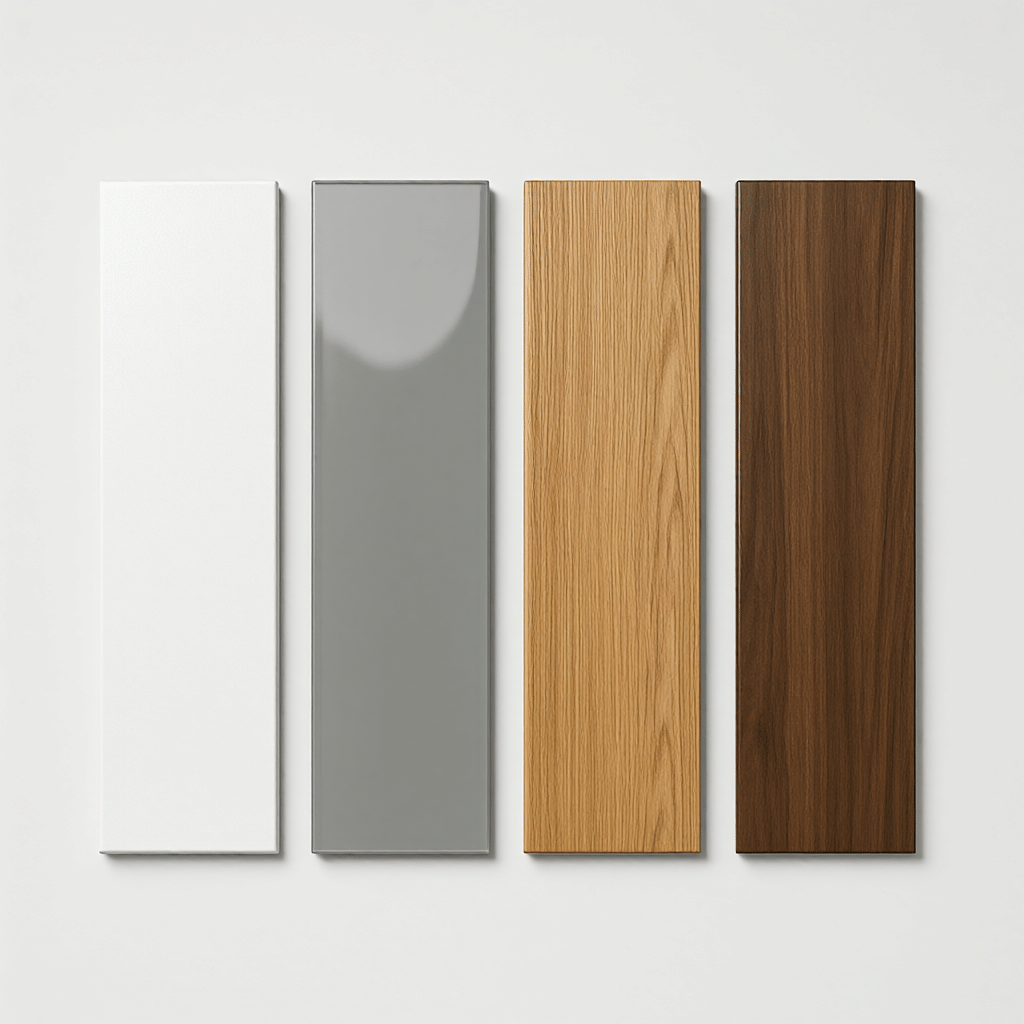
Surface finish systems. Melamine laminates offer durable, cost-effective surfaces for high-volume residential and commercial work. PVC foil and thermofoil produce contoured profiles and rounded edges suitable for decorative styles. High-pressure laminate (HPL) delivers heavy wear resistance for hospitality and high-traffic settings. Acrylic and painted finishes provide high-gloss aesthetics and color consistency but require controlled curing and handling procedures to avoid marring. Finish selection should align with expected usage intensity and cleaning protocols rather than visual preference alone.
Structural details and hardware. Dovetail or mechanical joinery, reinforced rails and stiles, and matched hinge mortising improve longevity. Hardware choice—hinges, runners, handles and locks—should be specified by load rating, finish compatibility and opening cycle expectations. When ordering frameless cabinet doors or RTA cabinet doors, confirm that cutouts and clearances match the intended rail and hinge systems.
Applications
Where can these cabinet doors be used?
Bulk kitchen cabinet doors from Chinese manufacturers serve several procurement contexts where consistent quality, repeatable specs and container-level pricing matter. Hotel and resort project supply often requires uniform door aesthetics across many units, coordinated finishes and reliable documentation. Multi-unit apartment developer orders benefit from standardized sizes, predictable lead times and streamlined logistics. Furniture distributor wholesale relies on flexible packaging and competitive freight economics, while kitchen showroom private-label lines depend on finish consistency and branding support. These doors are also suitable for custom millwork doors used in renovation programs where size variations are frequent and tolerances must be maintained across mixed runs.
Buying Factors
What to consider when buying kitchen cabinet doors in bulk from China?
Procurement decisions improve when buyers compare options against measurable criteria instead of relying on photos or sample-only evaluations.
Match material and finish to project type. Heavy-use environments favor HPL or reinforced melamine systems; premium residential builds may justify acrylic or painted finishes. Solid-core and engineered solutions each have trade-offs in stability, weight and repairability. If you need a durable alternative with different aesthetic goals, see our shower head filter manufacturing guide for how finish selection varies across product categories.
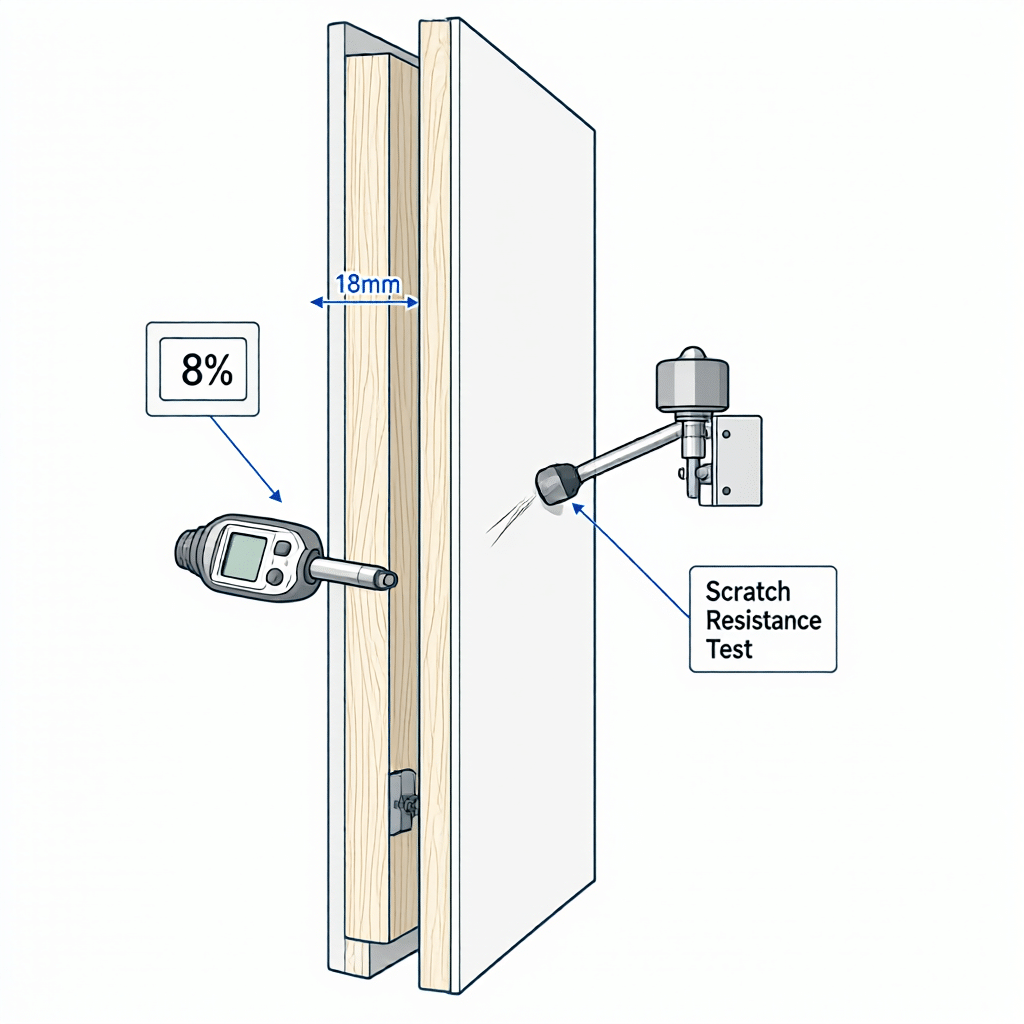
Verify quality-control checkpoints before shipment. Expect documented dimensional tolerance checks, surface scratch resistance results, edge-band adhesion testing and finish adhesion tests. Ask for test methods and acceptance criteria so inspections are repeatable and disputes are resolvable.
Confirm certification and customs documentation. Relevant expectations include CARB Phase 2 formaldehyde limits for markets that require it, FSC chain-of-custody when sustainably sourced wood is involved, and ISO 9001 quality management system coverage for process control. Ensure packing lists, proforma invoices and commercial documents align with destination import requirements. For broader sourcing methodology, this shower filter supplier sourcing guide for B2B buyers outlines how verification steps translate across product categories.
Plan packaging to prevent edge damage during sea freight. Stack-oriented packaging, corner protectors, moisture barriers and rigid carton or palletization reduce transit damage. Packaging design should be specified early because it affects container loading efficiency and unit cost.
Balance MOQ flexibility with shipment mode. Full-container load (FCL) orders typically achieve lower per-unit costs and simpler logistics, whereas less-than-container load (LCL) shipments offer flexibility for smaller试单 or phased deliveries at higher relative handling cost. Confirm minimum order thresholds and mixing rules for colors, sizes and finishes.
Send your size list and finish preferences for a spec-based quote.
Price & Cost
How much do bulk kitchen cabinet doors cost? (FOB China)
Unit pricing for bulk kitchen cabinet doors depends on substrate, finish system, door dimensions, hardware inclusion, packaging complexity and order volume. Lower-cost engineered cores with melamine finishes generally sit at the entry tier, while acrylic, painted or solid-wood options move into mid-to-high tiers due to material and finishing labor. Freight and packing density also influence landed cost, especially for large-format slab doors.
| Core material | Surface finish | Typical thickness | Indicative FOB price range (USD/unit) | Bulk reference tier |
|---|---|---|---|---|
| MDF / particleboard | Melamine | 16–20 mm | $12–$28 | 100+ units |
| Plywood blend | PVC foil / HPL | 18–22 mm | $22–$48 | 100+ units |
| Solid wood | Painted / Acrylic | 18–25 mm | $38–$85 | 50–99 units |
| Engineered composite | Acrylic / HPL | 18–22 mm | $30–$65 | 100+ units |
Indicative FOB China bulk-order pricing for trade buyers — not a retail price and not a binding offer; final pricing depends on quantity, specification and order schedule.
Lead-time ranges commonly fall within four to eight weeks from order confirmation to shipment departure, depending on material availability, finish sequencing and inspection scheduling. Buyers should request a shipping schedule broken into material procurement, production, quality inspection and vessel booking milestones to reduce uncertainty.
Request a bulk FOB quotation with your target volumes.
Evidence & Practical Notes
Field note: Edge damage and chipped corners remain one of the most common post-delivery complaints for bulk slab and frameless cabinet doors shipped via LCL or loosely palletized FCL. Specifying corner guards, separating layers with protective inserts and requiring photographic evidence of packed units before closing containers materially reduces rejection rates.
Practical limitation: Higher-gloss acrylic and painted finishes show scratches and handling marks more readily than textured melamine or HPL systems. These finishes also require stricter curing and climate control during transit, which can extend lead times and increase return risk if storage conditions vary along the supply chain.
Buyer takeaway: Prioritize suppliers that publish test reports and inspection checkpoints aligned with your specification sheet. Equivalent pricing across vendors often reflects differences in QC depth and packaging rigor more than material cost, so verify documentation before selecting based on unit price alone.
Manufacturer Approach and Capability Integration
When sourcing from a china kitchen cabinet doors manufacturer, buyers benefit from suppliers who treat specification alignment as the starting point rather than an afterthought. As a manufacturer, our approach focuses on matching your project requirements to proven profile structures, validated finish systems and repeatable inspection routines. We provide full customization on size, color, glass and hardware accessories, adjust profile structures and fittings to match local building codes of target markets, and conduct strict pre-shipment inspection including air-tightness, water-tightness and wind resistance testing where applicable to the door system. Our export operations are built around direct factory supply with competitive pricing, flexible FCL and LCL shipment options, and complete customs documentation including packing lists and proforma invoices. For buyers evaluating options, seeing how these controls map to your specification Sheet helps convert询价 into actionable purchase orders. If you want detailed spec sheets, sample packages and container load plans for your target market, reach out to discuss your project parameters.
Sourcing kitchen cabinet doors from China involves choosing among MDF, plywood, particleboard, and solid-wood cores; melamine, PVC foil, HPL, acrylic and painted finishes; and 16 mm–25 mm thicknesses, with bulk FOB pricing typically ranging $12–$85 USD per unit depending on material and specification. The right selection hinges on matching core and finish combinations to project use intensity, verifying that suppliers document dimensional tolerance, moisture content and formaldehyde compliance against recognized standards, and structuring orders to balance MOQ thresholds with FCL or LCL shipment economics. Buyers who lead with spec sheets and factory capability audits consistently achieve better landed cost and lower rejection rates than those chasing headline unit price alone.
Quality Control Checkpoints and Acceptance Standards
What quality tests should be required before shipment?
Professional buyers define acceptance criteria up front so inspections are repeatable and disputes are resolvable. Typical checkpoints include dimensional tolerance measurement, moisture-content verification, edge-band adhesion testing, surface scratch and wear resistance, hardware cycle testing, and formaldehyde emission compliance where relevant.
Dimensional tolerance. Panel thickness should be verified across multiple points using calibrated calipers; common acceptable variance is ±0.5 mm for 16 mm–20 mm doors and ±0.8 mm for 22 mm–25 mm doors. Width and height should be checked with reference to the order drawing, allowing for typical millwork tolerances of ±0.5 mm for cut dimensions and ±0.3° for squareness.
Moisture content. Engineered-core panels should be dried to a moisture-content range appropriate for the destination market—typically 6%–10% for North American and European interior climates, and up to 12%–14% for more humid tropical ports. Panels shipped outside their equilibrium moisture range are prone to warpage after installation.
Edge-band adhesion. Epoxy or PUR adhesive edge banding should meet peel-adhesion requirements. Industry practice commonly references EN 13986 performance classes for bonded wood-based panels and uses peel-test methods aligned with ISO 11339 principles; many buyers accept a minimum peel strength of 15 N/10 mm for decorative edge banding on internal cabinetry applications. Reputable suppliers can provide lab reports demonstrating compliance.
Formaldehyde emission. For buyers targeting markets with VOC or formaldehyde regulations, CARB Phase 2 TSCA Title V compliance sets limits such as ≤0.05 ppm for hardwood plywood and similar thresholds for composite panels. European projects may reference EN 717-1 for formaldehyde emission classification. These specifications are verifiable through third-party test reports and should be requested during supplier qualification.
Surface hardness and wear. Melamine and HPL surfaces are often evaluated against resistance-to-abrasion benchmarks; ANSI HP-1 provides hardness classification guidance for laminate surface durability. High-traffic hospitality projects typically specify HPL or reinforced melamine systems rated for heavy daily use, while residential showroom applications may accept standard acrylic or painted finishes.
Ask for current test reports and inspection checklists.
Core Materials and Surface Finishes by Buyer Profile
Which core materials and surface finishes deliver the best value for different buyer profiles?
Value depends on aligning material and finish selection to expected usage intensity, aesthetic positioning and project budget rather than choosing uniformly by lowest unit price.
| Buyer / project profile | Recommended core | Recommended finish | Why this combination works | Red flags to avoid |
|---|---|---|---|---|
| Budget residential developer | Medium-density fiberboard (MDF) / particleboard | Melamine | Stable flatness, low cost, fast turnaround for high-volume uniform runs | Thin MDF (<16 mm) without reinforced stiles; unlabeled formaldehyde claims |
| Mid-range kitchen remodeler | Plywood blend or premium MDF | PVC foil / thermofoil | Contoured profiles possible; moderate durability at accessible pricing | Foil delamination at corners; inconsistent color lot-matching across batches |
| Hospitality / contract kitchen | Multi-layer plywood / hardwood plywood | High-pressure laminate (HPL) | Heavy wear resistance; chemical and heat tolerance for demanding environments | Standard melamine mislabeled as HPL; insufficient backing paper on laminate |
| Premium residential / showroom | Solid wood or hardwood veneer over stable core | Acrylic or paint-grade primed MDF | High-gloss aesthetics; visible grain character for luxury positioning | Unsealed solid wood shipped without acclimation; inadequate curing before packing |
| Custom villa / architect-led | Solid wood or engineered composite with matched veneer | Painted / stained + clear coat | Full design freedom; finish matched to architectural tone | No finish sample kit provided; opaque spec on coating chemistry or VOC content |
For comparable guidance on how finish selection varies across product categories, see the shower head filter manufacturing reference on finish trade-offs by application intensity.
Value decision tip: Two identical-looking doors from different factories often diverge in concealed layers—backing paper quality, adhesive type, edge-band material and core density. Request a cross-section sample or die-cut specimen so you can verify construction beneath the visible surface.
Factory Vetting Checklist for Chinese Cabinet-Door Suppliers
How to evaluate and vet Chinese kitchen cabinet-door factories systematically?
A structured qualification process reduces sourcing risk far more than relying on trade-platform ratings alone. Use the checklist below during supplier evaluation and request documented evidence for each item.
Capability and production evidence. Confirm actual annual output capacity, number of active production lines, primary machinery types (CNC routers, edge-banding machines, spray/paint booths), and whether the factory owns its finishing line or outsources it. Factories that own core machining and finishing retain tighter control over consistency.
Quality-management documentation. Ask for ISO 9001 certification status, in-house laboratory capabilities, routine test schedules and historical rejection-rate data. Reputable suppliers track defect rates by process step and can share summarized metrics without disclosing proprietary formulas.
Reference projects and case history. Request recent container-level shipments to your region, including photos of packed units, customs documents and post-delivery feedback. Third-party B2B sourcing methodology articles such as the shower filter supplier sourcing guide for B2B buyers illustrate how verification workflows translate across industrial product categories.
Sample policy and sample lead time. Legitimate suppliers provide pre-production samples reflecting actual batch material, finish and hardware—not promotional renders. Verify sample turnaround time and whether sample charges are credited against first production orders.
Communication and documentation discipline. Evaluate response speed, specification-sheet literacy and willingness to produce packing lists, proforma invoices and detailed bill-of-materials before order confirmation. Weak documentation habits at quotation stage usually escalate into shipment discrepancies.
Factory audit option. If order volume justifies it, arrange an on-site or virtual audit covering raw-material storage, production scheduling, finished-goods staging and packing procedures. Audit findings should be recorded against a scored checklist for future re-evaluation.
MOQ Thresholds and FCL vs LCL Shipment Flexibility
What MOQ levels and shipment modes apply to bulk kitchen cabinet doors?
Minimum-order thresholds and logistics structure strongly influence unit economics and schedule predictability.
Typical MOQ ranges by configuration. Standard-size slab doors in common thicknesses and finishes often carry MOQs around 50–100 units per style, while custom profiles, specialty finishes and solid-wood constructions may require 30–50 units per design. Mixing rules for colors and sizes within the same core family are frequently negotiable once base MOQ is met.
| Shipment mode | Typical applicable volume | Cost characteristics | Best suited for |
|---|---|---|---|
| FCL (full container load) | ~500–1,200 units depending on door size and packing | Lower per-unit freight cost; simpler loading and fewer handling events | Established distributor contracts; large hotel/resort project supply; multi-phase residential developments |
| LCL (less-than-container load) | ~50–400 units consolidated with other cargo | Higher relative handling cost; longer transit due to consolidation/deconsolidation | Initial试单 orders; small-scale importers; phased project delivery; mixed-SKU pilot runs |
Freight-density consideration. Large-format slab doors consume significant cubic space relative to unit count, so container payload is often governed by volume rather than weight. Tighter nesting packaging and optimized carton sizing can materially improve loaded container yield and reduce landed cost per installed door.
Lead-time impact of shipment mode. FCL orders generally benefit from dedicated vessel booking and faster port turnaround when schedules are planned ahead. LCL shipments introduce variable waiting time for cargo consolidation and may experience schedule drift during peak shipping seasons. Buyers should negotiate commitment windows for both production and logistics.
Share your monthly volume target and we will map FCL/LCL options.
How do core materials compare for durability, stability and price?
Buyers should evaluate core substrates against measurable performance indicators rather than choosing based on appearance alone. The table below ranks common options by screw-holding strength, warpage risk and relative cost tier.
| Core Material | Screw-Holding Strength | Warpage Risk | Cost Ranking | Best Use Case |
|---|---|---|---|---|
| Solid Wood (Oak, Maple, Birch) | Excellent (high density per ASTM D1037) | Moderate — reacts to humidity changes | $$$$ | Premium residential, heritage-style kitchens |
| Plywood Blend | Very Good | Low — cross-laminated structure resists movement | $$$ | High-end residential, coastal/humid climates |
| MDF (Medium-Density Fiberboard) | Good | Low when sealed on all edges; vulnerable to moisture | $$ | Modern slab doors, painted/acrylic finishes |
| Particleboard | Fair | Moderate — lower density affects long-term fastener retention | $ | Budget residential, light commercial use |
| Engineered Composite (hybrid cores) | Good to Very Good | Low — stabilized layer construction | $$–$$$ | Volume production with mixed finish requirements |
For project specification, buyers should request the supplier’s test reports for EN 14322 (humidity resistance for panel substrate) and EN 13986 (performance classes for bonded wood-based panels). Core selection must be matched to the destination climate zone and expected installation environment to avoid post-delivery claims related to warpage or swelling.
Supplier Evaluation Checklist for Kitchen Cabinet Door Manufacturers
Professional procurement teams reduce risk by using a structured supplier evaluation checklist. The following template addresses the most critical decision factors for bulk cabinet door sourcing from China:
- [ ] Company verification: Business license, export history, factory photos, and client references confirmed
- [ ] Quality system certification: ISO 9001 documentation reviewed; audited quality procedures on file
- [ ] Material certifications: CARB Phase 2 / TSCA Title V compliance certificates for formaldehyde emission; FSC chain-of-custody if required by market
- [ ] Test report availability: Dimensional tolerance reports, edge-band peel-adhesion results (target ≥15 N/10 mm per ISO 11339 principles), moisture-content records, and surface hardness classifications aligned with ANSI HP-1
- [ ] MOQ flexibility: Clear statement of minimum order quantities for both FCL and LCL shipment modes, including mixing rules for colors and sizes
- [ ] Lead time commitment: Written production schedule covering material procurement, manufacturing, inspection and vessel booking milestones
- [ ] Pre-shipment inspection protocol: Agreed acceptance criteria for dimensional checks, visual finish inspection, packaging review and optional third-party inspection staging
- [ ] Packing specification: Corner protection, moisture barrier, stack-oriented packaging plan documented and tested for sea-freight transit
- [ ] Customs documentation readiness: Proforma invoice format, packing list structure and any country-specific import certificates confirmed
- [ ] OEM / private-label capability: Branding, packaging customization and logo application processes clarified
This checklist should be shared with prospective suppliers as part of the initial inquiry to identify firms that operate with documented quality systems and transparent procurement terms.
Frequently Asked Questions
What to consider when buying kitchen cabinet doors in bulk from a China manufacturer?
Procurement decisions improve when buyers compare options against measurable criteria instead of relying on photos or sample-only evaluations. Key considerations include matching material and finish to project type (HPL or reinforced melamine for heavy-use environments; acrylic or painted finishes for premium residential builds), verifying quality-control checkpoints before shipment, confirming certification and customs documentation including CARB Phase 2 compliance and ISO 9001 coverage, and planning packaging to prevent edge damage during sea freight. Buyers should also balance MOQ flexibility with shipment mode—FCL orders typically achieve lower per-unit costs and simpler logistics, whereas LCL shipments offer flexibility for smaller orders or phased deliveries at higher relative handling cost. For broader sourcing methodology guidance, see our shower filter supplier sourcing guide for B2B buyers which outlines how verification steps translate across product categories.
What quality inspections and certifications should a buyer require before shipment?
Professional buyers define acceptance criteria up front so inspections are repeatable and disputes are resolvable. Required checkpoints typically include dimensional tolerance measurement, moisture-content verification, edge-band adhesion testing, surface scratch and wear resistance, hardware cycle testing, and formaldehyde emission compliance where relevant. Documentation such as ISO 9001 certificates, CARB Phase 2 test reports, EN 13986 performance class declarations and ANSI HP-1 hardness classifications should be requested from the supplier prior to order placement. Third-party inspection services may be engaged for pre-shipment audits to verify that agreed acceptance criteria have been met.
Sources & References
- shower head filter manufacturing — zooshen.com
- shower filter supplier sourcing guide for B2B buyers — zooshen.com
- Share your monthly volume target and we will map FCL/LCL options — wai.me
Related resources for this product category
- Composite wooden door systems
- Wood door range and finishes
- Kitchen cabinet doors manufacturer: bulk sourcing guide
- Plywood doors manufacturing and bulk procurement
- Certifications and test coverage at our factory
Need a project-specific quotation? Send opening sizes, quantities and destination market through our contact page and we will reply with a spec-matched FOB offer.











