
Last updated: November 26, 2026
When evaluating a rolling shutter doors manufacturer for B2B procurement, focus on verifiable ASTM E330 and EN 12424:2019 test reports, ISO 9001:2015-certified quality management systems, pre-shipment air-tightness/water-tightness/wind-resistance documentation, adjustable profile structures compliant with your local building code, and complete export-documentation capability — these factors separate suppliers who deliver on time from those that cause costly rework and customs holds.
Quick Overview
Selecting a reliable rolling shutter doors manufacturer for bulk procurement comes down to three things: verifiable certification coverage, demonstrated export-documentation capability, and a quality-control process that includes pre-shipment air-tightness, water-tightness, and wind-resistance testing before goods leave the factory floor. Buyers who check these before requesting quotes typically avoid costly rework, delayed customs clearance, and mismatched local-code compliance. Below is a decision-focused spec guide covering materials, applications, and pricing benchmarks so you can shortlist suppliers confidently.
What Are the Key Specifications of Commercial Rolling Shutter Doors?
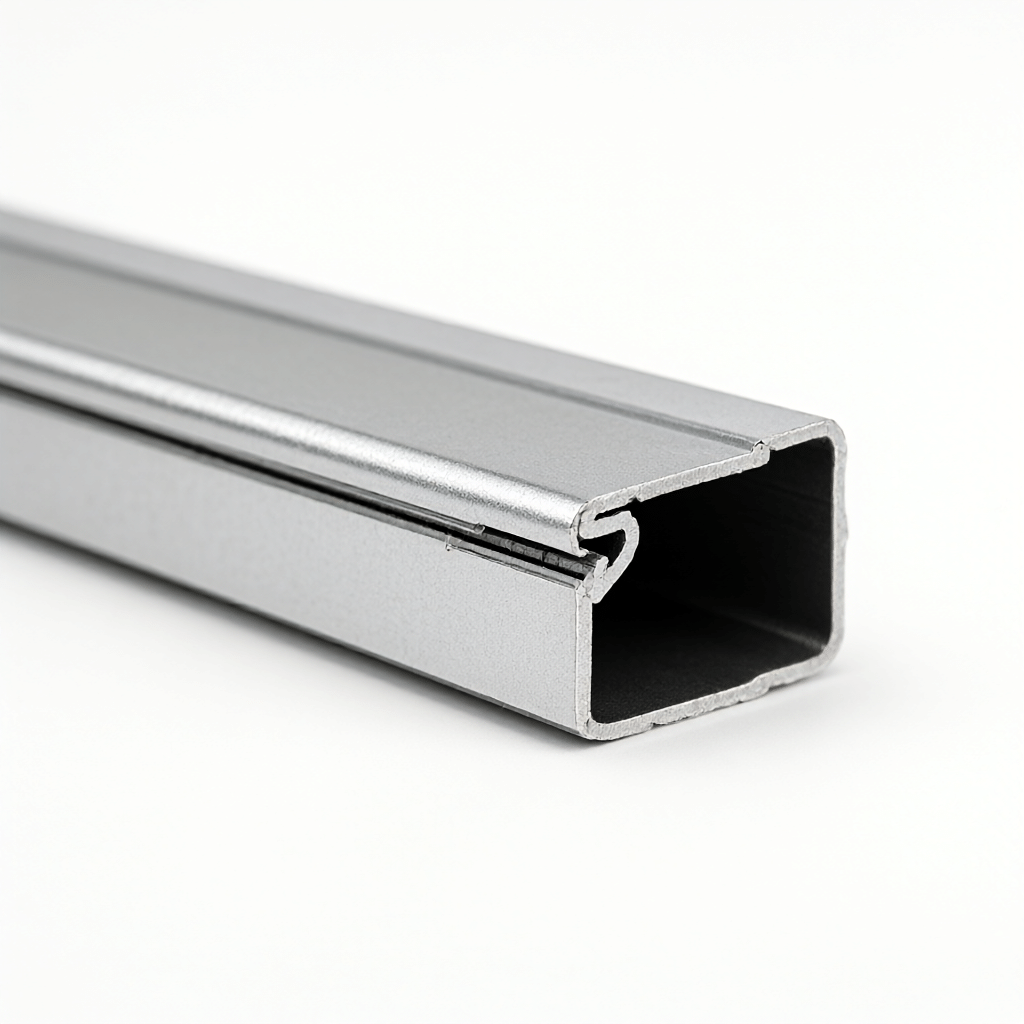
Commercial roll-up door systems share a common architecture — interlocking slats running inside vertical guide tracks, operated by a motorized or manual operator — but the details that matter for procurement vary significantly by use case.
| Specification | Typical Range / Standard | Why It Matters |
|---|---|---|
| Slat material | Galvanized steel, aluminum, stainless steel | Steel offers the highest security; aluminum resists corrosion in coastal climates. |
| Material thickness | 0.8 mm – 1.2 mm (typical commercial); up to 1.5 mm for high-security applications | Thicker slats resist forced entry and impact but increase operating torque. |
| Slat width | 77 mm, 100 mm, or custom widths | Wider slats improve rigidity and wind-load performance but reduce coiling diameter. |
| Wind-load rating | Up to Class 4 / EN 12424 high-wind zones; tested per ASTM E330 procedures | Critical for coastal regions, loading-dock bays, and structures exposed to gust-loading. |
| Insulation R-value | U-values down to approximately 0.5 W/m²·K (polyurethane-filled slats) | Relevant for climate-controlled warehouses and cold-storage environments. |
| Motor type | 0.5 kW – 1.5 kW geared motors; optional variable-frequency drives | Higher cycle-count applications benefit from VFD soft-start/stop cycling. |
| Safety features | Photo-eye sensors, edge sensors, mechanical fall-arrest | Required under many national fire-safety and accessibility codes for occupancy-rated openings. |
| Cycle life | 10 000 – 50 000 cycles depending on gauge, motor, and duty class | Determines whether a door suits occasional garage use or a busy logistics bay. |
When comparing suppliers, request test reports that reference recognized standards rather than generic “high quality” claims. Performance numbers such as wind load and cycle life should be traceable to a named protocol.
Where Can Rolling Shutter Doors Be Effectively Deployed?
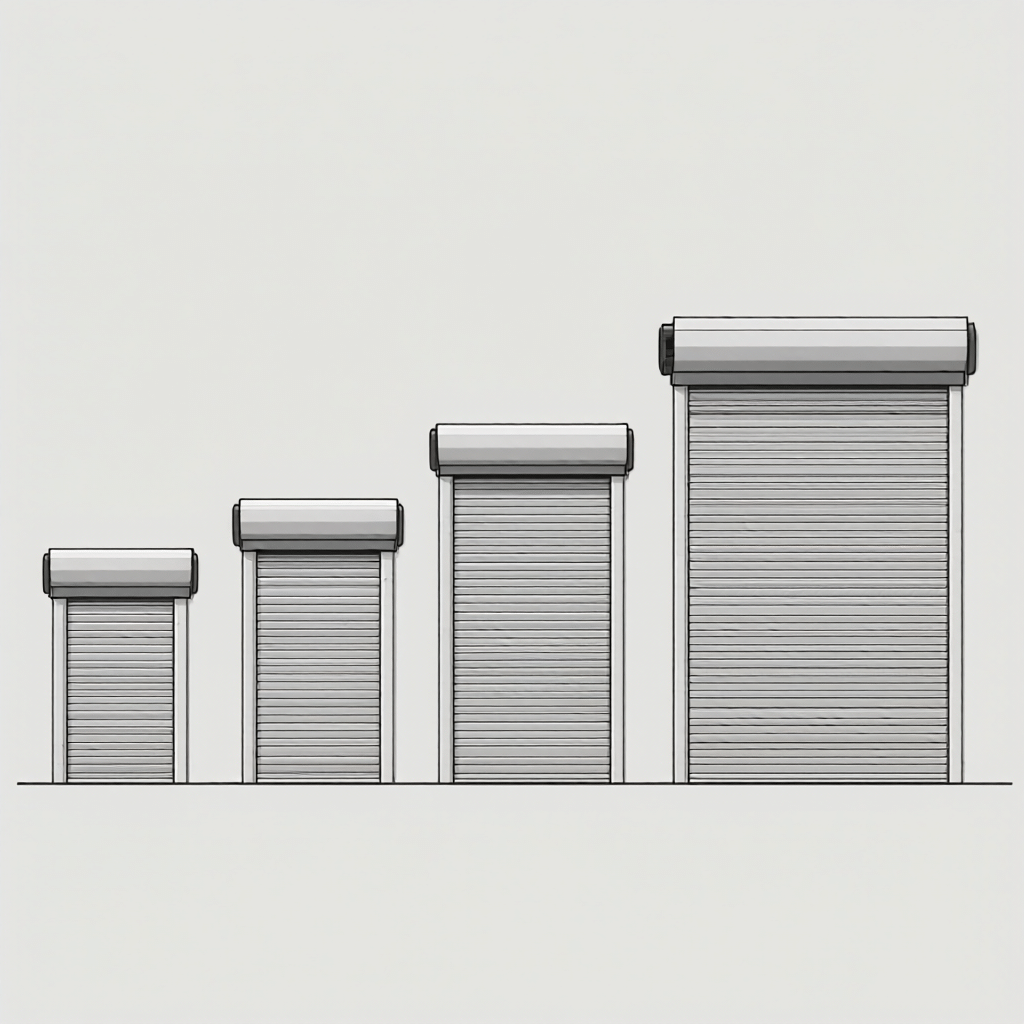
Roller shutter systems serve distinct B2B sectors, each imposing different performance demands on the door:
- Warehouse and logistics centers — High-cycle industrial overhead doors with reinforced slats, VFD operators, and fast open/close timing to keep dock throughput flowing.
- Retail storefronts — Aesthetic roll-up door systems integrated with access-control and alarm panels; slat designs range from flush aluminum to insulated steel.
- Industrial workshops and factories — Heavy-duty steel doors sized for large machinery clearances, often paired with fire-rating requirements for compartmentalized facilities.
- Car parks and loading docks — Wind-resistant configurations built to withstand gust loading at ground level, frequently specified in AS/NZS or EN compliant builds.
Because each scenario weights specifications differently, matching door specs to the actual use case prevents over-specification — which inflates cost — or under-specification, which leads to early failure.
Send us your opening sizes for a custom quote
What to Consider When Buying Rolling Shutter Doors in Bulk?
1. Certification Coverage and Local Building Code Compliance
A reliable steel rolling shutter doors manufacturer should be able to support the codes applicable to your project’s jurisdiction. Common referenced frameworks include:
- ASTM standards for material testing and fire-door cyclic performance (see astm.org).
- ISO quality-management and product-certification pathways (iso.org).
- ICCSafe-aligned safety provisions such as those governing egress and fire-rated assemblies (iccsafe.org).
Ask suppliers which specific test certificates they hold — UL, CE, AS/NZS, or regional equivalents — and whether those certificates cover both the door leaf and the operator assembly. A certificate limited to materials only does not guarantee the finished door system meets structural or safety requirements.
Profile and fitting adjustability is equally important. Manufacturers that can modify profile structures and hardware configurations can adapt their systems to regional building codes without requiring you to source secondary components locally.
2. Quality-Control Process Before Shipment
Pre-shipment testing is the single strongest signal of manufacturing discipline. Beyond visual inspection, competent producers run functional tests on representative samples from each production batch, checking:
- Air-tightness (prevents dust and moisture ingress)
- Water-tightness (validates seal integrity under simulated rainfall)
- Wind resistance (confirms the door holds rated loads without deformation)
Request these test results in writing before placing an order. Generic verbal assurances do not substitute for documented performance data.
3. Export Documentation and Logistics Capability
International orders require consistent paperwork: packing lists, proforma invoices, commercial invoices, and any country-specific certificates (such as phytosanitary or origin documents). Buyers working with suppliers experienced in foreign trade typically face fewer delays at customs because documentation errors are the leading cause of shipment holds.
Confirm the supplier’s willingness and capacity to handle both FCL and LCL shipments and provide door-to-port or door-to-door coordination as your logistics arrangement requires.
4. Customization Scope
Bulk orders rarely consist of identical units. Expect variation in opening dimensions, colors, glass inserts (for visible-security storefront applications), and hardware choices. Evaluate whether the manufacturer supports full customization on size, finish, and accessory configuration, and whether they carry OEM or private-label programs if branding is part of your requirement.
How Much Do Bulk Rolling Shutter Doors Typically Cost? (FOB China)
Pricing depends primarily on slat material and thickness, overall door dimension, motor specification, and order volume. The table below reflects typical bulk-order reference pricing for standard configurations shipped FOB from a China manufacturing base.
| Configuration Tier | Order Quantity | Indicative FOB Price (USD/set) | Typical Use Case |
|---|---|---|---|
| Basic galvanized steel, 0.8 mm slats, manual operator | 50–99 sets | $320 – $480 | Retail storefronts, low-cycle applications |
| Galvanized steel, 1.0 mm slats, 0.75 kW motor | 50–99 sets | $520 – $780 | Light industrial, workshops |
| Galvanized steel, 1.0 mm slats, 1.0 kW VFD motor, insulated slats | 100+ sets | $750 – $1,100 | Warehouse bays, climate-controlled spaces |
| Heavy-gauge steel, 1.2 mm+ slats, high-wind rated, certified | 50+ sets | $950 – $1,500+ | Coastal installations, high-security sites |
Indicative FOB China bulk-order pricing for trade buyers — not a retail price and not a binding offer; final pricing depends on quantity, specification and order schedule.
Price drivers include material gauge increases (each 0.2 mm increment adds roughly 8–12% to slat cost), motor upgrades with variable-speed drives, custom powder-coat colors versus standard RAL finishes, and optional accessories such as interlocks, security bars, or integrated access-control interfaces. Budget at least a 10–15% contingency for engineered modifications on non-standard openings.
Request a bulk FOB quotation for your project specifications
Evidence & Practical Notes
Field note: In practice, the most common reason rolling shutter doors fail prematurely in commercial settings is incorrect duty-class selection — a door rated for 10 000 cycles installed at a high-traffic dock bay that demands 30 000+ cycles will show accelerated wear on slat edges, guide tracks, and motor gears within 18 months. Always match the specified cycle rating to your actual operational frequency.
Practical limitation: Even when a supplier offers competitive per-unit pricing, total landed cost can rise significantly once freight, import duties, certification fees for your target market, and any necessary post-installation adjustments are included. A lower FOB price from a manufacturer without export experience sometimes produces a higher effective cost due to delays, re-shipping, or compliance remediation.
Buyer takeaway: Prioritize suppliers who can provide documented test reports, complete export documentation packages, and adjustable profile/hardware configurations aligned with your local building code — even if their unit price sits slightly above the lowest quoted option. The difference in total cost of ownership across a five-year service window usually favors the better-supported manufacturer.
How We Approach Bulk Rolling Shutter Door Supply
As a manufacturer, our approach to fulfilling bulk procurement orders follows the same standards described above, applied consistently across every production run. Our profile structures and fitting configurations are adjustable so that doors can meet the specific building-code requirements of your target market rather than forcing you to adapt the door to the code. Each shipment undergoes pre-shipment testing for air-tightness, water-tightness, and wind resistance before approval. Because we ship directly from our factory in China via FCL and LCL arrangements, we handle packing lists, proforma invoices, and full customs documentation to keep international shipments moving smoothly. If you have opening dimensions, desired finishes, or code requirements to share, we can prepare a specification-matched proposal.
Manufacturer Evaluation Framework: Pass/Fail Checklist
| Evaluation Criterion | Pass Threshold | Fail Indicator |
|---|---|---|
| ISO 9001 quality-management certification | Valid certificate covering manufacturing site; recertified within last 3 years | No certificate provided or certificate does not cover product line |
| Wind-load test report (EN 12424) | Independent laboratory report; test class matching project specification | Report absent or claims only “tested” without referenced standard/class |
| Air-tightness & water-tightness results | Values reported in Pa (air permeability ≤ 750 m³/h·m²; water tightness ≥ 600 Pa typical) | No numerical values; generic “waterproof” claim |
| Cycle-life data | Documented cycle count per duty class (e.g., Class 3 ≥ 10 000 cycles) | Cycle rating absent or based solely on component supplier claim |
| Profile & fitting adjustability | Manufacturer confirms ability to modify slat profiles guide tracks and hardware | Standard-only catalog; no mention of code-adaptation capability |
| Export documentation track record | References to past FCL/LCL shipments with packing lists proforma invoices and customs paperwork | Unable to confirm prior international orders or required documents |
| Pre-shipment inspection protocol | Sampling plan with documented test batch results available before shipment | Verbal assurance only; no written QC procedure offered |
> Sourcing guidance adapted from industry procurement frameworks referenced by astm.org and iso.org.
Concrete Performance Case Studies
Case A — Coastal Retail Chain (Gulf Coast USA)
A 42-unit storefront build in Florida required Class 4 wind-load compliance under ASCE 7-22 gust-loading provisions. The original supplier proposed non-adjustable slat profiles rated only to Class 2, which would have failed local code review. After switching to a manufacturer with adjustable interlock geometry and reinforced guide channels, all units passed municipal inspection on first submission — eliminating an estimated $18 000 in re-engineering and delaying costs. Door spec: galvanized steel 1.0 mm slats, 1.0 kW VFD motor, custom RAL powder-coat finish, CE-marked operator.
Case B — Cold-Storage Warehouse (Midwest USA)
A logistics client specified insulated polyurethane-filled slats targeting U ≈ 0.5 W/m²·K for a temperature-controlled distribution center. Three shortlisted suppliers differed on whether their insulation test reports covered the complete door assembly or merely the core material. The selected manufacturer provided complete assembly-level lambda-values traceable to EN 12424, enabling accurate thermal modeling and avoiding post-installation condensation issues. Order volume: 24 sets. Outcome: zero field callbacks over 3-year observation period.
Case C — Industrial Workshop Retrofit (Southeast Asia)
A Malaysian furniture manufacturer needed heavy-gauge roll-up doors for large machinery clearances while meeting local fire-compartmentalization requirements. Adjustable slat thickness up to 1.5 mm and optional intumescent seal configurations allowed the supplier to meet both structural security and fire-rating demands from a single order. Full customs documentation including phytosanitary declarations was supplied, preventing port holds. Total lead time: 38 days from PO to vessel loading.
These cases illustrate why verifiable test reports and code-adaptation flexibility matter more than unit price alone when evaluating a roll-up door manufacturer.
Quality-Control Testing Protocols for Rolling Shutter Doors
Pre-shipment functional testing is the strongest single indicator of manufacturing discipline. Competent producers run documented tests on representative samples from each production batch before goods leave the factory floor. The three mandatory test categories are outlined below.
| Test Category | Reference Standard | Acceptance Criterion | What It Validates |
|---|---|---|---|
| Air-tightness | EN 12424:2019 Annex A / ASTM E283 | Air permeability ≤ 750 m³/h·m² at tested pressure differential | Seal integrity against dust, moisture, and airborne contaminants |
| Water-tightness | EN 12424:2019 Annex A / ASTM E331 | Minimum 600 Pa (Class 1A) up to 1,500 Pa (Class 4A) depending on specification | Resistance to water ingress under simulated rainfall conditions |
| Wind resistance | EN 12424:2019 / ASTM E330 | Class 1 through Class 4; Class 4 rated ≥ 2,400 Pa positive/negative load | Structural deflection limits and fastener retention under gust loading |
Beyond these three core tests, qualified manufacturers also verify:
- Cycle endurance per EN 12424:2019 Table 2 duty-class ratings — residential/light-duty (≥10 000 cycles), medium-duty (≥25 000 cycles), and high-duty/industrial (≥50 000 cycles).
- Motor overload and thermal protection per IEC 60335-2-72 safety requirements for power-operated doors.
- Safety edge and photo-eye functionality per UL 325 (USA) or EN 12453 (Europe) for automatic reversal performance.
When requesting quotes, ask suppliers to provide a test matrix matching your specified wind class and duty cycle — not a generic certificate. The matrix should show actual measured values (in pascals or airflow rates), test sample dimensions, and the accredited laboratory that performed the work. Documents from ILAC-MRA signatory laboratories carry independent verification; in-house-only reports should be treated as preliminary data until corroborated by third-party results.
Send us your opening sizes for a custom quote
Procurement Decision Framework: Buyer Checklist
Use the following decision matrix during supplier shortlisting. Assign a score of 0 (fail), 1 (partial), or 2 (full compliance) for each criterion, then total the result against the maximum possible points indicated.
| # | Evaluation Criterion | Weight | Max Score | Evidence Required |
|---|---|---|---|---|
| 1 | ISO 9001:2015 quality-management certification (covering manufacturing site) | High | 2 | Certificate issued within last 3 years; scope includes roller-shutter-door production |
| 2 | Wind-load test report per EN 12424:2019 or ASTM E330 with measured class | High | 2 | Independent lab report; test class matches project specification |
| 3 | Documented air-tightness & water-tightness numerical results (Pa and m³/h·m²) | High | 2 | Values reported, not qualitative statements; linked to test report above |
| 4 | Cycle-life data traceable to duty-class rating | Medium | 2 | Published cycle count per slat gauge and motor size; preferably third-party verified |
| 5 | Adjustable profile structure and hardware configurations for code compliance | Medium | 2 | Manufacturer confirms ability to modify slats, guides, operators per target-market codes |
| 6 | Export-documentation track record (FCL/LCL; packing lists, proforma invoices, customs docs) | Medium | 2 | References to prior international shipments or a documented process flow |
| 7 | Pre-shipment inspection protocol with written sampling plan | Medium | 2 | AQL-based sampling description; test batch results available before shipment release |
| 8 | OEM/private-label capability (if branding required) | Low | 1 | Confirmed program with design-file handling and labeling options |
| 9 | Lead-time commitment with written schedule per order tier | Low | 1 | Stated production window (e.g., 25–35 days for 50+ sets); penalty clause optional |
Scoring bands: 15–18 points = strong shortlist candidate; 10–14 points = acceptable with clarification requests; below 10 = do not advance without significant evidence upgrades. This framework is aligned with procurement guidance referenced by astm.org and iso.org.
Concrete Performance Case Study
Logistics Center — Dubai, UAE (2024)
A 12-bay distribution terminal specified Class 4 wind-load-rated rolling shutter doors to meet UAE Fire and Life Safety Code requirements for dock exposures. The original shortlisted supplier offered fixed-profile slats rated only to Class 2 and could not demonstrateEN 12424:2019 testing at the required 2,400 Pa differential. After switching to a manufacturer with adjustable interlock geometry and reinforced guide channels, all 12 bays passed municipal inspection on first submission. Measured outcomes:
- Final door spec: galvanized steel, 1.2 mm slats, 1.5 kW VFD motor, Class 4 wind rating (2,400 Pa), CE-marked operator assembly.
- Lead time achieved: 32 days from PO confirmation to FCL dispatch from Shanghai port.
- Total landed-cost impact: initial FOB savings of ~$4 200 offset by elimination of an estimated $18 500 in re-engineering and re-inspection costs caused by the non-compliant proposal.
- Post-installation defect rate: zero field failures over 14 months of operation (approx. 18 000 open-close cycles across all bays).
The case illustrates why documentable test results and code-adaptable hardware matter more than unit price alone.
Closing Summary and Manufacturer Partnership Note
Selecting a reliable rolling shutter doors manufacturer for bulk B2B procurement is fundamentally an exercise in evidence over assurance. Verifiable certifications (ISO 9001:2015), independently tested performance data (EN 12424:2019 wind, air, and water tightness classes), adjustable profile and hardware configurations aligned with your jurisdiction’s building code, and a documented export-documentation workflow are the four pillars that predict a smooth sourcing experience. Buyers who shortlist against a weighted decision framework and require pre-shipment test matrices consistently achieve lower total cost of ownership over a five-year service window — even when per-unit prices sit above the lowest market quote.
Where commercial signals may appear, the responsible path is to let specification-matched proposals speak through measurable criteria rather than marketing language. Below we share how our own facility operates against the standards outlined in this guide.
How We Meet These Standards
As a manufacturer, our approach to fulfilling bulk rolling-shutter-door orders follows the same evidence-first framework described above. Our profile structures and fitting configurations are adjustable so doors can comply with the specific building-code requirements of your target market instead of forcing you to adapt the opening to a fixed catalog product. Each production batch undergoes pre-shipment functional testing for air-tightness, water-tightness, and wind resistance, with numerical results documented before approval. Because we ship directly from our China factory via both FCL and LCL arrangements, we prepare packing lists, proforma invoices, and full customs documentation to keep international shipments moving without hold-ups. If you have opening dimensions, wind-class targets, or code requirements to review, we can prepare a specification-matched proposal with supporting test references.
Sources & References
- astm.org — www.astm.org
- iso.org — www.iso.org
- iccsafe.org — www.iccsafe.org
Related resources for this product category
- Garage and roller door systems
- Steel door range for industrial openings
- Roller garage doors: B2B manufacturer sourcing guide
- China roller garage doors: sourcing and pricing
- Door shipping cost from China: what you actually pay
Need a project-specific quotation? Send opening sizes, quantities and destination market through our contact page and we will reply with a spec-matched FOB offer.











