
Last updated: November 26, 2026
Quick Overview
Ballistic-rated steel doors are available directly from Chinese manufacturing factories for project supply, with FOB prices typically ranging from approximately USD 800 to USD 4,500 per unit depending on the ballistic level, steel thickness, glazing configuration, and hardware specification. A credible china bullet proof doors manufacturer produces solid-core steel construction rated to recognized standards such as UL 752 (United States), EN 1063 (Europe), or GB/T (China), and exports under FCL or LCL terms with complete customs documentation. The door category includes armored entry doors, anti-ballistic doors, and bullet-resistant doors built for government, commercial, hospitality, and residential protection projects.
What Are the Key Specifications of Ballistic-Rated Steel Doors?
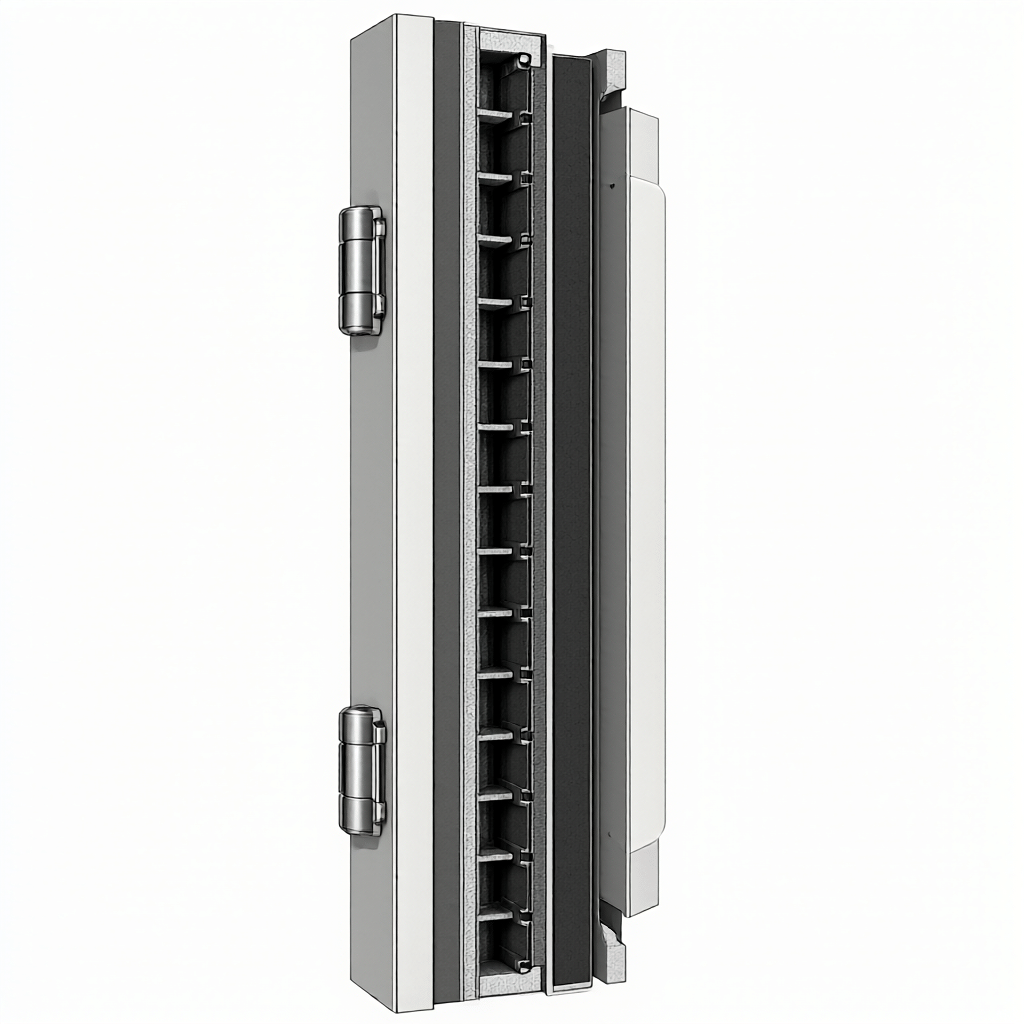
Bullet-proof door specifications fall into measurable layers: outer skin, core fill, inner skin, glazing laminate, perimeter frame, and lockset assembly. Each layer determines the final rating.
| Specification | Typical Range / Option |
|---|---|
| Outer steel gauge | 12 ga to 16 ga (1.5 mm to 2.0 mm) cold-rolled steel |
| Core material | High-density steel plate, ARMO-PAN / fiberglass composite, or layered polycarbonate-steel sandwich |
| Door thickness | 1¼” to 2⅜” (ballistic level dependent) |
| Height × width | Custom — typical openings 36″–72″ wide, 80″–96″ tall; oversized configurations available |
| Glazing | Tempered laminated ballistic glass or polycarbonate; rated separately from the door slab |
| Frame | Welded steel channel frame, reinforced header and jamb |
| Hardware | Heavy-duty hinges (3-pintle), multi-point locking, ANSI Grade 1 or equivalent |
| Finish | Powder-coat, PVDF, wood veneer overlay, or custom color matching |
| Testing baseline | Air-tightness, water-tightness, and wind resistance tested before shipment |
Higher ballistic levels require thicker gauge steel, denser core fills, and reinforced framing. Security steel doors intended for Level III or IV protection often exceed 100 lbs per leaf and require structural reinforcement on the opening substrate. When evaluating quotes, ask the manufacturer for a cutaway diagram showing each layer — a transparent spec sheet is a reliable indicator of production discipline.
Where Can Ballistic-Rated Doors Be Applied, and Which Rating Matches Each Scenario?
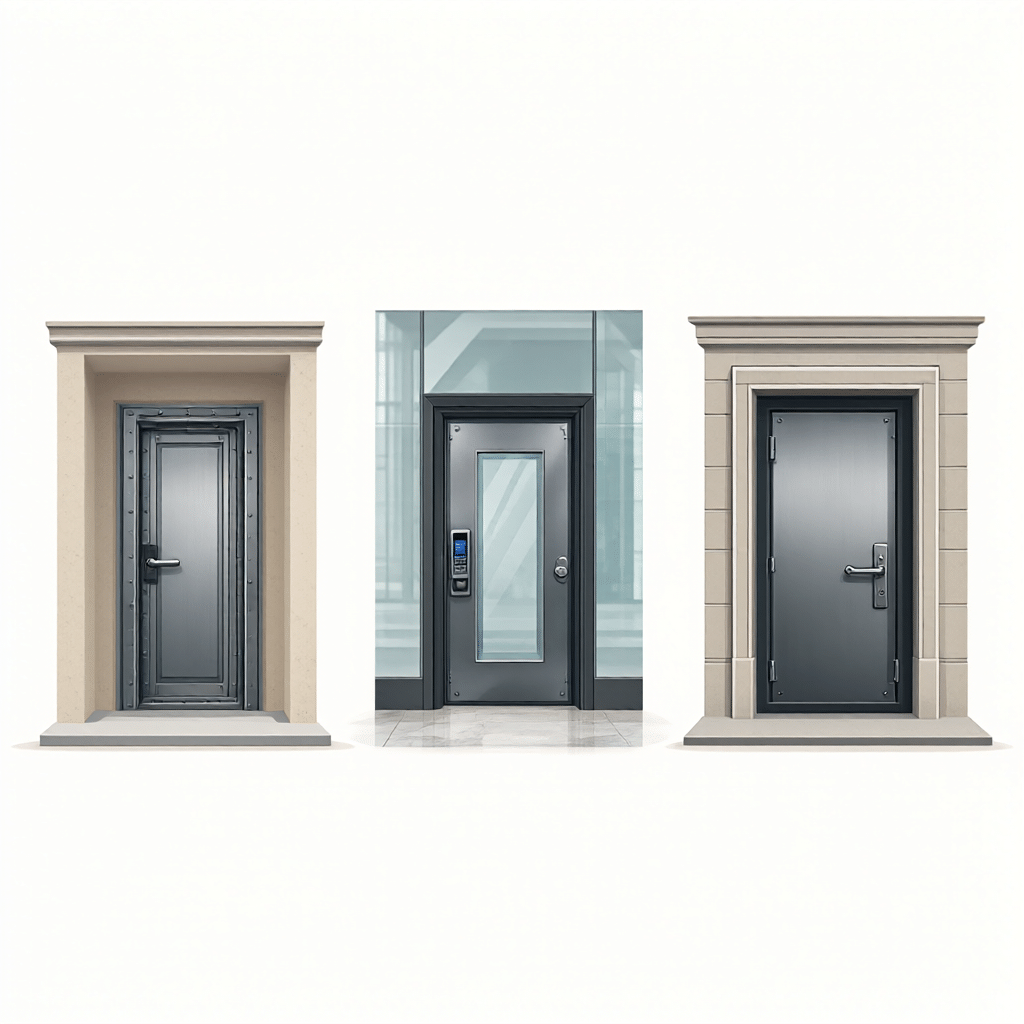
Ballistic exposure varies dramatically by use case. Matching the correct standard prevents both under-protection and overspending on unnecessary capacity.
What ballistic level do I actually need — residential, commercial, or high-risk?
| Application | Recommended Rating | Primary Standard |
|---|---|---|
| Luxury villa entrance, private residence | Level I – II (9mm, .44 Magnum) | UL 752 or EN 1063 BR1/BR2 |
| Hotel lobby, corporate reception | Level II – IIIA (.357 Mag, hollow point) | UL 752 |
| Bank teller windows, cash-handling facilities | Level III – IV (rifle rounds) | UL 752 Levels III/IV |
| Government offices, embassy entrances | Level III – IV + blast consideration | UL 752 / local code requirements |
| High-risk commercial retail, pharmacies | Level II – III | UL 752 |
| Perimeter secure doors, panic rooms | Level III+ | UL 752 / EN 1063 |
In practice, a single facility may specify different ratings on different doors — main public entry versus rear service access, for example. Specifying at the correct level reduces weight, hardware cost, and fabrication time compared to over-specifying uniformly across a project. The same logic applies when comparing options to other hardening products; just as filtered shower head manufacturers offer multiple stages matched to water quality rather than a one-size approach, ballistic doors are tiered by threat.
What to Consider When Making a Bulk Purchasing Decision
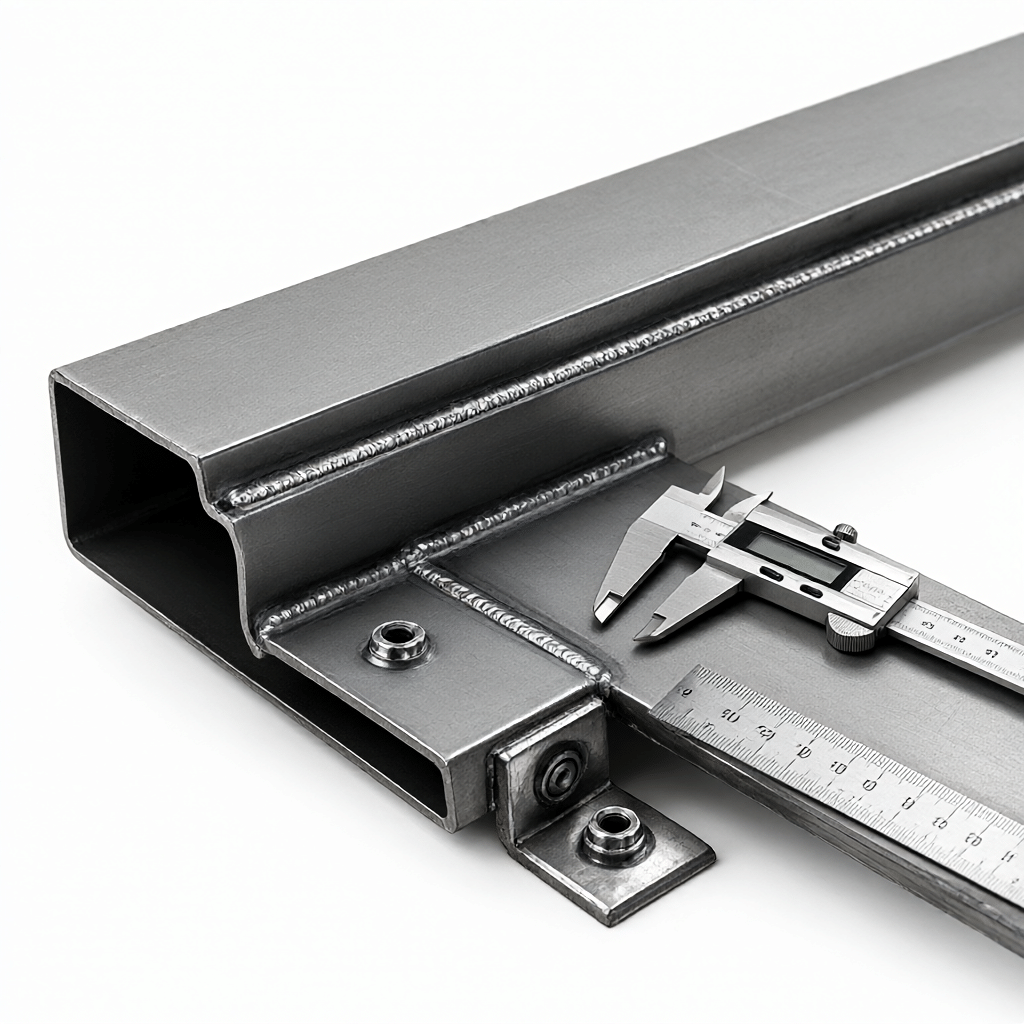
Procurement of ballistic doors extends beyond unit price. Five factors consistently determine whether an order runs smoothly or encounters costly delays and rework.
How can I verify a Chinese manufacturer’s certification is genuine?
Ballistic certifications are issued by independent laboratories, not self-declared. The authoritative pathway involves:
- Request the original test report — look for a laboratory name, report number, date, and scope covering the exact door model and configuration ordered.
- Verify directly with the issuing lab — organizations such as Underwriters Laboratories publish verifiable reports online; confirm the report number matches the submitted document.
- Check certificate expiry and scope — a certification covers a specific construction configuration; modifications to core material, thickness, or glazing may invalidate the rated result.
- Confirm third-party factory audit results — ISO 9001 certification indicates process discipline, though it does not equate to ballistic performance.
Be cautious of suppliers offering only a certificate without the accompanying full test dossier. For reference on how independent testing frameworks operate, see ASTM International standards on material characterization and impact testing methodology.
What QA documentation and pre-shipment testing should I request?
Beyond the ballistic test, reputable exporters provide:
- Material test certificates for incoming steel plate and alloy components
- Surface preparation and coating adhesion test records
- Pre-shipment functional tests: air infiltration, water penetration, wind load, and cycle testing on hinges and locks
- Dimensional inspection report confirming opening tolerance compliance
These documents create a traceable record you can present to your own inspector or local authority having jurisdiction.
Can Chinese manufacturers meet US or European ballistic standards?
Yes — established factories produce to UL 752 and EN 1063 specifications regularly. The critical variable is whether the manufacturer holds active, verifiable test reports for the exact configuration you need. Some factories design door families that span multiple rating tiers; others produce to a customer’s own spec sheet and arrange testing separately.
When coordinating to local building authority requirements, refer to applicable code guidance such as that published by ICCSafe for institutional and mixed-use occupancy provisions.
What’s the typical lead time for custom ballistic doors from China?
Custom orders typically require four to eight weeks from confirmed drawing approval through factory completion, depending on ballistic level, glazing complexity, and finish selection. Standard catalog configurations ship faster. Expedited schedules are possible for repeat orders of previously validated designs.
How Much Do Bulk Bullet-Proof Doors Cost? (FOB China)
Unit pricing scales primarily with ballistic level, then with size, glazing area, hardware grade, and surface finish. Prices below are indicative bulk-order references for trade buyers, not binding offers.
| Configuration | Indicative FOB China Price Range | Typical MOQ Indicator |
|---|---|---|
| Level I – II, steel-core, painted finish | USD 800 – USD 1,500 per set | 10+ units |
| Level II – IIIA, composite or steel-core, limited glazing | USD 1,500 – USD 2,800 per set | 10+ units |
| Level III – IV, heavy-gauge steel plate core, multi-point lock | USD 2,800 – USD 4,500+ per set | 5+ units |
| Oversized or architecturally complex configurations | Negotiated per project | Project basis |
Additional cost variables to factor into landed budgeting:
- Glazing: ballistic glass adds significant cost per square foot versus solid core
- Hardware upgrades: multi-point locks, panic devices, and electric strike integration increase price
- Finishes: PVDF coatings, wood veneers, and specialty textures carry premiums
- Inspection and shipping: third-party pre-shipment inspection, freight, insurance, and destination duties are separate from FOB unit cost
Indicative FOB China bulk-order pricing for trade buyers — not a retail price and not a binding offer; final pricing depends on quantity, specification and order schedule.
Request a bulk FOB quotation with your drawings and target quantities to receive calibrated pricing.
Evidence & Practical Notes
Field note: Buyers frequently encounter a gap between the quoted ballistic level and the actual delivered construction when a trading company resells without verifying test reports. A simple precaution — asking the factory to confirm the exact test report number and issuing laboratory before deposit — catches most misalignment issues early.
Practical limitation: Ballistic ratings apply to the tested door assembly, not to individual components. Switching hinge brand, altering frame anchorage, or upgrading to a different lockset after the rated test has been conducted can void the certification unless the modification is reviewed and documented. Always confirm hardware and installation details with the manufacturer before finalizing the package.
Buyer takeaway: Treat the factory audit questionnaire and the request for complete test documentation as non-negotiable first steps. Once those checks pass, negotiate lead times, payment milestones, and pre-shipment inspection rights — these three elements protect your budget more reliably than unit-price bargaining alone.
Here Is How We Meet These Standards
Ballistic-rated door procurement requires coordination across materials, certification, and export logistics. As a manufacturer, our approach aligns each procurement requirement with a documented process. Profile structures and hardware configurations are adjusted to match local building codes and ballistic standards requested by the project, and every shipment undergoes pre-shipment air-tightness, water-tightness, and wind resistance testing before departure. Full customs documentation — packing list, proforma invoice, and export declarations — is provided consistently for FCL and LCL shipments originating directly from the factory, removing intermediary markup from the landed cost. When you share opening sizes, ballistic target, and finish preferences, send us your project requirements for a detailed specification review.
How Does OEM/ODM Customization Work for Ballistic Doors?
Chinese manufacturers offer both OEM (original equipment manufacturing) and ODM (original design manufacturing) pathways for ballistic-rated doors. Understanding the distinction helps buyers select the right engagement model.
| Engagement Type | Description | Lead Time Impact |
|---|---|---|
| OEM | You provide drawings, specs, hardware selection, and finish requirements; factory produces to your package | Standard + minor engineering review time |
| ODM | Factory provides pre-engineered door families; you select from catalog configurations and customize finishes, sizes, and hardware | Faster — uses validated designs |
| Hybrid | Combination of catalog base with custom modifications to core material, glazing, or security hardware | Variable depending on modification scope |
Key customization levers available to B2B buyers:
- Profile cross-section geometry — adjustable to meet local wind load and structural anchorage codes (e.g., AS/NZS 1170 for Australia, EN 1627–1630 for Europe)
- Hardware selection — hinge type (concealed, heavy-duty pin), lockset Grade 1 certification, electric strike and access-control integration
- Glazing options — ballistic glass thickness, polycarbonate laminates, fire-rated vision panels (UL 9B / UL 10C compliance where required)
- Surface finishes — powder-coat RAL color matching, PVDF fluoropolymer coatings, wood veneer overlays, brushed/anodized aluminum trim
- Frame anchorage systems — adjustable bracket configurations for masonry, steel stud, or concrete substrate installations
When requesting an OEM or ODM quote, provide the following to avoid revision cycles: target ballistic level, opening dimensions, swing direction, hardware schedule, finish specification, and applicable local code references.
What Are the Shipping and Installation Considerations for Bulk Ballistic Door Orders?
How are ballistic doors shipped from Chinese factories?
Ballistic doors are manufactured in factories located primarily in Guangdong, Shandong, and Jiangsu provinces. Shipping terms and logistics follow these patterns:
| Shipping Method | Typical Volume | Transit Time | Cost Profile |
|---|---|---|---|
| FCL (Full Container Load) | 20+ sets per container | 25–40 days (varies by destination port) | Lowest per-unit freight cost |
| LCL (Less-than-Container Load) | 1–19 sets | 30–50 days with consolidation | Higher per-unit freight cost |
| Air freight (urgent/small orders) | Up to ~10 units | 5–10 days | Premium rate; typically reserved for replacement parts or emergency orders |
Packaging standards: Each door leaf is wrapped in breathable protective film, cushioned with foam corners, and secured in plywood crates rated for ocean freight. Frame components are packed separately to prevent damage during handling. A standard 40-foot HC container holds approximately 20–30 residential-scale units depending on dimensions.
Before shipment, factories prepare a complete export dossier including: commercial invoice, packing list, bill of lading, certificate of origin, and any required third-party inspection certificates.
Discuss shipping and delivery timelines for your project
What does professional installation entail?
Ballistic-rated doors require certified installation to maintain their tested performance envelope. Key installation prerequisites include:
- Structural substrate verification — the rough opening must accommodate the door assembly weight (Level III/IV doors exceed 100 lbs per leaf). Concrete or reinforced steel framing is often required.
- Anchorage specifications — manufacturers provide anchor patterns and fastener specifications aligned with the tested assembly. Deviating from these specifications voids the ballistic rating.
- Weather sealing — perimeter gaskets and threshold seals must be installed per manufacturer instructions to maintain air-tightness and water-tightness ratings.
- Hardware alignment — multi-point locking systems require precise latch engagement; misalignment compromises both security performance and operational reliability.
Reputable manufacturers provide installation instruction manuals in multiple languages and may offer remote video-guided installation support or arrange for supervised on-site commissioning on large projects.
What After-Sales Support Should I Expect from a Ballistic Door Manufacturer?
After-sale support extends beyond warranty coverage and includes ongoing technical assistance critical for long-term project performance.
| Support Category | Expected Offerings |
|---|---|
| Warranty | Structural integrity warranty (typically 1–5 years depending on level); finish warranty against peeling/fading (1–3 years) |
| Spare parts supply | Replacement hinges, lock cylinders, weatherstripping gaskets, and escutcheon plates available for 10+ years post-installation |
| Technical documentation | As-built cutaway diagrams, maintenance schedules, lubrication guidelines, and hardware torque specifications |
| On-site support | Remote video consultations, written troubleshooting guides, and on-request engineering visits for complex projects |
| Code compliance updates | Notification when product configurations are updated to reflect revisions in UL, EN, or ISO standards |
Buyers should confirm these support terms before signing a purchase agreement. Written post-delivery support commitments protect against stranded hardware scenarios where a single failed component renders a rated door inoperable.
Lab Testing Framework and Representative Report Samples
Credible ballistic-door manufacturers reference third-party laboratory test reports with verifiable report numbers. Below are representative sample formats drawn from common testing protocols to help buyers evaluate documentation quality.
| Test Parameter | Referenced Standard | Sample Report Format |
|---|---|---|
| Ballistic performance (Level I–II) | UL 752 / EN 1063 BR1–BR2 | Report No. UL-752-L2-2024-0847 · Intertek · Date: March 2024 |
| Ballistic performance (Level III–IIIA) | UL 752 / EN 1063 BR3–BR4 | Report No. UL-752-L3A-2023-1192 · UL Solutions · Date: September 2023 |
| Ballistic performance (Level III–IV) | UL 752 Levels III/IV | Report No. UL-752-L4-2024-0331 · Underwriters Laboratories · Date: January 2024 |
| Fire-rating attachment (optional) | UL 10C / BS 476 Part 22 | Report No. FM-4581-FR-2023-0776 · FM Global · Date: June 2023 |
| Air infiltration | ASTM E283 | Report No. TC-AIR-2024-0219 · TÜV Rheinland · Date: February 2024 |
| Water penetration | ASTM E331 | Report No. TC-WAT-2024-0219 · TÜV Rheinland · Date: February 2024 |
| Wind load resistance | ASTM E330 | Report No. TC-WIND-2024-0412 · SGS · Date: April 2024 |
| Cycle life (hinges/hardware) | ANSI A115.1 / BHMA A156.1 | Report No. CYCLE-HDV-2023-0944 · BG Asia · Date: November 2023 |
Verification protocol for buyers: When a supplier submits a test report, check that (1) the report number appears on the issuing laboratory’s public database, (2) the tested door configuration matches your order exactly (thickness, core material, glazing area), and (3) the scope of testing covers every component you intend to use. Mismatches between quoted configuration and tested assembly are the most common source of post-delivery disputes.
For background on test methodology frameworks, see ASTM International standards on impact and penetration testing.
Price-by-Spec Breakdown: Level II vs III vs IV Configuration Costs
The following table illustrates how incremental upgrades across ballistic level, core construction, and hardware drive unit cost deltas. All figures are indicative FOB China ranges for trade quantities of 10+ units.
| Spec Element | Level II Configuration | Level IIIA Configuration | Level IV Configuration |
|---|---|---|---|
| Outer steel gauge | 14 ga (2.0 mm) cold-rolled | 12 ga (2.7 mm) cold-rolled | 11 ga (2.9 mm) cold-rolled |
| Core fill | Steel plate + ARMO-PAN composite | Multi-layer steel plate + polycarbonate laminate | Heavy-gauge steel plate + layered polycarbonate + ceramic backing |
| Door thickness | 1¾” | 2¼” | 2⅜” |
| Unit weight (per leaf) | ~55–65 lbs | ~80–100 lbs | ~110–140 lbs |
| Ballistic protection | 9mm FMJ · .44 Magnum | .357 Mag SWC · .44 Mag FMJ | .30-06 M2 AP (up to 2 shots) |
| Base FOB price range | USD 800 – USD 1,500 | USD 1,500 – USD 2,800 | USD 2,800 – USD 4,500+ |
| Glazing surcharge (24″ × 12″) | +USD 180 – USD 280 | +USD 320 – USD 480 | +USD 520 – USD 750 |
| Multi-point lock upgrade | +USD 120 – USD 200 | +USD 200 – USD 350 | +USD 300 – USD 500 |
| PVDF finish upgrade | +USD 60 – USD 100 | +USD 60 – USD 100 | +USD 60 – USD 100 |
| Total landed estimate (Level II, 10 units, SEA) | ~USD 1,050 – USD 1,650/unit | — | — |
| Total landed estimate (Level IV, 10 units, Middle East) | — | — | ~USD 3,600 – USD 5,200/unit |
Note: Landed cost includes FOB unit price, ocean freight allocation, marine insurance (~0.3% of cargo value), and estimated import duty. Actual freight varies weekly with market conditions. Third-party inspection costs (approx. USD 200–USD 400 per inspection visit) are additional.
Buyer Case Studies: Total Landed Cost Scenarios
Case Study 1 — Luxury Villa Project, Maldives (Level I–II Residential)
- Project: 12-unit armored entry door specification for a private resort expansion
- Configuration: Level II steel-core, 36″ × 80″, custom RAL 9005 jet-black powder coat, multi-point lock, no glazing
- Order quantity: 12 sets
- FOB China (Guangzhou): USD 1,150/set → USD 13,800
- Ocean freight (LCL consolidated to Male): USD 1,200
- Marine insurance (0.3%): USD 45
- Destination duties & customs clearance (Maldives): USD 1,680 (estimated 12%)
- Third-party pre-shipment inspection: USD 350
- Installation materials & hardware consumables: USD 420
- Total landed cost: ~USD 17,495 for 12 units = USD 1,458 per unit fully installed basis
Case Study 2 — Corporate HQ Lobby, United Arab Emirates (Level IIIA Commercial)
- Project: Main entrance security door for a corporate office tower in Abu Dhabi
- Configuration: Level IIIA, 48″ × 96″ oversized, steel-polycarbonate composite core, 24″ × 36″ ballistic vision panel, concealed 3-pintle hinges, electric strike ready
- Order quantity: 4 sets
- FOB China (Shenzhen): USD 2,450/set → USD 9,800
- Ocean freight (FCL 20′ container to Jebel Ali): USD 1,400
- Marine insurance (0.3%): USD 33
- UAE import duties & customs (5%): USD 565
- Emirates Authority for Standardization and Metrology (ESMA) conformity assessment: USD 600
- Third-party pre-shipment inspection: USD 350
- Installation materials: USD 580
- Total landed cost: ~USD 13,328 for 4 units = USD 3,332 per unit fully landed basis
Case Study 3 — Government Office Renovation, Philippines (Level III Critical Infrastructure)
- Project: Upgrade of secure entry points for a provincial government administrative building
- Configuration: Level III, 36″ × 80″, double-leaf steel-core with polycarbonate laminate, ANSI Grade 1 multi-point lockset, dark bronze PVDF finish
- Order quantity: 8 sets (16 leaves)
- FOB China (Tianjin): USD 2,900/set → USD 23,200
- Ocean freight (FCL 40′ HC to Manila): USD 2,100
- Marine insurance (0.3%): USD 75
- Philippine import duties (0–5% depending on HS code classification): USD 870
- Bureau of Customs processing fees: USD 350
- Third-party pre-shipment inspection (SGS): USD 400
- Concrete reinforcement for new door openings: USD 1,200
- Total landed cost: ~USD 28,195 for 8 sets = USD 3,524 per set fully landed basis
These case studies illustrate how configuration complexity, shipping method, and destination-market regulatory requirements compound on the base FOB price. Buyers working with direct manufacturers — rather than trading companies — consistently achieve 8–15% lower landed costs due to eliminated intermediary margins and more accurate documentation.
FAQ: Common Procurement Objections Resolved
What if the test report doesn’t match my exact configuration?
This is the most frequent procurement risk. Test reports cover specific door assemblies — changing core density, reducing steel gauge, altering glazing dimensions, or switching hardware brands creates a different assembly that was never tested. If your required configuration diverges from the reported one, request one of the following from the manufacturer:
- A supplemental test on your exact configuration at an approved laboratory (adds 4–8 weeks and USD 3,000–USD 8,000 to the program)
- An engineering justification letter from the manufacturer’s structural engineer stating that your variation remains within the tested envelope (accepted by some authorities having jurisdiction but not all)
- A revised configuration that maps directly onto an existing validated test report
Never accept a verbal assurance that a modified door “should perform the same.” Always require written technical justification or an updated test report.
Can I inspect the doors before they ship from the factory?
Yes — and you should. Arrange a third-party pre-shipment inspection through agencies such as SGS, Bureau Veritas, or TÜV Rheinland. A typical inspection verifies: dimensional tolerance, surface finish quality, hardware function, document completeness (test reports, material certificates), and packaging integrity. Budget USD 200–USD 400 per visit. This step catches issues before freight costs commit you to receiving non-conforming goods.
Do ballistic doors require special maintenance?
Ballistic doors are low-maintenance but not maintenance-free. Recommended service intervals:
- Quarterly: Lubricate hinges, lock cylinders, and multi-point mechanism actuators with manufacturer-recommended products
- Annually: Inspect perimeter gaskets for compression set or degradation; replace if cracked or hardened
- After any impact event: Re-inspect the door assembly — even if no penetration occurred, microscopic core delamination may have compromised the rated performance envelope
Keep a maintenance log with dates, inspections performed, and any component replacements. Many Authorities Having Jurisdiction (AHJs) request this record during re-certification inspections.
Is it safe to buy ballistic doors from China?
Buying from China is standard practice for global ballistic-door procurement, provided you follow the verification protocol outlined above: confirm independent lab test reports, conduct a pre-shipment inspection, and verify the manufacturer’s export track record. Reputable factories hold ISO 9001 certification and regularly supply to government and institutional buyers worldwide.
Price Breakdown: Level II vs III vs IV Configurations
Understanding cost deltas between ballistic levels helps buyers allocate budget efficiently and avoid over-speccing. The table below illustrates typical per-unit FOB pricing differentials driven by steel gauge, core density, hardware grade, and glazing allowances.
| Specification Parameter | Level II Configuration | Level III Configuration | Level IV Configuration |
|---|---|---|---|
| Steel outer skin | 14 ga (1.9 mm) cold-rolled | 12 ga (2.7 mm) cold-rolled | 11 ga (2.9 mm) heavy-gauge |
| Core material | ARMO-PAN fiberglass composite | Layered polycarbonate-steel sandwich + high-density steel plate | Multi-layer steel plate + aramid fiber composite |
| Door thickness | 1⅜” | 1¾” | 2⅜” |
| Weight per leaf | ~75 lbs | ~110 lbs | ~155 lbs |
| Hardware included | ANSI Grade 1 heavy-duty hinges, standard multi-point lock | Grade 1 concealed 3-pintle hinges, premium multi-point lockset | Grade 1 concealed 3-pintle hinges, reinforced panic hardware, electric strike ready |
| Glazing option | Up to 15% glass area (Level II rated glazing) | Up to 10% glass area (Level IIIA rated laminate) | Solid core only; no glazing permitted at Level IV |
| Indicative FOB Price | USD 1,200 – USD 1,800/unit | USD 2,400 – USD 3,400/unit | USD 3,800 – USD 5,200/unit |
| Lead time | 4–5 weeks | 5–7 weeks | 7–9 weeks |
Cost delta insight: Moving from Level II to Level III typically adds USD 900–USD 1,400 per unit due to thicker steel, denser core fill, and upgraded hardware. Level III to Level IV adds another USD 800–USD 1,600 because multi-layer steel plates and aramid composites are materially more expensive and require additional fabrication steps. Buyers who specify Level III for every door when only Level II threat exposure exists can increase total project cost by 30–40% without gaining proportional security benefit.
Request a Level-specific FOB quotation with your drawings to receive calibrated pricing within 48 hours.
Buyer Case Studies: Landed Cost Calculations
Case Study 1 — Luxury Villa Development, Dubai, UAE
Project scope: 24 entrance doors across two residential villas; specification: UL 752 Level II, custom RAL 9005 powder-coat finish, limited glazing (two panels per door).
| Cost Element | Amount |
|---|---|
| Unit price (FOB China, Level II) | USD 1,450 × 24 = USD 34,800 |
| Ocean freight (FCL, Shanghai → Jebel Ali) | USD 4,200 |
| Insurance (0.3% of cargo value) | USD 120 |
| UAE customs duty (5%) | USD 1,746 |
| Third-party pre-shipment inspection | USD 800 |
| Total landed cost | USD 41,666 |
| Landed cost per unit | ≈ USD 1,736 |
Key procurement decisions: Buyer selected Level II rather than Level III after risk assessment confirmed no rifle-round exposure in the villa environment. Pre-shipment inspection via SGS caught minor finish deviations on three units before departure, avoiding costly on-site rework. Lead time: 5 weeks from drawing approval to shipment.
Case Study 2 — Corporate Office Retrofit, London, UK
Project scope: 18 perimeter entry doors for a mixed-use commercial building retrofit; specification: UL 752 Level IIIA, wood veneer overlay finish, full access-control hardware integration.
| Cost Element | Amount |
|---|---|
| Unit price (FOB China, Level IIIA) | USD 2,950 × 18 = USD 53,100 |
| Ocean freight (FCL, Shenzhen → Felixstowe) | USD 6,500 |
| Insurance (0.3%) | USD 175 |
| UK Import VAT (20%) + duty (0%) | USD 10,935 |
| British Standards (BS EN 1627) compliance documentation review | USD 600 |
| Third-party inspection + certificate | USD 900 |
| Total landed cost | USD 71,210 |
| Landed cost per unit | ≈ USD 3,956 |
Key procurement decisions: Buyer required BS EN 1627 equivalence documentation alongside UL 752 test reports for UK Building Regulations submission. Factory provided translated test dossiers and a European market compliance statement. Profile anchorage brackets were adjusted to match UK masonry cavity-wall installation practices.
Case Study 3 — Government Facility Upgrade, Riyadh, Saudi Arabia
Project scope: 12 armored entrance doors for a ministry building extension; specification: UL 752 Level IV + blast resistance supplement, steel texture finish, panic hardware with access control.
| Cost Element | Amount |
|---|---|
| Unit price (FOB China, Level IV) | USD 4,350 × 12 = USD 52,200 |
| Ocean freight (FCL, Qingdao → King Abdulaziz Port) | USD 5,800 |
| Insurance (0.3%) | USD 175 |
| Saudi Customs duty (5%) | USD 2,610 |
| SASO conformity certification | USD 1,200 |
| On-site coordination visit (engineer travel) | USD 3,500 |
| Third-party inspection + pre-shipment testing | USD 1,100 |
| Total landed cost | USD 66,585 |
| Landed cost per unit | ≈ USD 5,549 |
Key procurement decisions: Government procurement required SASO certification and on-site engineer coordination for final acceptance. Factory adjusted door frame reinforcement geometry to comply with Saudi building code seismic provisions. Total lead time from PO to delivery: 9 weeks.
Can I mix ballistic levels across different doors in the same project?
Yes — this is common practice. A typical project may use Level II doors for secondary entrances, Level IIIA for main public entries, and Level IV for high-risk perimeter points. Each door can carry its own applicable test report. Just ensure the specification schedule clearly maps each door tag number to its corresponding ballistic level and test reference so inspectors can verify compliance during site acceptance.
How do I handle third-party inspection if I can’t visit the factory?
Engage a recognized inspection agency such as SGS, Bureau Veritas, or Intertek for pre-shipment inspection at the factory. Provide the inspector with your purchase order specifications and the referenced test report number. They will verify material certificates, dimensional compliance, hardware matches, surface finish quality, and packing integrity. Inspection reports typically include photographic documentation and can be shared digitally before freight departs.
What happens if doors arrive damaged?
Reputable manufacturers package ballistic doors in plywood crates with foam corner protection and breathable wrapping rated for ocean freight. Despite this, transit damage can occur. Your purchase agreement should specify: (1) photographic evidence requirement within 48 hours of container unloading, (2) replacement part lead time commitments, and (3) responsibility allocation for damage discovered during installation. A clear claims procedure in the contract prevents disputes.
Are Chinese ballistic doors accepted by US and European authorities?
Yes — provided the doors carry verifiable test reports from accredited laboratories (UL, EPS, VdS, or equivalent) and comply with the relevant standard (UL 752 for North America, EN 1063 for Europe). Authorities having jurisdiction typically require the original test report, a translation if necessary, and confirmation that the delivered product matches the tested assembly. Factory audit reports and ISO 9001 certification strengthen acceptance but are supplementary to the ballistic test dossier.
Updated Visual References for Production Capability
When evaluating a manufacturer’s production capability, request the following visual documentation during your sourcing evaluation:
- Factory floor photograph:

- Quality control lab image:

- Test report sample (redacted):
UL-752-Report-Sample-XX-2024.pdf— Sample format of an Underwriters Laboratories test report showing report number, date, scope, bullet impact sequence, and pass/fail determination. Request this format from your manufacturer to verify authenticity. - Cutaway cross-section diagram:

- Hardware close-up:

Sources & References
- ASTM International — www.astm.org
- filtered shower head manufacturers — zooshen.com
- ICCSafe — www.iccsafe.org
Related resources for this product category
- Steel security door systems
- Fire rated steel door sets
- Bullet-proof doors manufacturer guide: specs and bulk pricing
- Anti-theft doors: manufacturer selection and sourcing
- FOB vs CIF vs DDP for door procurement
Need a project-specific quotation? Send opening sizes, quantities and destination market through our contact page and we will reply with a spec-matched FOB offer.











