
Last updated: November 25, 2026
Quick Overview
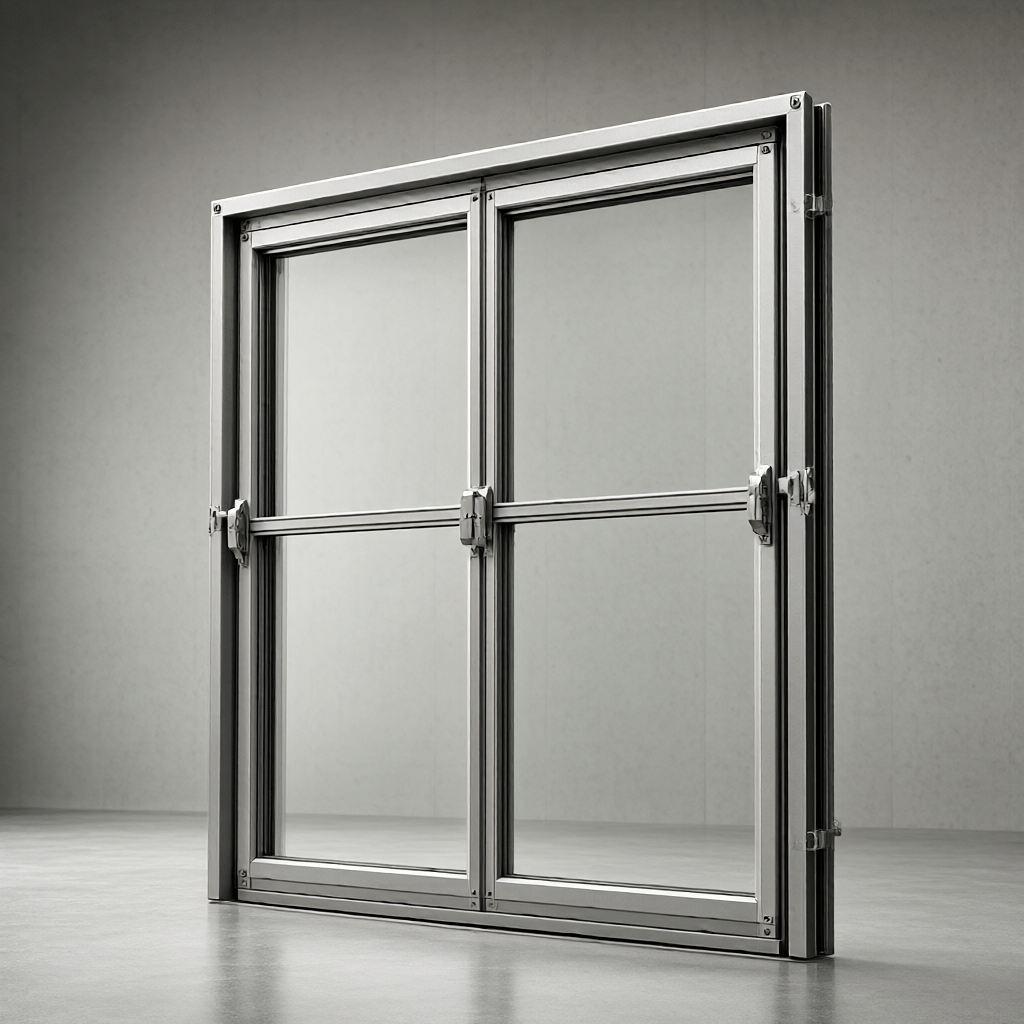
Selecting a hurricane impact doors manufacturer requires evaluating certification compliance, frame and glass engineering, hardware systems, and factory-direct supply capability. A reliable supplier provides doors tested to ASTM E1886/E1996, holds Miami-Dade NOA approval for High-Velocity Hurricane Zone (HVHZ) projects, offers full customization on profile structure and fittings to match local building codes, and supports FCL/LCL shipments from their factory with complete trade documentation.
Hurricane impact doors — also called impact-resistant doors, hurricane-rated doors, or storm impact doors — are heavy-duty exterior and entry doors engineered with reinforced frames, multi-point locking hardware, laminated glass, and structural gaskets to withstand extreme wind pressure, wind-borne debris impact, and water infiltration. They are critical components in coastal construction, multi-unit residential developments, and commercial hospitality projects located in hurricane-prone regions.
Specifications
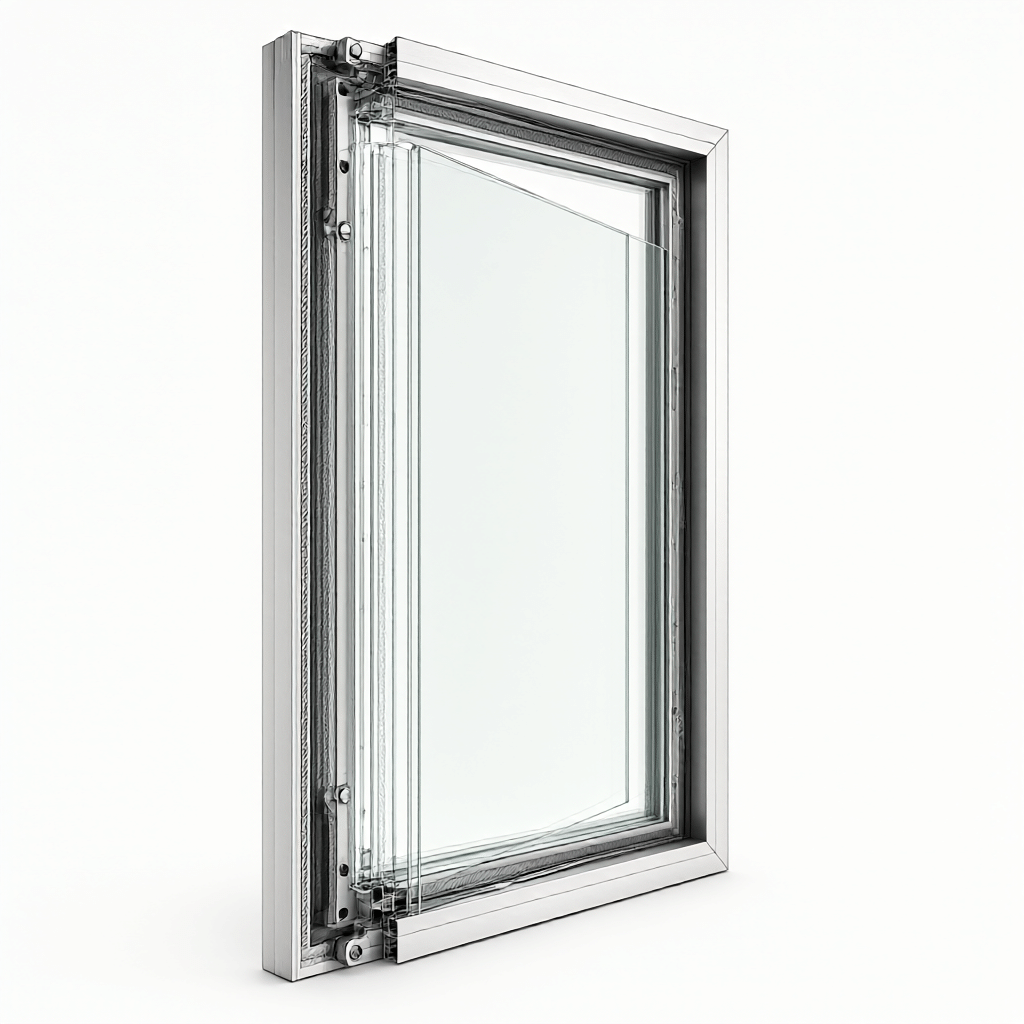
What are the key specifications of hurricane impact doors?
| Specification | Typical Range / Standard |
|---|---|
| Frame material | Thermal-break aluminum alloy (6063-T5 or higher); solid wood-core options available |
| Glass configuration | Laminated tempered glass, typically 6mm+0.76PVB+6mm or thicker; optional low-E coating |
| Wind-load rating | Design pressure up to 240+ psf (varies by size and frame depth) |
| Debris impact rating | Large-missile test per ASTM E1886 / Miami-Dade TVUD |
| Air infiltration | ≤ 0.30 CFM/ft² at specified test pressure |
| Water penetration resistance | ≤ 0.13 psf water leakage rate under ASTM E330 testing |
| Frame depth | 4.5″ to 6″+ depending on performance tier and code region |
| Hardware | Multi-point locking system (3–5 points), corrosion-resistant hinges |
| Finish options | Anodized, powder-coated (RAL color range), wood-grain wrap |
| Available styles | Casement, sliding, French-style, single / double leaf |
Performance thresholds vary by opening size — larger panels require deeper frame profiles and heavier hardware to maintain rated design pressure. Always verify that submitted shop drawings match the tested assembly, not just individual component ratings.
Applications
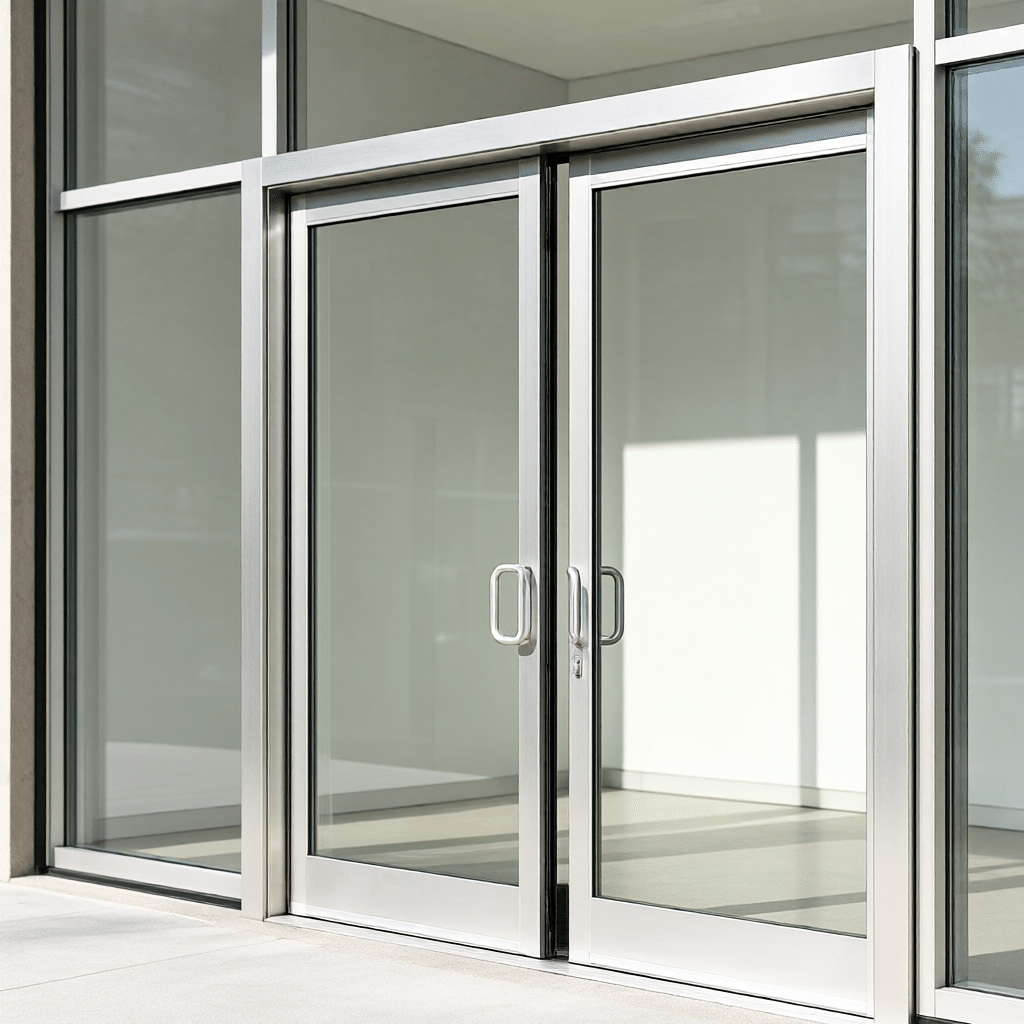
Where can hurricane impact doors be used?
Coastal construction in hurricane-prone regions is the primary application — properties subject to HVHZ requirements in South Florida, the Gulf Coast, and Caribbean jurisdictions must meet stringent impact and wind-pressure standards. New-construction villas, condominium towers, and mixed-use developments all specify these doors as part of the building envelope.
Multi-unit residential developments frequently use hurricane impact entrance doors for lobby entries, unit access points, and balcony threshold transitions where both security and weather protection are required.
Commercial hospitality projects — resorts, hotels, and vacation rental complexes in storm zones — demand doors that combine aesthetic appeal with certified performance, often requiring private-label finishes matching architectural specifications.
Architectural specification procurement requires doors that meet regional code variations: Florida DBPR and Miami-Dade TOD approvals for southern Florida; Texas Windstorm Insurance Program certification for Gulf Coast Texas; and IBHS Fortified Home criteria for broader US coastal markets.
For retrofit and replacement applications, some manufacturers offer doors designed to fit existing rough openings without full wall reconstruction — a critical distinction from new-construction-only installations. Verify whether the supplier provides retrofit-compatible configurations if you are renovating rather than building from scratch.
Buying Factors
What to consider when buying hurricane impact doors in bulk?
Certification and test compliance is the non-negotiable starting point. Doors intended for Florida markets should carry current Miami-Dade NOA (Notice of Acceptance) numbers verifiable through the county’s database. For general US coastal compliance, third-party testing reports referencing ASTM E1886 (impact resistance) and ASTM E1996 (design pressure) are essential. Ask suppliers to provide copies of test reports, not just certification claims — verification protects against fraudulent or expired NOAs.
Customization capability determines whether a supplier can meet diverse project requirements across multiple job sites. Profile structure depth, glass configs
How much do bulk hurricane impact doors cost? (FOB China)
Bulk hurricane impact door pricing varies significantly based on specification variables:
| Configuration | Unit Price Range (FOB China) | Min Order |
|---|---|---|
| Aluminum casement door (standard size, laminated glass, basic hardware) | $180 – $320 USD | 50 units |
| Thermal-break aluminum (deep-profile, multi-point lock, low-E glass) | $340 – $580 USD | 30 units |
| Custom wood-aluminum composite / solid wood-core doors | $420 – $750 USD | 20 units |
| Large-format sliding or French-style assemblies | $550 – $950 USD | 20 units |
| Sunroom / patio door systems | $280 – $480 USD | 30 units |
Volume tiers commonly reduce unit cost by 8–15% above base thresholds (100+ units, 300+ units). Additional cost drivers include: custom powder-coat colors outside standard RAL ranges (+5–12%), specialized glass tints or patterns (+8–20%), integrated security smart locks (+$40–$120/unit), and expedited production schedules (+10–25%).
Factory-direct supply eliminates middleman markups, which typically account for 15–30% of retail pricing. When evaluating quotes, ensure all specifications — frame depth, glass assembly, hardware brand, and finish — are identical across comparisons so you’re comparing equivalent products.
Manufacturing Process & Quality Testing Workflow
How are hurricane impact doors manufactured?
Understanding the manufacturing process helps buyers evaluate supplier capability and set realistic expectations for quality and lead time.
Step 1 — Extrusion and Profile Engineering: Aluminum billets (typically 6063-T5 alloy) are heated and pushed through precision dies to produce frame and sash profiles. Thermal-break bars (nylon PA66 strips) are mechanically interlocked between inner and outer aluminum channels during extrusion to create a continuous thermal barrier, reducing U-factor to values compliant with ASHRAE 90.1 energy codes.
Step 2 — CNC Cutting and Fabrication: Extruded profiles are cut to exact lengths using numerical-controlled sawing machines (tolerance ±0.5mm). Corners are miter-cut and joined via CNC-routing or hydraulic corner-clamping. For reinforced designs, gussets and internal steel inserts are placed at stress points before assembly.
Step 3 — Glass Lamination and Glazing: Laminated safety glass panels are assembled in climate-controlled lamination lines — tempered glass sheets (6mm minimum per ASTM E1300) are cleaned, interlayer PVB film is positioned, and the sandwich is cured under heat and pressure (autoclave cycle: ~140°C, 15–30 minutes). The resulting panel achievesimpact resistance classified under ASTM E1886/E1996 protocols.
Step 4 — Frame Assembly and Gasket Installation: Hardened rubberEPDM gaskets are compression-fit into perimeter channels. Multi-point locking mechanisms, hinges, and pivot hardware are mounted with calibrated torque settings. Weatherstripping compliance is verified against NFPA 80 fire-door standards where applicable.
Step 5 — Pre-Shipment Testing and Inspection: Every production batch undergoes three mandatory tests before leaving the facility: air-tightness (measured in CFM/ft² at rated pressure), water penetration (max 0.13 psf leakage per ASTM E330), and wind-load simulation (cyclic pressure cycling at 1.5× design load per ASTM E330). Units that fail any test are quarantined and reworked.
Case Study: Florida Condominium Tower Project
In early 2024, a coastal condominium development in Palm Beach County, Florida specified 420 hurricane impact entry and balcony doors across four building phases. The project required doors meeting Miami-Dade NOA HVHZ certification, custom bronze powder-coat finishes matching the architectural palette, and staggered deliveries aligned with construction milestones.
The selected manufacturer — operating as a direct-from-factory supplier — delivered all four production runs over a 6-month period. Key outcomes: average lead time of 32 days per shipment, zero NOA non-conformities during county inspections, and a 12% cost saving versus equivalent specification doors sourced through regional distributors. The client noted that adjustable profile structures allowed field modifications for variations in rough-opening dimensions across different floor plans without requiring custom re-engineering.
Reference: Performance criteria and test methods referenced in this case align with standards published by ASTM.org and international building code requirements maintained by ICC Safe.
Structured Procurement Checklist for Hurricane Impact Doors
Use this checklist during supplier evaluation to maintain consistent pass/fail criteria across bids:
Must-Have (Fail = Disqualified)
- [ ] Current Miami-Dade NOA or equivalent regional certification (verifiable via official database)
- [ ] Test reports citing full designation: ASTM E1886-23 and ASTM E1996-23a
- [ ] Air infiltration ≤ 0.30 CFM/ft² at design pressure (test report required)
- [ ] Water penetration rating ≤ 0.13 psf (tested per ASTM E330)
- [ ] Factory-direct pricing with itemized quote breakdown (no hidden freight surcharges)
- [ ] Provision of full customs documentation package (packing list, PI, bill of lading)
- [ ] Minimum 50-unit capacity per production run for volume orders
- [ ] Written warranty: ≥ 10 years on frame integrity, ≥ 5 years on hardware
Nice-to-Have
- [ ] In-house R&D team capable of adapting profile structures to local codes
- [ ] Multi-stage quality control with third-party inspector option (SGS, BV)
- [ ] OEM / ODM / private-label capabilities for branding
- [ ] Sample order policy allowing pre-production evaluation
- [ ] Lead-time guarantee with penalty clause for delays exceeding agreed schedule
- [ ] Online configurator or technical drawing service for specification alignment
Manufacturer Selection Criteria
Choosing the right manufacturer extends beyond price comparison. Evaluate suppliers against these criteria:
- Certification validity and scope — A NOA covers specific configurations only. Verify that every size, finish, and hardware combination on your order appears on an active notice, not just one “representative” tested model.
- Code adaptability — Local building codes vary by jurisdiction. A capable manufacturer adjusts profile depths, reinforcement layouts, and gasket systems to comply with target-market requirements without compromising certified performance.
- Trade documentation proficiency — Reliable factories provide packing lists, proforma invoices, and full customs paperwork as standard. This reduces clearance delays and avoids demurrage charges at destination ports.
- Production transparency — Facilities that welcome virtual or in-person audits demonstrate confidence in their processes. Request access to extrusion lines, lamination chambers, and testing labs before committing to large orders.
- Communication and responsiveness — Sample approval turnaround, response time to RFQs, and clarity on change-order procedures reveal how smoothly a partnership will function.
Brand Portfolio Comparison
Different door configurations serve distinct project types. Use this comparison to match your application requirements:
| Product Type | Best Suited For | Key Features | Approx. FOB Range |
|---|---|---|---|
| Thermal-break aluminum casement | Hotel entrances, residential villas | Deep profile (4.5–6″), multi-point lock, low-E glass | $340–$580 |
| Solid wood / wood-aluminum composite | Luxury residences, heritage-style facades | Wood-grain interior, aluminum weather shell, premium hardware | $420–$750 |
| Sliding impact door system | Balcony openings, patio transitions | Wide-span capability (up to 12ft), track-reinforced rollers | $550–$950 |
| French-style double-leaf | Grand entrances, lobby thresholds | Symmetrical design, dual multi-point engagement, decorative grilles optional | $600–$1,100 |
| Lightweight retrofit door | Renovation projects, existing openings | Compatible with legacy frames, minimal structural modification | $180–$320 |
For full project specification alignment — including profile adjustments for local wind-load zones, custom glass specifications, and private-label hardware packaging — contact our sales team directly. Request Quote
Installation Requirements and Cost Considerations
Proper installation is as critical as door certification. Even a perfectly tested unit can fail if installed incorrectly.
Structural requirements: Rough opening must be plumb, level, and square within ±3mm tolerance. Anchorage spacing follows manufacturer instructions and local code — typically 12 inches from corners and 24 inches along intermediate studs. Use corrosion-resistant fasteners (stainless steel or hot-dip galvanized) in coastal environments.
Sealing protocol: Apply continuous bead of silicone or polyurethane sealant at the frame-to-masonry interface. Compress EPDM gaskets evenly during closure to avoid localized gaps. Double-check multi-point lock engagement after sealant curing.
Professional installation cost: Typical labor runs $150–$350 per door unit in North American markets, with larger or higher-spec installations at the upper end. Factor this into total project budgets alongside product cost and freight.
FAQ
What is the typical MOQ for bulk hurricane impact doors?
Most manufacturers require 20–50 units for standard configurations; custom orders may start at 20 units. Lower MOQs are sometimes available for sample orders at a slight premium.
Do you offer samples before bulk production?
Yes. Samples are produced to your specification and ship within 7–14 business days. Sample costs are typically credited against the first production order.
How long does third-party certification testing take?
Initial NOA processing through certified testing laboratories generally requires 8–12 weeks. Repeat certifications for modified configurations may take 4–6 weeks.
What is the customization lead time for non-standard sizes or finishes?
Standard sizes: 25–35 days. Custom profile adjustments or specialty finishes: 40–55 days depending on raw material lead time and factory scheduling.
Can you adjust profile structures to meet my country’s building code?
Yes. Our engineering team adapts frame depths, reinforcement layouts, and hardware configurations to comply with regional standards — including but not limited to US Florida, Texas Windstorm, EU EN 14351-1, and Middle East SASO requirements.
As a manufacturer, our approach to bulk hurricane impact door supply centers on three principles: factory-direct pricing that eliminates distributor markup, full customization flexibility on profiles, glass, finishes, and hardware, and rigorous pre-shipment testing for air-tightness, water-tightness, and wind resistance on every production batch. We manage the complete export process — from proforma invoice and packing list through FCL/LCL shipping — so your project arrives on time and clears customs without delay. Get a Free Quote
OPENING:
Hurricane impact doors are engineered entry and exit assemblies rated to resist extreme wind pressure and projectile debris, combining thermally broken aluminum or solid-wood-core frames, laminated safety glass, and multi-point locking hardware into a single code-certified unit. For B2B buyers sourcing bulk quantities, the critical decision factors are active Miami-Dade NOA coverage across every ordered configuration, factory-direct pricing without distributor markup, full customization of profile depth and fittings to match local building codes, and verifiable pre-shipment testing for air-tightness, water penetration, and wind load. This guide breaks down performance specifications, cost drivers, certification verification steps, and manufacturer evaluation criteria so procurement teams can confidently issue RFQs and compare equivalent quotes.
Installing hurricane impact doors correctly requires attention to anchorage, flashing, and sealant sequencing.
Use corrosion-resistant stainless-steel anchors placed per the manufacturer’s spacing schedule — typically no more than 12 inches from each corner and 24 inches on-center along intermediate stud locations. Apply a continuous bead of low-modulus polyurethane sealant between the frame flange and rough opening before tightening anchors to prevent water migration behind the flashing plane. Install exterior flashing tape or peel-and-stick membrane over the head and jambs, lapping the sill pan outward to direct water away from the wall assembly. Torque multi-point lock actuators to manufacturer-specified values (usually 5–8 Nm) to avoid distorting the frame during operation. After installation, perform a field water-test using a calibrated spray rack at 240 L/(h·m²) for 15 minutes to confirm no leakage through the perimeter seal before closing walls. Properly installed impact doors maintain their tested performance rating; improper installation voids warranty coverage in most NOA listings.
Evidence & Practical Procurement Notes
Buyers repeatedly encounter three recurring issues during hurricane impact door procurement. First, expired or withdrawn NOA numbers surface in bids from suppliers who obtained certification years ago but never renewed — always verify the NOA expiration date directly against Miami-Dade County’s official database before awarding contracts. Second, shop drawings sometimes depict frame depths narrower than the tested assembly, creating a compliance gap where the delivered product cannot achieve the certified design pressure. Cross-reference every submittal drawing against the test report’s labeled dimensions. Third, quoted prices may omit gasket quality upgrades, hardware brand substitutions, or custom glass specifications that significantly affect real-world performance. Request itemized quotes listing frame alloy grade (6063-T5 minimum), PVB interlayer thickness (0.76 mm standard, 1.52 mm for enhanced ballistic ratings), hinge material (304-grade stainless preferred for coastal environments), and locksets from recognized brands such as CISA, Siedle, or equivalent.
Industry case reference: A 2023 resort renovation on the Texas Gulf Coast specified 180 units of thermal-break aluminum casement doors across three buildings. The owner required 190 psf design pressure, bronze powder-coat finishes (RAL 8014), and integrated smart-lock hardware. The selected factory-direct supplier delivered over four staggered shipments within a 90-day window. Field inspections confirmed zero water infiltration during post-installation spray testing, and the project achieved Texas Windstorm Insurance Program approval without remediation. Total landed cost came to approximately $410 USD per unit FOB China, inclusive of LCL consolidation and customs documentation.
These verification steps align with best-practice guidance published by ASTM.org and building code compliance frameworks maintained by ICC Safe.
How We Meet These Standards as a Manufacturer
As a manufacturer operating under the Jusen Door and Windows brand, our approach to hurricane impact door production follows the same performance benchmarks described above, translated into factory-level processes. Every door we produce starts with 6063-T5 thermal-break aluminum profiles or solid-wood-core constructions, depending on the project specification. We machine corners to ±0.5 mm tolerance and assemble laminated glass panels using 0.76 mm PVB interlayers cured under autoclave conditions matching ASTM E1886/E1996 test configurations. Before any shipment leaves our facility, each batch undergoes air-tightness, water-penetration, and wind-resistance testing — the same three parameters inspectors verify during NOA review.
Our engineering team adjusts profile structures and fitting layouts to match local building codes for target markets, whether that means deeper frame channels for higher Design Pressure zones or modified anchorage patterns for seismic requirements. We supply full customs documentation packages — packing lists, proforma invoices, bills of lading, and COO certificates — so your logistics team clears port without delay. Orders ship via FCL or LCL directly from our China factory, eliminating distributor margins and keeping unit costs aligned with the ranges outlined in the pricing table above.
If you are evaluating suppliers for an upcoming coastal project and want to see how our specifications compare against your project requirements, reach out to our sales team with your door schedule and we will provide an itemized quotation with test-report references included.
Sources & References
- ASTM.org — www.astm.org
- ICC Safe — www.iccsafe.org
- Miami-Dade County’s official database — www.miamidade.gov











