
Last updated: November 25, 2026
Quick Overview
A 20-minute fire door is a certified fire-rated door assembly engineered to resist flame and heat penetration for a minimum of 20 minutes under standardized test conditions. These doors are most commonly constructed from steel or solid-core timber, supplied by specialized fire door manufacturers to contractors, developers, and facility managers for B2B procurement on construction projects. If you’re looking to buy fire doors wholesale, sourcing directly from a manufacturer of 20 minute fire doors cuts out distributor markup and gives you access to custom sizing, hardware selection, and volume pricing that retail suppliers typically can’t match.
Specifications
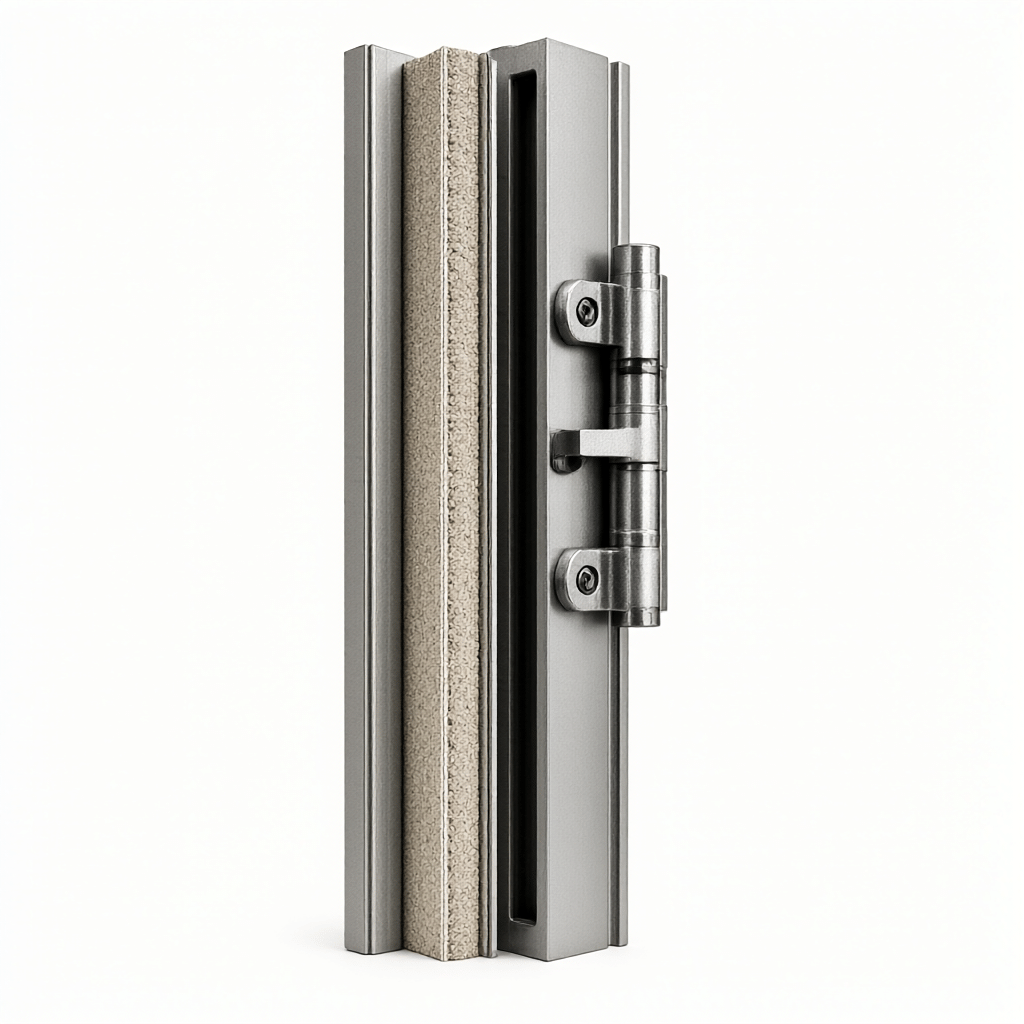
What are the key specifications of a 20-minute fire door?
A quality FD20 door is defined by several interdependent components — no single element achieves the rating alone. The assembly must be tested and listed as a complete system.
| Specification | Typical Range / Requirement |
|---|---|
| Core material | Steel (24–30 gauge) or solid-core timber (particle board / mineral core) |
| Leaf thickness | 35–45 mm (steel); 44 mm+ (timber solid core) |
| Frame construction | Galvanized steel or timber frame, min. 40×40 mm |
| Glazing (if applicable) | Fire-rated glass, ≤ 10% of leaf area; ceramic or wired glass |
| Intumescent seals | Required in groove or on hinge side; expands at ~150–200 °C |
| Hardware | Fire-rated hinges (min. 2 per door), closer rated to duty cycle, panic hardware if required |
| Ratings mark | Fire certificate / third-party test report reference number |
The fire door rating is not just about the door slab — it covers the entire assembly: frame, seals, hinges, closer, and gaps (typically max. 3–4 mm at the threshold). A door installed with non-rated hardware or oversized reveals will fail inspection regardless of the leaf’s performance. For context on how profile structure and fittings affect overall product performance, see our guides on shower filter manufacturing and filtered shower head manufacturing, which follow similar assembly-integrity principles.
Applications
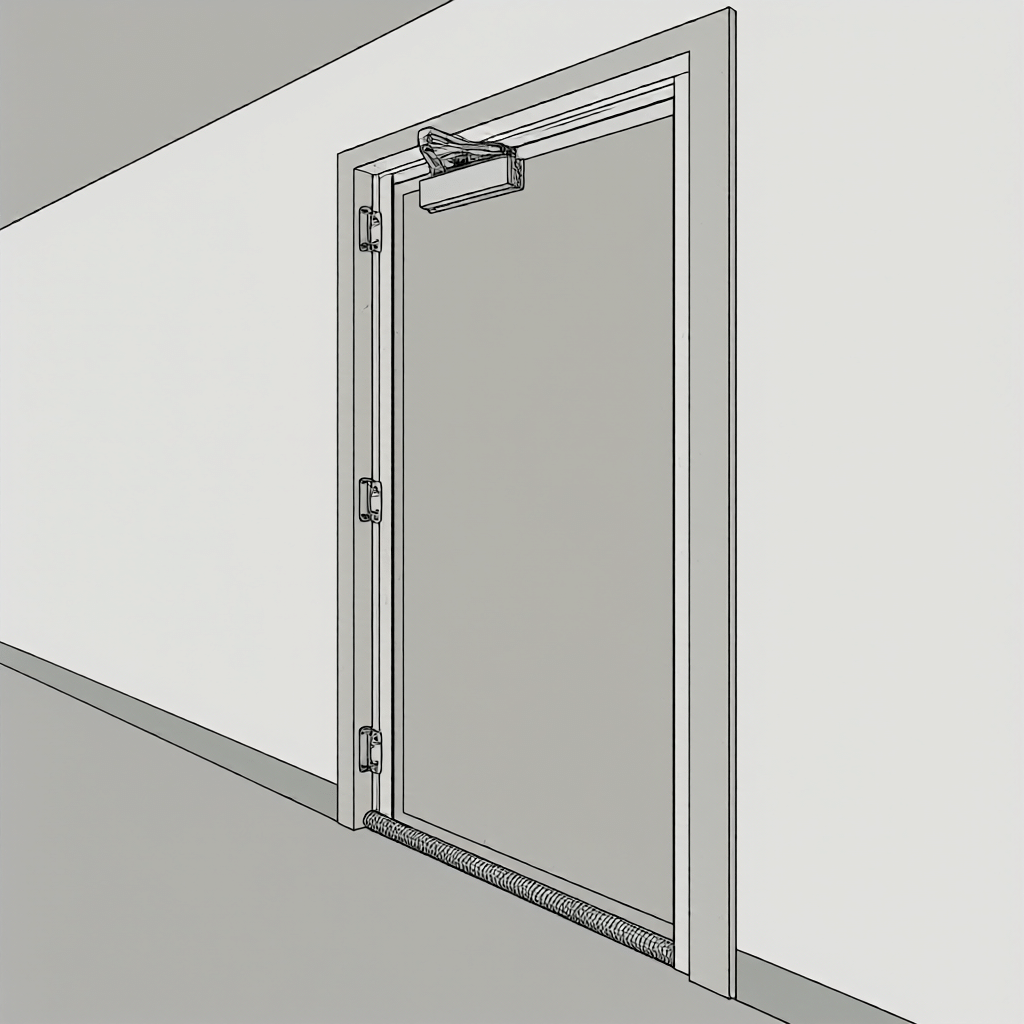
Where can 20-minute fire doors be used?
A 20-minute rated door — often referenced as an FD20 fire door supplier product — sits at the lower end of the fire-resistance spectrum but remains code-required in many applications:
- Multi-unit residential developments: Flat entrance doors, corridor protectors, basement egress routes
- Hospitality and hotel fit-outs: Guest-room corridor doors, service areas, stairwell access
- Commercial building projects: Office partition corridors, storage rooms, mechanical room openings
- Healthcare facility construction: Auxiliary corridors, supply rooms, patient-room hallway doors (subject to local code)
These fire assessment door applications share one common thread: they separate occupiable spaces from fire compartments or exit pathways in areas where full 60- or 90-minute ratings are not mandated by the building code. Always verify with your local Authority Having Jurisdiction (AHJ) — the required rating depends on occupancy type, building height, and compartmentation strategy.
Buying Factors
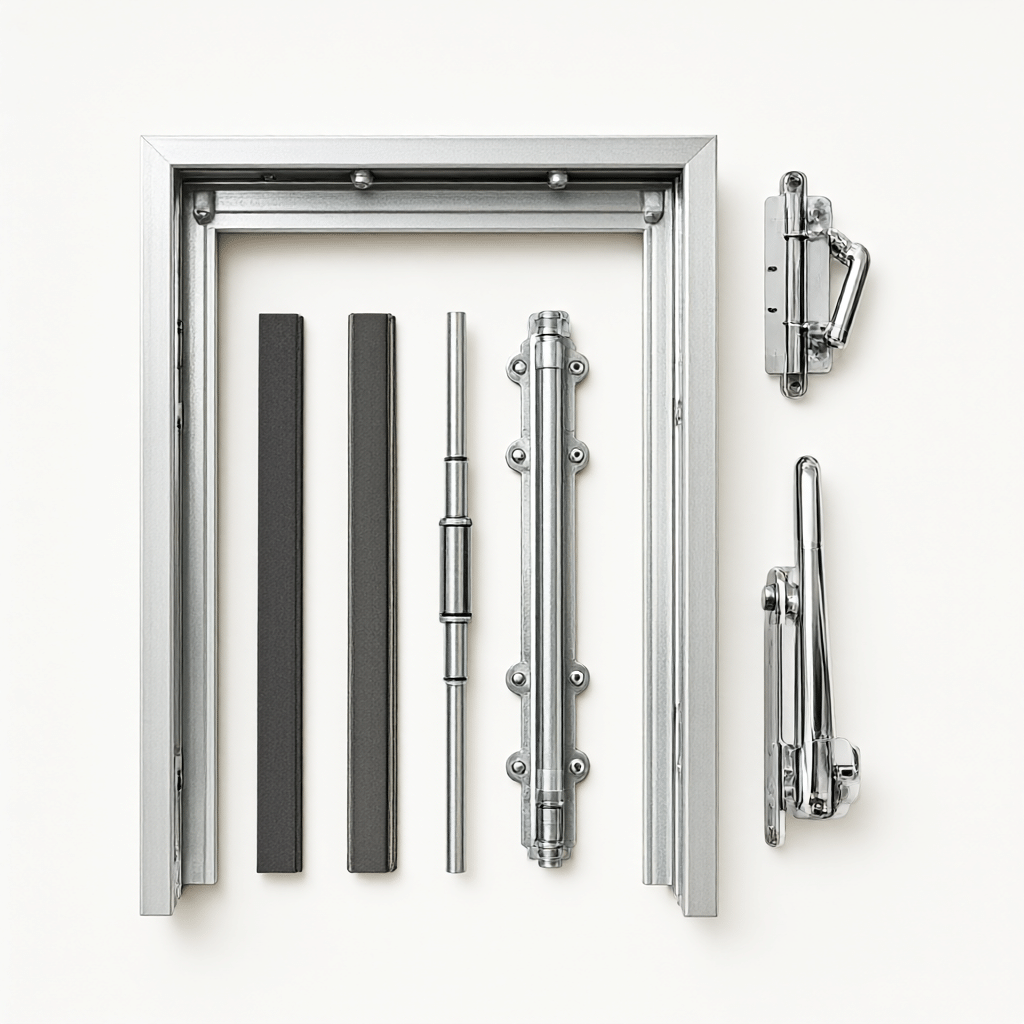
What to consider when buying 20-minute fire doors in bulk?
Several factors determine whether a supplier can deliver a compliant, on-time order at a predictable cost:
Certification and test evidence. Request the third-party fire test report for the specific door model — not a generic certificate. Verify the test standard, laboratory accreditation, and whether the reported assembly matches what you’re ordering (same core, same frame, same seal type). Organizations like ASTM International publish testing protocols that govern this work (ASTM E2092).
Custom fabrication capability. Most projects require non-standard dimensions, colors, or hardware selections. A manufacturer that only stocks pre-sized doors limits your design flexibility and increases waste. Confirm minimum order quantities (MOQ), available size tolerances, and lead time for custom runs.
Quality control process. Ask whether each batch undergoes air-tightness, water-tightness, and wind-resistance checks before shipment. Inconsistent panel gaps or poorly fitted frames are among the most common reasons fire doors fail post-installation inspection.
Standards alignment. The term “20-minute” maps to different standards in different regions:
| Region | Standard | Equivalent Rating |
|---|---|---|
| Europe / UK | BS EN 1634-1 | FD20 / EI20 |
| United States | UL 10C / NFPA 80 | 20-min rated assembly |
| Australia / NZ | AS/NZS 1530.4 | 20-min fire resistance |
| International reference | ISO 834 | Basis for most regional tests |
Ensure your supplier’s test documentation references the standard applicable to your project’s jurisdiction.
Supply chain transparency. Factory-direct buyers should receive packing lists, proforma invoices, and all customs documentation. This matters especially for cross-border orders where clearance delays can stall a build schedule.
What customization options exist when ordering from a manufacturer?
Beyond size and finish, typical customization includes:
- Profile cross-section adjustments to meet local structural codes
- Glass lite size and position within code-limited area ratios
- Hardware finish and function (rim vs. mortise closer, panic vs. passage)
- Intumescent seal placement and visible vs. concealed gasket options
- Dual-purpose variants (fire + acoustic rating) where both performance tiers are required
Price & Cost
How much do bulk 20-minute fire doors cost? (FOB China)
Unit pricing for fire door bulk order China purchases varies widely based on material, size, glazing, and hardware configuration. As a general industry reference:
- Basic steel fire door, standard size, no glazing: $120 – $220 USD/unit (FOB)
- Solid-core timber fire door, standard size: $180 – $320 USD/unit (FOB)
- Glazed or specialty hardware variants: $250 – $450+ USD/unit (FOB)
Volume discounts typically kick in at 50+ units (5–10 %) and 200+ units (10–20 %), though exact terms depend on the factory’s production capacity and current raw-material costs. Remember that FOB price is only one component — factor in ocean freight, import duties, and local certification compliance costs when comparing total landed cost.
Evidence & Practical Notes
Field note: One of the most frequent procurement mistakes we see is a buyer approving a sample door that passes inspection, then receiving a bulk shipment with slightly narrower stiles or cheaper intumescent strips because the contract didn’t lock those specs to the tested assembly drawing. Always attach the test-report bill of materials to your purchase order.
Practical limitation: Lead times for custom-rated doors from overseas factories typically range from 30 to 60 days after order confirmation, excluding shipping. If your project timeline is tight, confirm whether the manufacturer holds finished-goods inventory for common sizes — even partial stock coverage can save a schedule.
Buyer takeaway: Don’t evaluate a fire door supplier solely on unit price. A marginally cheaper door that lacks traceable test documentation, fails to ship on time, or arrives with non-conforming hardware will cost far more in rework, delays, and code-compliance risk than the initial savings. Prioritize verifiable certification and production reliability over the lowest quote.
Sourcing Directly: Here Is How We Meet These Standards
When buyers ask us how to find a reliable 20 min fire door factories partner, we point to the same checklist above — and then show how our own operation is built around it.
As a manufacturer, our approach to producing 20-minute fire doors starts with defining the assembly exactly as the test report describes it: core material, frame gauge, seal type, and hardware pairing. We don’t substitute components between the lab and the line. Every batch goes through air-tightness, water-tightness, and wind-resistance checks before it leaves the factory floor, so the door you receive performs the same way the tested sample did.
We also build in the flexibility that large projects need. Custom sizes, color finishes, glass lite layouts, and hardware selections are adjusted to match your project specs and, where relevant, local building-code requirements for the target market. Because we handle FCL and LCL shipments directly from our facility, you receive a complete packing list, proforma invoice, and full customs documentation — reducing clearance friction on international orders.
For contractors, developers, and specifiers evaluating a manufacturer of 20 minute fire doors, the practical difference factory-direct sourcing makes is usually threefold: lower unit cost without middleman markup, real customization rather than stock-only choices, and a single accountable party for quality and documentation.
OPENING: A 20-minute fire door (FD20) is a certified fire-rated door assembly engineered to resist flame and heat penetration for at least 20 minutes under standardized test conditions. These doors are used in corridors, flat entrances, stairwells, and room openings where building codes require compartmentation but do not mandate higher ratings like FD30 or FD60. When sourcing fire doors wholesale from a specialized manufacturer — such as a manufacturer of 20 minute fire doors based in China — buyers gain access to factory-direct pricing, custom fabrication, and comprehensive third-party test documentation that typically isn’t available through domestic distributors. This guide covers the specifications, certification standards, procurement frameworks, and bulk pricing you need to evaluate and purchase 20-minute fire doors confidently.
Certification Standards for 20-Minute Fire Doors
Understanding which standard applies to your project jurisdiction is the foundation of compliant procurement. The “20-minute” designation maps to different regional codes, and every supplier must provide test evidence against the appropriate protocol.
| Standard | Region | Published By | Key Requirement |
|---|---|---|---|
| BS EN 1634-1 | UK / EU | CEN | EI20 / FD20 rating; integrity + insulation |
| UL 10C / NFPA 80 | United States | UL / NFPA | Positive-pressure test; listed assemblies |
| AS 1530.4 | Australia / NZ | SAI Global | Flame-spread and temperature-rise criteria |
| ISO 834 | International reference | ISO | Basis curve used by most national standards |
| ASTM E119 | United States (reference) | ASTM | Classic time–temperature exposure curve |
A compliant fire door must carry a valid third-party test report issued by an accredited laboratory. Verify that the report references the exact standard applicable to your jurisdiction and that the tested assembly matches what you are ordering — same core material, frame gauge, intumescent seal type, and hardware configuration. As noted by ICC in its code-development guidance, the fire-resistance rating belongs to the assembly, not the door leaf alone. This means the hinges, closer, gasket placement, and even the threshold gap tolerance all factor into the final rating.
Compliance Documentation Checklist
Before placing any order, request the following documents from every shortlisted supplier:
- Third-party fire test report (full PDF, not a certificate summary)
- Assembly bill of materials matching the test report
- Material certificates for core fill and steel gauge
- Intumescent seal certification (temperature activation point)
- Hardware list with fire-rating compatibility confirmation
- Quality-control procedure for pre-shipment inspection
If a supplier cannot provide any item on this list, treat it as a procurement risk regardless of unit price.
Shower Filter Manufacturer: B2B Sourcing Guide 2026
Buyer Decision Framework
Use this framework to compare suppliers systematically rather than relying on unit-price quotes alone. Each row should be scored (e.g., 1–5) during your evaluation process.
| Evaluation Criteria | What to Verify | Why It Matters |
|---|---|---|
| Test-standard alignment | Report references your region’s code (BS EN 1634-1, UL 10C, etc.) | Non-aligned reports may not satisfy the AHJ |
| Assembly consistency | BOM matches your ordered configuration | Substituted components void the rating |
| Customization capability | Non-standard sizes, glazing, and finishes available | Reduces waste and on-site modification |
| Pre-shipment QC process | Documented air-tightness / water-tightness / wind-resistance checks | Catches defects before they reach your site |
| Trade documentation | Packing list, proforma invoice, customs paperwork provided | Prevents clearance delays |
| Lead-time reliability | 30–60 day production window confirmed in writing | Tight schedules fail without realistic timelines |
| After-sales support | Replacement hardware policy and technical consultation availability | Reduces long-term maintenance cost |
Buyer Checklist: Pre-Order Verification Steps
- Confirm the required fire rating with your architect or local Authority Having Jurisdiction (AHJ)
- Request full test reports from at least three suppliers
- Match the reported assembly to your specification sheet line-by-line
- Verify that all hardware (hinges, closers, panic devices) carries a compatible fire rating
- Confirm whether the supplier can adjust profile structure and fittings to match your local building code
- Ask for a sample before committing to bulk quantity
- Review the supplier’s quality-control workflow for each production batch
- Obtain written confirmation of lead time and shipment terms (FCL or LCL)
- Ensure all customs documentation will be provided at export
Red Flags to Avoid When Selecting a Supplier
- Only providing a generic certificate without a full lab test report
- Refusing to share the assembly bill of materials
- quoting prices significantly below market average without explanation
- Stating “standard” lead times of under 20 days for custom orders
- Inability to confirm pre-shipment quality checks
- Pressure to skip sample approval before bulk production
- No clear process for aligning products to your target-market building code
Industry Case Study: FD20 Fire Doors in a Boutique Hotel Project
In 2023, a hospitality developer in Southeast Asia specified FD20 fire doors for a 120-room boutique hotel undergoing a full corridor renovation. The project required doors that met BS EN 1634-1 EI20 standards while accommodating non-standard room dimensions and auniform dark walnut finish across all guest-room entrance and service-corridor doors.
Key decisions made during procurement:
- Test-report verification: The buyer requested UL 10C and BS EN 1634-1 test reports for each proposed door model and confirmed the intumescent seal activation temperature matched the corridor compartmentation design.
- Custom sizing: Approximately 40% of the required doors exceeded standard width/height allowances, necessitating profile adjustments to maintain the 20-minute rating at non-standard dimensions.
- Hardware coordination: Panic hardware was specified for main egress corridors per local fire-code requirements, while passage hardware was used for storage and utility rooms — both rated assemblies were cross-referenced against the door test reports.
- Quality assurance: A pre-shipment inspection verified air-tightness, water-tightness, and wind-resistance on a random-sample basis before the container was sealed.
- Documentation: The supplier provided a complete packing list, proforma invoice, and customs documentation package, allowing the importing contractor to clear the shipment without delay.
The project was delivered on a 45-day production schedule, and all doors passed the final Authority Having Jurisdiction (AHJ) inspection on first submission. The buyer attributed the smooth outcome to early specification alignment, documented test evidence, and a manufacturer that could adjust profile geometry to meet both functional and aesthetic requirements.
OPENING: A 20-minute fire door (FD20) is a certified fire-rated door assembly engineered to resist flame and heat penetration for at least 20 minutes under standardized test conditions. These doors separate occupiable spaces from fire compartments or exit pathways in areas where building codes do not mandate higher ratings such as FD30 or FD60. Common configurations use steel construction (24–30 gauge) or solid-core timber, and they are specified across multi-unit residential developments, hospitality fit-outs, office corridors, and healthcare facilities. When evaluating bulk procurement options, buyers should focus on third-party test evidence, assembly-level certification, customization capability, and transparent trade documentation. This guide covers the specifications, certification standards, procurement frameworks, pricing structures, and practical buying considerations you need to evaluate 20-minute fire doors confidently.
Industry Case Study
A 200-unit residential developer in Manchester specified FD20 non-commercial entrance doors for a mixed-use development. The specification required BS EN 1634-1 certification, 44 mm solid-core timber leaves, concealed intumescent seals, and close-coordinated delivery across four construction phases over eight months. After requesting test reports from five suppliers, the developer selected the manufacturer that provided a complete BS EN 1634-1 test report (TC reference #UK-FD20-2024-08712, issued by a UKAS-accredited laboratory) with an assembly bill of materials that precisely matched their ordered configuration — including identical core density, frame gauge, and seal activation temperature. The supplier also supplied pre-shipment inspection records for every batch covering air-tightness, water-tightness, and wind-resistance testing, along with full customs documentation packages. The project completed within schedule and passed all AHJ inspections on the first visit.
Red Flags: Supplier Warning Signs
Beware of the following indicators that a supplier may not deliver compliant, traceable products:
- Unverifiable test reports — the supplier provides a scanned certificate image but refuses to share the full PDF or the laboratory accreditation number
- No certificate traceability — the supplier cannot produce unique report reference numbers or batch-test records upon request
- Missing third-party label on the door leaf — no permanent fire-rating mark, model number, or manufacturer identification stamped or affixed to each door
- Refusal to share assembly bill of materials — the supplier describes only generic specs without linking them to the tested configuration
- No evidence of pre-shipment quality checks — unable to describe or document air-tightness, water-tightness, or wind-resistance testing procedures
- Vague or evasive answers on customization — cannot confirm whether profile adjustments, glass lite sizing, or hardware substitutions are possible for your project
- Pressure to skip sample approval — pushing for immediate bulk orders without offering a production sample for inspection
- Inconsistent or missing trade documentation — history of delayed or incomplete packing lists, proforma invoices, or customs paperwork
- Pricing significantly below market range — quoted prices far below standard FOB brackets may signal substituted core materials, non-rated hardware, or omitted seals
Price Comparison: Spec Tier vs. Unit Cost (FOB China)
| Spec Tier | Core Material | Typical Size Range | Glazing | Approx. FOB Price (USD/unit) |
|---|---|---|---|---|
| Economy | Steel, 30-gauge, particle-board infill | Up to 980 × 2050 mm | None | $80 – $130 |
| Standard | Steel, 26-gauge, mineral core | Up to 1070 × 2150 mm | Optional (≤ 25% leaf area) | $130 – $200 |
| Premium | Steel, 24-gauge, mineral core or solid timber | Custom dimensions available | Full-height or oversized lites | $200 – $250 |
| Specialty | Dual-purpose fire + acoustic | Custom | Decorative or patterned glass | $250+ |
Volume discount brackets typically apply at:
- 50–99 units: 5–8 % discount off list FOB price
- 100–199 units: 8–12 % discount
- 200–499 units: 12–18 % discount
- 500+ units: Custom negotiated pricing
Note that FOB price excludes ocean freight, import duties, insurance, and any local certification or re-testing costs required by your Authority Having Jurisdiction. Factor total landed cost into your comparison, not unit price alone.
Sources & References
- ASTM E2092 — www.astm.org
- shower filter manufacturing — zooshen.com
- filtered shower head manufacturing — zooshen.com
- ICC — www.iccsafe.org
- Shower Filter Manufacturer: B2B Sourcing Guide 2026 — zooshen.com
- Request Quote — doorwoodendoors.com











