
Last updated: November 25, 2026
Buyers sourcing smart door locks for bulk B2B projects should compare suppliers against verifiable ANSI/BHMA or EN security ratings, documented warranty and spare-parts commitments, transparent FOB/CIF pricing models, and realistic lead-time guarantees — using a structured checklist that distinguishes reliable manufacturers from vendors carrying hidden compliance, tooling, or logistics risk.
Quick Overview
A reliable smart door lock manufacturer for bulk B2B procurement is defined by verifiable technical specs, documented quality controls, transparent pricing tiers, and the ability to customize hardware to match project requirements — including matching door and window systems. Buyers evaluating manufacturers should look beyond unit price and assess certification depth, lead-time consistency, OEM/ODM flexibility, and post-shipment documentation capability before placing large orders.
Specifications — What are the Key Technical Specifications?
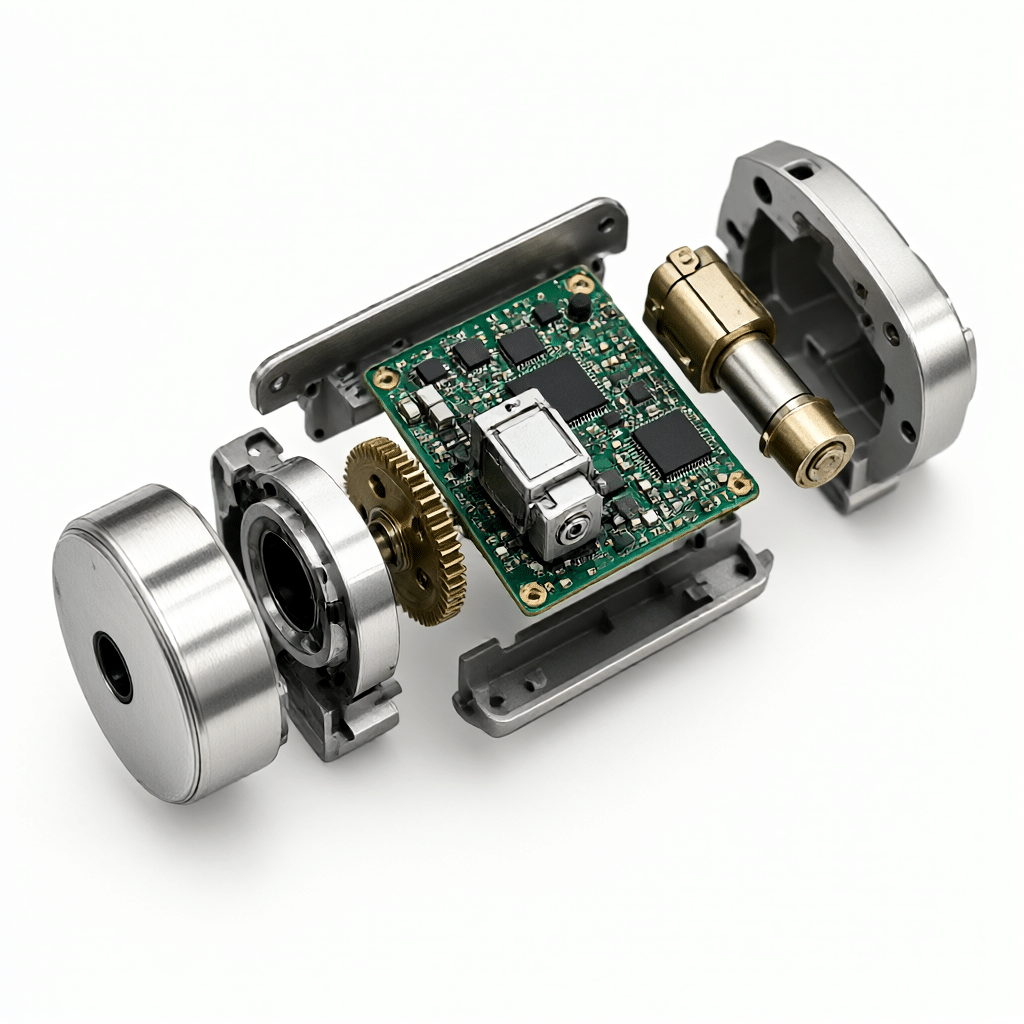
When comparing smart door lock models across suppliers, the following specification dimensions separate viable options from costly mismatches:
| Specification | Typical Range / Standard | Why It Matters |
|---|---|---|
| Connectivity | BLE 5.0, Wi-Fi, Zigbee 3.0, Matter-ready | Dictates ecosystem compatibility; affects app latency and offline operation |
| Power Source | Rechargeable Li-ion 3000–5000 mAh, AA batteries, or hybrid | Determines battery life and maintenance frequency per unit |
| Security Rating | ANSI/BHMA Grade 1 or Grade 2; EN 14846 compliance | Defines forced-entry resistance and cycle durability |
| Cycle Endurance | 100,000+ actuation cycles (ANSI tested) | Predicts replacement timeline for high-traffic installations |
| IP Rating | IP44 minimum for interior; IP65 recommended for exterior exposure | Protects electronics against moisture and dust ingress |
| Operating Temperature | –20 °C to +60 °C typical range | Critical for unheated buildings, warehouses, and exterior doors in extreme climates |
| Backset Compatibility | 2 3⁄8″ or 2 3⁄4″ adjustable | Affects retrofit feasibility without door modification |
| Access Methods | Keypad, RFID/NFC, Bluetooth app, mechanical key override | Multi-method locks reduce single-point-of-failure risk during power loss |
Buyers should cross-reference each model’s published test reports — particularly ANSI/BHMA cycle and security ratings — rather than relying solely on manufacturer claims. ASTM publishes referenced test methods for lock performance that many independent labs use to validate these numbers.
Applications — Where Are Smart Door Locks Most Effective?
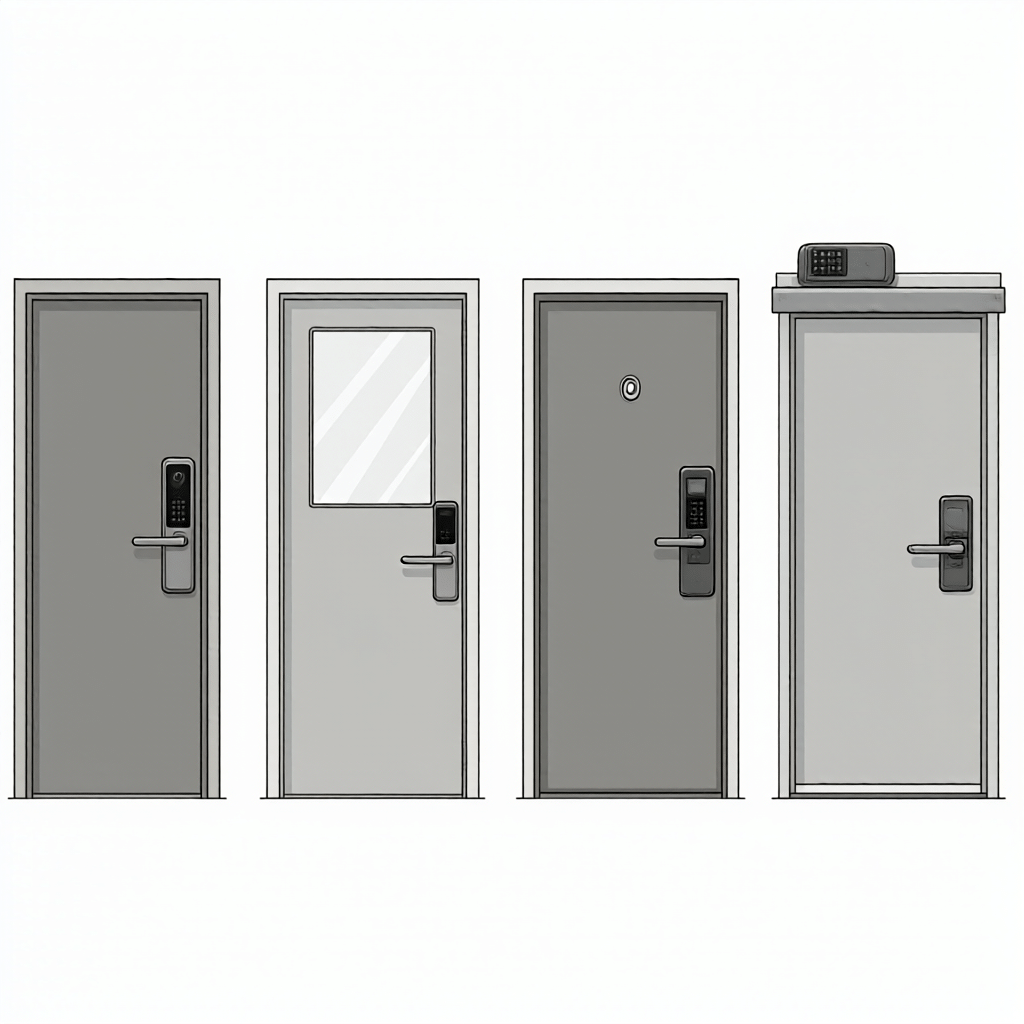
Smart door locks serve distinct B2B segments with very different durability and integration demands:
- Hospitality guest-room rollouts require centralized management software, temporary credential generation, and audit-trail logging; locks must tolerate thousands of daily cycles with minimal service calls.
- Hotel project supply often couples smart locks with property-management-system integrations and requires consistent lead times across hundreds of units.
- Apartment complex upgrades prioritize retrofit-friendly designs that fit existing door preparations, along with resident self-installation interfaces managed through a building-wide admin platform.
- Commercial building fit-outs demand compliance with fire-code egress requirements — deadbolt-free trim designs and fail-safe unlocking on alarm activation.
These scenarios share a common constraint: a lock that performs well in a single-family home may underperform under the higher turnover, broader climate swings, and stricter code compliance expectations of multi-unit or commercial deployments.
Buying Factors — What to Consider When Procuring in Bulk?
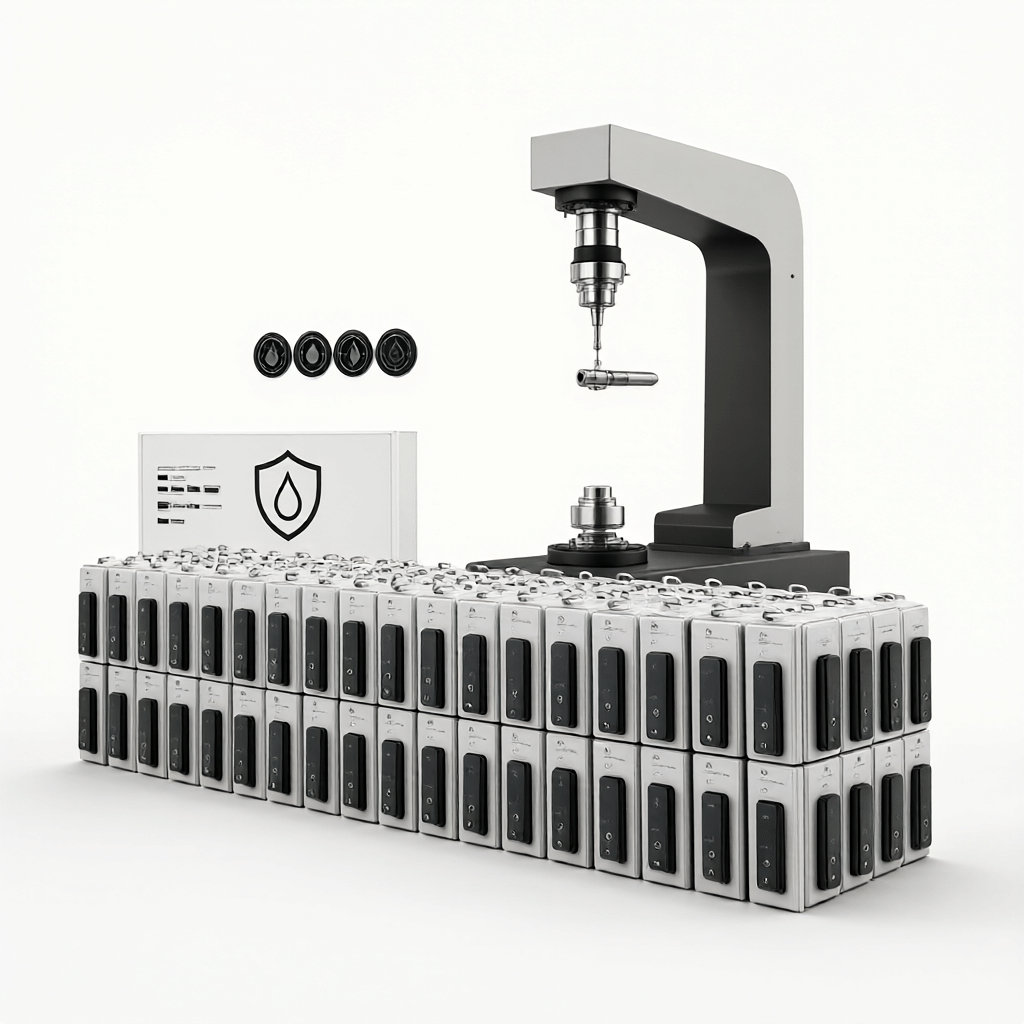
Bulk smart door lock procurement involves decisions that compound quickly at scale. The critical evaluation factors break down as follows:
Certifications and Quality Controls
A trustworthy manufacturer demonstrates third-party tested compliance — ANSI/BHMA Grade 1 or Grade 2 for security, CE marking for European markets, and FCC/IC certification for wireless modules. Request test reports by report number; reputable suppliers provide them without negotiation.
MOQ and Volume Tiers
Minimum order quantities typically range from 50 to 200 units depending on product complexity. Suppliers offering tiered pricing (tiered discounts at 100+, 500+, 1000+ units) make budgeting more predictable. Confirm whether MOQ applies per SKU or per order.
Lead Time Consistency
Sample turnaround usually runs 7–15 business days; production for 500+ units ranges from 25 to 45 days depending on customization depth. Ask for current lead times rather than historical averages, as component shortages shift schedules rapidly.
OEM/ODM Customization
Most established manufacturers offer hardware color matching, logo engraving, firmware white-labeling, and packing customization. Deeper ODM engagement — where the supplier adapts the lock mechanism or app interface to your branding — requires longer development cycles but yields differentiated hardware for your project.
Documentation and Compliance Package
Overseas buyers need proforma invoices, packing lists, certificates of origin, and material declarations. A manufacturer experienced in foreign trade handles these routinely; smaller workshops often outsource documentation, adding delay and risk of errors at customs.
If you’re evaluating suppliers against these criteria, send us your project specifications so we can map our capabilities to your checklist.
Price & Cost — How Much Do Bulk Smart Door Locks Cost?
Smart door lock pricing for B2B buyers is structured around hardware class, connectivity module, and order volume. The table below shows typical FOB China wholesale benchmarks for 2026:
| Product Tier | Features | Typical FOB China Price (USD/unit) | MOQ Reference |
|---|---|---|---|
| Basic keypad lock (BLE) | Keypad, BLE app, ANSI Grade 2, AA batteries | $35 – $55 | 100 units |
| Mid-range smart lock (Wi-Fi/Zigbee) | Multi-connectivity, rechargeable battery, Grade 1, audit log | $65 – $110 | 50 units |
| Premium hospitality-grade lock | Centralized management API, M-CODE support, commercial hardware, IP65 | $120 – $200 | 200 units |
| Custom OEM lock set | White-label hardware + packaging + firmware + logo | Above base tier + tooling/nRE | Negotiable |
Indicative FOB China bulk-order pricing for trade buyers — not a retail price and not a binding offer; final pricing depends on quantity, specification and order schedule.
Additional cost drivers worth tracking:
- Custom tooling or mold fees for unique faceplates or branding — usually a one-time NRE charge amortized over volume.
- Private-label firmware development — adds engineering hours but eliminates licensing costs on app platforms.
- Expedited shipping — air freight can double landed cost versus sea freight for urgent project timelines.
- After-market parts — battery replacements, strike plates, and escutcheon components add hidden lifecycle cost if not included in the initial quote.
To understand how these variables apply to your specific order, request a bulk FOB quotation with your target volumes and configuration.
Evidence & Practical Notes
Field note: In hotel projects we’ve reviewed, buyers frequently specify Grade 1 locks but receive Grade 2 hardware unless the purchase order explicitly references the ANSI grade. Always require the grade designation on your PO and verify it matches the shipped product’s labeling and test documentation before payment release.
Practical limitation: Multi-connectivity locks (Wi-Fi + BLE + Zigbee) offer flexibility but introduce firmware update complexity — a bug pushed to one radio profile can affect pairing behavior on another. Before committing to a multi-radio platform, ask the manufacturer for their OTA update process and rollback procedure.
Buyer takeaway: Don’t negotiate unit price in isolation. The total landed cost of a smart lock includes tooling, certification verification, spare-parts provisioning, and customs documentation readiness. A supplier who offers a slightly higher per-unit price but bundles complete compliance documents, sample approval workflows, and post-shipment support often delivers lower total cost of ownership over a 3–5 year project lifecycle.
How We Approach Bulk Smart Door Lock Procurement
When working with hotel project supply, apartment complex upgrades, commercial building fit-outs, and hospitality guest-room rollout clients, our approach centers on matching each lock specification to the actual environment it will serve — not simply delivering the cheapest unit that turns on.
As a digital lock factory, we start every inquiry with the project context: door material, local climate extremes, expected daily cycle count, and the building management system the client already uses. That determines whether a basic BLE keypad lock is sufficient or whether a Wi-Fi-enabled access control lock manufacturer approach is warranted to avoid future retrofit costs.
Our profiles, fittings, and locking mechanisms are adjustable to align with local building codes in the target market — whether that means fire-rated door compatibility, ADA-handling clearances, or specific latch-backset dimensions. For an electronic door lock supplier looking to bundle entry hardware with doorsets or sunroom enclosures, having a single point of contact for both the lock and the door/window substrate reduces coordination errors on site.
Every shipment undergoes pre-shipment inspection for functional performance — air-tightness, water-tightness, and wind resistance where applicable — because a lock installed on a door that doesn’t seal properly will degrade faster regardless of its intrinsic rating. Our team also handles the full export documentation package — proforma invoices, packing lists, and customs declarations — so buyers receive everything needed for smooth border clearance without chasing suppliers after the fact. Shipments move via FCL or LCL directly from our China facility, with lead times communicated upfront and updated weekly during production.
Talk to Our Team to discuss your project requirements and get a specification-matched quotation.
Price Structure & Cost Drivers — How FOB and CIF Benchmarks Shape Total Landed Cost
Smart door lock unit price is only the first layer of total cost. A thorough procurement framework requires mapping FOB benchmarks against CIF equivalents and all ancillary charges that compound at scale:
| Cost Component | Typical Range / Benchmark | Impact on Total Landed Cost |
|---|---|---|
| FOB China (basic BLE keypad lock) | $35 – $55/unit (≥100 units) | Baseline hardware cost |
| FOB China (mid-range Wi-Fi/Zigbee) | $65 – $110/unit (≥50 units) | Connectivity module premium |
| FOB China (hospitality-grade API lock) | $120 – $200/unit (≥200 units) | Centralized management hardware + IP65 |
| Ocean freight (LCL, Asia → North America) | $8 – $18/unit | Scales inversely with container fill rate |
| Ocean freight (FCL, 40HQ, Asia → North America) | ~$3,500 – $5,500/container | ~$2 – $4/unit at 1,200-unit load |
| Customs duty (US HTS 8301.40) | 3.4% – 6.8% depending on trade status | Direct per-unit add-on |
| Insurance (CIF basis, ~0.3% of cargo value) | $0.15 – $0.60/unit | Low but non-zero at scale |
| Tooling / NRE (one-time) | $800 – $3,500 per custom faceplate | Amortized over order volume |
| Private-label firmware dev | $1,500 – $5,000 one-time | Required for white-label app deployment |
| Customs brokerage & docs processing | $150 – $400 per shipment | Fixed per-shipment charge |
To convert any FOB quote into a comparable CIF-based budget, buyers should request a landed-cost calculation from their supplier that includes freight, marine insurance, customs duty estimation, and brokerage fees — not just the ex-works unit price. This comparison reveals whether a lower FOB price is offset by longer transit times, less reliable carrier relationships, or hidden customs-delivery delays. ICC Incoterms® rules define the terms that govern when risk and cost transfer between buyer and seller, making it essential that purchase orders specify whether pricing is FOB, CIF, or DDP.
Beyond unit cost, these five cost drivers most heavily influence total project spend:
- Custom tooling and mold fees — unique faceplates, branded escutcheons, or non-standard backsets require one-time NRE charges that are amortized over order volume; a 1,000-unit order absorbs tooling at a fraction of a 200-unit order.
- Connectivity-module selection — adding Matter-ready or multi-radio (Wi-Fi + BLE + Zigbee) modules increases BOM cost by $4 – $12 per unit but reduces future retrofit expenses.
- Expedited shipping vs. standard sea freight — air freight can increase logistics cost by 200% – 300%; for non-urgent project phases, sea freight remains the dominant cost-effective channel.
- After-market parts provisioning — battery packs, strike plates, and electronic keypads sourced separately post-delivery carry 30% – 50% higher per-unit effective costs than when bundled upfront.
- Compliance-document preparation — suppliers lacking in-house foreign-trade experience outsource proforma invoices, packing lists, and certificates of origin, adding $200 – $600 in processing fees and potential customs clearance delays.
If you want a complete landed-cost breakdown mapped to your target destination port and order volume, request a CIF quotation with your project specs.
Supplier Qualification Indicators & Quality-Assurance Processes
Identifying a supplier whose capabilities reliably reduce procurement risk requires looking past marketing materials and examining documented quality-assurance infrastructure. The following indicators separate manufacturers built for consistent bulk delivery from those introducing execution risk:
Green Flags — Signals of a Qualified Manufacturer
- Third-party test reports with traceable report numbers — ANSI/BHMA Grade 1 or Grade 2 per ANSI/BHMA A156 series, EN 14846:2017 cycle testing, IP65 per IEC 60529. Reputable suppliers cite the certifying lab and report number on request without hesitation.
- ISO 9001:2015-certified facility — documented QMS with internal audit trails, corrective-action logs, and incoming-material inspection records available for review.
- Sample-to-production parity protocol — the sample approved before mass production is subject to the same incoming-inspection, in-process QC checkpoints, and pre-shipment functional test as every unit leaving the line.
- Pre-shipment inspection coverage — minimum AQL 2.5 sampling plan for cosmetic and functional defects; 100% functional burn-in for electronics where applicable.
- In-house firmware-update infrastructure — OTA rollback procedures, version-control logs, and staged rollout capability reduce field-failure risk across large deployments.
- Documented export-process capability — proforma invoice generation, packing list formatting, certificate-of-origin issuance, and customs-declaration support handled internally rather than outsourced to third-party agents.
Red Flags — Warning Signs Before Signing a Contract
- Test reports provided without report numbers, lab names, or issue dates — unverifiable claims of “ANSI tested” or “Grade 1 rated” without traceable documentation are a procurement risk.
- Inability to state current production lead time — suppliers who answer with historical averages rather than current capacity have limited real-time production visibility.
- No sample approval workflow described — if a manufacturer cannot explain how samples transition to mass production with quality maintained, expect variance in the delivered lot.
- Vague or absent certification scope — claiming “CE certified” without specifying which directives (RED 2014/53/EU for wireless, RoHS for material restriction) indicates incomplete compliance awareness.
- Resistance to providing packing-list or invoice templates — foreign-trade inexperience often surfaces here; avoid suppliers who treat export documentation as an afterthought.
Pre-Qualification Buyer Checklist
Use this checklist to qualify any shortlisted smart door lock manufacturer before issuing a purchase order:
| Qualification Item | Pass Criterion |
|---|---|
| ANSI/BHMA test report (Grade 1 or Grade 2) | Report number + accredited lab name provided |
| ISO 9001:2015 certification | Certificate valid and recently audited |
| Sample-approval SOP | Written process explaining sample → production handoff |
| Pre-shipment inspection procedure | AQL standard stated; functional burn-in confirmed |
| Export-documents capability | Proforma invoice, PL, COO, material declaration template available |
| Lead-time commitment | Current (not historical) timeline documented in writing |
| Firmware-rollback capability | Documented OTA rollback procedure for field failures |
| Reference project (≥200 units shipped) | Customer reference or case study verifiable |
Any single red flag does not automatically disqualify a supplier, but multiple red flags together signal elevated execution risk — particularly on orders exceeding 500 units where consistency compounds.
Procurement Decision Guide — Step-by-Step Framework for Bulk Orders
Large-volume smart door lock procurement follows a repeatable decision sequence that minimizes specification drift, protects against hidden-cost surprises, and ensures on-time site delivery:
Step 1 — Define Project-Specific Requirements
Map door material, local climate range, expected daily cycle count, and existing building-management-system integrations. This determines whether a basic BLE keypad lock suffices or whether Wi-Fi/API-enabled access control is required — choosing correctly here prevents expensive mid-project hardware swaps.
Step 2 — Shortlist Manufacturers Against the Qualification Checklist
Apply the six-item green-flag / red-flag matrix above. Retain only suppliers meeting the minimum pass criteria; document why each retained supplier was selected.
Step 3 — Request Samples and Verify Against Test Reports
Order representative samples matching the target SKU. Cross-check received samples against the supplier’s cited ANSI/EN test reports: verify marking labels, cycle-count ratings, and IP-rated sealing. If the sample does not match the report, request re-inspection or move to the next qualified supplier.
Step 4 — Negotiate Total Landed Cost, Not Unit Price
Request a side-by-side FOB and CIF comparison including freight, insurance, duty estimation, and customs brokerage. Compare at equal order volumes; a $5/unit FOB difference may disappear once differential freight and duty rates are factored in.
Step 5 — Lock Quality Gates Into the Purchase Order
Write acceptance criteria into the PO: AQL sampling plan, pre-shipment inspection rights, sample-parity warranty, and documentation package requirement. Without contractual quality gates, dispute resolution becomes subjective after delivery.
Step 6 — Monitor Production Weekly
Establish a weekly production-update cadence — progress percentage, component-status, expected ship date. Suppliers comfortable with regular updates demonstrate stronger internal production control.
When applying this framework to your upcoming project, submit your project specifications and we will walk through each step with a tailored specification recommendation, current lead-time estimate, and full landed-cost breakdown.
Buyer Checklist — Certification, Factory Visit & Sample Testing
Before committing to a bulk smart door lock order, procurement teams should verify each of the following items systematically. Yes/no responses create an auditable trail; ambiguous answers warrant further inquiry or supplier replacement.
Certification Audit
- [ ] ANSI/BHMA Grade 1 or Grade 2 test report provided with a unique document number?
- [ ] EN 14846 (European standard) report available when targeting EU markets?
- [ ] CE marking dossier includes EMC, RoHS and radio-equipment directives?
- [ ] FCC/IC certification files accessible for North American wireless-lock deployments?
- [ ] Test reports issued by an ISO 17025-accredited laboratory — not in-house only?
- [ ] Certificate of Origin and material declarations ready upon shipment?
Factory Visit Criteria
- [ ] Facility size stated in square meters with concurrent production-line capacity documented?
- [ ] Annual output figure confirmed with a verifiable reference (audit report or client testimonial)?
- [ ] Direct conversation with QA manager and R&D engineer included in the visit agenda?
- [ ] Recent, unedited photo and video walkthrough of the assembly and burn-in lines provided?
- [ ] Third-party inspection firms granted unhindered access to the facility?
- [ ] Historical defect-rate and field-failure data shared and benchmarked against industry norms?
Sample Testing Protocol
- [ ] Functional samples received before any deposit payment is released?
- [ ] ANSI/BHMA cycle count verified by independent lab or accredited third party?
- [ ] Connectivity performance tested under real-world conditions (range, pairing stability, battery drain over 30 days)?
- [ ] Mechanical durability stressed beyond rated cycles to identify early wear patterns?
- [ ] Firmware version and update path documented, including rollback procedure?
- [ ] IP-rating claim validated by an independent moisture/dust test when specifying exterior units?
Red Flags — Warning Signs in Smart Door Lock Procurement
Certain supplier behaviors consistently predict cost overruns, compliance gaps, or installation delays. Recognizing these indicators early saves significant project value.
- Vague ANSI test reports — Claims of “Grade 1 equivalent” or “meets ANSI standards” without a document number, accredited-lab letterhead, or publicly retrievable test file usually indicate incomplete or misleading certification.
- Suppliers refusing third-party lab results — A reputable manufacturer will share or authorize submission of test reports to independent labs. Refusal suggests either fabricated credentials or inability to meet claimed specifications.
- MOQ ambiguity — Quoted MOQs that shift between stages, lack a per-SKU definition, or exclude accessory bundles create budget uncertainty and complicate container-load planning.
- Undocumented NRE fees — Non-recurring engineering charges for custom faceplates, firmware branding, or tooling must itemize exactly what is covered. Blank line items with no scope description often expand unexpectedly during production.
- No written firmware-support timeline — Vendors without a committed OTA-update window risk deploying locks that become unsupported within 12–24 months, forcing premature replacement.
- Absent API/open-platform disclosure — If a supplier cannot confirm SDK availability or centralized-management integration capability upfront, the lock may become an island device incompatible with building-management platforms.
Decision Matrix — FOB vs CIF Pricing Scenarios with Landed-Cost Examples
Choosing between FOB and CIF terms directly affects risk allocation, insurance responsibility, and total cost predictability. The decision matrix below compares two representative B2B routes using mid-range Wi-Fi/Zigbee smart locks priced at $85/unit FOB China.
| Cost Element | Scenario A: Shanghai → Los Angeles (FCL) | Scenario B: Shanghai → Hamburg (FCL) |
|---|---|---|
| Unit price (FOB China) | $85.00 | $85.00 |
| Ocean freight (40HQ, ~1,200 units loaded) | +$3.00/unit | +$7.50/unit |
| Marine insurance (CIF basis, 0.3%) | +$0.26/unit | +$0.28/unit |
| Customs duty (US HTS 8301.40 @ 5.1%; EU TARIC @ 2.5%) | +$4.34/unit | +$2.13/unit |
| Customs brokerage & docs | +$0.25/unit | +$0.25/unit |
| Total estimated landed cost | ~$92.85/unit | ~$95.16/unit |
Key implications:
- FOB offers greater freight-cost control — the buyer selects the forwarder and negotiates space directly, which can yield savings on repositioning trades or consolidator rates.
- CIF simplifies budgeting — a single quoted price bundles freight and insurance, reducing coordination complexity but limiting freight-route flexibility.
- Duty differential matters — US import duty on electronic locks currently sits above the EU rate for comparable HS codes, making European landings comparatively cheaper despite longer transit.
- Transit-time variance — Shanghai to Los Angeles averages 14–18 days ocean transit; Shanghai to Hamburg runs 25–32 days, affecting inventory carrying cost and project-phase sequencing.
Buyers should request a side-by-side landed-cost spreadsheet from each shortlisted supplier, explicitly separating FOB unit price, freight estimate, insurance, duty estimation, and brokerage charges. This comparison reveals whether an apparently cheaper FOB quote is offset by less favorable routing, carrier reliability, or undocumented surcharges. ICC Incoterms® rules define when cost and risk transfer under each term, ensuring purchase orders specify the correct obligation boundary.
Supplier Evaluation Metrics — Warranty, Spare Parts, Firmware & Platform Commitment
Reliable bulk procurement extends far past unit price. The following quantitative metrics differentiate sustainable supplier partnerships from transactional vendor relationships:
| Metric | Minimum Acceptable Threshold | Why It Matters |
|---|---|---|
| Hardware warranty period | ≥ 2 years (written, transferable) | Covers premature electronic or mechanical failure during initial deployment cycle |
| Spare-parts kit inclusion rate | 3% – 5% of order volume bundled free | Prevents project standstills when strike plates, batteries or keypads fail post-installation |
| Firmware-update policy duration | ≥ 5 years from product launch date | Ensures continued app compatibility, security patches and OS update support |
| API / open-platform commitment | Full REST API or SDK provided at no extra licensing fee | Enables building-management integration; avoids vendor lock-in on access-control stacks |
| SLA response time for warranty claims | ≤ 48 hours acknowledgment, ≤ 10 business days resolution | Critical for hospitality or multi-site deployments where downtime creates guest or tenant friction |
| Defect rate track record | < 1.5% field-return rate over rolling 12-month period | Indicates consistent QC and mature component screening processes |
These metrics convert abstract supplier promises into contractually enforceable clauses. Buyers should require each threshold to be reflected in the master purchase agreement, not merely discussed verbally during negotiation.
FAQ — Minimum Order, Lead-Time Guarantees & Customization Scope
What is the typical minimum order quantity for bulk smart door lock procurement?
Most manufacturers set MOQ between 50 and 200 units depending on product tier. Basic BLE keypad locks commonly carry an MOQ of 100 units; hospitality-grade locks with centralized management APIs often require 200 units to justify production scheduling and firmware integration work. Custom OEM configurations may negotiate flexible MOQ based on tooling investment amortization.
How do lead-time guarantees work for large-volume orders?
Standard production lead time for 500+ units ranges from 25 to 45 days depending on customization depth. Reputable suppliers commit to written lead-time guarantees with penalty clauses for delays beyond agreed windows. Express or expedited schedules are available at premium freight cost. Weekly production updates and milestone tracking should be contractual obligations, not optional courtesy reporting.
What customization options are typically available for electronic locks in bulk B2B orders?
Common OEM/ODM offerings include:
- Hardware color matching and surface-finishing options (powder coat, anodized, PVD)
- Custom faceplate tooling and branded escutcheon designs
- White-label firmware with proprietary app UI and building-brand identity
- Packing and labeling customized to project logistics requirements
- API endpoint configuration for centralized property-management or access-control platforms
- Backset, handing, and latch-spec adaptations to match local door-preparation standards
Deeper ODM engagement — such as modifying the lock mechanism geometry, integrating with existing door/window hardware families, or developing project-specific credential workflows — extends development cycles by 4–8 weeks but yields hardware differentiated for the target market.
Sources & References
- ASTM — www.astm.org
- ICC Incoterms® rules — iccwbo.org











