
Last updated: November 25, 2026
Quick Overview
China office partitions are interior wall systems—framed glass, solid-core panels, and movable or demountable dividers—manufactured in volume by Chinese factories and exported as OEM or custom-size solutions for commercial fit-outs. A reliable china office partitions manufacturer typically offers aluminum-frame configurations with tempered, laminated, or low-e glass, fire-rated cores, and acoustic ratings tailored to project code requirements, with bulk FOB China pricing scaling from roughly USD 65 per square meter for entry-level fixed panels up to USD 220–300 per square meter for premium acoustic-glass or movable partition-wall systems.
What are the key specifications of office partitions?
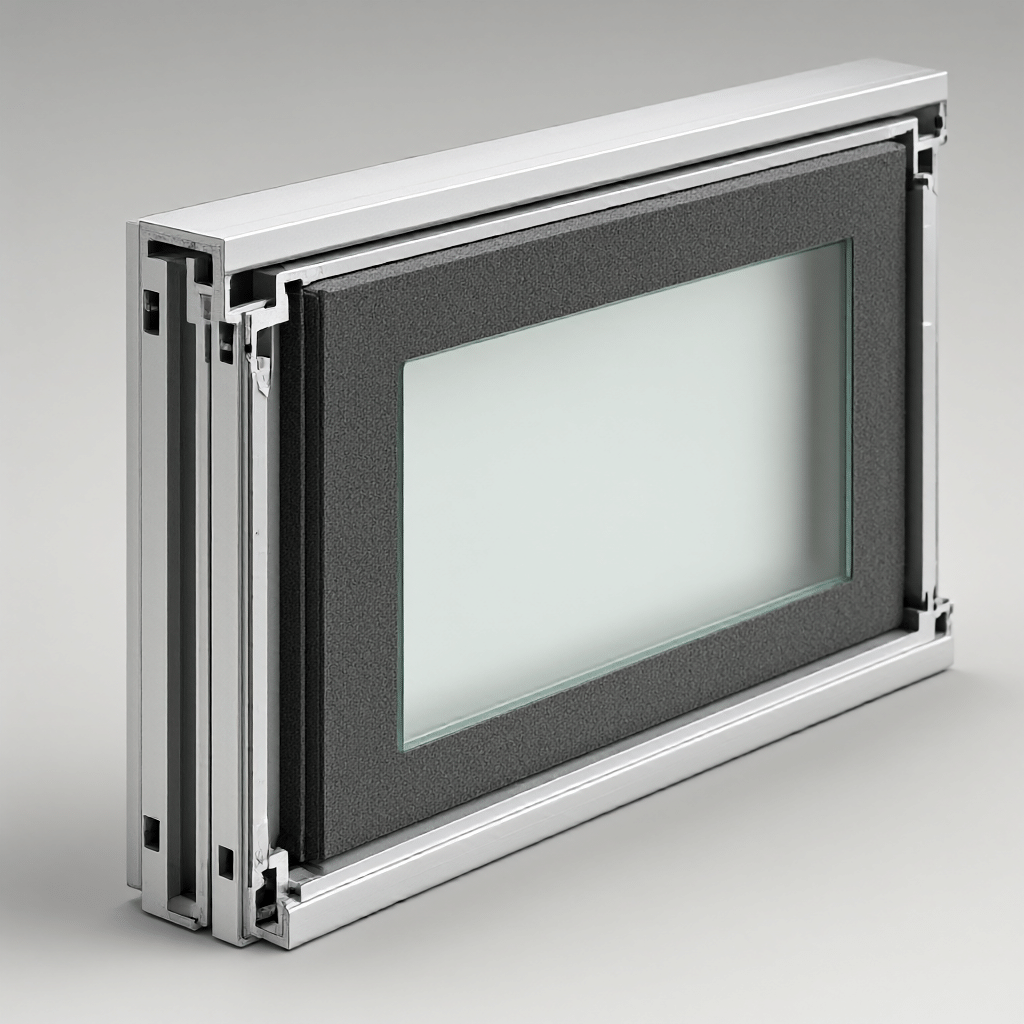
Buyers should confirm the following parameters before issuing a purchase order, because small specification gaps drive the largest cost and compliance surprises on import-grade partitions:
| Parameter | Typical Range / Options | Why It Matters |
|---|---|---|
| Frame material | 6063-T5 aluminum alloy; powder-coated or anodized | Determines structural rigidity, finish durability, and compatibility with local facade codes |
| Glass type | Tempered (9–12 mm), laminated (10.52–12.52 mm), Low-E insulated | Impact safety, optical clarity, solar heat gain, and sound isolation |
| Panel thickness | 50 mm to 100 mm (solid-core); 24–50 mm (glass) | Directly affects STC rating and fire endurance |
| Height range | Standard 2.4–3.0 m; up to 4.5 m for high-ceiling corridors | Ceiling clearance, sprinkler head alignment, and header reinforcement |
| Fire rating | 30 min / 60 min / 90 min (per GB / ASTM E119 / BS 476) | Required by building code for egress routes and plant rooms |
| Acoustic class | STC 35–55 depending on core, gasketing, and seal details | Governs privacy between meeting rooms, open offices, and co-working pods |
| Finish options | Powder coat RAL colors, wood grain transfer, brushed/anodized metal | Brand identity, interior design continuity, and corrosion resistance in humid climates |
| Hardware | Hinges, locks, handles, floor springs, sealing brushes | Impacts operation feel, security level, and long-term maintenance cost |
When evaluating a China supplier’s spec sheet, compare these values against the target market’s building code rather than accepting generic “standard” claims. For instance, a project destined for the EU will need CE marking under the Construction Products Regulation, while North American projects commonly reference ASTM and UL standards. Procurement teams often ask whether the supplier can adjust profile geometry and fitting detail to match local codes; a credible manufacturer will confirm this capability before quoting.
Where can China-sourced office partitions be deployed?
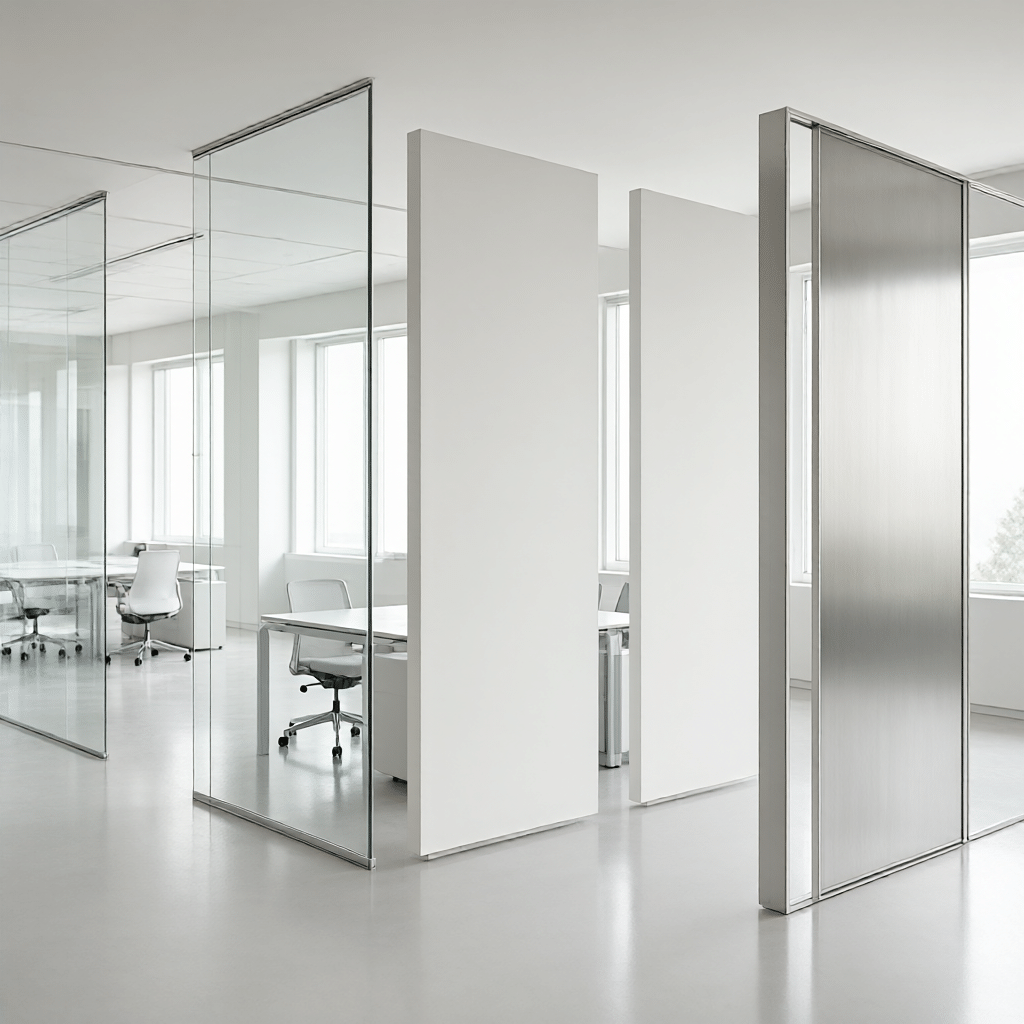
Movable partition walls, fixed glass dividers, and solid-core room dividers work across several commercial project types, each with distinct performance priorities:
- Commercial office fit-out projects favor demountable partitions that allow reconfiguration as team sizes change, with emphasis on fast installation and minimal site dust.
- Co-working space builds prioritize modular acoustic office partitions around private phone booths, focus rooms, and hybrid meeting zones.
- Hotel conference room conversions require sliding partition walls with high STC ratings and soft-close hardware so event layouts can shift within hours.
- Corporate headquarters refurbishment blends framed glass partitions for transparency with solid-core panels for executive suites and server rooms.
Solid-core options provide higher impact resistance and easier chase routing for power and data, which is useful when the tenant needs integrated outlet provisions without exposing conduit. If you are specifying solid-core doors elsewhere in the same facility, the matching aesthetic and fire-performance logic is similar to what applies here—for reference on that product category, you may review related guides on solid wood closet doors.
What to consider when buying office partitions in bulk?
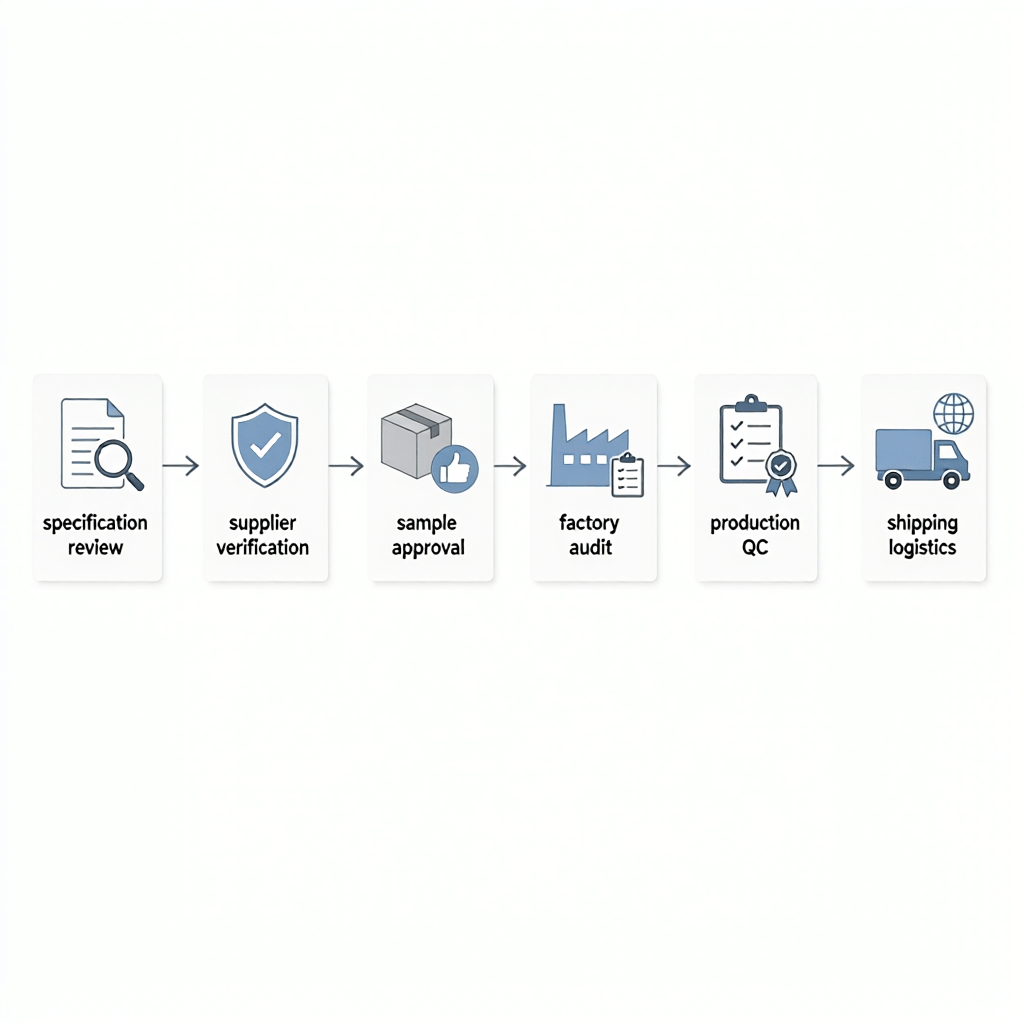
B2B buyers should evaluate five decision factors before selecting a China-based supplier:
- Customization options — Confirm whether the factory can produce non-standard widths, heights, curved runs, or custom RAL colors without inflating unit cost disproportionately. Full customization on size, color, glass, and hardware is typical at factories that run flexible extrusion and assembly lines.
- Lead time and capacity — Movable partition-wall orders usually ship within 25–40 days after drawing approval for standard configurations; complex profiles with special finishes add 7–14 days. Verify monthly output capacity against your square-meter requirement.
- Certifications and testing — Request test reports for air-tightness, water-tightness, and wind resistance. For fire-rated assemblies, ask for reports aligned with your import market’s standard. Certifications such as ISO 9001 and product-specific marks (CE, UL, SFERA) should be documented, not just claimed.
- Logistics and packaging — FCL shipments maximize container utilization but require accurate panel length planning; LCL is viable for smaller fit-out phases. Export packaging must protect glass and anodized profiles from moisture and abrasion during transit. Full customs documentation, including packing list and proforma invoice, should be routine.
- After-sales support — Replacement gaskets, spare handles, and repair hardware should be quoted alongside the initial PO. Ask how the supplier handles field measurement discrepancies and whether engineering drawings are issued before production.
A common trade-off is between lead time and customization depth: highly tailored profile sections and multi-stage surface treatments extend scheduling, while standard off-the-shelf aluminum frames ship faster. Buyers who lock final dimensions early and limit decorative finishes to two RAL ranges typically see the best balance of speed and cost.
How much do bulk office partitions cost FOB China?
Pricing depends primarily on configuration tier, glass specification, acoustic requirement, and order volume. The figures below are industry reference ranges for container-load orders shipped FOB major Chinese ports:
| Configuration Tier | Frame + Glass/Core | Acoustic / Fire Target | Estimated FOB Price (USD/m²) |
|---|---|---|---|
| Entry-level fixed panel | Aluminum frame, single 8–10 mm tempered glass or 50 mm solid core | STC ~35, non-rated or 30 min | 65 – 110 |
| Mid-tier system | Aluminum frame, 10–12 mm tempered or laminated glass, gasket seals | STC 40–45, 30–60 min fire | 110 – 170 |
| Premium acoustic/glass | Double-glazed Low-E units, reinforced headers, concealed hardware | STC 45–55, 60–90 min fire | 170 – 300+ |
| Movable/sliding partition wall | Heavy-duty track system, interlocking edge seals, optional storage trolley | STC 40–50, portable reconfigurability | 150 – 320 |
These are starting points, not binding quotes. Final pricing shifts with panel height, glass laminate stack-up, handle and lock selection, powder-coat versus anodized finish, and whether the order qualifies for FCL container optimization. A detailed shop-drawing set eliminates most pricing ambiguity because it reveals exactly which hardware and seal details are required.
For procurement teams comparing sourcing options, it helps to align price tiers with the use case: entry-level fixed partitions suit back-of-house corridors and storage areas; mid-tier acoustic glass fits open-plan workspaces and conference rooms; premium systems belong in executive floors, recording studios, or healthcare-adjacent offices.
Evidence & Practical Notes
Field note: On factory visits and sample reviews, the most consistent differentiator among suppliers is not the aluminum alloy grade itself—which is usually standard 6063-T5—but the precision of the milling and the quality of theEPDM or silicone gaskets that seal glass-to-frame joints. Panels that skip double-seal detailing routinely show condensation and airborne noise leakage in installed projects, especially where HVAC pressure differentials exist between adjacent rooms.
Practical limitation: Lead times listed on inquiry responses often assume standard RAL colors and stock profile sizes. Once a buyer requests a custom cross-section, textured anodizing, or a proprietary locking handle, tooling and setup add calendar days that rarely get reflected in the first-round quote. Procurement teams should budget an extra 10–14 days for any non-standard configuration and confirm whether re-tooling fees are absorbable at higher volumes.
Buyer takeaway: Treat the specification matrix as the primary negotiation lever rather than unit price alone. A slightly higher FOB rate that includes reinforced headers, dual-edge seals, and pre-approved fire-test reports typically saves money during commissioning by reducing on-site adjustments, replacement orders, and code-remediation delays.
Supplier Evaluation
Selecting a reliable supplier comes down to verifying that the manufacturer can reproduce the approved sample, meet the stated test criteria, and deliver complete export paperwork. Because office partitions sit at the intersection of architectural hardware and building-envelope performance, credible factories combine extrusion capability with assembly-line QA rather than outsourcing critical steps.
As a manufacturer, our approach to this is straightforward: we hold direct supply from our own factory, which removes middleman markup and keeps bulk pricing predictable. Every order undergoes strict pre-shipment inspection for air-tightness, water-tightness, and wind resistance before it leaves the line. We offer full customization on profile size, surface color, glass type, and hardware accessories, and we adjust profile structures and fittings to match the local building codes of your target market. With extensive foreign-trade experience, our team provides a complete packing list, proforma invoice, and all customary customs documents, shipping via FCL or LCL directly from China. When evaluating potential partners, use these checkpoints to verify capability—and if you want to discuss your project dimensions and target acoustic or fire ratings, send us your inquiry and we will respond with a specification-matched proposal.
China office partitions are engineered interior wall systems—framed glass dividers, solid-core panels, and demountable or movable partition walls—produced by Chinese factories that ship as OEM or custom-size solutions for commercial fit-outs. A qualified china office partitions manufacturer supplies aluminum-frame configurations with tempered, laminated, or Low-E glass, fire-rated cores, and acoustic ratings aligned to project codes, with bulk FOB pricing typically ranging from USD 65/m² for basic fixed panels to USD 220–300/m² for premium acoustic-glass or movable partition-wall systems.
Use this weighted matrix to compare shortlisted vendors across key procurement criteria:
| Evaluation Criteria | Weight | Vendor A Score (1–5) | Vendor B Score (1–5) | Vendor C Score (1–5) |
|---|---|---|---|---|
| Specification compliance | 25% | |||
| Test report availability | 20% | |||
| Lead time reliability | 15% | |||
| Customization flexibility | 15% | |||
| Documentation completeness | 15% | |||
| After-sales support commitment | 10% | |||
| Weighted Total | 100% |
Score each vendor against your project requirements. A total below 3.5 out of 5 generally indicates insufficient readiness for complex commercial orders. Revisit gaps with suppliers before finalizing awards.
Manufacturing standards and quality control for import-grade partitions
Import-grade office partitions must pass structured quality gates before leaving the factory floor. Buyers should verify the following control points:
| QC Stage | Checkpoint | Acceptance Criterion |
|---|---|---|
| Incoming material | Aluminum alloy grade (6063-T5), glass thickness, core density | Mill certificates; glass with tempering mark; core density ≥450 kg/m³ for solid panels |
| Extrusion tolerance | Profile dimension, wall thickness, surface finish | ±0.15 mm on critical mating surfaces; no pitting or discoloration after powder coating |
| Assembly precision | Corner joint gap, gasket compression, hardware alignment | Gap ≤0.3 mm at miter joints; EPDM seal compression 15–25% |
| Functional testing | Door operation, locking engagement, sliding resistance | Handle torque 2–5 N·m; sliding force <15 N per leaf |
| Performance validation | Air-tightness, water-tightness, wind resistance | Per GB/T 7106 or equivalent ISO/ASTM method; Class 3+ for air, Class 4+ for water |
Credible manufacturers document each stage with inspection reports and retain samples for traceability. When auditing a potential supplier, request photos of their in-line QC stations and ask whether third-party test labs (e.g., SGS, Intertek, BV) perform periodic certification audits. Reference standards such as those published by iso.org provide the baseline for these requirements.
How to evaluate and select a China-based supplier
Selecting a China supplier for bulk office partitions requires a structured vendor evaluation rather than price comparison alone. The following framework helps procurement teams score candidates objectively:
OEM capability assessment
| Capability Area | What to Verify | Red Flag |
|---|---|---|
| Custom profile design | Can factory modify extrusion dies for non-standard sections? | Supplier insists all orders must use stock profiles |
| Glass sourcing | Does factory partner with certified tempering/laminating plants? | Unable to provide glass mill certificates or safety marks |
| Hardware integration | Are hinges, locks, and floor springs from recognized brands? | Only unbranded generic hardware available |
| Engineering support | Will factory issue shop drawings before production? | No CAD detail provided; relies on verbal specs |
Documentation readiness checklist
A credible supplier should routinely produce:
- Product test reports — air-tightness, water-tightness, wind load, acoustic performance (STC rating), fire endurance
- Certification packages — ISO 9001 quality management, CE marking under EU Construction Products Regulation, UL listing for North American markets
- Export documentation — commercial invoice, packing list, bill of lading, certificate of origin, any required customs declarations
- Warranty terms — clearly defined coverage for hardware, seals, and glass breakage
Factory audit steps
When possible, conduct an on-site or virtual factory audit covering:
- Production line capacity and scheduling flexibility
- Quality control station placement and inspector training records
- Raw material storage conditions (humidity control for glass and core materials)
- Finished goods packaging methodology (moisture barriers, corner protectors)
- Sample room and demonstration area completeness
Buyers who skip these verification steps frequently encounter delays, specification mismatches, or incomplete documentation at customs.
Country-specific code compliance reference
Different import markets require distinct certification paths. Use this matrix to align supplier capabilities with your project destination:
| Target Market | Required Standard / Mark | Key Compliance Items |
|---|---|---|
| European Union | CE marking under CPR (Regulation EU No 305/2011) | Declaration of Performance, notified body assessment for fire-rated assemblies |
| United States | ASTM E119 (fire), UL 10C (positive pressure), ANSI A115.4 (accessibility) | UL listings for fire doors, ADA-compliant hardware reach ranges |
| United Kingdom | British Standards BS 476, BS EN 1634-1 | Fire resistance certification, CE/UKCA marking post-Brexit |
| Gulf Cooperation Council | SASO (Saudi), ESMA (UAE), QCS (Qatar) | Regional approval marks, Arabic-language labeling, climate-specific corrosion tests |
| Australia/New Zealand | AS/NZS 1170 (structural), NZBC Clause C (fire) | CodeMark certification or accepted engineering judgment |
Suppliers unfamiliar with these regional requirements may quote aggressively but fail to deliver compliant documentation. Always confirm the target market’s specific marks before placing the order.
Buyer checklist and red flags
Before signing a purchase agreement with a China partition supplier, walk through this due-diligence list:
Green lights
- [ ] Provides detailed specification sheet matching your drawing set
- [ ] Issues provisional shop drawings within 5–7 business days
- [ ] Shares third-party test reports for acoustics, fire, and weather tightness
- [ ] Offers FCL/LCL shipping options with clear container load plans
- [ ] Includes spare hardware and replacement gaskets in the quote
- [ ] Responds to code-compliance questions with specific standard references
Red flags
- Vague timelines (“approximately 30 days”) without drawing approval milestones
- Refusal to share test reports or claims they are “confidential”
- Pressure to pay >30% deposit before contract execution
- Inability to adjust profile dimensions for local building codes
- Missing customs documentation or inconsistent packing list formats
- No warranty clause or ambiguous after-sales responsibility terms
Procurement managers should treat these signals as decision thresholds, not preferences. A supplier that triggers multiple red flags likely lacks the documentation maturity required for import-grade commercial projects.
Industry-aligned manufacturing perspective
Office partition procurement sits at the intersection of architectural hardware, building envelope performance, and commercial fit-out logistics. The manufacturers that consistently deliver on time and to spec combine three capabilities: controlled extrusion tolerances, systematic QA documentation, and proactive code-compliance mapping for each export destination.
As a manufacturer, our approach to this discipline is straightforward. We maintain direct supply from our own factory, which eliminates middleman markup and keeps bulk pricing transparent. Every order passes strict pre-shipment inspection covering air-tightness, water-tightness, and wind resistance before shipment. We provide full customization on size, color, glass type, and hardware accessories, and we adjust profile structures and fittings to match the local building codes of your target market. With extensive foreign-trade experience, our team prepares complete packing lists, proforma invoices, and all customary customs documents, shipping via FCL or LCL directly from China. When evaluating partners, apply the scorecard and red-flag checklist above to verify capability—and if you want to discuss your project dimensions, acoustic targets, or fire-rating requirements, contact our team and we will respond with a specification-matched proposal.
China office partitions are engineered interior wall systems—framed glass dividers, solid-core panels, and demountable or movable partition walls—produced by Chinese factories that ship as OEM or custom-size solutions for commercial fit-outs. A qualified china office partitions manufacturer supplies aluminum-frame configurations with tempered, laminated, or Low-E glass, fire-rated cores, and acoustic ratings aligned to project codes, with bulk FOB pricing typically ranging from USD 65/m² for basic fixed panels to USD 220–300/m² for premium acoustic-glass or movable partition-wall systems.
Factory Audit and Sampling Protocol
A structured factory audit reduces sourcing risk significantly. The recommended protocol includes:
- Pre-audit document review — Request ISO 9001 certificate, recent third-party test reports, product catalogue with specification sheets, and a list of exported projects by market.
- On-site extrusion line observation — Verify annual capacity, mold inventory flexibility, and in-process measurement tools. Factories that own extrusion lines have tighter control over profile tolerances than traders or assemblers only.
- Assembly-line walk-through — Observe joint construction, seal installation, and hardware fitting processes. Look for standardized work instructions posted at each station.
- QC laboratory visit — Confirm existence of air-tightness, water-tightness, and wind-resistance test rigs. If a supplier cannot demonstrate these tests in person, request that a sample batch be tested at an accredited lab before full production.
- Sample approval — Order a prototype panel representing your configuration. Evaluate finish quality, operation smoothness, and seal integrity before releasing bulk authorization.
Reference: international trade documentation practices are outlined at wto.org, which provides guidance on customs documentation and export compliance frameworks relevant to manufactured goods.
Procurement Readiness Checklist
- [ ] Specification sheet matches target market building codes (frame alloy, glass type, fire rating, STC class)
- [ ] Test reports available from accredited laboratory (not self-declared only)
- [ ] Lead time commitment stated in writing with penalty clauses for delay
- [ ] FCL/LCL shipping capability confirmed with previous shipment references
- [ ] Packing list, proforma invoice, and customs documentation workflow explained
- [ ] Customization options (profile, color, glass, hardware) documented without hidden tooling fees
- [ ] After-sales support terms defined: spare parts availability, replacement policy, warranty period
- [ ] Third-party pre-shipment inspection accepted or routine
- [ ] Factory audit completed or virtual audit with live video walkthrough
- [ ] Sample panel approved against project specification requirements
Supplier Red Flags
| Warning Sign | Risk Implication |
|---|---|
| Refuses to share test report originals or lab accreditation numbers | May be fabricating or inflating performance claims |
| Quotes lead times under 15 days for custom configurations | Likely promises unrealistically; schedule slips are common |
| No visible extrusion line or assembly facility on site audit | May be a trading company reselling another factory’s product |
| Unclear packaging method for glass and anodized profiles | High risk of transit damage and on-site rejection |
| Requests 100% payment before shipment with no inspection clause | Minimal buyer protection; escrow or LC terms recommended |
| Cannot produce packing list and customs documents as standard practice | Increases customs clearance delays and duty complications |
| Vague response to code-compliance questions (EU CPR, ASTM, GCC) | May lack experience exporting to your target market |
| Pressure to skip sample approval and proceed straight to bulk | Risks receiving non-conforming product at scale |
Avoid suppliers who trigger three or more red flags. Revisit gaps with written clarification before awarding any purchase order.
How to Evaluate and Select a China-Based Office Partition Supplier
Selecting the right supplier requires systematic comparison across technical capability, commercial terms, and operational reliability. Use this decision framework when shortlisting vendors:
Key Evaluation Dimensions Explained
- Specification compliance — Does the supplier’s standard product range align with your required frame material, glass type, thickness, fire rating, and STC class? Can they adjust profile geometry for local code compliance?
- Test report availability — Are reports from ISO/IEC 17025-accredited labs provided? Can they produce country-specific certifications (CE, UL, SASO)?
- Lead time reliability — What is their track record for on-time delivery? Do they publish realistic lead times and honor them?
- Customization flexibility — Can they accommodate non-standard sizes, curved runs, custom RAL colors, and proprietary hardware without excessive MOQs or re-tooling charges?
- Documentation completeness — Is packing list, proforma invoice, commercial invoice, bill of lading, and customs declaration handled routinely? Do they provide full export documentation?
- After-sales support commitment — What warranty terms are offered? Are spare gaskets, handles, and replacement hardware available? Is there a field-engineering response process?
Commercial Integration: How We Meet These Standards
The specifications and quality gates outlined above reflect what professional buyers expect from import-grade office partitions. Here is how we meet these standards as a manufacturer.
As a china office partitions manufacturer, our approach is straightforward: direct supply from our factory eliminates middleman markup, keeping bulk pricing transparent and predictable. We offer full customization on profile size, surface color, glass type, and hardware accessories, and we adjust profile structures and fittings to match the local building codes of your target market — whether that is EU CPR, ASTM/UL, or GCC requirements. Every order undergoes strict pre-shipment inspection for air-tightness, water-tightness, and wind resistance before it leaves the line. With extensive foreign-trade experience, our team prepares complete export documentation including packing list, proforma invoice, and all customary customs papers, shipping via FCL or LCL directly from our China factory.
If you want to discuss your project dimensions, target acoustic or fire ratings, or specific code compliance requirements, send us your inquiry and we will respond with a specification-matched proposal within 24 hours.
Sources & References
- iso.org — www.iso.org
- solid wood closet doors — doorwoodendoors.com
- wto.org — www.wto.org











