
Last updated: November 28, 2026
What is a china door manufacturer for Austria?
This is a China-based producer that designs and manufactures exterior and interior doors specifically engineered to meet the thermal, structural, and documentation requirements of the Austrian market. Rather than selling standard domestic Chinese products, these factories adapt profile structures, glazing units, and hardware configurations to satisfy EU conformity assessment pathways, then handle the export paperwork that Austrian customs and freight forwarders require. For B2B buyers, the key distinction is that the manufacturer takes responsibility for both product compliance and trade compliance before goods leave the factory floor.
Why source doors from China for Austrian projects?
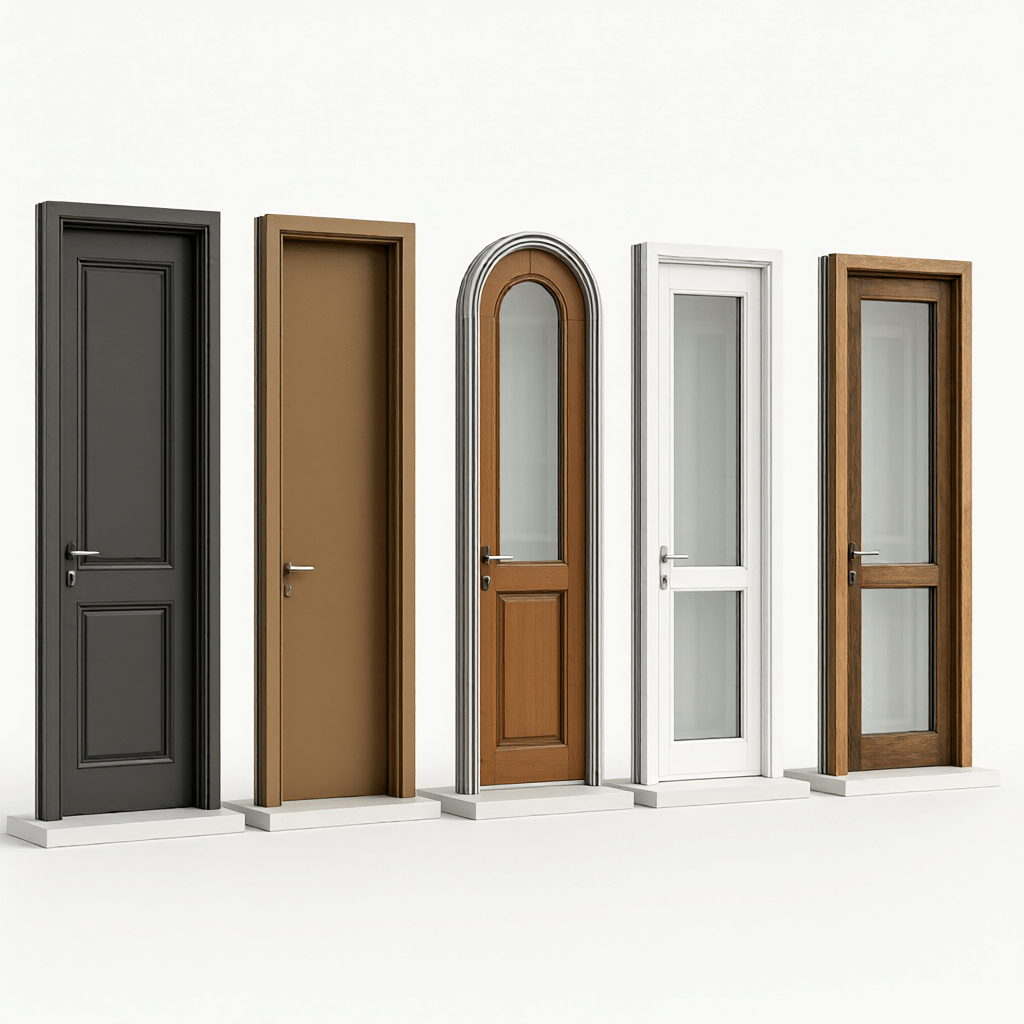
The primary drivers are cost efficiency through direct factory supply, deep customization options, and proven capacity for large-volume project deliveries. Austrian door manufacturers often carry higher unit prices due to labor costs and smaller production runs, while Chinese factories can offer similar thermal-break aluminum and solid-wood constructions at significantly lower FOB prices. When you source directly from the factory, you eliminate the middleman markup that distributors and trading companies typically add.
Full customization is another major factor. Austrian projects frequently require non-standard dimensions, specificRAL colors, specialized glazing for passive-house U-values, and hardware suited to local mounting patterns. Chinese manufacturers commonly adjust profile structures, thread sizes, and fitting geometries to match Austrian and broader EU building conventions. This flexibility matters particularly for villa developments, hotel renovations, and multi-unit apartment projects where each door may need individual sizing.
Supply capacity rounds out the advantage. A single Chinese factory can produce thousands of door sets per month, making it viable for large-scale developments without fragmented supplier management. Combined with established export workflows—including packing lists, proforma invoices, and full customs documentation—the total sourcing process becomes manageable for buyers who lack an in-house China team.
What specifications matter for doors destined for Austria?
The Austrian climate demands doors that resist cold drafts, manage condensation, and maintain thermal integrity year-round. Key specifications center on the thermal-break profile design, the U-value of the complete door assembly, and the air-, water-, and wind-load resistance classes.
Which door materials work best for Austrian buildings?
| Material | Thermal Performance | Weather Resistance | Typical Applications | Best For |
|---|---|---|---|---|
| Thermal-break aluminum | Excellent (U-values achievable down to ~1.0 W/m²K with triple glazing) | High; powder-coated or anodized finishes resist corrosion | Exterior entrance doors, balcony lift-slide doors, system casement doors | Climate-controlled buildings, passive-house adjacent projects |
| Solid wood | Good (depends on species and core construction) | Moderate; requires maintenance and sealing against moisture | Interior doors, premium exterior villa doors | Traditional architecture, luxury villa developments |
| Steel-core insulated | Very good (dense core provides strong insulation) | High; inherently resistant to impact and weather | Security-focused entrances, commercial applications | Hotels, high-traffic public buildings |
| PVC-U framed | Good to very good (multi-chamber profiles trap heat) | Moderate; UV stabilization required for long outdoor life | Residential replacements, budget-conscious projects | Apartment refurbishments, secondary residences |
For Austrian exterior applications, thermal-break aluminum remains the most popular choice because it combines strong structural rigidity with excellent thermal separation between interior and exterior frames. See our comparison of powder coating, anodizing, and PVDF finishes for aluminum doors to understand which surface treatments hold up best in alpine conditions.
What thermal and performance specs should you require?
Require a minimum air-tightness class 4 (EN 12207) for exterior doors in Austria’s climate zone. This prevents cold-air infiltration that drives up heating costs and causes condensation inside wall cavities. For water penetration, demand class E750 or higher (EN 12208), which ensures the door withstands heavy rain and snow-melt driving forces common in Alpine regions. Wind-load resistance should meet at least class C3 (EN 12210) for standard residential heights, increasing to C4 or C5 for tall entrance doors exposed to high winds.
The overall U-value of the complete door assembly (frame plus leaf plus glazing) is the single most important thermal metric. In Austria, new builds and deep retrofits increasingly target U-values at or below 1.0 W/m²K. Achieving this typically requires a thermally broken aluminum frame with a wide chamber structure, warm-edge spacer glazing, and low-emissivity triple glazing filled with argon gas.
Pre-shipment testing should cover all three performance areas—air-tightness, water-tightness, and wind resistance—before any container leaves the factory. Reputable suppliers run these tests on representative samples from each production batch and provide third-party test reports. Refer to ASTM International standards for additional reference on material and performance testing methodologies used globally.
What standards and certifications apply?
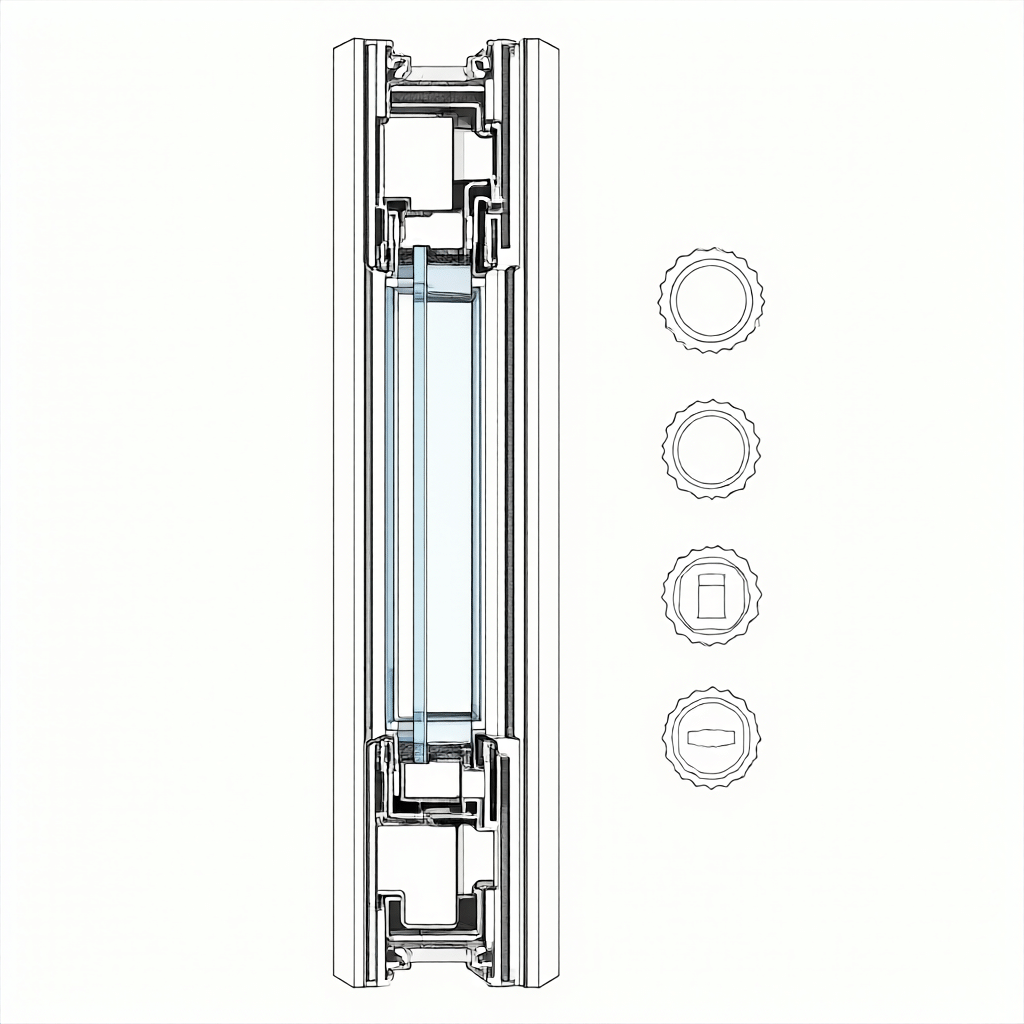
Doors classified as construction products under EU law must bear CE marking and comply with Construction Products Regulation (EU) No 305/2011. This regulation requires a declared performance based on harmonized European standards and a DoP (Declaration of Performance) issued by the manufacturer before the product enters the EU market.
Which EU and Austrian standards must imported doors meet?
The specific harmonized standards depend on door type. European casement doors and system entrance doors typically fall under EN 14351-1 (product standard for external人行 doors and pedestrian doors). Fire-rated versions reference EN 1634-1 for fire resistance classification (EI30, EI60, EI90 ratings—see our EI30 vs EI60 vs EI90 fire resistance ratings comparison guide for details on how these classifications map to Austrian building-code requirements). Secure-locking doors use EN 1627–1630 for burglary resistance ratings.
Austrian national standards are designated Önorm (Austrian Norm). While Önorm generally aligns closely with EN standards, some federal states (Bundesländer) impose additional regional requirements for acoustic insulation, thermal bridging at wall-door junctions, and accessibility thresholds. Buyers should confirm whether the project location has state-level amendments beyond the federal baseline.
What pre-shipment tests should a responsible manufacturer perform?
Any competent factory will test representative units for air-tightness, water-tightness, and wind-load resistance before loading containers. These tests simulate real-world pressure differentials and rainfall exposure to verify that the assembled door meets its declared performance class. Request test certificates issued by an accredited laboratory, not internal QC logs, as independent certification carries weight with Austrian customs and building-authority inspectors.
Manufacturers serving the Austrian market should also verify that all materials comply with REACH restrictions on restricted substances (SVHCs) and that glazing units carry valid thermal and solar-transmission declarations aligned with the declared U-values.
How do you evaluate and shortlist a manufacturer?
Start by confirming that the factory has direct export experience to the EU, not just to other regions. Ask for a portfolio of recent shipments to Austria or Germany and verify the documentation trail—packing lists, commercial invoices, and customs forms should be consistent and complete. Review their process for adapting profile structures and fittings to match local building codes, since this is where many generic Chinese factories stumble on European projects.
Conduct a structured supplier audit using a door factory audit checklist for B2B procurement evaluation to assess production capacity, quality-control procedures, and personnel competence. Prioritize factories that perform in-house performance testing and can provide third-party test reports for the exact door configuration you intend to order—not just a generic catalog example.
Request physical samples before committing to volume. Evaluate the sample for finish quality, hardware operation, joint tightness, and glazing seal integrity. A well-made sample signals a factory that respects precision; a sloppy one predicts costly rework at scale.
See our FCL vs LCL shipping for door and window procurement comparison to understand how shipment strategy affects your landed cost and risk profile.
How do FCL and LCL shipments differ for door orders?
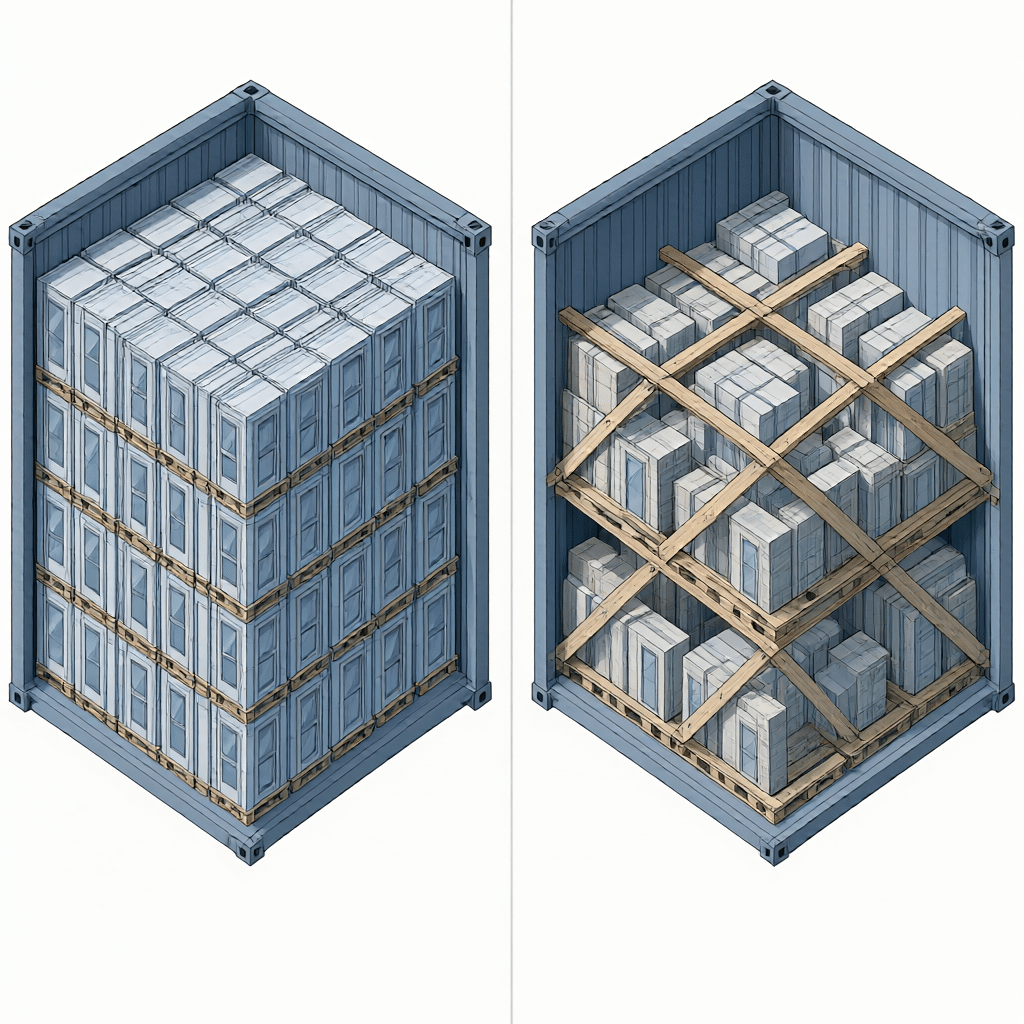
Full Container Load (FCL) means your order occupies an entire 20ft or 40ft container. This is the default choice for project-sized orders—typically 150 to 250 door sets per 20ft container depending on door dimensions and packing method. See our 20ft container door loading quantity and shipping configuration guide for detailed stowage layouts. Less than Container Load (LCL) shares container space with other shippers and is only practical for small replacement orders or pilot batches under 30 sets.
Required documentation includes a commercial invoice, packing list, bill of lading, and certificate of origin (often EUR.1 for preferential tariff treatment under EU trade arrangements). The supplier should also provide the CE marking documentation package—the Declaration of Performance, technical file summary, and any test reports required by the applicable harmonized standard. Consult a customs broker or refer to resources like Zoll.at for current duty rates and VAT obligations when bringing doors into Austria. Our door HS code and import duty procurement guide walks through the classification and cost calculations step by step.
What profile and fitting adjustments are typically needed for the Austrian market?
Standard Chinese-profile doors often use metric thread sizes and mounting patterns that don’t align with Austrian or wider EU hardware conventions. Adjustments commonly include switching to European-style multipoint locking systems with correct lever spacing, replacing hinge knuckles to match German/Austrian door-weight standards, and modifying threshold profiles for proper integration with Austrian floor-finishing practices. Glass units must be ordered with warm-edge spacers and low-E coatings rated for Central European climate zones to prevent inter-pane condensation during winter months.
These adjustments are straightforward for manufacturers experienced in EU-facing production but can cause delays or non-compliance with suppliers who only produce for the domestic Chinese market. Always confirm that the exact configuration you specify will be tested and documented before mass production begins.
How can a buyer verify a Chinese factory meets Austrian building-code requirements?
Verification comes down to three steps: request the technical documentation package (DoP, test reports, material declarations), confirm that test specimens match your specified configuration rather than a generic model, and, if possible, engage a third-party inspection agency in China to audit the factory and inspect pre-shipment goods. Reputable sourcing platforms and trade shows such as Domotage Vienna and the Canton Fair provide opportunities to meet manufacturers face-to-face and assess their readiness for the European market.
How We Meet These Standards
As a manufacturer serving the Austrian and broader EU market, our approach centers on understanding exactly what a project requires before we begin production. We work directly with architects and procurement teams to specify profile structures, glazing units, and hardware that match local building-code expectations—then we validate those choices through testing before any order moves to the factory floor.
Every shipment undergoes strict pre-shipment inspection covering air-tightness, water-tightness, and wind-resistance performance. We prepare complete export documentation—packing lists, proforma invoices, and customs papers—so your freight forwarder in Austria receives everything needed for smooth clearance. Whether you need FCL or LCL delivery, we handle the logistics from our factory to your port of entry.
Our facility supports full customization on size, color, glass, and hardware accessories, along with OEM and private-label options for buyers who need branded solutions. If you are evaluating whether our capabilities align with your project requirements, Get a Free Quote.
Frequently Asked Questions
What EU/Austrian standards must imported doors meet?
Doors must comply with the Construction Products Regulation (EU) No 305/2011, carry CE marking, and meet applicable harmonized EN standards such as EN 14351-1 for external doors. Austrian Önorm standards generally align with EN but some federal states add regional requirements. Fire-rated doors reference EN 1634-1 for EI classifications.
How do I verify a Chinese door manufacturer’s credibility?
Request their CE marking documentation package, ask for third-party test reports on the exact configuration you plan to order, review past export records to Austria or Germany, and consider engaging a third-party inspection agency for a factory audit. Verify they can adapt profiles and fittings to EU conventions.
What certifications are required for doors sold in Austria?
CE marking under CPR 305/2011 is mandatory for construction-product doors. Depending on the door type, you may also need fire-resistance certification (EN 1634-1), security-rating certification (EN 1627), or acoustic-performance declarations. All certificates must accompany the shipment with the Declaration of Performance.
What is the average shipping cost and lead time from China to Austria?
Lead times typically range from 30 to 45 days for customized orders after sample approval. Sea freight to Trieste or Hamburg plus overland transport to Austria usually adds 25 to 35 transit days. Exact costs vary with container volume, fuel surcharges, and current route conditions—obtain fresh quotes from your freight forwarder before ordering.
Are there import duties or VAT considerations when bringing doors from China into Austria?
Doors generally carry an import duty rate around 4.5 percent under the EU’s common external tariff, though preferential rates may apply with a valid EUR.1 certificate of origin. Austria applies a standard VAT rate of 20 percent on imported goods, calculated on the sum of customs value plus duty plus shipping insurance. Verify current rates with Zoll.at or a licensed customs broker before finalizing your landed-cost estimate.
Sources & References
- ASTM International — www.astm.org
- comparison of powder coating, anodizing, and PVDF finishes for aluminum doors — doorwoodendoors.com
- EI30 vs EI60 vs EI90 fire resistance ratings comparison guide — doorwoodendoors.com
- door factory audit checklist for B2B procurement evaluation — doorwoodendoors.com
- FCL vs LCL shipping for door and window procurement comparison — doorwoodendoors.com
- 20ft container door loading quantity and shipping configuration guide — doorwoodendoors.com
- Zoll.at — www.zoll.at
- door HS code and import duty procurement guide — doorwoodendoors.com











