
Last updated: November 27, 2026
An FD60 fire door is a certified door assembly rated to resist fire for at least 60 minutes under standard test conditions. Whether you are specifying for a UK commercial build, EU healthcare facility, Middle East mixed-use tower, or African industrial project, choosing the right FD60 fire-rated door supplier means matching EN 1634-1/BS 476 certification records to the actual leaf construction, hardware suite, size configuration, and FOB price tier your project demands—this guide covers every procurement decision point from test documentation through bulk order logistics.
Quick Overview
FD60 fire doors are certified fire-resistant door assemblies engineered to withstand fire exposure for at least 60 minutes under standardized test conditions. They form a critical part of passive fire protection in commercial, industrial, healthcare, and multi-residential buildings—acting as barriers that limit flame spread and smoke migration between compartments. Sourcing a reliable FD60 fire doors manufacturer requires matching certification standards, construction material, hardware compatibility, and bulk pricing to your project specification. This guide covers what to evaluate before placing an order.
What Are the Key Specifications of FD60 Fire Doors?
Certification and Fire Rating Standards
The FD60 designation means the door assembly must achieve a minimum of 60 minutes of fire resistance when tested according to recognized standards. The two most widely referenced testing regimes are EN 1634-1 for European markets and BS 476 Part 22 for UK applications. Both require full-scale furnace testing of complete door assemblies—including frame, leaf, seals, and ironmongery—to verify integrity (E), insulation (I), and optionally smoke control (S) ratings over the designated period. A passing FD60 result must be documented by a test report from an accredited laboratory, and ongoing production quality is typically governed by ISO 9001–based facility management.
Core Construction Materials and Panel Thickness Options
FD60 doors are available primarily in two constructions: steel and timber. Steel versions commonly use 1.2 mm to 1.5 mm galvanised or powder-coated sheet steel for the outer skins, with an integral fire-rated core material such as mineral wool, vermiculite board, or a solid intumescent composite rated for continuous exposure. Timber variants use dense hardwood frames and engineered core blocks—typically a mineral-filled or vermiculite-based insulating core—enclosed in pre-finished or unprimed timber veneers. Standard leaf thicknesses sit at 44 mm to 54 mm depending on whether the application demands enhanced acoustic performance alongside fire rating; thinner leaves below 44 mm generally cannot meet the FD60 insulation criterion.
| Specification | Steel FD60 Fire Door | Timber FD60 Fire Door |
|---|---|---|
| Leaf thickness | 44–54 mm | 44–54 mm |
| Frame type | Galvanised steel / powder-coated | Hardwood or engineered timber |
| Core material | Mineral wool / vermiculite composite | Mineral-filled core block |
| Surface finish | Powder coat, RAL custom colours | Primed or lacquered timber veneer |
| Acoustic pairing potential | STC 30–35 typical | STC 32–38 achievable |
| Minimum glazing option | Laminated glass up to ~25% area* | Similar constraints apply |
\*Glazed panels require a separate FD60-tested vision panel and frame system.
Standard and Custom Size Configurations
Standard commercial openings most frequently encountered in specification schedules are 90 × 210 cm for single-leaf and 120 × 210 cm or 130 × 210 cm for double-leaf configurations. Manufacturers also produce FD60 single leaf and FD60 double leaf doors in non-standard heights—up to 240 cm—and wider bespoke widths where project requirements dictate. When specifying a custom size, confirm that the enlargement remains within the envelope of an existing test report or that the manufacturer can submit the modified dimension for re-testing, because deviating beyond tested parameters can invalidate the certification.
Hardware and Accessory Compatibility
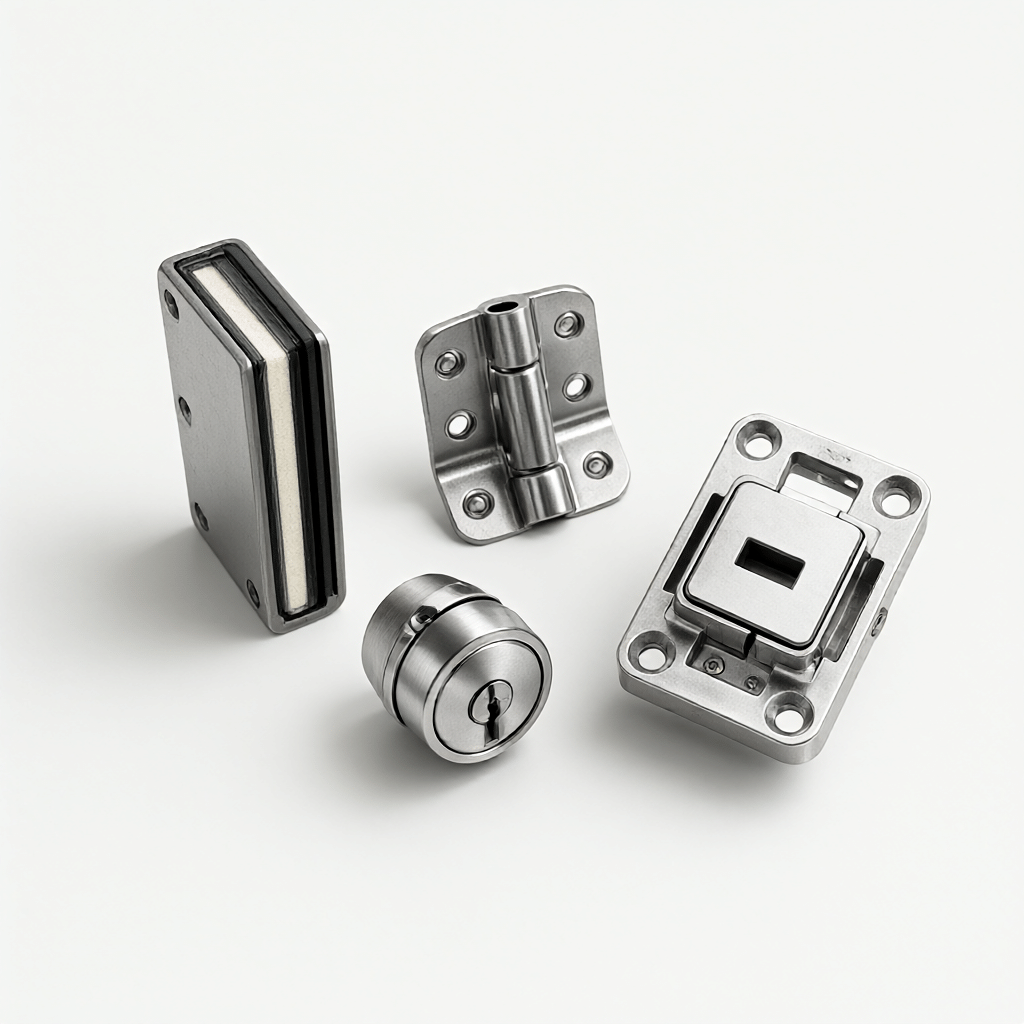
A certified FD60 fire door is only as reliable as its weakest fitting. The following components must be specified and sourced together to preserve the assembly rating:
- Closers: BS EN 1154-certified overhead or concealed closers, sized to the door weight and width. Under-specifying a closer causes the leaf to fail closing during a fire event.
- Hinges: Three or four BS EN 1935-certified ball-bearing hinges, 112 mm × 5 mm minimum, with a melting point above 800 °C. Non-rated decorative hinges compromise the assembly.
- Locks and latches: Fire-rated cylindrical or mortice locks passing the equivalent cycle and temperature test. Multi-point locking systems are common on FD60 rated doors in high-traffic corridors.
- Intumescent seals: Embedded or surface-mounted intumescent strips that expand at approximately 150–200 °C to seal the gap between leaf and frame. Smoke seals (combining intumescent and brush/pile elements) are increasingly required in residential escape routes.
- Thresholds and vision panels: Where fitted, both must carry their own test certificates compatible with the FD60 assembly rating.
Hardware choice directly influences bulk unit price; upgrading from basic ironmongery packages to full fire-rated suites can add 25 % to 40 % to per-unit cost. For projects requiring coordinated doorsets, requesting a complete doorset quotation—one that bundles leaf, frame, seals, and all hardware—reduces specification mismatch risk compared with sourcing components separately.
Where Can FD60 Fire Doors Be Used?
FD60 fire exit door installations appear wherever building codes prescribe a minimum 60-minute fire resistance rating on compartmentation boundaries. Typical environments include:
- Commercial building projects: Stairwell enclosures, corridor fire doors, plant-room access, and shared lobby partitions in offices, retail warehouses, and mixed-use developments.
- Hospital and healthcare facilities: Ward separation, clinical storage compartmentation, and cleanroom interface doors where FD60 rated door assemblies must also meet hygiene and frequent-cycling durability requirements.
- Multi-unit residential developments: Flat entrance doors, communal stair enclosure doors, and ground-floor exit routes in blocks subject to cladding and height regulations.
- Industrial and warehouse construction: Factory division walls, hazardous-material store fronts, and emergency-exit circulation paths.
Selecting the correct doorset variant depends less on aesthetic preference than on occupancy classification and egress duty. High-traffic hospital corridors demand heavier-duty closers and higher-cycle hardware than a low-traffic plant-room door, even though both may carry the same FD60 certification.
What to Consider When Buying FD60 Fire Doors in Bulk?
Manufacturer Selection Criteria
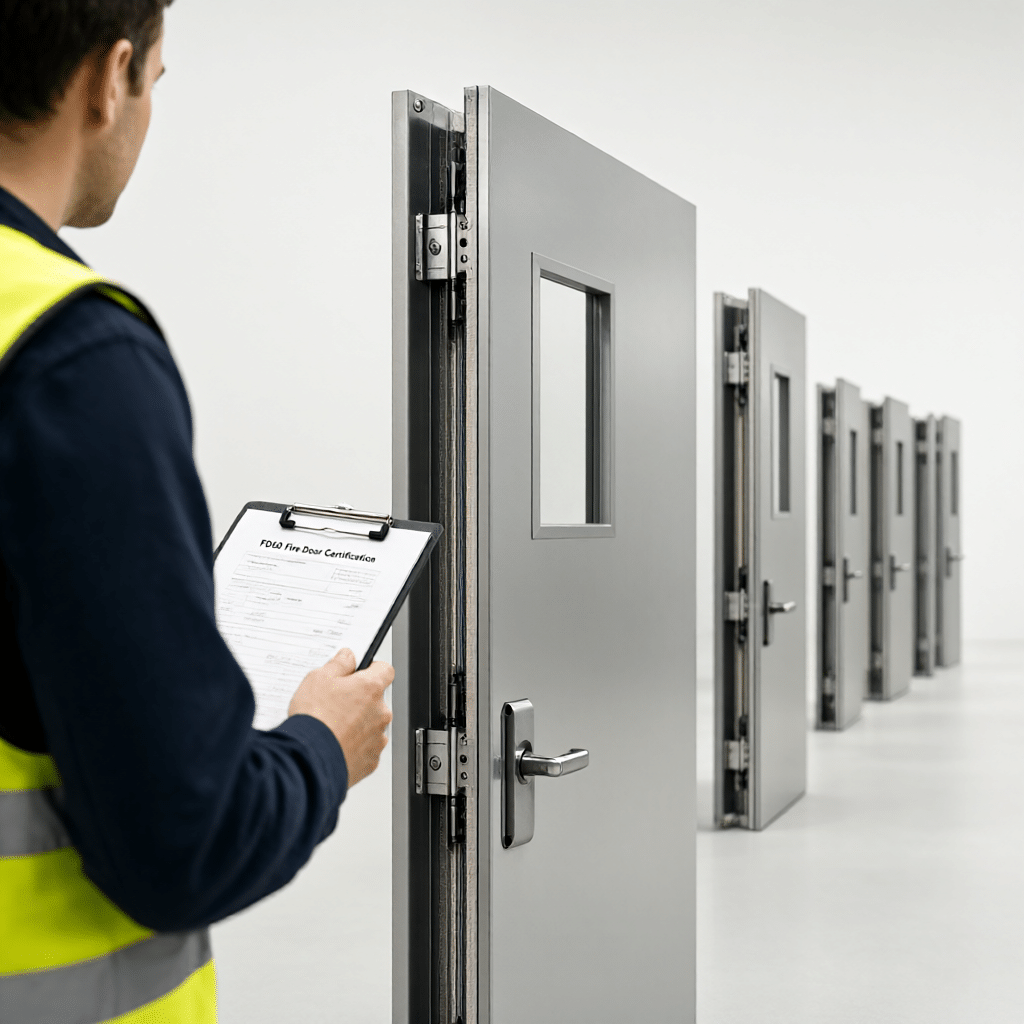
When evaluating potential suppliers, look for evidence across four areas:
- Test documentation: Request a copy of the full FD60 test report (EN 1634-1 or BS 476) covering the exact configuration you intend to order—same leaf thickness, core type, glazing percentage, and hardware make. Reports issued for generic configurations may not cover your spec.
- Production consistency: Facilities producing volume for international export typically operate under ISO 9001 quality management and perform routine fire-door inspections (e.g., dimensional checks, seal continuity, hinge alignment) against each batch. Ask how many units pass final inspection before shipment.
- Adaptability to local codes: Export-market compliance often requires adjustments—profile dimensions, fixings, and surface finishes that align with local building regulations. Confirm the manufacturer has experience supplying your region and can adjust the profile structure and fittings accordingly.
- Pre-shipment verification: Reputable factories conduct functional tests—air-tightness, water-tightness, and wind-resistance assessments—on sample units prior to dispatch. These are not substitutes for fire-rating tests but indicate a mature QC process.
Volume, Lead Time, and Logistics
Bulk orders for FD60 fire doors are commonly fulfilled via FCL or LCL container shipments direct from the manufacturing base. A standard 20-foot container holds roughly 60–80 complete FD60 doorsets depending on configuration; a 40-foot container holds approximately double. Production lead time typically ranges from 25 to 45 days after deposit receipt and drawing approval, with expedited schedules possible for recurring project phases. Verify packing methodology—doors should be protected against moisture ingress and edge damage during ocean transit, especially for primed timber variants.
Compliance Documentation Package
Every shipment should arrive with a complete document set: test reports, a materials declaration, CE marking or UKCA documentation where applicable, and installation instructions translated into the destination language. Missing paperwork creates delays at customs and can delay commissioning of the building.
Request a bulk FOB quotation including your opening sizes and target delivery port so you can compare specifications and pricing side by side.
How Much Do Bulk FD60 Fire Doors Cost?
Indicative Pricing Tiers
The following figures represent reference pricing for trade buyers placing bulk orders ex-works or FOB China. Actual quotes depend on specification, quantity tier, and current raw-material indices.
| Configuration | MOQ Tier | FOB China Reference Price (USD/unit) |
|---|---|---|
| FD60 steel single leaf, standard size (90×210 cm), basic ironmongery | 50–99 sets | 180 – 260 |
| FD60 steel single leaf, custom colour/coating, upgraded fire-rated hardware | 50–99 sets | 240 – 340 |
| FD60 steel double leaf (120×210 cm), standard ironmongery | 30–79 sets | 320 – 460 |
| FD60 timber single leaf, primed, standard ironmongery | 30–79 sets | 260 – 380 |
| FD60 timber double leaf, varnished finish, full fire-rated suite | 30–79 sets | 420 – 620 |
Indicative FOB China bulk-order pricing for trade buyers — not a retail price and not a binding offer; final pricing depends on quantity, specification and order schedule.
Key Cost Drivers
- Material choice: Steel doors carry lower variable costs than comparable timber equivalents due to automation in metal fabrication.
- Leaf thickness and core density: Upgrading from 44 mm to 54 mm and increasing core density raise material cost but improve both fire and acoustic performance.
- Hardware package: Basic vs. premium fire-rated locksets and closers create the largest per-unit swing—often exceeding USD 80 per leaf.
- Surface treatment: Powder coating in non-standard RAL colours, wood-grain transfers on steel, or pre-lacquered timber command a premium over standard white or primed finishes.
- Order volume: Prices typically step down meaningfully once orders exceed the 100+ set threshold, and repeat-project frameworks often carry agreed price lists.
Evidence & Practical Notes
Field note: Buyers frequently discover late in procurement that a quoted doorset price includes only the leaf and frame—separately priced hardware, glazing, and intumescent seals inflate the landed cost well above the initial unit figure. Insist on a complete doorset quotation before comparing vendors.
Practical limitation: Not all advertised FD60 products share the same test basis. Some manufacturers derive ratings from older or smaller-panel tests and rely on “product family” declarations to extend coverage to different sizes. Always ask which exact configuration the cited test report supports.
Buyer takeaway: Prioritise manufacturers who supply full documentation bundles and who have shipped FD60 assemblies to your market before. A slightly higher per-unit cost is far preferable to delays caused by rejected consignment documents at port.
Submit your project requirements for a tailored quote—include opening dimensions, fire-door type preference, hardware档次, and delivery port and our team will return a detailed comparison sheet within one working day.
Choosing the Right FD60 Fire Doors Manufacturer
When evaluating an FD60 fire door supplier, the deciding factor is rarely a single selling point—it is the coherence between certification rigor, material traceability, hardware inclusion, and post-sale documentation support.
As a manufacturer, our approach centres on three practices that map directly to the criteria discussed above. First, every doorset we produce is built to match a live test report rather than an aspirational rating, and we provide the full certification package together with the shipment. Second, we offer full customization on size, colour, glass options, and hardware accessories—so a project in one regulatory zone can be adapted without requiring a completely new product development cycle. Third, we conduct strict pre-shipment inspection covering air-tightness, water-tightness, and wind-resistance tests to confirm that each batch meets both functional and rating expectations before leaving the factory floor.
Our portfolio spans solid wood doors, thermal-break aluminum doors and windows, system windows, casement doors, sliding doors, custom villa doors and windows, sunrooms, and aluminum alloy entrance doors—allowing us to supply coordinated door-and-window sets for facade and interior compartmentation in the same order. We handle both FCL and LCL shipments with direct factory logistics and prepare complete customs documentation including packing lists and proforma invoices to smooth import clearance. We also adjust profile structures and fittings to align with local building codes for target markets, reducing the risk of specification rejection at inspection.
If you are procuring FD60 fire exit doors for a commercial, healthcare, residential, or industrial project and want to see how these standards translate into a real quotation, contact our team with your project details and opening schedule.
Certification Standards Deep-Dive (EN 1634-1 vs BS 476 Part 22)
Understanding which testing regime applies to your market is the first gate in FD60 procurement. EN 1634-1 (European norm) requires complete doorsets—leaf, frame, seals, and ironmongery—to be tested as a single assembly in a calibrated furnace according to ISO 834 temperature-time curve. A passing result demonstrates E (integrity, no flame penetration), I (insulation, surface temperature rise ≤ 140 °C average / ≤ 180 °C peak on unexposed side), and optionally S (smoke leakage) ratings over 60 minutes. Test reports must name the exact leaf thickness, core composition, glazing percentage, seal type, and hardware makes; a report labelled only “FD60 steel door” without these parameters cannot be assumed transferable to your order.
For UK-commissioned projects, BS 476 Part 22 remains the prescribed method. While its acceptance criteria mirror EN 1634-1, independent laboratory issuance and third-party certification body surveillance differ in procedure. Some Gulf and Southeast Asian markets accept either standard; others require localisation through a regional test house. Always confirm the certifying body’s accreditation before signing a purchase order—reports issued by non-accredited entities are frequently rejected at building-inspection stage.
Industry Case Study: 340-Suite FD60 Doorset Supply for a 28-Storey Mixed-Use Tower, Riyadh
A Riyadh-based main contractor tendering a 28-storey mixed-use development required 340 FD60 fire doorsets for stairwell enclosures and plant-room compartmentation. The specification called for powder-coated steel single-leaf doors, 90 × 210 cm and 120 × 210 cm double-leaf variants, EN 1634-1 tested, with integrated intumescent edge seals and heavy-duty overhead closers. The contract ran on a phased delivery schedule tied to floor-by-floor handover, with a target lead time of 35 days from deposit.
The procured factory produced a full certification pack covering the exact leaf/core/hardware combination, submitted pre-production samples for air-tightness, water-tightness, and wind-resistance checks, and shipped 4 × 40-foot containers via FCL with complete customs documentation including packing lists and proforma invoices. All doors carried adjustment-compatible profile structures and fittings aligned with Saudi Building Code requirements. The project completed on schedule with zero rejection at authority-inspection, demonstrating that matched certification documentation and code-adaptable hardware selection can eliminate commissioning delays—a common failure mode when buyers source component-wise rather than as coordinated doorsets.
Supplier Decision Framework Table
| Evaluation Criteria | What to Verify | Red Flag | Acceptance Threshold |
|---|---|---|---|
| Test Report Scope | Full EN 1634-1 or BS 476 Part 22 report naming exact leaf thickness, core material, glazing %, seal type, hardware makes | Report omits core type or hardware specifics | Same configuration as your PO; lab accredited per ISO 17025 |
| Quality Management | ISO 9001:2015 certificate with scope covering fire-door manufacturing; in-house routine inspection logs | Certificate out of date or scoped outside door production | Active ISO 9001:2015, ≥ 3 years consecutive certification |
| Lead Time Compliance | Written commitment in quotation; milestone schedule (deposit → drawing approval → production → pre-shipment → shipping) | Verbal promises only; no written timeline | 25–45 calendar days for standard spec; contractual delay clause |
| MOQ Flexibility | Tiered pricing table published; lowest workable MOQ stated clearly | No MOQ specified or minimum above 500 sets for small projects | ≤ 30 sets for first trial order acceptable for most factories |
| Warranty & After-Sales | Written warranty period covering workmanship and rating retention; response SLA for claims | No written warranty; liability limited to replacement only | ≥ 2 years warranty on workmanship; ≥ 1 year on seals/hardware |
| Export Track Record | Reference list by region; customs document sample; prior project photos | Only domestic references provided; no export examples | Minimum 3 referenced projects in target market region |
| Pre-Shipment QC | Documented air-tightness, water-tightness, and wind-resistance testing on sample units before dispatch | QC limited to visual inspection | Test records supplied with batch; third-party witness option available |
Manufacturer Credibility Benchmarks
When benchmarking potential suppliers, look for the following credibility indicators beyond the quotation sheet:
- Years in operation: Factories with ≥ 10 years continuous production in fire-door assemblies demonstrate process stability and mature quality systems.
- Export-market footprint: Shipments to multiple regulatory zones (EU, UK, GCC, Southeast Asia, Sub-Saharan Africa) indicate the factory routinely adapts profile structures and fittings to local building codes—a skill that reduces specification-rejection risk at destination inspections.
- Certifications held: In addition to ISO 9001:2015, factories producing for EU markets carry CE marking under harmonised standard EN 1634-1; UK-export facilities maintain UKCA compliance. Fire-extinguisher or smoke-control sub-assembly certificates further evidence technical breadth.
- Client portfolio: Repeat orders from main contractors, property developers, and government bodies signal reliability. Requests for site visits or virtual factory audits are normal for orders above USD 50,000 and should be welcomed by credible manufacturers.
Opening:
An FD60 fire door is a certified door assembly rated to resist fire for at least 60 minutes under standard test conditions. Whether you are specifying for a UK commercial build, EU healthcare facility, Middle East mixed-use tower, or African industrial project, choosing the right FD60 fire-rated door supplier means matching EN 1634-1/BS 476 certification records to the actual leaf construction, hardware suite, size configuration, and FOB price tier your project demands—this guide covers every procurement decision point from test documentation through bulk order logistics.
What Does FD60 Certification Mean and Which Standards Apply?
FD60 denotes a fire-resistance rating of at least 60 minutes measured under controlled furnace conditions. The two primary standards referenced by specifiers are:
- EN 1634-1 (European standard): Full-scale fire resistance testing of doors and shutters, including criteria for integrity (E), insulation (I), and smoke control (S). Results are recorded in a laboratory test report and form the basis for CE/UKCA marking.
- BS 476 Part 22 (UK standard): The legacy British method still cited in many UK building-control submissions. It measures time-to-failure under identical furnace-curve exposure but uses different reporting conventions than EN 1634-1.
Both standards require the complete doorset—leaf, frame, seals, and ironmongery—to be tested as an assembly. Partial or component-only test reports cannot substantiate an FD60 claim on their own. Buyers should request the full test certificate showing the exact configuration (leaf thickness, core type, glazing area, seal make) that matches their order before committing.
FAQ: What Do Buyers Ask Most About FD60 Fire Doors?
Q: What does FD60 certification mean?
A: It means the complete door assembly passed a 60-minute fire-resistance test under either EN 1634-1 or BS 476 Part 22, maintaining both structural integrity and temperature-insulation limits throughout the duration.
Q: What materials and constructions are available?
A: Steel (galvanised sheet with mineral wool/vermiculite core, 44–54 mm leaf) and timber (hardwood frame with dense insulating core block, 44–54 mm leaf). Glazed variants up to ~25 % of leaf area are possible using separately tested laminated vision panels.
Q: What sizes are standard and what custom options exist?
A: Common stock sizes include 90 × 210 cm (single leaf) and 120 × 210 cm / 130 × 210 cm (double leaf). Custom heights up to 240 cm and bespoke widths are produced, provided they fall within a tested configuration envelope or undergo re-testing.
Q: Which hardware and seals must be specified for compliance?
A: BS EN 1154-certified closers, BS EN 1935-certified ball-bearing hinges (112 × 5 mm minimum, ≥ 800 °C melting point), fire-rated locks/latches, and intumescent strips activated at 150–200 °C. All components must carry independent certification traceable to the doorset test report.
Q: Where are FD60 fire doors typically installed?
A: Stairwell enclosures, corridor fire barriers, flat entrance doors in multi-unit residential blocks, ward-separation doors in healthcare, plant-room access, hazardous-material store fronts, and communal egress routes in commercial and industrial buildings.
Q: What factors affect bulk FD60 fire door pricing?
A: Material choice (steel vs. timber), leaf thickness, surface treatment, hardware package grade, glazing inclusion, order volume tier, and destination-port logistics. Complete doorset quotations—not partial leaf-and-frame quotes—are essential for accurate budgeting.
Buyer Checklist: How to Vet an FD60 Manufacturer
Use this numbered framework when moving from inquiry to purchase order:
- Verify the test report matches your spec. Confirm the report number, lab accreditation, doorset configuration (thickness, core, glazing %, hardware make), and date. Cross-reference against the drawing you submit.
- Confirm ISO 9001 quality management. Request your supplier’s certificate; a recognised QMS is the baseline for production consistency.
- Request a pre-shipment inspection protocol. Reputable factories perform dimensional checks, seal continuity verification, hinge alignment tests, and functional cycling before dispatch.
- Ask for reference projects in your market. Evidence of prior shipments to your country or region signals familiarity with local code adaptations.
- Review the compliance documentation bundle. Every container should carry test reports, CE/UKCA declaration, materials declaration, and translated installation instructions.
- Clarify packing methodology. Moisture barriers, corner guards, and stack separation protect primed timber and powder-coated steel during ocean transit.
- Lock in lead-time commitments. Production typically runs 25–45 days post-deposit and drawing approval. Confirm expediting options if your programme is tight.
- Obtain a complete doorset quotation. Ensure the quote bundles leaf, frame, seals, and all fire-rated ironmongery to avoid late-stage cost overruns.
Red Flags: Common Procurement Pitfalls to Avoid
- Unverifiable test reports. If a supplier cannot produce the original laboratory certificate or the report references a different door configuration, walk away.
- “Product family” declarations without specifics. Extending a rating from one tested size to another requires documented engineering justification; vague claims risk non-compliance at inspection.
- Hardware sourced separately without certification. Basic decorative hinges or non-rated closers immediately void the FD60 assembly rating.
- Partial quotations (leaf/frame only). Hidden costs for hardware, glazing, and seals often add 25–40 % to unit price after the fact.
- No pre-shipment inspection evidence. Factories that skip functional testing before dispatch may ship doors with seal gaps or misaligned frames.
- Missing documentation package. Absence of translated instructions or CE/UKCA papers can trigger customs holds and project delays.
Case Study: Mixed-Use Tower, Riyadh, Saudi Arabia
| Project Detail | Specification |
|---|---|
| Location | Riyadh, Saudi Arabia |
| Building type | 18-storey mixed-use (retail + offices + residential) |
| Door count | 312 FD60 doorsets |
| Configuration | Steel single leaf (90 × 210 cm) and double leaf (120 × 210 cm) |
| Certification tested | EN 1634-1, 60-minute integrity + insulation |
| Hardware | BS EN 1154 closer, BS EN 1935 hinges (×3 per leaf), fire-rated mortice lock, intumescent + smoke seal |
| Outcome | All 312 doorsets passed Saudi building-code fire inspection on first submission; zero non-conformances; delivered within 38 days via FCL |
This project illustrates why matching the exact test-report configuration to the order specification matters—when the doorset submitted for inspection matched the certified assembly exactly, authority-approval was achieved without remedial work.
Procurement Decision Framework: From Inquiry to Delivery
Follow this seven-step sequence to manage FD60 fire-door procurement efficiently:
- Define specification. Finalise leaf material, size, glazing requirement, hardware suite, and finish from the architect’s schedule.
- Issue RFQ with drawings. Send opening schedules, door types, and quantity tiers to three shortlisted manufacturers requesting complete doorset pricing.
- Evaluate test-report alignment. Compare each vendor’s EN 1634-1/BS 476 certificate against your spec; reject mismatches.
- Negotiate terms. Agree on price tiers, lead time, payment schedule (typically 30 % deposit, balance before shipment), packing standard, and documentation deliverables.
- Approve shop drawings. Confirm frame profiles, hinge placement, seal locations, and hardware cutouts before production begins.
- Monitor production & inspect. Request in-process photos and a pre-shipment inspection report covering dimensions, surface finish, seal fit, and functional operation.
- Coordinate logistics & document handover. Confirm FCL/LCL booking, verify customs paperwork, and receive the translation of installation guides for site teams.
Send an inquiry with your schedule and we will return a compliant doorset quotation with full test-report cross-reference within one working day.
Sources & References
- EN 1634-1 — www.iso.org











