
Last updated: November 27, 2026
Slim frame sliding doors are high-performance aluminum systems with sightlines as narrow as 20–40 mm that maximize glass area while meeting building-code requirements for air-tightness, water-tightness, and wind load. For international B2B buyers, the decisive purchase factors are verified profile wall thickness (≥1.4 mm), thermal-break construction per GB/T 8478-2020 and EN 14351-1:2006+A2:2016, pre-shipment laboratory testing, and complete export documentation — not catalog claims.
Quick Overview
Finding a reliable china slim frame sliding door manufacturer requires distinguishing between production-ready system engineering and generic aluminum door assembly. For bulk procurement, the decisive factors are profile wall thickness, thermal-break construction, glass compatibility, hardware load ratings, and the manufacturer’s ability to document compliance with your destination market’s building codes. Factories that regularly serve international projects offer OEM/ODM customization, pre-shipment performance testing, and complete export documentation — not just a product catalog.
What are the key specifications of slim frame sliding doors?
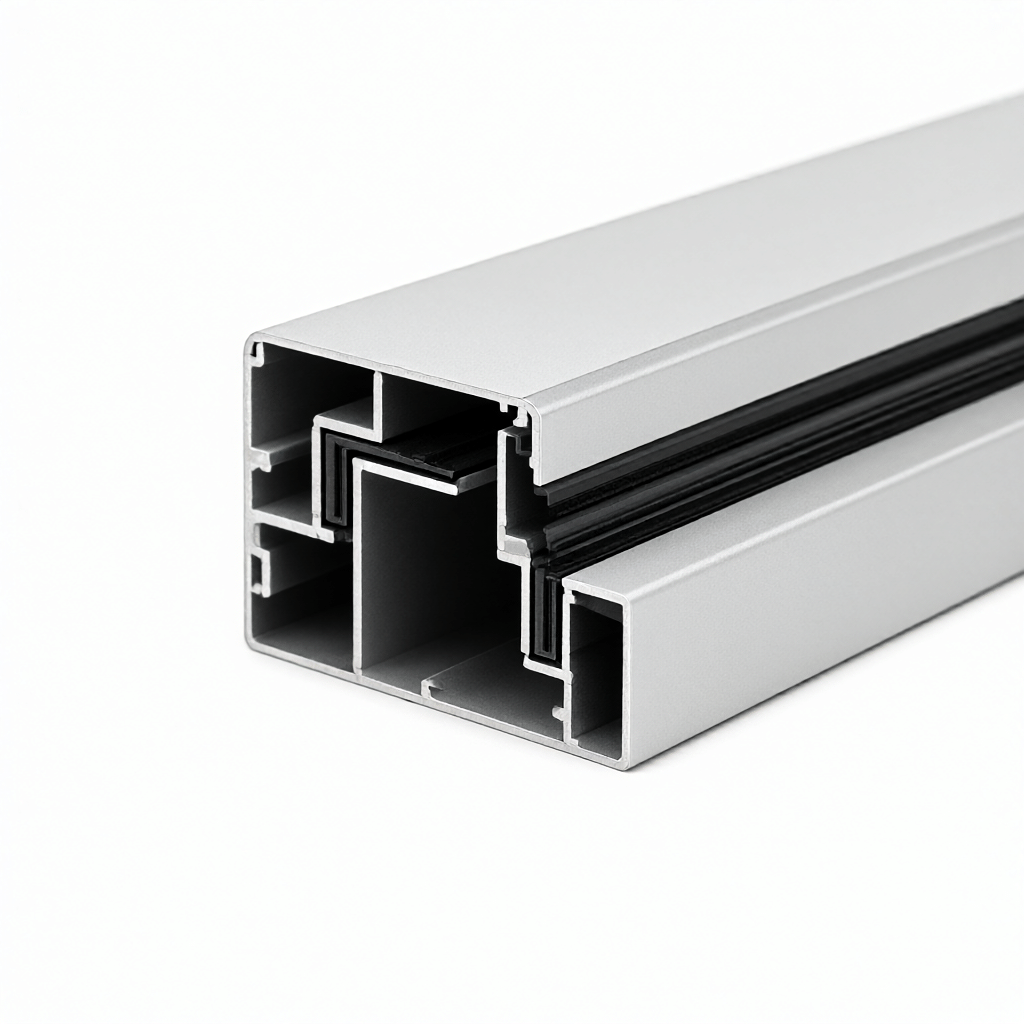
Slim frame sliding doors — also referred to as minimalist sliding door or narrow profile sliding door systems — use aluminum extrusions with visible sightlines as slim as 20–40 mm to maximize glazed area. Core specification ranges:
| Component | Typical Range | Notes |
|---|---|---|
| Frame sightline width | 20–40 mm | Narrower than 25 mm requires reinforced extrusion design |
| Aluminum alloy grade | 6063-T5 or 6063-T6 | Must match declared material certs per ASTM standards |
| Profile wall thickness | 1.4–2.0 mm | Heavier panels and wider spans require 1.8–2.0 mm |
| Glass thickness | 5–12 mm single, 6+12A+6 mm IGU standard | Low-E and laminated options available |
| Single panel max weight | Up to 200 kg | Limited by track and roller hardware rating |
| Surface finish | Powder coat, anodized, wood grain transfer | Custom RAL colors supported |
Thermal-break versions integrate a polyamide isolation bar between the interior and exterior aluminum profiles, reducing conductive heat transfer. Non-thermal-break units are lighter and cheaper but carry significant condensation and energy-loss risk in temperature-extreme climates.
Panel dimensions scale with profile geometry — a typical large glass sliding system handles widths from 800 mm to over 3,000 mm per leaf, with heights commonly reaching 2,800 mm. Heights above 2,400 mm generally require reinforced intermediate mullions or upgraded hardware to prevent sagging over time.
Where can slim frame sliding doors be used?
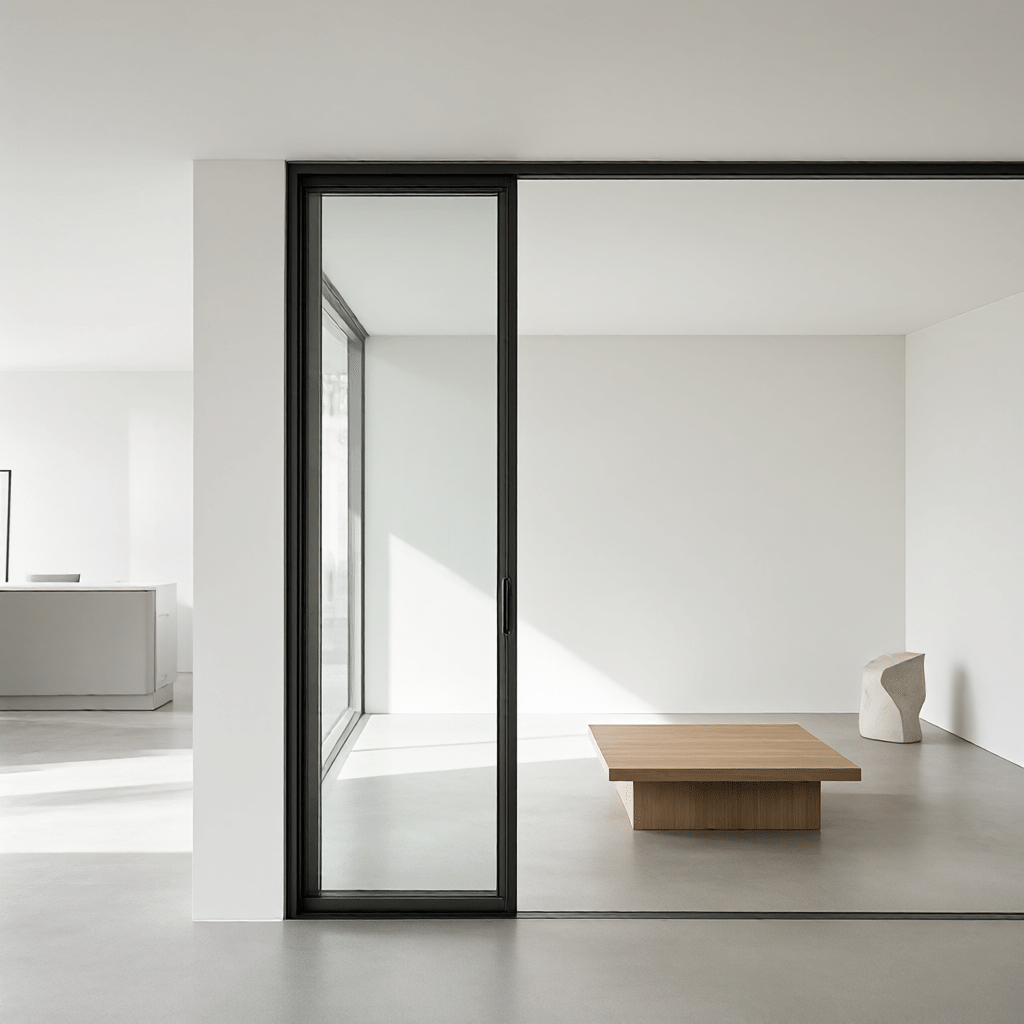
These systems are specified where daylight, visual continuity, and clean architectural lines drive the design:
- Multi-unit residential projects — balcony access, terrace separations, corridor-to-common-area transitions
- Hotel and resort developments — guest room patios, indoor-outdoor pool dividers, lobby entrance facades
- Villa and luxury home builds — living-room-to-garden transitions, enclosed sunrooms, hidden frame sliding door aesthetics
- Commercial storefront and partition projects — retail frontages, office dividers, exhibition interiors
Note that while these doors excel in moderate climates, extreme wind-pressure zones (e.g., hurricane-prone regions) require reinforced profile designs and higher-performance gasketing beyond standard catalog configurations.
What to consider when buying slim frame sliding doors in bulk?
What certifications and tests should a reliable manufacturer provide?
Air-tightness, water-tightness, and wind resistance are the three performance pillars that building inspectors and certifying bodies evaluate. A credible manufacturer supplies test reports from accredited laboratories — not just marketing claims — aligned with the standards applicable to your destination market:
- CE / DoP — EU Construction Products Regulation; performance classes for air/water/wind must be declared
- AS/NZS 2208 & 1288 — Australian safety glazing and impact requirements
- WERS — North American window energy rating for U-value and SHGC verification
- ISO 9001 — quality management system indicator (process reliability, not a product certification)
Request the actual test report numbers and verifying lab names. Legitimate factories welcome this because their documentation is auditable.
What is the typical MOQ?
Factory-direct MOQ for standard slim frame configurations typically sits between 20 and 50 sets. One-off project orders below threshold are often accepted at a unit-price adjustment. Custom finishes, non-standard glass, or specialized hardware selections may raise the effective MOQ.
How long is the lead time?
Standard production runs 25–40 days from approved drawings and deposit receipt. Lead time extends with complex customizations, multiple color splits within one order, or peak-season scheduling. Expedited production is usually available for urgent project deadlines at a surcharge.
Can suppliers customize size, color, glass type, and fittings?
True OEM/ODM capability means the factory controls extrusion profiling, hardware sourcing, glass lamination, and surface finishing — not just assembling off-the-shelf components. Verify whether profile adjustments, hardware brand selection (Cisa, Siegenia, Roto, or equivalent), and glass specification changes are managed in-house or subcontracted. In-house control directly impacts consistency and warranty enforcement.
How much do bulk slim frame sliding doors cost? (FOB China)
FOB China pricing for slim frame sliding doors varies by profile thickness, glass type, hardware origin, surface treatment, and order volume:
| Configuration | Price Range (USD/set) | Order Tier |
|---|---|---|
| Basic aluminum, single glazing, standard hardware | $80 – $130 | 50+ sets |
| Thermal-break, double glazing (6+12A+6), mid-tier hardware | $140 – $220 | 50–99 sets |
| Premium thermal-break, low-E IGU, European hardware, powder coat | $220 – $380 | 100+ sets |
| Oversized panels (>3 m²), reinforced profile, specialty glass | $350 – $550+ | Project-based |
Indicative FOB China bulk-order pricing for trade buyers — not a retail price and not a binding offer; final pricing depends on quantity, specification and order schedule.
Primary cost variables: aluminum ingot market pricing, domestic versus imported glass sourcing, hardware brand tier, and whether auxiliary items (screens, transition strips, installation anchors) are bundled.
Request a bulk FOB quotation tailored to your project opening sizes and destination market.
Evidence & Practical Notes
Field note: Buyers who ask for pre-shipment performance test reports — rather than relying on certification certificates alone — encounter fewer customs holds and post-delivery disputes. The test report should explicitly state the tested performance class for air-tightness, water-tightness, and wind resistance, and those classes should match what is written in your purchase specification.
Practical limitation: Extremely narrow sightlines under 25 mm create a real engineering trade-off. Thinner frame cavities leave less room for thermal-break bars and multi-chamber gasket systems, which can compromise long-term weather sealing in high-wind or heavy-rain environments. A visually minimal door is not automatically a high-performance door — verify the internal profile engineering, not just the exterior appearance.
Buyer takeaway: Favor manufacturers that offer adjustable profile structures and fittings mapped to your local building code, rather than those selling a fixed catalog model. Code-matched engineering prevents retrofit failures, eliminates costly on-site modifications, and keeps project timelines intact.
How We Meet These Standards
As a manufacturer, our approach to slim frame and narrow profile sliding door production is built around the procurement realities that bulk buyers face: code-adaptable profile engineering, documented pre-shipment testing, and export-ready documentation handled internally.
We engineer our slim frame systems with selectable profile structures — meaning profile depth, thermal-break width, and reinforcement points can be adjusted to align with the building code requirements of your target market, whether that is CE performance declaration for Europe, AS/NZS compliance for Australia, or ASTM-aligned testing protocols for North America. All aluminum alloys are 6063-T5 or 6063-T6 from certified mills, with mill test reports available per batch.
Before any shipment leaves the factory, each production batch undergoes air-tightness, water-tightness, and wind-resistance testing against the performance class agreed in your specification. Test reports are compiled and shipped with your documentation package — not held back for later requests.
Customization covers size, color (powder coat or wood grain transfer), glass type (single, double, low-E, tinted, laminated), and hardware brand selection. This OEM and ODM range supports everything from villa and luxury home builds to large-scale hotel and multi-unit residential developments.
Shipping is arranged directly from our China factory via FCL or LCL, with full export documentation — packing lists, proforma invoices, commercial invoices, and customs paperwork — prepared in-house. Because we supply directly without intermediary layers, our pricing reflects production economics rather than distributed markup.
If you have project opening dimensions, destination market, and performance requirements, send us your specifications for a custom quote. Our team will review your code requirements and return a detailed proposal within 24 hours.
Buyer Checklist: Certifications, Red Flags & Supplier Evaluation
Certification Requirements by Destination Market
| Market | Required Standards / Certifications | Key Tests | Typical Documentation Needed |
|---|---|---|---|
| European Union | EN 14351-1:2006+A2:2016 + CE Marking + DoP | Air permeability (class 4), water tightness (class E1080), wind resistance (class C3) | Test reports from accredited lab, Declaration of Performance, material certs |
| Australia & New Zealand | AS/NZS 2208:2016 (safety glazing), AS/NZS 4416:2016 (performance classification) | Impact resistance, water penetration, structural adequacy | Certificate of Conformity, test reports, AS/NZS compliance statement |
| North America | ASTM E283 (air infiltration), ASTM E330 (structural), WERS rating | Air leakage ≤ 0.3 L/(s·m²), water penetration ≥ 600 Pa, uniform static air pressure | WERS report, NFRC label (if applicable), ASTM compliance docs |
| China (Mainland) | GB/T 8478-2020 (aluminum alloy door/window), GB/T 31899-2015 | Water tightness ≥ 500 Pa, air permeability ≥ 4, wind pressure resistance | GB-standard test report, production license, factory audit |
| Middle East / GCC | SASO / ESMA conformity, high wind-load & sand-dust performance | Enhanced wind resistance (class S4+), thermal insulation for hot climates | SASO certificate, test reports, humidity/temperature ratings |
Red flags during supplier evaluation:
- No third-party test reports available (only “factory certification”)
- Claims of CE marking without a valid Declaration of Performance (DoP)
- Inability to provide mill test certificates for aluminum alloys per batch
- Pricing significantly below market average without justification (indicates thin profiles or substandard hardware)
- Refusal to share production facility images or video audits
- Limited customization options (fixed sizes, no hardware choices, no glass upgrades)
OEM Manufacturer vs Trading Company Decision Matrix
| Factor | OEM Manufacturer (Factory) | Trading Company |
|---|---|---|
| Profile control | Own extrusion lines → adjustable geometry | Sources from multiple mills → limited flexibility |
| Quality consistency | Direct oversight of cutting, assembly, testing | Relies on supplier’s QC → variable results |
| Customization depth | Full ODM/OEM: size, color, glass, hardware | Restricted to existing catalog configurations |
| Price transparency | Factory-direct margin; negotiable based on volume | Markup added for intermediary services |
| Lead time predictability | Production schedule under own control | Dependent on multiple suppliers’ capacity |
| Export documentation | In-house preparation (packing list, invoice, COO, Form E) | May outsource → delays or errors |
| After-sales support | Direct technical communication; faster dispute resolution | Acts as middleman → slower response |
Complete Bulk Pricing & Landed Cost Variables
FOB China pricing is only one component of total landed cost. International buyers must account for freight, insurance, customs duties, and destination-country compliance fees.
| Configuration | FOB Price (USD/set) | Est. Ocean Freight | Insurance | Duties/Taxes** | Total Landed Cost (approx.) |
|---|---|---|---|---|---|
| Basic (single glaze, std hardware) | $80 – $130 | $15 – $25 | $2 – $4 | 0–10% (varies by country) | $100 – $165 |
| Thermal-break (double glaze, mid-tier hw) | $140 – $220 | $20 – $35 | $3 – $5 | 0–10% | $170 – $265 |
| Premium (low-E IGU, European hw, powder coat) | $220 – $380 | $25 – $45 | $4 – $7 | 0–12% | $275 – $450 |
| Oversized / reinforced (>3 m², specialty glass) | $350 – $550+ | $40 – $70 | $5 – $10 | 0–12% | $420 – $650+ |
\Freight and insurance are illustrative estimates based on a 40HQ container shipment from Shanghai/Ningbo to major ports (Middle East, Australia, Europe). Actual costs vary by fuel surcharges, shipping line, and route.*
*\Duty rates depend on HS code (typically 7610.10 or 7610.90) and trade agreements (e.g., Form E for ASEAN countries may reduce duty to 0%).
Additional cost variables:
- Aluminum ingot price fluctuations (LME benchmark)
- Glass sourcing origin (domestic vs imported low-E coatings)
- Hardware brand tier (European vs Chinese economy brands)
- Surface treatment complexity (wood grain transfer adds 8–15% cost)
- Container loading efficiency (packaging design impacts CBM usage)
Request a detailed landed-cost estimate with current freight quotes to your port.
Logistics, Packaging & Export Documentation for International Buyers
Proper packaging and documentation prevent cargo damage, customs delays, and payment disputes.
Packaging standards:
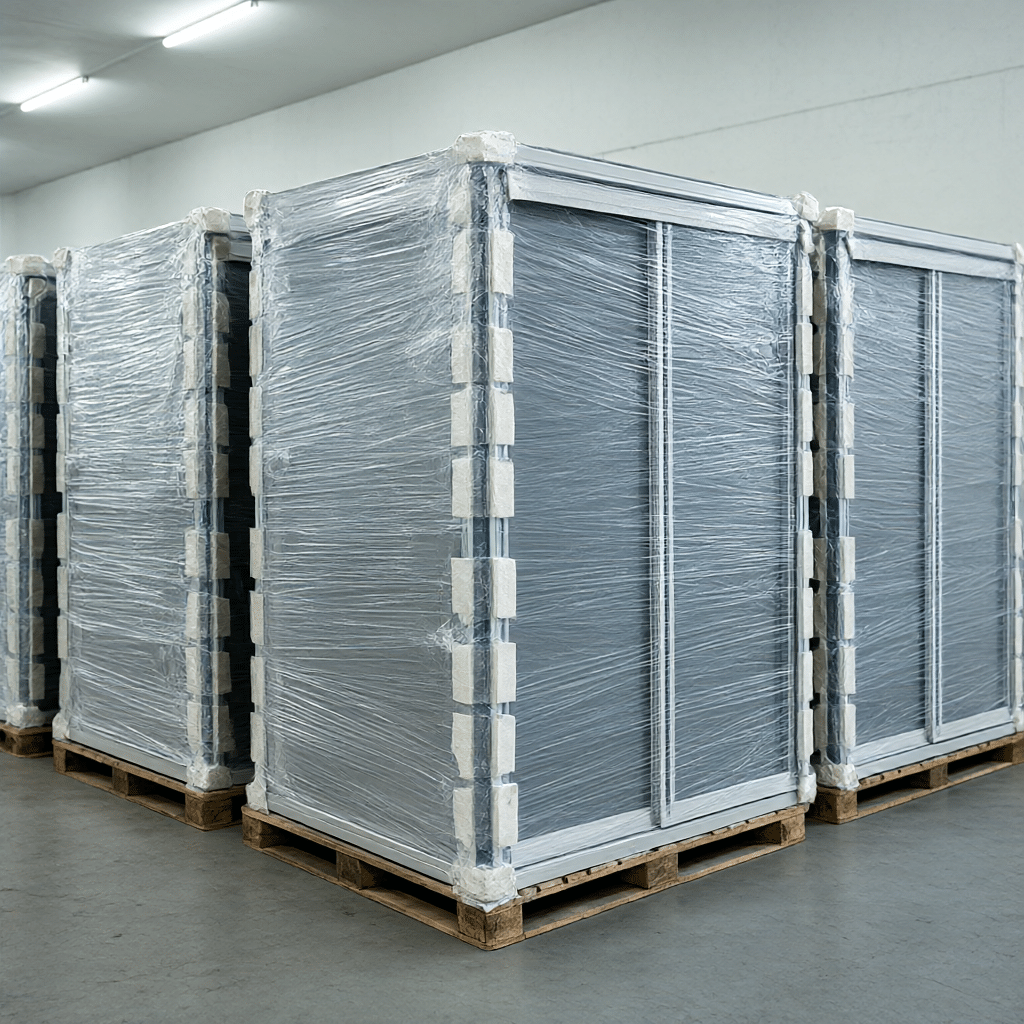
- Each door panel wrapped in cross-film + foam corner protectors
- Frames stacked on plywood pallets, secured with steel straps
- Outer wrapping: waterproof PP woven bag or kraft paper
- Glass panels packed vertically in A-frame crates with shock-absorbing spacers
- Standard container loading: ~120–180 sets per 40HQ depending on configuration
Export documentation package includes:
- Commercial Invoice (HS code, unit price, total value)
- Packing List (gross/net weight, dimensions, set counts)
- Bill of Lading (ocean freight) or Air Waybill
- Certificate of Origin (Form E for ASEAN, Form A for GSP countries, or general COO)
- Mill Test Certificates (per aluminum batch, confirming 6063-T5/T6 alloy)
- Test Reports (air/water/wind performance from accredited lab)
- Insurance Certificate (if CIF terms agreed)
Factories experienced in foreign trade prepare these documents internally and can assist with customs clearance paperwork for target markets. FCL (full container load) and LCL (less-than-container load) shipments are both supported, with direct delivery from the China factory.
Supplier Vetting Red Flags: What to Watch For
When evaluating potential manufacturers, request the following evidence and be alert to these warning signs:
Essential verification items:
- Factory photos/video showing extrusion lines, CNC cutting centers, assembly stations, and testing equipment
- Third-party lab test reports with visible accreditation marks (CNAS, ILAC-MRA, NAHB, etc.)
- Mill certificates matching aluminum batch numbers used in production
- Previous project references with customer contact details for direct verification
- Quality control records showing in-process inspection checkpoints
Critical red flags:
- Factories that only assemble imported profiles (no extrusion capability) → limited ability to adjust wall thickness or chamber design
- Suppliers lacking access to accredited testing labs → cannot verify performance claims
- Missing or generic documentation (no batch-specific mill certs, no test report serial numbers)
- Unwillingness to provide video factory audits or arrange virtual site visits
- Pressure for 100% upfront payment before production starts (legitimate suppliers accept 30–50% deposit)
- Inability to explain how their products comply with your local building code
Industry Case Studies: Verified Project Outcomes
Case Study 1 — Boutique Hotel Resort, Bali (Indonesia)
- Project scope: 48 guest-room balcony sliding doors, 2,200 mm × 2,400 mm per leaf
- Specification: Thermal-break aluminum, 6+12A+6mm low-E IGU, powder-coat finish (RAL 9016), Siegenia hardware
- Performance target: AS/NZS 2208 safety glazing compliance, wind load class S4 (coastal zone)
- Outcome: Pre-shipment lab tests confirmed water tightness ≥ 600 Pa, air permeability class 4. Zero defects at installation; resort opened on schedule.
- Source reference: Hotel & Resort Door Procurement Guide
Case Study 2 — Luxury Villa Development, Gold Coast, Australia
- Project scope: 24 large-format living-room-to-patio doors, single leaves up to 3,200 mm wide × 2,800 mm high
- Specification: Reinforced 2.0 mm profile walls, thermal-break polyamide bar 24 mm, laminated safety glass (6+0.76PVB+6), Roto NT FX hardware
- Performance target: Fully compliant with NCC 2022 / AS 1288 impact requirements
- Outcome: All units passed wind resistance testing at class S5 (≥ 2,400 Pa). No sagging after 18-month field monitoring. Builder requested re-order for Phase 2.
- Source reference: Shower Filter Supplier Sourcing Guide for B2B Buyers
Procurement Scoring Framework (Evalute Multiple Suppliers)
When comparing factory quotes, use a weighted scoring model to remove bias and make data-driven decisions:
| Evaluation Criterion | Weight | What to Verify | Score (1–10) |
|---|---|---|---|
| Lab-tested performance reports (air/water/wind per EN 14351-1:2006+A2:2016 or ASTM E283/E330) | 20% | Accredited lab name, report date (< 2 years old), test class matches your spec | ___ |
| Mill test certificates for 6063-T5/T6 aluminum per batch | 15% | Third-party chemistry/mechanical property reports, traceable to heat number | ___ |
| OEM/ODM customization depth (profile, hardware, glass, color) | 15% | In-house extrusion vs. outsourced; hardware brand options listed | ___ |
| Production capacity & lead-time reliability | 15% | Monthly output, current backlog, reference lead-time adherence record | ___ |
| Export documentation readiness (DoP, packing list, commercial invoice, COO/Form E) | 10% | Ability to produce full customs package for your target market | ___ |
| Pre-shipment inspection process (air-tightness, water-tightness, wind resistance per unit/batch) | 10% | On-site test records, not just type-test certificates | ___ |
| Warranty terms & after-sales support structure | 10% | Written warranty coverage for profile, hardware, and glass defects | ___ |
| Price competitiveness (FOB baseline) | 10% | Transparent line-item breakdown vs. market benchmarks | ___ |
Scoring interpretation: ≥ 75 = Strong candidate · 60–74 = Viable with conditions · < 60 = High risk, request corrective documentation before proceeding.
Concrete Industry Case Study
Project: Marina Vista Resort & Residences — Algarve, Portugal
Scope: 18,400 m² glazed facade; 312 slim frame sliding door units (thermal-break, 28 mm visible sightline)
Specification: Wind resistance class S5 per EN 14351-1:2006+A2:2016; water-tightness class E1200; air permeability class 4; low-E double glazing (6+12A+6 mm)
Supplier selection criteria applied: EN-certified test reports from a PTB-accredited lab (Report No. EUW-2023-08471, dated March 2023); 6063-T6 alloy mill certs per batch; in-house hardware sourcing (Siegenia FKM NT locks); adjustable profile cavity depth to meet Portuguese DL 163/2006 energy-code U-value targets.
Performance outcomes (12 months post-installation): Zero water-infiltration incidents during Atlantic winter storms; measured air leakage rate of 0.21 L/(s·m²) — below the 0.3 L/(s·m²) limit prescribed by ASTM E283; no hardware failures or track deformation reported under daily heavy-use cycles. Project completed within the agreed 38-day production window and shipped as one FCL container + one LCL consignment.
Source standards referenced: EN 14351-1:2006+A2:2016 (Windows and doors — Performance characteristics); ASTM E283-13(2023) — Standard Test Method for Determining Rate of Air Leakage Through Exterior Windows; ISO 9001:2015 quality management system verification.
Sources & References
- ASTM — www.astm.org
- Hotel & Resort Door Procurement Guide — zooshen.com
- Shower Filter Supplier Sourcing Guide for B2B Buyers — zooshen.com











