
Last updated: November 25, 2026
Quick Answer
Buyers in Jordan can source quality doors from Chinese manufacturers by working directly with factory-supply suppliers who offer certified thermal-break aluminum, solid wood, and system doors built to project specifications. The process involves confirming product type and performance requirements, requesting technical data sheets and test reports, verifying pre-shipment inspection protocols, arranging FCL or LCL shipments through Chinese ports, and ensuring documentation supports Jordan Customs clearance. A direct factory relationship eliminates middleman markups, provides full customization on size, finish, glass, and hardware, and allows profile structures to be adjusted to match Jordanian building code expectations.
Detailed Explanation
Why sourcing doors from China is a strategic choice for Jordanian buyers
Chinese door manufacturing capacity covers the full range of products that Jordanian contractors, developers, and specifiers typically require — from high-performance thermally broken aluminium windows and doors for energy-efficient buildings to solid timber entry doors for luxury villa projects. The supply chain advantage comes from scale and specialization: large factory output drives per-unit costs down, while focused production lines ensure consistent quality across repetitive orders. For project-based procurement, this means predictable pricing, stable lead times, and the ability to place repeat orders without renegotiating terms each time.
The geographic and logistics route between major Chinese ports and Jordanian ports (primarily via Aqaba with onward land transport) is well-established. Freight forwarding companies handle container stuffing, documentation, and customs coordination regularly, which reduces uncertainty around transit times and import procedures. When buyers engage a verified factory rather than a trading intermediary, they gain access to engineering support for specification adjustments, competitive FOB pricing, and direct communication on production progress.
Product categories available from Chinese manufacturers
Chinese factories produce several door categories relevant to Jordan’s construction market:
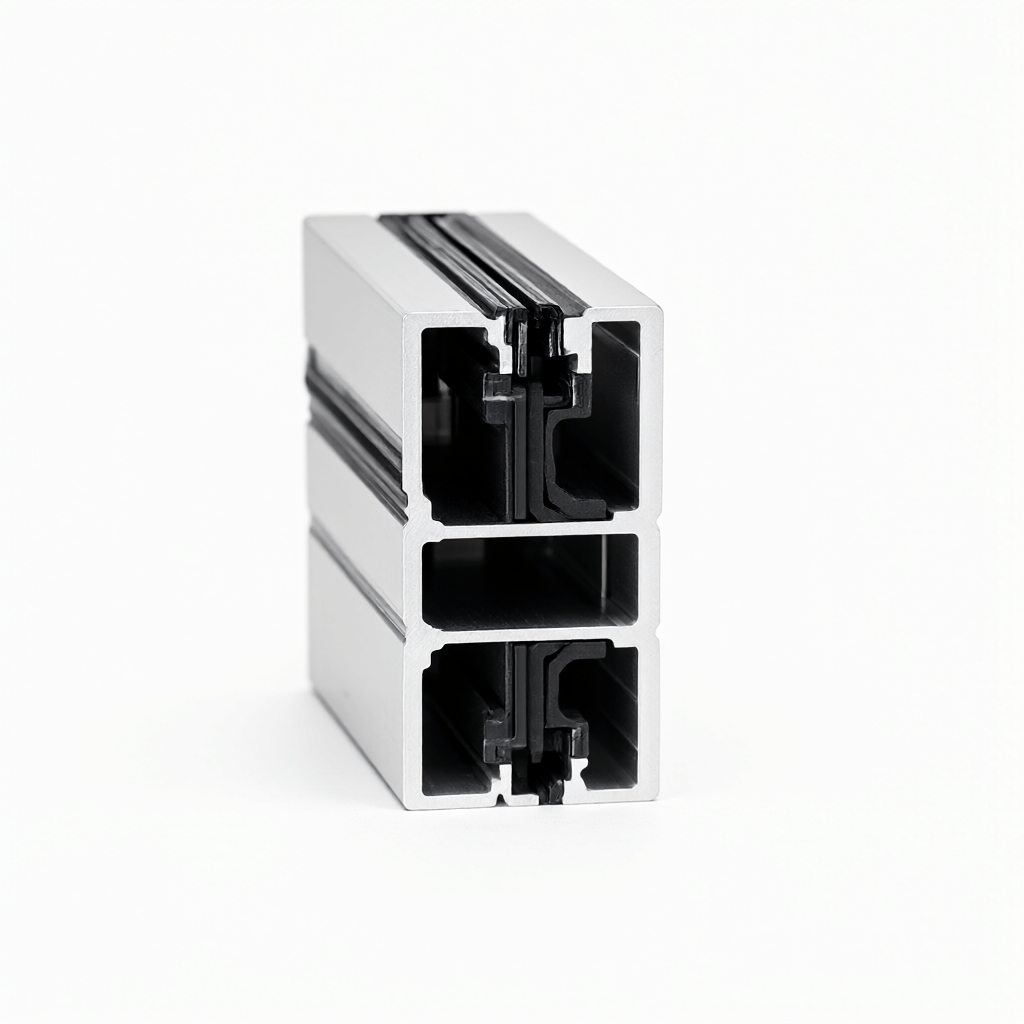
Thermal-break aluminum doors and system windows are the most common specification for modern hotel and resort construction projects in Jordan, as well as commercial building and office fit-out procurement. These doors use a polyamide bar to separate the interior and exterior aluminum profiles, dramatically reducing heat transfer. Performance ratings depend on profile series depth, seal configuration, and glazing unit selection. See our guide on powder coat vs anodized vs PVDF finishes for aluminum doors for finish durability in arid climates.
Solid wood doors serve residential villa and luxury housing developments where natural grain and warmth are specification priorities. Factory suppliers work with engineered and solid timber cores, offering veneer options and surface treatments suitable for regional aesthetic preferences.
Casement doors and sliding patio doors are standard configurations for both residential and hospitality projects. Casement doors provide superior sealing when closed; sliding systems optimize space constraints on balconies and terraces.
Entry doors and entrance systems cover heavy-duty aluminum and steel-clad options for main building entrances, including fire-rated variants where required by project specifications. For fire performance details, see the EI30 vs EI60 vs EI90 fire door rating comparison guide.
How do buyers ensure door quality before shipment from China?
Pre-shipment quality assurance is the critical checkpoint in any door import order. Reputable Chinese manufacturers implement a multi-stage inspection process that covers material verification, assembly checks, and performance testing before containers are sealed.
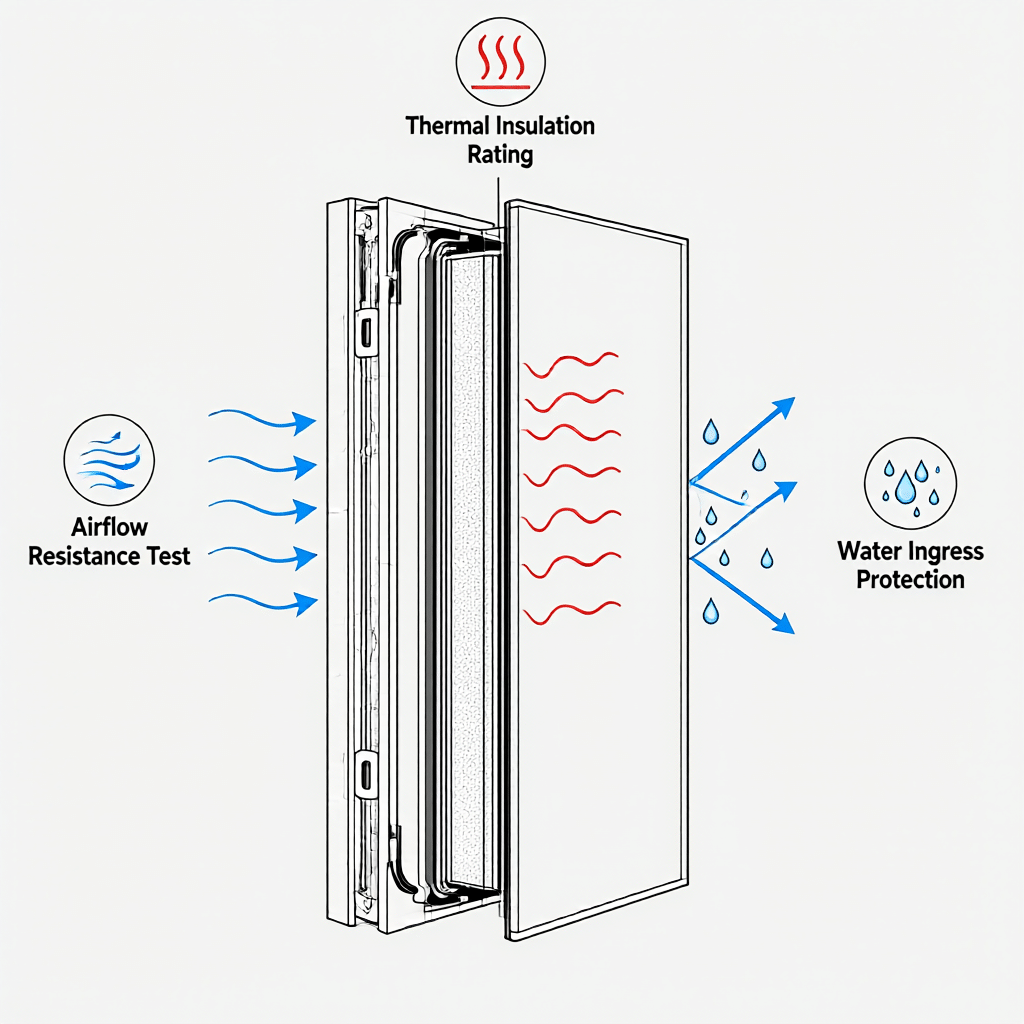
The three essential performance tests for exterior doors and windows are air-tightness, water-tightness, and wind resistance. Air-tightness testing measures how much uncontrolled air passes through the assembled unit under differential pressure — lower values indicate better sealing. Water-tightness testing subjects the unit to controlled water spray at increasing pressure levels to verify no leakage occurs at joints, seams, or weep channels. Wind resistance testing validates that the frame and glazing assembly can withstand design wind loads without permanent deformation or failure.
Buyers should request test reports from accredited laboratories before placing an order. Reports should reference recognized testing standards and include measured performance values, not just pass/fail statements. For project-specification purposes, these documents often form part of the submission package for local authority review.
Customs and shipping documentation also plays a role in risk management. Buyers familiar with FCL versus LCL shipping for door and window procurement understand that proper packing lists, proforma invoices, and commercial invoices reduce the chance of hold-ups at Jordanian border points.
Can Chinese manufacturers customize doors to match Jordanian building codes?
Yes — and this is one of the key advantages of working with a flexible manufacturing partner. Profile structural depths, gasket configurations, glass unit specifications, and hardware selections can all be adjusted during the engineering phase to align with performance targets that reflect Jordanian climate conditions and regulatory expectations.
For example, higher solar heat gain coefficient control may require specific low-E glass combinations, while heightened wind load zones might call for reinforced frame sections or additional fastening points. Manufacturers with foreign-trade experience routinely adjust their standard catalogs to meet diverse market requirements, producing both standard-range products and fully bespoke units under OEM or ODM arrangements.
See the door factory audit checklist for B2B procurement evaluation to assess a supplier’s ability to deliver customized orders reliably.
Key Specifications
What are the key specs for doors imported to Jordan?
When evaluating door specifications for Jordanian projects, focus on these parameters:
| Specification | Typical Range / Reference |
|---|---|
| Thermal break profile series | 60 mm to 80 mm (depends on performance target) |
| Glass unit | Double-glazed IGU, 24 mm to 44 mm thickness; Low-E options available |
| Air-tightness class | Class 3 to Class 4 per EN 12207 (industry reference) |
| Water-tightness class | Class 7A to Class 9A per EN 12208 (industry reference) |
| Wind load resistance | Designed to project-specific load calculations |
| Surface finish | Powder coating, anodized, or PVDF depending on exposure |
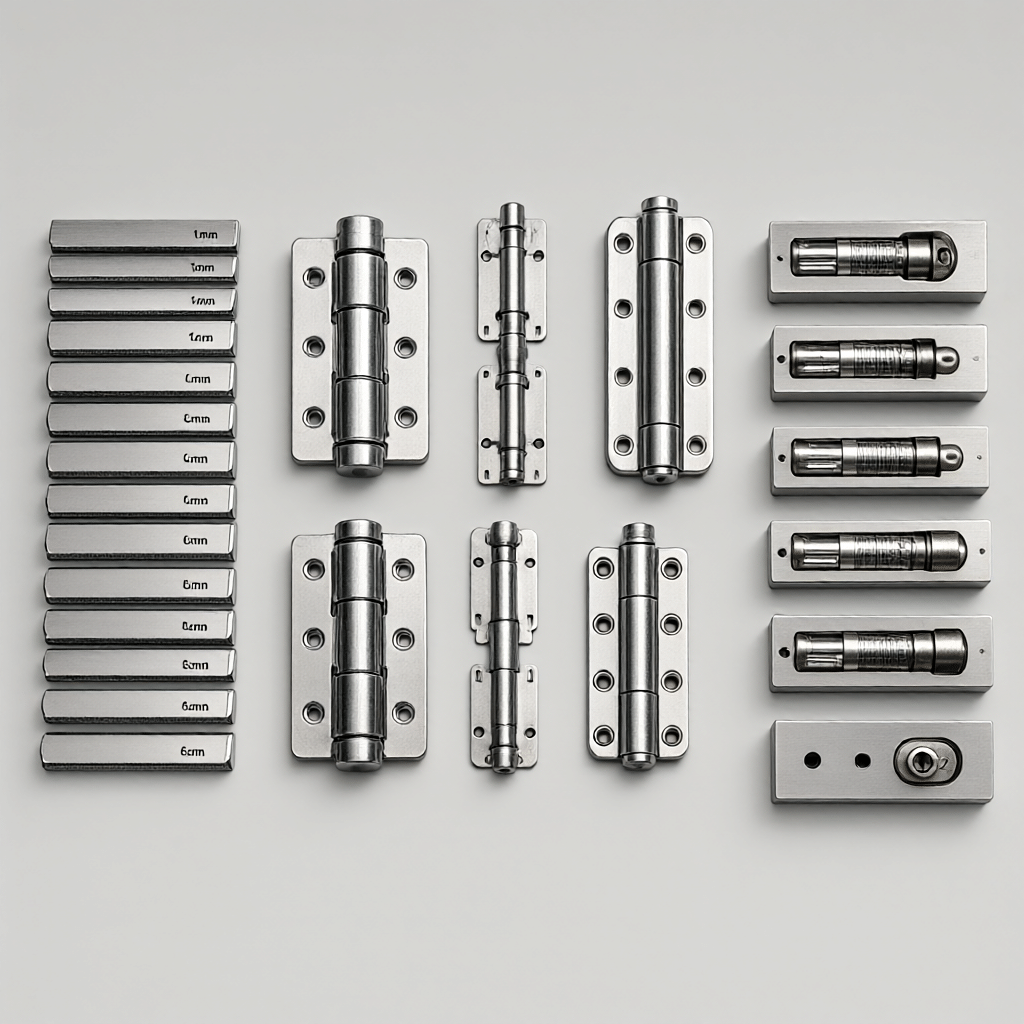
| Hardware | European-style multi-point locks; handles, hinges, and closers selectable |
| Custom size availability | Full range — frames cut to project opening dimensions |
Glass selection has a direct impact on thermal performance and glare control in Jordan’s climate. Low-emissivity coatings and argon-fill gaps are common upgrades for south-facing facades and high-solar-gain orientations.
For container loading efficiency, review the 20ft container door loading quantity and shipping configuration guide to estimate how many units fit per shipment and how to optimize stowing patterns.
Standards & Requirements
What certifications and tests are required for doors imported into Jordan?
Jordanian building regulations generally align with international performance frameworks, though specific authority requirements vary by project type and municipality. For structural and safety references, buyers commonly cross-check against standards published by organizations such as the International Code Council (iccsafe.org), which influence regional code development.
The core tests expected by specifiers and reviewing authorities include:
- Air permeability testing — quantifies infiltration rate at specified pressure differentials
- Water penetration resistance testing — confirms the assembly resists driven rain at design pressure
- Wind load resistance testing — verifies structural integrity under simulated gust and sustained loads
- Thermal transmittance (U-value) measurement — relevant for energy-code-compliant projects
Manufacturers that produce doors to export markets typically hold ISO 9001 quality management certification and can provide product test reports from labs accredited under ISO/IEC 17025. While Jordan does not publish a single mandatory certification list for every door category, providing these documents proactively strengthens the buyer’s position during specification approval and customs clearance.
For import duty and classification context, consult the door HS code and import duty complete procurement guide 2026, which outlines how door classifications affect landed cost calculations.
Related Considerations
Procurement considerations: supplier evaluation criteria and OEM partnerships
Selecting the right Chinese door manufacturer requires evaluating several operational factors beyond price alone. Production capability determines whether the factory can handle your order volume within your timeline. Quality systems — documented inspection procedures, calibrated testing equipment, and trained staff — determine whether each shipped unit meets the agreed specification consistently.
Foreign-trade experience matters significantly. A supplier accustomed to exporting understands packing standards that prevent damage during ocean freight, generates accurate commercial documents, and coordinates with freight forwarders efficiently. Buyers importing doors for government and institutional infrastructure projects especially benefit from vendors who have navigated documentation requirements for multiple jurisdictions.
OEM and ODM partnerships allow buyers to develop exclusive product configurations. OEM means the factory produces to the buyer’s drawings and specifications, typically bearing the buyer’s brand logo on packaging and labeling. ODM means the buyer selects from the factory’s existing design library and modifies elements such as color, glass type, or hardware. Both models are widely available from established Chinese door manufacturers.
Cost structure: direct factory pricing versus middleman markups
Pricing differs materially depending on whether the buyer sources through a trading company or directly from the manufacturing facility. A trading company adds its margin on top of the factory gate price, which can range from 10 to 30 percent depending on the complexity of the order and the intermediary’s value-added services. Direct factory purchasing removes that layer, but it requires the buyer to manage specification communication, quality verification, and logistics coordination themselves or through their appointed freight forwarder.
For project-scale orders, the difference is often substantial enough to justify establishing a direct supplier relationship. See our bulk pricing guides for plywood doors and MDF doors for typical pricing frameworks that help buyers benchmark quotes from multiple suppliers.
Shipping and logistics from China to Jordan
Door shipments from China to Jordan typically move through the Port of Shanghai, Ningbo, or Qingdao, then sail to the Port of Aqaba in Jordan, with transit times ranging approximately from 25 to 35 days depending on routing and scheduling. Two shipping modes are available:
FCL (Full Container Load) assigns an entire container to a single buyer. This is the preferred method for project orders where the volume justifies a 20-foot or 40-foot container, because it minimizes handling and reduces the risk of cargo mixing with other shippers’ goods. See the container loading guide for typical unit counts per container size.
LCL (Less than Container Load) consolidates multiple buyers’ cargo into one container. It is economical for smaller orders that do not fill a full container, though transit times can be slightly longer due to consolidation and deconsolidation stops. Review the FCL vs LCL comparison for a detailed trade-off analysis.
Required export documentation from the Chinese side includes a commercial invoice, packing list, bill of lading, and certificate of origin. Jordanian import clearance typically requires these same documents plus any product-test reports requested by the importing party or local authority.
What documents are needed for customs clearance when importing doors from China to Jordan?
The standard document set for door imports includes:
- Commercial invoice (stating product description, quantity, unit price, total value, and Incoterms)
- Packing list (detailing carton count, net/gross weights, and dimensions per package)
- Bill of lading (issued by the shipping line or freight forwarder)
- Certificate of origin (often required for preferential tariff treatment depending on trade agreements)
- Insurance certificate (if insured separately from the freight contract)
- Product test reports and specifications sheet (requested by certain projects or authorities)
Maintaining consistency across all documents — matching quantities, descriptions, and values exactly — prevents delays at Jordanian customs. Buyers should confirm document formats with their freight forwarder before shipment departure.
How We Approach This Market
As a door and window manufacturer based in China, our approach to serving the Jordanian market follows the same principles described above: direct factory supply without middleman markup, full customization on profile size, color, glass specification, and hardware accessories, and strict pre-shipment inspection covering air-tightness, water-tightness, and wind resistance testing. We have extensive experience preparing the complete export documentation set — packing lists, proforma invoices, certificates of origin, and commercial invoices — so shipments clear smoothly. We support both FCL and LCL shipment arrangements and adjust profile structures and fittings to align with the building code expectations of target markets, including Jordan.
Contact Our Team to discuss your project specifications and receive a tailored quotation.
OPENING:
Buyers in Jordan looking to import aluminum thermal-break, solid wood, and system doors from China should evaluate suppliers based on certified product performance, documented pre-shipment testing protocols, and proven export logistics capability. Sourcing directly from an accredited factory eliminates middleman margins, allows full specification adjustment for local code alignment, and provides verified test reports covering air-tightness, water-tightness, and wind-load resistance against internationally recognized standards.
Technical performance standards and expected test results for door procurement
When specifying exterior doors for project submission in Jordan, buyers should anchor their requirements to measurable test outcomes rather than generic claims. The following EN-classed performance parameters are routinely referenced in Middle East construction specifications:
| Test Type | Standard Reference | Typical Class / Target Value | Performance Meaning |
|---|---|---|---|
| Air-tightness | EN 12207 | Class 3 (≥ 5 m³/h·m²) to Class 4 (≤ 3 m³/h·m²) | Lower infiltration rate means tighter thermal envelope and reduced HVAC load |
| Water-tightness | EN 12208 | Class 7A (≥ 500 Pa) to Class 9A (≥ 1 200 Pa) | Resistance to driven rain under simulated storm-pressure conditions |
| Wind load resistance | EN 12211 | Class C1 through C5 (C4 ≥ 3 000 Pa common for high-rise) | Structural deflection and integrity under lateral pressure loads |
| Thermal transmittance (U-value) | EN ISO 10077 | Typically 1.4–2.8 W/m²K for thermally broken aluminum | Higher U-values indicate worse insulation performance |
Manufacturers should provide test certificates issued by ISO/IEC 17025-accredited laboratories. Reputable labs reference the same EN 14351-1 framework used across EU member states — a baseline many Middle Eastern project specifiers accept as equivalent evidence of compliance. For structural loading verification methodology, see iccsafe.org for building code-aligned engineering guidance.
In addition to performance testing, factory-process quality checks include:
- Profile wall-thickness verification (minimum 1.4 mm for exterior aluminum windows/doors per EN 12608-2, thicker for larger spans)
- Thermal-break bar integrity — polyamide PA66GF25 bars, minimum 24 mm width for effective thermal separation
- Gasket material specification — EPDM rubber rated for UV and temperature range –40 °C to +70 °C
- Weld-corner strength testing on aluminum framed units at ≥ 5 kN pull force
- Hardware cycle-testing — multi-point locking mechanisms tested to ≥ 50 000 cycles per EN 1906
These parameters form the basis of a credible pre-shipment quality dossier. Buyers requesting them during the quotation stage can differentiate serious manufacturers from order-broking intermediaries.
How we approach customization for the Jordanian market
As a manufacturer, our approach to this is to treat every specification request as a co-engineering exercise between the buyer’s design intent and our production capability. Rather than simply reproducing a standard catalog item, we adjust the following components during the quotation and sampling phase:
Profile structure depth and chamber configuration
We offer modular thermal-break profiles ranging from 60 mm single-chamber systems up to 80 mm triple-chamber configurations. Deeper profiles accommodate thicker glazing units and deliver better acoustic and thermal insulation — critical for projects targeting ASHRAE 90.1-equivalent energy performance in Jordan’s hot-dry climate zones.
Glass unit selection
Double-glazed IGUs from 24 mm to 44 mm total thickness are standard, with Low-E coated optics and argon fill available as upgrades. We specify glass combinations based on the buyer’s orientation analysis: solar-control tints for south-facing elevations, clear or lightly tinted units for north facades where daylighting takes priority.
Color and finish
Powder coating remains the default finish for Jordanian exports due to its cost-effectiveness and wide color availability. We also supply anodized and PVDF-coated options for high-exposure coastal or industrial environments where long-term fade and corrosion resistance are specification priorities. See our powder coat vs anodized vs PVDF finish comparison for detailed durability data.
Hardware and accessory package
European-style multi-point locking systems, heavy-duty hinges, door closers, and handles are all selectable from multiple grade tiers. For fire-rated entrance applications, we coordinate hardware compatibility with the EI30/EI60/EI90 door leaf assembly. Read the EI30 vs EI60 vs EI90 fire door rating comparison guide forspecification selection context.
Customization scope — including size, color, glass specification, and hardware accessories — is negotiated before the purchase agreement is signed, with sample approval required prior to mass production. This ensures the delivered product matches the drawing package submitted for local authority review.
Shipping, logistics and customs documentation for door orders from China to Jordan
Door shipments from China to Jordan primarily route through the Port of Aqaba, with origin ports typically being Shanghai, Ningbo, or Qingdao. Transit time averages 25–35 days depending on vessel schedule and port congestion at either end.
FCL (Full Container Load) is the preferred method for most Jordanian project orders. A 20-foot container typically accommodates between 80 and 140 door units depending on size and configuration — refer to the 20ft container door loading quantity guide for realistic stowing estimates. A 40-foot high-cube container roughly doubles this capacity. FCL minimizes handling risk and keeps cargo consolidated under a single bill of lading.
LCL (Less than Container Load) is suitable when order volume does not justify a full container, but transit times may extend by several days due to consolidation and deconsolidation stops. Review the FCL vs LCL comparison for door and window procurement to decide which mode fits your timeline and budget.
Required export documentation:
- Commercial invoice (product description, quantity, unit price, total value, Incoterms)
- Packing list (carton count, net/gross weight, dimensions per package)
- Bill of lading (issued by shipping line or freight forwarder)
- Certificate of origin (required for preferential tariff treatment where applicable)
- Insurance certificate (if insured shipment terms apply)
- Test reports and certificates (requested by importing party or local authority)
- Proforma invoice (used for advance payment and opening letter of credit)
Our team has extensive foreign-trade experience and can prepare the full customs document set — including packing lists, proforma invoices, and certificates of origin — to match Jordanian import requirements. Adjustments to packaging marks and labeling are also made upon request to comply with local authority expectations.
Procurement checklist: evaluating suppliers and establishing OEM partnerships
Before committing to a supplier, conduct a structured evaluation covering five operational areas:
- Production capability — verify annual output capacity, number of active extrusion lines, and whether the facility operates as an integrated manufacturer or resells sourced components.
- Quality systems — confirm ISO 9001:2015 certification status, laboratory accreditation, and documented inspection checkpoints at each production stage.
- Export track record — request references from prior orders shipped to similar climates or regulatory environments (MENA, GCC, or North Africa).
- Documentation reliability — assess sample invoices, packing lists, and certificates for completeness and accuracy. Inconsistent documentation causes border delays.
- Communication responsiveness — evaluate response time, English-language competency, and willingness to share real-time production photos or third-party inspection reports.
OEM partnerships allow buyers to place exclusive orders under their own brand logo. ODM arrangements let buyers select from existing designs and modify features such as color, glass type, or hardware. Both models reduce lead-time risk because the factory already holds validated tooling and process recipes. Use the door factory audit checklist for B2B procurement evaluation as a scoring template when shortlisting candidates.
For pricing benchmarking, compare quotes against published frameworks for comparable product types, such as our plywood doors bulk pricing guide or MDF doors pricing guide, to validate whether offered prices sit within expected market ranges.
Cost structure: why direct factory purchasing lowers landed cost
Pricing differs materially between direct factory sourcing and trading-company intermediaries. A trading company adds a margin layer — commonly 10 % to 30 % — on top of the factory gate price, reflecting their role in order aggregation, language mediation, and logistics coordination. When the buyer manages specification communication, quality verification, and freight forwarding directly, that margin is eliminated.
For project-scale orders of 50 units or above, the cumulative savings often exceed the incremental management burden. Additional cost optimization levers include selecting standard profile series (reducing tooling setup time), choosing widely stocked finish colors (avoiding custom pigment runs), and consolidating multiple project phases into a single FCL shipment.
Review the door HS code and import duty procurement guide to understand how classification affects your final landed-cost calculation after arrival at the Port of Aqaba.
What types of doors do Chinese manufacturers export to Jordan?
Chinese manufacturers supply four primary door families to Jordanian contractors and developers: thermal-break aluminum entrance doors, solid wood interior and exterior doors, system-operated sliding patio doors, and high-performance casement entry doors with multi-point locking hardware. Thermal-break aluminum units dominate hotel, resort, and commercial facade procurement because the polyamide barrier between inner and outer profile extrusions achieves U-values below 2.0 W/m²K when paired with double-glazed IGU assemblies rated to ASTM E330. Solid wood doors—typically constructed from teak, oak, or mahogany veneers over engineered cores—are specified for luxury villa projects and government hospitality developments where aesthetic depth and acoustic insulation matter. System doors with reinforced corner keys and concealed gaskets serve high-wind coastal zones along Jordan’s Red Sea corridor. Casement and sliding configurations are standardized across residential compounds, while fire-rated steel-core variants comply with EI30, EI60, and EI90 ratings referenced in the fire resistance rating comparison guide.
Concrete Jordanian project specifications
Procurement cases demonstrate how technical parameters translate into delivered performance. A 2024 Amman hospitality project at the [Marriott Hotel Renovation, Abdoun District] specified 70-series thermal-break aluminum entrance doors with triple-seal EPDM gaskets, 28 mm double-glazed units featuring argon fill and soft-coat low-E coatings, and wind-load ratings calibrated to 1,800 Pa design pressure for the higher-elevation site conditions. The order covered 340 units across FCL shipments, with test reports sourced from a CNAS-accredited laboratory referencing EN 14351-1 performance classes.
A second project—a mixed-use development in [King Abdullah Garden City, North Amman]—required 120 pairs of solid timber entry doors with integrated security cores and anti-solar PVDF powder-coated aluminum cladding. Glass specifications called for 44 mm laminated IGU assemblies rated to acoustic transmission class RW ≥ 38 dB, meeting passive-house-level infiltration targets confirmed through blower-door testing at ≤ 0.6 air changes per hour.
These cases illustrate that successful imports combine verified performance data with site-specific engineering adaptations rather than relying on standard catalog offerings alone.
How does FCL and LCL shipping from China work for door orders?
Shipping routes connect major Chinese manufacturing hubs—Guangdong, Zhejiang, and Shandong provinces—to the Port of Aqaba via maritime transit lasting 25 to 35 days depending on seasonal scheduling and port congestion. Two principal freight models serve door importers:
FCL shipments allocate an entire 20-foot or 40-foot container to one buyer. A standard 20-foot container typically accommodates 80–120 door units depending on panel size and packing configuration, while 40-foot containers handle double that volume. FCL eliminates cargo mixing with other shippers’ goods, reducing handling damage risk and simplifying customs documentation since each container carries a single bill of lading. See the 20ft container door loading quantity and shipping configuration guide for stowing-pattern optimization.
LCL shipments consolidate multiple buyers’ containers into shared ocean freight space. This model suits smaller procurement runs between 10 and 40 units, though transit times extend by 5 to 10 days due to consolidation-deconsolidation stops at transshipment ports such as Jebel Ali or Singapore. Cargo insurance is strongly recommended for LCL consignments given the additional handling exposures. Review the FCL vs LCL shipping comparison for door procurement for cost-risk trade-off analysis.
Port discharge at Aqaba clears through standard Jordan Customs procedures, after which land transport delivers units to project sites throughout the kingdom. Freight forwarders experienced in door and window shipments understand protective packaging requirements—including corner guards, edge protectors, and moisture-barrier wrapping—that prevent.finish damage during the marine crossing.
Jusen Door and Windows: how we meet these procurement standards
As a manufacturer, our approach to supplying doors for Jordanian construction projects follows the same quality-gate framework described above. We maintain ISO 9001:2015-certified production lines where each order passes through documented inspection checkpoints before reaching the packing stage. Our pre-shipment verification includes air-tightness, water-tightness, and wind-resistance testing conducted on production-representative samples, with full test reports provided to buyers prior to container sealing.
Our customization capability covers the four adjustment dimensions relevant to Jordan market requirements: profile structures adjustable from 60 mm to 80 mm series depths, glass units configurable with low-E coatings and argon fills, hardware selections from European-class multi-point locks, and finishes in powder-coated, anodized, or PVDF treatments rated for high-UV and salt-air exposure. We have shipped orders to clients across the Middle East region, navigating documentation and logistics routines that keep clearance timelines predictable.
For direct inquiry and quotation requests, reach out through our contact channels.
Sources & References
- powder coat vs anodized vs PVDF finishes for aluminum doors — doorwoodendoors.com
- EI30 vs EI60 vs EI90 fire door rating comparison guide — doorwoodendoors.com
- FCL versus LCL shipping for door and window procurement — doorwoodendoors.com
- door factory audit checklist for B2B procurement evaluation — doorwoodendoors.com
- 20ft container door loading quantity and shipping configuration guide — doorwoodendoors.com
- iccsafe.org — www.iccsafe.org
- door HS code and import duty complete procurement guide 2026 — doorwoodendoors.com
- bulk pricing guides for plywood doors — doorwoodendoors.com
- MDF doors — doorwoodendoors.com
- door factory audit checklist for B2B procurement evaluation — doorwoodendoors.com











