
Last updated: November 25, 2026
Sourcing doors from China for Portugal means selecting a CE-certified manufacturer capable of producing to ETAG 034 test protocols, offering full customization of profile type, glass specification, finish, and hardware, and delivering via FCL or LCL with complete export documentation. The total landed cost extends well beyond the unit price — it includes ocean freight, EU import duty, Portuguese VAT, port handling, customs brokerage, third-party inspection, and any tooling charges. Buyers should verify test reports for air-tightness, water-tightness, and wind resistance before committing to bulk orders.
Quick Answer
A reliable china door manufacturer for Portugal delivers exterior entrance systems that comply with EU construction regulations and Portuguese national standards, shipped via FCL or LCL with full export documentation. The supplier must hold valid CE marking under EU Regulation 305/2011, demonstrate compliance with ETAG 034 performance classes, provide third-party test reports for air-tightness, water-tightness, and wind load resistance, and accommodate full customization of profile type, glass specification, surface finish, and hardware. Total landed cost includes unit price, ocean freight, import duty, VAT, port fees, and any certification or tooling expenses — not just the FOB quote.
Detailed Explanation
Why Chinese door manufacturers compete on price and customization for European markets
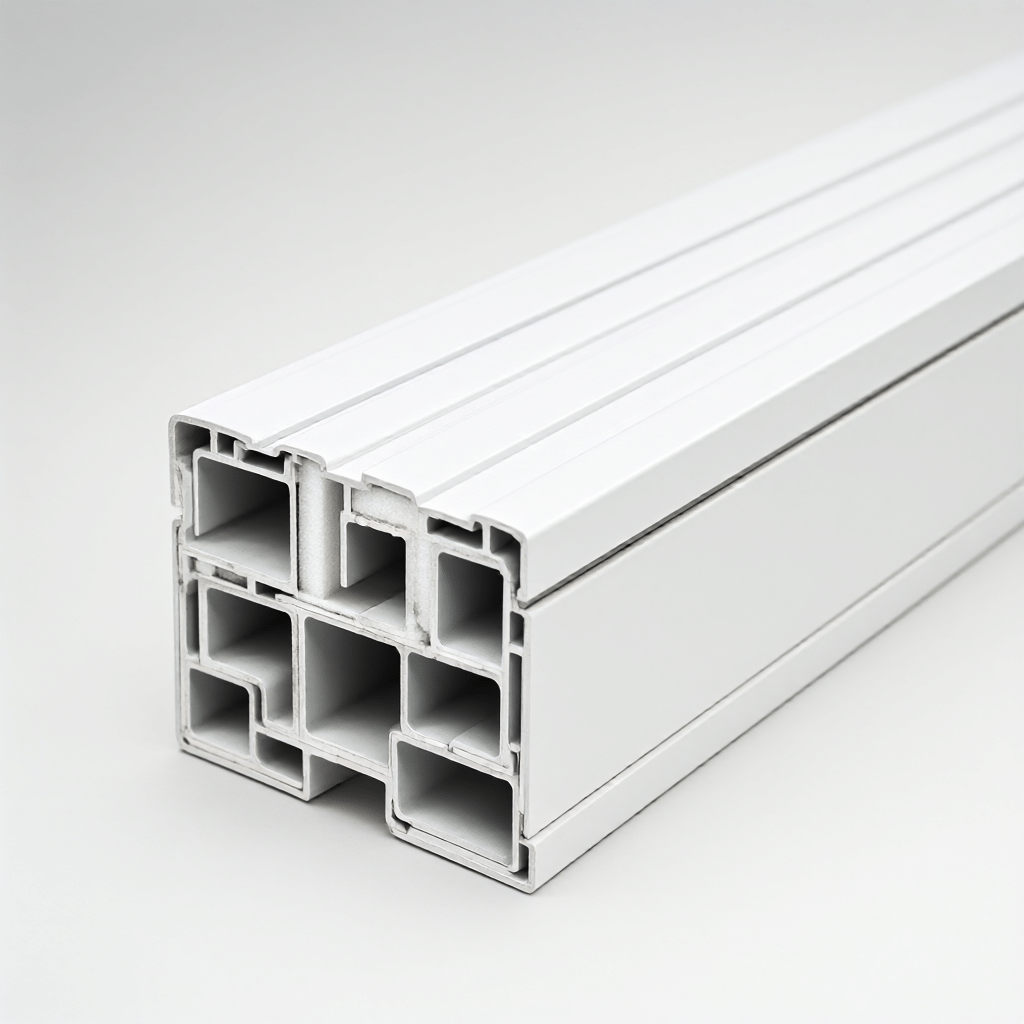
Chinese door factories operate at scale with vertically integrated supply chains — aluminum extrusion, steel fabrication, glass cutting, and finishing are often managed under one roof. This structural advantage keeps unit costs low even when producing to elevated performance specifications. For European buyers, the compelling factor is not merely lower per-unit pricing but the ability to tailor every variable — thermal-break aluminium windows and doors, solid wood core construction, glass U-values, handle profiles, color RAL codes — without minimum-order penalties.
This customization model directly benefits villa development groups, hotel hospitality procurement teams, and multi-unit residential developers who typically specify dozens of door configurations across a single project. A manufacturer capable of holding consistent tolerances while adapting to varied architectural drawings reduces engineering back-and-forth and accelerates tender preparation.
How does Portuguese and EU compliance work for imported doors?
Doors placed on the Portuguese market fall under the Construction Products Regulation (EU) No 305/2011. This regulation requires that every door system covered by a harmonized European standard carries CE marking based on assessed performance against declared parameters. For exterior door assemblies, the relevant performance characteristics include mechanical resistance, safety in case of fire, thermal insulation, acoustics, moisture protection, and durability.
Portugal additionally applies its own building code framework governed by Regulamento de Condições e Requisitos acústicos nas edificações (RSAC) and structural wind-load provisions tied to regional climatic zones. A Lisbon coastal project and a inland mountain villa may face different wind-class requirements, which is why flexible profile engineering matters during the specification phase.
Buyers should also consider whether the supplier follows recognized guidance documents such as ETAG 034 for the assessment of external window and door systems. While ETAGs are technically European Technical Approval guidelines rather than mandatory laws, referencing their test protocols signals a manufacturer that designs to internationally benchmarked methods rather than using minimal local equivalents.
For more context on how European standards intersect with product classification, you can review additional guidance on EI30 vs EI60 vs EI90 fire rating differences if fire-rated entrance systems are part of your scope.
What key criteria determine whether a Chinese door supplier is reliable?
Reliability in this context means three things: technical competence, documentation discipline, and logistics consistency.
Technically, the supplier must prove it can manufacture doors meeting declared performance classes. Request recent test certificates issued by an accredited laboratory for the exact product line you intend to order — not generic certificates for unrelated models. Verify that the test report includes measured values, not just pass/fail labels.
On documentation, a trustworthy exporter maintains organized records: material certificates, process records, and traceability logs. They respond promptly to audit requests and do not hesitate to share production floor footage or factory layout plans when asked.
Logistically, consistent on-time delivery depends on mature packaging practices and familiarity with EU port entry procedures. Factories that have exported regularly understand lading sequences, container stuffing diagrams, and protective measures needed for long ocean voyages. Understanding typical loading efficiency per container — see our guide on 20ft container door loading quantity and configuration — helps you validate whether quoted volumes are realistic.
How is air-tightness, water-tightness, and wind resistance tested before shipment?
Standard pre-shipment testing replicates laboratory conditions in controlled chambers. Air-tightness testing pressurizes or depressurizes a mounted door specimen and measures leakage volume at specified pressure differentials. Water-tightness testing sprays water onto the closed assembly while applying static or cycling pressure to simulate rain exposure. Wind resistance testing subjects the unit to repeated positive and negative pressure cycles until deflection or failure thresholds are reached.
Competent manufacturers run these tests on sample units from each production batch, not once per year for marketing brochures. Ask whether the factory performs routine checks in-house and whether results are recorded per batch. Internal quality-control records give you visibility into manufacturing consistency long before the cargo arrives at Porto or Lisbon.
Key Specifications
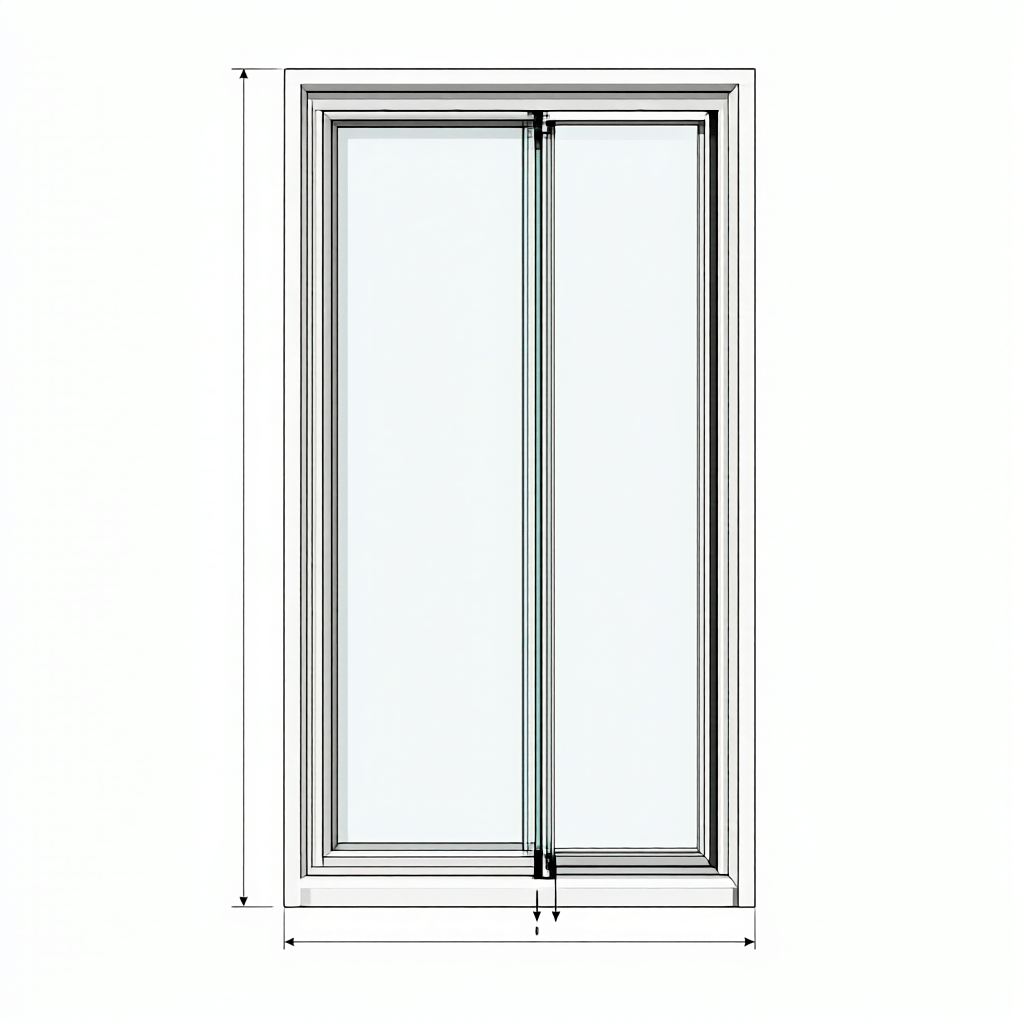
| Specification | Typical Requirement for Portugal | What to verify |
|---|---|---|
| CE marking | Required under EU CPR 305/2011 | Declaration of Performance linked to tested product variant |
| Wind load class | Varies by region; coastal sites often Class E750 or higher | Test certificate showing actual measured value |
| Water-tightness class | Minimum Class 9A for most exposed façades | Pressure difference in pascals confirmed in report |
| Air-tightness class | Class 4 or higher for energy-efficient buildings | Leakage rate at designated test pressure |
| Thermal transmittance (U-value) | Depends on energy code tier | Profile chamber design and glazing specification |
| Fire resistance (if applicable) | EI30 / EI60 depending on building use | Certified test according to EN 1634 series |
These ranges represent industry targets; actual required values depend on your project’s architectural drawdowns and local municipal requirements.
Standards & Requirements
When comparing sourcing options, it helps to keep the door HS code and import duty framework in view. Portugal applies the EU’s common external tariff, and door products generally fall under heading 8302 or 8306 depending on material composition and finish. Import duties vary by subclass, and misclassification can alter landed cost unexpectedly. Make sure your supplier confirms the correct HS code before finalizing the commercial invoice.
VAT on imported goods is recoverable through the Portuguese tax system for registered businesses, but cash flow impact during transit and customs clearance is real. Portuguese customs may assess VAT at the time of entry, meaning working capital needs rise proportionally with container value.
Regarding national regulation alignment, exterior doors used in permanent constructions must satisfy the applicable Portuguese transposition of the CPR and any supplementary normative references published by the Instituto Português da Qualidade e da Construção. Buyers sometimes treat CE marking as sufficient proof of compliance, but Portuguese authorities may request supporting evidence during site audits. Keeping test files, DOP copies, and factory audit records organized prevents delays at project handover.
If you are evaluating multiple factories, apply the same due-diligence lens used in professional verification workflows; see our door factory audit checklist for B2B procurement evaluation for a structured questionnaire template.
Related Considerations
Customization options for project-specific requirements
A versatile manufacturer adjusts four main variables:
- Profile structure — thermal-break aluminum sections with varying chamber counts and width families; solid wood species selection; optional UPVC or wood-clad composite configurations for thermal performance trade-offs.
- Glass specifications — double or triple glazed IGUs, Low-E coatings, argon fill, laminated or tempered safety glass, acoustic ratings matched to the environment.
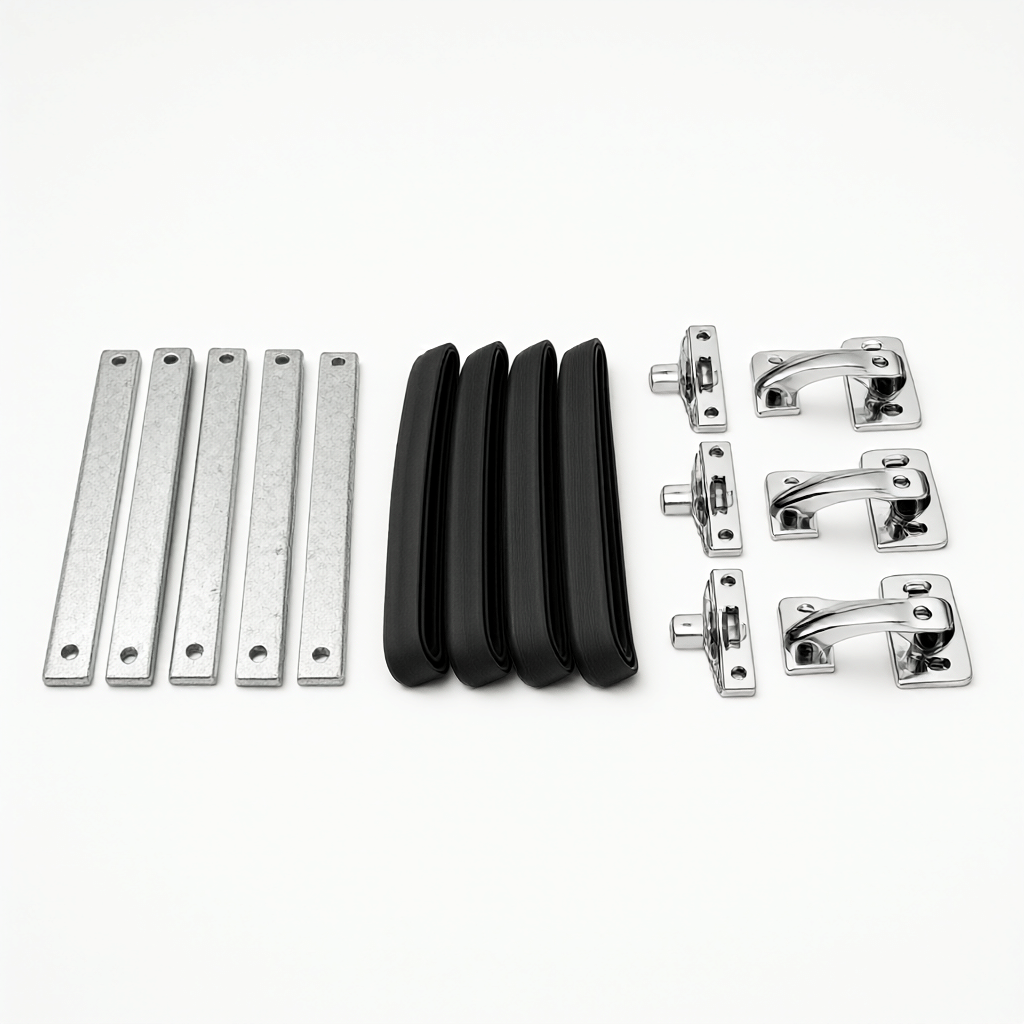
- Hardware selections — handles, hinges, locks, and closers sourced from established European brands or equivalent-grade alternatives, chosen to match both aesthetic direction and security class.
- Surface finishes — powder coating, anodizing, or PVDF options; for detailed comparisons of coating longevity and suitability in humid coastal climates, refer to our analysis of powder coating versus anodizing and PVDF finishes for aluminum doors.
Customization adds engineering time before production begins. Expect a sample approval step that confirms color matching, hardware function, and seal integrity. Skipping this stage creates rework risk later.
Shipping method and lead time choices
Deciding between full container load and less-than-container load is rarely about price alone. An FCL shipment offers sealed container integrity, predictable transit duration, and simpler port handling. A mixed-consignment LCL arrangement reduces upfront commitment but introduces consolidation handling, potential delay at destination, and increased risk of surface damage if neighboring cargo shifts. Our comparison of FCL versus LCL for door and window procurement outlines how these trade-offs affect risk allocation and scheduling.
Lead times commonly range from six to ten weeks for customized orders, inclusive of raw-material procurement, fabrica-tion, finishing cure periods, testing, and packing. Rush production is possible but raises cost disproportionately; plan around it rather than relying on expedited turns for fixed project milestones.
Cost structures beyond the unit price
A quoted door price is only the starting point. A practical budget should account for:
- Ocean freight (volume-dependent; rates shift monthly)
- Insurance coverage during transit
- Import duty calculated on customs value plus freight
- VAT payable at importation
- Port handling and terminal fees in Lisbon, Leixões, or Setúbal
- Customs broker fees
- Third-party inspection costs if you commission independent verification
- Tooling or mold charges for non-standard dimensions or custom extrusions
- Replacement spare parts buffer for installation anomalies
Omitting any of these categories typically produces budget overruns during project execution.
How to protect yourself during procurement
Before committing to a bulk order, request a formal proforma invoice that itemizes product, accessories, packing details, incoterms, and payment schedule. Confirm that the supplier can issue a complete packing list, commercial invoice, certificate of origin, and any required inspection certificates. Clear paperwork prevents customs holds, which are costly in terms of demurrage and storage at Portuguese terminals.
Payment security remains essential. Letters of credit provide strongest buyer protection for large orders, while milestone-based Telegraphic Transfer structures suit repeat partnerships. Avoid manufacturers that insist on full upfront payment without escrow or third-party quality checkpoints.
Partnering with a manufacturer aligned to these standards
Understanding the sourcing framework clarifies what to look for in a supplier. As a manufacturer, our approach reflects those same expectations — we align our production workflow to the compliance and documentation standards that Portuguese and EU projects require. Our profile structures can be adapted to match local building code classifications, and we run scheduled air-tightness, water-tightness, and wind resistance tests before releasing containers. Every shipment is accompanied by a packing list, proforma invoice, and full customs documentation package. We support both FCL and LCL shipments directly from our factory and coordinate with experienced freight partners familiar with Iberian port operations. When projects involve distinct aesthetic or performance demands — whether for a luxury villa, hotel grouping, or apartment complex — we adjust sizes, colors, glazing layers, and fittings during the quotation stage so the delivered system matches the specified drawdowns. If you want to explore how this process fits a current project, you can reach us through our contact page.
How to read door specifications — material grades, tolerances, and glass configurations
When evaluating a quotation from a Chinese supplier, the headline price tells you almost nothing without context on material grade, dimensional tolerance, and glazing build-up. Several industry-standard parameters separate a compliant export-grade door from one that will fail during site installation or commissioning.
Profile structure
- Thermal-break aluminium doors typically use AA6063-T5 or AA6063-T6 extruded profiles, conforming to EN 12020-2. Wall thickness for exterior entrance systems should be minimum 1.4 mm; structural load-bearing frames often specify 2.0 mm or above.
- Profile width families commonly range from 65 mm to 100 mm depending on performance class. A wider multi-chamber design improves both thermal insulation and structural rigidity.
- Dimensional tolerance for frame squareness is typically ±1.5 mm per meter; hinge and lock bore locations should hold ±1 mm to ensure hardware fit without field modification.
Glass configuration
- Standard exterior doors for the Portuguese climate use 24 mm double-glazed IGUs with argon fill and Low-E coating, achieving U-values around 1.4 W/m²K. Triple glazing may be specified for passive-house-level projects.
- Safety glass requirements align with EN 12600 impact classification; laminated or tempered options should be confirmed per local building code.
- Acoustic-rated glazing assemblies can reach Rw values of 42 dB or higher when paired with appropriate gasket compression.
Hardware and finishes
- Handle sets, hinges, and locks sourced from European-compatible supply chains (e.g., ROTO, GU, or SIMONSWIN equivalent grades) allow compliance with EN 1906 and EN 1670 security classes.
- Surface treatments include powder coating (AZO salt-spray ≥ 1000 h), anodizing, and PVDF fluoro-resin coatings; coastal installations benefit from PVDF or marine-grade powder systems rated to EN 12204-2.
- Solid wood doors specify species (e.g., oak, ash, meranti) with target moisture content of 8–12 % for European interiors.
These specifications form the basis for any meaningful comparison between suppliers and should be requested explicitly during the quotation phase.
Shipping, customs, and lead-time planning for Portugal deliveries
Logistics from Chinese door factories to Portuguese construction sites follows well-established maritime routes, but the gap between FOB price and delivered cost requires careful calculation.
Typical shipping routes and transit time
- Primary origin ports: Ningbo, Shanghai, Guangzhou/Shenzhen, and Qingdao.
- Destination ports: Lisbon (Sines is also used for larger cargoes), Leixões (Porto), and Setúbal.
- FCL transit time averages 30–40 days depending on loading port, transshipment hubs, and destination port congestion.
- LCL consolidation adds approximately 5–10 additional days due to cargo grouping and de-consolidation at the destination warehouse.
Cost comparison: FCL versus LCL
| Factor | FCL | LCL |
|---|---|---|
| Minimum commitment | 1 × 20 ft or 40 ft container | Per cubic meter (CBM) |
| Estimated ocean freight* | USD 1,200–2,500 / 20 ft; USD 2,200–4,500 / 40 ft | USD 80–150 per CBM |
| Transit predictability | High — sealed container | Moderate — shared space, potential delays |
| Risk of damage | Lower | Higher if adjacent cargo shifts |
| Customs clearance | Straightforward (one BL per container) | More complex (multiple shippers in one consignment) |
\*Freight rates fluctuate monthly; obtain current quotes from your freight forwarder.
Required export documentation
Every shipment should arrive with a documented package that includes:
- Commercial invoice (HS-coded, FOB/CIF value stated)
- Packing list with net weight, gross weight, dimensions, and piece count per box
- Bill of lading (FCL) or consolidated house bill of lading (LCL)
- Certificate of origin (EUR.1 or simple declaration, depending on preferential tariff eligibility)
- CE Declaration of Performance (DOP) for each product variant
- Test reports referencing ETAG 034 test protocols issued by an accredited laboratory
- Any additional inspection certificates requested by the buyer or Portuguese authorities
Incomplete paperwork is one of the most common causes of demurrage charges at Portuguese terminals. Confirm the document set before production begins.
For background on HS-code classification and applicable import-duty bands, review our procurement overview on door HS codes and import duties.
Total landed-cost breakdown — beyond the unit price
A realistic project budget for imported doors must account for every cost layer between the factory gate and the Portuguese job site. The following framework applies to a typical mid-size villa or hotel procurement.
Illustrative cost model — 20 ft container, mixed aluminium entry doors
| Cost component | Approximate range (USD) | Notes |
|---|---|---|
| Unit price (FOB ex-factory) | USD 8,000–18,000 | Depends on spec, quantity, glass, hardware |
| Ocean freight (FCL) | USD 1,200–2,500 | Rate varies monthly |
| Insurance (cargo) | USD 150–400 | Typically 0.3–0.5 % of insured value |
| Import duty (EU TARIC) | ~USD 0–600 | Varies by HS subclass; many door headings carry low or zero duty |
| Portuguese VAT (23 %) | Calculated on customs value + freight + duty | Recoverable for registered businesses; cash-flow impact at import |
| Port handling & terminal fees (Lisbon/Leixões) | USD 300–800 | THC, documentation, container handling |
| Customs broker fee | USD 200–500 | Includes DOP and origin-document verification |
| Third-party inspection | USD 400–1,200 | Pre-shipment inspection at origin factory |
| Inland transport (port to site) | Variable | Depends on project location in Portugal |
| Tooling / mold charges (if applicable) | USD 500–3,000+ | One-time charge for custom profiles or sizes |
Case illustration — Cascais villa development
A two-villa residential project near Lisbon ordered 48 exterior aluminium entrance doors (custom thermal-break profiles, 24 mm Low-E triple glazing, PVDF dark-anthracite finish, European security-class handles) from a Chinese manufacturer. Key figures from the completed order:
- FOB unit price: USD 312 per door × 48 = USD 14,976
- 1 × 40 ft HQ container filled at ~85 % cube utilization
- Ocean freight (Ningbo → Sines): USD 3,200
- Cargo insurance: USD 380
- EU import duty: USD 0 (most favourable HS subheading applied)
- Portuguese VAT at import (23 % on customs value): recoverable but impacted short-term cash flow
- Port and customs-clearance fees at Sines: USD 620
- Third-party pre-shipment inspection (air-tightness Class 4, water-tightness Class 9A, wind-load Class E1000 confirmed): USD 950
- Tooling for non-standard leaf width (1100 mm): USD 1,200 (amortized across single project)
Total landed cost: approximately USD 1,131 per door inclusive of all logistics and documentation, excluding inland transport and installation labour. Without the pre-shipment inspection, the buyer would have assumed hidden defect risk worth potentially 3–5 % of order value in rework.
This example demonstrates why unit-price comparison alone is misleading; the landed-cost perspective reveals where value — or hidden cost — actually sits.
Supplier-vetting steps and factory-audit criteria
Before placing a bulk order, follow a structured evaluation sequence. Skipping verification steps is the most frequent cause of post-delivery disputes.
Step-by-step vetting
- Request the supplier’s business license, export registration, and any quality-management certification (ISO 9001). Verify certificate validity through the issuing body’s public register.
- Ask for recent test reports (issued within the last 12 months) for the exact product line you intend to order. Cross-check measured values against the declared performance class.
- Review previous export records to EU markets — a valid track record reduces compliance risk significantly.
- Commission a third-party factory audit or conduct a video walkthrough covering: extrusion/production line layout, assembly stations, sealing and glazing areas, curing/powder-coat booth, and finished-goods storage.
- Confirm pre-shipment inspection protocol — air-tightness, water-tightness, and wind-resistance test frequency per production batch.
- Clarify payment terms: milestone-based T/T (typically 30 % deposit, 70 % before shipment) or letter of credit for large orders. Avoid 100 % upfront transfers.
Factory-audit checklist — key items to verify on-site
- [ ] Aluminium extrusion stock meets AA6063-T5/T6 specification; mill certificates available
- [ ] Thermal-break strips are PA66GF25 (nylon 6.6 with 25 % glass fibre); PVC strips are unacceptable for structural thermal breaks
- [ ] Gasket and seal material is TPV or EPDM; compression-set resistance verified
- [ ] Weld/joint integrity for corner connections; mechanical fastening or warm-angle welding procedures documented
- [ ] Glass IGU spacer and desiccant meet EN 1279; argon-fill retention test records
- [ ] Powder-coat curing oven temperature logs maintained; AZO salt-spray test files on request
- [ ] Hardware mounting points machined to ±1 mm tolerance per drawing
- [ ] Finished-goods packaging uses waterproof wrapping plus corner protection suitable for sea freight
- [ ] Quality-control staff operate calibrated pressure-test chambers for routine batch sampling
- [ ] Warehouse organized with FIFO stock rotation and clear quarantine zone for non-conforming goods
For a downloadable question template designed for door-supplier evaluations, see our door factory audit checklist.
Sources & References
- ETAG 034 — www.astm.org
- EI30 vs EI60 vs EI90 fire rating differences — doorwoodendoors.com
- 20ft container door loading quantity and configuration — doorwoodendoors.com
- the door HS code and import duty framework — doorwoodendoors.com
- door factory audit checklist for B2B procurement evaluation — doorwoodendoors.com
- powder coating versus anodizing and PVDF finishes for aluminum doors — doorwoodendoors.com
- FCL versus LCL for door and window procurement — doorwoodendoors.com











