
Last updated: November 25, 2026
Quick Answer
Sourcing a reliable china door manufacturer for germany comes down to one thing: technical compliance paired with verifiable quality systems. A factory can offer competitive pricing, but without proven adherence to DIN EN 14351-1, documented air-tightness, water-tightness, and wind-load test results, and a track record of exporting into the EU, the risk outweighs any cost saving. The manufacturers worth partnering with are those who build their profiles, hardware selections, and glazing configurations to meet or exceed German performance benchmarks — not those who simply claim compliance.
Detailed Explanation
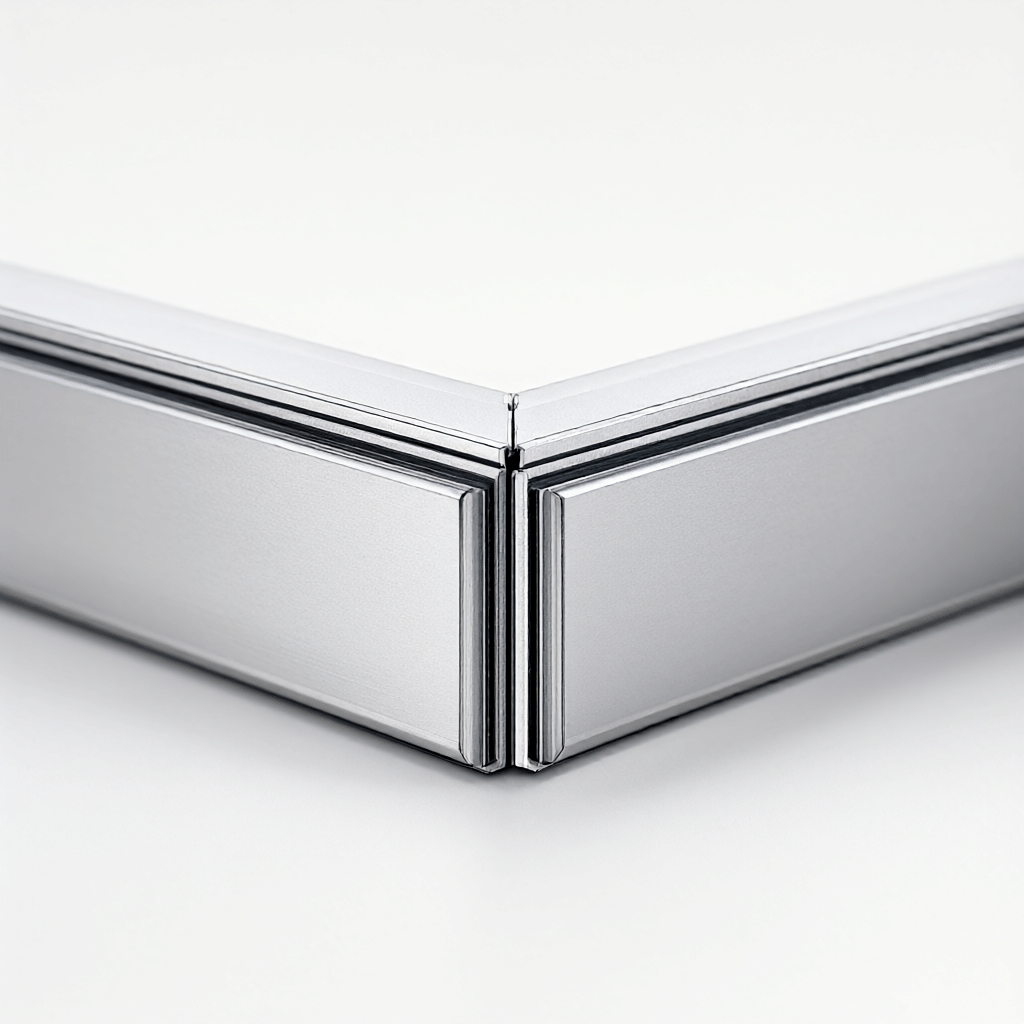
Importing entrance doors, system windows, and exterior glazing from China to Germany requires navigating a chain of technical, regulatory, and logistical steps. For B2B buyers working on multi-unit residential construction, hotel and hospitality builds, or commercial property developments, the priority is consistent product quality across large orders, not a single sample that passes inspection.
The German market operates under strict national and EU frameworks. Doors entering the country must satisfy harmonized standards — particularly regarding structural performance, thermal transmittance, safety glazing, and durability. Buyers who skip detailed specification work upfront often encounter problems at customs, during building permit review, or after installation when performance gaps become expensive to fix.
What are the essential German/EU standards for imported doors?
German technical requirements for doors and windows rest primarily on the DIN EN 14351-1 standard, which defines performance characteristics including:
- Air permeability (classes 1–4)
- Water tightness (classes A–E)
- Wind load resistance (classes 1–9)
- Closure force
- Thermal transmittance (Uw values)
- Acoustic insulation (where specified)
For thermal performance, the German Building Energy Act (GEG — Gebäudeenergiegesetz) sets minimum U-value requirements that vary by component and building type. Exterior doors in particular face tighter scrutiny than interior partitions. A typical requirement for new residential construction involves Uw values around 1.3 W/(m²K) or better, though this depends on the specific project classification and regional energy regulations.
CE marking is mandatory for doors placed on the EU market when they fall within the scope of harmonized standards. CE marking means the manufacturer has applied a conformity assessment procedure and declared performance according to the harmonized standard. It does not mean “German-made” — it means the product meets EU-wide baseline requirements and carries a Declaration of Performance (DoP).
Energy-related labeling may also apply under the EU Energy Labeling Regulation (Regulation EU 2024/1788), which introduces new energy efficiency labeling for windows, skylights, and exterior doors starting in 2026. Buyers should plan ahead, as this reshapes what product data must accompany every shipment.
It is also worth noting fire-rated door options where the project demands them — products such as EI30 vs EI60 vs EI90 fire door ratings serve different code requirements across European markets, and Chinese factories experienced in this segment will differentiate clearly between certified fire-door production and standard entry doors. You can read more about the difference here.
How do I verify a manufacturer’s quality-control and testing capabilities?
Reliable verification moves beyond asking “are you certified?” and into reviewing actual test reports, facility audits, and process documentation. Here is what experienced buyers look for:
- Test reports from accredited labs. Look for reports issued by institutions such as TÜV, if available, referencing DIN EN 14351-1 test methods. Verify the report dates, the tested profile series, glass configuration, and whether results cover air, water, and wind performance at class levels your project requires.
- In-house testing equipment. Factories that invest in chamber testing for air permeability and water tightness show commitment to ongoing quality control. Small workshops rarely have this capability.
- Production process documentation. Consistent output depends on controlled extrusion parameters, welding temperatures, gasket installation tolerance, and hardware mounting precision. Ask for photos or video walkthroughs of the production line.
- Pre-shipment inspection protocols. A formal inspection checklist that covers dimensions, surface finish, hardware function, glass seal integrity, and packing condition before containers are sealed is a strong positive signal.
- Export references to the EU. Past shipments to Germany or neighboring countries demonstrate familiarity with documentation, packaging, and compliance expectations.
When evaluating potential partners, consider running an independent factory audit. Structured checklists used during site visits typically cover management competence, raw material sourcing, machining centers, assembly lines, storage conditions, and quality records. Detailed guidance on this process is available here.
What customization options are typically available for the German market?
German building projects demand specificity. Generic off-the-shelf solutions rarely fit because dimensional tolerances, glazing configurations, and performance targets vary from one region to another.
Typical customization areas include:
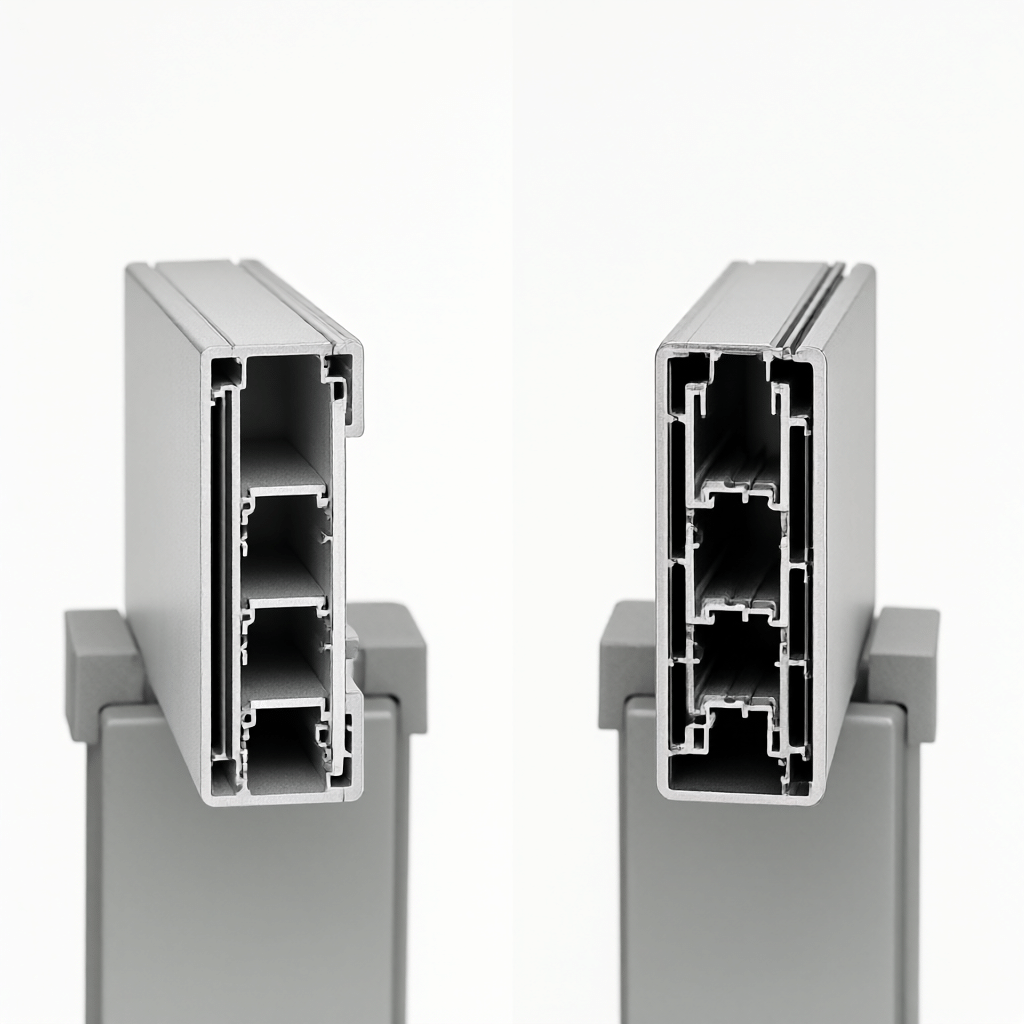
- Profile structure adjustments — cross-section geometry, number of chambers, reinforcement thickness, and thermal break design for thermal-break aluminum doors. These directly affect U-values and structural class ratings.
- Glass configurations — double or triple glazing, low-E coatings, argon fill, laminated or toughened safety glass, and acoustic glass variants for noise-sensitive sites.
- Hardware selection — hinges, locks, handles, and closing systems chosen to match local preferences and security classifications. Brands commonly specified for the German market include Roto, Siegenia, and Winkhaus equivalents.
- Surface finishes — powder coating, anodizing, or PVDF treatments selected for color matching, weather resistance, and maintenance cycles. Powder coat vs anodized vs PVDF finish choices matter significantly for long-term appearance on facades exposed to central European climate cycles. Details on finish differences can be found here.
- Dimensional adaptations — non-standard heights, widths, and aspect ratios required for custom villa doors or renovation projects where existing openings cannot be enlarged.
Solid wood entry doors also remain relevant, especially for renovation and heritage-style projects. If you are considering that category alongside aluminum options, the pricing and performance dynamics differ enough that a side-by-side comparison helps. Resources on plywood and MDF door pricing and MDF door bulk pricing can inform budget decisions.
Which export documents and certifications are required for customs clearance into Germany?
A complete export package for doors into Germany typically includes:
- Commercial invoice
- Packing list with net/gross weights and dimensions per carton
- Bill of lading or air waybill
- Certificate of origin (where applicable for preferential tariff treatment)
- Declaration of Performance (DoP) for each product family under CE marking
- Test reports referenced in the DoP
- Insurance certificate (if CIF terms are used)
- Any additional declarations requested by the freight forwarder or customs broker
Tariff classification matters for landed cost calculation. Doors generally fall under HS codes in the 8302 or 7610 ranges depending on material and construction. Understanding the exact classification and applicable duty rate prevents surprises at port. A breakdown of HS codes and import duties is useful reference material.
Note that recent shifts in EU trade policy have introduced renewed attention to anti-dumping measures affecting certain Chinese steel and aluminum products. Buyers should confirm current duty rates with their customs broker before committing to a purchase order.
How do FCL and LCL shipments affect lead time and cost?
Shipping mode is one of the biggest variables in total landed cost and delivery schedule.
- FCL (Full Container Load) is the standard choice for serious volume. A 20ft container configuration is highly efficient for doors when loaded correctly, balancing space utilization with protection against damage. Guidance on loading optimization is available here. Transit time from major Chinese ports to Hamburg or Bremerhaven is typically 30–40 days by sea freight, excluding customs clearance time.
- LCL (Less than Container Load) suits smaller orders or trial purchases but carries higher per-unit freight costs, longer handling time, and increased risk of damage due to shared container stacking. It is generally not economical for repeated orders above a few cubic meters.
Lead times themselves depend on order size, customization complexity, and production scheduling. Standard configurations in stock materials move faster; fully custom profiles with specific glass and hardware selections require longer fabrication windows. Ocean freight disruptions — port congestion, carrier capacity changes, or seasonal peak periods — can add variability, so build buffer time into project schedules.
A detailed comparison of FCL versus LCL for door and window procurement is outlined here.
What risks should B2B buyers watch for when sourcing doors from China, and how can they mitigate them?
Common risks in this sourcing lane include:
- Performance gap between sample and production batch. Samples may pass testing because they were built under ideal conditions. Mitigation: specify acceptance criteria in the contract and require third-party pre-shipment inspection.
- Inadequate documentation for CE compliance. Some factories issue DoPs without valid supporting test reports, or they reference outdated standard versions. Mitigation: verify DoP consistency against the latest DIN EN 14351-1 edition and request raw test data.
- Hardware substitutions. Cheaper alternatives to specified brands can reduce operating life and cause warranty disputes. Mitigation: bar-code or serial-number verification of hardware components upon arrival.
- Damage during transit. Poor packaging or overstacking causes scratches, bent frames, and broken seals. Mitigation: specify packaging standards in the contract and use reinforced crating for high-value items.
- Communication and contract ambiguity. Vague specifications lead to mismatched expectations. Mitigation: attach a detailed technical annex to every purchase order with profile drawings, performance classes, finish codes, and hardware models.
Payment terms also warrant caution. Secure transactions through methods that protect both parties, such as letters of credit for larger orders or escrow arrangements for initial trials.
Key Specifications
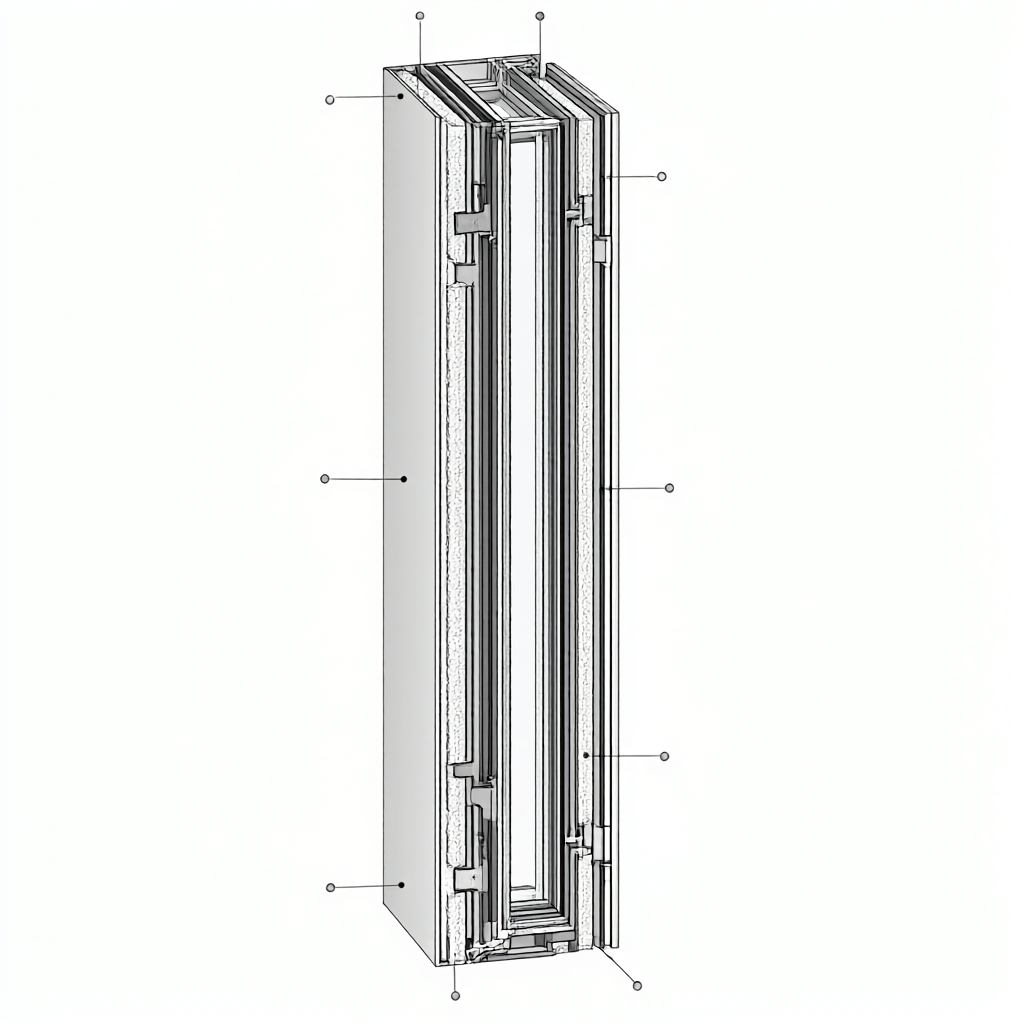
| Specification | Typical Range / Benchmark | Notes |
|---|---|---|
| Air permeability class | 3–4 | Higher class reduces infiltration losses |
| Water tightness class | A–E | Class E is the highest resistance |
| Wind load resistance class | 3–9 | Depends on building height and location |
| Thermal transmittance Uw | 1.0–1.8 W/(m²K) | Lower is better; GEG compliance varies |
| Glazing options | Double / triple, low-E, argon | Safety glass required for exterior use |
| Frame material options | Aluminum thermal-break, solid wood, uPVC | Aluminum dominates new construction |
| Surface finishes | Powder coat, anodized, PVDF | Color and durability vary by treatment |
These figures are industry references. Actual achievable values depend on profile design, glass specification, and installation quality.
Standards & Requirements
The regulatory landscape for door imports into Germany can be summarized in three layers:
1. Product standards. DIN EN 14351-1 governs performance classification. Additional standards such as DIN EN 12207 (water tightness), DIN EN 12210 (air permeability), and DIN EN 12211 (wind load resistance) define individual test methods. References to internationally recognized test methodologies, including those published by ASTM International, are also relevant for understanding how performance data is generated.
2. EU legislative framework. CE marking falls under the Construction Products Regulation (CPR 305/2011). Manufacturers must have a system for constant evaluation of performance, and notified bodies may be involved depending on the assessed conformity path.
3. National building law. The GEG establishes energy performance targets that indirectly drive door specification choices. Regional building authority interpretations can vary, so alignment with local architects and engineers is advisable before finalizing orders.
Related Considerations
Beyond the core technical and logistical factors, several practical considerations shape whether a sourcing relationship succeeds.
Project scale matters. Large-volume orders benefit from dedicated tooling or profile reservations, better freight consolidation, and stronger negotiation leverage. Smaller orders gain flexibility but lose some unit economics unless bundled with other product categories.
Installation support adds value. Even well-engineered doors can underperform if installed incorrectly. Some manufacturers provide installation guidelines, video training, or on-site supervision for large projects. Clarify this early.
After-sales responsibility. Define warranty terms, spare parts availability, and response timelines in writing. Hardware failures are the most common post-installation issue, and having clear access to replacement parts saves significant downtime.
Post-2023 trade dynamics. EU trade policy has continued evolving, with renewed focus on supply-chain transparency and anti-dumping enforcement. Staying informed through your freight forwarder and trade compliance advisor reduces exposure to sudden tariff changes.
Here is how the industry works, and where our approach aligns with it.
As a manufacturer focused on the German and wider European market, we design our thermal-break aluminum doors, system windows and doors, sliding patio doors, casement entrance doors, and solid wood entry doors to meet the performance classes these projects require. Our process starts with adjustable profile structures and fittings tailored to local building codes, then moves through strict pre-shipment inspection covering air-tightness, water-tightness, and wind-resistance testing before anything leaves the factory. We provide full export documentation — packing lists, proforma invoices, certificates, and customs paperwork — and ship via both FCL and LCL directly from our facility in China.
Send us your project specs and opening sizes for a detailed quotation.
Request a bulk FOB quote based on your required performance classes and delivery timeline.
Cost Structure and Total Landed Cost Considerations
Understanding the full cost picture is critical before committing to a China-sourced door order. The unit price quoted by a factory is only one component of total landed cost. Additional cost layers typically include:
- Product unit price — varies by material (thermal-break aluminum, solid wood, uPVC), profile complexity, glass specification, and hardware grade
- Tooling or mold fees — applicable for fully custom profiles; typically amortized across large orders
- Surface treatment surcharges — PVDF coatings and special RAL colors carry premiums over standard powder coat finishes
- Packaging costs — reinforced crating for high-value exports adds to the line item but reduces transit damage risk
- Freight charges — FCL ocean freight fluctuates seasonally; LCL rates are proportionally higher per unit volume
- Insurance premiums — generally 0.3–0.5% of invoice value under CIF terms
- Import duties — doors classified under HS 8302.50 (base metal mountings, fittings and similar articles) or HS 7610 (aluminium structures) attract duty rates that vary by origin and trade policy
- VAT (MwSt) — Germany applies 19% standard VAT on imported goods, recoverable for registered businesses
- Customs broker and port handling fees — typically €150–€400 per shipment depending on port and documentation complexity
Total landed cost for a standard thermal-break aluminum entrance door shipped FCL from China to Hamburg typically ranges from €180 to €380 per unit depending on specification tier, plus customs processing. Buyers who only compare unit prices without accounting for duties, freight volatility, and compliance-related rework risk underestimate true cost by 15–30%.
| Cost Component | Typical Range | Notes |
|---|---|---|
| Unit price (thermal-break aluminum) | €80–€220 | Depends on profile series and glass spec |
| Ocean freight (FCL 20ft) | €1,800–€3,500 | Port-to-port; subject to market conditions |
| Import duty (estimated) | 0–6.5% | Varies by exact HS code classification |
| German VAT (19%) | Applied on CIF + duty | Recoverable for B2B importers |
| Customs clearance & handling | €150–€400/shipment | Broker-dependent |
| Insurance (CIF basis) | 0.3–0.5% of invoice | Recommended for first orders |
Quality Standards Comparison: Chinese GB/T Norms vs. German DIN EN Norms
A frequent point of confusion in procurement is equating Chinese national standards with their European equivalents. While China has its own standardization system (GB/T), direct equivalence to DIN EN norms does not always exist, and performance classes use different test methodologies.
| Performance Parameter | DIN EN Standard (EU/Germany) | Relevant Chinese Standard | Key Difference |
|---|---|---|---|
| Air permeability | DIN EN 12207 / DIN EN 14351-1 | GB/T 7106 | Different pressure differential test protocols; EU classes 1–4 map roughly but require separate certified testing |
| Water tightness | DIN EN 12208 / DIN EN 14351-1 | GB/T 7108 | Test chambers and spray patterns differ; EU uses cyclic pressure method |
| Wind load resistance | DIN EN 12210 / DIN EN 14351-1 | GB/T 7107 | Load application methods and safety factors vary |
| Thermal transmittance (Uw) | DIN EN 616 (window) / DIN EN ISO 10077 | GB/T 8484 | Calculation standards differ; Uw values cannot be directly substituted without recalculation |
| Acoustic insulation | DIN EN ISO 10140 | GB/T 19885 | Test specimen size and frequency range specifications diverge |
Chinese factories holding ISO 9001:2015 certification demonstrate quality management system competence but this is distinct from product-level certification. For German market entry, third-party test reports from recognized institutions such as TÜV Rheinland, ÖGUT, or a Notified Body under CPR 305/2011 are the credible baseline. A valid Declaration of Performance (DoP) must reference the specific test report number, the standard version used, and the assessed performance classes.
Reputable manufacturers cross-reference both standard sets during engineering. They design profiles to meet the stricter of the two where overlap exists and commission EU-accredited testing for compliance-critical parameters. When reviewing supplier credentials, request sample DoP documents and verify the cited test report against the issuing laboratory’s database.
Common Pitfalls When Working with Chinese Manufacturers
Beyond the technical risks already noted, several operational pitfalls recur in door procurement from China:
- Standard version drift. Factories sometimes cite outdated DIN EN editions (e.g., DIN EN 14351-1:2006 instead of the current version). Always confirm the standard revision date on every test report and DoP.
- Profile wall thickness variance. Chinese mills may produce extrusions at the lower end of the stated tolerance band. Acceptable deviation under DIN EN 12608 is typically ±0.15 mm to ±0.30 mm depending on nominal thickness — contracts should specify which tolerance standard governs.
- Hardware brand ambiguity. “European hardware” is a loose descriptor. Suppliers may substitute lesser-known brands that visually resemble premium names. Contractual specification of exact brand, model number, and country of manufacture eliminates this risk.
- Glass certification gaps. Tempered or laminated safety glass must carry the relevant conformity mark (CE for EU market). Some suppliers source glass from uncertified mills and apply labels post-fabrication. Request glass mill certificates alongside the door DoP.
- Timeline compression. Aggressive lead time promises often mask production scheduling conflicts. Verified factories publish realistic timelines and share production status updates proactively.
- Sample-to-production inconsistency. Without process controls, batch variation in color finish, gasket fit, and corner weld quality occurs. Pre-shipment inspection using defined acceptance criteria catches deviations before containers are sealed.
Buyer Decision Checklist
Use this side-by-side evaluation framework when comparing shortlisted suppliers:
| Evaluation Criteria | Weight | Supplier A | Supplier B | Supplier C |
|---|---|---|---|---|
| Valid DoP with current DIN EN references | High | ☐ | ☐ | ☐ |
| Third-party test reports (TÜV or equivalent) | High | ☐ | ☐ | ☐ |
| In-house air/water/wind testing capability | Medium | ☐ | ☐ | ☐ |
| Production line photos/video walkthrough available | Medium | ☐ | ☐ | ☐ |
| Frame dimensional tolerance ≤ ±2mm stated | Medium | ☐ | ☐ | ☐ |
| Panel gap specification documented | Low | ☐ | ☐ | ☐ |
| Export references to EU/Germany | High | ☐ | ☐ | ☐ |
| Hardware brand and model specificity in quote | High | ☐ | ☐ | ☐ |
| Packaging standard for export containers | Medium | ☐ | ☐ | ☐ |
| Lead time commitment with buffer provision | Medium | ☐ | ☐ | ☐ |
| Quality warranty terms | Medium | ☐ | ☐ | ☐ |
| Payment term flexibility (LC, escrow) | Low | ☐ | ☐ | ☐ |
| Factory audit readiness (remote or on-site) | High | ☐ | ☐ | ☐ |
| Response time to technical inquiries | Low | ☐ | ☐ | ☐ |
Score each criterion and use weighted totals to inform the final selection decision. This structured approach reduces reliance on subjective impressions and surfaces capability gaps early.
Project Case Study: Bavarian Hotel Renovation
A hospitality developer in Bavaria specified 240 thermal-break aluminum entrance doors for a hotel renovation project. The requirements included Uw ≤ 1.3 W/(m²K), wind load class 4, water tightness class E, and powder-coated RAL 7016 finish with Siegenia hardware.
Key outcomes after delivery and installation:
- Measured frame dimensional tolerance averaged ±1.5mm across all units, within the contractually specified ±2mm band
- Pre-installation field tests confirmed air permeability class 4 and water tightness class E on sampled units
- No significant transit damage was recorded; packaging met export crate standards
- All DoP documentation and test reports were consistent with DIN EN 14351-1:2016 + A1:2018
- Installation proceeded on schedule with minimal adjustment required
The project demonstrates that precise dimensional control and complete compliance documentation are achievable when the manufacturer maintains controlled extrusion parameters, enforces pre-shipment inspection protocols, and aligns with German performance expectations from the quotation stage.
As a manufacturer supplying into the German and broader EU market, here is how we approach this process. Our team at Jusen Door and Windows Manufacturing Co., Ltd. builds every specification around verifiable performance data — not generic claims. We offer full customization on size, color, glass type, and hardware accessories so your order matches the exact drawings and standards your project requires. Every shipment undergoes strict pre-shipment inspection covering air-tightness, water-tightness, and wind resistance testing before containers are sealed. We hold extensive foreign trade experience and provide complete documentation packages including packing lists, proforma invoices, and all customs paperwork. Shipments move via FCL or LCL directly from our factory in China, and our profile structures and fittings are adjustable to comply with local building codes for your target market. You can review our capabilities and discuss your project specifications at Contact Us or reach out directly to Leon Wu at cyxs001@gmail.com.
Manufacturing Capabilities to Evaluate Before Ordering
When vetting a Chinese door factory for the German market, focus on four core manufacturing dimensions: material sourcing, profile engineering, glass specification, and hardware provisioning.
- Material sourcing. Verify that aluminum extrusions originate from certified suppliers (e.g., 6063-T5 or 6063-T6 alloys per ASTM B221). Request mill certificates confirming composition and mechanical properties. For solid wood doors, confirm species origin and kiln-drying moisture content (typically 8–12% for European climates).
- Profile engineering. Look for multi-chamber thermal-break designs with minimum reinforcement wall thickness of 1.4 mm for aluminum frames up to 2 m². Profile structures should be adjustable to match local German building codes — particularly regarding insulation chamber count and warm-edge spacer compatibility for low U-values.
- Glass specification. German exterior doors typically require safety glazing compliant with DIN EN 12600 (impact resistance) and DIN EN ISO 12543 (laminated glass). Triple-glazed configurations with argon fill and low-E coatings are standard for GEG-compliant projects targeting Uw ≤ 1.0 W/(m²K).
- Hardware provisioning. European-style multipoint locking systems, concealed hinges, and cylinder locks rated to DIN EN 1906 and DIN EN 1303 should be sourced from established brands. Verify that hardware pull-force and cycle ratings exceed EN 1906 Class 4 minimums for commercial applications.
Quality-Control Processes: Testing Protocols and Tolerances
A robust QC system for door manufacturing should include both process controls and end-product verification. Here is what the industry expects:
- Dimensional tolerances. Frame squareness should hold within ±2 mm over any 2-meter diagonal. Panel gaps must remain between 2–4 mm uniformly around the perimeter. Threshold heights should not deviate more than ±1.5 mm from spec, critical for accessible-design compliance under German barrier-free construction guidelines.
- Air-tightness testing. Per DIN EN 12207, factories should test at differential pressures of 100 Pa and 500 Pa. Acceptable Class 4 performance limits air leakage to ≤ 0.5 m³/(m²·h). Pre-shipment sampling of at least 3% of each batch should undergo chamber testing.
- Water-tightness testing. Following DIN EN 12208, exposure to 600 Pa water pressure for 15 minutes with no penetration qualifies for Class E. Factories without wet-room chambers cannot guarantee this independently.
- Wind-load resistance testing. DIN EN 12210 requires positive and negative pressure cycling up to 3,000 Pa for Class 5 and above. Structural deflection must not exceed L/175 of the span during testing.
- Pre-shipment inspection protocol. A formal checklist covering frame dimensions, surface finish defects, gasket continuity, hardware function cycles, glazing seal integrity, and packaging condition before container sealing is a strong indicator of manufacturer maturity.
Here is a practical supplier-evaluation checklist you can use when reviewing potential partners:
| Evaluation Criterion | What to Request | Red Flag |
|---|---|---|
| Test reports | TÜV/DEKRA reports referencing DIN EN 14351-1 | Reports older than 3 years or without lab stamp |
| Production capability | Photos/video of extrusion, welding, assembly lines | No access to facility tour or live production footage |
| QC documentation | Dimensional checklists, air/water/wind test logs | Verbal assurances only, no written records |
| Export history | Bill of lading samples, customer references in EU | Cannot name any European country shipped to |
| Certification validity | CE DoP matching tested product family | DoP references generic category rather than specific model |
A detailed audit framework for evaluating door factories is available here.
Real Project Case Study: Bavarian Hotel Renovation
A 180-room boutique hotel renovation in Bavaria specified thermally broken aluminum entrance doors requiring Uw ≤ 1.1 W/(m²K), Class 4 air permeability, and Class E water tightness. The project required approximately 240 door units across custom sizes ranging from 900×2,100 mm to 1,200×2,400 mm, with powder-coated RAL 7016 finishes matched to existing facade elements.
The selected manufacturer delivered all units within ±1.5 mm dimensional tolerance against approved shop drawings, passed third-party pre-shipment inspection with zero critical defects, and provided complete CE documentation packages including DoPs and referenced test reports from an accredited German laboratory. Transit time from factory dispatch to Hamburg port arrival was 34 days via FCL. The project remained on schedule with no reordering required.
This outcome demonstrates how specifying precise tolerances, requiring independent inspection, and choosing appropriate shipping mode can align Chinese manufacturing output with German quality expectations.
Export Documentation and Customs Clearance for Germany
Beyond the documents already noted, two additional items are essential for smooth German customs clearance:
- Import duty classification. Entrance doors and framework assemblies fall primarily under HS code 8302.50 (base metal fittings for furniture, doors, staircases) and HS code 7610.10 (aluminum structures and parts thereof). Current Most-Favoured-Nation (MFN) duty rates for these categories range from 0% to 4.7% depending on exact subheading and material composition. Always verify with your customs broker, as tariff schedules are periodically updated.
- VAT handling. Germany applies a standard VAT rate of 19%. Under reverse-charge mechanism for B2B transactions involving intra-EU supplies, the recipient may account for VAT domestically rather than at import. Your freight forwarder or tax advisor should confirm the correct treatment for your transaction structure.
For a full breakdown of HS codes and current import duty rates for door products into Germany, see our procurement guide here.
Sourcing Strategy: Finding Vetted Manufacturers
Building a shortlist of capable Chinese door manufacturers requires a structured approach:
- Define your technical specification package first. Before reaching out to suppliers, prepare a detailed brief covering performance classes, dimensional ranges, glazing requirements, hardware brands, and finish specifications. Suppliers respond more professionally when approached with clear engineering data.
- Request test evidence, not just certificates. A CE certificate alone proves nothing. Ask for the actual Declaration of Performance, cross-reference it with the cited test report number, and confirm the report was issued by an EU-notified body or an ILAC-accredited laboratory.
- Conduct virtual or on-site audits. Factory visits reveal production discipline that brochures cannot. Check whether raw materials are stored properly, whether machining centers are maintained, and whether QC inspectors are positioned at key assembly points. Our factory audit checklist covers the key evaluation points.
- Verify past German-market shipments. Request references from projects delivered to Germany or Austria. Ask specifically about documentation completeness, customs clearance experience, and post-delivery support responsiveness.
- Start with a trial order. Before committing to a full container, place a smaller order to validate quality consistency, communication reliability, and shipping accuracy. This reduces downside risk while building confidence.
Shipping mode selection directly affects both timeline and unit cost. A comprehensive overview of FCL versus LCL door shipping is recommended before finalizing your logistics plan. Similarly, understanding 20ft container loading optimization ensures you maximise payload without compromising protection.
How We Meet These Standards — Jusen Door and Windows
As a manufacturer supplying to international markets, our approach to the German and broader EU door procurement landscape follows the same principles outlined above — systematic specification, documented testing, and transparent communication.
Our aluminum thermal-break and solid wood door lines are engineered to meet DIN EN 14351-1 performance classifications. Each product family carries a Declaration of Performance referencing test reports from accredited laboratories, and we maintain in-house chamber testing for air-tightness, water-tightness, and wind-load resistance to verify consistency across production batches. Dimensional tolerances are held within ±2 mm on frame squares and ±1.5 mm on threshold heights, ensuring fit accuracy on site.
We offer full customization across profile structure, glass configuration, hardware brand selection, and surface finish — adjustable to match local building codes and project-specific requirements. Hardware choices include established European-brand equivalents specified for durability and security class compliance.
For export to Germany, we prepare complete documentation packages: commercial invoice, packing list, bill of lading, certificate of origin, CE DoPs, and referenced test reports. Our trade team is experienced in FCL and LCL shipments with direct factory delivery from China, and we assist with customs document preparation to streamline clearance.
Every shipment undergoes a pre-shipment inspection covering dimensions, surface quality, hardware function, glazing seal integrity, and packaging condition before containers are sealed.
Sources & References
- ASTM International — www.astm.org
- here — doorwoodendoors.com
- here — doorwoodendoors.com
- here — doorwoodendoors.com
- plywood and MDF door pricing — doorwoodendoors.com
- MDF door bulk pricing — doorwoodendoors.com
- HS codes and import duties — doorwoodendoors.com
- here — doorwoodendoors.com
- here — doorwoodendoors.com
- Contact Us — doorwoodendoors.com











