
Last updated: November 25, 2026
A single pine door — whether primed interior panel, painted solid-core, or custom villa entry unit — typically costs USD $28 to $120 per unit on an FOB China basis, with finger-jointed budget models at the lower end and thick solid-core customized doors reaching the upper band. Bulk orders above 100 units regularly deliver USD $4–$15 per-unit savings depending on specification, and landed project costs become predictable once size, construction type, finish, hardware, and shipping mode are locked in. This guide answers the most common procurement questions — from species grading and moisture-control standards to FOB price bands, MOQ expectations, and the specific factors that move unit cost up or down — so you can quote accurately before contacting suppliers.
Quick Overview
A single pine door — typically a smooth, primed or painted solid wood interior door constructed from finger-jointed or solid-core pine panels — runs approximately USD $25 to $120 per unit on an FOB China basis, depending on size, construction type, finish, and hardware. For contractors, developers, and distributors ordering bulk quantities, the per-unit cost drops meaningfully above 100+ units, and total project costs scale predictably once the specification matrix is locked down. This guide walks through the specs, applications, bulk-buying decision factors, and current price ranges so you can move from inquiry to purchase with confidence.
What Are the Key Specifications of Pine Doors?
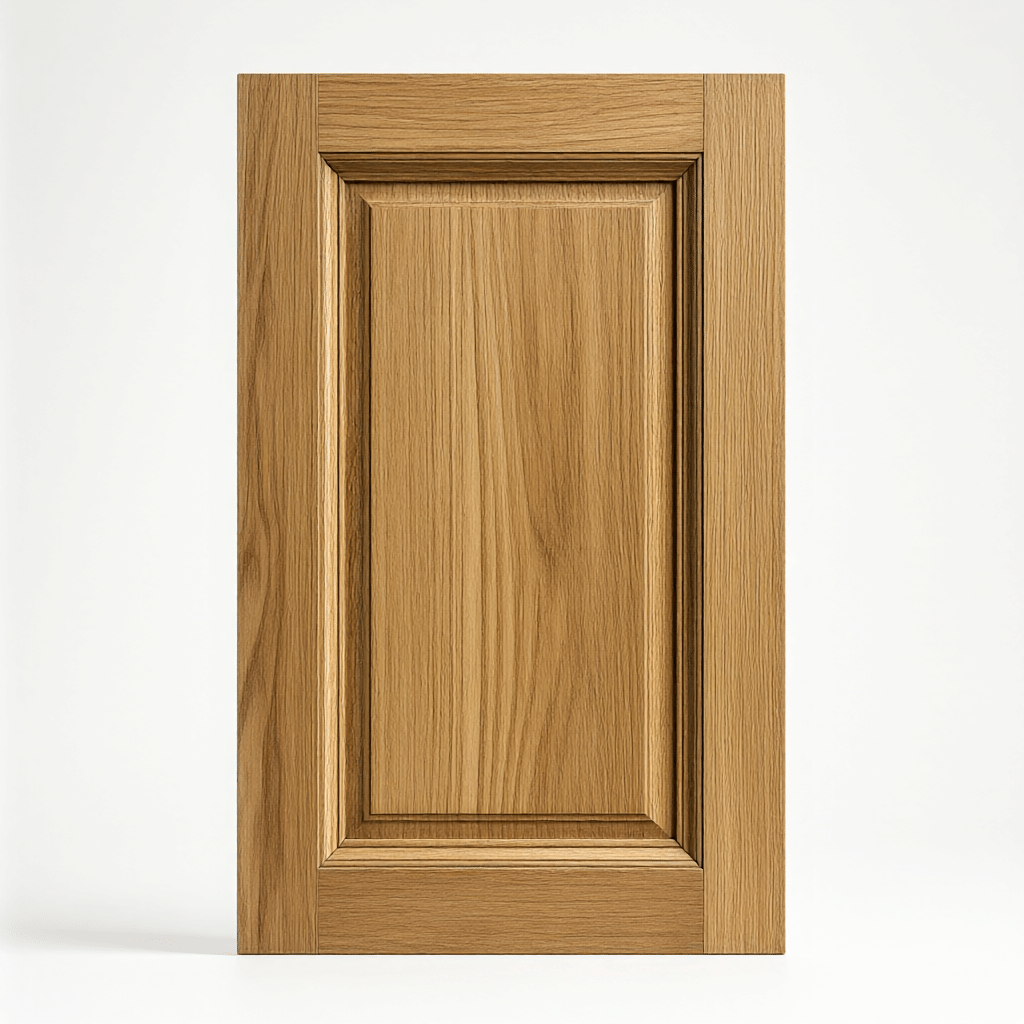
Understanding the specification options is the first step toward accurate cost estimation. Pine doors vary along several axes that directly affect both performance and price.
Dimensions and Thickness
Standard door sizes follow common architectural openings: heights of 80″, 82″, or 96″ and widths of 28″, 30″, 32″, or 36″. The thickness range spans 35mm to 45mm, with 35–40mm being most common for interior room doors and 45mm preferred for entrance or security-grade applications. Thicker profiles increase material cost but also improve sound insulation and perceived quality.
Materials and Construction Types
Pine doors generally fall into two construction categories:
| Specification | Solid-Core Pine Door | Finger-Jointed Panel Door |
|---|---|---|
| Core Material | Random-cut or matched solid pine lumber | Small pine blocks joined with adhesive |
| Dimensional Stability | Good, subject to natural wood movement | Excellent — reduced warping and cracking |
| Weight | Heavier (more material density) | Lighter, easier to hang |
| Typical Interior Use | Premium residential, hotel guest rooms | Budget-friendly interiors, apartments, rentals |
| Finish Compatibility | Accepts stain, paint, veneer well | Best suited for paint or primer-and-paint |
Both types use pine as the primary timber species. Finger-jointed panels are engineered for consistency; solid-core constructions feel more substantial and command a premium. For reference on how core materials influence broader product categories, see our solid wood closet doors guide.
Surface Finish Options
- Primed: Factory-applied primer, ready for on-site painting. Most common for residential and hotel projects.
- Painted: Finished with a base coat or topcoat directly from the factory. Available in RAL colors.
- Smooth / Unfinished: Raw pine surface requiring on-site sanding and finishing. Lower base cost but higher labor expense at destination.
Glass and Hardware Inclusions
Some pine doors come with glass inserts (clear, frosted, or decorative) or are supplied as prehung pine door assemblies that include the frame, hinges, and latch set. Adding glass raises unit price by USD $8–$25 depending on glazing type. Standard hinge and lock hardware selections also shift cost: basic zinc-alloy handlesets sit at the lower end, while stainless steel or branded European hardware adds significant per-unit value.
Where Can Pine Doors Be Used?
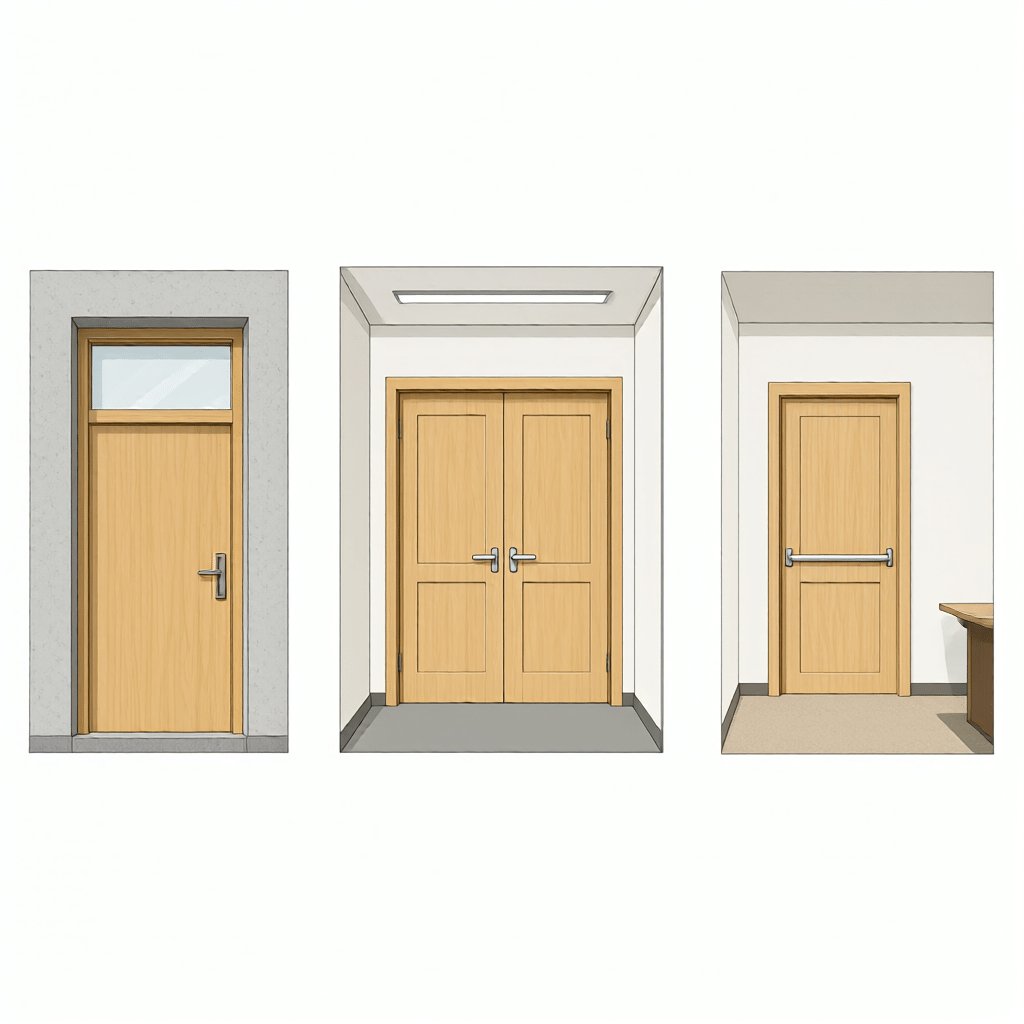
Pine doors serve a broad range of building applications. Their versatility comes from being lightweight enough for standard residential framing yet workable enough for semi-premium commercial interiors.
Residential interiors — Bedrooms, bathrooms, closets, and kitchen passages are the most common settings. A primed interior/exterior door style works equally well for bathroom installations when the finish is properly sealed against moisture.
Hotel and resort guest rooms — Bulk orders for hospitality projects frequently specify smooth pine doors with primed or painted finishes. These projects demand consistent appearance across dozens or hundreds of units, making engineered finger-jointed panels a cost-effective choice. For guidance on container loading for large door shipments, see our 20ft container door loading quantity guide.
Villa and luxury residential developments — Higher-end villa projects often call for thicker, solid-core pine doors with refined panel designs. Custom color matching and premium hardware elevate these orders beyond standard catalog offerings.
Multi-unit apartment projects — Contractors seeking uniform appearance across floors benefit from ordering standardized sizes in bulk pine door quantities. The predictable pricing model supports budget forecasting.
Commercial renovations — General contractors handling retrofit work typically choose prehung pine doors to reduce on-site framing adjustments and speed installation timelines.
What to Consider When Buying Pine Doors in Bulk?
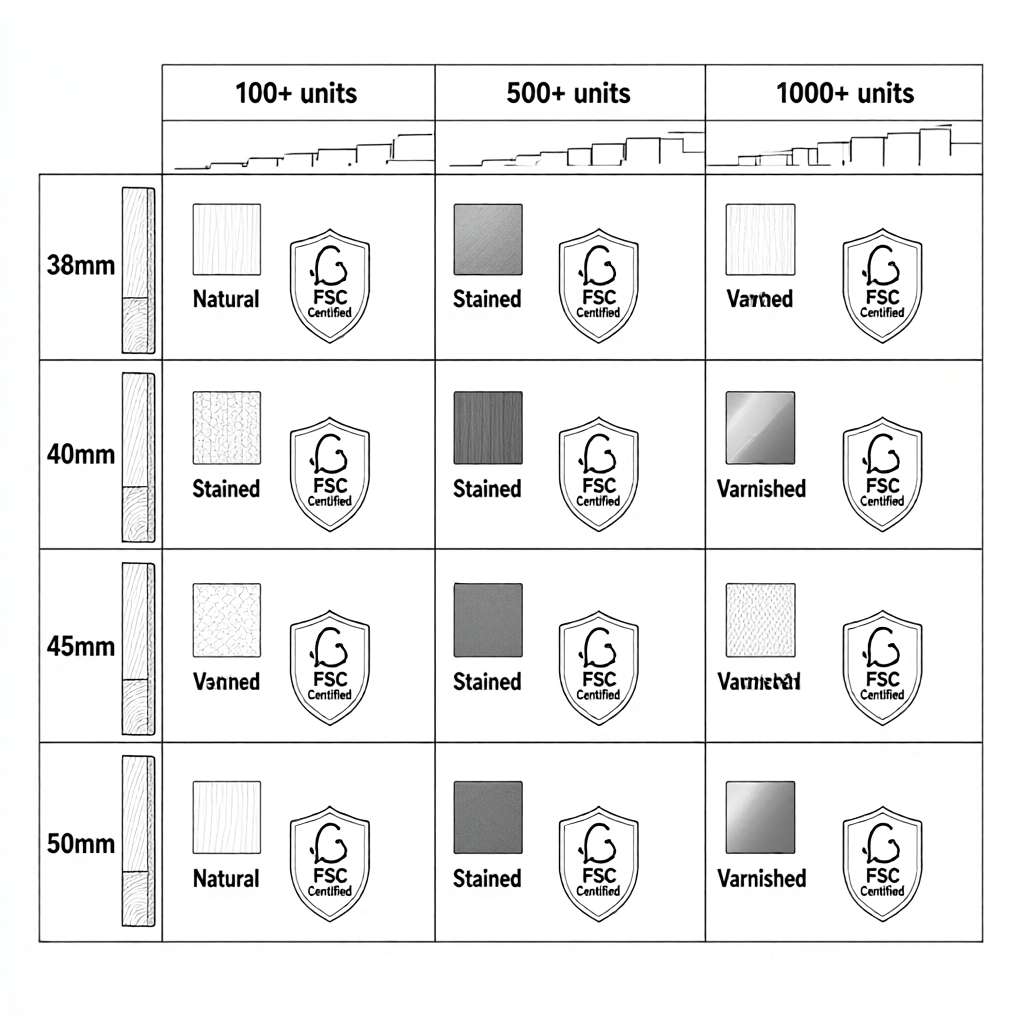
Bulk procurement decisions extend far beyond unit price. The following factors determine whether an order delivers value or hidden cost overruns.
Material Grade and Timber Source
Not all pine lumber is equivalent. Kiln-dried pine with controlled moisture content (typically 8–12%) resists post-installation warping far better than air-dried stock. Buyers should confirm drying protocols before committing.
Profile Structure and Code Compliance
Door profile depth, frame rebate design, and glazing grooves must align with local building codes. Different markets require different frame depths and sealing methods. A manufacturer that adjusts profile structures and fittings to match your target market’s regulations prevents costly rework after delivery.
Certification Requirements
Many projects — particularly in Europe and North America — require documented compliance with fire-resistance, acoustic, or structural standards. Understanding which certifications apply to your market helps narrow supplier selection. For context on how certification frameworks differ, see our comparison of EI30 vs EI60 vs EI90 fire ratings and refer to ASTM International standards for material testing methods.
Shipping Configuration and Logistics
Door shipments require careful packing to prevent surface damage. The choice between FCL (full container load) and LCL (less than container load) affects both per-unit landed cost and transit risk. Larger orders justify FCL shipments, while smaller project purchases may consolidate via LCL. Our guide on FCL vs LCL for door procurement breaks down the trade-offs.
Documentation and Trade Compliance
Import clearance requires a complete paper trail — packing list, proforma invoice, Bill of Lading, and any country-specific certificates. Manufacturers experienced in foreign trade streamline this process. Familiarize yourself with the applicable HS code and import duty brackets for your region before signing contracts.
Quality Inspection Before Shipment
Pre-shipment verification protects buyers from receiving substandard goods. Air-tightness, water-tightness, and wind-resistance testing are among the checks that separate reputable factories from casual operators. Requesting a sample inspection report before mass production begins establishes accountability early in the relationship.
How Much Do Bulk Pine Doors Cost? (FOB China)
Unit pricing for pine doors varies significantly based on specification choices and order volume. The table below presents indicative FOB China wholesale pricing for trade buyers.
| Product Type | Size Range | Quantity Tier | FOB China Price (USD/unit) |
|---|---|---|---|
| Smooth primed interior pine door, 35mm, finger-jointed | 80″ × 32″ | 50–99 units | $28 – $38 |
| Smooth primed interior pine door, 35mm, finger-jointed | 80″ × 32″ | 100+ units | $24 – $32 |
| Painted solid-core pine door, 40mm | 82″ × 36″ | 50–99 units | $55 – $75 |
| Painted solid-core pine door, 40mm | 82″ × 36″ | 100+ units | $45 – $65 |
| Prehung pine door with glass insert, primed, 40mm | 82″ × 34″ | 50–99 units | $65 – $90 |
| Prehung pine door with glass insert, primed, 40mm | 82″ × 34″ | 100+ units | $55 – $78 |
| Custom-designed villa entry pine door, 45mm, stained | Variable | 50+ units | $80 – $120 |
| Custom-designed villa entry pine door, 45mm, stained | Variable | 100+ units | $65 – $100 |
Indicative FOB China bulk-order pricing for trade buyers — not a retail price and not a binding offer; final pricing depends on quantity, specification and order schedule.
Several variables push prices within these bands:
- Order quantity: Every tier break above represents a meaningful per-unit saving. Suppliers absorb some fixed setup and tooling costs across larger volumes.
- Thickness: Moving from 35mm to 45mm adds material cost and may require stiffer framing reinforcements.
- Construction type: Solid-core doors carry a premium over finger-jointed panels due to greater timber consumption and longer machining time.
- Glass inserts and hardware: Any added component increases unit price proportionally.
- Finish complexity: Basic primer is the lowest-cost surface treatment. RAL-matched paints, stains, or specialty coatings add processing steps and material cost.
- Custom sizing: Non-standard heights or widths introduce cutting waste and production slowdowns. Standard sizes yield the best per-unit pricing.
- Certification and testing: Third-party test reports and specialized documentation add administrative and lab fees that appear as line-item surcharges.
To get an accurate figure for your project, send your opening sizes and specification preferences to request a detailed bulk FOB quotation.
Evidence & Practical Notes
Field note: Solid-core finger-jointed pine panels consistently outperform random solid-core boards in long-haul export scenarios because the engineered joinery minimizes the seasonal expansion and contraction that causes gaps in door frames after installation. Buyers who specify kiln-dried timber with documented moisture content rarely encounter warpage complaints.
Practical limitation: Even within the same specification sheet, two factories may quote widely different prices for identical-looking doors. The gap often reflects unquoted differences — undisclosed timber grades, omitted surface prep steps, or lack of pre-shipment performance testing. Requesting a detailed specification breakdown alongside every quotation is essential.
Buyer takeaway: For project-based purchasing, anchor your evaluation on the supplier’s ability to match local codes, perform documented pre-shipment tests, and deliver complete export documentation. Price alone is a misleading proxy for value when recurring quality issues trigger return freight, delay handover dates, or trigger client disputes.
Sourcing Comparison: Choosing a Reliable Pine Door Manufacturer
When evaluating manufacturers for bulk pine door supply, the deciding factors tend to cluster around four areas: pricing transparency, specification flexibility, quality verification, and logistics competence.
Factory-direct sourcing eliminates the markup layers that intermediaries add, producing a genuinely competitive base price. Full customization on size, color, glass, and hardware ensures the doors arrive configured for your exact project needs rather than forcing your plans around a catalog limit. Pre-shipment testing — including air-tightness, water-tightness, and wind-resistance verification — provides objective confirmation that each batch meets performance thresholds before it leaves the factory floor. For an in-depth look at how to evaluate a supplier’s operations, review our door factory audit checklist.
Experience in international trade matters operationally. A manufacturer accustomed to export workflows prepares packing lists, proforma invoices, and customs documentation without requiring buyer intervention, reducing clearance delays at destination ports. Flexible shipping arrangements — FCL for full-container orders and LCL for partial loads — let buyers adjust logistics to project cash flow and timeline constraints. Adjustable profile structures and fittings mean the doors conform to local building code requirements without redesigning the entire product line.
As a manufacturer, our approach to these standards is straightforward: we source prime pine timber, machine doors to the exact dimensions you provide, apply the finish specification you approve, verify performance through rigorous pre-shipment testing, and ship with complete documentation so your cargo moves cleanly through customs. We structure our pricing to reflect direct factory supply with no intermediary margin, and we accommodate both standard catalog sizes and fully custom requirements. Whether you are outfitting a hotel corridor or a multi-unit residential development, the per-unit cost is determined by your specification choices and order volume — and contact our team to work through those variables together.
What Are Pine Doors Made Of? Material Grades & Construction Standards
Timber Species & Grading Classifications
Pine doors are manufactured primarily from fast-growth coniferous species — commonly radiata pine, scots pine, or sudanese pine — selected for workability, straight grain, and relatively low density compared to hardwoods. Lumber is graded by knot frequency, color consistency, and presence of defects. Grade-A pine features minimal knots and uniform coloration, suitable for stained or clear-coat finishes; Grade-B allows moderate knotting and minor color variation, typical for primed or painted interiors. Using incorrect grade for a specified finish often results in visible telegraphing or uneven paint absorption after installation.
Moisture Content & Kiln-Drying Standards
Dimensional stability is the single most important technical parameter for export-oriented pine doors. Industry best practice requires kiln-drying timber to a moisture content of 8–12% before machining, following protocols similar to those referenced by ASTM International for wood conditioning and testing. Doors shipped with excessive moisture will continue to lose water in drier destination climates, causing joint separation, panel cupping, and frame-gap complaints — the most frequent post-installation failure in bulk door procurement. Reputable manufacturers retain kiln-drying certificates alongside each shipment.
Core Construction Methods: Solid vs Engineered Panels
Beyond the solid-core versus finger-jointed distinction outlined earlier, several engineered constructions exist:
| Construction Method | Description | Stability Rating | Cost Impact |
|---|---|---|---|
| Solid-sawn random-width | Full-length pine boards glued edge-to-edge | Moderate — prone to seasonal movement | Baseline premium |
| Finger-jointed blocks | Short pine segments bonded with DAF or PUR adhesive | High — engineered to resist warpage | Low-cost option |
| Veneer-over-engineered-core | Thin pine veneer laminated onto particle or MDF substrate | Very high | Mid-range |
| Stile-and-rail with solid infill | Framed construction with solid pine panel inserts | Good (depends on rail width) | Mid-to-premium |
For hotel and apartment projects where hundreds of doors must remain visually consistent over years, finger-jointed construction consistently delivers the lowest warranty claim rate. For villa entry doors where tactile feel matters, solid-sawn or stile-and-rail constructions remain preferred.
Typical Installation Settings for Pine Doors
Pine doors occupy three primary market segments, each with distinct specification drivers:
Hospitality (hotels, resorts, serviced apartments): Projects frequently specify 35mm finger-jointed primed doors for internal room separation and 40–45mm solid-core doors for suite entrances. Consistency across 100+ identical units is prioritized over individual character, making engineered panels the default choice. Finishes are almost universally painted in RAL-matched hotel branding colors. Acoustic performance between rooms may require supplemental sealing gaskets, a specification buyers should confirm during engineering review rather than assume is included.
Multi-unit residential (apartments, condos): Interior bedroom, bathroom, and closet doors follow the same finger-jointed primed paradigm as hospitality, but with tighter budget constraints per unit. Fire-rating requirements vary by jurisdiction — a 20-minute EI15 rating may be mandated for corridor-facing doors in certain countries. Buyers should verify local code before finalizing construction type, as fire-rated assemblies require specialized core materials and certification.
Villa & luxury custom homes: Solid-core or stile-and-rail pine doors in thicker profiles (45mm+) command higher prices but justify the investment through visual weight, superior sound insulation, and compatibility with premium hardware. Custom staining, decorative glass inserts, and bespoke panel configurations are routine in this segment.
Price Range Breakdown: Pine Doors by Type, Size & Configuration
The table below provides indicative FOB China wholesale pricing organized by door category and order volume. Prices reflect current raw-material and labor conditions as of mid-2025; actual quotes may vary by ±10% based on weekly timber pricing.
| Door Category | Thickness | Size Example | 50–99 Units | 100–299 Units | 300+ Units |
|---|---|---|---|---|---|
| Finger-jointed primed interior | 35mm | 80″ × 32″ | $28 – $38 | $24 – $32 | $20 – $28 |
| Finger-jointed painted interior | 35mm | 80″ × 32″ | $35 – $48 | $30 – $42 | $26 – $36 |
| Solid-core primed interior | 40mm | 82″ × 34″ | $55 – $75 | $45 – $65 | $38 – $55 |
| Solid-core painted interior | 40mm | 82″ × 34″ | $65 – $85 | $55 – $75 | $48 – $68 |
| Prehung with frosted glass insert | 40mm | 82″ × 34″ | $65 – $90 | $55 – $78 | $48 – $70 |
| Villa entry solid-core stained | 45mm | Custom | $80 – $120 | $65 – $100 | $55 – $90 |
| Fire-rated EI30 pine door | 45mm+ | Per code spec | $120 – $180 | $100 – $155 | $85 – $135 |
Key price-drivers within these bands:
- Thickness increase (35→45mm): Adds approximately USD $8–$20 per unit due to extra timber volume and heavier hardware requirements.
- Glass inserts: Frosted or clear tempered glass adds USD $8–$25 per unit; decorative acid-etched or leaded glass can exceed USD $40.
- Hardware package: Basic zinc-alloy handle set is included in base pricing; upgrade to stainless steel or European-branded hardware (e.g., CISA, Ferco) adds USD $15–$45 per unit.
- Finish tier: Primed → painted → stained → specialty PVDF coating represents escalating processing complexity and cost.
- Custom sizing: Non-standard widths beyond 36″ or heights beyond 96″ introduce cutting waste and machine setup time, typically adding 8–15% to the base unit price.
- Fire certification: EI30-rated pine doors require intumescent seals, specialized core composition, and third-party test reports, pushing base price well above standard interior models.
To receive a project-specific quotation reflecting your exact sizes, quantities, and specification requirements, send us an inquiry with your door schedule.
Additional Costs Beyond Unit Price
Unit price is only part of the total landed cost equation. Buyers should budget for the following line items:
Surface preparation at destination: Unfinished or primed doors may require on-site sanding, priming, or top-coating — labor costs ranging from USD $3–$8 per door depending on regional wage rates and surface condition.
Hardware procurement: While basic hinges and latchsets are often included, upgraded locks, closer mechanisms, or accessibility-compliant lever handles may need separate purchase. Budget USD $5–$30 per door for hardware upgrades not covered in the base quote.
Freight & insurance: Ocean freight from Chinese ports varies by container rate fluctuations. FCL shipments amortize port charges across more units, reducing per-door logistics cost. Marine cargo insurance typically runs 0.3–0.5% of invoice value. See our FCL vs LCL shipping comparison for detailed cost modeling.
Customs duties & import taxes: Duty rates on wood doors vary significantly by country. Many jurisdictions classify solid wood doors under HS codes beginning with 4418. Confirm applicable duty percentages and any anti-dumping surcharges before finalizing project budgets. Our HS code and import duty guide provides country-specific reference data.
Replacement & contingency: Industry practice recommends ordering 3–5% additional units beyond the bill of quantities to cover transit damage, installation mistakes, and future maintenance replacements.
How to Choose a Reliable Pine Door Manufacturer for Bulk Supply
Supplier evaluation should extend past per-unit pricing into operational capability, quality systems, and trade experience. Use the following decision framework when shortlisting manufacturers:
1. Verify Technical Documentation Quality
A professional supplier provides specification sheets that include: timber species, moisture content guarantee, core construction method, dimensional tolerances (typically ±1–2mm for standardized doors), finish system details, and applicable test standards. Vague or incomplete documentation is a red flag for potential quality inconsistency.
2. Assess Pre-Shipment Inspection Rigor
Performance verification before cargo leaves the factory is non-negotiable for bulk orders. Key tests include air-tightness (measured in m³/(h·m) under pressure differential), water-tightness (resistance to simulated rain exposure), and wind-resistance load ratings. These parameters align with performance classes defined under standards such as EN 14351-1, which governs product standards for pedestrian doors, windows, and shutters. Manufacturers unable to produce inspection reports for these tests lack the quality infrastructure required for reliable bulk supply.
3. Evaluate Export Trade Competence
International shipments demand complete documentation: commercial invoice, packing list, Bill of Lading, certificate of origin, and any destination-country-specific declarations. Manufacturers with extensive foreign-trade experience prepare these documents systematically rather than reactively, preventing port clearance delays that can disrupt project timelines. Familiarity with destination-market customs procedures further reduces risk.
4. Confirm Logistics Flexibility
FCL shipments maximize efficiency for large orders; LCL consolidation suits smaller project purchases. A capable manufacturer accommodates both models and provides accurate cubic-meter calculations and container-loading plans upfront. Our 20ft container loading guide illustrates how standard door dimensions translate into container utilization rates.
5. Request Factory Audit Evidence
Third-party facility audits provide objective validation of production capacity, QC processes, and working conditions. See our door factory audit checklist for the criteria that matter most when evaluating prospective suppliers on-site or via video walkthrough.
Recommended Manufacturer Profile: Jusen Door and Windows
Based on the procurement framework above, manufacturers that satisfy the full spectrum of requirements tend to share specific operational characteristics. Jusen Door and Windows positions itself within this profile through practices that directly address each evaluation criterion:
- Direct factory supply eliminates intermediary margins, producing genuinely competitive FOB pricing without sacrificing specification quality. The absence of middleman markup is structural, not promotional.
- Full customization capability covers size, color (RAL matching), glass inserts, and hardware selections — ensuring doors arrive configured for your exact project rather than forcing redesign around catalog limitations.
- Documented pre-shipment inspection includes air-tightness, water-tightness, and wind-resistance testing on representative samples from each production batch, providing objective performance confirmation before cargo departs.
- Export documentation competence means packing lists, proforma invoices, Bills of Lading, and country-specific certificates are prepared routinely rather than improvisationally, reducing clearance friction at destination ports.
- Flexible shipping arrangements support both FCL and LCL modes, allowing buyers to match logistics structure to project scale and cash-flow timing.
- Adjustable profile structures and fittings enable compliance with local building codes across different markets without requiring complete product-line redesigns.
As a manufacturer, we approach each bulk order by confirming your target market’s code requirements first, then engineering profile structures and hardware selections accordingly. We source kiln-dried pine to 8–12% moisture content, machine to your dimensional tolerances, apply the finish system you approve, verify performance through documented pre-shipment testing, and ship with complete export paperwork so your cargo clears customs without delay. Pricing reflects direct factory supply with no intermediary margin, and both standard catalog configurations and fully custom specifications are accommodated within the same production workflow. Request a detailed quotation with your door schedule and we will return itemized pricing within one business day.
Sources & References
- ASTM International — www.astm.org
- solid wood closet doors — doorwoodendoors.com
- 20ft container door loading quantity guide — doorwoodendoors.com
- EI30 vs EI60 vs EI90 fire ratings — doorwoodendoors.com
- FCL vs LCL for door procurement — doorwoodendoors.com
- HS code and import duty — doorwoodendoors.com
- door factory audit checklist — doorwoodendoors.com
- EN 14351-1 — www.en-standard.eu











