
Last updated: November 25, 2026
What is GB 12955 and Who Publishes It?
GB 12955 is the mandatory Chinese national standard (national standard) for steel fire doors (steel fire doors). Issued by China’s Standards Administration, it defines the material, construction, performance, testing, and marking requirements that every domestically produced and imported steel fire door must satisfy before entering construction projects in China.
It is strictly limited to steel-core doors; wood-core equivalents are covered separately under GB 12954. The standard is frequently referenced by the term China fire door national standard in domestic bidding documents and customs clearance filings, signaling that the door has passed the required conformity assessment.
How Are Steel Fire Doors Classified by Fire Resistance Under GB 12955?
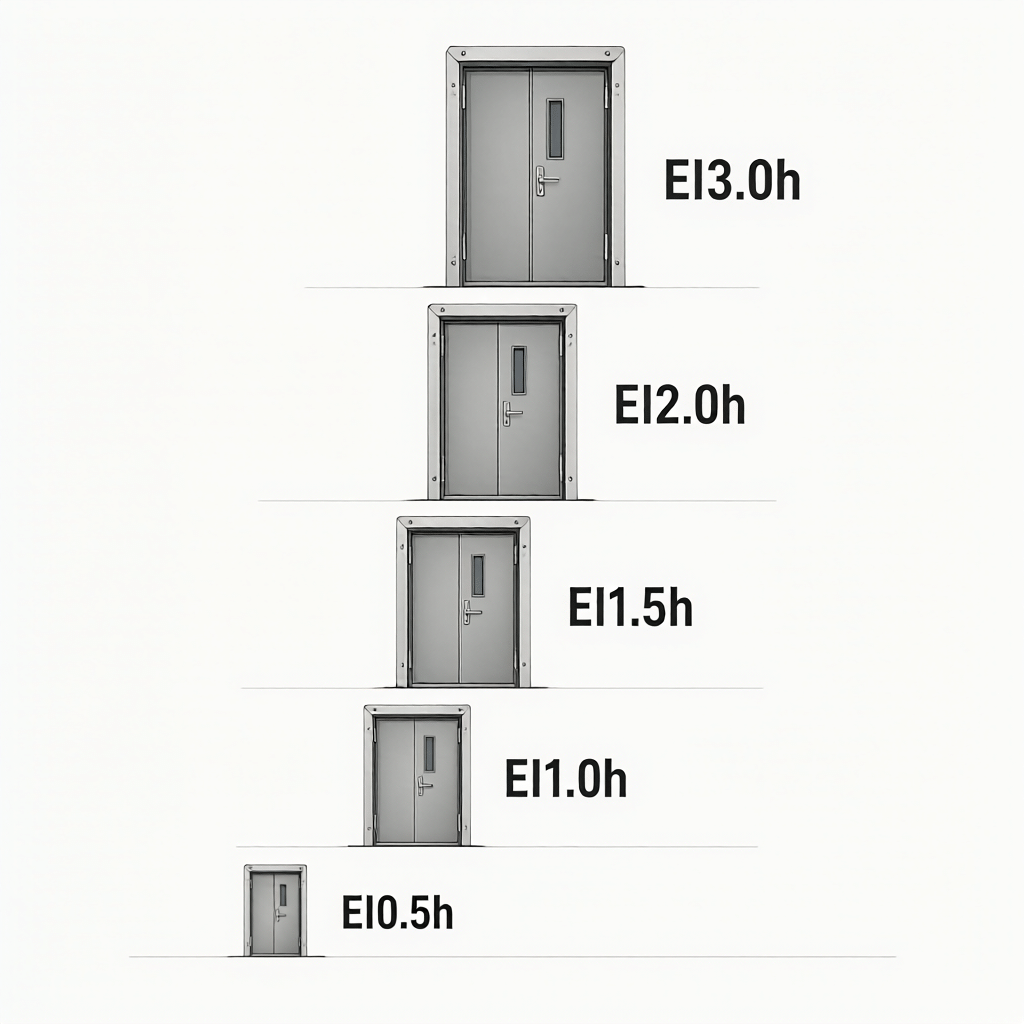
GB 12955 divides steel fire doors into three fire resistance classes based on minimum fire endurance duration:
| Class | Chinese Designation | Minimum Fire Endurance | Common Use Cases |
|---|---|---|---|
| Class A | Class A fire door | ≥ 1.50 hours | Stairwells, elevator shafts, high-hazard zones |
| Class B | Class B fire door | ≥ 1.00 hour | Corridor separations, moderate-risk partitions |
| Class C | Class C fire door | ≥ 0.50 hour | Utility rooms, low-risk internal divisions |
These hours represent the door’s ability to maintain both structural integrity and thermal insulation during a standardized furnace test. Importantly, the classification depends on full assembly performance—including frame, leaf, seal, and hardware—not just the steel thickness alone.
What Are the Core Technical Requirements?
GB 12955 sets clear boundaries on several physical and functional attributes:
- Steel skin thickness: Outer panels typically range from 0.8 mm to 1.2 mm depending on door size; thinner sheets increase the risk of warping under heat.
- Core material: Must consist of non-combustible insulation such as vermiculite, perlite, or mineral wool boards—no organic or flammable fillers.
- Frame construction: Heavy-gauge steel channel frames reinforced at joints to prevent distortion during fire exposure.
- Hardware: Intumescent seals, fire-rated hinges, positive-latching locks, and self-closing mechanisms are mandatory. Every component must retain function after extended high-temperature exposure.
- Gap control: Clearances between leaf and frame are tightly regulated; excessive gaps allow smoke and flame passage regardless of the door’s rated duration.
Manufacturers adjusting profile structures to match local building codes must revalidate those changes through updated testing, since even minor geometry shifts can alter heat flow patterns inside the furnace.
Which Testing Standard Verifies Fire Resistance?
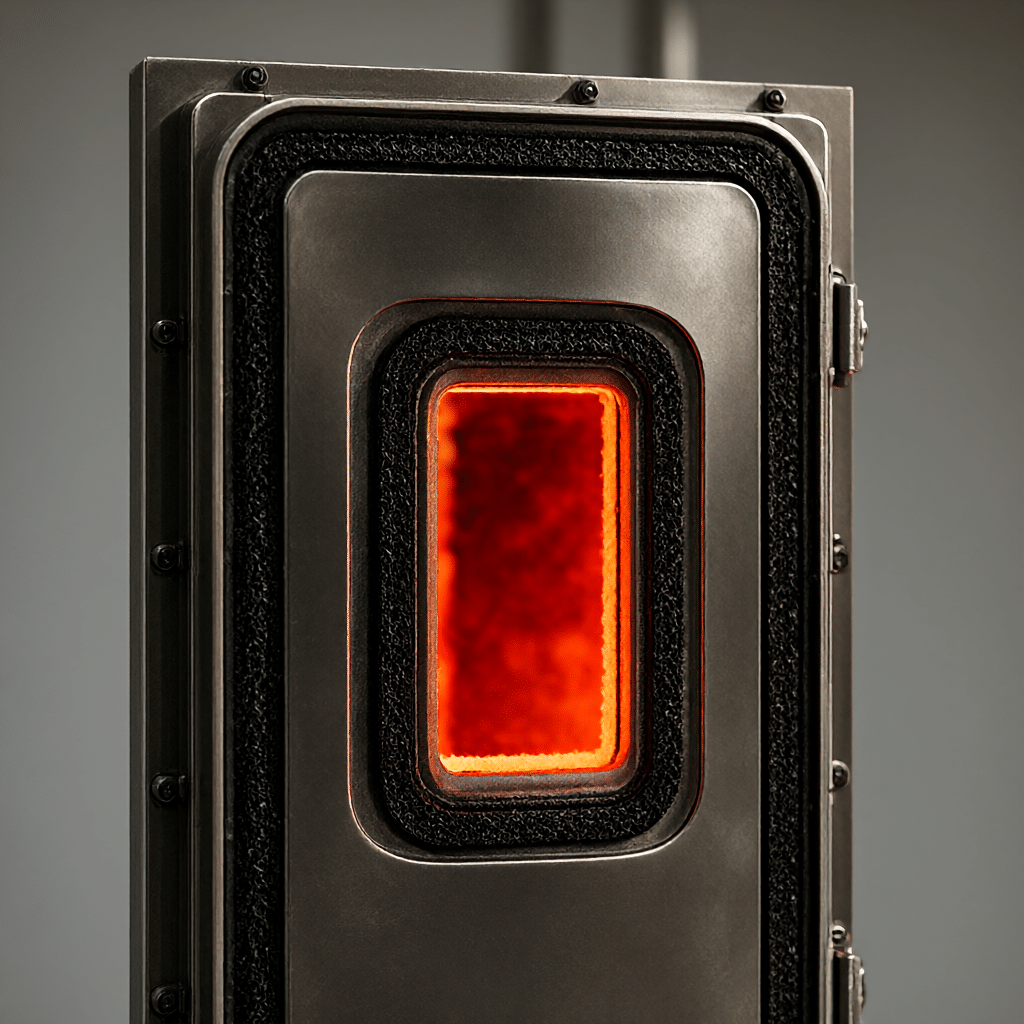
Fire resistance testing for GB 12955 steel doors follows GB/T 7633, the Chinese companion test-method standard aligned closely with ISO 834 time–temperature curves. Each door undergoes a full-scale furnace trial until one of three failure conditions occurs:
- Loss of integrity — flames or hot gases penetrate through seams, glazing, or the door surface.
- Loss of insulation — the unexposed surface temperature rises more than 140 °C on average or exceeds 180 °C at any single point.
- Structural failure — the door collapses, bows excessively, or loses latching contact.
Only tests performed by CNCA-recognized laboratories produce reports accepted by Chinese market regulators. Relying on foreign test data without local conversion is common source of rejection during project audits.
What Marking and Documentation Requirements Apply?
Compliant steel fire doors must carry a permanently attached nameplate or label indicating:
- Applicable standard number (GB 12955)
- Classification class (A, B, or C)
- Manufacturer name and registered address
- Production date and batch/serial identifier
- Certification mark from an authorized body
Supporting documentation typically includes:
- Original test report (inspection report) referencing GB/T 7633
- Type-approval or conformity certificate
- Factory inspection records and quality-control checklists
- Commercial package for export: packing list, proforma invoice, customs declaration, and certificate of origin
Having complete paper trails simplifies both domestic registration and overseas customs clearance, particularly when fire-rated steel door China standard verification is requested by local authorities.
How Does GB 12955 Compare with EN 1634 and UL 10C?
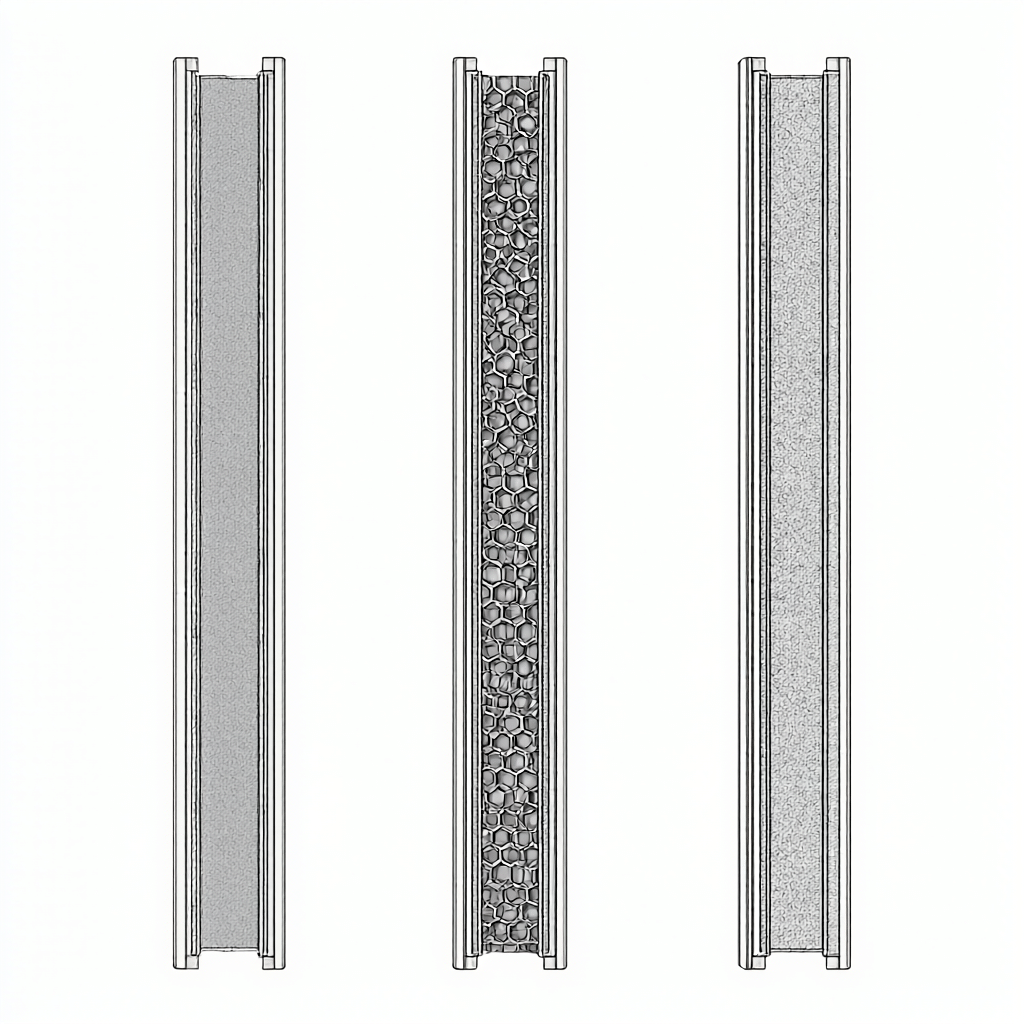
While the three major standards share the goal of quantifying fire resistance, their classification systems, test limits, and certification pathways differ enough to matter during global procurement:
| Parameter | GB 12955 (China) | EN 1634 (EU) | UL 10C / NFPA 80 (US) |
|---|---|---|---|
| Rating format | Class A/B/C | EI30/EI60/EI90/EI120 | 20/45/60/90 minutes |
| Primary test standard | GB/T 7633 | EN 13501-2 | ASTM E119 |
| Insulation ceiling (average) | +140 °C | +140 °C | +125 °C above start |
| Max single-point temp rise | +180 °C | +240 °C | Not specified identically |
| Certification regime | CCC / CFCC | CE marking (Notified Body) | UL listing + NFPA inspection |
A frequent misconception is that EU or US test reports automatically satisfy GB 12955. They do not—each jurisdiction requires its own labeled certification path unless bilateral mutual-recognition arrangements exist, which currently remain limited for fire doors.
What Should International Buyers Verify During Supplier Evaluation?
Procurement teams sourcing GB 12955 code doors for export or domestic China projects should assess these practical criteria:
- Laboratory legitimacy — Confirm the issuing test lab holds current CNCA accreditation and that reports are retrievable on official registries.
- CCC surveillance history — Manufacturers subject to regular post-certification audits tend to maintain tighter process control.
- Component traceability — Hinges, seals, and locksets should come from recognized sub-suppliers with their own fire-performance documentation.
- Customization capacity — Adjustable profile structures, color finishes, glass inserts, and hardware selections add value but require re-validation under the standard.
- Pre-shipment quality checks — Non-destructive examinations for weld integrity, seal fit, and closing force reduce field defects that trigger compliance failures.
- Documentation readiness — Suppliers experienced in foreign trade can deliver packing lists, invoices, and full customs paperwork smoothly, avoiding port delays.
These factors directly influence long-term project risk and total cost of ownership—both far more consequential than unit-price comparisons alone.
How Do You Choose the Right Fire Resistance Class for Your Project?
Specification teams should anchor class selection to building-code occupancy requirements rather than cost convenience:
- Class A belongs where evacuation routes, high-hazard equipment rooms, or vertical shaft penetrations demand maximum protection.
- Class B suits general corridor barriers and intermediate fire compartments in mixed-use buildings.
- Class C covers low-risk service openings where fire spread potential is limited and shorter resistance times are acceptable.
Incorrect class selection can result in rejected inspections, costly retrofits, or insurance complications downstream.
Related Considerations for Procurement and Specification
Several practical details often trip up inexperienced buyers:
- Door orientation: Some Class A/B configurations are rated for single-direction swing only; double-egress installations need separate validation.
- Glazed apertures: If vision panels are required, their fire-rating duration must match the door assembly—partial glazing reduces overall classification unless specially engineered.
- Threshold profiles: Raised or flush thresholds change accessibility outcomes and may conflict with universal-design mandates in certain jurisdictions.
- Maintenance intervals: Intumescent seals and closers degrade over time; schedules prescribed by the manufacturer should be baked into facility operations plans.
For broader context on related door-specification topics, see the IBC Chapter 716 opening protectives guide, and review our hinge spacing rules for interior and exterior doors when finalizing hardware layouts.
Here Is How We Meet These Standards
As a direct-from-factory manufacturer, our process mirrors the GB 12955 framework at every production stage. We select certified steel gauges and non-combustible core materials, validate hardware selections against the standard’s durability expectations, and run pre-shipment air-tightness, water-tightness, and wind-resistance checks before any order leaves the factory floor. Our team is accustomed to adjusting profile structures and fittings to align with local building codes for diverse target markets, while maintaining full documentation packages—including packing lists, proforma invoices, and customs papers—for straightforward FCL and LCL delivery from China.
Buyer Red Flags to Watch For
When evaluating potential suppliers of GB 12955-compliant steel fire doors, experienced procurement teams typically flag these warning signs immediately:
- Unlabeled doors — Absence of a permanent nameplate showing standard number, class rating, manufacturer, and batch ID indicates either non-compliance or shadow manufacturing.
- Unverifiable test reports — Reports without CNCA-accredited laboratory seals, missing registration numbers, or documents from unrecognized facilities are routinely rejected during audits.
- Missing CCC/CFCC credentials — Manufacturers selling domestically or supplying projects requiring Chinese market certification must hold valid certificates; expired or absent credentials signal process risk.
- No component traceability — If hinges, intumescent seals, locksets, or closers cannot be traced back to their own fire-performance certifications, the full assembly rating is compromised.
- Vague documentation packages — Suppliers unable to provide packing lists, proforma invoices, customs declaration support, or certificates of origin create clearance delays and compliance exposure.
These issues often surface only after installation or inspection, making upfront supplier vetting far more cost-effective than post-delivery remediation.
Expanded Standards Framework: Beyond GB 12955 and GB/T 7633
While GB 12955 governs product-level performance and GB/T 7633 defines the test methodology, compliant fire-door procurement also depends on two additional regulatory anchors:
- GB 50016 — Code for Fire Protection Design of Buildings — This overarching standard dictates where fire-rated assemblies must be installed based on occupancy type, building height, compartmentation strategy, and evacuation distance. GB 12955 ensures the door itself performs; GB 50016 determines whether that performance level is appropriate for your specific project. Buyers sourcing doors should confirm alignment between the specified fire resistance class and the architectural requirements outlined in this code.
- GB 29364 — Technical Specification for Manufacturing Quality Control of Fire Doors — Issued by the China National Certification and Accreditation Administration (CNCA), this specification establishes factory quality-management requirements including raw-material incoming inspection, weld-process control, core-fill consistency checks, hardware qualification, and periodic surveillance auditing. Doors manufactured under GB 29364-controlled environments demonstrate greater production repeatability and lower defect rates across large-order deliveries.
These three standards together form a hierarchical framework: GB 50016 (design intent) → GB 12955 (product performance) → GB 29364 (manufacturing quality control). Importers and project specifiers who reference only the product standard without considering the design-code or quality-control layer often encounter specification mismatches or field-rejection issues.
Industry Case Study: Class A Steel Fire Doors for a High-Rise Hospital Project
A recent procurement scenario illustrates how thorough supplier evaluation prevents costly downstream failures. A general contracting firm was supplying Class A steel fire doors for a 28-story private hospital in Southeast Asia, where local codes cross-reference ISO 834 fire-resistance principles (see ASTM standards reference) alongside mandatory smoke-control compartmentation.
The project team shortlisted three Chinese manufacturers and evaluated them against a weighted decision matrix covering five criteria: laboratory-verified test reports (25%), CCC/CFCC surveillance history (20%), component traceability and sub-supplier documentation (20%), customization flexibility for local-code adjustments (15%), and documentation completeness for FCL shipment (20%).
The winning supplier demonstrated current CNCA-accredited test reports spanning multiple frame-depth configurations, verifiable CCC records retrievable on official registries, and traceable hardware from recognized fire-rated sub-suppliers. The runner-up offered a competitive unit price but could not produce test reports for doors exceeding 1200 mm width — a gap that would have required re-testing and delayed the project schedule by approximately six weeks. This outcome reinforced that total-cost-of-ownership analysis, not sticker-price comparison, drives reliable fire-door procurement.
Skimmable Procurement Decision Checklist for GB 12955 Steel Fire Doors
Use the following weighted checklist when scoring candidate manufacturers. Assign points on a 1–5 scale per criterion, multiply by weight, and sum for a comparative score.
| Criterion | Weight | What to Verify |
|---|---|---|
| CNCA-accredited test report | 25% | Valid GB/T 7633 report, registered with issuing authority, covers ordered configuration |
| CCC / CFCC surveillance record | 20% | Current certificate, no suspension history, third-party audit trail available |
| Component traceability | 20% | Hinges, seals, locks, closers backed by independent fire-performance certs |
| Customization & local-code adaptability | 15% | Adjustable profile structures, fittings, finishes; re-validation process documented |
| Documentation readiness for export | 15% | Packing list, proforma invoice, customs declaration support, COO issuance capability |
Manufacturers scoring below 60% of total points should be disqualified regardless of unit-price advantage. Below 40%, disqualification is automatic due to unacceptable compliance risk.
How We Meet These Standards
As a direct-from-factory manufacturer, our process mirrors the GB 12955 framework at every production stage. Frame construction uses certified Q235 structural steel grades selected for consistent yield strength and weldability under high-temperature stress, paired with outer skin panels rated 0.8–1.2 mm depending on leaf dimensions. Core insulation is sourced exclusively from non-combustible vermiculite, perlite, or mineral wool boards — organic fillers are excluded at the raw-material inspection gate.
Hardware selections, including intumescent seals, fire-rated hinges, positive-latching locks, and self-closing mechanisms, are validated against the durability and temperature-retention expectations embedded in GB 12955 and GB 29364. Our QC team conducts pre-shipment air-tightness, water-tightness, and wind-resistance examinations on every order before it leaves the factory floor.
We are accustomed to adjusting profile structures and fittings to align with local building codes for diverse target markets, while maintaining full documentation packages — packing lists, proforma invoices, and customs papers — for straightforward FCL and LCL delivery from China.
Skimmable Procurement Decision Checklist (Weighted Criteria)
When evaluating potential suppliers for GB 12955-compliant steel fire doors, use this quick-reference checklist during vendor scoring:
| Criterion | Weight | Key Verification Steps | Red Flags |
|---|---|---|---|
| CNCA-accredited test reports | 25% | Check lab registration number; confirm report spans your required door sizes | Single-size testing; expired accreditations; foreign-only data |
| CCC/CFCC certification status | 20% | Verify certificate validity on official registry; request surveillance audit records | Lapsed certificates; no post-certification audit trail |
| Hardware & seal traceability | 20% | Obtain fire-rating certificates for hinges, closers, intumescent strips from sub-suppliers | Generic hardware without independent ratings; no batch numbers |
| Local-code adaptation capability | 15% | Ask for examples of profile/hardware adjustments for target markets | Inflexible standard profiles; refusal to provide adjustment documentation |
| Export documentation readiness | 20% | Confirm packing list, proforma invoice, customs declaration, and COO formats | Missing document templates; unclear export process |
| Pre-shipment inspection protocol | 10% | Review air-tightness, water-tightness, and wind-resistance test procedures | No inspection SOP; reliance solely on end-product visual checks |
| Steel grade & core material specs | 10% | Verify Q235 steel grade for frames; confirm non-combustible core fill (vermiculite/mineral wool) | Unknown alloy grades; organic filler materials |
Total score ≤ 60% indicates high procurement risk and warrants further due diligence.
Complete Material & Test Duration Specifications
To eliminate ambiguity in technical evaluations, specific material and performance thresholds must be confirmed before issuing purchase orders:
- Frame steel grade: Q235 carbon structural steel (GB/T 700 compliant) with minimum yield strength of 235 MPa ensures adequate rigidity during furnace exposure without excessive thermal expansion.
- Outer panel thickness: 0.8 mm–1.2 mm galvanized or cold-rolled steel sheet, selected based on door dimension and class rating; smaller doors may use thinner gauge without compromising integrity.
- Core insulation: Non-combustible boards (vermiculite, perlite, or mineral wool) with density ≥ 300 kg/m³; organic fillers such as polystyrene are strictly prohibited.
- Intumescent seal compression: Must expand to ≥ 3× original thickness within 60 seconds of heat exposure, sealing gaps up to 4 mm under standard test conditions.
- Test duration benchmarks: Class A doors endure 90 minutes of furnace heating before integrity/insulation failure; Class B lasts 60 minutes; Class C requires 30 minutes. Actual endurance times typically exceed minimum ratings by 10%–15% when manufactured to spec.
- Gap tolerances: Leaf-to-frame clearance ≤ 3 mm horizontally; ≤ 2 mm vertically; uniform gaps prevent heat channeling that accelerates failure.
These precise parameters give procurement teams objective criteria for rejecting non-compliant quotes and selecting suppliers who can deliver consistent, code-adherent products at scale.
Sources & References
- see ASTM standards reference — www.astm.org
- IBC Chapter 716 opening protectives guide — doorwoodendoors.com
- hinge spacing rules for interior and exterior doors — doorwoodendoors.com











