
Last updated: November 25, 2026
Fixed louvre shutters feature blades permanently set at a static angle during manufacturing, providing constant ventilation, shading, and privacy with zero mechanical complexity. Operable louvre shutters incorporate a manual or motorized pivot mechanism that allows blade angle adjustment on demand, enabling real-time control of airflow, light ingress, and visibility. For B2B buyers, the decision hinges on project function: fixed systems deliver a lower-cost, virtually maintenance-free solution ideal for permanent facade screening and passive ventilation, while operable systems serve hospitality, villa, and mixed-use developments where adaptive climate control and occupant comfort are central design requirements.
At a Glance
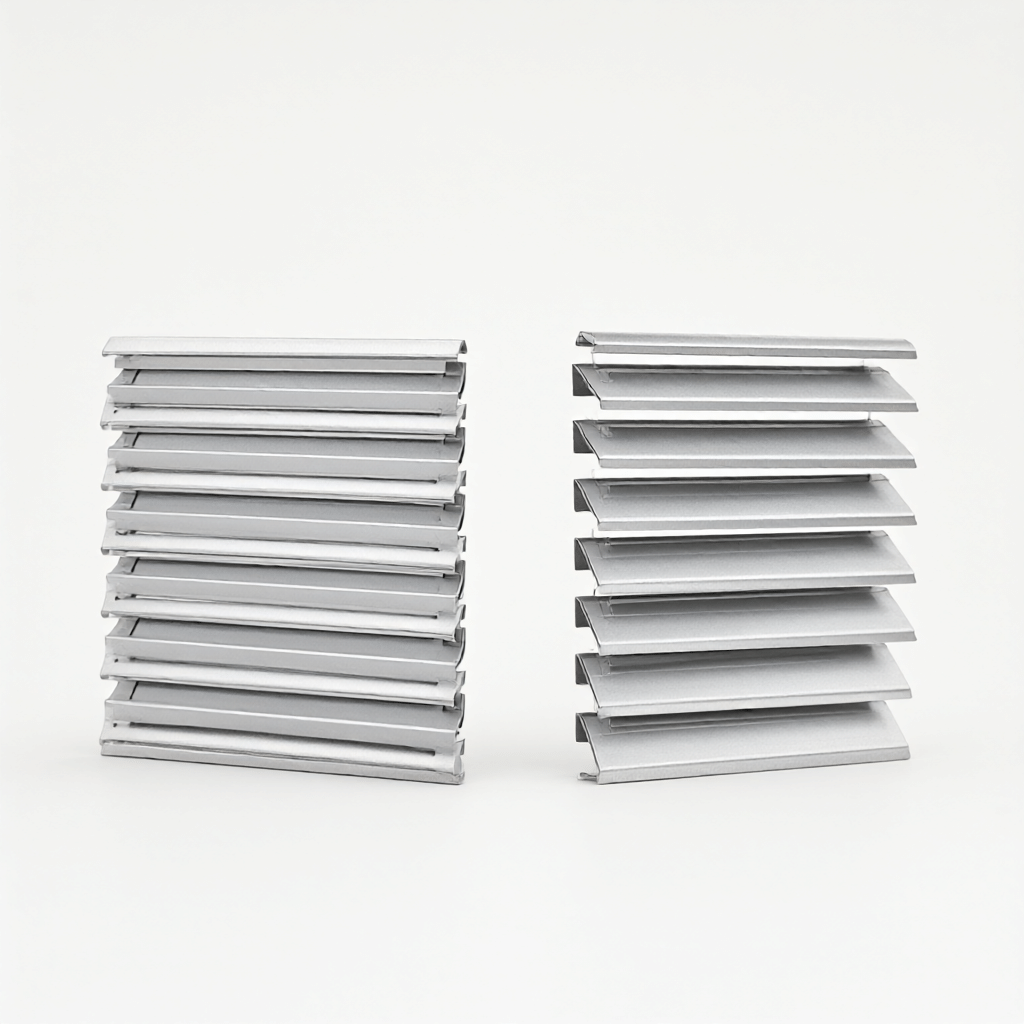
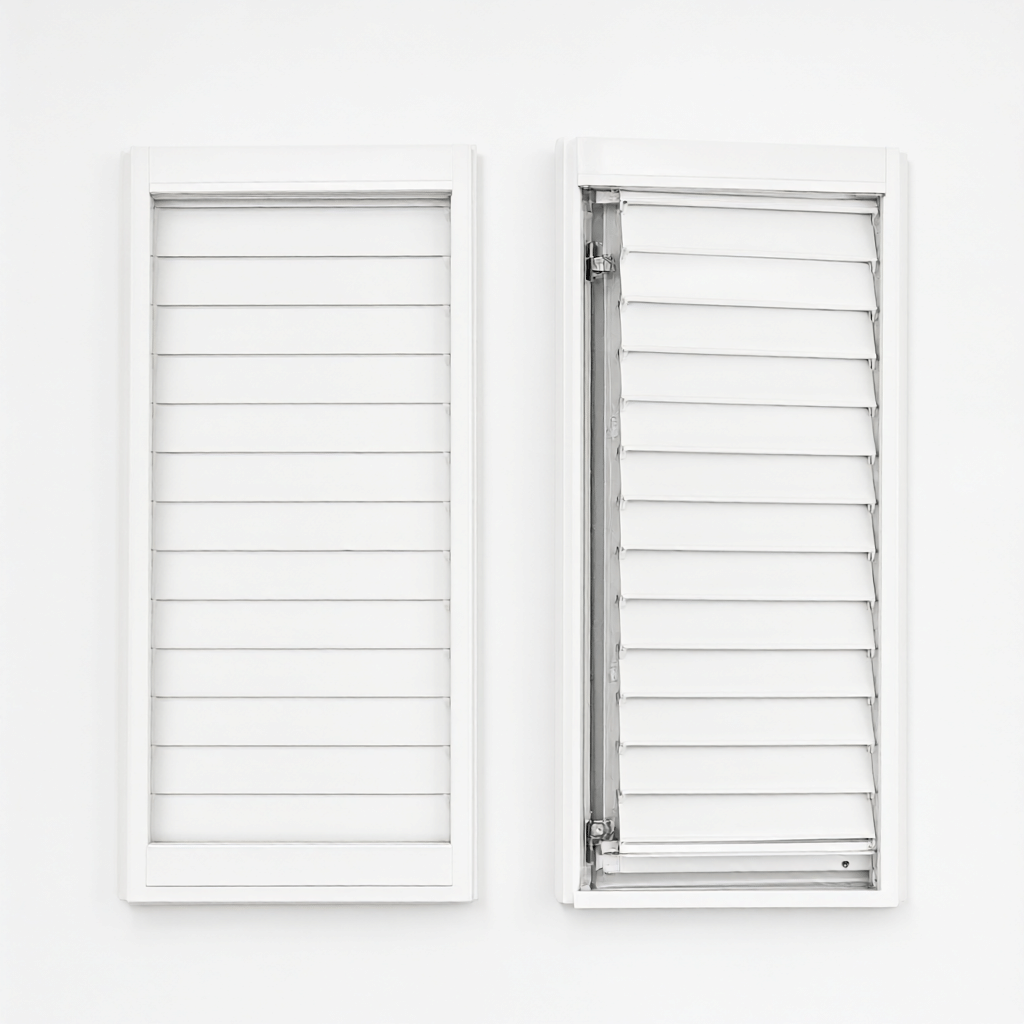
The fundamental difference between fixed and operable louvre shutters comes down to one thing: whether the blades can be adjusted after installation. Fixed louvre shutters have blades set at a permanent angle inside the frame — they provide consistent shade, ventilation, and privacy but cannot be changed once mounted. Operable louvre shutters feature a mechanism (manual or motorized) that allows the blades to pivot, letting occupants control airflow, light, and visibility on demand.
For most B2B procurement decisions, the choice depends on three factors: the climate and ventilation requirements of the project, the desired aesthetic and maintenance profile, and the budget for both upfront supply and long-term ownership. Fixed shutters are the lower-cost, lower-maintenance option; operable systems deliver adaptive performance at a higher price and with more mechanical complexity.
Types and Categories
What is a fixed louvre shutter?
Fixed louvre shutters are window or door coverings with angled blades permanently mounted inside a frame. The blade angle is determined during manufacturing and cannot be altered on-site. They function as solar shading screens and passive ventilation elements — air can pass through the gaps between blades, but the amount of airflow is constant. Fixed systems are often referred to as louver facade screens or static ventilation shutters in architectural specifications.
What is an operable louvre shutter?
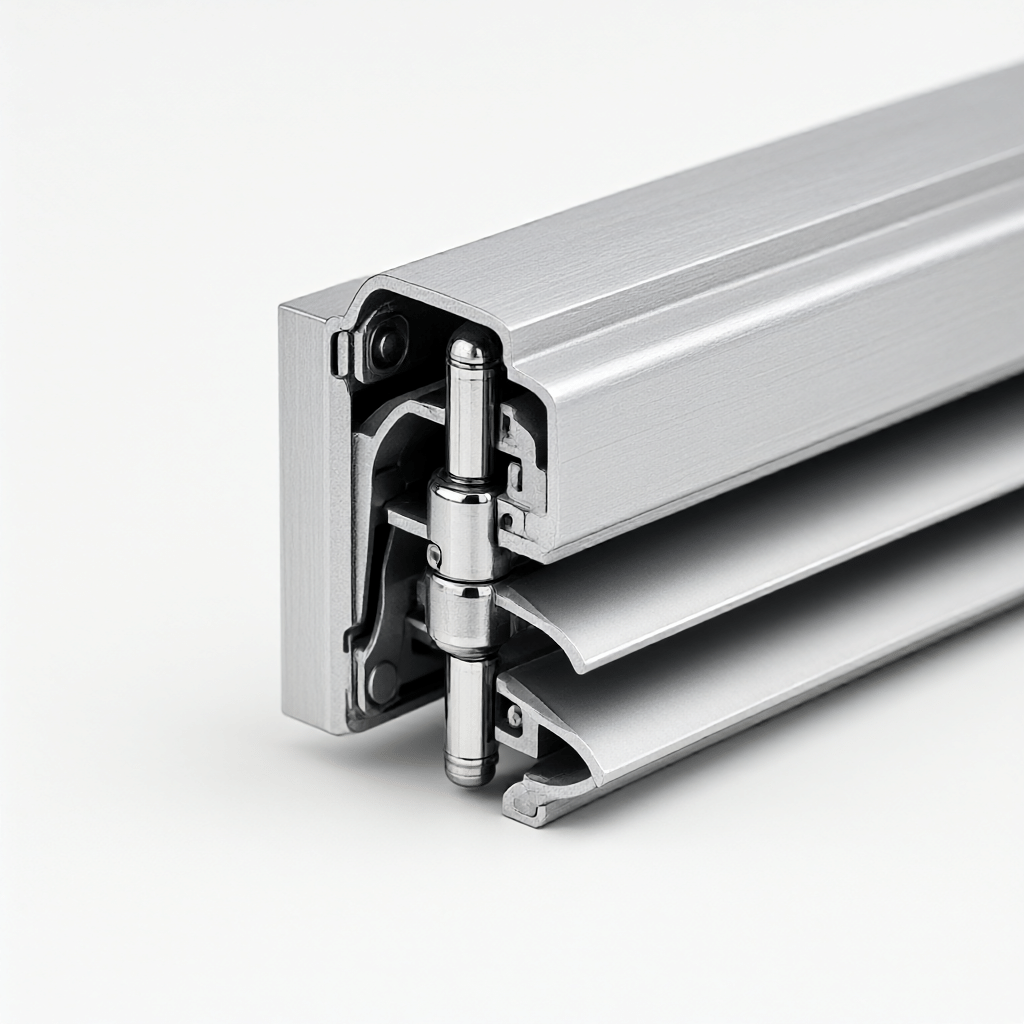
Operable louvre shutters, sometimes called bioclimatic louvers or adjustable louver systems, have blades attached to a turning mechanism. This mechanism may be manual (a rod, crank, or pull-cord) or motorized (connected to a building automation system). By adjusting the blade angle, users can modulate ventilation rate, block direct sunlight, or open the blades fully for maximum airflow and views. Louver windows with this functionality are common in hospitality and mixed-use projects where occupant control is expected.
What opening styles exist for operable louvre shutters?
Operable systems are available in three main configurations:
- Bi-fold louvre shutters — multiple panels fold accordion-style against each other, creating a wide opening for doors or large windows.
- Sliding louvre shutters — panels slide laterally on a track, useful for wide apertures where folding is impractical.
- Hinged louvre shutters — a single panel swings on hinges like a traditional door, suited for standard-width openings.
The opening style affects not only how the shutter operates but also the structural requirements of the surrounding frame and wall.
Comparison Table
How do fixed and operable louvre shutters compare across key specifications?
| Specification | Fixed Louvre Shutters | Operable Louvre Shutters |
|---|---|---|
| Blade adjustment | Not adjustable after installation | Adjustable via manual or motorized mechanism |
| Airflow control | Fixed permeability based on blade angle | Variable — can be opened fully or closed |
| Privacy control | Static; set by blade pitch during design | Dynamic; can be adjusted per momentary need |
| Solar shading | Constant shade pattern | Modifiable to track sun position or user preference |
| Mechanical complexity | None — simple frame and blade assembly | Additional hardware: hinges, turning rods, gears, or motors |
| Maintenance requirement | Minimal — clean blades periodically | Higher — mechanisms require lubrication and inspection |
| Wind resistance rating | Generally higher due to fixed structural integrity | Depends on mechanism quality; lower when blades are open |
| Upfront cost | Lower — fewer components, simpler manufacturing | Higher — adds hardware, actuation, and assembly labor |
| Lifespan | Longer mechanical lifespan (no moving parts) | Shorter; mechanism wear may require part replacement |
| Best suited for | Facade screening, permanent shading, ventilated screens where control is not needed | Hotels, villas, patios, sunrooms, and spaces where occupants adjust conditions |
Buying Factors
How to choose between fixed and operable louvre shutters for a project?
The decision should be driven by the building’s functional requirements rather than aesthetics alone. Consider each of the following dimensions.
Ventilation and airflow control
If the project requires occupants to actively manage cross-ventilation — for example, a beachfront resort room or a villa terrace where wind direction changes throughout the day — operable louvre shutters are the appropriate choice. They allow the blades to be opened for maximum louver shutter air permeability or closed to reduce drafts. Fixed shutters provide a constant level of airflow that cannot respond to changing weather or occupant preference.
For buildings where ventilation is handled by a separate HVAC or mechanical system and the louvres serve primarily as solar shading or privacy screens, fixed systems are sufficient and more economical.
Privacy and solar shading by blade angle
The blade angle determines both how much light enters and how much privacy is provided. Fixed shutters require the blade angle to be selected at the design stage — a common range is 25° to 45°, where steeper angles provide more shade and privacy but less visible light. Operable shutters let users shift between near-closed (high privacy, low light) and fully open (maximum visibility and airflow) positions.
Maintenance and cleaning accessibility
Fixed louvre shutters have no moving parts, so maintenance is limited to occasional cleaning of the blade surfaces. For exterior installations in dusty or coastal environments, this is a genuine advantage — especially on upper floors where access is difficult.
Operable louvre shutters require periodic inspection of the blade mechanism. Manual systems need lubrication of hinges and turning rods. Motorized systems add electrical components that may need servicing or replacement over a 10- to 15-year period. For high-rise commercial facades, the added maintenance burden of operable units can significantly increase lifecycle costs.
Durability, weather resistance, and structural rating
Both types can be engineered to meet the same external louvre shutters performance standards — including air-tightness, water-tightness, and wind resistance ratings — but the path to certification differs. Fixed shutters achieve higher structural ratings more easily because their rigid blade-to-frame connection resists deformation under wind load. Operable shutters introduce pivot points and gaps that can become weak points if the hardware is underspecified.
When specifying for high-wind regions or coastal projects, operable systems should use heavy-duty hardware and be tested to the applicable local building code. Fixed shutters offer a simpler path to compliance in these conditions.
Material options: aluminum, timber, and uPVC
The material choice applies to both fixed and operable types and significantly affects performance and cost.
- Aluminum louvre shutters — most common for exterior commercial use. Naturally corrosion-resistant, especially when powder-coated or anodized. Lightweight, which reduces the load on supporting frames and makes larger panels easier to handle. Compatible with both fixed and operable mechanisms. See our guide on powder coat vs anodized vs PVDF finishes for aluminum doors and windows for finish selection guidance.
- Timber louvre shutters — preferred for heritage or luxury residential projects where warmth and natural texture are priorities. Requires regular sealing or staining to resist moisture and UV degradation. Heavier than aluminum, which places greater demand on hinges and frames in operable configurations.
- uPVC louvre shutters — cost-effective and low-maintenance, but generally limited to interior or sheltered exterior applications. uPVC lacks the structural rigidity needed for large external operable panels in high-wind zones.
Cost comparison and total ownership
Fixed louvre shutters typically cost 20% to 40% less than comparable operable units, depending on material and finish. The gap widens when motorized actuation is included. However, total cost of ownership should account for maintenance and potential mechanism replacement over the building’s lifespan. In hot climates where operable shutters reduce HVAC loads through natural ventilation, the energy savings can partially offset the higher initial investment.
What factors should B2B buyers prioritize in procurement?
For project specifiers and procurement managers, the selection process should follow this sequence:
- Define the functional requirement: Is occupant control of airflow and light essential, or is a static shading/ventilation screen adequate?
- Confirm the environmental conditions: wind load, coastal exposure, temperature range, and maintenance access.
- Select the material and finish based on durability and aesthetic requirements.
- Specify the opening style (bi-fold, sliding, hinged) for operable systems based on aperture dimensions and operational preference.
- Request pre-shipment testing documentation for air-tightness, water-tightness, and wind resistance from the supplier.
- Evaluate total lifecycle cost, including estimated maintenance intervals and part replacement schedules.
Price and Cost
How much do louvre shutters cost?
Pricing varies significantly by material, size, and whether the system is fixed or operable. The following ranges are industry references for factory-direct supply from Chinese manufacturers and may differ by region and order volume.
- Fixed aluminum louvre shutters: USD 80–180 per square meter for standard sizes (1.2 m × 1.5 m), powder-coated finish, single cavity thermal-break profile. Larger custom sizes and premium finishes (PVDF, wood grain transfer) push prices toward USD 200–300 per square meter.
- Operable aluminum louvre shutters: USD 150–350 per square meter for manual systems with quality hardware. Motorized systems with integrated actuators range from USD 250–500 per square meter depending on control sophistication.
- Timber louvre shutters: USD 200–450 per square meter, with tropical hardwoods (meranti, teak) at the higher end due to material cost and treatment requirements.
- uPVC louvre shutters: USD 60–140 per square meter, typically for smaller interior or sheltered exterior applications.
These are reference ranges for bulk project orders. Single-unit or small-batch orders will carry higher per-square-meter pricing. See our plywood doors price per unit — bulk wholesale pricing guide for context on how volume affects unit pricing across product categories.
What drives cost variation?
Several factors move the price beyond the base range:
- Profile structure: Multi-cavity thermal-break profiles cost more than single-cavity designs but improve insulation and wind resistance.
- Blade width and thickness: Wider blades (100 mm+) provide better shading but require heavier hardware in operable systems.
- Hardware quality: European-brand hinges and turning mechanisms command a premium over standard domestic hardware but offer longer service life and smoother operation.
- Finish type: Standard powder coating is the baseline. PVDF coatings, wood grain transfers, and custom RAL colors add 10% to 25% to the unit cost.
- Custom dimensions: Non-standard sizes require bespoke tooling and reduce production efficiency, typically adding 15% to 30% to the base price.
- Motorization: Adding electric actuators and smart controls increases the operable unit cost by 40% to 80%.
How do operating costs compare over the product lifespan?
Over a 20-year period, the maintenance difference between fixed and operable systems becomes significant. Fixed aluminum shutters typically require only cleaning every 6 to 12 months. Operable systems may need hardware lubrication every 12 to 18 months and potential replacement of wear components — such as hinges, seals, or actuators — at years 8 to 12. For high-rise buildings where maintenance requires scaffolding or bosun’s chairs, these service calls can add substantial labor costs that far exceed the initial price difference between the two types.
Pros and Cons
Fixed Louvre Shutters
Advantages
- Lower upfront cost and simpler manufacturing
- No mechanical components to fail or require servicing
- Higher inherent wind resistance due to rigid construction
- Longer lifecycle with minimal maintenance
- Suitable for hard-to-reach or high-rise installations where servicing is costly
Disadvantages
- Cannot adjust ventilation or shading after installation
- Blade angle must be correctly specified at the design stage — errors are irreversible
- Less flexible for spaces with variable occupancy or seasonal needs
- Once installed, they cannot be converted to operable systems
Operable Louvre Shutters
Advantages
- Full control over airflow, light, and privacy
- Adaptable to changing weather and occupant preferences
- Can contribute to natural ventilation strategies and reduce HVAC loads
- Available in bi-fold, sliding, and hinged configurations for different aperture types
- Better suited for hospitality and residential projects where user experience is prioritized
Disadvantages
- Higher initial cost, especially for motorized systems
- Mechanical components require periodic maintenance and eventual replacement
- Potentially lower wind resistance rating when blades are partially open
- Greater complexity in procurement, installation, and after-sales support
- Larger total cost of ownership over 15 to 20 years due to maintenance and part replacement
Evidence & Practical Notes
Field note: On commercial projects in tropical climates, we commonly see fixed aluminum louvre shutters specified for facade screening on upper floors where occupant access for adjustment is impractical, while operable units are reserved for ground-floor terraces and balconies where residents can reach them. This hybrid approach balances lifecycle cost with user control where it matters most.
Practical limitation: Converting a fixed louvre shutter to an operable system after installation is generally not feasible. The frame geometry, blade mounting points, and structural reinforcement required for a turning mechanism are different from those of a fixed assembly. Buyers should confirm the operational requirement at the specification stage rather than attempting retrofit later.
Buyer takeaway: For hotel and resort projects where guest rooms have operable shutters on balconies and corridor-side facade screens are fixed, the optimal strategy is to specify each type for its intended role rather than standardizing on one. This typically reduces overall project cost by 15% to 25% compared to using operable units throughout.
Manufacturer Capabilities and Selection Guidance
As a manufacturer of aluminum and solid wood louvre shutter systems, we approach the fixed-versus-operable decision the same way we approach any specification: by matching the product to the actual conditions of the project. Here is how we align our capabilities with the selection criteria above.
Direct factory supply and competitive pricing
We source raw aluminum profiles and timber directly, eliminating intermediary markups. This means project buyers receive factory-direct pricing on both fixed and operable systems without the markup that distributed suppliers typically add. For bulk orders, this can represent a meaningful reduction in per-square-meter cost — especially on custom-sized operable units where manufacturing complexity is already higher.
Full customization on size, color, glass, and hardware
Every project has different aperture dimensions and aesthetic requirements. We manufacture louvre shutters to the exact sizes specified in the architectural drawings, with a full range of powder-coated, anodized, or wood-grain-finished colors. Hardware can be specified from European brands (such as Roto, Siegenia, or Sobinco) for operable systems where durability and smooth operation are critical, or standard-grade hardware for fixed applications where cost optimization is the priority. If you need to evaluate whether our finishing and hardware options align with your project specifications, contact us to discuss your requirements.
Pre-shipment testing for performance verification
Before any shipment leaves the factory, each batch of louvre shutters undergoes three mandatory tests: air-tightness, water-tightness, and wind resistance. These tests verify that the product meets the performance levels stated in the specification — whether the order is for fixed facade screens or motorized operable units for a hotel façade. For projects requiring third-party certification, we can coordinate with accredited testing laboratories to generate compliant reports.
Foreign trade logistics and documentation
With extensive experience in international shipping, we handle full export documentation — packing lists, proforma invoices, and customs declarations — so procurement teams do not need to manage compliance separately. Orders can be shipped as FCL (full container load) or LCL (less than container load), depending on order volume. For reference on how container loading affects per-unit shipping cost, see our guide on FCL vs LCL for door and window shipments and our 20ft container door loading quantity and shipping configuration guide. If your project involves importing louvre shutters, our team can also assist with HS code classification and import duty estimation.
Profile structure and fittings adjusted to local building codes
Different markets have different structural and performance requirements. Our engineering team adjusts profile wall thickness, cavity design, and hardware specifications to meet the building codes of target regions — whether that is AS/NZS 2047 for Australia, EN 14351-1 for Europe, or local codes in Southeast Asia and the Middle East. This adaptability ensures that operable systems specified for high-wind coastal hotels or fixed screens for arid-climate villas both meet the structural rating required by the local authority.
For a detailed evaluation of manufacturing quality before placing a bulk order, review our door factory audit checklist to understand what we inspect and how.
Contact Our Team to discuss your project specifications, request a sample, or obtain a detailed quotation for fixed or operable louvre shutters.
Frequently Asked Questions
What is the main difference between fixed and operable louvres?
Fixed louvre shutters have blades set at a permanent angle and cannot be adjusted after installation. Operable louvre shutters feature a mechanism that allows the blades to pivot, enabling on-demand control of airflow, light, and privacy.
Do operable louvres cost more than fixed ones?
Yes. Operable louvre shutters typically cost 20% to 40% more than fixed units of the same material and size, due to the additional hardware, actuation mechanism, and assembly labor. Motorized systems add further cost on top of manual operable units.
Can you adjust airflow with fixed louvres?
No. Fixed louvre shutters provide a constant level of ventilation determined by the blade angle and spacing at the time of manufacture. Airflow cannot be modified after installation.
Which type requires less maintenance?
Fixed louvre shutters require less maintenance because they have no moving parts. Operable systems need periodic lubrication of hinges andTurning mechanisms, and motorized units may require electrical component servicing over time.
Can fixed louvres be converted to operable later?
In most cases, no. Fixed and operable shutters use different frame geometries and blade mounting systems. Converting a fixed unit to operable after installation is generally not feasible and would require replacing the entire shutter assembly.
What customization options are available for fixed louvre shutters?
Fixed louvre shutters are typically treated as a “design once, install always” product, but several customisation dimensions can be specified before manufacture:
- Blade angle — Common factory settings range from 15° (high airflow, low privacy) to 60° (high privacy, maximum shade). The angle is selected based on the project’s solar geometry and local climate data.
- Blade width — Standard widths are 50 mm, 75 mm, and 100 mm. Wider blades (100–150 mm) provide stronger shade lines but reduce air permeability. Narrower blades (50–75 mm) allow more airflow at the same pitch.
- Blade thickness — Ranges from 0.8 mm to 1.5 mm depending on the desired wind load rating. Thicker blades resist deformation under high wind pressure.
- Frame alloy grade — Most manufacturers use 6063-T5 or 6063-T6 aluminium extrusions. T6 temper offers approximately 15% higher yield strength than T5, which matters for large-format fixed screens in high-wind zones.
- Finish type and colour — Standard powder-coated finishes comply with ASTM D3359 adhesion standards. Custom RAL colours, wood-grain transfers, and PVDF coatings (meeting AAMA 2605) are available for architectural matching.
- Air permeability rating — Fixed shutters are rated by their free-area percentage, typically ranging from 25% to 60%. Higher permeability improves passive ventilation but reduces shading effectiveness.
These customisation choices are made during the specification phase and cannot be altered after the blades are pressed into the frame.
What customization options are available for operable louvre shutters?
Operable louvre shutters offer all the base customisations of fixed units, plus additional mechanisms and control systems:
- Operating mechanism — Manual (top rod, side crank, or pull-cord), semi-motorised (spring-assisted), or fully motorised (electric actuator with remote or building-management-system control).
- Blade pitch range — Operable blades typically adjust from 0° (fully open) to 90° (fully closed), with intermediate positions at 15°, 30°, 45°, and 60°.
- Opening style — Bi-fold, sliding, or hinged configurations. Each style has different aperture-width limits and structural requirements.
- Motorization system — Single-speed or multi-speed actuators, compatible with KNX, Loxone, or other smart-home/building-automation protocols. Wind and rain sensors can be integrated for automatic closure.
- Blade width and thickness — Same range as fixed units, but heavier blades (1.2–1.5 mm) require higher-torque actuators.
- Hardware brand — European hardware brands (e.g., Siegenia, Roto, Maco) are available for projects requiring certified lifecycle performance of 20,000+ cycles.
The selection of operating mechanism and motorization system significantly affects both upfront cost and long-term maintenance requirements.
Procurement Decision Framework
Buyer checklist for louvre shutter procurement
Use this checklist to evaluate whether a supplier quotation meets your project’s technical and commercial requirements:
| # | Checkpoint | Pass Criteria |
|---|---|---|
| 1 | Mill certificate for aluminium extrusions | Grade 6063-T5 or T6, certified to EN 12020-2 |
| 2 | Powder-coating thickness documentation | Minimum 60 µm for exterior, 80 µm for coastal/high-UV environments |
| 3 | Air permeability test report | Tested per ASTM E283; class A1 or better for exterior applications |
| 4 | Water-tightness test report | Tested per ASTM E331 or EN 12208; class E75 or higher |
| 5 | Wind-load resistance test report | Tested per AS/NZS 4420 or local equivalent; rated for project-specific design wind pressure (Pa) |
| 6 | Finish adhesion test | Pass per ASTM D3359 cross-hatch method |
| 7 | Hardware cycle-life certification | Minimum 10,000 cycles for manual; 20,000+ for motorised actuators |
| 8 | Sample approval | Physical sample reviewed and approved before mass production |
| 9 | Pre-shipment inspection report | Third-party or in-house PSI covering dimensions, finish, function, and packaging |
| 10 | Documentation package | Packing list, proforma invoice, commercial invoice, certificate of origin, test reports, and installation manual |
Red flags to watch for during supplier evaluation
- No test reports provided — If a supplier cannot produce air-tightness, water-tightness, or wind-resistance test certificates, the product may not comply with local building codes.
- Vague profile specifications — Suppliers who do not specify alloy grade (6063-T5 vs. T6), wall thickness, or cavity structure may be using substandard extrusions.
- No sample policy — Reputable suppliers provide pre-production samples for approval. Refusal to supply samples is a risk indicator.
- Unrealistically low pricing — Prices significantly below market range often indicate thin-wall profiles, untested hardware, or omitted QC steps.
- No customization flexibility — Inflexible suppliers who only offer standard sizes and colours may not be able to adapt to local building codes or project-specific requirements.
- Missing trade documentation experience — Suppliers unfamiliar with packing lists, proforma invoices, and customs documentation can cause delays at import.
- No pre-shipment inspection process — Absence of PSI means defects may only be discovered after the cargo arrives at the destination port.
Vendor evaluation scoring matrix
Use the weighted scoring matrix below to compare multiple suppliers objectively:
| Evaluation Criterion | Weight (%) | Score (1–10) | Weighted Score |
|---|---|---|---|
| Technical compliance with standards (ASTM E283, E331, AS/NZS 4420, EN 14351-1) | 20% | ||
| Material specifications (alloy grade, wall thickness, coating thickness) | 15% | ||
| Quality control process (pre-shipment inspection, test reports) | 15% | ||
| Customization capability (size, colour, hardware, mechanism) | 12% | ||
| Trade documentation and logistics experience (FCL/LCL, customs docs) | 10% | ||
| Pricing competitiveness | 10% | ||
| Sample quality and lead time | 8% | ||
| References and project portfolio | 5% | ||
| Communication and responsiveness | 5% | ||
| Total | 100% | /100 |
A score of 70 or above indicates a supplier suitable for project procurement. Below 70, request clarifications or consider alternative vendors.
Manufacturer Selection Guide
How does a responsible manufacturer approach fixed and operable louvre shutters?
The distinction between fixed and operable louvre shutters is not just mechanical — it reflects a deeper difference in how a manufacturer engineers for performance, durability, and long-term value. Understanding how a manufacturer designs, tests, and delivers these products helps buyers make informed procurement decisions.
Engineering for performance standards
Reputable manufacturers design louvre shutters to meet recognised performance standards rather than generic product descriptions. Fixed shutters are engineered for maximum structural integrity — the blade-to-frame connection is rigid, and the profile structure is optimised to resist wind deflection. Operable shutters require additional engineering at every pivot point: hardware must withstand repeated cycling, seals must maintain water-tightness across blade positions, and actuators must operate reliably across temperature extremes. Manufacturers that publish test data for air permeability (per ASTM E283), water-tightness (per ASTM E331 or EN 12208), and wind resistance (per AS/NZS 4420) demonstrate a commitment to verifiable performance.
Customization as a standard practice
Every project has unique requirements — aperture dimensions, local building codes, aesthetic preferences, and climate conditions. A manufacturer that offers full customization on size, colour, glass or blade configuration, and hardware accessories enables specifiers to meet those requirements without compromise. This includes adjusting profile structure (single-cavity vs. multi-cavity thermal-break), selecting blade thickness (0.8 mm to 1.5 mm), choosing frame alloy grades (6063-T5 to 6063-T6), and specifying finish systems (powder coat, PVDF, wood-grain transfer) — all tailored to the target market’s building code requirements.
Quality control before shipment
Pre-shipment inspection is where specifications are verified against reality. A rigorous inspection process includes testing air-tightness, water-tightness, and wind resistance on production samples before bulk shipment. This is not an optional add-on — it is the point at which design intent is confirmed as manufactured output. Manufacturers with established QC protocols can provide test certificates alongside shipping documentation, giving buyers confidence that the product delivered matches what was specified.
Logistics and trade readiness
For international procurement, a manufacturer’s ability to handle export logistics is as important as product quality. This includes FCL and LCL shipment arrangements, complete customs documentation (packing list, proforma invoice, commercial invoice, certificate of origin), and packaging that protects finishes and hardware during transit. Experience in foreign trade means the manufacturer understands the documentation and compliance requirements of different import markets, reducing the risk of delays at customs.
How we apply these principles
As a manufacturer, our approach to louvre shutters follows the same framework — engineering to standard, customising to specification, inspecting before shipment, and shipping with full trade documentation. We design our fixed and operable louvre systems to meet EN 14351-1 performance classifications, use 6063-T5/T6 aluminium profiles with powder-coating thickness of 60–80 µm for exterior durability, and conduct pre-shipment testing for air-tightness, water-tightness, and wind resistance on every production batch. Our customization capabilities cover profile structure, blade dimensions, finish type, and hardware selection — all adjustable to match the local building codes of your target market. We support both FCL and LCL shipments with full export documentation, and our team provides quotation, specification support, and after-sales assistance throughout the procurement process.
For projects requiring fixed or operable louvre shutters with verified performance, full customization, and reliable export logistics, we welcome your inquiry.
Technical Specifications and Industry Standards for Aluminum Louvre Shutters
Aluminum louvre shutters for exterior commercial applications are typically manufactured from 6063-T5 or 6061-T6 aluminum alloy, providing a minimum tensile strength of 180 MPa and 260 MPa respectively. Extruded frame profiles range from 40 mm to 80 mm in width with wall thicknesses of 1.4 mm to 2.0 mm, selected based on the required wind load rating and aperture dimensions.
Blade thickness for exterior-grade units typically spans 1.2 mm to 2.0 mm, with 1.4 mm serving as the industry baseline for residential applications and 1.6 mm to 2.0 mm specified for commercial facades and high-wind zones. Blade widths commonly range from 50 mm to 150 mm; 75 mm to 100 mm offers the most balanced ratio of ventilation permeability to solar shading performance.
Surface finishes must satisfy recognized coating standards. Standard powder-coated systems comply with AAMA 2603 (intermediate performance, minimum 35 µm film thickness) or AAMA 2604 (high-performance, minimum 40 µm), while severe-exposure and coastal projects require AAMA 2605 with a minimum 50 µm coat build. Anodized finishes conform to ASTM B136, typically Class II at 18 µm to 25 µm minimum thickness.
Performance testing follows internationally referenced standards. ASTM E283 air permeability testing measures leakage rates at a 75 Pa pressure differential, with exterior louvre assemblies typically rated Class 1 through Class 4 (0.05 to 0.30 L/(s·m²)). Water tightness per ASTM E330 uniform static pressure testing achieves ratings from 300 Pa to 1,200 Pa depending on gasket design and blade overlap. Wind load structural resistance, also tested under ASTM E330, ensures the assembly withstands design pressures without permanent deformation or hardware failure — commercial-grade units commonly carry ratings of 1,500 Pa to 3,000 Pa. For glazing integrated within louvre assemblies, EN 12158 (tempered glass) and NFRC ratings apply to the glass component.
Maintenance and Accessibility Considerations for High-Rise Installations
For high-rise commercial facades, maintenance accessibility is a decisive factor that often tips the cost-benefit analysis toward fixed louvre shutters. Fixed systems contain no moving parts; maintenance consists solely of periodic blade cleaning, typically required every 6 to 12 months. On upper floors, cleaning is performed via rope access or bosun’s chair at an estimated cost of USD 150 to USD 400 per panel per visit.
Operable louvre shutters introduce recurring maintenance obligations. Manual pivot mechanisms require lubrication of hinges, turning rods, and seal interfaces every 12 to 18 months. Motorized systems add actuators, control wiring, and interface modules that demand annual inspection and component replacement at years 8 to 12 of service life. On high-rise buildings, each service call involves scaffolding, swing stages, or certified rope-access labor, with costs scaling with building height. A single motorized actuator replacement on a 20-story facade can range from USD 800 to USD 2,000 per unit once access equipment and specialized labor are factored in. Over a 20-year lifecycle, these recurring maintenance expenses can exceed the initial price premium of operable systems by a significant margin, making fixed shutters the more economical choice for hard-to-access installations.
Selecting a Manufacturer: Procurement Evaluation Criteria
When sourcing louvre shutters for B2B projects, the manufacturer’s technical capability and quality systems directly affect product performance, code compliance, and delivery reliability. Buyers should evaluate suppliers against the following criteria:
- Third-party certification and test reports: Verify independent test documentation for air-tightness (ASTM E283), water-tightness (ASTM E330), and wind resistance. Confirm compliance with the building codes applicable to your target market.
- Material and finish specifications: Confirm aluminum alloy grade (6063-T5 minimum for most exterior applications), extruded profile wall thickness, and coating system compliance (AAMA 2603 minimum for standard exposure, AAMA 2605 for coastal or severe environments).
- Customization flexibility: The ability to adjust profile structures, blade angles, hardware configurations, and finish options to match local building codes and architectural specifications is essential for international projects.
- Pre-shipment quality control: Inspected units should undergo functional testing of all operating mechanisms, dimensional verification, and finish quality checks before shipment.
- Export documentation and logistics experience: Suppliers with foreign trade experience should provide complete packing lists, proforma invoices, and customs documentation, and offer both FCL and LCL shipping from the factory.
Jusen Door and Windows: Manufacturer Capability and Standards
As a manufacturer of aluminum and solid wood doors, windows, and louvre shading systems, our production approach aligns with the technical specifications and industry standards outlined above. We supply directly from our factory to international B2B buyers, eliminating middleman markup and maintaining competitive pricing on both fixed and operable louvre shutter systems.
Our aluminum louvre shutters are manufactured from 6063-T5 alloy with minimum profile wall thickness of 1.4 mm. Powder-coated finishes comply with AAMA 2603 and AAMA 2605 standards, and we provide third-party test reports documenting air-tightness, water-tightness, and wind resistance performance for every product line. Each unit undergoes strict pre-shipment inspection covering functional operation of all mechanisms, dimensional accuracy, and finish quality before leaving the factory.
We offer full customization across blade angle, profile dimensions, finish color (including RAL and custom selections), glass integration, and hardware specifications — allowing each order to be engineered to the building code and structural requirements of your target market. For international procurement, we manage FCL and LCL shipments directly from our China factory, providing complete export documentation including packing lists, proforma invoices, and customs paperwork. Our engineering team adjusts profile structures and fittings to align with local building codes, ensuring compliant delivery from specification through installation.
Sources & References
- powder coat vs anodized vs PVDF finishes for aluminum doors and windows — doorwoodendoors.com
- plywood doors price per unit — bulk wholesale pricing guide — doorwoodendoors.com
- FCL vs LCL for door and window shipments — doorwoodendoors.com
- 20ft container door loading quantity and shipping configuration — doorwoodendoors.com
- HS code classification and import duty estimation — doorwoodendoors.com
- door factory audit checklist — doorwoodendoors.com











