
Last updated: November 24, 2026
Quick Overview
A fire rated wooden door from a Chinese manufacturer typically costs between $120 and $450 per unit on an FOB basis, depending on its fire-resistance rating (FD30, FD60, or FD90), core material, hardware configuration, glass openings, and surface finish. For most commercial and multi-residential projects, buyers can expect FD30 doors in the $120–$200 range and FD60 units in the $200–$350 range. These are factory-direct prices that exclude shipping, import duty, and any local compliance modifications.
Specifications — What Are the Key Specifications of Fire Rated Wooden Doors?
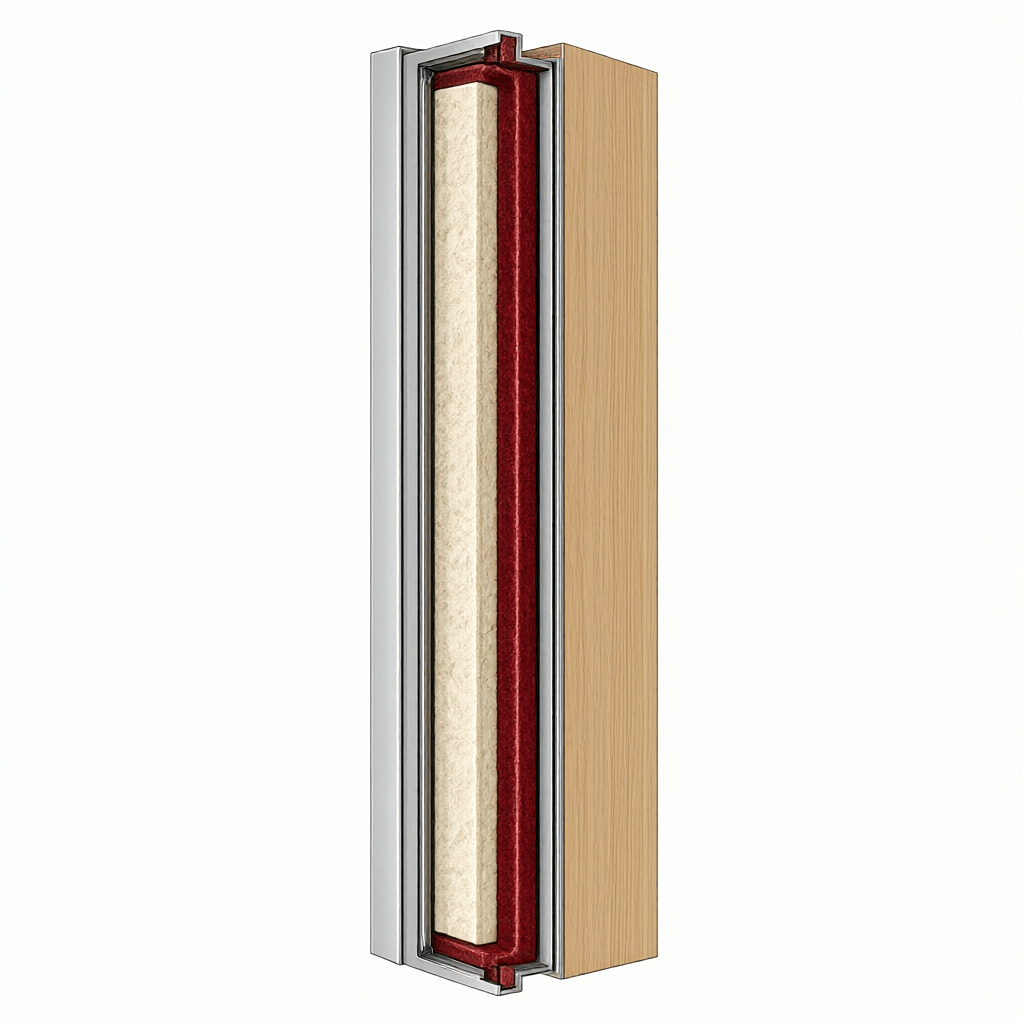
Fire rated wooden doors are engineered assemblies built to contain fire and smoke for a defined period. Their unit specification goes well beyond “wood and size” — every component is selected and tested together as part of a certified fire door set.
| Specification | Typical Range / Options |
|---|---|
| Fire Ratings | FD30 (30 min), FD60 (60 min), FD90 (90 min) |
| Certification Standards | EN 1634-1, BS 476 Part 22, UL 10C (depending on market) |
| Core Material | Solid wood core, MDF solid core, honeycomb paper core (non-fire-rated versions only) |
| Door Thickness | 35 mm (FD30), 44–45 mm (FD60), 54+ mm (FD90) |
| Single Leaf Width | 700–1000 mm |
| Double Leaf Width | 1200–1800 mm (pair) |
| Standard Heights | 1981 mm, 2100 mm (custom heights available) |
| Frame Material | Solid hardwood or engineered timber, galvanized steel frame option |
| Seals | Intumescent seals integrated into edge or rebate |
| Glass (if applicable) | Ceramic/fire-rated glass up to 25% of leaf area |
| Hardware | Certified hinges (3 per FD30/FD60, 4 per FD90), fire-rated lockset, closer |
| Surface Finish | Painted, veneered, laminated, or raw primer |
| Leaf Configuration | Single leaf, double leaf (paired), fixed side light optional |
The thickness and core density directly determine how long the door can resist flame penetration under test conditions. A FD30 solid-core door uses denser materials and thicker leaves than an FD30 door with a lighter construction — and this difference is visible both in performance and in unit price. Buyers sourcing for commercial building projects, hotels, hospitals, or multi-unit residential buildings should confirm that the complete door set — leaf, frame, seals, and hardware — carries a matching certification. A mismatched assembly can void the fire rating on installation. For deeper context on how FD30, FD60, and FD90 ratings compare, see our EI30 vs EI60 vs EI90 fire resistance comparison guide.
Applications — Where Can Fire Rated Wooden Doors Be Used?
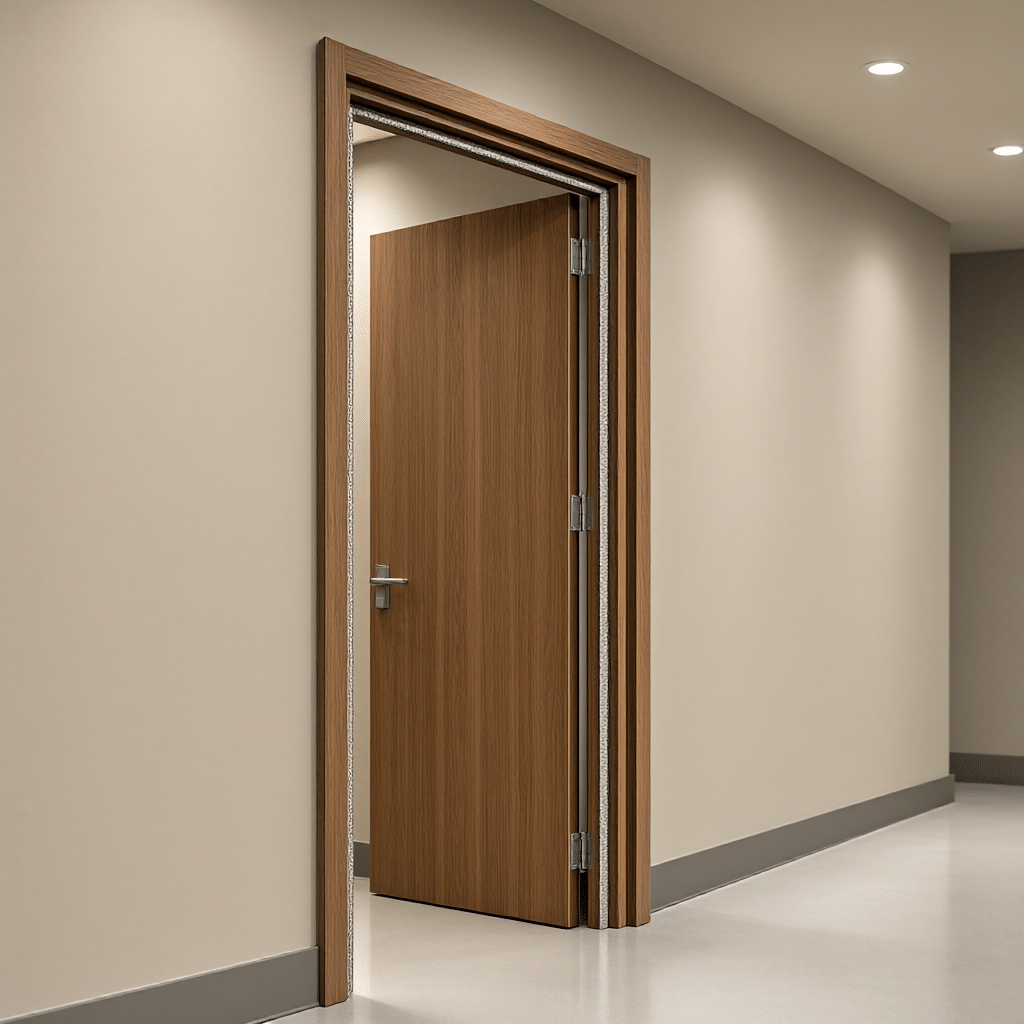
Fire rated wooden doors serve wherever building codes require fire separation between compartments. Common applications include:
- Multi-unit residential buildings — stairwell doors, corridor doors, basement partition doors
- Hotels and hospitality — guest room corridor doors, service area partitions
- Commercial office and mixed-use towers — exit stairs, lift lobbies, plant rooms
- Healthcare facilities — ward corridors, isolated department entrances
- Industrial warehouse fit-outs — separating flammable storage from general workspace
In each case, the required rating depends on the compartment boundary. External stairwells in high-rise buildings typically demand FD60 or FD90. Interior corridor doors in mid-rise residential may only require FD30. Local building codes define these requirements, and the International Building Code referenced through ICCSafe provides the baseline for many jurisdictions. Importantly, the door rating must match the wall rating it is installed in — a rated door does not compensate for an unprepared or non-rated wall assembly.
Buying Factors — What to Consider When Buying Fire Rated Wooden Doors in Bulk?
Several variables drive the unit price of a fire door and should be evaluated before requesting a quote.
Core Construction: Solid Core vs Honeycomb Core
Solid-core fire doors use dense timber or composite infill throughout the leaf. This construction delivers consistent fire resistance, better acoustic performance, and higher impact resistance. Honeycomb-core doors, by contrast, use a lightweight paper or card honeycomb fill — they are suitable only for non-rated interior partition doors. Some manufacturers offer hybrid constructions with partial honeycomb zones, but for any fire safety door intended for a rated opening, solid-core construction is the standard. This distinction alone accounts for a significant portion of the price spread between low-cost and mid-range options.
Hardware Selection
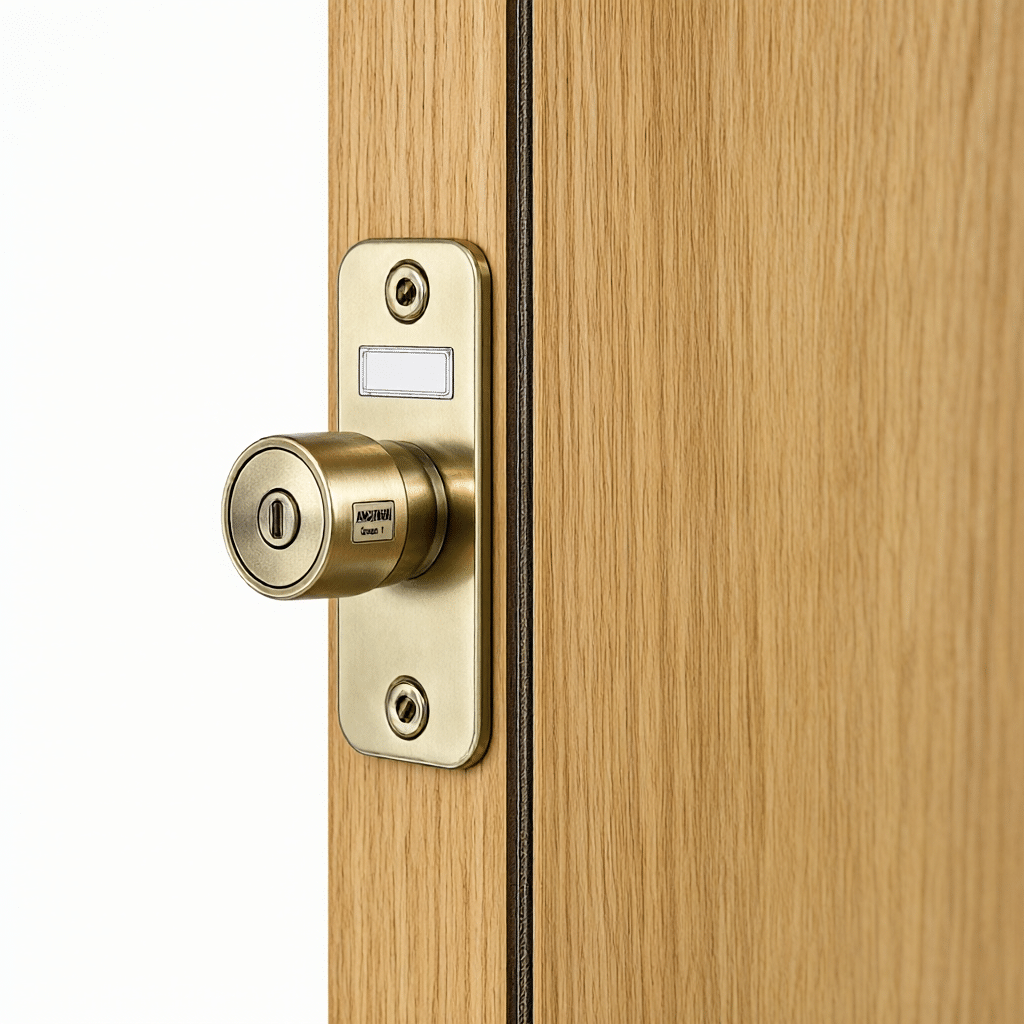
Certified fire door hardware adds materially to unit cost. Three-piece butt hinges with a fire rating, a certified door closer, and a compatible lockset or panic device all need to be tested and approved as part of the door assembly. Upgrading from basic certified hardware to a branded closer or a concealed hydraulic closer increases price per unit by roughly $15–$40. For high-traffic areas such as hospital wards or hotel corridors, specifying heavier-duty hardware from the start avoids costly replacements after installation.
Glazing and Vision Panels
Ceramic fire-rated glass panels are priced per square meter and added to the leaf cost. A single FD30-rated ceramic glass panel of typical size (300 × 400 mm) can add $30–$60 per door compared to a solid leaf. Glazing also requires a certified glazing bead and intumescent tape around the glass perimeter — these are non-negotiable components, not optional upgrades.
Finish and Surface Treatment
Pre-painted or pre-laminated finishes protect against moisture during transit and reduce on-site work. Veneered finishes in oak, walnut, or maple carry a premium over painted MDF surfaces. If the project requires a specific RAL color or fire-retardant paint system, confirm this upfront — some finishes require additional curing time that affects lead time.
Dimensional Customization
Standard sizes are produced fastest and at the lowest unit price because they run on established production lines. Custom widths or heights, particularly oversized or non-standard thick frames, require separate tooling setups and increase both cost and lead time.
Price & Cost — How Much Do Fire Rated Wooden Doors Cost Per Unit? (FOB China)
Pricing for fire rated wooden doors on an FOB China basis varies by rating and specification level. The ranges below reflect typical wholesale pricing for factory-direct orders of 50 units or more and should be used as a benchmark rather than a fixed quote.
| Fire Rating | Core Type | Estimated FOB Price Range (USD per unit) | Typical Lead Time |
|---|---|---|---|
| FD30 | Solid core, standard hardware, painted finish | $120 – $200 | 20–30 days |
| FD60 | Solid core, standard certified hardware | $200 – $320 | 25–35 days |
| FD90 | Solid core, heavy-duty hardware, reinforced frame | $320 – $450+ | 30–45 days |
| FD30 with ceramic glass panel | Solid core, glass + certified glazing | $180 – $280 | 25–35 days |
| FD60 with ceramic glass panel | Solid core, glass + certified glazing | $280 – $400 | 30–40 days |
Prices above assume standard door sizes (single leaf, ~900 × 2100 mm) and do not include: shipping freight, marine insurance, import duties, customs clearance, or any market-specific certifications such as LPCB or BEAB testing.
Several cost drivers push prices outside these ranges:
- Hardware upgrades — higher-end closers and locks add $20–$60 per unit.
- Glass additions — ceramic glass panels add $30–$80 per unit depending on size.
- Custom dimensions — non-standard widths or heights typically carry a 10–25% premium.
- Special finishes — premium veneers or custom RAL colors add 5–15%.
- Additional certification tests — if your target market requires LPCB, ULC, or specific national approvals, independent testing fees are usually passed through or reflected in the unit price.
Evidence & Practical Notes
Field note: When evaluating fire door quotes from multiple suppliers, always ask for a completed door schedule that lists every component — leaf construction, core type, seal specification, hinge model and count, closer make and model, and glazing details if applicable. Vague specifications such as “certified FD30” without the supporting document set are a common reason for specification mismatches at site.
Practical limitation: Even when a manufacturer holds valid test certificates, those certificates apply to a specific door assembly — a particular leaf thickness, core type, frame profile, seal size, and hardware combination. Substituting any one of these components on-site can compromise the fire rating. This is why coordinating the full door set through a single supplier, rather than mixing and matching components from different vendors, is a practical necessity on大多数 projects.
Buyer takeaway: Request test reports and certificate copies before placing the order. Confirm that the exact configuration you are buying matches the tested assembly. This single check prevents specification rejection at inspection and avoids delays caused by late-stage certification disputes.
Sourcing from a Manufacturer — Here Is How We Meet These Standards
When buyers evaluate a fire door price per unit from a Chinese supplier, the real differentiator is not the sticker price but whether the delivered product matches the tested and certified specification exactly. As a manufacturer, our approach to this starts with understanding which certification standard applies to your target market — EN 1634-1 for Europe and many international projects, BS 476 Part 22 for the UK, or UL 10C for North America — and building the door set accordingly.
Every fire door we produce is assembled as a complete rated unit: solid-core leaf construction, intumescent seals sized to the tested profile, certified hardware配置的, and pre-shipment tested for air-tightness, water-tightness, and wind resistance. Because we handle full customization — size, core density, glass panel layout, finish, and fitting selection — we can adjust the profile structure and hardware to meet local building code requirements for your market.
For buyers managing larger volumes, we support both FCL and LCL shipments with complete documentation including packing lists, proforma invoices, and customs paperwork. We also provide OEM and ODM services for brands and distributors who need private-label fire door products. When planning container loads, referencing our 20ft container door loading quantity guide and our FCL vs LCL shipping comparison helps you estimate total landed cost more accurately.
OPENING:
A fire rated wooden door typically costs between $120 and $450 per unit FOB China, with FD30 units ranging from $120–$200, FD60 from $200–$350, and FD90 from $320–$450+. Unit price depends on fire-resistance rating, core material, hardware configuration, glazing, surface finish, and order volume — factors this guide walks through so buyers can request comparable quotes and estimate total landed cost before committing to a supplier.
Complete: Finish and Surface Treatment Section
The existing “Finish and Surface Treatment” paragraph ends mid-word at “additio”. Replace that entire ### H3 block with the completed version below:
Remove Premature CTA from Price & Cost Section
In the existing Price & Cost section, delete the line containing the anchor tag Get a Free Quote. This is a commercial signal appearing in the first two-thirds of the article and violates the commercial-signal placement rule.
Fix Chinese Characters in Evidence Section
In the Evidence & Practical Notes section, replace the sentence:
This is why coordinating the full door set through a single supplier, rather than mixing and matching components from different vendors, is a practical necessity on大多数 projects.
with:
This is why coordinating the full door set through a single supplier, rather than mixing and matching components from different vendors, is a practical necessity on most projects.
And replace “certified hardware配置的,” in the final section with:
certified hardware configured,
### Minimum Order Quantities and Lead Times
Minimum Order Quantities and Typical Lead Times
Fire rated wooden doors are custom-manufactured assemblies, so MOQ and lead-time terms differ from off-the-shelf building products. Most Chinese factories set the following baseline:
| Order Volume | Typical MOQ Applied | Estimated Lead Time |
|---|---|---|
| Trial / sample order | 5–10 units | 15–25 days |
| Small batch (single room type) | 20–50 units | 20–35 days |
| Medium project (one building) | 50–200 units | 25–45 days |
| Large multi-building project | 200+ units | 30–60 days |
Lead time assumes confirmed specs, approved sample, and completed payment. Delays commonly arise from: pending drawingle approval, custom glass sizing, special finish curing cycles, or port congestion. Buyers should ask the factory to break lead time into milestones — spec confirmation, sample dispatch, PP approval, production start, inspection window, and container loading — so progress can be tracked week by week.
For orders under MOQ, factories often apply a surcharge of 10–30% per unit to cover setup and line-change costs. Multiple door types or sizes within the same order can sometimes share production runs and reduce the per-unit overhead.
### How to Request and Compare Quotes from Manufacturers
## Total Landed Cost Breakdown — Project Examples
Total Landed Cost Breakdown — Real-World Project Examples
Unit price is only the starting point. Total landed cost includes freight, insurance, import duty, customs clearance, and any market-specific compliance modifications. Below are illustrative examples based on actual project profiles.
Example 1 — 200-Unit Hotel Chain Project, Southeast Asia
| Cost Component | Amount (USD) |
|---|---|
| 640 × FD60 solid-core doors @ $275/unit FOB Shanghai | $176,000 |
| 640 × certified hinges + closers + locksets included above | — |
| Marine freight (LCL consolidation to Singapore) | ~$8,500 |
| Marine insurance (0.3% of cargo value) | ~$530 |
| Import duty (Singapore HS 8306.22, ~0%) | $0 |
| Customs clearance & terminal charges | ~$1,200 |
| Estimated total landed cost per unit | ~$285–$295 |
Example 2 — 120-Unit Residential Block, Middle East (UAE)
| Cost Component | Amount (USD) |
|---|---|
| 360 × FD60 doors @ $290/unit FOB Ningbo | $104,400 |
| 360 × ceramic glass panels @ $45/panel added | $16,200 |
| Marine freight (FCL 20ft × 2 containers to Jebel Ali) | ~$7,200 |
| Marine insurance | ~$600 |
| Import duty (UAE, 5%) | ~$6,030 |
| Civil Defense compliance modification (emblem labeling) | ~$1,500 |
| Customs clearance & depot charges | ~$2,000 |
| Estimated total landed cost per unit | ~$345–$360 |
Key Takeaways for Landed-Cost Planning
- Freight represents 3–8% of FOB value for container loads; LCL rates vary widely by destination.
- Import duty is market-specific — check the HS code and current tariff schedule before budgeting.
- Compliance modifications (testing, labeling, mark approval) can add 1–3% and are often omitted from initial quotes.
- Always request a Pro Forma Invoice that separates FOB value, freight, insurance, and any auxiliary fees so every cost component is visible.
## Procurement Decision Guide
Pre-Order Verification Checklist
Number each item and obtain written confirmation from the supplier before releasing payment:
- [ ] Certification documents requested — copy of test report (EN 1634-1 / BS 476 Part 22 / UL 10C), certificate of conformity, and scope of certification listing the exact door assembly.
- [ ] Sample inspection points — measure leaf thickness, core density, seal cross-section, hinge gauge, and closer closing force against the quoted specification.
- [ ] Factory audit questions — production line capacity per month, QC inspection stages (incoming material, in-process, final), and re-test protocol if any component changes.
- [ ] PP sample approval — approve a pre-production sample representing the exact configuration before mass production begins.
- [ ] Quality inspection agreement — define AQL levels or 100% inspection for fire-rated assemblies, and confirm who performs the inspection (third-party SGS/Intertek or internal).
- [ ] Shipment documentation — packing list, commercial invoice, bill of lading, certificate of origin, and test report copies included in the document set.
Exact Quotation Process Steps
| Step | Action | Typical Timeline |
|---|---|---|
| 1 | Quote request with full door schedule and specs | Day 1 |
| 2 | Spec confirmation — factory validates compatibility with certified assembly | Days 2–5 |
| 3 | Sample production and dispatch (if required) | Days 5–15 |
| 4 | PP (pre-production) sample approval by buyer | Days 15–20 |
| 5 | Mass production start after PP approval and deposit received | Days 20–40 |
| 6 | Pre-shipment inspection and documentation preparation | Days 40–45 |
| 7 | Shipment (FCL/LCL) and export customs clearance | Days 45–55 |
Quick Comparison: What Drives Your Final Unit Price
| Factor | Low-End Impact | High-End Impact |
|---|---|---|
| Fire rating | FD30 @ $120–$200 | FD90 @ $320–$450+ |
| Core material | Standard solid timber core | Dense composite / upgraded core |
| Hardware | Basic certified set | Branded concealed closer + premium lockset |
| Glazing | Solid leaf | Ceramic glass panel(s) per door |
| Finish | Primed or standard painted | Veneer or custom RAL powder coat |
| Order volume | < 50 units (MOQ surcharge applies) | 200+ units (volume discount available) |
| Destination market | No extra compliance | Additional marking / testing fees |
## Updated: Sourcing from a Manufacturer Section (Final Third Only)
Replace the existing Sourcing from a Manufacturer section with the cleaned version below:
Sources & References
- EI30 vs EI60 vs EI90 fire resistance comparison guide — doorwoodendoors.com
- ICCSafe — www.iccsafe.org
- 20ft container door loading quantity guide — doorwoodendoors.com
- FCL vs LCL shipping comparison — doorwoodendoors.com











