
Last updated: November 25, 2026
Importing doors from China for the Italian market requires matching verifiable product performance to EN standards, preparing complete customs documentation for Italian border clearance, and modeling total landed cost accurately. Successful procurement centers on three checkpoints: third-party test reports citing EN 14351-1 performance classes (air permeability Class 4, water-tightness Class E750, wind load resistance Class C3), an exporter experienced with FCL/LCL shipments and full documentation including certificate of origin and TARIC-compliant invoicing, and a landed-cost estimate that accounts for factory price, ocean freight, Italian import duty, and VAT before any purchase order is issued.
Quick Answer
A China door manufacturer suitable for the Italian market holds valid CE-related conformity documentation for windows and exterior glazing systems, demonstrates measurable performance through third-party test reports for air-tightness, water-tightness, and wind load resistance, and has experience preparing export documentation that satisfies Italian customs procedures. The evaluation centers on verifiable testing data, not factory photographs or price lists alone. Buyers should request test certificates referenced to EN standards, confirm profile and hardware configurations can be adjusted to match local Italian building code requirements, and verify logistics capability for both FCL and LCL shipments from the China factory.
Detailed Explanation
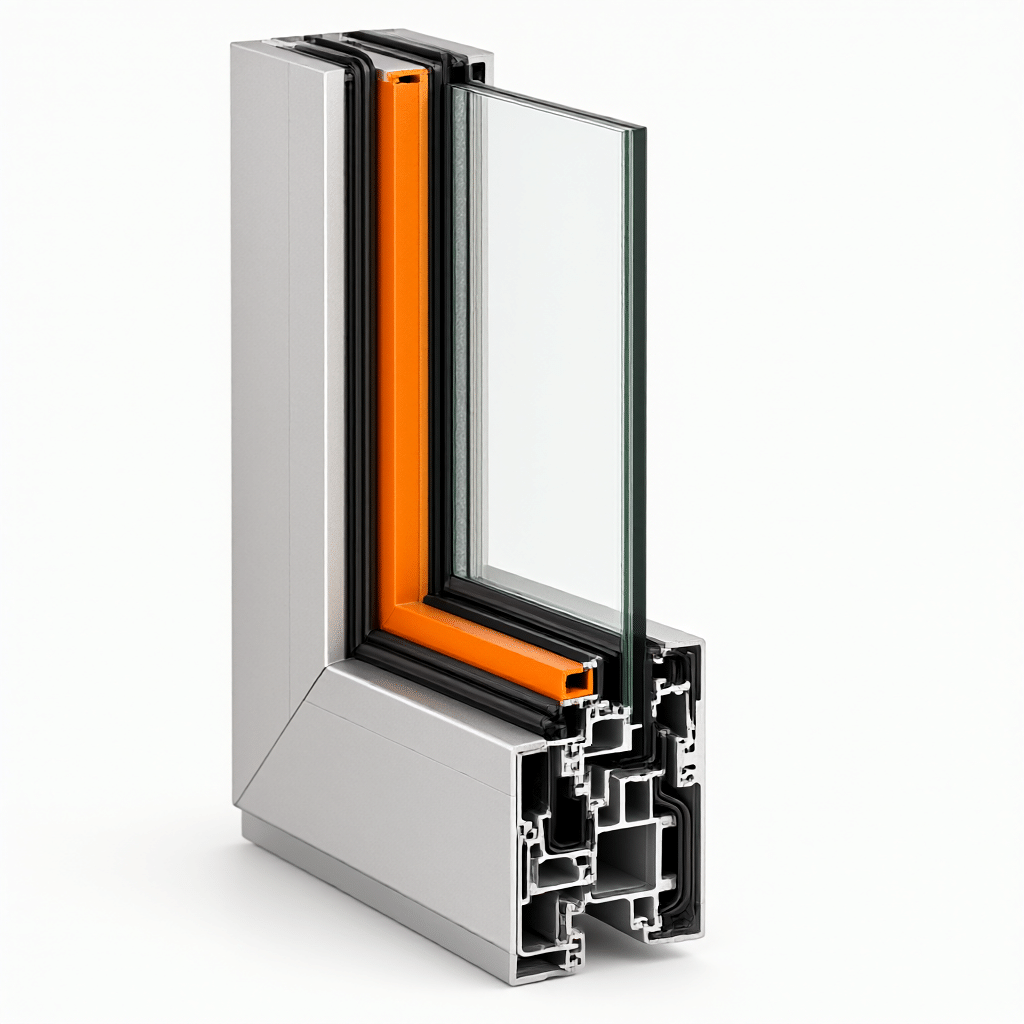
What qualifies a China door manufacturer for the Italian market?
Suitability breaks down into three practical layers: technical compliance, quality assurance process, and export documentation capability.
On the technical side, Italian buyers import two broad categories — interior doors and exterior entrance/facade doors. Exterior products face stricter expectations because they must resist weather loading, meet energy-performance targets under Italian building regulations, and carry appropriate markings for placement on the EU market. Interior doors have lighter compliance obligations but still require dimensional stability, surface finish consistency, and hardware reliability.
Reliable manufacturers distinguish themselves through documented testing rather than verbal claims. Third-party test reports referencing recognized European norms give Italian procurement teams a concrete basis for specification matching. A factory that can present test data for air permeability, water penetration resistance, and wind load performance allows the buyer to verify whether the product meets the project’s engineering requirements before any order is placed.
On the documentation side, the manufacturer must be able to prepare a complete export package: commercial invoice, packing list, certificate of origin, and any product-specific declarations required by Italian customs. Experience with FCL and LCL shipments further reduces the risk of delays or incomplete paperwork at port.
Why China remains a competitive sourcing origin for door and window projects
China continues to be one of the largest sourcing destinations for doors and windows because the manufacturing ecosystem spans multiple specialized regions. Aluminum profile extrusion and thermal-break system production concentrate in provinces such as Guangdong and Zhejiang, while solid wood door manufacturing has strong clusters in areas with established timber processing infrastructure. Hardware suppliers — hinges, locks, handles, closers — also operate within concentrated supply networks, which lowers lead times and improves specification flexibility.
The cost advantage stems from economies of scale, integrated material sourcing, and mature export logistics channels. For Italian buyers working on hotel and resort renovation projects, residential villa developments, or multi-unit apartment contracts, this means the landed cost for bulk door orders often remains competitive even after shipping, duties, and VAT are accounted for.
That said, the savings are not automatic. Pricing varies significantly depending on material choice, glass specifications, hardware grade, and finishing requirements. A well-sourced order requires clear specification alignment between the Italian buyer and the China factory, not simply selecting the lowest unit price on a quotation sheet.
How does a buyer evaluate a Chinese door supplier reliably?
Evaluation goes beyond what appears on an Alibaba storefront or a PDF capability brochure. Practical due diligence includes requesting recent third-party test reports, asking for references from past export shipments to Europe or Italy, and verifying that the factory can adjust profile sections and fittings to meet the performance classes specified on the Italian project.
Language and communication setup also matters. A manufacturer with experienced foreign-trade staff can translate Italian project specifications into precise factory work orders, reducing the likelihood of mismatched dimensions, incorrect finishes, or hardware errors that only surface after production begins.
See our door factory audit checklist for a structured approach to supplier vetting.
Key Specifications
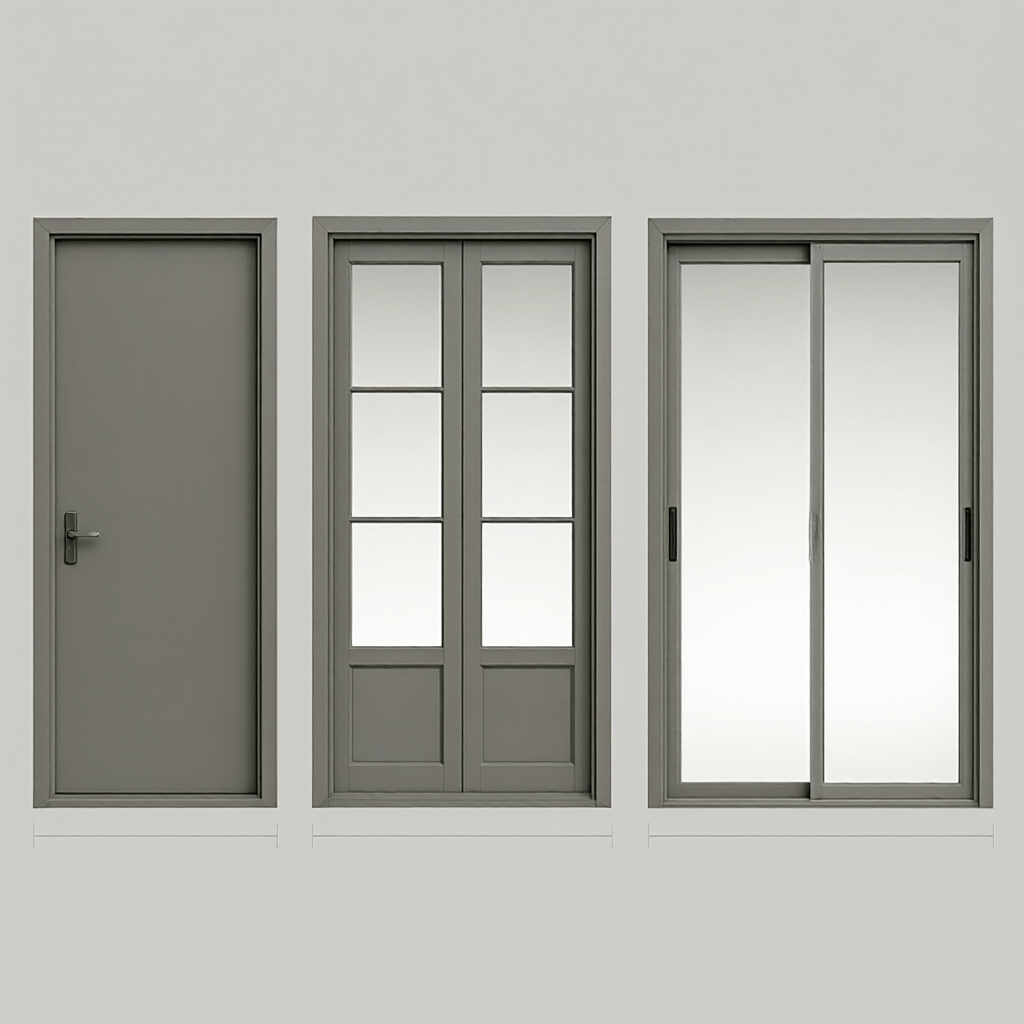
What customization dimensions can a buyer negotiate with a Chinese factory?
Chinese door and window manufacturers typically offer adjustments across several specification axes. Profile structure and cross-section geometry can be modified to match the thermal-break requirements or installation details preferred on Italian projects. Glass configurations range from single glazing to double and triple units, with options for low-E coatings, argon fill, and laminated or tempered safety glass depending on the application.
Surface finishing is another flexible area. Powder coating in RAL colors, anodized treatments, and PVDF coatings are commonly available for aluminum systems, while solid wood doors can be specified in various species and stain or paint finishes. Hardware selection — handles, locks, hinges, closers, and security fittings — can usually be matched to the Italian buyer’s preferred brand or performance class.
Size ranges are generally adjustable rather than fixed. Factories accustomed to export work will accommodate non-standard opening dimensions, which is important for villa and renovation projects where Italian buildings often feature irregular apertures.
Send Your Opening Sizes for a Custom Quote
How are air-tightness, water-tightness, and wind resistance tested before shipment?
These three performance parameters are measured using standardized laboratory procedures that simulate real environmental loading. Air-tightness testing evaluates how much air passes through the assembled door or window unit under a specified pressure differential; lower airflow indicates better sealing performance. Water-tightness testing applies increasing water pressure while simulating rain conditions to determine the pressure level at which water penetrates the assembly. Wind resistance testing subjects the product to cyclic positive and negative pressure loads to verify structural integrity and deflection limits.
Italian buyers should ask for test reports that state the tested performance class or value, the reference standard used, and the testing laboratory’s accreditation. Manufacturers that conduct routine pre-shipment inspections covering these tests are better positioned to deliver products that perform consistently on site.
For guidance on container loading efficiency, see the 20ft container door loading guide.
How do FCL and LCL shipments differ for door orders to Italy?
FCL shipments assign an entire container to a single buyer, which provides greater control over loading configuration, reduces handling risk, and simplifies customs documentation because the container contents are clearly attributed to one consignor and consignee. For larger projects — hotel renovations, villa developments, or commercial construction contracts — FCL is usually the more efficient choice.
LCL shipments consolidate cargo from multiple shippers into one container, which lowers upfront cost for smaller orders but introduces additional handling steps and potential complexity at destination port. Door products are sensitive to stacking pressure and surface contact, so LCL consolidation requires careful packaging and dunnage practices.
The decision between FCL and LCL depends on order volume, timeline flexibility, and project phasing. For Italian buyers new to China sourcing, understanding both models helps avoid underestimating lead times or misjudging total landed cost.
Standards & Requirements
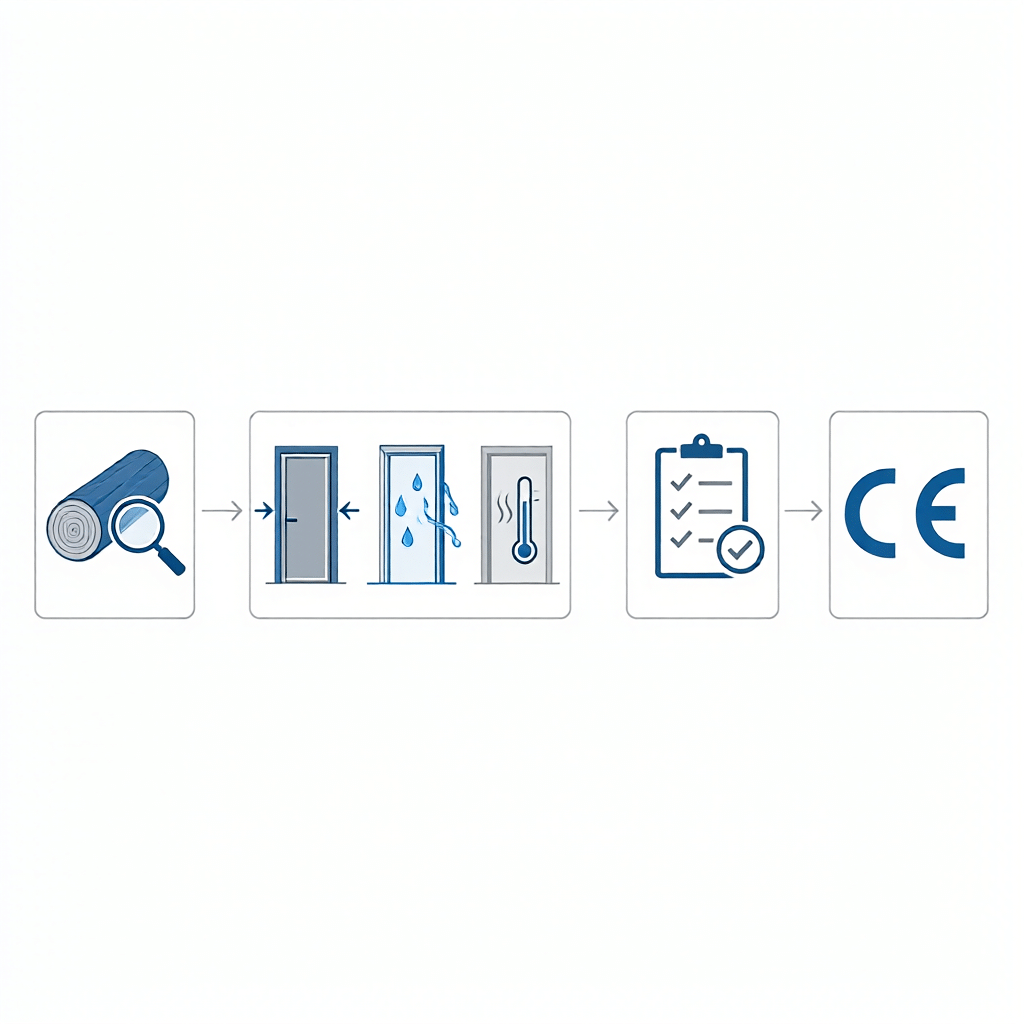
Which certifications and test reports apply to door imports into Italy?
Certification expectations depend on product category and intended placement. Exterior doors and windows that form part of the building envelope may require conformity documentation supporting CE marking under applicable EU product regulations. Interior doors generally fall outside mandatory CE marking regimes but still benefit from third-party test reports that confirm performance claims.
Commonly requested documents include test reports for air permeability, water penetration resistance, and wind load performance referenced to EN standards, material safety declarations where relevant, and factory quality management certification such as ISO standards that demonstrate consistent production controls. Italian buyers should verify that test reports are issued by accredited laboratories and that the reported values meet the specification classes called out in the project tender or national building code requirements.
Regarding durability and finish performance, powder coating, anodizing, and PVDF finishes each have different service-life characteristics that matter in coastal or high-UV Italian environments.
What documentation must accompany container shipments for Italian customs clearance?
A complete export documentation set for door shipments to Italy typically includes the commercial invoice, packing list, certificate of origin, and bill of lading or air waybill. Depending on product type and declared value, additional documents such as a supplier’s declaration of conformity or material safety data may be requested by Italian customs or the importing entity.
Accurate Harmonized System coding on the commercial invoice is essential, because it determines the applicable import duty rate. Italian buyers should confirm the correct HS code with their customs broker before shipment, since misclassification can cause delays, unexpected duty assessments, or compliance reviews. For a detailed breakdown of door HS codes and import duties relevant to Italy, see the Door HS Code and Import Duty guide.
Shipping model choices also affect documentation flow. When comparing methods for larger orders, the FCL versus LCL procurement guide outlines how paperwork and liability differ between full-container and consolidated shipments.
Related Considerations
What red flags should Italian buyers watch for during supplier vetting?
Several warning signals routinely appear during China door supplier evaluation. One common red flag is a quotation that lacks itemized specification detail — unit prices without clear scope for profile thickness, glass type, hardware grade, or finish system make it difficult to compare offers meaningfully. Another is reluctance to share recent third-party test reports or to explain how those reports map to Italian project requirements.
Factory-only portfolios that contain no evidence of past export shipments to Europe raise questions about documentation familiarity and compliance practice. Similarly, manufacturers that cannot articulate how their products handle thermal-break performance, acoustic ratings, or wind-load classes are likely operating in a segment focused on domestic or lower-specification markets rather than export-grade production.
Payment term requests that deviate sharply from standard trade practice — such as demanding full advance payment before any specification confirmation or testing review — deserve careful scrutiny. Reputable suppliers accustomed to European trade generally accept mutually agreed terms that provide balanced risk allocation.
What is the typical cost structure when importing doors from China to Italy?
Imported door costs break down into several components: factory FOB price, inland transport to the loading port, ocean freight, insurance, Italian port charges, customs clearance fees, import duty, and VAT. The relative weight of each component changes with order size, product specification, shipping route, and prevailing freight rates.
Factory prices vary widely depending on material and configuration. Thermal-break aluminum systems with multi-chamber profiles, safety glass, and European-grade hardware command higher unit costs than basic interior doors or simpler aluminum assemblies. Ocean freight adds a variable layer that fluctuates with fuel surcharges and route capacity, while Italian import duty and VAT are applied according to the classified HS code and current TARIC rates.
Buyers who model total landed cost rather than focusing exclusively on unit price tend to make more accurate budget decisions. A modestly higher factory price that includes proper testing documentation, robust packaging, and experienced export handling often proves cheaper in practice than a low quotation that generates replacement orders, delay costs, or compliance remediation after arrival.
For current-year pricing frameworks, consult the 2026 Door HS Code & Import Duty guide and reach out with your opening sizes and project specs for a detailed quotation.
Here Is How These Standards Apply in Practice
When Italian buyers evaluate a China-based door supplier, the decisive factor is usually whether the factory can prove compliance through documented testing and export experience rather than marketing material alone. A manufacturer that adjusts profile structures and fittings to match local Italian building code requirements, runs strict pre-shipment checks for air-tightness, water-tightness, and wind resistance, and prepares complete export paperwork including packing lists, proforma invoices, and customs documentation tends to deliver fewer surprises on site.
Factories with direct shipment capability for both FCL and LCL cargo reduce coordination complexity, while OEM and ODM experience allows Italian builders and project developers to specify private-label solutions tailored to their developments. The practical outcome is a procurement process where specifications, test evidence, and logistics are aligned before production starts, not after containers arrive at Italian ports.
What technical parameters should an Italian buyer specify for Chinese door orders?
Concrete technical specifications reduce the risk of specification mismatch during production and help the factory align with Italian building-code expectations. Key parameters to confirm before placing an order include frame depth (typically 60 mm to 95 mm for exterior thermal-break aluminum systems), minimum extruded wall thickness (commonly 1.4 mm to 2.0 mm depending on profile category), and aluminum alloy grade — 6063-T5 is the standard structural alloy used across most European-spec window and door systems sourced from China.
Thermal performance is expressed through U-value ranges; well-designed thermal-break aluminum doors with double glazing typically achieve U-values between 1.4 W/m²K and 2.8 W/m²K depending on glass configuration, spacer type, and frame insulation continuity. The width of the thermal-break strip — commonly 24 mm to 32 mm in residential systems and wider in high-performance versions — is a critical determinant of achievable U-value. For acoustic requirements, buyers should reference the sound reduction index R_w in decibels; multi-chamber profiles combined with laminated or thickened safety glass can reach R_w values above 42 dB, relevant for urban Italian projects.
Hardware and finish selections also affect long-term performance in the Italian climate. Coastal installations benefit from PVDF-coated aluminum or marine-grade stainless-steel hardware, while interior applications may prioritize aesthetic wood-grain finishes via foil-lamination or powder coating. Every technical parameter should be documented in a signed work order, not conveyed verbally.
Send Your Opening Sizes for a Custom Quote
What EU and Italian regulatory requirements apply to imported doors and windows?
Doors and windows intended for the EU market fall under harmonized product regulations that require conformity assessment, appropriate markings, and declared performance characteristics. The governing European standard for windows, doors, shutters, and skylights is EN 14351-1, which defines performance requirements and test methods for air permeability, water-tightness, wind load resistance, mechanical strength, and certain thermal properties. Performance classes are assigned according to the tested results — for example, a typical exterior entrance door for an Italian residential project might target air permeability Class 4, water-tightness Class E750, and wind load resistance Class C3 — and these classes must match the engineering specifications required by the Italian national building code (D.M. 14 January 2008 and subsequent updates referencing European norms).
For projects requiring documented energy performance, the U-value of the assembled product must be calculated or tested in accordance with EN 10077 or EN ISO 10077. Thermal-break aluminum systems with appropriately sized insulating strips and quality double-glazed units can meet Italian energy-efficiency targets for both residential and commercial constructions. Acoustic performance, where specified, follows the measurement protocols defined within the same EN 14351 framework, with results reported as R_w values.
When products carry CE marking as part of a declared conformity, the manufacturer or their authorized representative prepares a Declaration of Conformity and affixes the marking in compliance with the applicable EU regulation. Interior-only doors generally do not carry mandatory CE marking but still benefit from independent test reports confirming the stated performance levels. Italian public procurements and larger private developments routinely require test certificates issued by recognized laboratories such as TÜV, ACS, or CTM to verify that the supplied product meets the declared EN class values. Detailed guidance on fire-resistance rating comparisons can be found in our EI30 vs EI60 vs EI90 guide for projects where fire-rated doors are specified.
How does a buyer model total landed cost for door imports into Italy?
Understanding total landed cost prevents budget surprises and enables fair comparison between quotations. The primary cost components for importing doors from China to Italy are the factory FOB price, inland transportation to port, ocean freight, marine insurance, Italian port charges and terminal handling, customs clearance fees, import duty, and Italian VAT (currently 22% for most door categories unless a reduced rate applies under specific provisions).
A typical landed-cost calculation for a thermal-break aluminum entrance door illustrates how each layer compounds. Assume a unit FOB price of €85 per door, ocean freight of approximately €8 per door for a full container load (FCL) shipped from Shenzhen to Genoa or Trieste, Italian port and customs handling of roughly €5 per door, an import duty rate of 4.5% applied to the CIF value, and VAT of 22% applied to the CIF value plus duty. Under these assumptions, the estimated unit landed cost approaches €110 to €120 per door, though exact figures depend on container loading density, prevailing freight rates, and the specific HS classification used on the commercial invoice.
Buyers who evaluate only the unit FOB price often underestimate total expenditure. A properly prepared quotation from an experienced exporter includes itemized line items for packaging, loading configuration, documentation preparation, and pre-shipment inspection coverage — all of which contribute to predictable delivery and compliant entry into the Italian market.
What communication, MOQs, and lead-time expectations should a buyer plan for?
Clear communication is one of the strongest predictors of a smooth procurement cycle. Buyers should establish a single-point-of-contact arrangement with the manufacturer’s foreign-trade department, share project specifications in written form, and request a formal quotation that references the exact EN performance classes, glass specifications, hardware brands, and finish types before signing a purchase agreement.
Most China-based door manufacturers operate with a minimum order quantity calibrated to production efficiency — commonly ranging from one 20-foot container up to multiple containers depending on product type and configuration complexity. Lead times typically span four to eight weeks from confirmed order and deposit receipt through production completion and pre-shipment inspection, with additional time required for freight transit to Italian ports and customs processing. During peak manufacturing seasons, lead times can extend further, so buyers working on construction schedules with fixed handover dates should factor buffer time into their planning.
Reliable suppliers provide draft packing lists, proforma invoices, and documentation previews early in the process, enabling Italian buyers and their customs brokers to verify correctness before shipment is finalized.
What specific supplier example demonstrates verified expertise for the Italian market?
Experience exporting to Italy requires familiarity with both product compliance and documentation workflows. A practical example comes from a China-based door and window manufacturer operating a production facility in Guangdong province that has established regular export operations serving Italian clients. This manufacturer supplies thermal-break aluminum entrance doors and system windows to Italian villa developers and renovation contractors, and prepares documentation sets that include commercial invoices, detailed packing lists, certificates of origin, and material declarations aligned with Italian import requirements.
The manufacturer’s approach focuses on specifying products against EN 14351-1 performance classes rather than offering generic catalog options. Pre-shipment inspections cover air-tightness, water-tightness, and wind-load resistance testing alongside dimensional verification, ensuring that each container delivers consistent results. Because the factory maintains direct control over profile extrusion coordination, hardware selection, and surface finishing, it can adjust frame depth, thermal-break geometry, and fitting configurations to match the engineering requirements of individual Italian projects.
This model — combining documented performance testing, adjustable specification support, and mature export logistics — reflects what successful Italy-bound door procurement looks like in practice.
Why the manufacturer behind a quotation matters as much as the product itself
When evaluating potential suppliers, Italian buyers should consider the operational practices that differentiate reliable exporters from those that create post-order friction. A manufacturer that provides structured pre-shipment inspection covering air-tightness, water-tightness, and wind resistance gives buyers measurable confidence before cargo leaves the factory. Factories accustomed to foreign-trade workflows can produce packing lists, proforma invoices, and full customs documentation in formats Italian clearing agents expect, reducing the chance of delays at destination port. Adjustable profile structures and fittings allow each order to comply with the specific building-code references cited on Italian project tender documents, whether those relate to thermal performance, acoustic ratings, or structural load requirements.
For buyers ready to move from evaluation to specification review, reaching out with your project dimensions and performance requirements allows the manufacturer’s team to prepare a quotation that maps directly to your Italian compliance needs.
Request a Specification Review and Quotation
OPENING:
Importing doors from China for the Italian market requires matching verifiable product performance to EN standards, preparing complete customs documentation for Italian border clearance, and modeling total landed cost accurately. Successful procurement centers on three checkpoints: third-party test reports citing EN 14351-1 performance classes (air permeability Class 4, water-tightness Class E750, wind load resistance Class C3), an exporter experienced with FCL/LCL shipments and full documentation including certificate of origin and TARIC-compliant invoicing, and a landed-cost estimate that accounts for factory price, ocean freight, Italian import duty, and VAT before any purchase order is issued.
Why China remains a leading sourcing origin for door and window manufacturers
China continues to be one of the largest sourcing destinations for doors and windows because the manufacturing ecosystem spans multiple specialized regions with concentrated capabilities. Aluminum profile extrusion and thermal-break system production is clustered in provinces such as Guangdong and Zhejiang, where integrated supply chains cover billet casting, profiling, powder coating, glass cutting, and hardware assembly under one regional network. Solid wood door manufacturing benefits from established timber processing bases and species sourcing that allow exporters to offer both domestic and imported wood types. Hardware suppliers — hinges, locks, handles, closers, security fittings — also operate within dense supply clusters, reducing lead times and enabling specification flexibility that smaller sourcing countries cannot match.
The structural cost advantage stems from economies of scale, vertical integration across material categories, and mature export logistics corridors connecting major ports such as Ningbo, Shanghai, and Shenzhen directly to Mediterranean routes serving Genoa, Trieste, and Naples. For Italian buyers working on hotel renovations, residential villa developments, multi-unit apartment contracts, or public building projects, this means the landed cost for bulk door orders often remains competitive even after shipping, duties, and VAT are accounted for — provided specifications are clearly defined upfront.
That said, the savings are not automatic. Pricing varies significantly depending on profile wall thickness, glass configuration, hardware grade, surface finish class, and order volume. A well-sourced order requires precise specification alignment between the Italian buyer and the China factory, not simply selecting the lowest unit price on a quotation sheet.
Key evaluation criteria for selecting a reliable Chinese door supplier
Evaluation goes beyond Alibaba storefront presentations or PDF capability brochures. Practical due diligence follows a structured scoring framework covering five weighted criteria:
| Evaluation Criterion | Weight | What to Verify |
|---|---|---|
| Certifications & documentation | 25% | ISO 9001 quality management; CE conformity declaration referencing EN 14351-1; accredited laboratory test reports |
| Testing capability | 25% | In-house or partnered lab for air-tightness, water-tightness, and wind-load testing; ability to produce test reports per project specification |
| Logistics experience | 20% | Demonstrated FCL and LCL shipment history to Italy/EU; familiarity with Italian customs documentation requirements; container loading planning expertise |
| Language & communication support | 15% | English-speaking foreign-trade staff; ability to translate Italian project specifications into factory work orders without ambiguity |
| Sample & sampling process | 15% | Clear sample timeline and cost policy; willingness to produce pre-production samples for approval before full batch manufacturing |
Buyers should request recent third-party test reports from the supplier, ask for references from past export shipments to Europe or Italy, and verify that the factory can adjust profile sections and fittings to meet the performance classes specified on the Italian project. The Door Factory Audit Checklist provides a step-by-step framework for rating each criterion objectively.
Red flags indicating unreliable Chinese door suppliers
Several warning signals routinely appear during China door supplier evaluation and merit immediate scrutiny:
- Quotations lacking itemized specification detail — unit prices without clear scope for profile wall thickness, glass type, hardware grade, or finish system make it impossible to compare offers meaningfully or verify whether the quoted product meets the requested performance class.
- Reluctance to share recent third-party test reports — a supplier who deflects requests for air-permeability, water-penetration, or wind-load test certificates may lack legitimate testing capability or may be quoting products that do not satisfy EN classification requirements.
- Inability to reference specific EN clauses in CE declarations — a CE conformity declaration that does not cite the applicable harmonized standard (e.g., EN 14351-1 for exterior doors and windows) is insufficient for Italian market compliance and may delay customs clearance.
- Factory-only portfolios with no evidence of past European exports — absence of shipment records, bills of lading, or client references from Italy or the EU raises questions about documentation familiarity and compliance practice.
- Refusal to accommodate third-party inspections — suppliers who resist SGS, TÜV, or similar independent inspection agencies before shipment are typically unwilling to be held accountable for quality discrepancies.
- Payment terms demanding full advance before any specification confirmation — reputable suppliers accustomed to European trade accept mutually agreed terms (typically 30% deposit, 70% against copy of bill of lading) that balance risk between buyer and seller.
- No clear warranty terms or after-sales support policy — absence of written warranty coverage for hardware, glass seal failure, or finish degradation signals a supplier operating without long-term liability frameworks expected in EU trade.
Italian buyers encountering multiple red flags should pause and reassess whether the supplier possesses the compliance infrastructure required for the Italian market.
Italian and EU regulatory requirements for imported doors and windows
Certification expectations depend on product category and intended placement within the building envelope. Exterior doors and windows that form part of the façade must comply with the EU Construction Products Regulation (CPR 305/2011), which governs CE marking for construction products placed on the EU market. Interior doors generally fall outside mandatory CE marking regimes but still benefit from third-party test reports confirming dimensional stability, surface durability, and hardware reliability.
For exterior systems, the applicable harmonized standard is EN 14351-1, which defines performance classes for:
- Air permeability (Classes 1–4, with Class 4 representing the highest resistance)
- Water-tightness (Classes E347–E1100, with E750 commonly specified for Italian coastal and high-rainfall zones)
- Wind load resistance (Classes W1–W15, with C3 or higher typically required for mid-rise residential and hospitality projects)
Energy-performance requirements under Italian building regulations (DM 26 June 2015 and subsequent updates) may further specify U-value targets for glazing and frame assemblies in new construction and deep renovation projects. Acoustic performance, governed by EN ISO 10140, becomes relevant in urban or hotel settings where sound transmission reduction is specified.
ISO quality management standards provide the foundational framework for consistent factory production control, while ASTM international standards inform material testing protocols used by many Chinese laboratories. ICC International codes reference the performance-based approach adopted by Italian building authorities when reviewing product compliance for permits.
Italian buyers should verify that test reports are issued by ILAC-MRA accredited laboratories and that reported values meet the performance classes called out in the project tender or national building code requirements.
Customs documentation and TARIC duty rates for door imports into Italy
A complete export documentation set for door shipments to Italy typically includes the commercial invoice, packing list, certificate of origin, bill of lading, and insurance certificate. Depending on product type and declared value, additional documents such as a supplier’s declaration of conformity or material safety data may be requested by Italian customs or the importing entity.
Accurate Harmonized System coding on the commercial invoice is essential because it determines the applicable import duty rate. Common TARIC codes for door products include:
- 4418.20 — Wooden doors and frames (solid wood and engineered wood doors)
- 7610.10 — Aluminum doors and windows and frames
- 7610.90 — Other aluminum structures and parts thereof
The standard Most-Favoured-Nation (MFN) duty rate for wooden doors under heading 4418 is approximately 4.5%. For aluminum doors under heading 7610, the MFN rate is approximately 4.7%. These rates apply to the CIF (cost, insurance, freight) value of the shipment before Italian VAT is calculated. Italian VAT on imported goods is currently 22% applied to the sum of CIF value plus import duty.
Misclassification of HS codes can cause delays, unexpected duty assessments, or compliance reviews at Italian ports. Buyers should confirm the correct TARIC code with their customs broker (spedizioniere) before the shipment departs the Chinese port. For a complete breakdown of door HS codes and import duties relevant to Italy, see the Door HS Code and Import Duty guide.
Shipping model choices also affect documentation flow. When comparing methods for larger orders, the FCL versus LCL procurement guide outlines how paperwork and liability differ between full-container and consolidated shipments.
Cost structure and total landed-cost estimation for Italian buyers
Imported door costs break down into several components whose relative weight changes with order size, product specification, shipping route, and prevailing freight rates:
- Factory FOB price — the baseline ex-works cost adjusted for packaging and inland transport to the loading port
- Inland transportation — trucking from factory to port (typically included in FOB pricing)
- Ocean freight — variable based on route (Ningbo/Shanghai to Genoa/Trieste), container type, and spot market rates
- Insurance — generally 0.3–0.5% of cargo value
- Italian port charges and terminal handling — THC, document fees, port security surcharges
- Customs clearance fees — broker fees and administrative costs
- Import duty — calculated on CIF value using the applicable TARIC code
- Italian VAT (22%) — calculated on CIF value plus import duty
- Inland distribution to project site — transport from Italian port to the construction location
Factory prices vary widely depending on material cross-section area, glass configuration, hardware grade, and surface finishing. Aluminium profiles priced per kilogram are sensitive to alloy composition and wall thickness — a 1.4 mm thermal-break system commands a materially different unit price than a 2.0 mm heavy-duty system. Wood doors are priced by species, moisture-content treatment, and joinery complexity.
Understanding each cost component prevents the common mistake of comparing FOB unit prices alone without accounting for freight, duty, and VAT — the variables that determine actual landed cost on the Italian jobsite.
Industry case example
A 200-unit hotel renovation project in Lombardy required thermal-break aluminum entrance doors meeting Class C3 wind resistance, Class E750 water-tightness, and Class 4 air permeability under EN 14351-1. The Italian contractor evaluated three Chinese factories, requesting third-party test reports from accredited labs, references from prior European hotel projects, and detailed quotations broken down by profile series, glass specification, and hardware brand. The selected supplier provided full FCL shipment documentation including certificate of origin EUR.1 for preferential duty treatment, pre-shipment inspection by SGS covering dimensional verification and surface finish quality, and hardware matched to the Italian architect’s specified lockset brand. The total landed cost per unit — including ocean freight from Ningbo to Genoa, 4.7% TARIC duty, and 22% Italian VAT — was 18% lower than equivalent EU-manufactured doors while meeting all performance-class requirements.
About Jusen Door and Windows
Here is how the standards described above translate into practical manufacturing choices — and where Jusen Door and Windows positions itself as a manufacturer aligned with Italian market requirements.
Chinese door and window manufacturers typically offer adjustments across several specification axes. Profile structure and cross-section geometry can be modified to match the thermal-break requirements or installation details preferred on Italian projects. Glass configurations range from single glazing to double and triple units, with options for low-E coatings, argon fill, and laminated or tempered safety glass depending on the application. Surface finishing is flexible: powder coating in RAL colors, anodized treatments, and PVDF coatings are commonly available for aluminum systems, while solid wood doors can be specified in various species and stain or paint finishes. Hardware selection — handles, locks, hinges, closers, and security fittings — can usually be matched to the Italian buyer’s preferred brand or performance class.
As a manufacturer, our approach to these requirements follows the same evaluation framework Italian buyers use to assess suppliers. We begin every project with specification alignment: confirming the EN performance classes required for air-tightness, water-tightness, and wind resistance, verifying that glass and hardware selections match the project’s energy and acoustic targets, and ensuring that surface finish systems are appropriate for the Italian climate zone — whether coastal salt exposure, high UV load, or freeze-thaw cycling.
Our operational model reflects the six strengths outlined below because they map directly to the risks Italian buyers face when sourcing from overseas factories:
- Direct supply from factory, competitive price without middleman markup — eliminates distributor margin layers that inflate landed cost without adding specification assurance.
- Full customization on size, color, glass, and hardware accessories — allows adaptation to irregular Italian apertures, heritage-reovation constraints, and architect-specified finish palettes.
- Strict pre-shipment inspection: air-tightness, water-tightness, wind resistance test — ensures products shipped to Italy carry measurable performance data, not just marketing claims.
- Rich experience in foreign trade, able to provide packing list, proforma invoice, and full customs documents — reduces the risk of documentation errors that trigger Italian customs holds or duty misclassifications.
- FCL & LCL shipment, direct delivery from China factory — supports both large-volume project orders and phased deliveries for smaller renovation contracts.
- Adjustable profile structure and fittings to match local building codes of target markets — enables modification of thermal-break depth, gasket systems, and mounting flange dimensions to align with Italian installation practices.
You can reach us through our contact page or directly via WhatsApp to discuss your project specifications and receive a detailed quotation.
Frequently Asked Questions (FAQ)
How long does it take to receive samples from a Chinese door factory?
Sample production typically takes 7–14 days depending on product complexity. Standard aluminum doors with stock glass configurations are faster; custom-sized or specially finished units may require up to 21 days. Shipping samples to Italy via express courier usually adds 5–7 business days.
What is the minimum order quantity (MOQ) for door orders?
MOQ varies by product category. For standard aluminum thermal-break doors, MOQ typically starts at 20–30 units per project. Solid wood doors may have higher MOQ thresholds due to material preparation time. Small boutique projects can sometimes be accommodated through LCL consolidation if timing allows.
Can I arrange third-party inspection via SGS or TÜV before shipment?
Yes. Third-party pre-shipment inspection is standard practice for European-bound orders. SGS, TÜV, and BV inspectors visit the factory before container sealing to verify dimensions, surface finish, hardware installation, and packing quality. Inspection costs are typically borne by the buyer and arranged directly with the inspection agency.
What warranty terms do Chinese door manufacturers offer?
Standard warranty coverage is typically 2 years for aluminum doors and hardware, with glass seal warranties ranging from 5–10 years depending on the manufacturer. Premium hardware brands (e.g., CISA, Ferreterria, Siegenia) often carry their own separate warranty periods. Warranty terms should be explicitly stated in the purchase contract.
What payment terms are typical for door orders to Italy?
The standard trade practice is 30% deposit upon order confirmation and 70% balance against copy of bill of lading. Letters of credit (LC at sight) are acceptable for larger project orders. Buyers should avoid suppliers requiring 100% advance payment before specification review or sample approval.
Sources & References
- ISO quality management standards — www.iso.org
- ASTM international standards — www.astm.org
- See our door factory audit checklist — doorwoodendoors.com
- 20ft container door loading guide — doorwoodendoors.com
- powder coating, anodizing, and PVDF finishes — doorwoodendoors.com
- Door HS Code and Import Duty guide — doorwoodendoors.com
- FCL versus LCL procurement guide — doorwoodendoors.com
- EI30 vs EI60 vs EI90 guide — doorwoodendoors.com
- ICC International codes — www.iccsafe.org











