
Last updated: November 25, 2026
What Is a China Door Manufacturer for India?
Indian businesses looking for a china door manufacturer for India are typically seeking a factory-level supplier that can produce solid wood doors, thermal‑break aluminium doors and windows, system windows, casement and sliding doors, custom villa doors, sunrooms, and aluminum alloy entrance doors — then ship them directly to ports such as Nhava Sheva, Mundra, or Chennai under FCL or LCL terms with complete export documentation. The core advantage is bypassing middlemen so the buyer receives factory-direct pricing, size and finish customization, and pre‑shipment performance testing rather than generic catalogue items.
In practice, a reliable Chinese door manufacturer for Indian B2B procurement acts as both a production partner and a logistics coordinator: it adjusts profile structures and fittings to match Indian building‑code expectations, prepares packing lists and proforma invoices, runs air‑tightness, water‑tightness, and wind‑resistance checks before loading, and handles customs paperwork for smooth clearance. Buyers who understand these moving parts can shortlist suppliers more quickly and negotiate with better leverage.
How Does Sourcing from China Work for Indian Buyers?
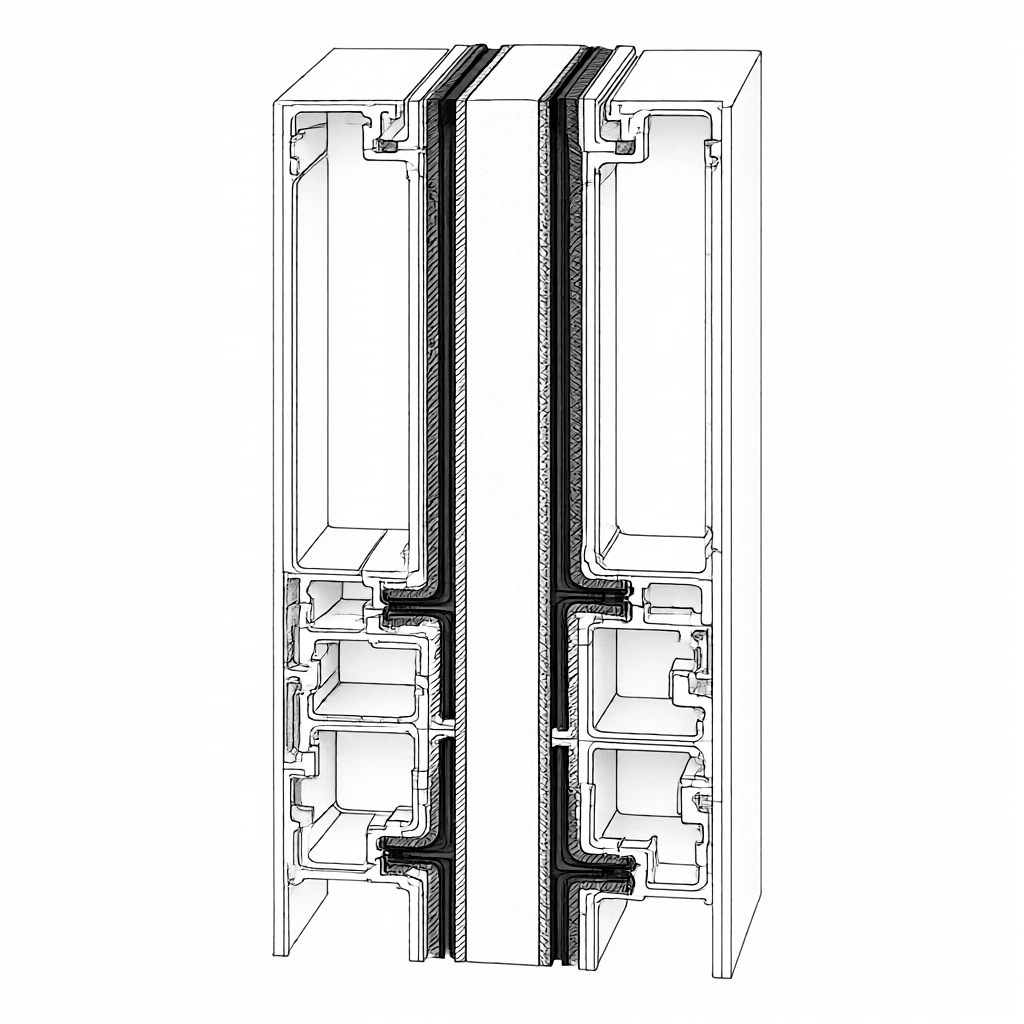
Procurement teams usually follow a five‑step loop when engaging a Chinese door factory:
- Requirement mapping — translate the project’s specifications (door type, quantity, fire rating, glazing, finish, hardware brand preference, and delivery port) into a clear brief.
- Supplier shortlisting — evaluate factories on production capability, relevant certifications, export experience to South Asia, and willingness to share test reports.
- Sample and spec verification — order prototype doors or review detailed technical drawings; confirm profile chamber design, glass unit construction, surface treatment, and hardware make.
- Commercial negotiation — agree on FOB/CIF pricing, payment terms, lead time, MOQ flexibility, and quality‑acceptance criteria.
- Pre‑shipment audit and dispatch — conduct or commission inspections, verify load plans, and ship via FCL for bulk orders or LCL for smaller consignments.
For context on container loading and shipment modes, see our FCL vs LCL for door shipments comparison guide, which breaks down cost, speed, and risk trade‑offs specific to bulky building‑material orders.
Why do Indian buyers prefer direct factory supply?
Middlemen add markup without adding technical value. A factory‑direct arrangement lets the buyer negotiate profile depth, glass U‑value, powder‑coat thickness, and hardware selection independently. It also reduces the chance that a trader will substitute materials after the order is placed — something that happens frequently with opaque supply chains. When the buyer deals straight with the manufacturer, any change to specs requires documented approval, making traceability straightforward.
What types of doors do Chinese manufacturers typically produce for Indian projects?
Most credible factories serve four main categories that map to Indian demand:
- Solid wood doors — used in hospitality and villa projects where aesthetic warmth matters. Profiles range from 40 mm interior doors to 50–60 mm exterior units with multi‑point locks.
- Thermal‑break aluminium doors and windows — the fastest‑growing segment for Indian commercial and high‑rise residential buildings because they meet energy‑efficiency targets while resisting coastal corrosion. Powder‑coat versus anodized finishes for aluminum doors help explain how surface treatment choices affect longevity in humid climates.
- System windows and casement entrance doors — engineered units with concealed gaskets and reinforced frames, increasingly specified for hotel facades and premium apartments.
- Sliding doors and aluminum alloy entry doors — chosen for space‑saving applications and heavy‑traffic commercial entrances.
Factories that combine these lines under one roof can offer mixed orders — for example, a resort developer ordering both solid‑wood room doors and thermal‑break balcony systems — without managing multiple vendors.
What Are the Key Specifications for Indian Markets?
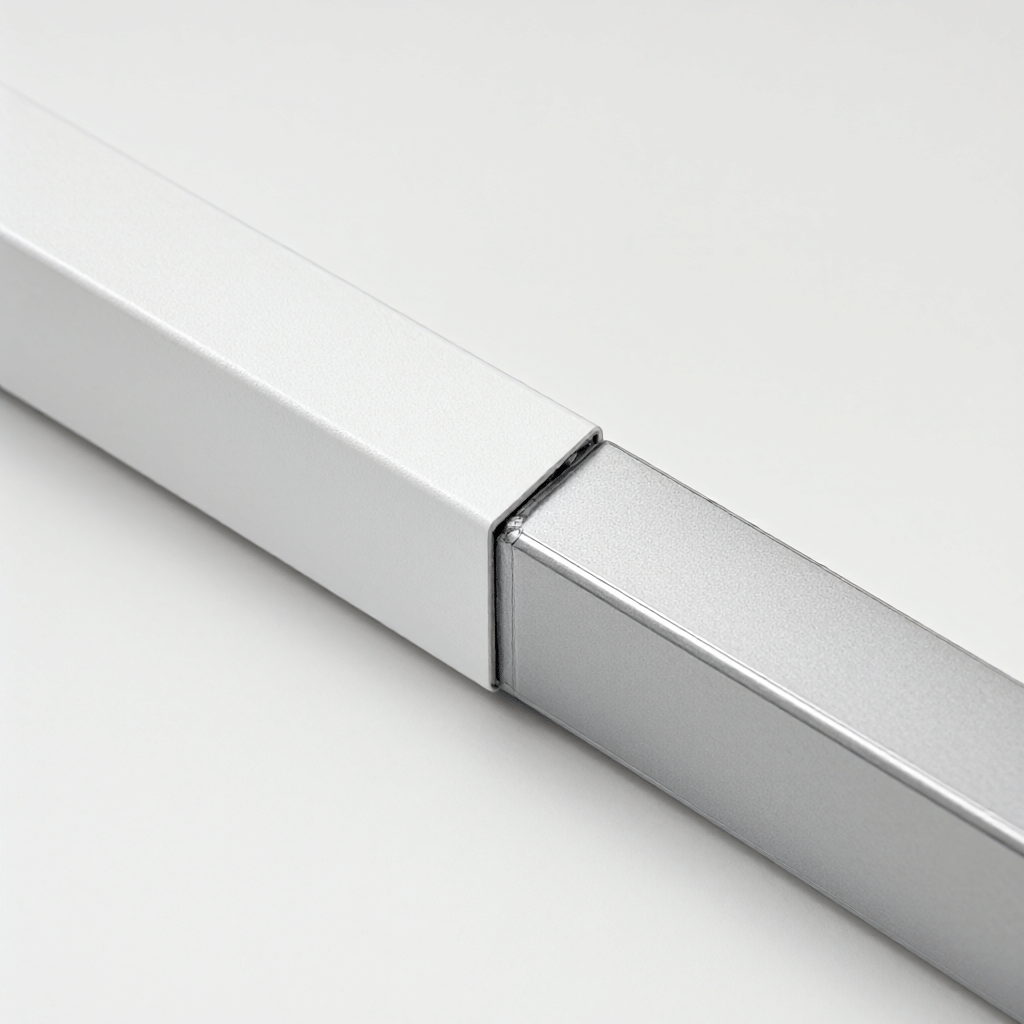
Indian buyers should focus on five specification areas, because each one directly affects durability, compliance, and lifecycle cost.
| Specification | What to check | Typical industry range |
|---|---|---|
| Profile structure | Chamber count, wall thickness, thermal‑break material | 2.0–2.8 mm outer skin; 1.4–1.8 mm inner skin; PA66GF25 thermal bar |
| Glass unit | Dual/triple glazing, low‑E coating, gas fill, edge seal | 6 mm + 12 mm AIR + 6 mm; U‑value 1.1–1.8 W/m²K |
| Surface finish | Powder coat, PVDF, anodized; salt‑spray hours | ≥2 000 h neutral salt spray for coastal zones |
| Hardware | Make, lock type, handle finish, warranty | Roto, Siegenia, CISA, or equivalent; 100 000‑cycle tested |
| Dimensions | Height, width, threshold height, rough opening tolerance | Custom within ±2 mm of drawn size; typical rough opening +10 mm |
For villa and premium‑housing developments, buyers often specify wider panels (up to 1 200 mm leaf width) with reinforced intermediate mullions to prevent deflection. In hotel and resort projects, fire‑rated variants may be required — refer to our EI30 vs EI60 vs EI90 fire‑door rating comparison if you need to align door assemblies with occupancy‑class requirements.
How do Indian building codes influence spec choices?
India’s National Building Code and state‑level regulations do not prescribe a single door standard, but they do require:
- Minimum wind‑load resistance for external doors based on building height and location zone.
- Fire‑rating compliance for stairwell and corridor doors in multi‑storey structures.
- Accessibility clearances (typically 900 mm minimum passage width).
A capable Chinese factory will adjust frame depth, reinforcement spacing, and gasket compression to satisfy these thresholds when asked — which brings us to the next question.
What Standards and Documentation Apply?
Importing doors into India involves three parallel tracks: product standards, customs documentation, and buyer‑side quality assurance.
Product standards. While India does not mandate a single IS code for every door category, most reputable exporters design to internationally recognized benchmarks. Thermal‑break aluminium assemblies commonly reference ISO 12600 (performance classification) and EN 14351‑1 (windows and doors — product standard), while air‑ and water‑tightness tests align with ASTM E2092 practices for field and laboratory measurements. These references give Indian engineers and procurement teams a common language during technical reviews.
Customs documentation. A complete export file for India includes:
- Commercial invoice with HS code (typically 8302.41 for base‑metal door fittings, 7610.10 for aluminium structures, or 4418.20 for wooden doors).
- Packing list with net/gross weight and package dimensions.
- Bill of lading or airway bill.
- Certificate of origin (often required for preferential tariff treatment under SAFTA).
- Insurance certificate, if shipped CIF.
Our door HS code and import duty guide walks through the exact codes and current duty brackets so buyers can model landed cost accurately before committing.
Quality assurance. Third‑party inspection agencies such as SGS, Bureau Veritas, or Intertek can perform pre‑shipment audits on your behalf. A typical audit verifies dimensional accuracy, finish quality, hardware function, and test‑report authenticity. For a deeper dive into how to evaluate a supplier’s manufacturing readiness, see our door factory audit checklist for B2B procurement.
What Should You Consider Before Placing the Order?
Sourcing doors across borders introduces risks that disappear in domestic buying. Addressing them early saves time and money.
Pre‑shipment testing is non‑negotiable
Any serious Chinese door manufacturer should run three basic performance checks before loading:
- Air‑tightness — measures infiltration under differential pressure; values below 0.5 m³/h·m² are considered excellent for external assemblies.
- Water‑tightness — simulates rain exposure while applying static pressure; pass thresholds vary by climate zone but 200–300 Pa is a practical benchmark for monsoon‑prone regions.
- Wind resistance — confirms the frame and glazing can sustain design loads without permanent deformation; Indian coastal zones often specify higher wind‑pressure ratings.
If a supplier cannot produce test certificates for these three checks, treat that as a yellow flag. Request raw data sheets, not just a “passed” stamp.
Customization must be documented
Indies buyers frequently ask whether a Chinese factory can tweak profile structures and fittings to match local requirements. The answer is yes — provided the changes are captured in approved shop drawings before production starts. Key adjustable elements include:
- Frame depth and chamber configuration
- Glass unit thickness and Low‑E specification
- Surface colour (RAL or custom Pantone match)
- Hardware brand and finish
- Threshold height and draft‑excluder type
Every adjustment should be reflected in a revised drawing signed by both parties. This prevents the common dispute where the delivered product looks right but fails to fit the rough opening or local code.
Logistics: FCL versus LCL for India routes
Bulk orders above roughly 30–40 cubic metres benefit from Full Container Load (FCL) shipping, which offers lower per‑unit freight cost and reduced handling risk. Smaller repeat orders or mixed‑SKU consignments often ship as Less than Container Load (LCL), consolidating with other cargo. Our 20ft container door loading quantity guide explains how door dimensions, packaging style, and stowing patterns affect how many units fit per container — useful knowledge when you’re estimating landed cost.
Pricing dynamics
Direct factory pricing typically sits 15–30 % below equivalent trader‑marked prices, depending on order volume and complexity. However, “cheap” can become expensive if the factory cuts corners on thermal‑break integrity, hardware grade, or surface prep. Always compare total value — specification compliance, test coverage, documentation completeness, and after‑sales support — rather than unit price alone.
How to Evaluate and Shortlist a Chinese Door Manufacturer
Use a simple scoring matrix across these six criteria:
| Criterion | What to verify | Red flag |
|---|---|---|
| Production scope | Same factory produces the door types you need | Subcontracted lines with no oversight |
| Export track record | Shipments to South Asia in the past 24 months | First‑time exporter with no reference cases |
| Test capacity | In‑house or partnered lab for air/water/wind tests | Refuses to share test methodology |
| Customization responsiveness | Willingness to revise drawings without excessive NRE fees | Flat‑price change policy for any modification |
| Documentation readiness | Familiarity with Indian customs requirements | Asks buyer to arrange origin certificates |
| Communication quality | Response time, technical English proficiency, sample turnaround | Slow replies or vague answers to spec questions |
Rank each supplier against these markers and eliminate those that score poorly on test capacity or export documentation — two areas where shortcuts later create clearance delays or rejection at Indian ports.
Where Do Jusen Door and Windows Fit Into This Framework?
As manufacturers, we approach the same evaluation criteria your team will use, only from the supply side. When an Indian procurement manager asks how we ensure doors meet their standards, our process follows three checkpoints:
First, we confirm product specs against the brief — profile wall thickness, thermal‑bar material, glass unit construction, finish class, and hardware brand. Second, we run pre‑shipment performance tests for air‑tightness, water‑tightness, and wind resistance before any container is sealed. Third, we prepare the full export file — packing list, proforma invoice, and customs documentation — so your clearing agent in India faces no surprises at the port.
Because we operate directly from the factory, we can adjust profile structures, colours, glass configurations, and fitting selections to align with Indian building‑code expectations without routing requests through a middleman. Orders ship via FCL or LCL, with lead times that reflect realistic production scheduling rather than trader inventory estimates.
If you have an open requirement — whether it’s a hotel resort needing mixed door types, a villa developer specifying thermal‑break aluminium systems, or a trader placing repeated apartment‑building orders — we can review your drawing set and provide a specification‑matched quotation within a few working days.
OPENING:
When sourcing a china door manufacturer for India, Indian B2B buyers need a factory‑direct supplier capable of producing solid‑wood doors, thermal‑break aluminium systems, casement and sliding doors, system windows, sunrooms, and custom villa entrances — built to Indian wind‑load, fire‑rating, and accessibility thresholds, shipped via FCL or LCL to Nhava Sheva, Mundra, or Chennai, and accompanied by complete export documentation (commercial invoice, packing list, bill of lading, certificate of origin, and pre‑shipment test certificates). The defining advantage of a qualified Chinese factory over a trading company is the ability to adjust profile chambers, thermal‑bar material, glass U‑value, powder‑coat class, and hardware brands to local code expectations, run air‑tightness/water‑tightness/wind‑resistance tests before loading, and handle customs paperwork without middlemen markup. Below is a practical procurement guide covering the standards, shipping routes, documentation, OEM/ODM models, and supplier‑evaluation framework Indian buyers should use.
ISI Mark, BIS Compliance, and Fire‑Rated Door Requirements for India
India does not enforce a single mandatory door standard across every category, but certain product classes and project types trigger specific certification and testing expectations that your Chinese supplier must address.
- BIS (Bureau of Indian Standards) registration. For aluminum extrusions used in door and window frames, BIS certification under IS 731 (aluminium alloy extrusions) is commonly requested by Indian engineers and project specifiers. While not universally mandated for finished doors, large hospitality, government, and institutional projects often require proof of BIS‑compliant raw materials. Ask your manufacturer whether their aluminium profiles carry BIS certification or an equivalent mill test certificate.
- ISI marking on ferrous fittings. Base‑metal door fittings such as hinges, locks, and handles (HS 8302) are subject to the Compulsory Registration Order under IS 7012. Importers should verify that hardware suppliers hold valid ISI marks or provide third‑party test reports demonstrating compliance with the relevant IS specification.
- Fire‑rated door assemblies. Multi‑storey commercial and residential buildings in India are increasingly requiring fire doors in stairwells, corridors, and elevator lobbies. The applicable benchmarks include EN 1634‑1 (fire resistance tests for doors and shutters) for laboratory-rated performance, and project‑specific EI classifications (EI30 / EI60 / EI90) aligned with local civil‑defence requirements. See our EI30 vs EI60 vs EI90 fire‑door rating comparison for guidance on selecting the correct rating for your occupancy class.
- National Building Code (NBC) references. The NBC 2016 (Part 3, Fire and Life Safety; Part 4, Building Materials) requires adequate fire separation, minimum 900 mm clear passage widths, and wind‑load resistance based on zone classification. While the NBC does not prescribe a single Indian Standard for every door type, specifying doors tested to EN 14351‑1 performance classes (Class 2–4 for air tightness, Class E300–1500 for water tightness, Class C3–C5 for wind load per EN 12211 methodology) gives Indian consultants a defensible technical basis during plan approval.
- ASTM E119 remains the reference standard for fire-endurance testing of building construction elements, and some international hotels operating in India specify ASTM‑compliant fire-door assemblies alongside EN ratings.
A reliable factory will maintain test reports from accredited laboratories (e.g., ARCONIC, Intertek, or SGS) covering these classifications and share them during the pre-qualification stage — not after order confirmation.
OEM, ODM, and Private‑Label Service Models Available from Chinese Factories
Chinese door manufacturers offer three primary engagement models, each suited to different types of Indian buyers. Understanding the distinction helps you select the right arrangement and negotiate terms appropriately.
| Model | What it means | Typical Indian buyer profile |
|---|---|---|
| OEM (Original Equipment Manufacturing) | You provide detailed drawings, specs, hardware lists, and finish requirements; the factory produces exactly to your instructions under your project designation. | Developers, architects, and interior‑design firms with established design teams and approved vendor lists. |
| ODM (Original Design Manufacturing) | The factory offers proven platform designs (e.g., a standard thermal‑break aluminium system) that you adapt with minor changes — colour, glass, hardware, or panel configuration. | Traders, small developers, or repeat‑order buyers who want faster turnaround and lower NRE costs. |
| Private‑label / White‑label | The factory manufactures doors under your brand name and packaging. Suitable when you distribute across multiple projects or retail channels. | Importers, branding companies, and regional distributors seeking to build an India‑facing product line. |
Key considerations for each model:
- NRE (Non-Recurring Engineering) fees. Custom OEM runs typically incur one-time drawing and tooling charges (₹15 000–₹75 000 depending on complexity). ODM platforms usually carry little or no NRE fee because the base design already exists.
- MOQ flexibility. Pure OEM orders demand higher minimum quantities (often 50–100 units per SKU) to justify production setup. ODM and private-label options frequently accept lower MOQs because platform components are shared across clients.
- IP protection. If you provide proprietary designs, insist on a confidentiality agreement and confirm that the factory does not sell identical specifications to competing projects. Reputable manufacturers treat client drawings as confidential by default.
- Sample lead time. OEM prototypes take 15–25 working days; ODM samples can ship in 7–12 days because they start from an existing platform.
Factories experienced in the Indian market understand that both OEM and ODM routes are common — a single supplier may serve a luxury resort developer through OEM and a housing society builder through ODM simultaneously. Confirm which model aligns with your project before requesting a quotation.
Expanded Buyer Evaluation Checklist and Red Flags
Use the following expanded checklist to shortlist and rank Chinese door manufacturers. Combine the qualitative assessment with quantitative scoring (1–5 per criterion) for an objective comparison.
| # | Criterion | Verify With | Score (1–5) |
|---|---|---|---|
| 1 | Production scope matches your door categories | Factory photo audit, equipment list | |
| 2 | Export experience to India or South Asia | Shipments in past 24 months, BL copies | |
| 3 | In-house or partnered lab for EN 14351‑1 / ASTM E2092 testing | Test report sample, laboratory accreditation | |
| 4 | Willingness to share BIS / ISI / Mill test certificates | Document sample provided before order | |
| 5 | Customization responsiveness — revised drawings within 3–5 working days | Sample revision cycle | |
| 6 | FCL & LCL shipping capability with Indian port experience | Shipping partner references | |
| 7 | Documentation readiness — packing list, PI, CoO, insurance | Sample document set | |
| 8 | Communication quality — English proficiency, response time <24 h | Email/video call assessment | |
| 9 | Third-party inspection acceptance (SGS, BV, Intertek) | Policy statement on audit acceptance | |
| 10 | OEM/ODM/private-label flexibility | Discussion of your engagement model preference |
Red flags that should eliminate a supplier immediately:
- Refuses to share any test reports or labels them “confidential” without justification.
- Cannot produce a sample drawing within 5 working days of receiving your brief.
- Asks you to arrange Certificate of Origin or handle customs documentation yourself.
- Offers prices significantly below market (more than 25 % under comparable quotes) — likely indicates corner-cutting on profile wall thickness, thermal-bar material, or hardware grade.
- Has no history of shipping to India or South Asia and cannot provide a reference contact.
- Insists on 100 % upfront payment with no escrow or letter-of-credit option.
- Does not accept third-party pre-shipment inspection.
Rank each candidate against this matrix and remove any supplier scoring below 3 on criteria 3, 4, 6, or 7 — these are the areas most likely to cause port-clearance delays or performance failures once the containers arrive in India.
Industry Case Example: Mumbai Hotel Chain Sourced from a Guangdong Factory
To illustrate how these procurement principles apply in practice, consider a recent project: a mid-scale hotel chain in Mumbai specified 240 thermal-break aluminium balcony doors and 180 solid-wood room doors for a beachfront property. The architect required EN 14351‑1 Class C4 wind resistance (coastal zone), 2 500 h salt-spray-rated powder coating, and EI30 fire ratings for corridor doors.
The sourcing team shortlisted three Guangdong-based factories using the checklist above. Two were eliminated during the document-review stage — one could not produce a BIS-compliant mill test certificate for its aluminium profiles, and the other refused third-party pre-shipment inspection. The selected factory provided full EN 14351‑1 test reports, arranged SGS inspection at the factory before loading, and shipped the order as a 40ft FCL container to Jawaharlal Nehru Port Trust (Nhava Sheva) with complete customs documentation including SAFTA certificate of origin for preferential tariff treatment. Total transit time was 18 days sea freight plus 5 days inland clearance. The project was delivered within the agreed 42-day lead time.
This example shows why verification at the shortlisting stage matters — the two eliminated factories would have created documentation bottlenecks and potential non-compliance issues at the Indian port.
Where Jusen Door and Windows Fits Into This Framework
As a manufacturer, we approach the same evaluation criteria your team will use — only from the supply side. Here is how we meet each standard your Indian procurement manager will ask about:
On product specifications, we adjust profile chamber design, PA66GF25 thermal-bar placement, glass unit construction (dual/triple glazing with Low-E and argon fill), powder-coat class (≥2 000 h salt spray for coastal zones), and hardware selection (Roto, Siegenia, CISA or equivalents) to match the exact brief you send us. Whether you need OEM drawings executed precisely or an ODM platform adapted for faster delivery, we accommodate both models.
On standards and documentation, our production lines are managed under ISO 9001:2015 quality management procedures, and our test laboratory performs air-tightness, water-tightness, and wind-resistance checks on every batch before shipment. We provide EN 14351‑1 test reports, ASTM E2092 test records, and — upon request — mill test certificates for our aluminium extrusions. Our export file includes the commercial invoice with correct HS codes, packing list, bill of lading, certificate of origin, and insurance documentation, prepared so your clearing agent faces no surprises at the port.
On logistics, we ship via both FCL and LCL directly from our Guangdong facility. For orders bound to Nhava Sheva, Mundra, or Chennai, we coordinate container stowing according to our 20ft container door loading quantity guide principles, minimizing damage risk during transit. Our experience with South Asian shipping routes means we understand the documentation flow and typical clearance timelines for Indian imports.
When an Indian buyer asks about OEM, ODM, or private-label models, we tailor the engagement: pure OEM for architect-specified projects with detailed shop drawings; ODM for repeat orders where a proven platform can be quickly configured; private-label for importers building a branded product line. Every adjustment is captured in signed drawings before production begins, preventing specification drift between order and delivery.
If you have an active requirement — a hotel resort needing mixed door types, a villa developer specifying thermal-break aluminium systems, or a builder placing repeated apartment orders — we can review your drawing set and provide a specification-matched quotation within a few working days.
## Procurement Checklist: Evaluating Chinese Door Suppliers
Before shortlisting factories, use this quick‑reference table to flag potential risks:
| Evaluation Area | Green Light | Yellow Flag | Red Flag |
|---|---|---|---|
| Certifications | ISO 9001:2015 active; verifiable certificate number shared | Certificate pending or expired | No QA certification offered |
| Test reports | ASTM E283 / E331 results with raw data sheets | “Passed” stamp only, no supporting figures | Refuses to share test methodology |
| Customization flexibility | Willing to revise shop drawings for profile, glass, colour, hardware | Charges high NRE fee for any change | Flat-price change policy for all modifications |
| Export track record | Shipment references to South Asia within past 24 months | General overseas exports, no India-specific cases | First-time exporter, no references |
| Documentation readiness | Familiar with Indian customs docs, packing lists, origin certificates | Asks buyer to arrange own origin paperwork | Cannot produce proforma invoice sample |
| Pre-shipment inspection | Air/water/wind tests run before loading; third-party audit accepted | Tests done but no certificate shared | Refuses pre-shipment inspection entirely |
| Logistics capability | Offers both FCL and LCL; experienced with major Indian ports | Can ship FCL only | Can only handle domestic delivery |
Sources & References
- ASTM E2092 — www.astm.org
- EN 12211 — www.iso.org
- FCL vs LCL for door shipments comparison — doorwoodendoors.com
- Powder‑coat versus anodized finishes for aluminum doors — doorwoodendoors.com
- EI30 vs EI60 vs EI90 fire‑door rating comparison — doorwoodendoors.com
- door HS code and import duty guide — doorwoodendoors.com
- door factory audit checklist for B2B procurement — doorwoodendoors.com
- 20ft container door loading quantity guide — doorwoodendoors.com











