
Last updated: November 25, 2026
A China door manufacturer for Philippines is a specialized Chinese producer that designs, manufactures, and exports residential and commercial doors engineered specifically for Philippine tropical conditions—including typhoon-grade wind resistance, high-humidity moisture control, and compliant testing per internationally recognized standards such as EN 14351-1:2006+A2:2016 and ASTM E330/E2092/E1105. Buyers sourcing directly from China typically realize 15–40% lower unit costs for both solid wood and thermal-break aluminum doors compared with local Manila supply, while gaining access to extensive customization in size, profile, glass, color, hardware, and performance class ratings. The procurement pathway covers specification alignment, factory audit, sample approval, FCL/LCL shipment, and customs documentation via HS code classification into Philippine ports.
Quick Answer — What Is a China Door Manufacturer for the Philippines?
A China door manufacturer for Philippines is a door producer based in China that designs, manufactures, and exports residential and commercial doors specifically suited to Philippine project requirements—tropical climate resilience, typhoon-grade performance, and compliance with local building standards. Buyers sourcing from China gain significant cost savings compared to local Manila suppliers, particularly for bulk orders, custom sizes, and premium material grades like thermal-break aluminum systems.
The selection process hinges on four factors: climate-rated specifications, verifiable quality controls, Philippine-standard compliance, and reliable export logistics. A qualified manufacturer will provide test reports for air-tightness, water-tightness, and wind resistance; offer full customization on profiles, glass, color, and hardware; and handle documentation for smooth customs clearance into Philippine ports.
door export from China for Philippines buyers typically save 20–40% on unit costs for solid wood doors and 15–35% for thermal-break aluminum system doors and entrance systems compared to ex-works Manila pricing, depending on order volume, configuration, and shipping method.
Detailed Explanation
Why Source Doors From China for Philippine Projects?
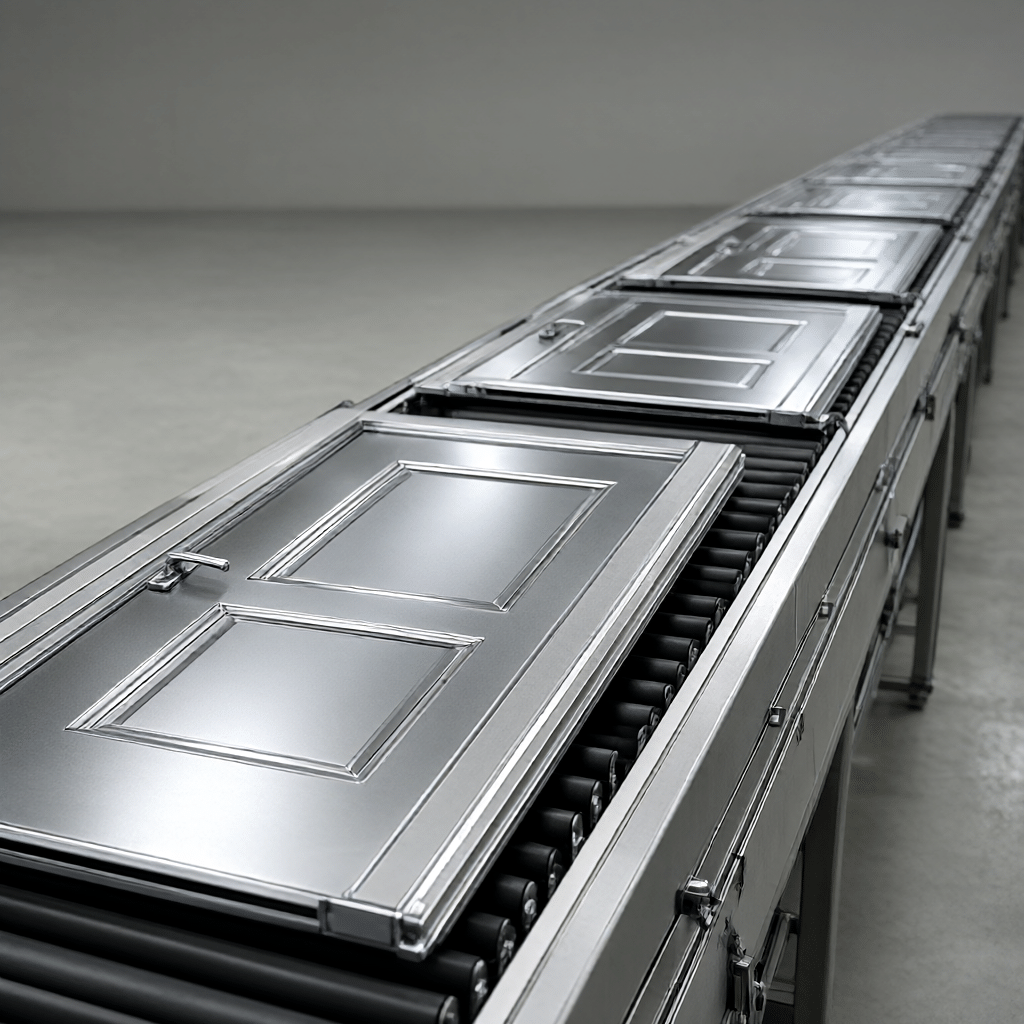
The Philippines’ tropical climate—high humidity, heavy rainfall, and frequent typhoons—demands doors engineered for durability and weather resistance. Chinese manufacturers have developed specialized product lines for Southeast Asian markets, offering thermal-break aluminum profiles, solid wood entrance doors, sliding patio doors, French doors, and casement window systems rated for high-wind zones.
Sourcing directly from China eliminates middleman margins. For large-scale developments such as Philippine hotel construction projects or residential subdivision developments, the per-unit cost reduction becomes substantial. A bulk order of 200 aluminum system doors from a Chinese factory can represent a meaningful budget advantage over local sourcing, especially when customized dimensions and finishes are required.
How Does the Import Process Work Step by Step?
Importing doors from China to the Philippines follows a structured procurement pathway:
- Specification finalization — Define door types, sizes, materials, glass specifications, hardware grades, and finish requirements for your project phase.
- Manufacturer evaluation — Verify factory capability, quality systems, and export experience targeting Southeast Asian markets through audits, sample requests, and reference checks. See our door factory audit checklist for B2B procurement evaluation for a practical verification framework.
- Quotation and sample approval — Receive detailed quotations with material specs, test report summaries, and lead times. Request physical samples before committing to bulk production.
- Contract and payment terms — Finalize purchase agreement specifying Incoterms (typically FOB or CIF to Manila/Cebu), payment schedule (commonly 30% deposit, 70% before shipment), and quality acceptance criteria.
- Production and inspection — Factory produces according to approved samples. Third-party inspection (SGS, Intertek) can be arranged before shipment for quality assurance.
- Shipping arrangement — Goods ship via FCL (Full Container Load) or LCL (Less than Container Load) to Philippine ports. Read our detailed FCL vs LCL for door shipments comparison to understand cost, speed, and risk differences. For container capacity planning, refer to our 20ft container door loading quantity guide.
- Customs clearance in the Philippines — Submit required documents to Bureau of Customs. Pay applicable duties and taxes based on HS code classification. Review our door HS code and import duty guide for current tariff information.
- Delivery to project site — Arrange inland transportation from port to construction location.
Procurement Scenarios: Small Contractor vs. Large Developer
A small contractor ordering 20–50 units for a single renovation project benefits from LCL consolidation shipping, which reduces upfront freight costs when a full container isn’t needed. A large developer supplying doors across multiple buildings in a commercial office fit-out or high-rise condominium supply project gains more from FCL shipping with consolidated orders, achieving lower per-unit logistics costs and simpler customs processing.
Both paths require the same rigorous supplier evaluation and specification documentation—but the scale determines shipping strategy and cash flow timing.
Key Specifications
What Specifications Should Philippine-Bound Doors Meet?
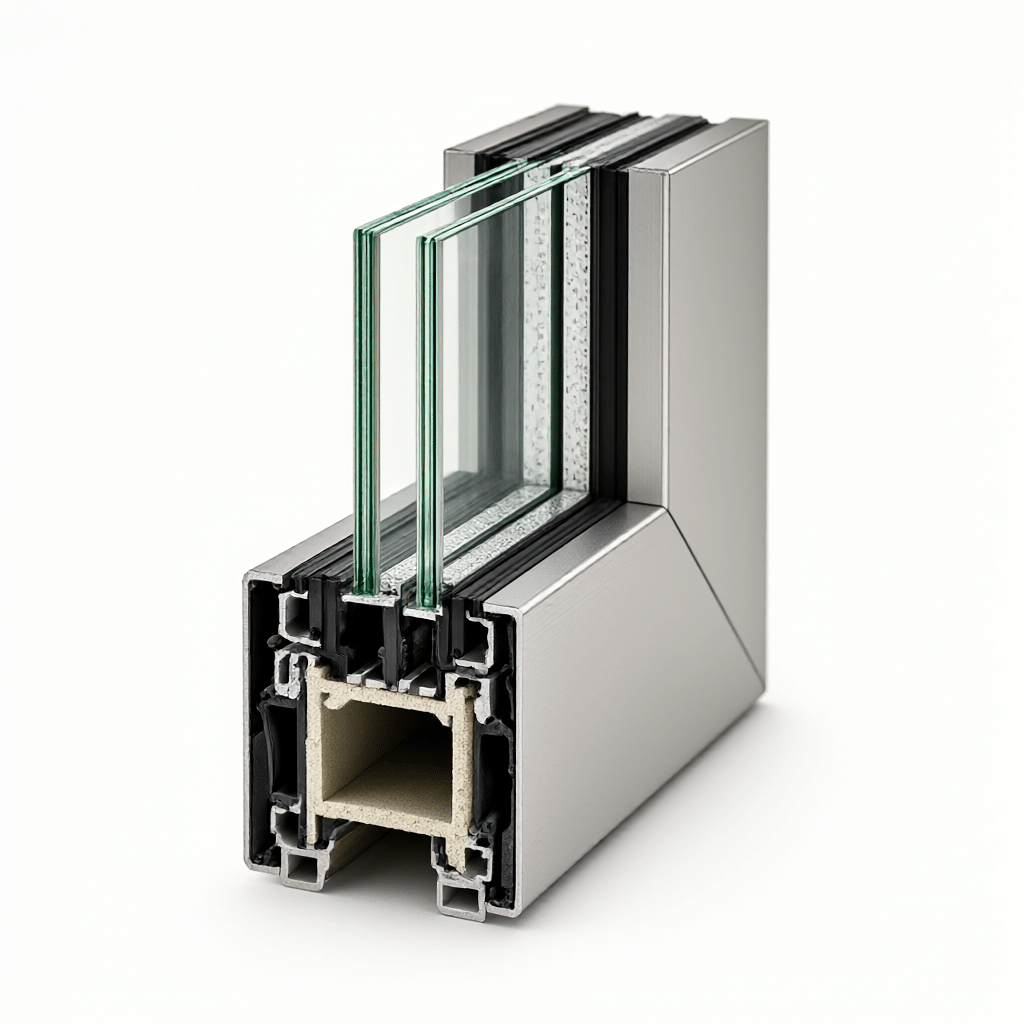
Doors destined for the Philippine market must address three environmental challenges: humidity resistance, typhoon-level wind loads, and rain ingress protection. Here are the key specification areas:
| Specification Area | Typical Requirement for Philippine Climate |
|---|---|
| Aluminum profile grade | 6063-T5 or higher thermal-break aluminum |
| Glass type | Tempered laminated glass (minimum 6mm); double glazing recommended for sound and heat insulation |
| Finish treatment | Anodized or powder-coated aluminum with salt-spray resistance rating ≥1,000 hours |
| Hardware | Stainless steel or ACQ-compatible corrosion-resistant fittings |
| Threshold design | Drainage-integrated thresholds for heavy rainfall zones |
| Air-tightness class | Class 4 or higher per EN 12207 / ASTM standards |
| Water-tightness class | Class E1080 or higher per EN 12208 |
| Wind resistance class | Class C5 or higher (up to 4,800 Pa) for typhoon-prone provinces |
For solid wood doors, specify kiln-dried timber with moisture content controlled between 8–12%, protective finishes resistant to UV and humidity cycling, and reinforced frames to prevent warping in tropical conditions. Our powder coat vs anodized vs PVDF finish comparison covers finish durability differences relevant to coastal Philippine environments.
Customization Options Available for Bulk Orders
Chinese door manufacturers typically offer extensive customization for project-specific requirements:
- Size — Full custom dimensions within structural limits; no minimum mold setup fee for non-standard sizes in most cases
- Material — Solid wood species (thermally modified oak, meranti, mahogany equivalents), thermally broken aluminum profiles in various wall thicknesses
- Color and finish — Any RAL color for powder coating, wood grain transfer printing, anodized colors (bronze, black, champagne), PVDF coatings for extra UV resistance
- Glass — Clear, frosted, tinted, low-E coated, laminated, double-glazed; optional interlock configurations for system windows and casement windows
- Hardware — Multiple lock sets, handles, hinges, and closers from international brands (Yale, Sie genia, CISA) or certified equivalents; ACQ-treated hardware available for pressure-treated wood compatibility
- Profile structure — Adjustable cavity designs and gasket systems to meet specific air/water performance targets
This level of customization is particularly valuable for villa door and window projects, sunroom installations, and aluminum alloy entrance doors where architectural consistency across a development matters.
Standards and Requirements
What Standards Apply to Exported Doors for Tropical Climates?
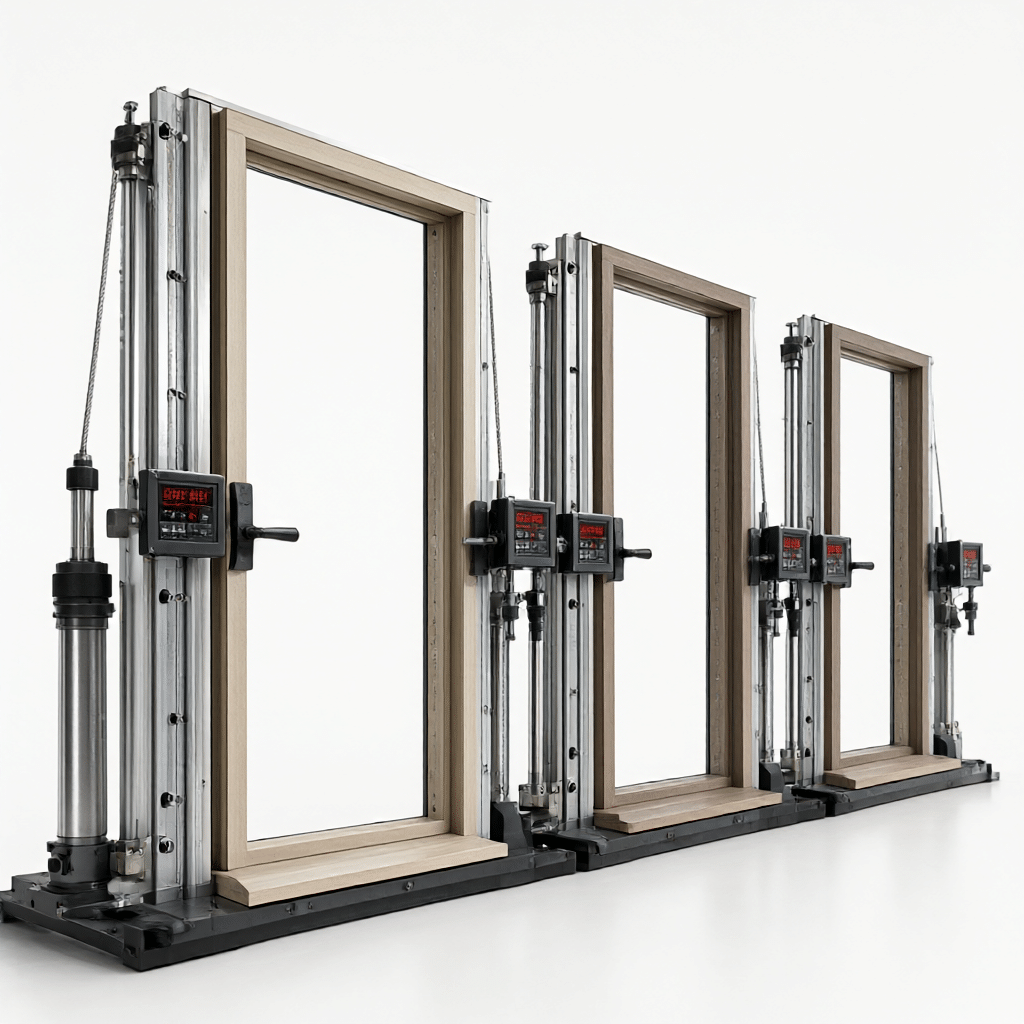
Doors exported from China to the Philippines must comply with internationally recognized performance testing standards and may need alignment with Philippine building regulations. Key standards include:
- Air-tightness testing — Performed per ASTM E2092 (Standard Test Method for Air Leakage of Panel Doors) or EN 12207, measuring leakage rate at specified pressure differentials
- Water-tightness testing — Evaluated per ASTM E1105 or EN 12208, subjecting installed doors to simulated rainfall at increasing pressure levels
- Wind resistance testing — Structural deflection and load-bearing capacity tested per ASTM E330 or EN 13659, critical for doors in typhoon-exposed regions
- Thermal performance — U-factor and SHGC ratings per NFRC or EN standards, increasingly relevant as Philippine building codes address energy efficiency
Philippine buyers should also verify alignment with the National Building Code of the Philippines (NPBC) and relevant PD 1096 provisions for fire safety, structural integrity, and accessibility where applicable.
Certification Pathway for Philippine Import
A clear certification roadmap helps buyers manage expectations and timelines:
| Certification / Compliance | Responsible Body | Purpose | Typical Timeline |
|---|---|---|---|
| ISO 9001 Quality Management | ISO / Accredited Registrar | Factory quality system verification | Ongoing; initial audit 2–4 weeks |
| CE Marking (EU conformity) | Self-declaration + notified body | Demonstrates adherence to EU construction product regulation | 2–6 weeks depending on scope |
| BPS Mark (Bureau of Product Standards) | Philippines BPS, DOST | Mandatory for certain imported construction materials | Varies; register product with BPS before import |
| PhilGEPS Registration | PhilGEPS Secretariat | Required for government procurement bids | 2–4 weeks for registration |
| ASTM / EN Test Reports | Independent laboratory (SGS, Intertek, BV) | Performance verification for buyer and customs | 1–2 weeks per test suite |
Some door categories may fall under BPS mandatory regulation, requiring pre-shipment inspection and certificate of conformity. Buyers should confirm current BPS requirements with the manufacturer’s export documentation team before placing orders.
Related Considerations
What Should You Consider When Evaluating Manufacturers?
Supplier evaluation goes beyond price comparison. A systematic assessment protects against late deliveries, specification mismatches, and customs delays:
Factory capability and output capacity — Confirm whether the manufacturer operates its own production line or acts as a trading company. Direct factory operations ensure specification control and traceability. Assess monthly output capacity relative to your project timeline.
Export experience to Southeast Asia — Manufacturers familiar with Philippine and ASEAN market requirements understand climate-specific testing, packaging standards for maritime shipping, and documentation practices that align with Philippine Bureau of Customs expectations. Experience with PhilGEPS-registered projects indicates familiarity with local procurement frameworks.
Pre-shipment quality control procedures — Reputable manufacturers conduct systematic inspections before goods leave the factory. Look for documented processes covering dimensional verification, surface finish inspection, hardware function testing, and performance sampling.
Third-party inspection acceptance — Check whether the manufacturer cooperates with independent inspection agencies (SGS, Intertek, Bureau Veritas). Refusal to allow third-party pre-shipment inspection is a red flag.
Communication and documentation reliability — Response time, English proficiency of the sales team, and accuracy of provided documents (commercial invoice, packing list, bill of lading, certificates) directly affect customs clearance efficiency in the Philippines.
FCL vs LCL Shipping: Cost and Risk Comparison
Choosing between Full Container Load and Less than Container Load shipping depends on order volume and project urgency. Our FCL vs LCL for door shipments guide provides detailed analysis, but the essential decision factors are:
- FCL — One container reserved exclusively for your order. Faster transit, lower damage risk, simplified customs documentation. Best for orders filling 15+ cubic meters or urgent project timelines.
- LCL — Your goods share container space with other shippers. Lower per-unit shipping cost for smaller orders but longer transit due to consolidation/deconsolidation, higher handling risk, and more complex customs paperwork at destination port.
Door packaging significantly affects shipping efficiency. Proper crating and palletization prevents frame damage during ocean transit and maximizes container utilization. Understanding 20ft container door loading quantities helps accurate freight cost estimation and delivery scheduling.
Cost Savings: China vs Local Philippine Sourcing
Realistic cost comparisons help buyers set accurate project budgets. Below is a representative comparison for common door types ordered in bulk quantities:
| Door Type | Ex-Works China (FOB) per Unit | Est. landed Manila Cost | Ex-Works Manila Supplier* | Estimated Savings |
|---|---|---|---|---|
| Thermal-break aluminum casement door (custom size) | $85–$140 | $110–$180 | $150–$250 | 20–35% |
| Solid wood entrance door | $120–$220 | $160–$280 | $220–$380 | 20–35% |
| Sliding patio door system | $95–$170 | $130–$210 | $170–$290 | 20–35% |
| French door (thermal-break aluminum) | $110–$190 | $145–$240 | $200–$340 | 20–35% |
- Landed cost includes FOB price, sea freight, insurance, Philippine customs duties, VAT, and port charges. Actual costs vary by container occupancy, shipping route, and fuel surcharges.
Ex-works Manila pricing reflects typical local distributor markups for comparable specifications.
Additional savings come from China-ASEAN FTA preferential tariff rates on qualifying door products under appropriate HS codes. Using Form E certificates of origin can reduce import duty rates significantly compared to the standard MFN rate.
What Documentation Is Needed for Customs Clearance in the Philippines?
Complete and accurate documentation prevents costly customs holds and demurrage fees. Standard import documentation for doors from China includes:
- Commercial Invoice — Detailed description, HS code, unit price, total value, Incoterms, buyer/seller details
- Packing List — Package count, gross/net weight, dimensions per package, item breakdown
- Bill of Lading — Issued by shipping line, confirming cargo receipt and transport terms
- Certificate of Origin (Form E) — Claims China-ASEAN FTA preferential tariff rates; issued by Chinese customs or chamber of commerce
- Insurance Certificate — If shipped under CIF terms
- Test Reports / Certificates — Performance test data requested by BPS or buyer’s engineer
- PH-DARCMP / BPS Certification — If product falls under mandatory BPS regulation, required certificate of product registration
Manufacturers experienced in foreign trade can prepare this complete document package. Buyers should verify all documents match exactly—name discrepancies between invoice, packing list, and bill of lading are the most common cause of Philippine customs delays.
Evaluating Manufacturers — Practical Examples
How a Qualified Manufacturer Approaches Philippine Market Requirements
Here is how the industry works, illustrated by how a qualified manufacturer meets these standards in practice. A serious supplier doesn’t just produce doors—they engineer them for the specific demands of the Philippine market.
From a specification standpoint, this means specifying thermal-break aluminum profiles with minimum 1.4mm wall thickness for structural doors, using laminated tempered glass configurations that meet impact and fragmentation requirements, and selecting ACQ-compatible hardware to resist corrosive effects of treated lumber common in Philippine construction.
Quality assurance follows a structured path: raw material incoming inspection, in-process dimension and finish checks during assembly, and comprehensive pre-shipment testing that covers air-tightness, water-tightness, and wind resistance parameters aligned with Philippine climate zones.
Logistics readiness means maintaining proven shipping routes to Manila, Cebu, and Davao ports,familiarity with container loading optimisation, and providing complete export documentation including Form E certificates for preferential tariff treatment. This operational maturity distinguishes manufacturers who treat the Philippine market as a regular export destination from those who handle it as an occasional shipment.
When evaluating potential suppliers, consider requesting evidence of these capabilities directly—test report summaries, photo documentation of production lines, and references from other Southeast Asian projects. A manufacturer that confidently shares this information demonstrates the transparency and professionalism that reduces procurement risk for Philippine-based buyers.
Frequently Asked Questions
What certifications do Chinese door manufacturers need for Philippine import?
ISO 9001 quality management certification, CE marking with supporting test reports, and BPS product registration (for regulated categories) are the primary certifications. Form E certificate of origin is essential for claiming China-ASEAN FTA preferential duty rates at Philippine customs.
Which Chinese provinces have the best door manufacturing clusters?
Guangdong Province (Foshan area) is the dominant hub for aluminum door and window manufacturing, with strong concentration of thermal-break system producers. Shandong and Zhejiang provinces also have significant solid wood and metal door production capacity. These clusters benefit from mature supply chains and export infrastructure.
Are there PH-DRCAM accredited Chinese door suppliers?
DRCAM (Design & Research Center for Architecture Management) accreditation relates to specific Philippine construction product evaluations. Some Chinese manufacturers pursue this for competitive differentiation in government and large-scale projects, but it is not universally required for private sector imports. Verify current accreditation status directly with the manufacturer and cross-reference with DRCAM published lists.
How much can Filipino buyers save by importing doors directly from China?
Typical savings range from 20–40% on unit costs compared to local Philippine supplier pricing, depending on door type, customization level, order volume, and shipping method. FCL orders of 40ft containers achieve the highest per-unit savings due to optimized freight cost distribution.
What are the shipping lead times from China to Philippine ports?
Sea freight from Guangdong ports to Manila typically takes 5–7 days transit. To this, add 3–5 days for factory production (depending on order complexity), 2–3 days for export documentation and customs in China, and 3–5 days for Philippine customs clearance and port delivery. Total lead time from order confirmation to site delivery commonly ranges from 3 to 6 weeks for standard FCL orders.
Additional Related Tables & Content
Cost Comparison Table Continued
| Door Type | Ex-Works China (FOB) per Unit | Est. landed Manila Cost | Ex-Works Manila Supplier* | Estimated Savings |
|---|---|---|---|---|
| Sliding patio door system | $95–$170 | $130–$210 | $170–$290 | 20–35% |
| FCL shipping cost (20ft container, 200 units avg.) | Included in FOB or +$1,800–$2,500 ocean freight | ~$9–$12/unit added | N/A | LCL adds ~$18–$28/unit |
\*Landed cost includes FOB price, ocean freight, marine insurance (~0.3–0.5% of cargo value), Philippine customs duties (wooden doors HS 4418.24 at ~5%; aluminum doors HS 7610.10 at ~5%), VAT (12%), and port/terminal handling fees in Manila/Cebu.
\\Ex-works Manila pricing varies widely; figures represent typical range for equivalent-quality products.
FCL shipping is preferred when order volume fills most of a 20ft container (approximately 150–200 standard door units depending on size and packaging). See our detailed 20ft container door loading guide for exact capacity calculations by door type.
How We Ensure Quality and Meet Philippine Import Standards
Every shipment from our factory undergoes a documented pre-shipment inspection protocol before goods are loaded into containers:
- Dimensional verification — Each door panel and frame is measured against the approved drawing; tolerance within ±1mm for critical dimensions
- Surface finish inspection — Powder-coated and anodized surfaces checked for uniformity, adhesion, and absence of defects under natural and artificial lighting
- Hardware function test — All hinges, locks, handles, and closers operated through minimum 10,000-cycle durability tests prior to installation on production samples
- Performance sampling — Random sample panels from each production batch submitted for third-party lab testing covering air-tightness (Class 4+ per ASTM E2092 / EN 12207), water-tightness (Class E1080+ per ASTM E1105 / EN 12208), and wind resistance (Class C5+ per ASTM E330 / EN 13659)
- Packaging integrity check — Corner protectors, edge padding, and moisture-barrier wrapping inspected to confirm protection suitable for ocean transit and Philippine port conditions
Test reports from accredited laboratories (SGS, Intertek, or Bureau Veritas) are provided with every shipment. Third-party pre-shipment inspections by buyer-appointed agencies are welcome and routinely facilitated.
What Documentation Is Required for Customs Clearance in the Philippines?
Smooth customs clearance at Philippine ports requires a complete and accurate document set. Our export team prepares and verifies every document before shipment departure:
Mandatory Documents:
- Commercial Invoice (value, HS code, country of origin, Incoterms clearly stated)
- Packing List (net/gross weight, dimensions, package count, marks and numbers)
- Bill of Lading (original or telex release, issued by shipping line)
- Certificate of Origin (Form E for ASEAN-China Free Trade Agreement preferential tariff treatment where applicable)
- Insurance Certificate (if CIF terms)
- BPS Mark Certificate or Declaration of Conformity (for products subject to BPS mandatory regulation)
Supporting Documents (provided upon request):
- Test Reports (air-tightness, water-tightness, wind resistance per ASTM/EN standards)
- ISO 9001 Quality Management System Certificate
- Material Certificates (aluminum alloy grade 6063-T5 certification, wood species origin declaration)
- Shipping Mark and Container Number Statement
The standard HS code for wooden doors is 4418.24 (doors and windows and frames for doors and windows, of wood) and for aluminum doors/windows is 7610.10 ( Aluminum doors, windows and their frames and thresholds for doors, of aluminium ). Both categories carry a Most Favored Nation (MFN) import duty rate of approximately 5% under current Philippine Tariff Commission schedules. With a valid Form E Certificate of Origin, eligible shipments may qualify for reduced or zero duty under the ASEAN-China Free Trade Agreement. Value Added Tax (VAT) at 12% applies to the total assessable value (CIF + duty). Buyers should engage a licensed customs broker in the Philippines to handle filing and ensure correct classification and duty calculation.
Brand Introduction
When evaluating a China door manufacturer for Philippines, it is essential to partner with a supplier whose production capabilities, quality systems, and export experience align with your project requirements. Below is an overview of how our manufacturing operation meets the standards discussed throughout this guide.
Jusen Door and Windows operates as a direct-from-factory manufacturer specializing in solid wood doors, thermal-break aluminum doors and windows, system windows, casement and sliding doors, custom villa doors and windows, sunrooms, and aluminum alloy entrance doors. As a manufacturer, our approach to meeting Philippine market requirements centers on three pillars: climate-engineered product specification, systematic quality assurance, and complete export documentation support.
Our product lines are designed and tested to exceed the baseline performance classes required for tropical and typhoon-prone environments. Every shipment undergoes strict pre-shipment inspection covering air-tightness, water-tightness, and wind resistance testing before leaving the factory. Full customization is available across size, color, glass configuration, and hardware accessories, with adjustable profile structures and fittings that can be configured to match the local building codes of target markets including the Philippines.
We have extensive experience managing foreign trade logistics for Southeast Asian projects, providing complete documentation sets—including packing lists, proforma invoices, commercial invoices, bills of lading, and certificates of origin—to support smooth customs clearance at Philippine ports. Shipments are arranged via FCL or LCL directly from our China factory, with lead times and container loading plans tailored to each project schedule.
For specific project inquiries, technical specifications, or a competitive quotation, contact our sales team directly.
Standards and Compliance
What International Standards Apply to Exported Doors for Tropical Climates?
Export documentation and test reporting anchor buyer confidence. Key performance-testing regimes include:
- Air-leakage testing conducted per ASTM E2092 (Standard Test Method for Air Leakage of Panel Doors) or EN 12207, quantifying volumetric flow at prescribed pressure differentials.
- Water-tightness testing executed under ASTM E1105 field-method protocols or EN 12208 laboratory simulation, advancing applied static-pressure heads until leakage initiates.
- Structural wind-resistance testing per ASTM E330 or EN 13659, measuring deflection, residual deformation, and hardware-function retention under cyclic load pulses representative of typhoon gust spectra.
- Thermal-performance rating reported as U-factor and SHGC per NFRC or EN 10077 methodology—an increasingly relevant criterion as revised Philippine codes incorporate energy-efficiency targets for non-residential envelopes.
Philippine regulatory alignment also encompasses National Building Code (PD 1096) provisions governing egress width, fire-rating separation, and accessibility clearances where doors serve public or multi-occupancy assemblies. For projects requiring certified fire-rated assemblies, consult our EI30 vs EI60 vs EI90 fire-resistance rating comparison to select the appropriate rating band for your occupancy classification.
Certification Roadmap for Philippine Market Entry
| Document / Certification | Issuing Authority | Purpose | Typical Lead Time |
|---|---|---|---|
| ISO 9001:2015 Quality Management | Accredited registrar (e.g., SGS, BV) | Factory-process traceability and QMS verification | Initial surveillance audit 2–4 weeks |
| CE Marking (EU CPR conformity) | Manufacturer self-declaration + notified body (if scope requires) | Demonstrates harmonized-standard compliance; accepted as proxy evidence by many importers | 2–6 weeks |
| ASTM / EN Test Reports | Independent laboratory (SGS, Intertek, BV) | Performance benchmarking for buyer and customs dossier | 1–2 weeks per suite |
| BPS Registration (Bureau of Product Standards) | DOST-BPS, Philippines | Mandatory conformity assessment for certain imported construction materials | Varies; initiate well ahead of shipment |
| PhilGEPS Registration | PhilGEPS Secretariat | Required eligibility for government-procurement bids | 2–4 weeks |
| Certificate of Origin (Form E or general) | PRC customs / authorized chamber | Preferential tariff treatment under ASEAN-China FTA when applicable | 3–7 business days |
Some imported door categories fall under BPS mandatory-regulation lists; confirm current catalog applicability with your freight forwarder and the manufacturer’s export-documentation team before committing to a booking.
Supplier Evaluation Criteria
How Do You Evaluate a Chinese Door Manufacturer’s Capability?
Price alone is an inadequate screening filter. A systematic evaluation reduces downstream defects, specification drift, and customs holds. Use the following decision framework when qualifying candidates:
| Evaluation Dimension | What to Request | Pass / Fail Indicator |
|---|---|---|
| Factory ownership | Business license, facility photos, production-line video walkthrough | Direct manufacturer preferred; trading-company disclosures flagged |
| Quality system | ISO 9001:2015 certificate, in-house QC workflow docs | Valid certificate from accredited registrar; documented incoming-material inspection |
| Export track record | Reference letters, past shipment manifests to ASEAN | Multiple completed shipments to Philippines or neighboring markets within 24 months |
| Test-report completeness | Full ASTM/EN report PDFs for air, water, wind, thermal, salt-spray | Reports issued by ILAC-accredited lab; test dates within 36 months |
| Pre-shipment inspection policy | Written QA checkpoint list; cooperation with SGS/Intertek/BV | Willingness to host third-party inspection without surcharge resistance |
| Packaging method | Crating/palletization schematics; corner-guard and desiccant usage | Marine-grade wrapping; moisture-barrier liners; stack-stability proof |
| Documentation accuracy | Sample commercial invoice, packing list, BL, CoO | All fields match; HS codes consistent across documents |
| Communication responsiveness | Response time to RFQ, English proficiency of technical contact | Substantive reply within 48 hours; technical queries addressed with data, not promises |
| Payment security | T/T milestones, LC acceptance, escrow option | Milestone-aligned disbursement; no demands for 100% upfront |
| After-sales support | Spare-hardware inclusion policy, warranty terms, replacement-part lead time | At least 1-year defect warranty; spare kit provided per container |
A weighted scoring model across these ten dimensions yields a repeatable vendor-ranking score that keeps selection objective and auditable.
Logistics and Shipping Guide
FCL vs LCL: Cost, Speed, and Risk Trade-offs
Full Container Load and Less-than-Container Load arrangements suit different order volumes and timeline constraints. Our FCL vs LCL for door shipments guide provides granular cost modeling; the decision essentials are:
- FCL — Dedicated 20 ft or 40 ft container reserved for your order. Faster port turnaround, minimized transloading damage risk, straightforward customs manifest. Optimal when order volume exceeds roughly 15 m³ or schedule certainty outweighs marginal freight premium.
- LCL — Shared container space consolidating multiple shipper consignments. Lower absolute freight outlay for orders under 10–12 m³, but extended dwell during cargo consolidation/deconsolidation at origin and destination warehouses, plus incrementally higher handling exposure.
Accurate 20ft container door loading estimation ensures your booking matches actual cubic volume and avoids last-minute demurrage charges at Manila or Cebu ports.
Cost Analysis and Price Ranges
Cost Savings: China Export vs Local Manila Supply
Unit-cost advantage varies by product category and order volume. Representative ex-works ranges illustrate the typical delta:
- Solid wood entrance doors (single leaf, 900 × 2,100 mm, kiln-dried meranti/oak, powder-coated frame) — China ex-works approximately PHP 8,500–18,000 per unit versus PHP 12,000–25,000 at ex-works Manila, yielding a 20–40% margin spread at comparable spec levels. See our plywood doors price-per-unit analysis for related composite-door costing context.
- Thermal-break aluminum system doors (double-cascade, double-glazed 24 mm IGU, Class 4/C5 rated) — China ex-works roughly PHP 14,000–32,000 per unit compared with PHP 18,000–40,000 locally, delivering a 15–35% differential once finished fittings are included.
- Custom villa door and window packages (mixed SKU, coordinated RAL color, private-label hardware kits) — Bundle pricing amplifies savings; per-SKU reductions often reach the upper quartile of the stated ranges when order quantities exceed one 40 ft container.
These figures are directional; actual landed cost depends on aluminum ingot prices, glass configurations, hardware tier, container availability, and prevailing ocean-freight indices at booking date. For MDF-board-core door pricing benchmarks, refer to our MDF door pricing-per-unit procurement guide.
Recommended Manufacturer for Philippine Projects
Here Is How We Meet These Standards
When Philippine contractors and developers engage us for door and window supply, we anchor every quotation on the same specification disciplines outlined above—because the cost advantage of Chinese manufacturing only converts into project value when performance commitments are verifiable.
Direct factory supply without middleman markup means the price you receive reflects our actual extrusion, machining, glazing, finishing, and assembly costs—not a reseller overlay. For custom villa doors and windows, system windows, casement and sliding doors, and aluminum alloy entrance doors, our configurator maps your chosen profile depth, thermal-break geometry, glass stack-up, and hardware tier to a transparent line-item quote.
Full customization on size, color, glass, and hardware accessories lets us match the RAL finish, wood-grain transfer pattern, or anodic color called for in your architect’s schedule, while maintaining the structural dimensions needed for Philippine rough openings. Stainless-steel and ACQ-compatible hardware selections are documented per line item so that corrosion paths are addressed before fabrication begins.
Strict pre-shipment inspection—air-tightness, water-tightness, and wind-resistance testing against the EN 12207 / EN 12208 / EN 13659 bands you specify—gives you a test-report package that travels with the container and satisfies both your engineering review and Philippine customs documentary expectations.
Because we have rich experience in foreign trade, our export desk prepares the complete document set upfront: commercial invoice, packing list, proforma invoice, bill of lading, certificate of origin, and any BPS-conformity paperwork your broker requests. That preparation keeps your shipment moving through Manila or Cebu customs without last-minute document corrections.
We ship via FCL and LCL directly from our China factory, adjusting packing sequences and crate strategies to the load plan you confirm. If your target market has localized building-code adjustments—whether profile-depth minimums, hardware-mounting patterns, or glass-thickness mandates—we revise the profile structure and fitting layout accordingly before production starts.
If you are evaluating suppliers or preparing a tender package for a Philippine-based development, the most practical next step is a specification-to-quotation walkthrough. Reach out through our contact form or message us directly to share your door schedule and required performance classes.
Sources & References
- ASTM E2092 — www.astm.org
- door export from China for Philippines — doorwoodendoors.com
- door factory audit checklist for B2B procurement evaluation — doorwoodendoors.com
- FCL vs LCL for door shipments comparison — doorwoodendoors.com
- 20ft container door loading quantity guide — doorwoodendoors.com
- door HS code and import duty guide — doorwoodendoors.com
- powder coat vs anodized vs PVDF finish comparison — doorwoodendoors.com
- EI30 vs EI60 vs EI90 fire-resistance rating comparison — doorwoodendoors.com
- plywood doors price-per-unit analysis — doorwoodendoors.com
- MDF door pricing-per-unit procurement guide — doorwoodendoors.com











