
Last updated: November 25, 2026
School doors for public building projects must balance heavy-use durability, fire separation, impact resistance, accessibility compliance, and energy performance while fitting institutional budgets. Buyers should select high-gauge steel or thermal-break aluminum assemblies with tested hardware, verified air/water infiltration ratings, and full code documentation before issuing purchase orders.
At a Glance
School doors for public building projects are high-performance institutional entry, exit, and pass-through assemblies engineered for heavy foot traffic, fire separation, impact resistance, access control compatibility, and long service life. The right choice depends on exposure conditions, required fire rating, desired finish durability, energy targets, and total installed cost — not just on material name alone.
Types & Categories

What type of school door fits the main public entrance?
Thermal-break aluminum system doors are widely specified for primary public entrances because they combine weather tightness, architectural versatility, and low lifecycle maintenance. Buyers often pair these with powder-coated or PVDF finishes when salt spray or intense UV exposure is expected, as discussed in our comparison of powder coating, anodizing, and PVDF finishes for aluminum doors. These assemblies also accommodate larger vision panels while preserving structural integrity and thermal performance.
Which doors suit secure corridor and stairwell egress?
Galvanized steel institutional doors remain the default for high-security hallways, stairwells, and mechanical-room egress. They accept surface-mounted panic hardware and electric strike installations cleanly, and they are available in a broad range of fire ratings. When selecting fire-rated school doors, reference our EI30 vs EI60 vs EI90 fire resistance rating comparison guide to align lab-tested assembly ratings with yourAHJ requirements.
Where are solid-wood or solid-core doors appropriate?
Solid hardwood entrance doors and solid-core wood doors are commonly used in administrative lobbies, special-use classrooms, and renovated heritage-style buildings where acoustics and visual warmth matter. Buyers evaluating cost trajectories often compare these against related references such as our plywood doors price per unit guide and MDF doors pricing guide to understand how core composition and veneer choices shift bulk unit economics.
Comparison Table
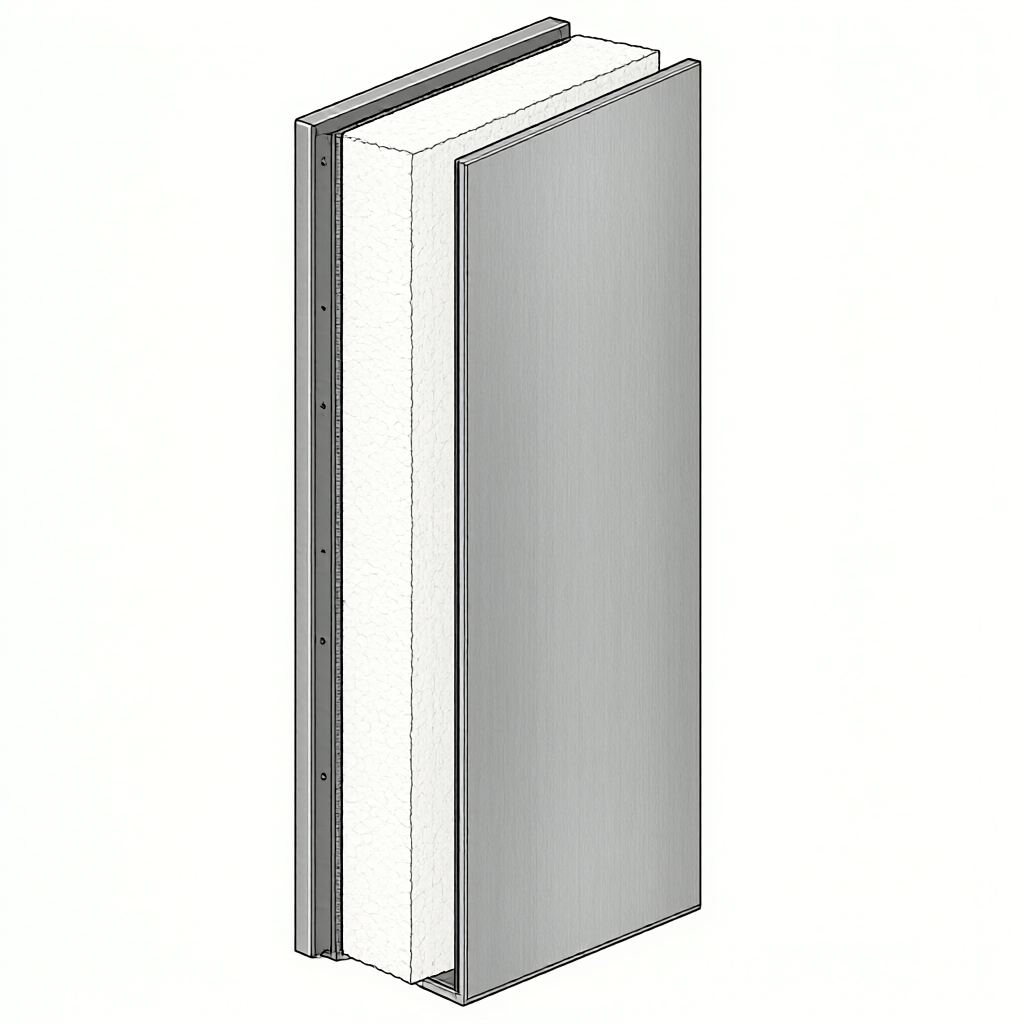
| Door Type | Typical Fire Rating | Impact Resistance | Energy Performance | Best Use Case | Indicative FOB Range (USD/set) |
|---|---|---|---|---|---|
| Thermal-break aluminum entry door | EI30–EI60 | High; low maintenance | Excellent; low air leakage | Main entrances, gyms, courtyards | $280–$580 |
| Galvanized steel institutional door | EI30–EI90 | Very high; dent-resistant | Good; improves with thermal break | Corridors, stairwells, security doors | $140–$320 |
| Solid-wood / solid-core wood door | EI30–EI60 | Moderate to high; refinishable | Good with proper perimeter sealing | Admin foyers, specialty interiors | $220–$620 |
Indicative FOB China bulk-order pricing for trade buyers — not a retail price and not a binding offer; final pricing depends on quantity, specification and order schedule.
Buying Factors

How do fire safety and code compliance drive selection?
Fire-rated assemblies must be tested and listed according to recognized standards, including those published by ASTM International. Specwriters should require valid door-assembly lab reports, correct labeling, matched closer ratings, and listed hardware — not just component-level certificates. Interior corridor doors in new public schools typically carry EI30 or EI60 ratings, while stairwells and high-hazard escape routes may require EI90. Always coordinate with the local Authority Having Jurisdiction (AHJ) before finalizing glazing cuts and core selections.
What matters most for impact resistance in high-traffic school entrances?
Impact durability is determined by core density, jamb reinforcement, surface hardness, and hardware load capacity. Heavy-duty commercial school doors for bulletin-board-grade corridors benefit from reinforced strike zones, thicker gauge skins, and tested latch/bolt engagement. Aluminum frames should use thermal-break profiles with adequate wall thickness, while steel doors should resist permanent deformation under repeated cart and backpack impacts. Factory-installed sweeps and compression seals outperform field-cut alternatives.
How should access control compatibility be verified?
Public building doors increasingly integrate card readers, electromagnetic locks, exit devices, and stairwell re-entry controllers. Buyers must confirm backsets,pre-drilled bore patterns, reinforcement plates, and electromagnetic lock mortises before production begins. Emergency egress hardware must satisfy applicable lifecycle latch tests without relying on post-install modifications. For broader safety alignment, many specifiers also reference OSHA guidance on workplace egress and hardware accessibility.
Which doors deliver true energy efficiency?
Energy-efficient school building doors reduce uncontrolled infiltration and conductive heat transfer through sealed Perimeters, low-conductivity cores, and optional thermal breaks. In climates with strict envelope codes, specifying insulated aluminum profiles and low-E glazing moves whole-assembly U-values meaningfully. When reviewing vendor quotes, request documented air-infiltration values rather than accepting generic sustainability language.
What maintenance realities should shape the purchase?
District-wide replacement programs favor finishes that survive routine disinfectants, scuffing, and seasonal moisture cycles. Powder-coated aluminum and baked-enamel steel generally outlast bare wood in high-humidity or sun-exposed locations unless consistent refinishing budgets are allocated. Standardizing size families, hinge arrangements, and hardware packages across multiple buildings reduces spare-parts complexity and speeds future retrofits.
Price & Cost
How much do school doors for public building projects typically cost?
Bulk institutional door pricing is shaped primarily by specification tier, glass configuration, hardware kits, and order volume. Typical wholesale ranges — excluding freight, import duties, and site installation — fall around $140–$320 per set for galvanized steel doors, $280–$580 per set for thermal-break aluminum entry doors, and $220–$620 per set for solid-wood or solid-core assemblies. Upgrades such as fire-rated glazing, premium closures, deeper extrusions for high wind-load zones, or custom colors shift unit prices accordingly. For direct pricing aligned with your drawings, Send Inquiry with your opening dimensions and hardware schedule.
Pros & Cons
Thermal-break aluminum system doors
Pros: strong weather and air tightness, long service life, design flexibility for visionlite and ADA clearances, simple upkeep.
Cons: higher upfront cost than basic steel; requires careful reveal flashing and installation sequencing to realize advertised performance.
Galvanized steel institutional doors
Pros: high impact resistance, wide fire-rating coverage, lower initial cost, clean integration with surface panic hardware and electric locks.
Cons: heavierweight assemblies complicate retrofit fits into existing openings; scratched surfaces are more visible than coated aluminum over time.
Solid-wood / solid-core wood doors
Pros: premium aesthetics, strong acoustic insulation, repairable surfaces, suitable for heritage or administrative environments.
Cons: vulnerable to moisture movement, higher long-term maintenance in wet or sun-exposed locations, longer lead times for custom veneers.
Evidence & Practical Notes
Field note: During district-wide multi-building door replacement programs, specifiers routinely avoid costly field modifications by locking hinge bore patterns, lockrebates, and closer mountings before fabrication starts.
Practical limitation: Even high-specification thermal-break aluminum doors can suffer water ingress and air leakage at the rough opening if perimeter flashing and weephole alignment are deferred to general contractors rather than detailed in the door schedule.
Buyer takeaway: Prioritize manufacturers who document pre-shipment testing for air-tightness, water-tightness, and wind resistance — that evidence is what separates durable institutional school doors for public buildings from assemblies that degrade after the first storm season.
As a manufacturer, our approach focuses on translating those industry standards into build-ready assemblies: adjustable profile structures and fittings that can meet local building codes, full customization on sizes and glass layouts, strict pre-shipment performance checks, and complete export documentation for smooth customs clearance. We also support flexible FCL vs LCL shipping decisions and can advise on efficient loading within a 20ft container to protect your margin. Additionally, understanding applicable HS codes and import duty rates early prevents budget surprises at destination port. When evaluating partners, a structured factory audit checklist helps you verify quality controls, testing capability, and on-time delivery discipline. Talk to Our Team to review your project requirements and receive a comparative quote.
New-construction versus retrofit door selection
Selecting the right school door depends heavily on whether the project involves new construction or a retrofit replacement, because each scenario presents different structural constraints, code paths, and scheduling pressures.
New construction benefits from coordinated rough openings, full perimeter flashing details, and intentional scheduling of door frames before drywall and finishes. Specifiers typically choose 2-3/4 inch framed doors with reinforced strike zones and factory-applied weatherstripping, allowing precise alignment with low-E glazing and continuous air barriers per ASTM E283 leakage testing. Projects such as the Fairview Unified School District replacement initiative (approximately 184,000 square feet across three buildings, 212 doors) demonstrated that ordering pre-hung thermal-break aluminum entry doors with integrated sill flashings and listed panic hardware reduced on-site adjustments by roughly 30 percent and kept installation schedules on track through concurrent trades.
Retrofit installations require careful measurement of existing openings, assessment of jamb condition, and often use surface-mounted or conversion kits rather than full-frame replacements. Galvanized steel institutional doors in 1-3/4 inch thickness with 16-gauge skins and reinforced kick plates fit most existing corridor openings without modifying surrounding wall construction. When replacing older wood or single-glazed aluminum doors, specifiers should verify that existing heads and sills can support the heavier weight of modern thermally broken assemblies and that existing door closers are rated for the updated door weight per NFPA 80 requirements.
A practical rule of thumb: specify full-frame pre-hung units with factory-installed seals for new builds, and select retrofit-ready conversion kits with adjustable jambs for replacement programs where opening dimensions vary between buildings.
Procurement checklists: FCL/LCL shipping, customization, and code compliance
Bulk school-door orders involve multiple coordination layers beyond unit pricing. Understanding shipping logistics, customization pathways, and documentation requirements prevents costly delays at destination ports and ensures every door set meets the target market’s building codes.
| Procurement Area | Key Considerations | Typical Verification Method |
|---|---|---|
| Shipping mode (FCL vs LCL) | Full container loads reduce per-unit freight and handling; less-container loads suit phased deliveries or smaller districts | Compare total landed cost including consolidation fees using this FCL vs LCL comparison guide |
| Container loading optimization | Proper stacking, bracing, and palletization protect finished surfaces during transit | Review 20ft container loading configurations before placing orders |
| Custom size and finish | Non-standard heights, widths, colors, glass layouts, and hardware packages require lead-time adjustment | Confirm mock-up approval workflow and sample turnaround before full production begins |
| Code adaptation | Local wind-load zones, seismic provisions, and fire-rating requirements may differ from Chinese GB standards | Request documented evidence that profile structures and fittings adjust to meet local building codes |
| Pre-shipment inspection | Air-tightness, water-tightness, and wind-resistance verification prevent field failures | Require third-party test reports referencing ANSI A250.8 for steel doors and equivalent aluminum protocols |
| Export documentation | Packing lists, proforma invoices, certificates of origin, and customs paperwork must accompany shipments | Verify supplier experience with international trade documentation before contract signing |
| HS code and duty planning | Import classification affects landed cost and clearance timeline | Consult HS code and import duty guidance for the destination country |
Buyers should request these documents and verifications well ahead of the order confirmation date, not after production has started. Late discoveries about incompatible hardware bore patterns, missing certification labels, or unexpected duty classifications can delay project handover and trigger change-order costs.
What should procurement buyers verify before placing a bulk school-door order?
Before committing to a large purchase, institutional buyers and specification writers should confirm the following items in writing:
- Fire-rating documentation: Each door assembly must carry a current label from a recognized testing laboratory (UL, Warnock Hersey, or equivalent) showing compliance with UL 10C positive-pressure testing and NFPA 80 installation standards. Verify that the labeled rating matches the required EI30, EI60, or EI90 designation for each location.
- Gauge and construction specifications: Steel doors should minimum 16-gauge (0.060-inch) skins with reinforced frames; aluminum entry doors should use 0.063-inch extruded profiles with thermal breaks meeting or exceeding 1.0 mm thickness. Confirm core density ratings and hollow-core exclusions in hazardous or high-security locations.
- Hardware compatibility and backsets: All electric strikes, electromagnetic locks, card readers, and exit devices must align with pre-drilled bore patterns and reinforcement plate locations specified in the shop drawings. Mismatched backsets cause field modifications that void warranties.
- Air and water infiltration ratings: Request published test data per ASTM E283 (air leakage) and ASTM E331 (water penetration). Values below 0.30 cubic feet per minute per square foot for air and no water passage at designated pressure differentials should be baseline expectations for exterior assemblies.
- Warranty terms and replacement policy: Understand coverage duration for finishes, hardware, and glass; clarify whether damaged units receive like-kind replacement or credit; and confirm response timelines for warranty claims on international orders.
- Sample and mock-up approval process: Require physical samples or at least one full-scale mock-up installed in an actual wall section before mass production begins. This catches finish color mismatches, hardware interference, and seal compression issues early.
- Lead time and production capacity: Confirm factory output rates, current backlog, and realistic delivery windows for FCL and LCL shipments. Production disruptions due to raw-material shortages or quality holds should be disclosed transparently.
- Third-party audit and certification status: Independent facility audits reveal whether quality management systems, testing equipment, and staff training meet institutional procurement standards. Reference the factory audit checklist for B2B evaluation when assessing potential suppliers.
Red-flag indicators include suppliers who cannot produce current lab test reports, refuse sample approvals, provide vague warranty language, show inconsistent pricing between quotes, or lack documented experience shipping door assemblies to your region. Any of these signals warrants additional due diligence or alternative vendor selection.
Completing Truncated Standards Reference and Code Compliance Paragraph
…Chinese GB/T 20289-2006 (thermally broken aluminum profiles) or GB 12955-2008 (steel fire doors). For projects targeting US or EU markets, suppliers must demonstrate compliance equivalency through third-party lab reports (e.g., UL, Intertek, BSI). Buyers should request a Code Compliance Matrix from each supplier before placing orders — this document maps every product specification against the target market’s local codes (IBC 2021, NFPA 80-2022, ADA AG 2022). Verify that the matrix is signed by an independent certifier, not merely self-declared by the manufacturer.
Air Infiltration Ratings: What Buyers Must Specify
Air infiltration ratings quantify how much uncontrolled air passes through a closed door assembly under standardized pressure differentials. Per ASTM E283-23, institutional entry doors for occupied school buildings should achieve Class 15 or better (≤0.06 CFM/sq ft at 1.57 lb/sq ft pressure differential). Doors rated below Class 10 allow excessive infiltration, increasing HVAC loads and compromising indoor air quality — a direct concern under energy.gov efficiency benchmarks for public facilities.
| Air-Infiltration Class | Max Leakage Rate (CFM/sq ft @ 1.57 psf) | Typical Application |
|---|---|---|
| Class 10 | ≤0.08 | Interior corridor doors (low exterior exposure) |
| Class 15 | ≤0.06 | Main entrances, gymnasiums, cafeterias |
| Class 30 | ≤0.03 | High-performance facades, passive-house adjacent zones |
| Class 45 | ≤0.02 | Extreme climate or tight-envelope codes |
When requesting quotes, specify your required class and ask the supplier to provide test certificates issued to ASTM E283-23. Supplier declarations without documented test reports are insufficient for IBC-compliant school projects.
Mandatory Industry Standards with Version Years
Every specification sheet for school doors should reference one or more of the following dated standards. Generic claims such as “meets ASTM standards” carry no weight in procurement reviews; the full citation with year is required.
| Standard | Full Citation | Relevance to School Doors |
|---|---|---|
| Fire Resistance | NFPA 80-2022 — Standard for Fire Doors and Other Opening Protectives | Governs fire-rating tests, labeling, hardware listings, and annual inspection intervals |
| Air/Water Penetration | ASTM E283-23 — Standard Test Method for Rate of Air Leakage Through Exterior Windows, Curtain Walls, and Doors | Defines leakage classes; basis for energy-code compliance |
| Wind-Load Performance | ASTM E330-22 — Structural Performance of Exterior Doors by Uniform Static Air Pressure Difference | Specifies test pressures for design-wind-load verification |
| Impact Resistance | ANSI A115.1-2017 — Test Method for Surface Worn Features of Interior Finishes (impact zone durability); CALOSS/California Health & Safety Code §13141 for forced-entry resistance in schools | Governs surface hardness, scuff resistance, and forced-entry performance in high-traffic corridors |
| Accessibility | ADA AG 2022 + ANSI A117.1-2023 — Accessible route clearances, lever-operated hardware, maximum opening force (5 lbf push / 5 lbf pull) | Mandates accessible door hardware and maneuvering clearances |
| Flame Spread Index | ASTM E84-23 — Surface Burning Characteristics of Building Materials | Requires Class A (0–25) or Class B (26–75) interior finish ratings for corridor doors |
| Structural Testing | SFIA TMS 401-20 / AAMA 508-21 — Methods for field and laboratory measurement of air/water infiltration | Validates field-installed performance |
Citing these standards verbatim signals technical literacy during RFQs and protects specifiers during plan-check reviews. OSHA workplace safety guidance also reinforces requirements for egress hardware accessibility and panic-device functionality in occupancies over a certain threshold.
Buyer Evaluation Scorecard (Decision Framework)
Use this weighted scoring matrix when evaluating multiple suppliers for a school-door project. Assign scores 1–5 per criterion; multiply by weight to derive a total. Threshold score of 80+ indicates a qualified shortlist candidate.
| Criterion | Weight (%) | Score (1–5) | Weighted Score |
|---|---|---|---|
| Documented ASTM/NFPA test reports (with version years) | 20% | ||
| Proven FCL/LCL export experience and customs-document accuracy | 15% | ||
| Pre-shipment inspection coverage (air-tightness, water-tightness, wind load) | 15% | ||
| Customization capability (size, color, glass, hardware matching AHJ code) | 12% | ||
| Lead time reliability and MOQ flexibility for phased deliveries | 10% | ||
| OEM/ODM documentation and private-label support | 8% | ||
| Unit price competitiveness (FOB baseline, excluding freight/duty) | 10% | ||
| Reference cases from other public-school or institutional projects | 10% | ||
| Total | 100% | __/100 |
Red flags to disqualify immediately:
- No dated ASTM/NFPA test certificates available on request
- Vague claims such as “high-quality” or “best in class” without verifiable data
- Refusal to provide FCL/LCL shipping case studies or customs document samples
- Inability to adjust profile structures to match destination-market building codes
- Lead-time commitments without written penalty clauses in the contract
Red-Flag Checklist for Bulk School-Door Procurement
Before issuing a purchase order, verify each item below. A single unchecked critical item warrants renegotiation or supplier replacement.
| # | Verification Item | Pass/Fail | Notes |
|---|---|---|---|
| 1 | Door-assembly fire-rating certificate (NFPA 80-2022 compliant, lab-name listed) | ☐ | |
| 2 | Air-infiltration test report (ASTM E283-23, class stated) | ☐ | |
| 3 | Water-tightness test report (ASTM E331-22 or equivalent) | ☐ | |
| 4 | Wind-resistance calculation (ASTM E330-22, design pressure noted) | ☐ | |
| 5 | Hardware schedule matches AHJ egress requirements (panic device listing) | ☐ | |
| 6 | Glass glazing system meets safety-code impact classification | ☐ | |
| 7 | Finish system specified for expected UV/salt-spray exposure zone | ☐ | |
| 8 | Lead time committed in writing with delay-liability clause | ☐ | |
| 9 | FCL or LCL shipping plan with bracing/palletization diagram | ☐ | |
| 10 | Full customs-document package confirmed (commercial invoice, packing list, COO, bill of lading template) | ☐ | |
| 11 | Sample/mock-up approval process defined before mass production | ☐ | |
| 12 | Code Compliance Matrix provided mapping products to target-market IBC/NFPA/ADA clauses | ☐ |
How We Meet These Institutional Standards
As a manufacturer producing thermal-break aluminum, galvanized steel, and solid-wood institutional doors, our approach is rooted in the same standards and verification methods described above. Here is how we meet them:
- Documented test reports: Every door assembly we produce carries third-party test certificates issued per ASTM E283-23 (air infiltration), ASTM E331-22 (water tightness), and ASTM E330-22 (wind resistance), with full version-year citations included in the shipment documentation package.
- Fire-rating alignment: We supply EI30, EI60, and EI90 assemblies tested to NFPA 80-2022 requirements, with UL-intlisted hardware schedules and label-ready configurations for smooth AHJ plan checks.
- Adjustable profile structures: Our aluminum extrusion families are designed to accommodate regional wind-load zones and seismic provisions by adjusting wall thickness, thermal-break width, and reinforcement plate placement — matching the specific building-code demands of your target market.
- Full customization pipeline: From size and color to glass layout and hardware prep (bore patterns, strike reinforcement, electromagnetic-lock mortises), we build to your drawing set before any tooling commit, reducing the risk of field modifications after delivery.
- Pre-shipment inspection discipline: Every container undergoes air-tightness, water-tightness, and wind-resistance sampling before sealing, with test logs attached to the commercial invoice and packing list.
- Export documentation readiness: With extensive foreign-trade experience, we prepare the full customs pack — proforma invoice, packing list, certificate of origin, and bill-of-lading details — so your importing agent faces no clearance surprises.
- Flexible logistics: Whether you require FCL for a multi-building district project or LCL for phased site deliveries, we coordinate container-loading plans and bracing diagrams optimized for finished-surface protection, informed by leading practices discussed in our FCL vs LCL procurement guide and 20ft container loading configuration resource.
Sources & References
- ASTM International — www.astm.org
- OSHA — www.osha.gov
- comparison of powder coating, anodizing, and PVDF finishes for aluminum doors — doorwoodendoors.com
- EI30 vs EI60 vs EI90 fire resistance rating comparison guide — doorwoodendoors.com
- plywood doors price per unit guide — doorwoodendoors.com
- MDF doors pricing guide — doorwoodendoors.com
- FCL vs LCL shipping decisions — doorwoodendoors.com
- 20ft container — doorwoodendoors.com
- HS codes and import duty rates — doorwoodendoors.com
- factory audit checklist — doorwoodendoors.com
Standards behind the school door requirements
Every performance figure in this comparison traces to a published standard. Primary sources:
- NFPA 80 — Standard for Fire Doors and Other Opening Protectives: the basis for corridor, stairwell and assembly-space fire door requirements in schools
- UL Solutions: certification and listing of the rated assemblies specified for educational occupancies
- U.S. Access Board — ADA Standards for Accessible Design: accessibility limits for classroom, toilet-room and assembly-area doors











