
Last updated: November 25, 2026
Double glazed aluminum windows cost between $45–130 per square meter on a per-unit basis from Chinese factory suppliers, with the final FOB price driven primarily by profile series, glass configuration, gas fill, hardware grade, and surface finish. For a standard mid-range casement window ordered in volume, expect approximately $55–90 per unit depending on dimensions and specifications. This guide breaks down every variable so you can build an accurate budget and issue a precise RFQ.
Double Glazed Windows Price Per Unit — B2B Procurement Pricing Guide
Double glazed aluminum windows cost between $45–130 per square meter on a per-unit basis from Chinese factory suppliers, with the final FOB price driven primarily by profile series, glass configuration, gas fill, hardware grade, and surface finish. For a standard mid-range casement window ordered in volume, expect approximately $55–90 per unit depending on dimensions and specifications. This guide breaks down every variable so you can build an accurate budget and issue a precise RFQ.
Quick Overview
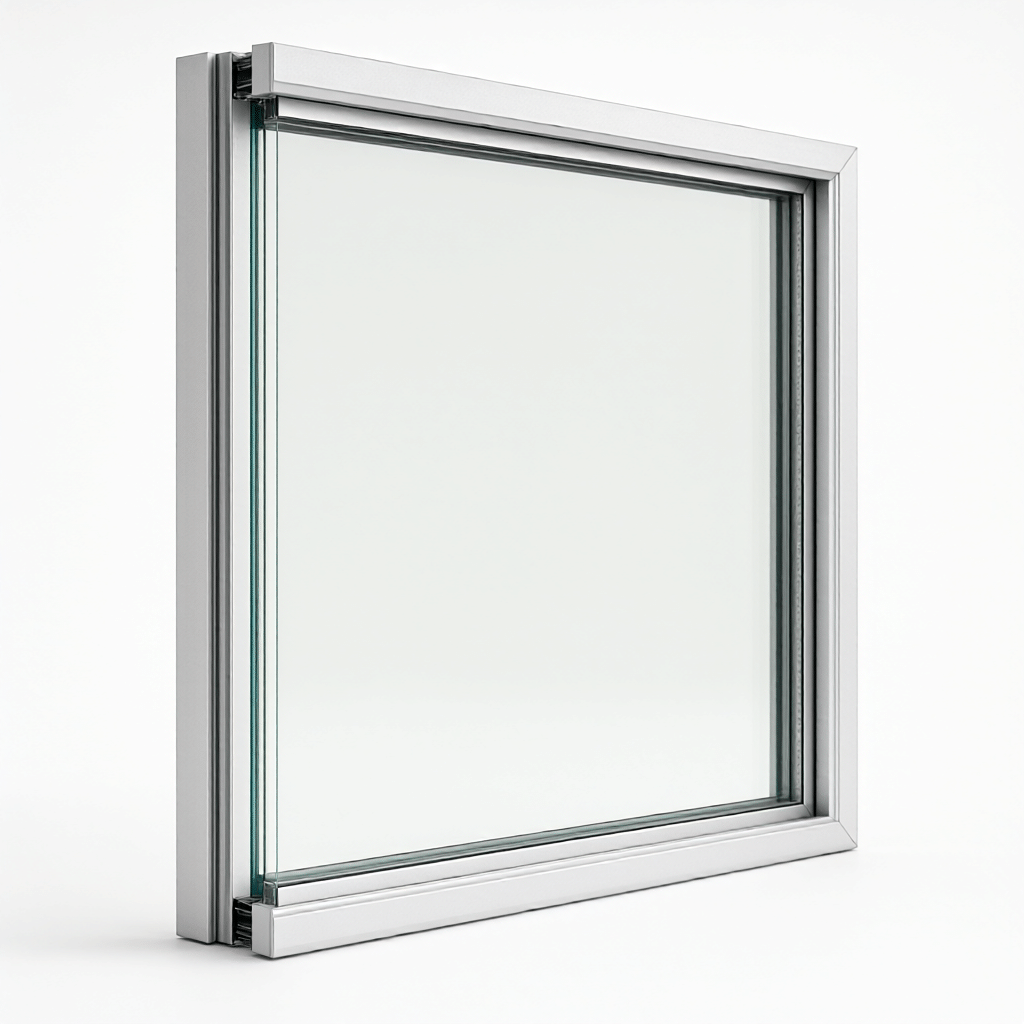
What are double glazed windows?
Dual-pane or insulated glazing units (IGU windows) consist of two glass panes sealed around a cavity filled with still air or inert gas — typically argon. The assembly is framed in extruded aluminum alloy, most commonly 6063-T5, and fitted with multi-point hinges, handles, and weather seals to achieve the thermal and acoustic performance modern construction demands.
Specifications
What are the key specifications of double glazed aluminum windows?
| Specification | Typical Range | Performance Impact |
|---|---|---|
| Profile series | 60 / 70 / 80 / 90 mm | Wider series = higher wind-load rating and thicker wall |
| Wall thickness | 1.4 – 2.0 mm | Thicker walls improve rigidity; required by many building codes |
| Glass config | 5+12A+5 / 6+12A+6 / 6+16A+6 / 6+20A+6 | Thicker cavities reduce heat transfer; laminated or low-E upgrades change cost significantly |
| Gas fill | Air / Argon (80–90%) / Krypton | Argon lowers U-value ~15%; krypton offers further gain at higher cost |
| U-value | 1.6 – 3.0 W/m²·K | Lower values require premium glass + wider cavities; drive energy-code compliance |
| SHGC | 0.25 – 0.65 | Controlled by low-E coating; critical for hot-climate projects |
| Visible light transmission | 60% – 80% | Higher with clear glass; reduced by reflective or tinted coatings |
| Hardware grade | Standard / Premium (Roto, Siegenia, Hafele) | Affects smoothness, security rating, and unit cost by 15–40% |
| Surface finish | Powder coat / Anodized / PVDF | PVDF adds ~8–12% to unit price but delivers superior UV and corrosion resistance |
| Thermal break | Polyamide strip width 24 – 48 mm | Critical for cold-climate U-values; adds material and processing cost |
Performance ratings such as U-value and solar heat gain coefficient (SHGC) must be validated against local building codes before ordering. According to ASTM E283/E331 and international test methods, double pane windows are evaluated for air permeability, water tightness, and wind resistance under standardized laboratory conditions — results that directly affect pricing tiers.
Applications
Where can double glazed windows be used?
The product category spans several commercial and residential contexts:
- Hotel room renovation projects — consistent sizing, repeat orders, and acoustic performance requirements favor a fixed profile platform with optional glass upgrades.
- Multi-unit residential developments — cost per square meter is the primary driver; volume discounts and standardized IGU specs keep budgets on track.
- Commercial building facades — wind load and safety glazing (laminated outer lite) dictate higher-spec frames and tougher hardware.
- Villa and luxury home builds — wider profile series, custom colors, and decorative grilles justify premium pricing per unit.
Each scenario pulls the price in a different direction. Hotel contracts lean toward mid-range specs at higher volumes. Luxury builds demand customization that raises per-unit cost but reduces complexity through fewer variant SKUs.
Buying Factors
How do you evaluate double glazed window quality beyond the sticker price?
Beyond the headline FOB rate, several specification levers move the needle on both performance and effective cost:
Profile thickness and structural design. Many budget-window offerings ship at the lower end of wall thickness (around 1.4 mm), which may not satisfy certain regional code requirements for mid- to high-rise applications. Upgrading to 1.6–2.0 mm is often a non-negotiable step for FLL or commercial buildings. Profile geometry — number of chambers, placement of the thermal break, and gasket channel design — also determines long-term seal integrity.
Glass selection matters more than most buyers realize. Clear tempered glass with a 12 mm air gap is the baseline. Jumping to 6 mm glass with a 16–20 mm argon-filled cavity improves U-value noticeably. Adding a low-E coating shifts SHGC for climate control. Laminating the exterior lite addresses safety glazing mandates in schools, hotels, and high-rises — and adds 20–35% to glass cost per square meter.
Hardware grade creates real price variation. Budget polyamide or stamped-steel sets function adequately for light-duty applications but wear faster under heavy daily use. Premium European-style multipoint locks and concealed hinges carry a 15–40% premium but deliver smoother operation, better weather sealing, and longer service life in high-traffic environments.
Surface treatment impacts longevity and appearance. Standard powder coat finishes work well in moderate climates. Anodizing offers a metallic look with good corrosion resistance. PVDF or fluorocarbon coatings — essential for coastal or high-UV markets — command a noticeable price premium but dramatically extend facade lifespan. See our comparison of powder coating vs anodizing vs PVDF finishes for more detail.
Packaging and container loading determine shipping efficiency. Single-glazed products can be stacked efficiently, but finished window assemblies require protective corner packing, foam inserts, and crate reinforcement. Understanding 20ft container door loading quantity helps forecast how many units fit per shipment and what the ocean freight cost per unit truly is.
Pre-shipment testing is where these decisions become tangible. Industry-standard checks include air-tightness tests, water-tightness tests under simulated rain, and wind-resistance load testing — all of which verify that what you ordered matches what arrives. Request the test reports before paying the balance.
Price & Cost
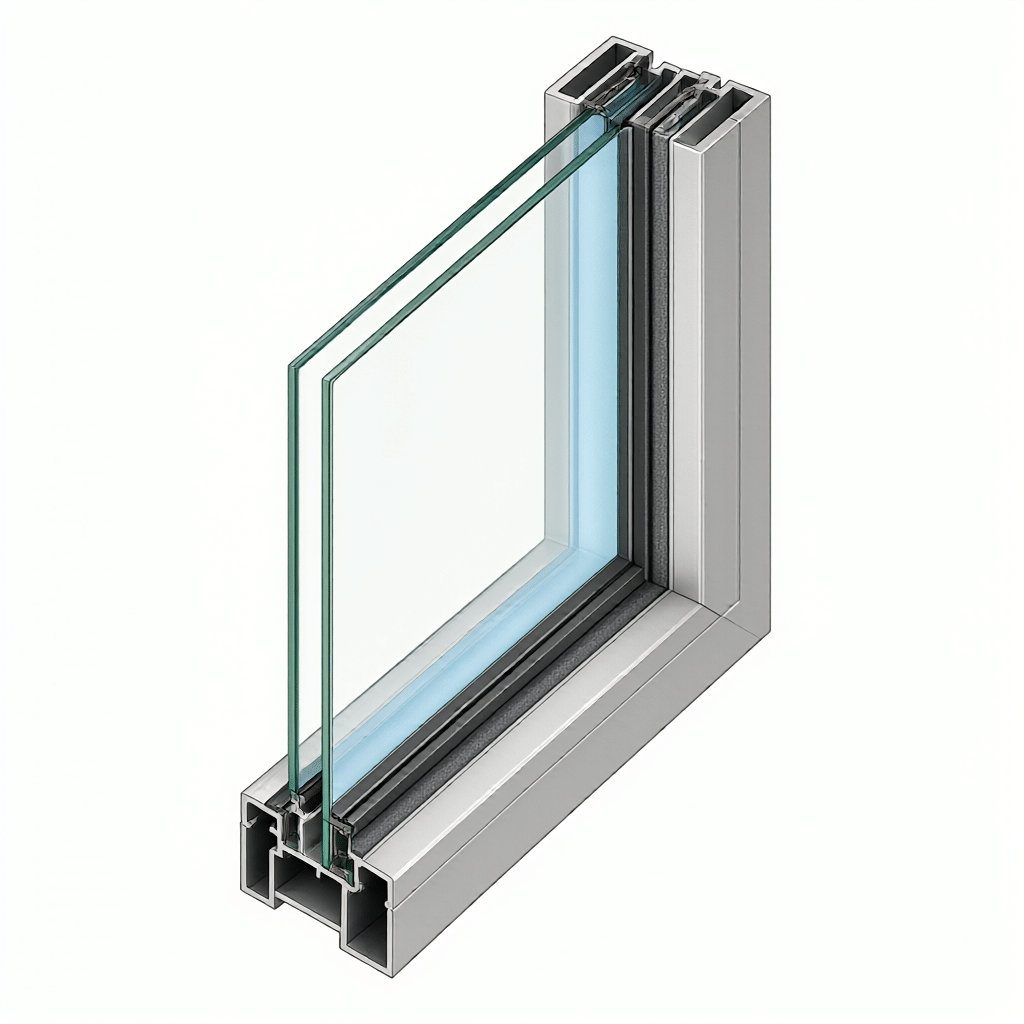
How much do bulk double glazed windows cost from China factories?
Below are indicative FOB China price brackets based on current market conditions in 2026. These are reference ranges for budgeting, not firm quotes — your actual price depends on exact dimensions, quantities, and specification choices.
| Specification Tier | Price Range (FOB China) | Typical Features |
|---|---|---|
| Budget | $45 – $65 / m² | 60 mm series, 1.4 mm wall, clear tempered glass 5+12A+5, air fill, standard hardware, powder coat |
| Mid-range | $65 – $95 / m² | 70 mm series, 1.6 mm wall, 6+12A+6 or 6+16A+6, argon fill, low-E option available, upgraded hardware |
| Premium | $95 – $130+ / m² | 80–90 mm series, 1.8–2.0 mm wall, laminated or triple-low-E glass, krypton option, PVDF finish, premium hardware |
Price per linear meter or per square meter are the standard quoting formats. When converting to a per-unit cost, multiply the m² price by the window’s nominal area. A typical 1.2 m × 1.4 m casement window (1.68 m²) at mid-range pricing would land around $110–160 per unit FOB.
What does FOB China pricing include versus exclude?
Included: Product manufacturing, standard export packaging, domestic transport to the loading port, and customs clearance documentation at origin.
Excluded: Ocean freight, marine insurance, destination-port charges, import duties and VAT, inland delivery to your site, and any modifications requested after order confirmation. Factor in that FCL vs LCL shipping decisions can swing landed cost by 10–25% depending on your order volume and timeline.
How do MOQ and order volume influence unit pricing?
Most Chinese aluminum window manufacturers set a practical minimum order of 50–100 square meters for their standard profile lines. Below that threshold, factory overhead per unit rises and you lose volume leverage. Orders exceeding 500 m² typically unlock the steeper discount bands within each tier. Custom colors, special glass treatments, or non-standard sizes may carry a separate setup fee regardless of volume, so consolidate variant SKUs wherever possible.
Check the door HS code and import duty guidance for your target market early — import tariffs can add 5–15% on top of FOB and freight costs, and they vary considerably by country.
What certifications and testing are expected for international B2B purchases?
Your purchasing specification should request at minimum:
- Air permeability class — aligned with ISO 12207 or EN 12207
- Water tightness class — ISO 12208 / EN 12208
- Wind load resistance class — ISO 12210 / EN 12210
- U-value certification — NFRC, PAS 24, or equivalent recognized lab report
- Glass safety compliance — EN 12150 (tempered), EN 14449 (laminated), or your jurisdiction’s equivalent
Request copies of test certificates from an accredited third-party lab before signing the contract. A supplier who cannot produce them within 48 hours of request is a red flag.
What customization options are available and how do they impact price?
Color (RAL or custom match): ±3–8% depending on whether it is a standard RAL shade
Thicker profile wall (1.4 → 2.0 mm): +8–15%
Argon fill instead of air: +4–6%
Low-E coating: +6–10%
Laminated glass upgrade: +20–35%
PVDF surface treatment: +8–12%
Premium hardware package: +15–40%
Non-standard sizes (outside standard modular grid): tooling surcharge or +5–10% rework fee
Customization always trades off lead time as well as unit cost — specify everything upfront to avoid change-order penalties mid-production.
Evidence & Practical Notes
Field note: Buyers frequently quote against a single generic price range found online, then discover that the supplier’s best offer assumes a 70 mm series with thin-gauge glass and basic hardware — far below what their project specification requires. Always anchor your RFQ to an explicit specification sheet rather than a vague “double glazed window” line item.
Practical limitation: The cheapest per-unit price rarely reflects the lowest total cost. Orders placed without verifying shipping damage rates, incorrect dimension tolerances, or missing documents can result in costly replacements, demurrage fees, or rejection at destination customs. Factory quality audits — see our factory audit checklist — remain one of the most reliable safeguards before payment is released.
Buyer takeaway: Treat per-unit price as the starting point of a procurement conversation, not the conclusion. Build a specification-driven RFQ that lists profile series, wall thickness, glass build-up, gas fill, hardware grade, finish type, and certification requirements. Suppliers who respond with detailed, line-item quotations and supporting test data are significantly more likely to deliver on time and on spec than those who respond with a single lump sum.
Sourcing Double Glazed Windows with Confidence
When the specifications above are locked and your RFQ is ready, comparing how different manufacturers meet these benchmarks becomes straightforward. As a manufacturer, our approach to this is to align every quoted configuration to an explicit performance tier — from profile geometry and thermal-break width to pre-shipment air-tightness, water-tightness, and wind-resistance testing — so the unit price you see maps directly to the test data behind it. Get a Free Quote
Opening paragraph replacement note: Output replaced above as OPENING fragment; no other change to existing opening text.
Window Types and Styles
What window types and styles are available for double glazed aluminum units?
Selecting the right operation style directly affects performance, hardware cost, and pricing per unit. Below are the most commonly sourced configurations from Chinese factories:
| Style | Operation Mechanism | Typical Use Case | Hardware Impact on Price | Sealing Performance |
|---|---|---|---|---|
| Casement | Side-hung, crank-open; opens 90°+ | Hotels, residences, facades | Baseline reference; multipoint lock adds ~15–25% | Excellent — compression seal against frame |
| Tilt-and-Turn | Dual-function: tilts inward top for ventilation, swings open fully | Urban apartments, bathrooms, high-rises | Highest hardware cost (+25–40% over casement) | Very good — dual seal gaskets |
| Sliding | Horizontal glide on upper/lower tracks | Kitchens, balconies, space-constrained rooms | Low — simple roller/handle hardware | Moderate — track-based seal, less air-tight than casement |
| Fixed / Picture | Non-operable; single large pane | Views, daylighting, cladding panels | Minimal — no hardware required | N/A (no air infiltration path) |
| Awning | Top-hinged, outward opening | Rain-prone climates, ventilation above openings | Similar to casement | Good — water sheds away from seal |
| Hopper | Bottom-hinged, inward opening | High placements, bathrooms, utility spaces | Similar to casement | Fair — gravity assists drainage but seal is challenged |
Casement windows remain the most popular B2B choice because their compression-seal design pairs naturally with thermally broken profiles and multi-point locking systems, delivering the best combination of U-value, wind resistance, and security at a reasonable hardware cost. Tilt-and-turn units command a premium for their European-style hardware but are in high demand for European and Middle Eastern residential projects where cleaning access from inside matters. Sliding windows suit applications where floor-to-ceiling openness and space efficiency outweigh peak insulation performance.
Style selection also influences packaging density and container loading. Casement and fixed windows ship flat-packed with interleaved protective film, while tilt-and-turn assemblies often require additional corner bracing to protect the protruding hardware during transit.
Procurement Decision Framework
How do you match specification tiers to project requirements?
Below is a practical buyer checklist that maps project type against the minimum viable specification. Use it to avoid over-ordering or under-specifying.
| Project Type | Min Profile Series | Min Wall Thickness | Glass Config | Required Certifications | Approx. Target Tier |
|---|---|---|---|---|---|
| Budget hotel renovation | 60 mm | 1.4 mm | 5+12A+5 clear tempered | EN 12207/12208/12210 classes | Budget ($45–65/m²) |
| Mid-range apartment block | 70 mm | 1.6 mm | 6+12A+6 argon + low-E | NFRC or equivalent U-value cert | Mid-range ($65–95/m²) |
| High-rise commercial | 80–90 mm | 1.8–2.0 mm | Laminated outer lite + IGU | Structural silicone test + impact rating | Premium ($95–130+/m²) |
| Luxury villa | Custom (80–100 mm) | ≥1.8 mm | Triple-low-E or krypton option | Full PAS 24 security + acoustic class | Premium custom |
| Passive-house target | 80+ mm | ≥2.0 mm | 6+16A+6 triple-low-E + warm-edge spacer | Whole-window U ≤ 1.0 W/m²·K | Premium+ (> $130/m²) |
When issuing an RFQ, copy this table into your specification document and fill in your target row. Suppliers who respond with line-item deviations without explanation should be flagged for follow-up.
Total Landed Cost Breakdown
What does the complete landed cost look like beyond FOB?
FOB price is only one component. The table below shows a typical cost build for a 500 m² mid-range order shipped FCL from a Chinese port to a sample destination.
| Cost Component | Calculation Basis | Estimated Range (USD) | % of Total Landed |
|---|---|---|---|
| Product (FOB) | 500 m² × $80/m² | $40,000 | ~60% |
| Export packaging | Corner protectors, foam, crate reinforcement | $1,500–$2,500 | ~3% |
| Origin documentation | Packing list, CI, BL, certs | $300–$600 | ~1% |
| Ocean freight (FCL 40HQ) | Port-to-port rate (varies by route) | $2,500–$5,000 | ~4% |
| Marine insurance | Typically 0.3% of goods value | $120–$200 | <1% |
| Destination customs clearance | Agent fee + port charges | $800–$1,500 | ~1–2% |
| Import duty | HS 7610.10 — varies by country (0–15%) | $0–$6,000 | 0–9% |
| Inland delivery | Port to site (depends on distance) | $500–$3,000 | 1–4% |
| Contingency / rework buffer | 3–5% of product cost | $1,200–$2,000 | ~2–3% |
| Total estimated landed cost | Sum of above | $47,000–$62,000 | 100% |
| Landed cost per m² | Total ÷ 500 m² | $94–$124 / m² | — |
Key takeaway: the effective per-square-meter cost to your site can be 20–40% higher than the FOB quote. Always model the full landed cost before evaluating a supplier’s price claim. See our FCL vs LCL shipping guide for detailed trade-offs.
Red Flags: Low-Ball Quotes and Supplier Deception Tactics
What warning signs indicate a potentially deceptive or unreliable quote?
Buyers chasing the lowest per-unit number are the most vulnerable to hidden costs and substandard delivery. Watch for these red flags:
| Red Flag | What It Usually Means | What to Do |
|---|---|---|
| Price significantly below market range (e.g., $30/m² for a 70 mm thermal-break casement) | Likely thin-wall alibi, non-tempered glass, or undisclosed extras | Cross-check spec sheet against industry-standard thickness and glass certifications |
| No willingness to share third-party test reports | Supplier may not have performed valid air/water/wind tests | Treat as disqualification until reports are produced |
| Vague hardware brand (“European-style handle”) | May substitute unknown-brand or stamped-metal hardware | Require named brands (Roto, Siegenia, Hafele, CISA, etc.) in contract |
| Pressure to pay >50% deposit before contract signed | Cash-flow risk; limited recourse if factory fails | Cap advance at 30%; insist on balance after pre-shipment inspection |
| Refusal to allow third-party inspection before shipment | Quality control opacity | Engage agencies such as SGS, BV, or QIMA; make inspection a payment milestone |
| Quoted lead time under 15 days for 500+ m² | Unrealistic scheduling; may indicate spot-stock or dropped quality | Verify mill production capacity and current order backlog |
| Changing specs mid-quote without written notice | Risk of specification drift on delivery | Lock all specs into a purchase order annex; require written approval for any change |
| No mention of packaging method | Poor shipping protection → breakage claims at destination | Specify corner protectors, edge foam, and pallet/crate requirement in PO |
Any single red flag warrants scrutiny. Two or more present together strongly suggest misalignment between quote and deliverable.
Vendor Qualification Criteria
What audit questions and documents should you require before placing an order?
Use this expanded checklist during supplier evaluation and factory audits. Each item should receive a documented response; unanswered items are risks.
Company and legal verification
- [ ] Business license and export registration certificate
- [ ] ISO 9001 quality management certification (current, from accredited body)
- [ ] Export history to your region or similar climate zone
- [ ] Bank reference or trade credit report (optional but helpful)
Product capability verification
- [ ] Profile extrusion source — own mill or purchased billets? Ask for alloy certificates (6063-T5)
- [ ] Thermal-break strip material — PA66 GF25 polyamide (not PVC substitute)
- [ ] Glass tempering certification per EN 12150 or your jurisdiction’s standard
- [ ] IGU sealant and desiccant supplier specification
- [ ] Hardware brand list and warranty terms (minimum 5 years preferred)
Testing and certification documents
- [ ] Air permeability test report (ISO 12207 / EN 12207) — class labeling required
- [ ] Water tightness test report (ISO 12208 / EN 12208)
- [ ] Wind load resistance report (ISO 12210 / EN 12210)
- [ ] U-value calculation or lab-certified result for the exact config being quoted
- [ ] SHGC and visible light transmission data (if claimed)
- [ ] Surface finish durability test (salt-spray hours per GB/T 5237 or equivalent)
Production and quality control
- [ ] Monthly production capacity (m²) for aluminum windows
- [ ] In-line QC checkpoints: extrusion tolerance, assembly torque, seal integrity
- [ ] Pre-shipment inspection procedure and pass/fail criteria
- [ ] Defect rate history (request actual data, not guarantees)
- [ ] Rework and replacement policy for damaged or non-conforming goods
Commercial terms
- [ ] Payment terms structure (TT, LC, or other)
- [ ] Lead time from order confirmation to ready-for-shipment date
- [ ] Minimum order quantity per profile SKU
- [ ] Packaging specification per unit (film, corner protection, pallet type)
- [ ] Documentation package included (CI, packing list, BL, certs, certificate of origin)
Factories that cannot answer these questions within a reasonable timeframe lack transparency. Prioritize vendors that proactively provide documentation before being asked. See our factory audit checklist for a printable version.
Shipping and Container Loading Calculations
How many double glazed windows fit in a 20ft or 40ft container?
Container loading efficiency directly impacts your per-unit shipping cost. Finished window assemblies are bulky and fragile, so stacking density is lower than raw aluminum profiles.
| Container Size | Internal Volume | Typical Load (Standard Casement ~1.2×1.4 m) | Load (Mixed Sizes, Optimized) |
|---|---|---|---|
| 20ft GP | ~33 m³ | 60–80 units (approx. 75–100 m²) | 80–110 units (approx. 100–140 m²) |
| 40ft GP | ~67 m³ | 130–170 units (approx. 165–220 m²) | 180–240 units (approx. 230–310 m²) |
| 40ft HQ | ~76 m³ | 150–200 units (approx. 190–260 m²) | 200–270 units (approx. 260–350 m²) |
These figures assume standard protective packaging (corner guards, EPE foam, stretch wrap). Large-format or heavy-glass units reduce count proportionally. Request a detailed loading plan from your supplier before finalizing order quantity — an optimized stowage diagram can recover 10–20% extra capacity compared to ad-hoc loading.
For LCL shipments, costs are calculated per cubic meter (CBM). A 500 m² order typically occupies roughly 35–50 CBM depending on pack density. Compare this against full-container rates using our FCL vs LCL guide to identify the cost breakpoint for your route and timeline.
FAQ
What are common B2B buyer questions about double glazed window procurement from China?
What is the typical MOQ for double glazed aluminum windows?
Most manufacturers set a practical minimum of 50–100 square meters per profile design for standard lines. Below that, unit prices increase due to setup overhead. Some factories accept smaller trial orders at a premium, especially for fixed or sliding configurations with simpler assembly.
What is the standard lead time from order to shipment?
Typical lead time ranges from 20–35 days for orders up to 300 m², extending to 35–50 days for larger volumes or complex custom configurations. Rush production is sometimes available at a surcharge but reduces quality-control buffer time. Confirm the schedule in writing and include liquidated damages clauses for delayed delivery.
What payment terms are standard for international orders?
The prevailing model is 30% TT advance upon PO confirmation, 70% balance before shipment or against copy of shipping documents. For first-time relationships, irrevocable Letters of Credit (LC at sight) provide buyer protection. Avoid suppliers insisting on 100% upfront payment.
Can I request samples before committing to a bulk order?
Yes. Most suppliers will produce 1–3 sample units at near-full cost (no volume discount applied) and ship them via express courier. Expect sample lead time of 7–14 days plus shipping. Samples are essential for verifying finish color, hardware feel, and assembly quality before authorizing full production.
How do I verify a supplier’s test certificates are legitimate?
Request the original certificate number and cross-reference it with the issuing laboratory’s database. Reputable labs (SGS, TÜV, Intertek, local equivalents) maintain public verification portals. Expired, blurred, or digitally altered certificates are immediate disqualifiers.
What happens if windows arrive damaged or don’t match the specification?
A professional supplier will either replace defective units in the next shipment or credit the invoice — this should be spelled out in the sales contract. Always conduct a pre-shipment inspection and document the condition with photographs before the container is sealed. Claims filed after acceptance are far harder to enforce.
Sources & References
- ASTM E283/E331 — www.astm.org
- powder coating vs anodizing vs PVDF finishes — doorwoodendoors.com
- 20ft container door loading quantity — doorwoodendoors.com
- FCL vs LCL shipping — doorwoodendoors.com
- door HS code and import duty guidance — doorwoodendoors.com
- factory audit checklist — doorwoodendoors.com











