
Last updated: November 25, 2026
CARB Phase 2 sets maximum formaldehyde emission levels of 0.05 ppm for hardwood plywood and veneer-core products, 0.117 ppm for particleboard, and 0.061 ppm for medium-density fiberboard (MDF). These binding thresholds apply to all composite wood manufactured or imported into California, and since TSCA Title VI adoption, they carry the same force nationwide — making them a mandatory checkpoint for any B2B buyer specifying interior finishes, door cores, or cabinetry substrates. The question every buyer faces is not whether these limits exist, but how to verify that every shipment meets them before materials reach the job site.
Quick Answer
CARB Phase 2 sets maximum formaldehyde emission levels of 0.05 ppm for hardwood plywood and veneer-core products, 0.117 ppm for particleboard, and 0.061 ppm for medium-density fiberboard (MDF). These thresholds apply to all composite wood products manufactured or imported into California, and they are enforced through TSCA Title VI, which adopted the same limits at the federal level.
Detailed Explanation
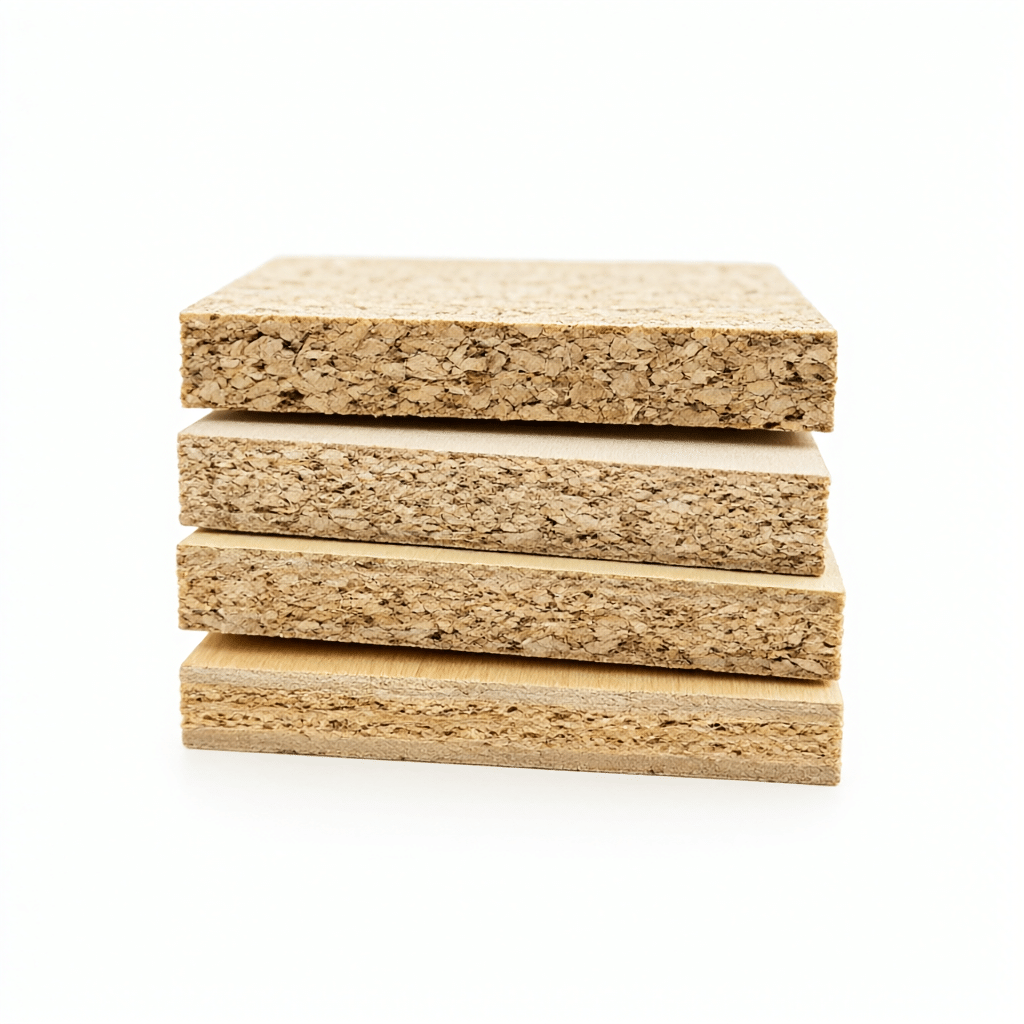
What is CARB Phase 2?
California Air Resources Board Phase 2 refers to the second tier of regulatory standards governing formaldehyde emissions from composite wood products — hardwood plywood, particleboard, and MDF — used in construction and furniture manufacturing. The program was introduced to reduce indoor air exposure to formaldehyde, a known human carcinogen, by setting tighter emission limits than those established under Phase 1.
Phase 2 superseded Phase 1 because the earlier limits allowed significantly higher formaldehyde release. Under Phase 1, particleboard could emit up to 0.3 ppm and MDF up to 0.21 ppm. Phase 2 cut those figures roughly in half, creating a much stricter baseline for any material entering the California market. The European Environment Agency has documented that prolonged exposure to formaldehyde at elevated concentrations poses measurable health risks, which is precisely why these thresholds matter for commercial procurement decisions. Environmental Protection Agency
How CARB Phase 2 Differs from Phase 1
The difference between Phase 1 and Phase 2 is not incremental — it represents a fundamental shift in how composite wood must be manufactured and verified. Phase 1 relied heavily on producer declarations and spot testing. Phase 2 requires third-party certification, ongoing conformity testing, and chain-of-custody tracking from the mill to the final product.
For buyers sourcing engineered wood panels, this means you can no longer accept a supplier’s word alone. You must request certificates from an EPA-approved third-party certifier, verify that testing follows ASTM E2092 or equivalent methods, and confirm that labeling includes the required attestation statements. Materials produced before Phase 2 enforcement dates cannot be sold as compliant, even if they passed older Phase 1 testing.
Which Composite Wood Products Fall Under Phase 2
Not every wood-based material is covered. The regulations specifically target three categories:
Hardwood plywood and veneer-core products — including furniture-grade panels, door cores, and cabinet substrates. Interior hardwood plywood with thin surface veneers is included; exterior-grade structural plywood is generally exempt unless it also serves as an interior finish material.
Particleboard — used extensively as door cores, shelf substrates, and cabinet boxes. All grades intended for interior use fall under the regulation.
Medium-density fiberboard (MDF) — common in painted doors, moldings, and furniture components. Both standard and moisture-resistant MDF are covered.
Products that do not require Phase 2 compliance include lumber that has been further processed (such as dimension stock planed or surfaced after manufacturing), exterior-grade plywood rated for structural or temporary concrete forms, and composite wood products made entirely from renewable biomass binders that are formally granted exemptions.
For buildings where interior door assemblies require both fire-rating and low-emission specifications, the interplay between NFPA 105 smoke-door standards and CARB compliance should be reviewed during specification. NFPA 105 Smoke Door Assembly Standards & Requirements
Key Specifications

What Are the CARB Phase 2 Formaldehyde Limits?
| Composite Wood Category | Maximum Formaldehyde Limit |
|---|---|
| Hardwood plywood / veneer-core | 0.05 ppm |
| Particleboard | 0.117 ppm |
| Medium-density fiberboard (MDF) | 0.061 ppm |
These values represent the chamber-method test concentration measured in parts per million. They are upper-bound limits — any batch that tests at or below these numbers meets the regulatory threshold. Testing above these values constitutes a compliance failure.
What Is the Exemption Level vs. the Attribution Level?
Understanding the difference between the exemption level and the attribution level is critical when evaluating supplier claims.
The exemption level is the formaldehyde concentration below which a composite wood product is not subject to the requirements of the standard. For hardwood plywood and veneer-core products, the exemption level matches the attributon level at 0.05 ppm — meaning these products cannot qualify for a simplified pathway; they always must meet the full limit.
The attribution level is the threshold used in chain-of-custody accounting. When a distributor combines compliant and non-compliant materials, the attribution level determines whether the resulting product must still carry a compliance attestation. For particleboard, the attribution level is 0.117 ppm; for MDF, it is 0.061 ppm. Below these levels, the material can flow through the supply chain without triggering additional compliance obligations at each transfer point.
In practice, this distinction matters most for importers and distributors who source from multiple mills. If your particleboard shipments come from a facility that tested at 0.09 ppm, you are well within the attribution level and face fewer documentation requirements than a shipment testing at 0.11 ppm, which sits close to the boundary and demands tighter chain-of-custody controls.
Standards & Requirements

How TSCA Title VI Aligns with CARB Phase 2
The Toxic Substances Control Act Title VI, enacted by the U.S. Environmental Protection Agency in 2016, incorporated the CARB Phase 2 standards into federal law. This alignment means that any composite wood product sold or distributed in interstate commerce across the United States — not just in California — must meet the same formaldehyde limits.
TSCA Title VI created a uniform national framework that eliminates the previous patchwork of state-level rules. However, California continues to enforce its own compliance infrastructure through CARB, and some states have adopted even stricter provisions. Importers and manufacturers should verify both the federal baseline and any additional state requirements that may apply to their destination markets.
Testing and Certification Processes
Compliance verification under CARB Phase 2 involves several distinct steps that buyers should understand before placing orders.
Initial product qualification testing — Manufacturers must have their products tested using approved chamber methods, typically ASTM E2092 (Standard Practice for Determining Formaldehyde Concentrations in Air and Emission Rates from Wood Products Using a Chamber Test). The test measures the concentration of formaldehyde released from a sample under controlled temperature and humidity conditions. Results are reported in ppm.
Ongoing periodic testing — Once a product line is qualified, the manufacturer must conduct regular retesting — usually annually or semi-annually depending on the product category. This ensures that production processes remain stable over time and that adjustments to resin formulations or press cycles do not push emissions above the limit.
Third-party certification — An EPA- or CARB-approved third-party certifier reviews the manufacturer’s quality control plans, audit test results, and inspects production facilities. Certification is not a one-time event; certifiers perform annual surveillance audits to maintain the manufacturer’s compliant status.
Chain-of-custody documentation — Every transaction involving certified composite wood must be documented. Suppliers provide invoices that include attestations confirming the product meets Phase 2 limits. Distributors and fabricators must retain these records and pass them to downstream buyers.
When sourcing materials for projects requiring specific acoustic performance alongside regulatory compliance, review how door constructions manage both soundproofing and emissions. How to Soundproof an Existing Door: Methods & Specs
Labeling and Documentation Requirements
Every slab, sheet, or bundle of regulated composite wood must carry a label or accompanying documentation stating:
- The product name and species (for plywood)
- The mill identification number assigned by the certifier
- The phrase “TSCA Title VI Compliant” or “CARB Phase 2 Compliant”
- The Formaldehyde Emission Level (e.g., “Ultra-Low-Emitting” for certain exempt products, though most Phase 2 products simply attest to meeting the limit)
- The date of manufacture and lot or batch number
Invoices should mirror these labels and include an attestation clause. For importers bringing materials into the U.S., customs brokers will check that the documentation accompanies the shipment. Missing or incomplete paperwork can result in delays at port or rejection of non-compliant goods.
Related Considerations
Implications for Building Code and Import Compliance
Composite wood formaldehyde compliance intersects with several other regulatory requirements that procurement teams must track simultaneously. Building codes in many jurisdictions reference TSCA Title VI compliance as a prerequisite for accepting interior finish materials. Local inspectors may request certificates during plan review or at the point of material delivery.
For international suppliers, China remains a major source of composite wood products shipped to North America and Europe. Buyers working with overseas manufacturers should ensure the factory holds valid CARB Phase 2 certification and that testing was conducted by a certifier recognized by both CARB and the EPA. Some suppliers offer materials tested only to domestic Chinese standards, which are not equivalent to Phase 2 requirements and will not satisfy U.S. or California code enforcement.
Procurement teams should also consider how composite wood selection affects downstream installations. The way interior doors are hung and finished can influence both the aesthetic outcome and the long-term performance of the assembly. Understanding proper hardware spacing and hanging techniques helps avoid costly field modifications. How to Hang an Interior Door: B2B Buyer’s Procurement Guide Similarly, prehung door configurations simplify on-site verification of compliance documentation before installation begins. How to Install a Prehung Door: Complete B2B Guide
Why Compliance Matters for Procurement Decisions
Formaldehyde emission compliance is not optional for anyone specifying interior materials in regulated markets. Non-compliant products create legal exposure for general contractors, distributors, and building owners. Penalties under TSCA Title VI can include civil fines of up to $37,531 per violation per day, and repeat offenders face criminal liability.
Beyond the legal consequences, there is a reputational and operational cost. A project that fails inspection because composite wood materials lack proper documentation will experience delays, potential rework, and strained relationships with specifiers and authorities having jurisdiction. In high-end residential and commercial projects, clients increasingly specify low-emission materials as part of broader indoor-air-quality commitments, and non-compliant products will not meet those expectations.
From a practical standpoint, the most reliable approach is to build compliance verification into the bid process — request certificates before quoting, confirm third-party certifier credentials, and insist on chain-of-custody documentation with every purchase order. Do not wait until materials arrive on site to discover that paperwork is missing.
As a manufacturer supplying composite wood products for door and window systems, our approach to CARB Phase 2 compliance centers on rigorous testing and full documentation transparency. Each batch of hardwood plywood, particleboard, and MDF we produce undergoes chamber-method testing against the 0.05 ppm, 0.117 ppm, and 0.061 ppm limits respectively, with certificates available upon request. We adjust profile structures and fitting configurations to match local building codes in target export markets while maintaining the same formaldehyde emission standards across all product lines. Our pre-shipment inspections cover air-tightness, water-tightness, and wind resistance in addition to documentation verification, ensuring that compliance is not limited to the material specification but extends through the entire delivery process. For buyers managing commercial door and window procurement or residential project sourcing, we can provide complete packing lists, proforma invoices, and customs documents alongside our CARB certification package. Contact Our Team to discuss your project requirements and receive compliance documentation for your next order.
How to Verify CARB Phase 2 Compliance Before Purchasing
Required Documentation and Certification
What documentation or certification is required for CARB Phase 2–compliant composite wood hinges on your role in the supply chain.
For domestic buyers: Request a current Certificate of Compliance issued by an EPA- or CARB-approved third-party certifier. The certificate must name the specific product lines and mill numbers it covers. Invoices must contain an attestation clause stating the product meets TSCA Title VI / CARB Phase 2 limits. Maintain these documents for at least three years as proof of compliance.
For importers: You must file an Importer Certifications Form with U.S. Customs and Border Protection, asserting that the shipped composite wood meets the applicable emission standard. Working with the EPA’s Certified Composite Wood Products Database ensures you can verify that your supplier holds active certification before boarding the cargo.
A buyer checklist that should accompany every purchase order:
| # | Verification Step | Why It Matters |
|---|---|---|
| 1 | Confirm the supplier holds a current CARB Phase 2 / TSCA Title VI Certificate of Compliance | Invalid or expired certificates provide zero legal protection |
| 2 | Cross-reference the mill ID number against the EPA Certified Composite Wood Products Database | Prevents reliance on forged or misattributed certificates |
| 3 | Review the most recent chamber-test report (ASTM E2092) and confirm values fall below the regulatory limit | A certificate alone does not prove your batch meets the threshold |
| 4 | Verify chain-of-custody paperwork accompanies the shipment | Missing CoC breaks the compliance chain and voids protections |
| 5 | For untreated lumber claims, request a separate Green Certificate or exemption documentation | Some suppliers incorrectly label further-processed lumber as exempt without documentation |
| 6 | Confirm the testing lab is accredited for ASTM E2092 or equivalent | Non-accredited results may not be accepted by inspectors or customs |
Industry Case Study: A Midwestern Furniture Manufacturer’s CARB Compliance Failure
A regional kitchen-cabinet manufacturer based in Ohio discovered its particleboard supplier from Southeast Asia had provided a Certificate of Compliance that appeared legitimate but was tied to a different mill. During an EPA compliance audit triggered by a random selection, the agency identified the discrepancy. The consequence was a cease-and-desist order, mandatory recall of finished cabinet boxes built with the uncertified material, and civil penalties assessed per violation day under TSCA Title VI. The incident was compounded by the fact that the manufacturer had not independently verified the mill ID in the EPA database before accepting the documents.
This case illustrates why second-source verification matters. A compliant certification on paper does not guarantee the actual shipment matches the certified product line. Independent batch-level verification — comparing mill numbers, lot identifiers, and test-report dates against the published certificate — closes the gap between paper compliance and field reality.
Cost Impact: Compliant vs. Non-Compliant Materials
Understanding the pricing dynamics helps buyers make informed procurement decisions and assess total landed cost.
| Factor | Compliant Material | Non-Compliant Material |
|---|---|---|
| Unit-cost premium | 8–15% above non-certified baseline for particleboard; 5–10% for MDF at volume | Lower sticker price |
| Risk exposure | Minimal legal risk; clean chain-of-custody | Up to $37,531 per violation per day in civil fines under TSCA Title VI |
| Shipment delay probability | Low — documentation clears customs without issue | High — lack of proper certification triggers port holds and possible rejection |
| Rework / replacement cost | None if specifications are met | Full replacement at buyer’s expense plus schedule disruption |
The apparent savings from purchasing non-compliant material quickly erode once penalty exposure, logistics delays, and material-replacement costs are factored in. For high-volume procurement, the compliance premium typically represents less than 2% of total project cost, while the downside risk of non-compliance can reach five to ten times that amount.
Supplier Verification Flowchart
Follow this step-by-step documentation audit when evaluating a new composite-wood supplier:
Step 1 → Request Certificate of Compliance (active, unexpired)
↓
Step 2 → Verify mill ID in EPA Certified Composite Wood Products Database
├─ Match found → Continue to Step 3
└─ No match → Reject supplier; investigate
↓
Step 3 → Request latest ASTM E2092 chamber-test report
↓
Step 4 → Confirm test lab is EPA/CARB-accredited
├─ Accredited → Continue to Step 5
└─ Not accredited → Flag as red flag; request independent retest
↓
Step 5 → Review chain-of-custody template (invoice + attestation format)
↓
Step 6 → Audit sample invoice for required fields (mill ID, emission level, date)
├─ Complete → Qualify supplier
└─ Incomplete → Return for correction before ordering
Red-Flag Indicators for Fraudulent or Expired Certifications
Beware of these warning signs when evaluating composite-wood supplier credentials:
- Certificate references a different mill number than what appears on the product label or shipping documents — the most common form of certification fraud.
- Expired certificates used as current proof — certificates have annual surveillance audits; an outdated date suggests the supplier has not maintained active compliance.
- Unusually low unit pricing that does not account for the cost of chamber testing, third-party certification fees, and quality-control infrastructure. Compliant material carries measurable production overhead.
- Vague or generic labeling — labels that omit the mill ID, emission level, or date of manufacture are non-compliant by definition and may indicate the supplier lacks proper traceability systems.
- Reluctance to provide original test reports — sellers who only offer a certificate summary without the full ASTM E2092 result are often masking unfavorable test data.
- No chain-of-custody documentation offered — absence of CoC paperwork means the supplier cannot track the material from mill to delivery, which is a direct TSCA Title VI violation pathway.
Recognized Third-Party Certifiers and Testing Bodies
When searching for qualified suppliers, prioritize those working with EPA-recognized certifiers such as:
- SCS Global Services (SCSC)
- National Particleboard Termite Bureau (NPTB / NTF)
- IAPMO R&T
- UL Environment (UL ES)
- Intertek
- CSA Group
These organizations conduct facility audits, review quality-control plans, perform surveillance testing, and maintain the databases that regulators and buyers reference during compliance verification.
As a manufacturer supplying composite wood products for door and window systems, our approach to CARB Phase 2 compliance centers on rigorous testing and full documentation transparency. Each batch of hardwood plywood, particleboard, and MDF we produce undergoes chamber-method testing against the 0.05 ppm, 0.117 ppm, and 0.061 ppm limits respectively, with certificates available upon request. We adjust profile structures and fitting configurations to match local building codes in target export markets while maintaining the same formaldehyde emission standards across all product lines. Our pre-shipment inspections cover air-tightness, water-tightness, and wind resistance in addition to documentation verification, ensuring that compliance is not limited to the material specification but extends through the entire delivery process. For buyers managing commercial door and window procurement or residential project sourcing, we can provide complete packing lists, proforma invoices, and customs documents alongside our CARB certification package. Contact Our Team to discuss your project requirements and receive compliance documentation for your next order.
How Buyers Can Verify CARB Phase 2 Compliance: A Step-by-Step Checklist
When evaluating whether a supplier’s composite wood truly meets Phase 2 requirements, buyers should follow a systematic audit path. Each step generates a verifiable artifact; skipping any step creates compliance risk.
Step 1 — Confirm Third-Party Certifier Credentials
Request the name of the EPA-approved or CARB-accredited third-party certifier who certified the mill. Valid certifiers include Intertek, CSA Group, WIKA Environmental Testing Laboratories, and Scientific Certification Systems. Cross-reference the certifier name against the EPA’s official list of approved third-party certifiers published at epa.gov/formaldehyde. If the supplier cannot identify their certifier or the certifier does not appear on the EPA register, treat the claim with immediate skepticism.
Step 2 — Verify Product-Specific Test Reports
Ask for test reports generated using ASTM E2092 chamber-method protocols for the exact product SKU you intend to purchase. Reports must show measured concentrations below the applicable limit (≤ 0.05 ppm for plywood, ≤ 0.117 ppm for particleboard, ≤ 0.061 ppm for MDF). Confirm the report includes: sample identification matching your order, test date, laboratory accreditation details, and the certifier’s signature. Outdated reports older than twelve months may not reflect current production quality unless accompanied by a retest certificate.
Step 3 — Audit Chain-of-Custody Documentation
Every invoice should include an attestation clause confirming the product meets CARB Phase 2/TSCA Title VI limits, the mill ID number assigned by the certifier, and the relevant lot or batch numbers. Reconstruct the supply chain: raw panel → fabricator → distributor → your facility. At each handoff, documentation must transfer cleanly. Gaps in the chain create liability even when the original mill complied.
Step 4 — Inspect Physical Labels
Upon receipt, verify that bundled panels carry permanent labels stating “TSCA Title VI Compliant” or “CARB Phase 2 Compliant,” the mill ID, and the date of manufacture. Missing or illegible labels on incoming shipments warrant an immediate inquiry to the supplier before accepting delivery.
Cost Impact Analysis: Compliant vs. Non-Compliant Materials
Formaldehyde emission compliance carries measurable cost implications that extend well beyond the unit price of composite wood panels. Understanding these costs helps procurement teams make informed decisions rather than selecting based on price alone.
Direct material costs: CARB Phase 2–compliant particleboard typically commands a premium of 8–15% over non-compliant equivalents sourced from mills without certified low-emission resin systems. Hardwood plywood compliant to the 0.05 ppm threshold often carries a 10–20% premium compared to standard Grade I or II construction-grade plywood. MDF compliant to the 0.061 ppm limit generally adds 5–12% to the base price versus non-certified MDF.
Indirect compliance costs: Buyers who skip verification face substantial downstream expenses if non-compliant materials are discovered after delivery. These include demurrage charges at port for detained shipments, return freight costs, replacement material sourcing at expedited rates, and potential penalties under TSCA Title VI — civil fines reach $37,531 per violation per day as adjusted for inflation. A single rejected container load of non-compliant particleboard can generate costs exceeding $15,000 when including logistics delays and remanufacturing waste.
Insurance and liability implications: Many commercial general liability policies and builder’s risk policies exclude coverage for regulatory penalties arising from knowingly specified non-compliant materials. Projects involving multi-family residential construction or healthcare facilities face heightened exposure because indoor air quality failures during post-construction inspections can trigger costly remediation and reputational damage.
Case Example: Kitchen Cabinet Manufacturer’s CARB Compliance Failure
In 2022, a mid-sized kitchen cabinet manufacturer in the southeastern United States experienced a significant compliance disruption. The company sourced high-quality melamine-faced particleboard from an overseas supplier at a price point approximately 22% below market rate. The supplier provided documentation claiming CARB Phase 2 compliance, but the certificates listed a third-party certifier that had recently lost its EPA accreditation.
During a routine plan review for a multi-unit residential project in Oregon, the local building official requested proof of composite wood compliance. The manufacturer produced the supplier’s certificates, but the authority having jurisdiction flagged inconsistencies: the certifier’s accreditation status had lapsed, and the test reports lacked lot-specific identifiers matching the shipped product. The project was placed on hold pending resolution.
The consequences were severe. The manufacturer was forced to reject the entire shipment — approximately 40 containers — and source replacement particleboard from a domestically certified mill at a 18% price premium. Delay penalties under the construction contract totaled $230,000. Additionally, the incident damaged the manufacturer’s relationship with a national homebuilder client who had specified the cabinets for three separate developments.
This case illustrates why verification must occur before purchase, not after delivery. Building the four-step audit process into the procurement workflow prevents costly surprises. IBC Chapter 716 Opening Protectives: Fire Door & Window discusses related code enforcement frameworks that frequently intersect with composite wood compliance audits during plan review.
Red Flag Indicators: Recognizing Fraudulent or Expired CARB Certifications
Even experienced procurement professionals can overlook warning signs when reviewing composite wood certification documents. Several indicators signal that a supplier’s compliance claims may be unreliable:
- Certifier not on the EPA approved list. The EPA maintains and periodically updates its registry of accredited third-party certifiers. Any certifier absent from this list lacks legal authority under TSCA Title VI.
- Test reports lacking lot or batch numbers. Authentic Phase 2 certifications tie test results to specific manufacturing runs. Generic reports without traceable identifiers suggest the supplier is presenting historical data rather than current production validation.
- Certificates missing mill ID numbers. CARB requires every certified mill to receive a unique identifier. Absence of this number indicates the document may not correspond to actual certified production.
- Prices significantly below market rate. Compliant low-formaldehyde particleboard and MDF carry higher production costs due to specialized resins and quality control infrastructure. Offers priced more than 20% below comparable certified products should trigger enhanced scrutiny.
- Refusal to provide original certificates. Suppliers who deflect requests for full certification documents, offer only screenshots, or claim documents are “in transit” are likely concealing non-compliance.
- Expired certification dates. Certifications require annual surveillance audits. A certificate dated more than twelve months without evidence of renewal suggests the certifier may have suspended or revoked the manufacturer’s compliant status.
- Inconsistent product nomenclature. When the product name on the certificate does not match the product being shipped — different grade designations, thickness specifications, or surface treatments — the documentation may not apply to your order.
Certified Composite Wood Suppliers and Certification Bodies
Several EPA-approved third-party certifiers conduct CARB Phase 2 conformity assessments for composite wood manufacturers globally. The most widely recognized include:
- Intertek — Operates extensive testing laboratories across North America and Asia, providing both initial qualification testing and ongoing surveillance for wood product manufacturers.
- CSA Group — Offers third-party certification services for composite wood producers, with particular expertise in North American market compliance.
- Scientific Certification Systems (SCS Global Services) — Provides formaldehyde emission testing and certification with presence in both U.S. and international manufacturing hubs.
- WIKA Environmental Testing Laboratories — Specializes in chamber-method formaldehyde testing aligned with ASTM E2092 procedures.
Major composite wood manufacturers holding valid CARB Phase 2 certification include Boise Cascade, West Fraser Timber, LP Building Solutions, and various Asian producers operating certified facilities in Guangdong, Jiangsu, and Shandong provinces. Buyers should request current certification status for any supplier, regardless of geographic origin, and independently verify that status through the certifier’s public registry.
For purchasers evaluating complete door and window assemblies where composite wood substrates form the core material, understanding the interplay between formaldehyde compliance and hardware performance is essential. Proper hinge spacing and hardware selection directly affect door functionality and long-term durability alongside emission standards. Hinge Spacing Rule for Doors: Complete Installation Guide provides additional specification guidance for integrated procurement decisions.
As a manufacturer supplying composite wood products for door and window systems, our approach to CARB Phase 2 compliance centers on rigorous testing and full documentation transparency. Each batch of hardwood plywood, particleboard, and MDF we produce undergoes chamber-method testing against the 0.05 ppm, 0.117 ppm, and 0.061 ppm limits respectively, with certificates available upon request. We adjust profile structures and fitting configurations to match local building codes in target export markets while maintaining the same formaldehyde emission standards across all product lines. Our pre-shipment inspections cover air-tightness, water-tightness, and wind resistance in addition to documentation verification, ensuring that compliance is not limited to the material specification but extends through the entire delivery process. Get a Free Quote for your next composite wood procurement project.
Sources & References
- Environmental Protection Agency — www.epa.gov
- NFPA 105 Smoke Door Assembly Standards & Requirements — doorwoodendoors.com
- How to Soundproof an Existing Door: Methods & Specs — doorwoodendoors.com
- How to Hang an Interior Door: B2B Buyer’s Procurement Guide — doorwoodendoors.com
- How to Install a Prehung Door: Complete B2B Guide — doorwoodendoors.com
- IBC Chapter 716 Opening Protectives: Fire Door & Window — doorwoodendoors.com
- Hinge Spacing Rule for Doors: Complete Installation Guide — doorwoodendoors.com











