
Last updated: November 25, 2026
Quick Overview
A 32 x 80 prehung door unit (sometimes called a preinstalled door kit or door package) is a complete hinged door assembly — door slab housed inside a pre-assembled jamb and header frame — sized for a nominal 32-inch-wide by 80-inch-tall rough opening. It arrives with the hinges already mortised, the jambs pre-cut, and the frame squared, so installers drop the unit into place rather than building the frame on-site.
In bulk B2B procurement, the critical distinction is that the door slab is 32 inches wide, but the rough opening must typically be about 34 inches wide to accommodate the frame plus shimming clearance. A single set ships as one packed unit. Buyers ordering for hotel guest-room renovations, multi-unit apartment buildings, contractor project supply, or residential subdivision builds will generally receive each prehung door sealed, labeled by room/side, and packed to resist transit damage.
What Are the Key Specifications of a 32 x 80 Prehung Door?
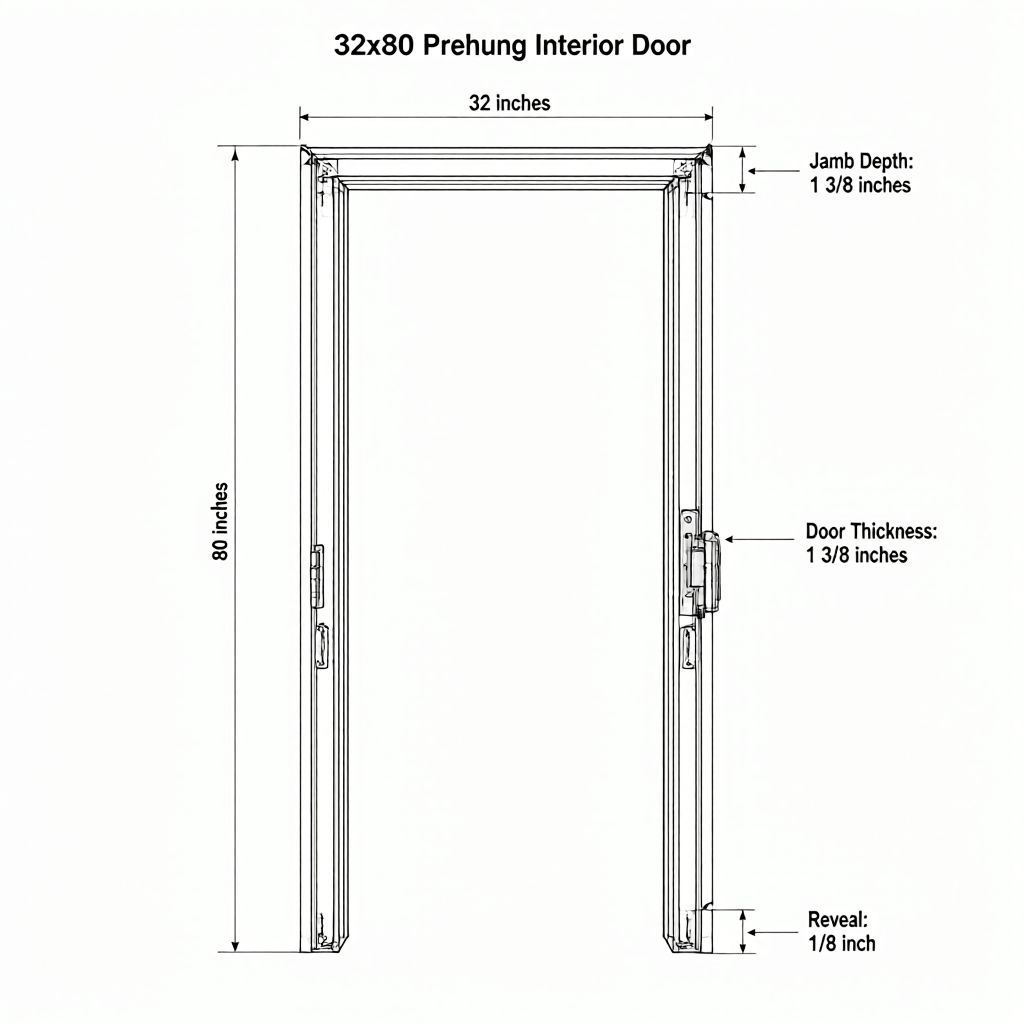
Specifications determine fit, durability, and whether the door meets project-grade requirements. Below is a specification comparison across the most common core and frame configurations for interior prehung doors.
| Specification | Solid Wood Core | Hollow-Core Wood | Fiberglass Skins / Wood Frame | Steel Skin / Wood Frame |
|---|---|---|---|---|
| Door thickness | 1-3/8″ standard; 1-3/4″ premium | 1-3/8″ | 1-3/8″ | 1-3/8″ |
| Frame width (jamb) | 4-3/4″–6″ typical | 4-3/4″–5-1/4″ | 4-3/4″–6″ | 4-3/4″–5-1/4″ |
| Frame material | Kiln-dried pine/larch | Pine | Pine / composite | Galvanized steel |
| Core density | ~45–50 lbs/ft³ | ~12–18 lbs/ft³ (honeycomb paper) | Wood-composite or foam insert | N/A (hollow) |
| Sound rating (STC) | 30–35 STC typical | 22–26 STC | 28–33 STC | 25–30 STC |
| Fire rating options | 20-min listed; 45-min possible | Generally non-rated | 20-min limited | 20-min |
| Finish type | Primed MDF skin; painted/hybrid veneer | Primed; laminate; vinyl wrap | Textured grain; painted | Powder-coated; primed |
| Hardware prep | Hinges 2–3; lock bore 2-1/8″ | Hinges 2; lock bore optional | Hinges 2–3; lock bore | Hinges 2 |
| Typical weight per set | 40–65 lbs | 20–35 lbs | 35–55 lbs | 30–45 lbs |
Key spec checkpoints for contractors and project buyers:
- Door vs. rough opening: a “32” door slab requires a ~34″ rough opening. Confirm frame width matches your wall cavity (4-3/4″ for 3-1/2″ walls; 5-1/4″–6″ for 4-1/2″–5-1/2″ walls).
- Jamb depth must match wall thickness plus finish. Miscalculation here is one of the most common field rework causes.
- Fire rating: interior doors rated 20-minute require testing per referenced standards such as ASTM E2092 fire-test procedures. Ratings must appear on the product label and be verifiable against the manufacturer’s test file.
- Grade distinction: commercial occupancy often requires BHMA Grade 1 hardware and door performance specs; residential subdivision work usually accepts Grade 2. Mixing grades across a project creates compliance gaps.
Where Can a 32 x 80 Prehung Door Be Used?
Interior prehung door units sit in several distinct B2B applications, each carrying its own specification pressure:
- Multi-unit apartment and condo projects: high-volume runs (50+ per building) with consistent finishes, tight turnarounds, and sometimes life-safety/fire-rating requirements. Consistency across hundreds of units is the main challenge.
- Hotel and hospitality guest rooms: sound isolation matters more here than in typical apartments because corridor noise and guest expectations are higher. Solid-core or upgraded fiberglass units are usually specified.
- Commercial tenant improvements and office retrofits: quick-install replacement units where demolition preserves existing walls but frames need adjustment.
- Residential subdivision builds: cost-sensitive, speed-driven projects where uniform primed or painted finishes reduce on-site labor.
- Healthcare and senior-living interiors: doors may need specific hardware, ADA clearances, and higher durability finishes.
Beyond volume and application, the choice among a French door set, entry door unit, door slab with frame, prehung kit, or hinged door assembly often depends on whether the project calls for double leaves, sidelites, or a single leaf — all of which change unit count and packaging strategy.
What to Consider When Buying 32 x 80 Prehung Doors in Bulk?
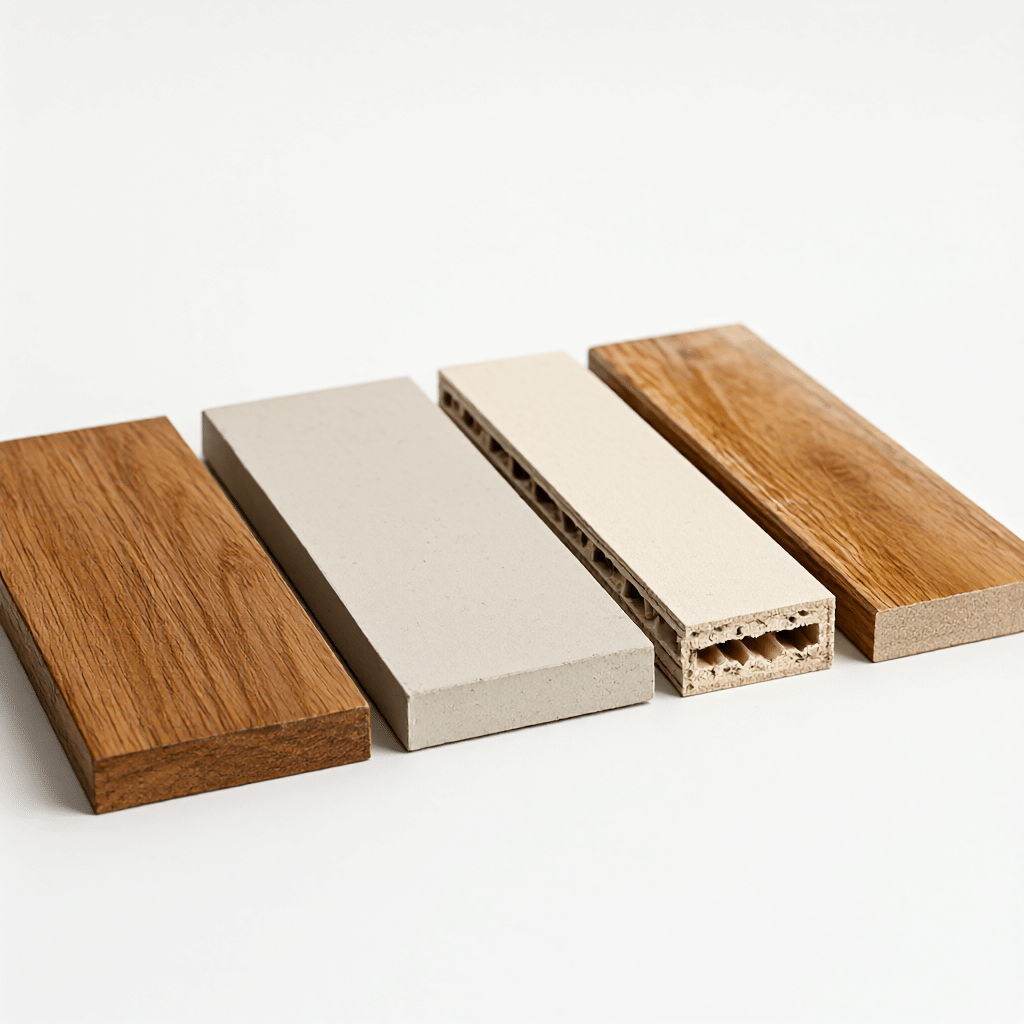
Bulk procurement decisions break into six practical buckets. Evaluate each explicitly rather than assuming a supplier covers them all.
Which certifications should a bulk supplier provide for interior doors?
Look for:
- ANSI/BHMA A250.4 performance standards (door and frame strength).
- BHMA Grade ratings for hardware and door assemblies (Grade 1 = heavy commercial; Grade 2 = light commercial/residential).
- UL or equivalent listings if 20-minute fire ratings are specified.
- CARB Phase 2 or formaldehyde emission compliance when wood composites or MDF skins are used.
- ISO 9001 for the manufacturer’s quality management system, signaling consistent process control rather than ad-hoc batching.
How can a buyer verify a manufacturer’s production capacity and quality control?
Request:
- Monthly output volumes by SKU family and by configuration (solid-core, hollow-core, custom sizes).
- In-process QC checkpoints: framing squareness checks, core bonding inspection, hinge-rabbet alignment verification, and a final dimension audit before packing.
- Third-party test reports or lab certificates for the exact door model you’re buying — not generic brochures.
What lead times and shipping constraints apply to container loads?
Lead time varies by configuration. Standard hollow-core units in white prime ship faster; solid-core, custom colors, or integrated glass kits extend timelines. Clarify whether quoted lead times include raw-material procurement, curing/bonding cycles, finishing, and QA release. Confirm container loading efficiency — how many sets fit a 20′ vs. a 40′ HC and what protective packaging is used.
What packing standards protect units through ocean freight?
Look for edge guards, corner protectors, interleaving paper between slabs and frames, stretch-wrap on each unit, and carton reinforcement rated for multiple stack layers. Damaged corners and chipped edges are common complaints when packing is thin.
What customization options are available for size, color, glass, and hardware?
Customization scope separates commodity suppliers from specialist factories. At minimum, verify:
- Size flexibility: able to produce non-standard rough openings and custom lengths up to roughly 84″.
- Color and finish: primed MDF skin, factory-painted RAL colors, wood veneer hybrids, or laminate wraps.
- Glass and light kits: transoms, sidelites, privacy or fluted glass inserts for specific room types.
- Hardware prep and coordination: hinge type/finish, lock bore positioning, and compatibility with specified lever sets.
- Profile adjustments: frame profiles that align with local building-code framing conventions and trim preferences.
How Much Do Bulk 32 x 80 Prehung Doors Cost? (FOB China Wholesale Price)
Pricing for interior prehung doors scales primarily with core density, finish complexity, hardware inclusion, and order volume. Below is indicative FOB China wholesale pricing by configuration and order tier — intended as a trade-buyer planning band, not a binding offer.
| Configuration | FOB China Wholesale Price (USD/unit) | MOQ Tier Note |
|---|---|---|
| Hollow-core, primed, standard frame | $65–$95 | 100+ sets |
| Hollow-core, colored paint finish | $85–$120 | 100+ sets |
| Solid wood core, primed | $110–$165 | 50–99 sets |
| Solid wood core, custom RAL color | $140–$200 | 50+ sets |
| Fiberglass-skin, wood frame | $130–$190 | 50+ sets |
| 20-min fire-rated unit | $170–$250 | 50+ sets |
| Integrated light kit / sidelite option | Add $25–$60 | varies |
Indicative FOB China wholesale pricing for trade buyers — not a retail price and not a binding offer; final pricing depends on quantity, specification and order schedule.
Additional cost drivers to budget for:
- Hardware packages: hinges, closer, and lock sets add $15–$45 per unit depending on grade.
- Custom sizes: non-standard rough openings usually carry a minimal setup fee amortized over the order.
- Specialty finishes: wood-grain hybrid or premium paints increase per-unit cost.
- Testing/certification fees: if the project requires third-party fire-rated certification or lab reports for the exact configuration, expect separate charges.
When comparing supplier quotes, insist that each price line item spells out core type, frame width, finish, hardware inclusion, packing method, and any accessory surcharge. Vague line items hide downstream variation.
Request a bulk FOB quotation with your expected unit counts and finish specs so you can compare apples-to-apples across suppliers.
Evidence & Practical Notes

Field note: Buyers frequently receive accurate door-slab dimensions on the spec sheet but miss that the shipped unit includes a frame wider than the nominal opening allowance. Always confirm the shipped frame width — especially on project conversions where existing jambs are being removed — and cross-check wall cavity depth before committing.
Practical limitation: Very low-priced hollow-core units can feel thin in hand and transmit noticeable vibration or impact sound between rooms. When acoustic separation matters — hospital corridors, hotel guest rooms adjacent to elevators, or boutique apartment layouts — upgrading to solid-core or reinforced fiberglass pays for itself in reduced callbacks.
Buyer takeaway: Prioritize suppliers who show their in-process QC (squareness, core bond, hinge-rabbet alignment) and provide a sample unit before full production. The upfront time requirement filters out vendors who rely on post-production cosmetic fixes rather than built-in dimensional consistency.
How to Evaluate and Select a 32 x 80 Prehung Door Manufacturer
Evaluating a manufacturer means scoring both capability breadth and execution discipline. Use the following checklist when shortlisting candidates for an upcoming build:
- Specification alignment: confirm they manufacture the exact core type, frame width, and finish approach your drawing set calls for. A factory that only produces hollow-core won’t help a hotel sound-isolation spec.
- Quality documentation: ask for current test reports, BHMA/ANSI references, and CARB/formaldehyde declarations for the precise SKUs you intend to buy.
- Volume cadence: understand how many containers per month the factory releases and whether your timeline fits their production queue.
- Packing and logistics competence: confirm carton stacking ratings, corner protection, and whether they routinely ship FCL and LCL. Verify their track record with customs documentation — bills of lading, commercial invoices, and packing lists should arrive clean and complete on first shipment.
- Customization responsiveness: for projects needing custom sizes, colors, or glass integrations, ask how many design iterations are needed before sampling and whether engineering review is included.
- After-shipment support: identify who handles warranty or damaged-goods resolution and what lead time replacements carry.
A practical rule of thumb: request physical samples or a video walkthrough of the production line alongside the written specs. Photos of finished goods are easy to stage; factory-floor process visibility is harder to fake.
Here Is How We Meet These Standards as a Manufacturer
When working with project teams who specify 32 x 80 prehung interior doors at volume, our approach centers on specification compliance first and finish second — because a beautiful door that doesn’t fit the frame tolerance or project rating doesn’t solve the buyer’s problem.
Our manufacturing workflow starts from the drawing set or opening schedule. We confirm door-slab width, frame width, and jamb depth against the wall construction before quoting, so there are no surprises when the units arrive on site. For interior prehung doors we commonly produce, the options span solid wood cores for projects that need acoustic separation, hollow-core options for cost-driven residential builds, and fiberglass-skin units where durable surface performance matters. Custom RAL paint colors, wood-veneer hybrids, and laminated finishes are routine requests we handle without long development cycles.
On hardware and glass integration, we coordinate hinge locations, lock bores, and light-kit or sidelite openings to match the project’s spec sheets. If a specifier calls for BHMA-graded hardware or a particular fire-rating label, we align the door and frame preparation to that requirement and document it in thepre-shipment inspection pack.
Quality assurance is the step most buyers should inspect closely. Before every container closes, each unit undergoes an air-tightness check, water-tightness verification, and wind-resistance assessment appropriate to the interior application — even though these tests are traditionally associated with exterior systems, measuring them internally catches frame distortion, core delamination, and seal lapses that otherwise only appear after installation. The result is fewer field touch-ups and tighter tolerances once the unit reaches the jobsite.
We also recognize that international logistics and documentation are part of the product. Our trade team provides a complete set of shipping papers — packing list, proforma invoice, and customs-ready export documents — so the cargo moves smoothly through destination port clearance. Whether the shipment fits an FCL arrangement or requires LCL consolidation, the paperwork sequence stays consistent.
If you are evaluating suppliers for a multi-unit apartment build, hotel renovation, or contractor project supply, the most useful next step is to send us your opening sizes and finish schedule. Send Inquiry and we will return a matched specification quote with unit pricing, lead time, and packing details for your review.
Manufacturing Capabilities & Quality Assurance Process (Industry Standard)
Leading manufacturers operate production lines capable of handling both high-volume commodity runs and low-volume customized orders without sacrificing dimensional consistency. A typical B2B-capable factory running interior prehung doors maintains:
- Monthly output capacity: 3,000–12,000 units depending on configuration complexity (solid-core runs slower than hollow-core)
- Tolerance range: ±1.5 mm on frame squareness and ±2 mm on panel dimensions — tighter than the ±3 mm allowed by ASTM E2092 for interior door assemblies
- Curing/bonding cycle: Pine framing is kiln-dried to 8–12% moisture content before assembly; core bonding adhesive cures under controlled temperature (typically 60–70 °C) for a minimum of 8 hours per batch
- In-process QC checkpoints: (1) raw-material inspection for wood species and moisture content, (2) frame squareness audit after assembly, (3) core adhesion peel test on random samples every 2 hours, (4) surface finish visual inspection under standardized D65 lighting, (5) final dimension audit against the drawing set before packing
Quality certification benchmarks buyers should request:
- ISO 9001:2015 — confirms documented process control, not just a final-product stamp
- ANSI/BHMA A250.4 — defines performance grades for interior door and frame assemblies (cyclic latch/lock life, force to operate, durability of finishes)
- CARB Phase 2 / TSCA Title VI — formaldehyde emission limits for composite cores and MDF skins (≤ 0.05 ppm for formaldehyde)
- UL 10C or NFPA 252 test reports for any fire-rated product line
> Red flag: Suppliers who cannot produce a third-party test certificate for the exact SKU you intend to order — generic brochures showing a different model’s rating do not satisfy code-compliance audits. Request the certificate number and verify it against the issuing lab’s database.
Customization Options: Size, Finish, Glass & Hardware Coordination
Customization scope separates commodity suppliers from specialist factories. At minimum, verify:
- Size flexibility: able to produce non-standard rough openings (e.g., 28×80, 30×84, 36×96) and custom jamb depths from 4-3/4″ to 8″ without retooling penalties above 10% of unit cost
- Color and finish: primed MDF skin, factory-painted RAL colors (±10 ΔE color tolerance), wood veneer hybrids (oak, walnut, maple grain patterns), or HPL laminate wraps
- Glass and light kits: transoms (fixed or operable), sidelites, privacy or fluted glass inserts rated for specific room applications; glazing beads field-replaceable for maintenance
- Hardware prep: hinge type/finish coordination (BSP, KBA, cylindrical), lock bore positioning (standoff distances per BHMA), accessibility-compliant lever-set clearance (minimum 1-1/2″ knob relief)
- Profile adjustments: frame profiles matching local building-code framing conventions (e.g., European slim-jamb systems vs. North American traditional reveals)
Buyer Decision Framework: Matching Door Type to Application
Use this framework when deciding which core type and specification tier your project requires. It compares cost, performance, and suitability across the three most common B2B verticals.
| Application | Recommended Core Type | Minimum STC | Fire Rating Required? | Key Hardware Spec | Approx. Unit Cost Range (FOB) | Procurement Priority |
|---|---|---|---|---|---|---|
| Hotel guest rooms | Solid wood core or reinforced fiberglass | 35 STC (wall-to-wall); 40+ STC preferred for corridor-facing | 20-min listed (per ICC/IBC egress requirements) | BHMA Grade 1 panic hardware; door closer ANSI Grade 1 | $130–$220 | Acoustic performance > cosmetic finish |
| Multi-unit apartments | Hollow-core (cost-driven) or solid-core (premium tier) | 25–28 STC minimum per UBC/IRC Section 1207 | Non-rated for interior corridors; 20-min at stairwell entries | BHMA Grade 2; mortise lock prep standard | $65–$140 | Uniformity across units & lead-time reliability |
| Healthcare / senior living | Solid wood core with antimicrobial surface treatment | 30+ STC; sound masking compliance per FGI Guidelines | 20-min listed; some jurisdictions require 45-min | BHMA Grade 1 or 2; ADA-compliant lever handles; closers with adjustable sweep/latch | $150–$260 | Durability of finish, infection-control compatibility, code compliance documentation |
Decision logic summary:
- If acoustic isolation is the primary spec driver → solid-core regardless of application tier
- If budget is the dominant constraint and corridor acoustics are low-risk → hollow-core with upgraded weather-stripping
- If health/safety codes mandate fire ratings → never substitute a non-rated door; request the UL directory listing number upfront
- IfADA accessibility applies → confirmlever-handle type, backset measurement, and maximum operating force (≤ 5 lbf per IRC R309.1) before ordering
Procurement Checklist & Red Flags
Before signing a purchase agreement or placing a deposit, run through this buyer checklist:
Must-Verify Items
- [ ] Test certificates for the exact SKUs (fire rating, air infiltration per ASTM E283, water penetration per ASTM E331 if applicable)
- [ ] Production capacity confirmation for your timeline — written lead time, not verbal estimate
- [ ] Packing specification document showing corner guards, interleaving, stretch-wrap, and stack-height rating
- [ ] Sample unit approval workflow — what happens if the first sample fails spec
- [ ] Warranty terms: defects in materials/workmanship coverage period and replacement parts availability
- [ ] Payment terms aligned with milestones (deposit → pre-shipment inspection → balance against BL copy)
Common Red Flags
- Supplier cannot provide a third-party lab report with traceable certificate number
- Lead times stated as “fast” without specific calendar-day commitments
- No mention of moisture-content testing for wood frames (crucial for preventing warpage in humid climates)
- Pricing quoted without specifying whether hardware prep, packing, or certification fees are included
- Refusal to ship a pre-production sample before full order commitment
- Vague or missing documentation for customs/export compliance
When to Walk Away
- The supplier asks for 100% payment upfront with no escrow or letter-of-credit option
- Multiple unresolved complaint records on third-party review platforms (check importdata aggregators and trade-credit reports)
- The quote omits container-load optimization details — a responsible supplier will show you how many sets fit a 20′ vs. a 40′ HC and what packaging prevents transit damage
If you are evaluating suppliers for a multi-unit apartment build, a hotel renovation, or a healthcare facility upgrade, start by requesting a spec-aligned sample and a written production cadence. The right manufacturer will provide documentation, test files, and a clear packing protocol on the first inquiry — not after five rounds of negotiation.
Sources & References
- ASTM E2092 — www.astm.org











