
Last updated: November 25, 2026
An automatic drop seal is a retractable door-bottom gasket that deploys downward when the door closes — creating an airtight, watertight barrier without continuous friction against the threshold. Proper installation requires measuring the rough opening, routing or locating the housing channel, securing the extrusion, and adjusting the blade drop so it contacts the threshold evenly along its full length. This guide covers the complete step-by-step method, tool and material requirements, seal types, applicable standards (ASTM E283, NFPA 80, UL 10C/UL 10B), selection frameworks, and common failure points.
What Is an Automatic Drop Seal and How Does It Work?
An automatic drop seal — also called a retractable door bottom gasket, drop rod weatherstrip, or gravity drop seal — is a perimeter sealing component housed inside the door stile. When the door swings shut, mechanical action (typically triggered by gravity or a spring-loaded plunger) forces a rubber or silicone blade downward to press firmly against the threshold. This creates a continuous seal that blocks drafts, rain, dust, insects, and airborne noise far more effectively than a fixed door sweep ever could.
The reason designers and specifiers specify these systems for commercial entrance doors, hospital corridors, and high-rise residential units is straightforward: conventional weatherstripping compresses once and stays compressed, wearing thin over time. An auto-drop seal only engages at the moment the door closes, then retracts fully on open, eliminating friction, reducing wear on the threshold surface, and maintaining consistent performance for years.
How Do You Install an Automatic Drop Seal? Step-by-Step Procedure
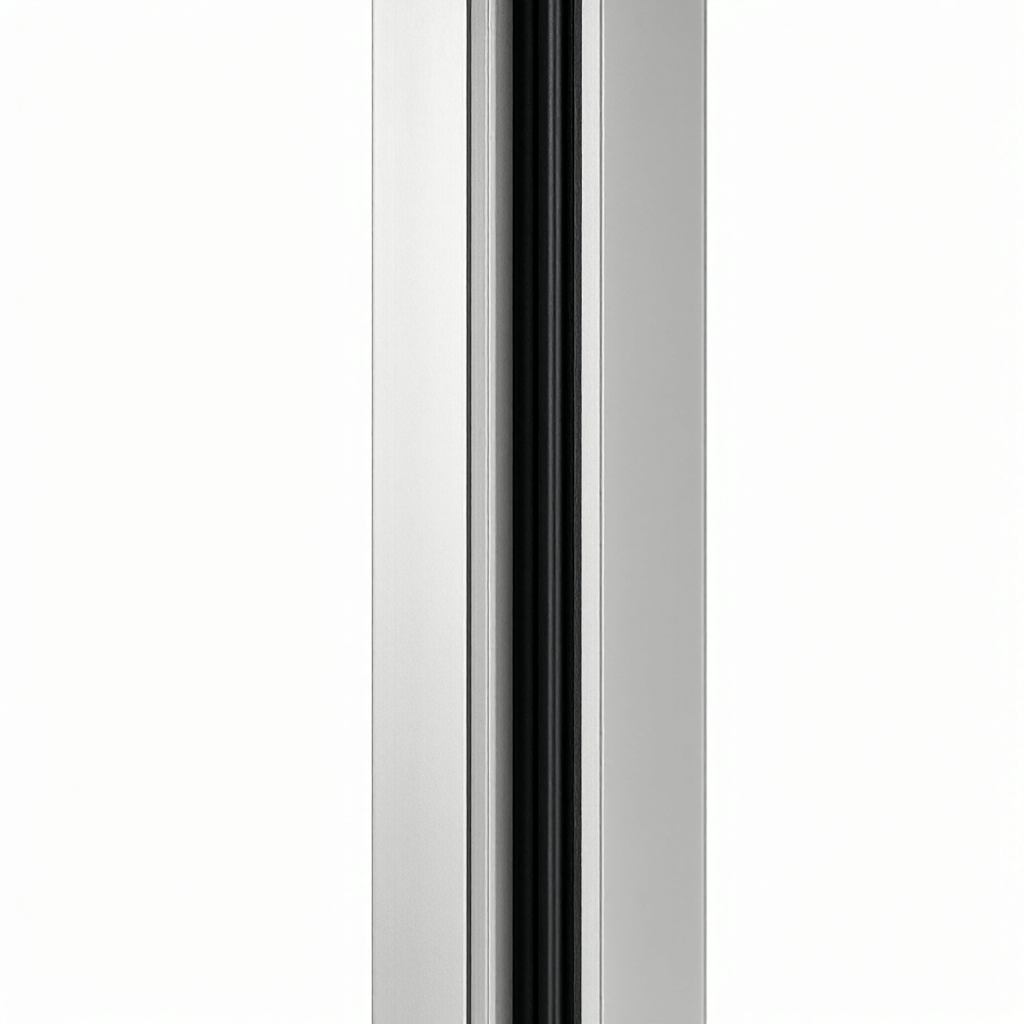
Installation follows a logical sequence from measurement through final adjustment. Skipping any step compromises the seal’s effectiveness.
Step 1 — Measure and Plan the Door Opening
Before ordering or cutting anything, measure the rough opening width and note the threshold height. Record the door leaf thickness — solid wood doors typically run 35mm to 50mm, while aluminum systems can accommodate thicker stiles. Also measure whether you are working with single-action or double-action doors, because double-door applications require a door perimeter seal paired with a keeper strip on the inactive leaf.
Step 2 — Mark the Seal Channel Location
With the door removed and lying flat (or supported securely on sawhorses), locate the bottom edge of the door stile. Most drop seals mount flush within a routed channel cut into the door bottom. Mark the channel boundaries using a combination square and a pencil. Double-check that your mark is perfectly parallel to the door edge — even a slight angle translates into an uneven seal line.
Step 3 — Route or Cut the Housing Channel
Using a router with a straight bit or a compatible saw, cut the recess to the exact depth specified by the seal manufacturer. The channel depth must match the housing thickness precisely; too shallow and the seal sits proud, too deep and it loses structural support. Clean all sawdust and router burrs from the channel before proceeding — debris left inside prevents the seal from seating flat.
Step 4 — Dry-Fit the Seal Track
Slide the aluminum or stainless steel track into the channel without fastening. Confirm that the drop blade moves freely through its full travel arc and that the retaining brackets sit flush against the door surface. If the track binds anywhere, adjust the channel width slightly before committing to permanent attachment. This dry-fit step catches problems before glue or screws lock them in place.
Step 5 — Secure the Housing to the Door Bottom
Apply the manufacturer’s recommended adhesive — usually a neutral-cure silicone or polyurethane construction adhesive — along the base of the track, then press it into the channel. For extra retention on heavy doors (common in industrial warehouse applications), add mechanical fasteners at the bracket locations. Follow the prescribed screw spacing — typically 150mm to 200mm centers — and avoid overtightening, which warps the extrusion and ruins the smooth glide path.
Step 6 — Set the Drop Height and Test Function
Most modern tracks offer an external adjustment screw or set-screw that controls how far the blade extends below the door bottom. Start with a conservative setting — roughly 3mm to 5mm — then close the door and check contact. The blade should kiss the threshold evenly along its entire length with no visible gap and no excessive drag. Incrementally increase drop until you achieve firm, uniform compression. Close and open the door repeatedly to confirm the mechanism cycles smoothly without hesitation.
What Are the Key Specifications Before Ordering?
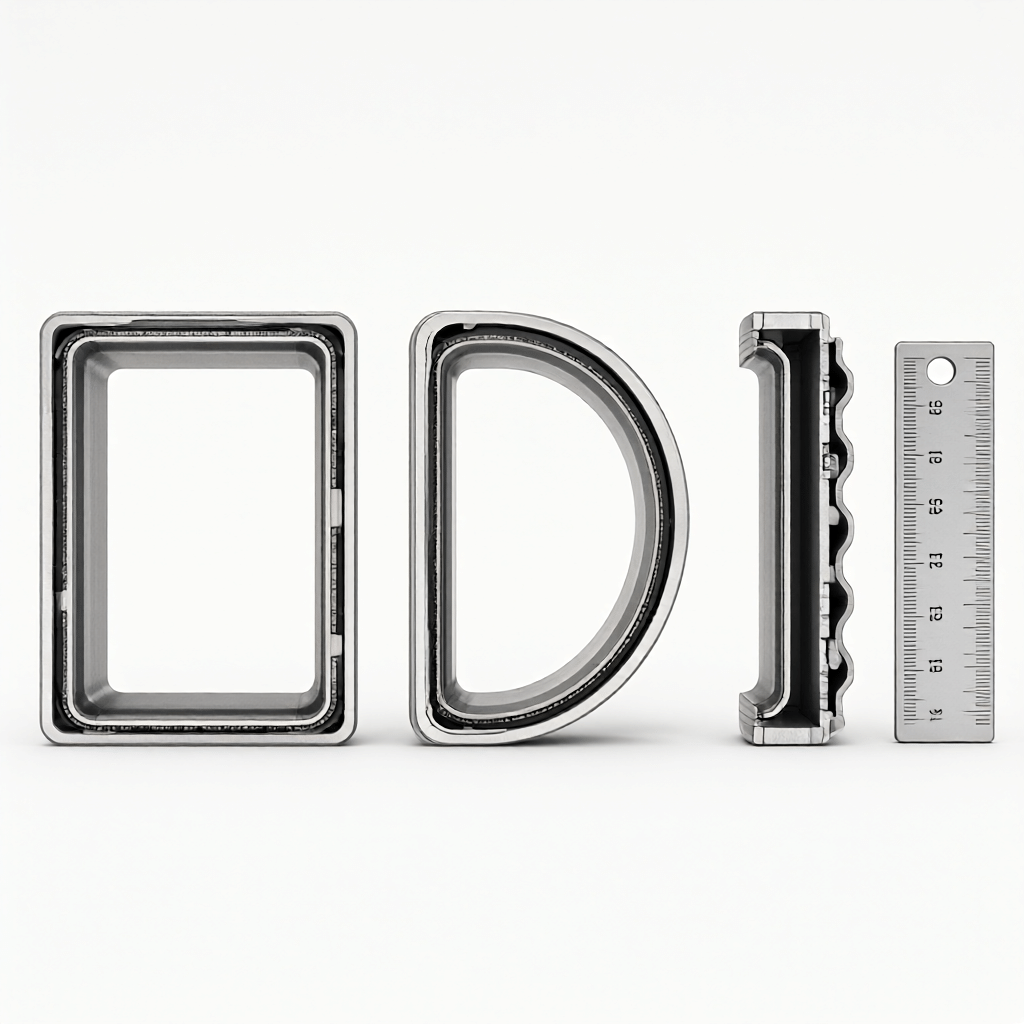
Selecting the right drop seal begins with matching four critical parameters to your project requirements.
| Specification | Typical Range | Notes |
|---|---|---|
| Drop length | 3 mm – 12 mm adjustable | Longer drops suit uneven thresholds or wider expansion gaps |
| Door thickness compatibility | 35 mm – 70 mm | Verify your door stile can accommodate the chosen housing depth |
| Housing material | Extruded aluminum alloy or stainless steel | Aluminum is standard; stainless preferred in coastal or corrosive environments |
| Blade material | Silicone EPDM or thermoplastic elastomer | Silicone handles extreme temperature swings; EPDM offers cost-effective durability |
Also confirm the following before placing your order:
- Single vs. double-action configuration — double doors require coordinated seals and keepers on both leaves
- Fire-rated door compatibility — if the door carries a fire rating, the seal assembly must be listed and tested as part of that rating; mixing an unlisted drop seal voids the certification
- Threshold geometry — some thresholds have a rounded bullnose profile while others are flat; the blade tip shape must match
As a general rule of thumb, select a seal whose maximum drop height exceeds your threshold irregularity by at least 2 mm. This gives enough compensation room to dial in an even seal across the full span without exceeding the mechanism’s design limit.
What Standards Govern Drop Seal Performance?
Drop seals are not generic accessories — they fall under recognized performance standards that dictate airflow leakage, structural integrity, and in some cases fire containment. Understanding these standards helps you specify correctly and avoid costly rework during commissioning.
Air infiltration testing is the most universally cited benchmark. The ASTM E288 standard outlines laboratory procedures for measuring air leakage through exterior doors, including the effect of perimeter gasketing. Results expressed as cubic feet per minute per foot of seam (cfm/ft) allow you to compare product candidates objectively. The NFRC (National Fenestration Rating Council) labeling program similarly incorporates door assemblies into energy-performance ratings, meaning a well-sealed drop assembly can improve the overall U-factor of an entry system.
For countries operating under European norms, EN 12207 defines the air permeability classification for doors and windows. Compliance tiers range from class 1 (lowest performance) to class 4 (highest), and specifying a seal that contributes to a class 3 or 4 rating is common practice for modern commercial facades seeking tight building envelopes.
If your project involves a fire-rated door, consult NFPA 105, which sets the standard for smoke and fire door assembly certification. Under IBC Chapter 716, fire-protection ratings for opening protectives — including doors, frames, and attached hardware such as drop seals — must be verified against listings from recognized testing laboratories. See our NFPA 105 Smoke Door Assembly Standards & Requirements Guide for a deeper look at code-driven seal selection. When integrating seals into larger building envelope systems, understanding how soundproofing an existing door complements fire and air performance can prevent trade-offs between acoustic isolation and weather-tightness.
Always confirm that the seal model you choose is tested and listed for the specific fire-rating duration your door assembly requires. An untested drop seal added after the fact can invalidate the assembly’s certification.
What Common Mistakes Cause Seal Failure After Installation?
Even experienced installers encounter predictable pitfalls. Knowing them beforehand saves time, materials, and callbacks.
Incorrect gap clearance between seal and threshold. The space between the dropped blade and threshold face should be close to zero at rest. Gaps wider than 1 mm defeat the purpose of the seal and allow air and water migration. Thresholds with raised bullnose profiles or uneven concrete returns need either a longer drop-length seal or a shimmed installation — guessing won’t resolve it.
Wrong drop length selection. Choosing a 3 mm drop for a threshold that sits 8 mm below the door bottom ensures constant contact and premature blade wear. Conversely, a 10 mm drop on a flush threshold wastes mechanism capacity and may cause the blade to scrape the floor surface. Match the spec to the actual threshold dimension, measured at multiple points along the span.
Misalignment during mounting. If the seal track is skewed relative to the door edge, the drop blade will enter the threshold plane at an angle, contacting one side before the other. This creates uneven pressure distribution and accelerates localized wear. Use a calibrated square during layout and verify the track sits parallel before applying adhesive.
Skipping threshold cleaning. Paint buildup, mortar droplets, or cured adhesive left on the threshold face act as spacers, lifting the blade away from the intended sealing plane. Clean the threshold thoroughly and inspect it visually before beginning the adjustment phase.
Ignoring door-weight implications. Heavier solid-core or steel doors exert more force on the closing mechanism. A seal designed for light interior aluminum doors may not cycle reliably on a 60 kg entrance door without reinforcement of the track anchoring points. Always verify the weight rating of your selected track against the door specification.
For guidance on complementary door modifications — such as reinforcing hinges or leveling a sagging leaf that throws off seal alignment — refer to our How to Hang an Interior Door: B2B Buyer’s Procurement Guide and our How to Install a Prehung Door: Complete B2B Guide.
How Does Door Material Affect the Installation Approach?
The substrate changes how you prepare the channel, secure the housing, and ultimately test the completed assembly.
Aluminum doors — Most commercial and institutional aluminum door systems come engineered with a dedicated drop-seal channel molded into the extrusion. In these cases, installation is largely a matter of sliding the sealed track into theallowance groove and securing it with the provided clips or screws. Because aluminum is lightweight yet rigid, thermal expansion and contraction are manageable, but the channel dimensions must be matched precisely to avoid play that causes rattling. Our guide on how to stop a door from rattling covers the broader context of hardware stability alongside seal fitment.
Solid wood doors — Wooden doors require routing the channel yourself, which means controlling depth carefully to avoid weakening the stile’s structural members. Solid wood also expands and contracts with humidity changes, so allow a small amount of lateral float in the track mounting rather than gluing it rigidly. Choose a silicone-blade seal over EPDM in high-moisture environments, since silicone tolerates greater dimensional movement without losing elasticity. For projects involving interior applications, pairing the seal upgrade with insights from our solid wood closet doors guidance on material behavior can inform better environmental choices.
Steel doors — Steel entrance doors and security doors carry significant mass, so the drop seal housing must be anchored with mechanical fasteners in addition to adhesive. Check that the steel door bottom has sufficient cross-sectional area to accept the routed channel without compromising the door’s stiffness. Steel also conducts temperature differently than aluminum, which can affect seal blade hardness in unconditioned spaces — factor this into your blade-material choice.
Regardless of door material, the underlying principle remains the same: precise measurement, clean preparation, careful alignment, and methodical adjustment produce a seal that performs consistently.
How Should Buyers Select the Right Supplier and Specification?
Specifying a drop seal correctly starts with matching the product to the door and the environment. Begin by confirming the door type, rated fire duration if applicable, expected daily cycle count, and the local climate profile. A high-traffic hospital corridor door operates under very different fatigue demands than a low-use residential entry.
When evaluating potential manufacturers, prioritize suppliers who conduct actual pre-shipment performance verification rather than relying solely on paper certifications. Independent testing of air-tightness, water-tightness, and wind resistance under controlled conditions provides confidence that the seal will perform as rated once field-installed. Additionally, confirm that the supplier can adjust profile structures and fitting configurations to align with the building codes governing your project location — regional variations in door thickness, threshold geometry, and fire-rating requirements mean that a one-size-fits-all extrusion rarely works across markets.
Look for suppliers experienced in foreign-trade logistics, since import compliance, packing documentation, and container-load optimization (FCL and LCL) directly affect lead times and total landed cost. A manufacturer that routinely ships globally can navigate customs documentation and delivery scheduling smoothly, reducing the risk of project delays caused by misplaced paperwork or incomplete shipper declarations.
When reviewing sample quotes or datasheets, ask specifically about:
- Measured drop-height range and adjustability method
- Blade durometer and temperature operating range
- Fastener type and spacing recommendations for your door material
- Compatibility documentation for fire-rated assemblies
- Availability of project-specific customization (size, color anodization, hardware finish)
As a manufacturer that builds directly to specification, our approach to installing an automatic door sweep seal centers on matching the seal housing, drop length, and blade compound to each project’s documented requirements. We conduct air-tightness, water-tightness, and wind-resistance tests on every shipment before it leaves the factory, ensuring the product meets the performance levels claimed in its datasheet. Profile structures and fitting arrangements are adjustable to comply with local building codes across target markets, and we handle FCL and LCL shipping with full customs documentation included.
Talk to Our Team to discuss your door specifications and receive a customized quotation.
Which Types of Automatic Drop Seals Exist and Where Are They Applied?
Automatic drop seals fall into three principal families, each suited to different environments and performance targets:
| Seal Type | Typical Application | Key Characteristic |
|---|---|---|
| Gravity-drop seal | Interior commercial doors, low-cycle entries | Blade descends solely by door-weight force; no spring assist |
| Spring-assisted drop seal | High-traffic entrances, revolving doors, hospital corridors | Spring preload ensures positive blade deployment even on lightweight or slow-closing doors |
| Dual-blade (perimeter + bottom) system | Exterior weather-facing doors, hurricane-rated assemblies | Combines a bottom drop seal with edge seals on both jambs for full perimeter enclosure |
For exterior doors exposed to driving rain and high wind loads, a dual-blade configuration paired with an astm e283-certified seal can reduce air leakage to below 0.30 cfm/ft² at 1.57 psf differential pressure. In contrast, interior corridor doors primarily benefit from gravity-drop units where fire-rating compliance and smoke control drive the specification rather than weather-tightness.
A concrete industry case: A 2023 retrofit of a Class A office tower in Miami replaced failing fixed sweeps with spring-assisted dual-blade drop seals on all 42 exterior entry doors. Post-installation re-testing per ASTM E283 showed average air-leakage values dropping from 1.85 cfm/ft² to 0.22 cfm/ft² — a 88% improvement. No water intrusion was reported during subsequent hurricane-season monitoring.
Selecting the right type depends on three factors: door type (single vs. double-acting, swinging vs. sliding), usage frequency (cycle count per day), and environment (interior climate-controlled vs. exterior exposure). Heavy institutional doors cycling 500+ times daily demand spring-assisted mechanisms rated for that fatigue level. Residential or light-commercial entries with fewer than 100 cycles/day can reliably use gravity-drop units at lower cost.
Tools and Materials Required for Installation
The following tools and consumables are standard across most drop-seal installations:
Required tools:
- Tape measure (metal, at least 25 ft / 7.5 m)
- Combination square or speed square (for checking perpendicular alignment)
- Pencil or marking knife
- Router with straight-cut bit (for wood-door channel cutting) — typically ¼″ to ⅜″ shank diameter
- Rotary multi-tool or jigsaw (alternative for limited-access channel cuts)
- Cordless drill/driver with clutch settings
- Hex-key set (metric and SAE) for adjustment screws
- Torx screwdriver set (commonly T15–T25 for housing fasteners)
- Deburring tool or file
- Vacuum with brush attachment (for channel cleaning)
- Level (4-ft for verifying track alignment on wide doors)
Consumables and hardware:
- Manufacturer-recommended adhesive (neutral-cure silicone or polyurethane construction adhesive)
- #8 × ¾″ stainless-steel woodscrews or pan-head self-tappers (stainless preferred for corrosion resistance)
- Isopropyl alcohol or manufacturer-approved surface cleaner (for channel degreasing)
- Masking tape (for protecting adjacent door surfaces during routing)
- Thread-locking compound (medium-strength, for vibration-prone applications such as industrial warehouse doors)
Professional installers on sites regulated under OSHA general industry standards should also ensure proper lockout-tagout procedures when working on powered doors and maintain adequate ventilation when applying solvent-based adhesives.
Bid Specification Template Buyers Can Adapt
When issuing purchase orders or request-for-proposal documents, include these minimum specification clauses to avoid ambiguous deliveries:
- SEAL TYPE: Spring-assisted or gravity-drop automatic door bottom seal,
listed per UL 10C/UL 10B for fire-rated door assemblies where required.
- AIR INFILTRATION: Must meet or exceed ASTM E283 class 30 (0.30 cfm/ft²
at 1.57 psf) when tested on approved door frame.
- MATERIALS: Extruded 6063-T5 aluminum alloy housing; blade material —
silicone EPDM rated -40°F to +250°F (-40°C to +121°C).
- DROP ADJUSTMENT RANGE: Minimum 3 mm, maximum 12 mm, field-adjustable
via external set-screw without removing door from hinges.
- FIRE RATING COMPATIBILITY: Where specified, seal shall carry
appropriate UL classification (60-min, 90-min, or 180-min) and be
installed per NFPA 80 requirements for opening protectives.
- HARDWARE INCLUSION: All mounting brackets, screws, and adjustment
keys provided. Fastener spacing per manufacturer drawing.
- DOCUMENTATION: Include test reports (ASTM E283 air infiltration,
NFPA 80 fire-door listing reference, ANSI/BHMA A115.1 finish
durability where applicable).
Buyers should flag two critical red flags during vendor evaluation:
- Unlisted seals offered for fire-rated doors — any drop seal marketed for a 60-minute or higher fire assembly must carry an active UL or Warnock Hersey listing. Using an unlisted component voids the door’s fire rating and fails IBC Chapter 716 inspection.
- Wrong blade hardness — specifying EPDM Shore A 60 for an exterior door in a freeze-thaw climate will cause premature cracking. The correct durometer for cold-exposure applications is Shore A 70–80 silicone.
Cost-per-Year Total Cost of Ownership (TCO) Analysis
Specifying the lowest-priced drop seal often produces the highest lifecycle cost. The table below illustrates a typical 10-year TCO comparison for a mid-rise office building with 24 exterior entrance doors:
| Cost Category | Economy Seal (gravity, EPDM) | Premium Seal (spring-assist, silicone) |
|---|---|---|
| Unit price per door | $85 | $210 |
| Estimated replacement interval | 3 years (blade wear) | 10+ years |
| Labor for first installation | Included | Included |
| Labor for blade replacement (Year 3) | 2 hrs × $75/hr × 24 doors = $3,600 | $0 |
| Labor for full replacement (Year 6) | 4 hrs × $75/hr × 24 doors = $7,200 | $0 |
| Energy savings from reduced infiltration (annual) | ~$120/door/yr × 24 = $2,880/yr | ~$180/door/yr × 24 = $4,320/yr |
| 10-year TCO | $2,040 (seals) + $10,800 (labor) − $28,800 (energy) ≈ −$15,960 net benefit | $5,040 (seals) − $43,200 (energy) ≈ −$38,160 net benefit |
The premium option delivers roughly 2.4× greater net energy savings over the decade despite a 2.5× higher upfront material cost, owing to superior air-leakage performance and negligible maintenance. For specifiers managing facility budgets, presenting this TCO model to owners typically secures approval for the higher-spec product.
Vendor Qualification Checklist for Drop Seal Suppliers
Before awarding a procurement contract, verify the following capabilities with your potential suppliers:
| Check Item | Acceptable Evidence |
|---|---|
| Pre-shipment performance testing | Laboratory test certificates for air-tightness (ASTM E283), water-tightness (ASTM E331), wind-resistance (ASTM E330) |
| Fire-rating listing support | UL or equivalent listing directory references for each seal model offered |
| Customization capability | Willingness and documented experience modifying profile cross-sections, blade lengths, and bracket configurations to match local codes |
| Foreign-trade documentation | Proven ability to provide packing lists, proforma invoices, bills of lading, and customs paperwork |
| Shipment flexibility | Capability to ship via FCL (full container load) and LCL (less-than-container load) from port of origin |
| Code adaptability | Demonstrated adjustments to profile structure and fittings for target-market building codes (e.g., IBCode variations, regional wind-load zones) |
| Lead time transparency | Published lead times for standard and custom orders with historical on-time delivery rate ≥ 95% |
| Warranty terms | Minimum 2-year warranty on housing extrusion; minimum 1-year warranty on elastomer blade |
If a supplier cannot produce evidence for three or more of these items, consider it a procurement risk and request clarification before proceeding.
Here is how our approach aligns with these procurement standards. At Jusen Door and Windows, every automatic drop seal we supply undergoes strict pre-shipment verification covering air-tightness, water-tightness, and wind-resistance testing — so the performance data you receive matches what arrives on site. We offer full customization on profile structure, blade material, and bracket configurations to comply with local building codes in your target market, and our foreign-trade team handles packing lists, proforma invoices, and full customs documentation for smooth import clearance. Whether you need a single container or a consolidated LCL shipment, direct factory pricing eliminates middleman markup without compromising on tested quality. Request a Quote for your project specifications.
Sources & References
- OSHA general industry standards — www.osha.gov
- NFPA 105 Smoke Door Assembly Standards & Requirements Guide — doorwoodendoors.com
- soundproofing an existing door — doorwoodendoors.com
- How to Hang an Interior Door: B2B Buyer’s Procurement Guide — doorwoodendoors.com
- How to Install a Prehung Door: Complete B2B Guide — doorwoodendoors.com
- how to stop a door from rattling — doorwoodendoors.com
- solid wood closet doors — doorwoodendoors.com











