
Last updated: November 25, 2026
Quick Answer
A villa gate installation follows nine logical stages: site survey and measurement, foundation excavation, post setting in reinforced concrete, curing, door leaf mounting, hinge or carriage adjustment, weather sealing and drainage detailing, automation integration, and final commissioning with performance verification. The exact sequence is rigid in places — you cannot mount the leaf before the posts cure — but flexible in others, such as whether automation runs during construction or as a retrofit after finishing.
Every stage carries measurable decision points. Post embedment depth, concrete mix strength, wind-load rating, and motor torque are not decorative choices; they determine whether the gate survives a storm season or requires repair within two years. This guide walks through each step so buyers, project consultants, and contractors can evaluate proposals with confidence.
Detailed Explanation
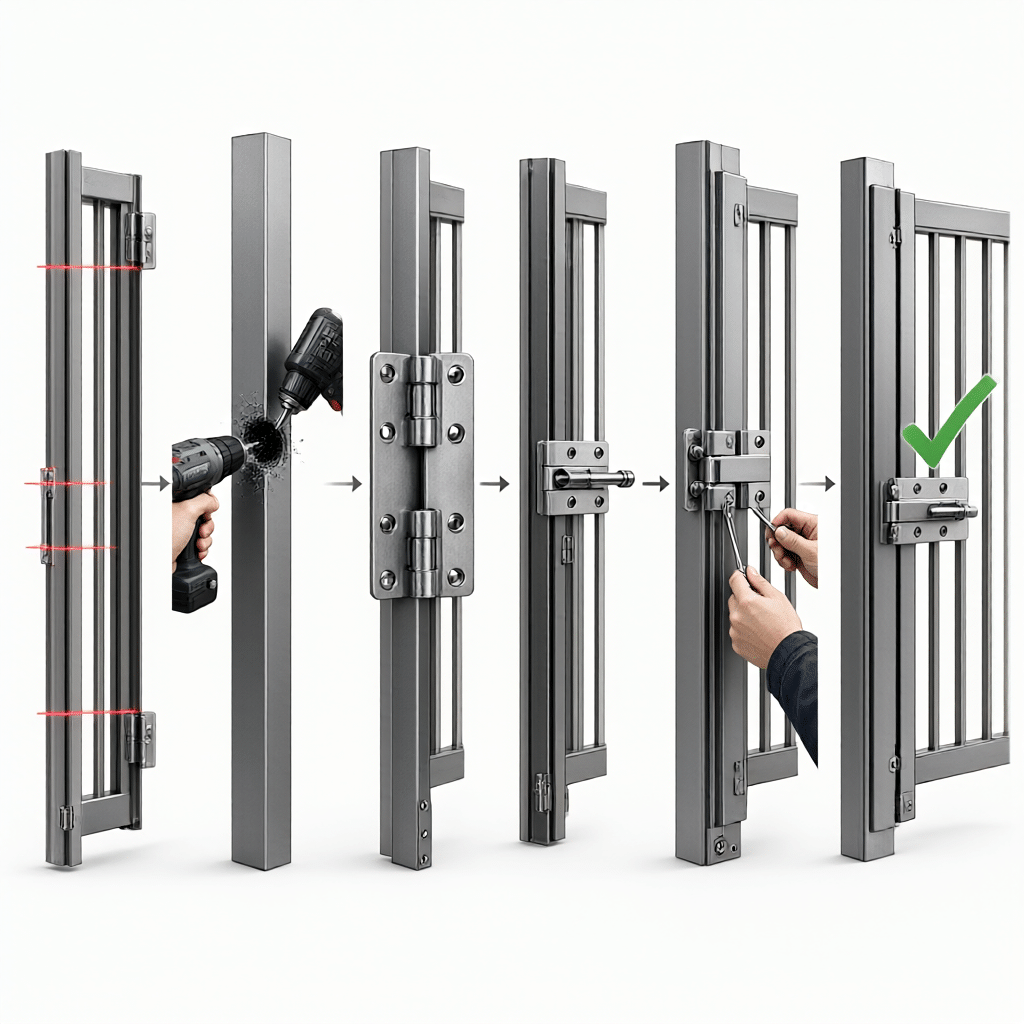
How does a villa gate installation process work?
The process begins well before hardware arrives on site. A proper villa gate installation procedure starts with a measured site assessment: confirming property lines, recording existing grade changes, identifying underground utilities, and noting which direction the gate should swing or slide based on traffic flow and setbacks. For luxury residential development projects and gated community bulk procurement, these measurements are often coordinated across multiple trades — civil, electrical, and architectural — because errors in one discipline cascade into costly rework.
Once dimensions are locked, the buyer selects between a swing gate system and a sliding gate system. The choice is driven by available space, expected vehicle width, and long-term maintenance access. After the mechanical path is chosen, the physical installation proceeds along the foundational layers: sub-base preparation, formwork, rebar placement, pour, cure, set, adjust, automate, test.
Swing gates require more horizontal clearance but operate reliably across a wider range of gate weights and lengths. Sliding gates conserve driveway space and reduce tripping hazards but demand a clean parallel track and often a heavier support rail. Neither type is universally superior; both have installation complexities that buyers should understand before committing.
What happens during foundation preparation and post setting?
The most visible failure point in perimeter entry gate installations is an undersized foundation. Posts must be embedded deep enough to resist overturning moments generated by wind loading and the dynamic forces of a swinging leaf. Typical practice calls for embedding depths of 600–900 mm below finished grade, depending on soil type, gate height, and local wind zones. In coastal or high-wind regions, deeper embedment and larger concrete footings become non-negotiable.
Concrete itself matters. A standard structural mix rated at C25/30 or higher is recommended for gate post foundations. The mix must be vibrated during placement to eliminate honeycombing around the rebar cage, and forms should remain in place for at least 24 hours before stripping. Full design strength develops over 28 days, though initial handling can begin after 48–72 hours if conditions are favorable. Rushing this timeline compromises the rigidity the entire assembly depends on.
Drainage Detailing is equally important. Water pooling around post bases accelerates corrosion regardless of finish quality. Weep holes, gravel backfill zones, and sloped grading away from the footing prevent hydrostatic pressure buildup and extend service life significantly.
How are door leaves mounted and aligned?
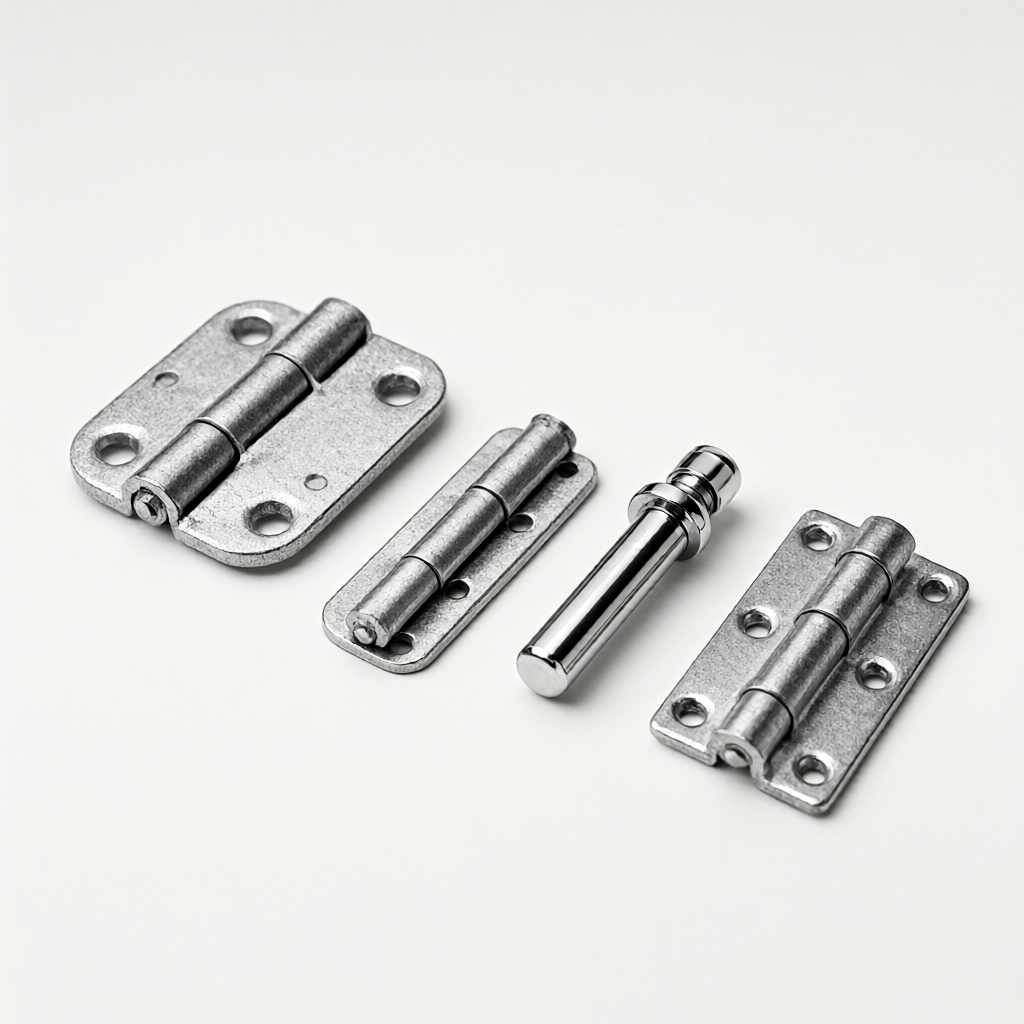
Leaf mounting comes only after the concrete has reached sufficient strength. For aluminum entrance gates, heavy-duty stainless steel hinges or continuous pianos hinges bearing the leaf weight evenly along its full height. Bearing selection — sealed ball bearing versus plain sleeve — affects both operating smoothness and long-term sag resistance.
Alignment is a precision task. The leaf must hang plumb, square to the frame opening, and parallel to the ground plane with consistent gaps on every side. Misalignment here causes premature wear on hinges, uneven seal compression, and increased motor load in automated systems. Proper installation uses shims at the hinge pockets and laser levels to verify squareness before final tightening.
For solid wood doors or thermal-break aluminum products installed in similar applications, see our how to hang an interior door procurement guide for hinge spacing rules, and review our hinge spacing guide for technical detail on bearing loads and spacing standards.
How is automation integrated during installation?
Automation adds a layer of complexity that buyers frequently underestimate. Motor selection depends on gate type, leaf weight, and cycle frequency. Torsion spring countersystems handle lighter residential leafs efficiently, while hydraulic or electromechanical operators are required for heavier estate gates exceeding 300 kg per leaf.
Sensor placement follows a strict logic: photoelectric beams at approximately 150 mm above grade detect obstructions in the gate’s travel path, while loop detectors embedded in the driveway surface signal approaching vehicles and trigger automatic opening. Power supply routing must comply with local electrical codes, including GFCI protection for outdoor circuits and surge suppression for sensitive control boards.
The automation controller should communicate clearly with access control devices — keypads, remote transmitters, intercoms, and license plate readers — without introducing latency that frustrates daily use. For estates requiring layered security, a gated community bulk procurement scenario might integrate multi-factor authentication alongside the gate operator.
Motor torque ratings should carry a safety margin of at least 25% above calculated operating load. Undersized motors strain under winter ice loading or debris obstruction and fail prematurely.
What role do weather sealing and corrosion prevention play?
Outdoor perimeter gates face UV exposure, temperature cycling, rainfall, salt spray in coastal environments, and mechanical abrasion from road debris. A robust villa gate installation best practices strategy addresses all three agents.
Powder coating applied to aluminum alloy frames and steel components provides the primary barrier against oxidation. Film thickness matters — a minimum of 80 microns dry film thickness is typical for exterior-grade finishes, with textured or wrinkle effects offering additional scratch resistance in high-traffic entrances.
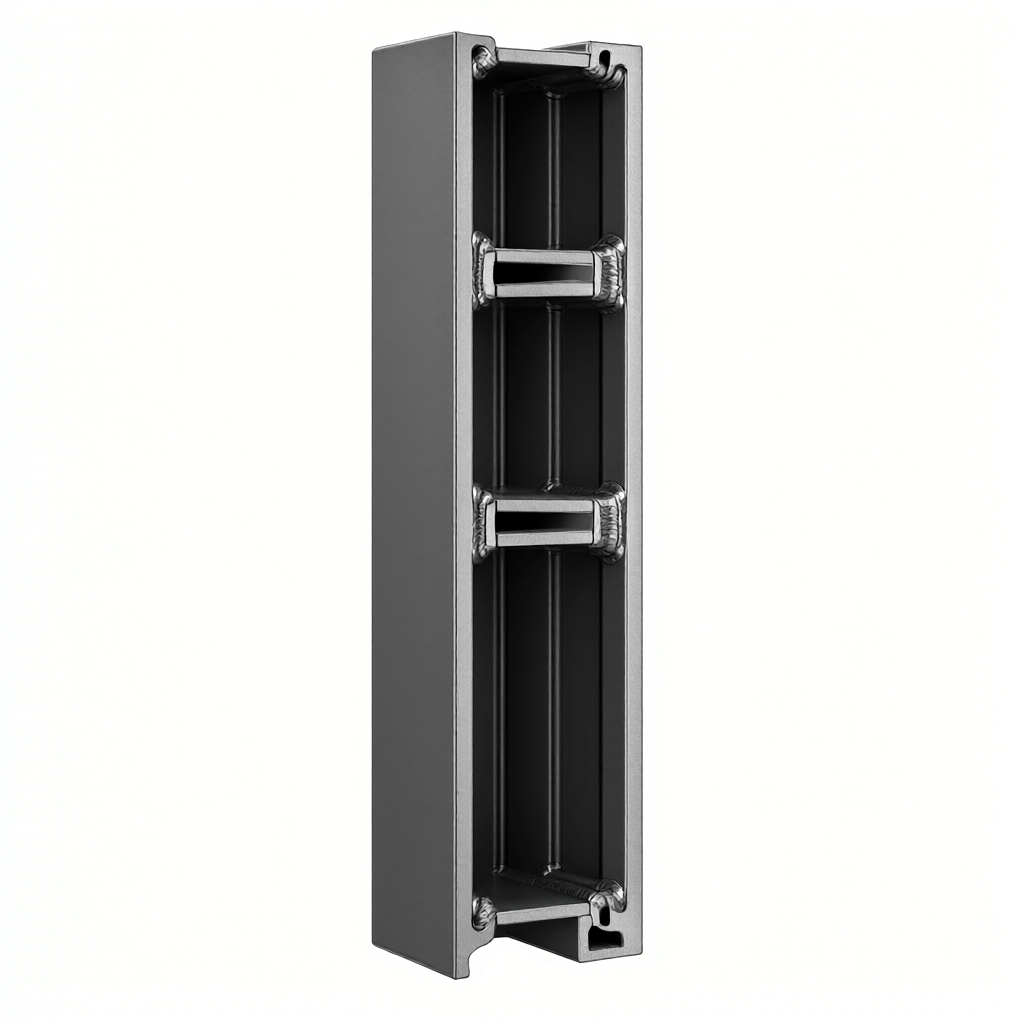
Water-tightness seals at pivot points and meeting stiles prevent water ingress into hollow profiles, which can cause internal corrosion hidden from view until structural degradation is advanced. Drainage channels molded into profile bottoms evacuate any condensation or splash-back before it reaches hardware attachment points.
Corrosion resistance grades should align with the installation environment. A seaside villa in a Class C4 or C5 corrosivity zone demands a different coating specification than an inland property in a mild climate. Buyers should ask suppliers for the specific salt-spray test duration their finish has passed.
Key Specifications
What are the key specs for a secure villa gate installation?
| Parameter | Typical Range / Requirement | Notes |
|---|---|---|
| Post embedment depth | 600–900 mm | Deeper for taller gates or high wind zones |
| Concrete mix strength | C25/30 minimum | Higher for heavy sliding gates |
| Wind-load rating | 120–160 km/h minimum | Coastal areas may require higher |
| Profile wall thickness | 1.5–2.5 mm extruded aluminum | Thicker for wider spans |
| Automation motor torque | 300–800 N rated force | Depends on leaf mass |
| Powder coat DFT | 80+ microns | C5 marine grade for coastal sites |
| Hinge load rating | 150–300 kg per hinge point | Stainless steel preferred outdoors |
These figures are reference benchmarks. Actual values depend on gate dimensions, local climate data, and the specific mechanical configuration chosen for each project.
Standards & Requirements
What standards apply to villa gate installation?
Villa gates fall under multiple overlapping regulatory frameworks. Building codes govern structural anchorage and wind resistance. Electrical codes regulate outdoor power circuits and emergency release mechanisms. Accessory standards address impact resistance and pedestrian safety sensors.
In the United States, OSHA maintains workplace safety regulations applicable to construction personnel performing gate installation work, including requirements for trenching safety when excavating post holes and lockout-tagout procedures when wiring automation equipment. (OSHA General Industry Guidelines)
Internationally, manufacturers often certify gates against EN 12453 for sliding gates and EN 12445 for swing gates, which define performance classes for operational reliability and safe functioning under repeated cycles. Testing laboratories verify these claims through accelerated cycle testing, static load application, and emergency release validation.
Fire-rated door assemblies used in commercial contexts reference NFPA 105 and IBC Chapter 716 requirements. While perimeter villa gates rarely serve as fire-rated openings, understanding these codes helps specifiers distinguish between residential and higher-security product tiers. For fire-rated assembly specifics, see our NFPA 105 smoke door standards and IBC Chapter 716 opening protectives guides.
Soundproofing and privacy concerns sometimes intersect with gate specification in dense urban developments. Related acoustic principles apply to solid-core constructions — review our soundproofing existing doors article and prehung door installation guide for context on material density and seal integrity.
Related Considerations
What should you consider beyond the hardware?
A technically correct installation means nothing if the surrounding context undermines it. Below are practical considerations that separate a durable installation from one requiring early intervention.
Local building-code compliance and permit considerations vary significantly by jurisdiction. Setback requirements from property lines, maximum allowable gate height, and historic district restrictions can all affect the feasible design. Many municipalities require engineering stamped drawings for automated perimeter systems. Buyers working with project consultants should confirm permitting timelines early, as delays in approval stall the entire procurement schedule.
Post-installation commissioning and routine maintenance schedule represent the final phase of responsible installation. Before handover, the installer should document gap measurements, verify all sensor alignment, log motor current draw under normal and loaded conditions, and confirm manual override functionality. A written maintenance schedule — typically quarterly lubrication of hinges and bearings, biannual inspection of seal compression, and annual check of anchor bolt tension — gives facility managers a clear roadmap for preserving warranty coverage and extending asset life.
Door rattling issues often trace back to inadequate seal compression or misaligned strike plates rather than hardware defects. For diagnosis approaches applicable to related door assemblies, see our how to stop a door from rattling guide, which covers seal recalibration and hardware realignment techniques useful for both interior and exterior applications.
Handle height compliance matters for accessibility. While villa gates differ from interior doors, maintaining consistent operation heights across a property’s entries — including main entrances and pool area gates — reduces confusion for users. Our door handle height standards reference can help specifiers coordinate fixture heights across all building openings.
How do we meet these standards?
As a manufacturer specializing in thermal-break aluminum doors and windows, casement doors, sliding doors, and custom villa entrance systems, we approach each installation specification with the same rigor buyers expect on-site. Our pre-shipment quality protocol includes air-tightness testing, water-tightness verification, and wind resistance evaluation — the same benchmarks professional installers rely on during commissioning.
We offer adjustable profile structures and fittings calibrated to match local building codes for target markets, ensuring that a gate manufactured in our facility performs correctly once installed anywhere in the world. Every order ships with complete documentation including packing lists, proforma invoices, and customs paperwork, and we support both FCL and LCL shipment from our China factory.
If you are planning a villa gate project and want to compare specifications, lead times, and customization options before committing to a supplier, Contact Us to discuss your project requirements directly with our team.
Additional technical parameters and material testing
To ensure longevity, several quantified industry standards apply to premium installations. Hinge and hardware load ratings are governed by DIN EN 1935, which defines endurance cycles and static load capacities (often 150–300 kg per hinge point). Automation operators must conform to ASTM F2200, ensuring safe operation under repeated usage, while emergency release mechanisms are validated against EN 12445 to guarantee pedestrian safety during power failures.
For powder-coated aluminum or steel frames, salt-spray resistance is measured via ASTM B117. High-performance exterior finishes in corrosive environments should withstand at least 1,000 hours of accelerated salt-spray testing without exhibiting white rust or substrate degradation. Window and door assemblies in coastal wind zones—such as those in Hurricane-Prone Regions—may also need to meet ASTM E1886 and E1996 impact and pressure cycling standards.
Quality benchmarks and pre-shipment verification
Before a gate assembly leaves the factory, professional vendors perform a series of quality benchmarks to ensure the unit meets the strict requirements of international export markets. These pre-shipment checks mirror the tests performed during post-installation commissioning.
Wind resistance testing involves subjecting the assembled frame and leaf to pressurized air loads equivalent to the target market’s design wind speed (typically up to 160+ km/h for coastal villas). Pass/fail criteria are defined by performance classes such as those in EN 12211.
Water-tightness verification utilizes dynamic water spraying according to DIN EN 12453 (for sliding gates) or EN 12208 (for swing gates). The assembly is exposed to simulated heavy rainfall while sensors detect any leakage through joints, glazing beads, or drainage paths. Any breach indicates a failure in seal compression or profile extrusion tolerances.
Finish inspection validates the aesthetics and durability of the surface treatment. Inspectors measure the Dry Film Thickness (DFT) of powder coatings using magnetic gauges to confirm the 80+ micron requirement. They also inspect for visual defects—such as orange peel, cracking, or color inconsistency—that could void warranties or fail client acceptance protocols.
Procurement Decision Framework
When evaluating contractors or manufacturers for a villa gate installation, use this checklist to assess vendor capability and mitigate risk.
Vendor Evaluation Criteria:
- Do they provide certified test reports for wind load (EN 12210), water-tightness (DIN EN 12453), and salt-spray resistance (ASTM B117)?
- Are their hinges and hardware rated per DIN EN 1935 for the specific leaf weight?
- Do they offer adjustable frame geometries to accommodate local building code variations?
- Is there a clear warranty structure covering both material defects and operational components?
Red Flags for Poor Installation:
- Use of untreated or thinly galvanized fasteners in exterior applications.
- Lack of scheduled drain holes in bottom rails of aluminum profiles.
- Absence of a documented commissioning report upon project completion.
- Vague specifications on powder coating thickness or corrosion resistance class.
By applying these standards, buyers can ensure that the final installed gate delivers decades of reliable service, whether in a mild inland climate or a harsh coastal environment.
Sources & References
- OSHA General Industry Guidelines — www.osha.gov
- how to hang an interior door — doorwoodendoors.com
- hinge spacing guide — doorwoodendoors.com
- NFPA 105 smoke door standards — doorwoodendoors.com
- IBC Chapter 716 opening protectives — doorwoodendoors.com
- soundproofing existing doors — doorwoodendoors.com
- prehung door installation guide — doorwoodendoors.com
- how to stop a door from rattling — doorwoodendoors.com
- door handle height standards — doorwoodendoors.com











