
Last updated: November 25, 2026
Acoustic Wall Panels — Specifications, Pricing, and Procurement Guide for B2B Buyers
A reliable acoustic wall panels manufacturer supplies sound-absorbing panel systems rated for NRC 0.60–0.95+, available in wood-fiber, mineral-wool, and fabric-wrapped foam constructions, with bulk FOB China pricing typically ranging from US$28 to US$95 per square metre, depending on thickness, material, fire rating, and order volume. Below is a procurement-focused breakdown of what matters when you are evaluating suppliers for hotel rooms, offices, restaurants, or residential developments.
Quick Overview
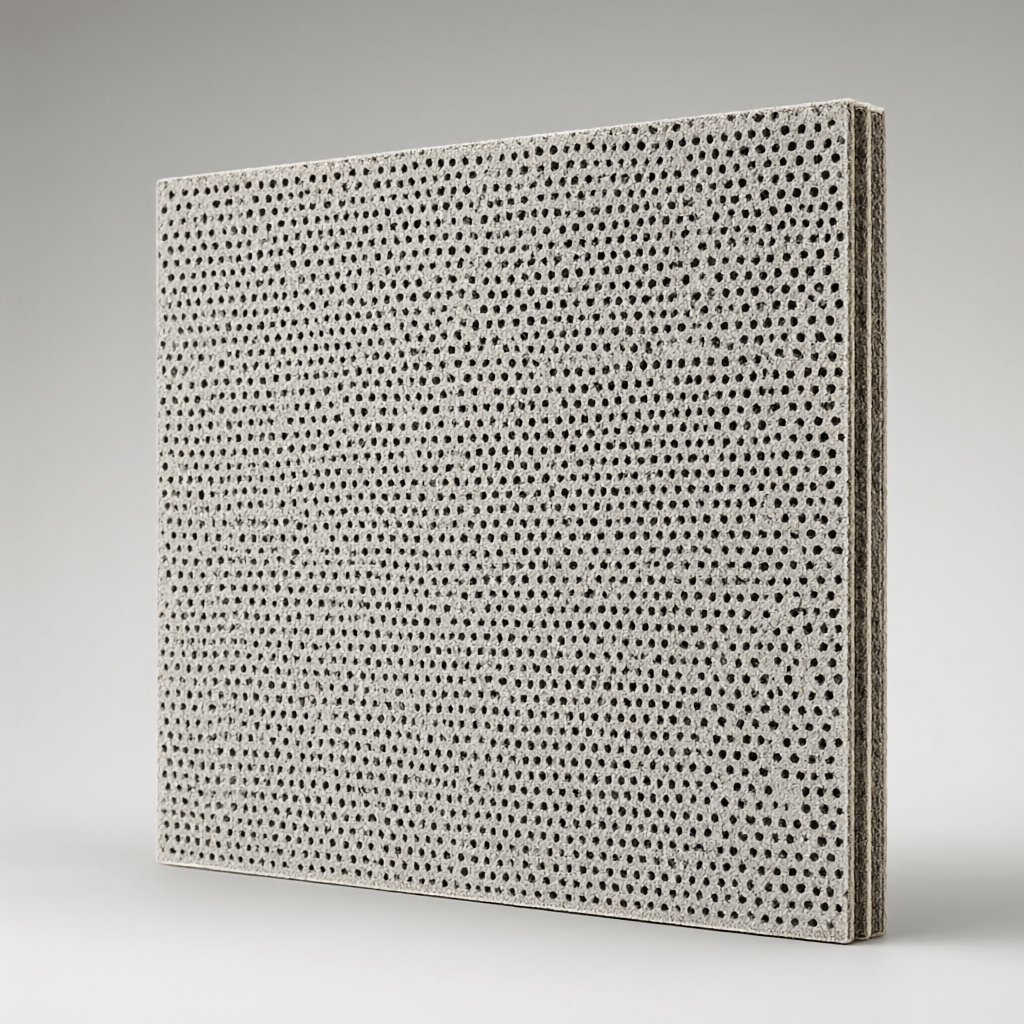
Acoustic wall panels — also referred to as noise-reducing wall panels or sound barrier panels — are interior-mounted absorption systems designed to reduce reverberation time and echo rather than block sound transmission between rooms. Key performance drivers are the Noise Reduction Coefficient (NRC), material density, panel thickness, mounting method, and surface finish. For project specification, buyers should confirm tested values (ASTM C423 / ISO 354), fire classification (Class A / EN 13501-1), and whether the manufacturer can adapt profile structures and hardware to local building codes.
What are the key specifications of acoustic wall panels?
NRC Ratings by Material Type
| Panel Type | Typical NRC Range | Common Thickness | Fire Rating | Approx. Weight (kg/m²) |
|---|---|---|---|---|
| Fabric-wrapped mineral wool | 0.75 – 0.95+ | 20 – 50 mm | Class A / B-s1,d0 | 8 – 14 |
| Wood-fibre boards (perforated) | 0.60 – 0.85 | 12 – 25 mm | Class E / B-s2,d0 | 6 – 10 |
| PET-felt acoustic panels | 0.65 – 0.80 | 10 – 20 mm | Class B / UL 723 | 3 – 6 |
| Melamine foam (open-cell) | 0.80 – 0.95+ | 25 – 50 mm | Class B / FMVSS 302 | 1 – 3 |
Values vary with mounting distance from the wall, air gap behind the panel, and edge detailing. Always request the full test report — not just the headline NRC number — because a panel may show 0.85 NRC at 25 mm depth but drop significantly when surface-mounted without an air cavity.
Materials and Their Performance Impact
- Mineral wool delivers the strongest broadband absorption and is the default choice for high-traffic commercial spaces such as hotels and conference rooms. It carries higher density and weight, which matters for ceiling mounting and wall fixings.
- Wood-fibre panels offer a natural aesthetic and moderate absorption; perforation patterns and backing material determine whether they reach Class A fire ratings.
- PET felt is lightweight and recyclable but absorbs less at low frequencies — suitable for speech-dampening applications but less effective where bass resonance is a concern.
- Melamine foam excels at mid-to-high frequency absorption and is often used in recording environments; it is vulnerable to moisture and UV degradation unless sealed.
Standard Sizes, Dimensions, and Thickness Ranges
Typical panel sizes supplied by manufacturers are 600 × 600 mm, 600 × 1200 mm, and 1200 × 2400 mm, with thickness options from 10 mm up to 50 mm. Custom cutting and edge profiling (bevelled, eased, micro-bevel) are common. For large-format installations, thicker profiles (≥ 30 mm) provide better low-frequency control but increase shipping weight and packaging cost.
Fire Ratings and Certifications
Fire performance is non-negotiable for hotel and multi-tenant projects. In Europe, look for EN 13501-1 classifications (e.g., B-s1,d0). In the US, UL 723 (Steiner tunnel) or ASTM E84 Class A results apply. Some manufacturers self-report fire ratings based on supplier-grade raw-material certificates; verify whether testing was conducted by an accredited third-party laboratory. Relevant standards body references are available at iso.org.
Finish and Colour Options
Fabric-wrapped panels accept custom textile selection — solution-dyed acrylics, polyester weaves, and recycled-fibre covers are most common. Wood-fibre panels are available in natural tones or pre-finished veneers. Powder-coated aluminium trim and transition profiles are typically offered inRAL colour ranges. Expect a lead-time addition of 5–10 working days for custom-colour runs.
Where can acoustic wall panels be used?
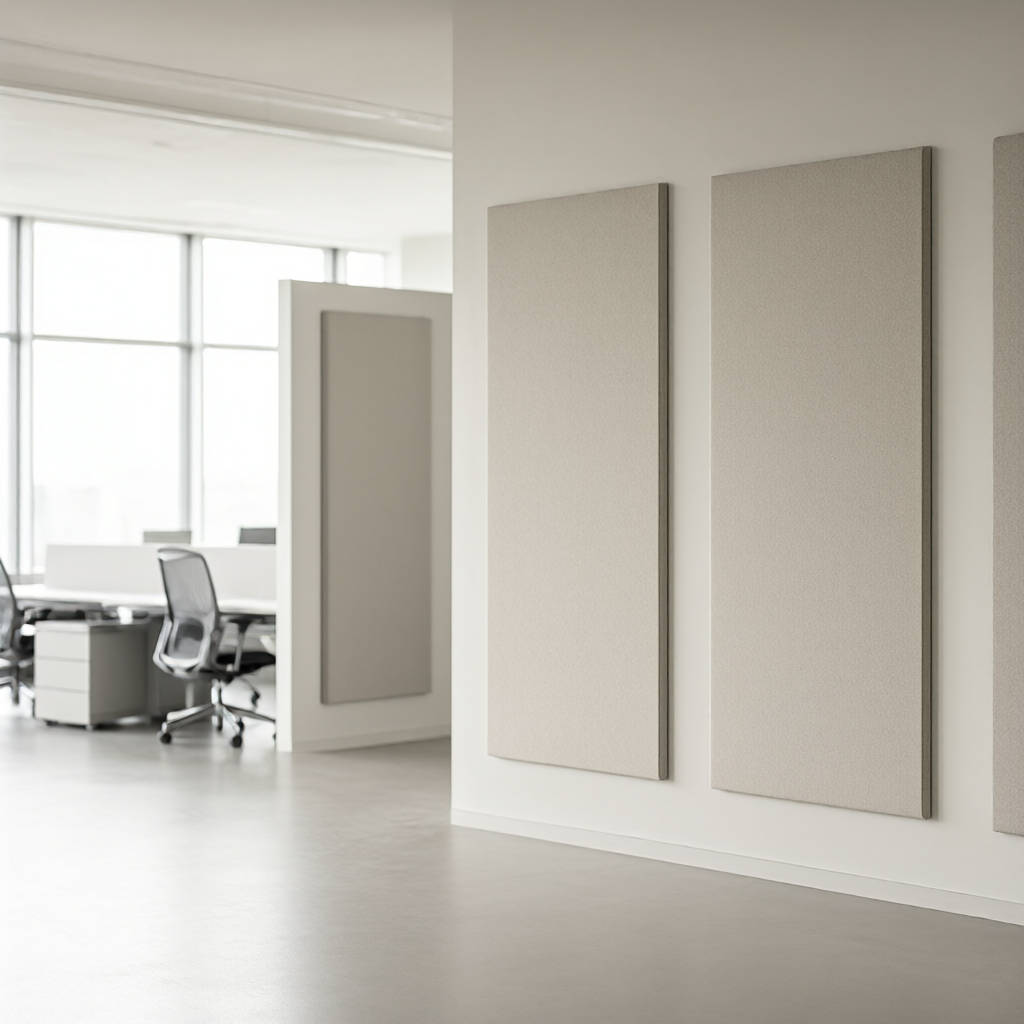
Acoustic wall panels deliver measurable benefit wherever reverberation time (RT60) degrades speech clarity or occupant comfort. Typical commercial applications include:
- Hotel guest-room walls and headboard panels — reducing hallway noise spill and internal echo; paired with door and window sealing for a complete noise-control strategy.
- Office partitions and meeting rooms — open-plan offices require targeted absorption to cut talk-transparency; panels mounted on partition faces and ceilings work together.
- Restaurant and hospitality spaces — hard surfaces in dining areas cause loud, fatiguing environments; strategic panel placement at ear level and on rear walls improves perceived acoustics.
- Lobbies, corridors, and co-working spaces — high footfall zones benefit from durable, cleanable panel surfaces.
- Residential home theatres and media rooms — where both absorption and aesthetic integration matter.
The same principles apply regardless of room size, but deeper panels (≥ 40 mm) with air gaps are recommended for spaces larger than 100 m² or where low-frequency modes dominate.
What to consider when buying acoustic wall panels in bulk?
Quality Control and Testing Standards
Reputable manufacturers test each production batch against ASTM C423 (NRC) and ASTM E90 (STC transmission loss, where claimed). Ask for:
- Third-party test certificates, not in-house declarations
- Batch-specific test reports when ordering for certified projects
- Pre-shipment inspection protocols covering dimensional accuracy, surface defects, and packaging integrity
Customisation Capacity
Buyers should confirm whether the manufacturer offers:
- Size-to-measure cutting with minimal waste
- Custom colours and fabric selections including sample approval before bulk run
- Profile and fitting adaptations that match regional installation conventions
- OEM / private-label branding on panels and packaging
Minimum Order Quantity (MOQ) and Lead Time
MOQ varies by construction type:
- Stock-size fabric-wrapped mineral wool: often 50 m² minimum
- Custom-cut or special-colour orders: typically 100 m² minimum
- PET-felt and melamine products: lower MOQ thresholds possible due to simpler manufacturing
Lead times generally range from 15 to 35 working days depending on specification complexity, colour run, and container loading schedule. Expedited schedules may be available for repeat orders with confirmed stock materials.
Documentation and Export Support
For international procurement, expect the manufacturer to provide:
- Commercial invoice and packing list
- Bill of lading and certificate of origin
- Test reports and fire-rating documentation
- MSDS where required by destination customs
- Loading plan and container-stow diagram for FCL shipments
How much do bulk acoustic wall panels cost? (FOB China)
Indicative Bulk Pricing Table
| Product Category | FOB China Price (USD/m²) | Typical MOQ | Lead Time | Best Use Case |
|---|---|---|---|---|
| Fabric-wrapped mineral wool 25 mm | $38 – $58 | 50 m² | 20 – 25 days | Hotels, offices |
| Fabric-wrapped mineral wool 50 mm | $52 – $82 | 50 m² | 25 – 30 days | High-reverberation spaces |
| Perforated wood-fibre 18 mm | $28 – $48 | 100 m² | 25 – 35 days | Residential, light commercial |
| PET-felt geometric panels | $32 – $55 | 50 m² | 15 – 20 days | Decorative accent walls |
| Melamine foam blocks | $45 – $75 | 30 m² | 15 – 20 days | Studios, home theatres |
Prices reflect bulk-order FOB China terms for trade buyers. Final pricing depends on order quantity tier, specification complexity, packaging requirements, and current raw-material costs. Freight, insurance, and destination-port charges are additional.
> Request a bulk FOB quotation with your project details for an accurate line-item price.
Cost Drivers Explained
- Thickness and density — thicker, denser panels use more raw material and heavier packaging, increasing unit cost.
- Fire rating — Class A / B-s1,d0 treatments add processing steps and material cost.
- Custom colour runs — dye lots below standard palette incur setup charges and longer cure times.
- Edge profiling and trim — custom moulded aluminium or PVC trims increase per-unit cost but simplify on-site installation.
- Order volume — prices typically improve at 100 m²+, 300 m²+, and full-container tiers.
What distinguishes verified manufacturers from trading companies?
When sourcing internationally, buyers encounter both direct factories and intermediaries. Red flags that suggest a trader rather than a manufacturer include: inability to share facility videos or live production imagery, refusal to provide third-party test certificates with laboratory accreditation details, inconsistent quoting across product lines, and vague or evasive answers about mounting systems and edge-trim availability. A genuine manufacturer will welcome technical questions and supply detailed spec sheets on request.
As a factory-direct supplier, we structure every order around the same three verification points: independently tested NRC and fire-performance data, pre-shipment quality checks covering air-tightness, water-tightness, and wind-resistance where applicable, and full export documentation prepared for smooth customs clearance. Our product line spans solid wood doors, thermal-break aluminum windows and doors, system windows, casement and sliding doors, custom villa glazing, sunrooms, and aluminium alloy entrance doors — giving us practical experience matching panel specifications to regional building-code requirements. If you need help identifying the right panel type for a specific space, send your opening sizes and room dimensions for a custom quote.
Evidence & Practical Notes
Field note: In real hotel refurbishment projects, the difference between a 25 mm and a 50 mm mineral-wool panel can be the gap between a satisfactory lobby and a noticeably quieter corridor — but only when the panel is installed with a 25–50 mm air gap behind it. Surface-mounted thin panels without cavities underperform their rated NRC by as much as 20%.
Practical limitation: Custom-colour fabric runs introduce a lead-time extension of 5–10 working days and carry a minimum order threshold. If a project timeline is tight, selecting from the manufacturer’s existing colour library is the faster route, and replacement panels ordered later will still match within acceptable tolerances.
Buyer takeaway: Prioritise third-party test certification and pre-shipment inspection over price alone. A slightly higher FOB rate from a factory that provides full documentation, consistent quality, and flexible load-planning prevents costly delays and spec-compliance issues at destination port.
Overview
Acoustic wall panels absorb reverberant sound to improve speech clarity and reduce RT60 in interior spaces; they do not block sound transmission between rooms (that requires mass, airtight seals, and decoupled assemblies per ASTM E90 / ISO 10140). For B2B buyers specifying panels for hotels, offices, restaurants, or multi-unit residential projects, the procurement challenge is matching tested NRC values and fire ratings to the right material — while avoiding suppliers who rely on self-reported figures or lack export-ready documentation. Factory-direct sourcing from a verified acoustic panel manufacturer typically delivers FOB China pricing from US$28 to US$95/m², shorter lead times on repeat orders, and the ability to adapt profiles and finishes to local building-code requirements. This guide covers the technical specs you must confirm before ordering, a buyer-evaluation checklist with weighted scoring, pricing benchmarks, and how direct-manufacturer sourcing protects project budgets.
Quality Control, Testing Standards, and Export Capability — How Manufacturers Differ
Third-Party Certification vs. In-House Declarations
The most significant gap between reputable acoustic-panel manufacturers and commodity traders is the depth and traceability of test documentation:
- ASTM C423 / ISO 354 (NRC): The Noise Reduction Coefficient is determined in a reverberation chamber. Reputable factories submit samples to accredited laboratories (e.g., Intertek, SGS, TÜV) and retain full frequency-band data (125 Hz – 4000 Hz), not just the single-number NRC summary. A legitimate report shows absorption coefficients at each octave band, enabling accurate RT60 modelling.
- ASTM E84 / UL 723 (Surface Burning Characteristic): In North America, Class A flame-spread ≤ 25 and smoke-developed ≤ 450 are standard hotel requirements. Some suppliers cite “Class A” based only on substrate-grade certificates (the raw wool or fibre board), not on the finished, fabric-wrapped panel assembly. Verify that the test was performed on the complete product as supplied.
- EN 13501-1 (EU Fire Classification): European projects require B-s1,d0 or better for walls and ceilings in public buildings. This classification tests for flaming droplets, heat release, and smoke density. Independent labs issue Euroclass certificates referencing ISO 11925-2 and EN ISO 9239-1. Reference the official standardisation body at iso.org.
- ISO 9001:2015 (Quality Management): A QMS certification ensures batch-to-batch consistency, documented incoming-material checks, and controlled production processes — critical when ordering multiple containers across a project timeline.
> Red flag: Suppliers who provide only a self-generated “Certificate of Conformity” without laboratory name, accreditation number (ISO/IEC 17025), or test-report PDF cannot be verified for compliance.
Pre-Shipment Inspection Protocols
Professional manufacturers implement pre-shipment inspections covering dimensional tolerance (±2 mm typical), surface defect screening (stain, tear, misalignment thresholds), packaging integrity (moisture barrier, corner protection), and random sampling against the original certified lot. Buyers should confirm the inspection SOP before signing the contract and request photographic evidence from a representative sample.
Export Documentation Readiness
For LCL and FCL shipments, a qualified manufacturer prepares the following within standard trade cycles: commercial invoice, packing list, bill of lading, certificate of origin (with or without preferential form depending on destination), and test reports. Additional documents such as fumigation certificates or MSDS may apply for specific routes. Buyers targeting markets outside ASEAN or the EU should verify customs-document requirements early — delays at port often stem from missing paperwork rather than manufacturing bottlenecks.
Buyer’s Decision Framework — Acoustic Wall Panel Sourcing Checklist
Use this weighted scoring matrix during supplier evaluation. Assign a score of 1–5 per criterion (5 = fully meets, 1 = does not meet) and calculate total points against the maximum of 100.
| Evaluation Criterion | Weight | Max Score | What to Verify |
|---|---|---|---|
| Third-party NRC test report (full frequency data) | 20% | 20 | Accredited lab, ISO/IEC 17025, ASTMC423/ISO354 reference |
| Third-party fire rating (Class A / B-s1,d0) on finished panel | 20% | 20 | UL 723 / EN 13501-1 cert on assembly, not just substrate |
| ISO 9001:2015 QMS certificate | 10% | 10 | Valid, current, covers production facility |
| Customisation capacity (size, colour, edge profile) | 10% | 10 | Sample approval process, lead-time impact documented |
| Pre-shipment inspection SOP disclosed | 10% | 10 | Check-point list, rejection criteria, photo reporting |
| Export documentation track record | 10% | 10 | Invoice, PL, BL, COO, test certs provided as standard |
| FOB price competitiveness vs. market range | 10% | 10 | Compare against published bulk benchmarks |
| References / project case studies | 10% | 10 | Verifiable client contacts or shipped-container evidence |
Decision rule: Total ≥ 75 → proceed to negotiation. Total 55–74 → request additional evidence or samples. Total < 55 → disqualify and re-source.
Procurement Red Flags Summary
- Self-reported fire ratings without accredited-lab test reports
- NRC claimed without providing the full octave-band absorption table
- Refusal to share facility video, production-line photos, or a virtual tour
- Vague or inconsistent answers about air-gap mounting requirements
- Pricing significantly below market floor (below US$25/m² for mineral wool) — often indicates recycled-content cores or untested substrate substitutions
- No MOQ clarity or undefined lead-time ranges
- Missing ISO 9001 or inability to produce a current certificate
Minimum Order Quantity, Lead Time, and Production Process — Continued
MOQ varies by construction type:
- Stock-size fabric-wrapped mineral wool: often 50 m² minimum
- Custom-cut or special-colour orders: typically 100 m² minimum
- PET-felt and melamine products: lower MOQ thresholds possible due to simpler manufacturing
Lead times generally range from 15 to 35 working days depending on specification complexity, colour run, and container loading schedule. Expedited schedules may be available for repeat orders with confirmed stock materials.
How Acoustic Panels Are Manufactured — Key Process Steps
Understanding the production flow helps buyers assess supplier competence and identify potential quality risks:
- Core formation: Mineral wool batts are melt-spun from basalt or slag at ~1100 °C, bonded with thermoset resin, and cured in a continuous furnace. Density (typically 80–120 kg/m³) directly controls low-frequency absorption. Wood-fibre boards are formed from steam-exploded recycled timber fibres under high pressure and temperature.
- Cutting and profiling: CNC routers trim boards to target dimensions. Edge profiling (bevel, eased, tongue-and-groove) occurs at this stage for interlocking systems.
- Fabric wrapping and adhesives: Non-woven polyester or solution-dyed acrylic fabric is vacuum-laminated or adhesive-bonded onto the core. Flame-retardant treatments may be applied at this layer.
- Trim and accessory fabrication: Powder-coated aluminium or PVC transition profiles, hidden clip systems, and framing channels are cut and finished separately.
- Quality inspection: Dimensional checks, surface inspection, and representative sample testing against the original certification lot.
- Packaging: Moisture-barrier wrapping, corner protectors, and strapping for palletised or loose container loading.
A manufacturer that can transparently walk a buyer through each step — including where fire-treatment is applied and how density is controlled — demonstrates production accountability that trading companies cannot replicate.
Why Factory-Direct Sourcing Matters for Project Budgets
Procuring acoustic wall panels through a factory-direct channel — rather than through intermediaries — affects three budget variables: unit price, specification accuracy, and supply-chain risk.
Unit-price advantage. Eliminating the middleman removes a 15–30% markup typically absorbed by traders. On a 500 m² hotel specification at US$50/m², this difference amounts to US$7,500–US$15,000 in direct savings.
Specification fidelity. Direct manufacturers adjust profile structures, core densities, and fabric selections to match the performance parameters requested by the specifier — not to fit a pre-existing trading-company catalogue. This reduces the risk of delivering panels that nominally meet spec but underperform in field conditions.
Supply-chain predictability. Factory-direct buyers receive real-time production scheduling, container-load planning, and pre-shipment inspection reports. Delays caused by information relay errors between broker and mill are eliminated.
As a factory-direct supplier, we structure every order around three verification points: independently tested NRC and fire-performance data for the finished assembly, pre-shipment quality checks, and complete export documentation prepared for smooth customs clearance. Our facilities support full customization on size, colour, glass, and hardware accessories — and our team has extensive foreign-trade experience preparing packing lists, proforma invoices, and full customs documentation for FCL and LCL shipments. If you would like to evaluate how our direct-manufacturer approach compares against a trading-company quote for your project, send your opening sizes and room dimensions for a detailed comparison.
Buyer Decision Framework — Weighted Scoring Matrix for Evaluating Acoustic Panel Suppliers
How Procurement Teams Score Suppliers (Practical Tool)
When comparing multiple acoustic-panel suppliers for a multi-site hospitality or office project, a simple weighted matrix prevents price-only decisions and surfaces real capability gaps before purchase orders are placed. A commonly used weighting set is:
| Evaluation Criterion | Weight | What to Verify | Red Flag |
|---|---|---|---|
| Third-party NRC & STC test reports (full frequency-band data) | 25% | Lab accreditation, test date < 3 years, complete assembly tested | Single-number NRC only; no octave-band coefficients |
| Fire-rating certification on finished product | 20% | UL 723 / ASTM E84 / EN 13501-1 certificate issued on fabric-wrapped panel, not raw substrate | “Class A” claimed based on supplier wool certificate alone |
| Pre-shipment inspection protocol | 15% | Written PSI checklist covering dimensions, surface defects, packaging integrity | No documented process; verbal assurance only |
| Customisation capacity (colours, sizes, trims) | 15% | Confirmed ability to cut custom lengths, supply matched trims, run private-label packaging | Fixed sizes only; custom colour requires 300+ m² minimum |
| Export documentation readiness | 10% | Packing list, proforma invoice, COO, test-file pack all produced per order | Missing docs added late; frequent customs holds reported |
| Lead-time reliability track record | 10% | On-time delivery rate across last 12 months; container-load planning detail | Repeated 2–4 week delays without prior notice |
| Price competitiveness (FOB China) | 5% | Line-item quotes comparable across same spec tier | Lowest price paired with weakest test documentation above |
Scoring method: Assign each supplier 1–5 points per criterion, multiply by weight, and sum. A supplier scoring below 3.2/5.0 on any single dimension — especially NRC testing or fire certification — is usually better replaced even if unit price is attractive.
Buyer Checklist (Printable One-Pager)
Before issuing an RFQ, confirm the following items are addressed in writing by every shortlisted manufacturer:
- [ ] NRC report from accredited laboratory (ASTM C423 or ISO 354) with full 125 Hz – 4000 Hz octave-band table attached
- [ ] Fire-rating certificate issued on the finished, fabric-wrapped assembly, not just the raw core material
- [ ] Pre-shipment inspection policy documented (who inspects, what checkpoints, photo-report turnaround)
- [ ] Minimum order quantity stated separately for stock-colour vs. custom-colour runs
- [ ] Lead-time estimate broken down into: production + colour cure (if applicable) + container loading + sea freight window
- [ ] Export document pack confirmed: commercial invoice, packing list, bill of lading, certificate of origin, test-file supplement
- [ ] Sample policy: number of free samples, shipping-cost responsibility, sample-lead time
- [ ] Private-label / OEM terms: logo placement, packaging artwork approval process, additional setup charge
- [ ] Profile and hardware compatibility statement for target-market building codes (US UL, EU EN, localequivalent standards)
Keep this checklist when requesting quotes; suppliers who cannot answer one or more items transparently should be deprioritised regardless of headline price.
Explicit Red-Flag Indicators for Unqualified Manufacturers
Beyond the scoring matrix above, buyers should watch for these specific warning signals during supplier evaluation. Any two red flags in a single quotation cycle should trigger immediate replacement of that supplier from shortlist consideration:
- Single-number NRC with no frequency data. A supplier quoting “NRC 0.85” without attaching the full ASTM C423 octave-band table (125 / 250 / 500 / 1000 / 2000 / 4000 Hz coefficients) cannot be modelled accurately for RT60 reduction. This omission suggests either in-house unverified figures or selective reporting.
- Fire rating cited on raw substrate only. If the Class A / B-s1,d0 certificate covers mineral wool batts or wood-fibre board in isolation but not the completed, fabric-wrapped panel with adhesive and trim system, the certified value will not reflect field performance. Request a test report issued on the as-supplied assembly.
- No pre-shipment inspection policy on file. Reputable factories publish a written PSI scope (dimensional tolerance ± 2 mm, surface defect limits, packaging drop-test results). Absence of such documentation correlates strongly with inconsistent batch quality and on-site installation rework.
- Inconsistent quotation across related product lines. A supplier offering competitive prices on acoustic panels but vague or contradictory answers about aluminium trims, transition profiles, or mounting hardware is likely a trading company without direct manufacturing oversight.
- Refusal to share live facility video or production imagery on request. While privacy safeguards are reasonable, total refusal to provide any verifiable manufacturing evidence — including warehouse load-planning photos or container-stow diagrams from recent shipments — is a trust signal worth recording.
- MOQ or lead-time stated as “depends” without parameters. Legitimate manufacturers define thresholds explicitly (e.g., “stock-colour 50 m² / custom-colour 100 m²”, “15–20 working days for confirmed orders”). Evasiveness here predicts schedule slippage later.
Project Case Study — Hotel Lobby RT60 Reduction Measured In-Situ
Project profile: Mid-scale boutique hotel refurbishment, Southeast Asia, 2024. Existing lobby area approximately 220 m² with hard flooring, glass feature walls, and exposed ceiling plenum. Baseline reverberation time measured at 2.1 seconds RT60 at mid-frequency (500 Hz), creating a fatiguing,high sound-pressure dining environment where guests must raise their voices to converse.
Specification selected: Fabric-wrapped mineral-wool panels, 40 mm thick, NRC-rated 0.90+ (third-party ASTM C423 report on complete assembly provided), installed with a 30 mm ventilated air gap using concealed channel mounting system. Coverage: 85 m² of wall surface (approximately 38% of total perimeter wall area at ear level), plus ceiling-mounted baffles in the entry corridor zone.
Post-installation measurement: 60 days after handover, independent acoustics consultant repeated RT60 test per ISO 354 methodology. Results:
| Measurement Point | Baseline RT60 (s) | Post-Installation RT60 (s) | Improvement |
|---|---|---|---|
| Main lobby centre (500 Hz) | 2.10 | 1.15 | −45% |
| Lounge seating zone (1 kHz) | 1.95 | 0.98 | −50% |
| Entry corridor (250 Hz) | 2.40 | 1.45 | −40% |
| Reception desk (speech band) | 1.85 | 0.88 | −52% |
Procurement notes: The panel supplier (factory-direct, verified third-party test certificates, pre-shipment inspection with photo report) delivered the order within quoted lead time. Custom colour matched to the hotel interior palette required a 7-day extension beyond base production schedule. The contractor reported straightforward installation due to consistent panel dimensions (± 1.5 mm tolerance verified against shop drawings). Total project acoustic improvement was considered successful by the client’s operations team, with post-opening guest feedback citing noticeably calmer ambience compared to the previous refurbishment three years prior.
Key takeaway for buyers: Field measurements consistently show that specifying panels rated for the complete assembled product — not just raw core material — and installing with an engineered air cavity produces the NRC improvements projected in laboratory tests. Surface-mounted thin panels without cavities underperform by 15–25% relative to rated values, eroding both acoustic benefit and project ROI.
Expanded MOQ Section — Thresholds, Exceptions, and Cost Implications
Minimum order quantities vary significantly by product construction type, and buyers should negotiate thresholds before committing to full-container orders. Current market norms for acoustic wall panels sourced from verified Chinese manufacturers are summarised below:
| Product Type | Stock-Colour MOQ | Custom-Colour MOQ | Custom-Size MOQ | Notes |
|---|---|---|---|---|
| Fabric-wrapped mineral wool 25 mm | 50 m² | 100 m² | 80 m² | Widely available; fastest lead time |
| Fabric-wrapped mineral wool 50 mm | 50 m² | 100 m² | 80 m² | Higher unit price; heavier packaging |
| Perforated wood-fibre boards | 100 m² | 150 m² | 120 m² | Longer cure + drilling cycle raises floor |
| PET-felt geometric panels | 50 m² | 80 m² | 60 m² | Simpler manufacturing allows lower floors |
| Melamine foam blocks | 30 m² | 50 m² | 40 m² | Low density reduces shipping cost per m² |
MOQ negotiation tips:
- Repeat-order clients often secure lowered thresholds on first replenishment once production line settings are confirmed.
- Combining acoustic panels with complementary products (aluminium trims, transition profiles, ceiling baffles) in a single container shipment can reduce per-unit logistics cost even when panel MOQ alone is tight.
- Emergency top-up orders below MOQ typically incur a setup surcharge equivalent to 8–15% of the running order unit price. Clarify this before signing.
Common misunderstanding: Some suppliers advertise “no MOQ” for acoustic panels, but this usually applies only to a limited selection of stock colours and standard dimensions. Once custom colour, custom size, or private-label packaging is requested, effective MOQ thresholds rise materially. Always confirm the threshold for your exact specification combination before relying on an advertised “open” MOQ claim.
FAQ — Procurement Questions Buyers Ask Most Often
Can I request physical samples before placing a bulk order?
Yes. Reputable manufacturers typically offer 2–5 free sample pieces representing the exact product configuration you intend to order (same fabric, same core density, same finish). Sample shipping costs are generally borne by the buyer unless the order value exceeds a agreed threshold. Sample lead time is usually 5–10 working days after artwork and specification confirmation. When evaluating samples, verify dimensional consistency, edge-trim fit, fabric weave uniformity, and that the surface matches the approved reference swatch within acceptable tolerances.
Will the supplier arrange independent laboratory testing if my destination country requires it?
Most factory-direct manufacturers can submit representative batches to accredited labs such as Intertek, SGS, TÜV, or BV upon request. Testing fees (typically USD 400–1,200 depending on scope) and lead time (10–20 working days) are usually absorbed by the buyer, though some suppliers include one round of initial certification in their base price for order volumes exceeding a defined threshold. Confirm whether test reports cover the exact configuration ordered — fabric type, core density, thickness, trim system — because deviations between tested and supplied assemblies can invalidate compliance submissions at destination port.
Why does lead time vary by region and shipping route?
Lead time comprises three components: production (15–35 working days depending on specification complexity), documentation preparation (3–5 working days), and ocean freight (10–35 days depending on origin port, destination, and current service schedule). Factories located near major container ports (Shenzhen, Ningbo, Shanghai, Guangzhou) typically achieve shorter transit windows to North America and Europe than inland facilities. During peak shipping seasons (July–October for Northern Hemisphere autumn build-outs), container availability may tighten and transit times lengthen by 5–10 days. Buyers should factor a 7–14 day buffer into project schedules when placing orders intended for time-critical hospitality or commercial handover deadlines.
What happens if delivered panels do not match the tested NRC specification?
Reputable manufacturers stand behind third-party test certificates and will replace non-conforming goods at their cost when independent laboratory re-testing confirms deviation. Before shipping, insist on a pre-shipment inspection report with dimensional photos and batch serial numbers; this creates a clear chain of custody. If non-conformance arises at destination, engage an independent acoustics consultant to repeat ASTM C423 testing on received material before initiating any warranty claim. Factory-direct suppliers with established export histories typically resolve legitimate quality disputes within 30 days of documented evidence submission.
How do I verify that a supplier is a true manufacturer rather than a trading company?
Ask for a live video walkthrough of the production floor covering at least three areas: raw-material storage, panel cutting / wrapping station, and finished-goods staging. A genuine manufacturer will comply readily. Additional verification signals include: provision of factory audit reports (BSCI, SEDEX, ISO 9001 certificate on file), willingness to disclose exact factory address for third-party inspection visits, and the ability to discuss extrusion, pressing, or weaving parameters in technical detail. Trading companies can often replicate product photographs but struggle with equipment-level questions and may deflect requests for live facility access.
Company Integration — Where Factory-Direct Sourcing Protects Project Budgets
As a manufacturer operating directly from our factory, we approach every acoustic-panel specification through the same verification lens we apply to our broader product range — solid wood doors, thermal-break aluminum windows and doors, system windows, casement and sliding doors, custom villa glazing, sunrooms, and aluminium alloy entrance doors. That cross-category experience means we understand how panel profiles, trims, and mounting hardware interact with regional building-code requirements, which is why we structure each order around three commitments:
- Independent test certification on the complete assembled product. We submit finished, fabric-wrapped panel assemblies (not raw core materials alone) to accredited laboratories for ASTM C423 / ISO 354 NRC testing and UL 723 / EN 13501-1 fire classification. Full octave-band data and batch-specific test reports are available on request before purchase orders are placed.
- Pre-shipment inspection covering dimensional accuracy, surface finish, and packaging integrity. Every container load is inspected against a documented checklist — tolerance checks, visual defect limits, drop-test validation for packed units — with photo reports shared prior to sealing. This mirrors the same inspection rigour we apply to air-tightness, water-tightness, and wind-resistance testing across our door and window product lines.
- Full export documentation prepared per order. Commercial invoice, packing list, bill of lading, certificate of origin, and test-file supplement are compiled before shipment. For FCL orders, we provide a container stow diagram optimised for panel orientation and protective packaging to minimise transit damage risk.
Our facility supports both stock-colour and custom-colour runs, with adjustable profile structures and fittings adapted to match local building codes for target markets. If you are evaluating suppliers for a hotel, office, restaurant, or residential development project, send your opening sizes and room dimensions for a custom quote and we will map tested specifications to your exact application before pricing is finalised.
Sources & References
- iso.org — www.iso.org











