
Last updated: November 26, 2026
Sourcing door hinges from a verified manufacturer requires matching material grade, finish durability, and load ratings to your project’s environmental conditions—then confirming those hinges pass documented pre‑shipment tests for air‑tightness, water‑tightness, and wind resistance before they leave the factory. This guide breaks down the specifications, typical FOB pricing from China factories, and the practical evaluation steps professional buyers use to rank suppliers objectively.
Quick Overview
Choosing a reliable door hinges manufacturer comes down to matching your project’s load and environmental demands with a supplier who can verify performance through testing, certify compliance with local building codes, and ship consistently across FCL or LCL containers. Buyers who scope material grade, finish durability, and pre-shipment inspection protocols upfront avoid rework on site. This guide covers the specifications that matter, typical bulk pricing from China factories, and the practical evaluation steps that separate dependable hinge suppliers from generic hardware traders.
What Are the Key Specifications of Door Hinges?
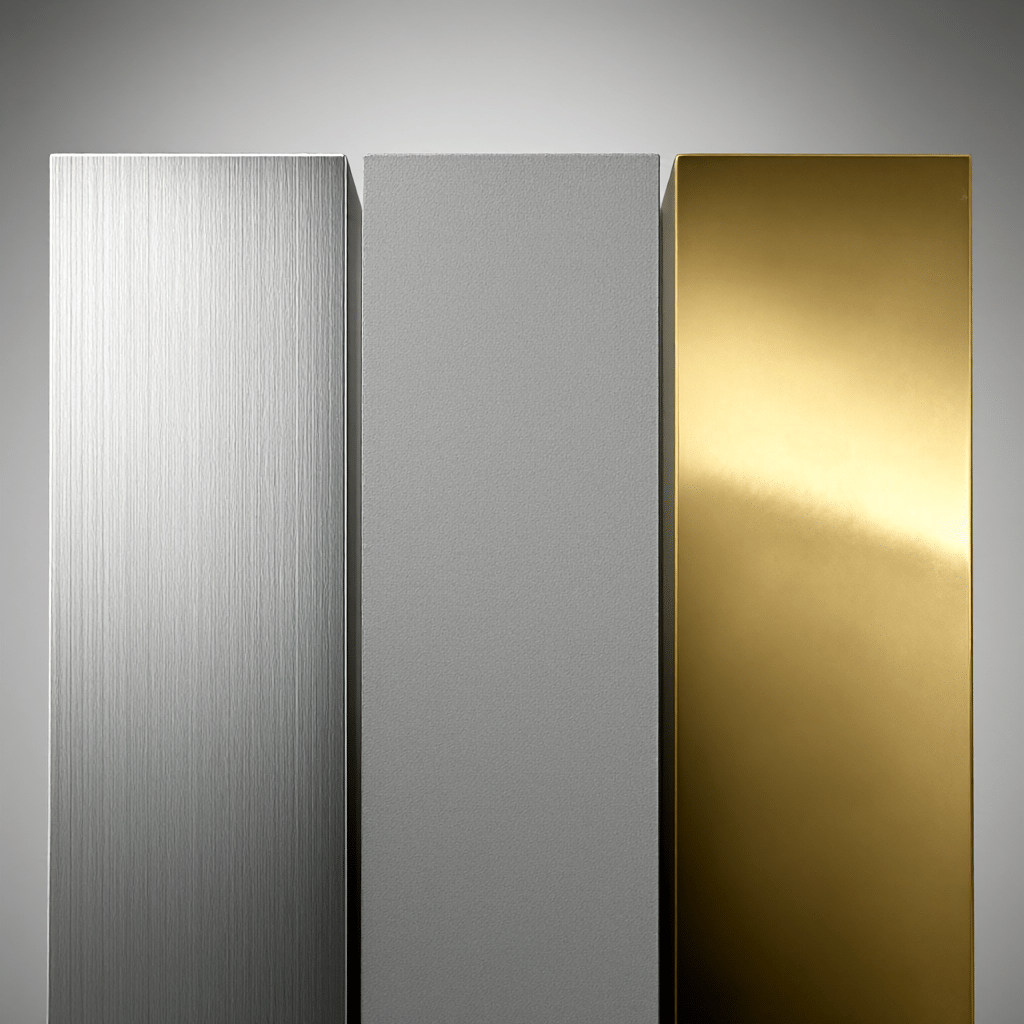
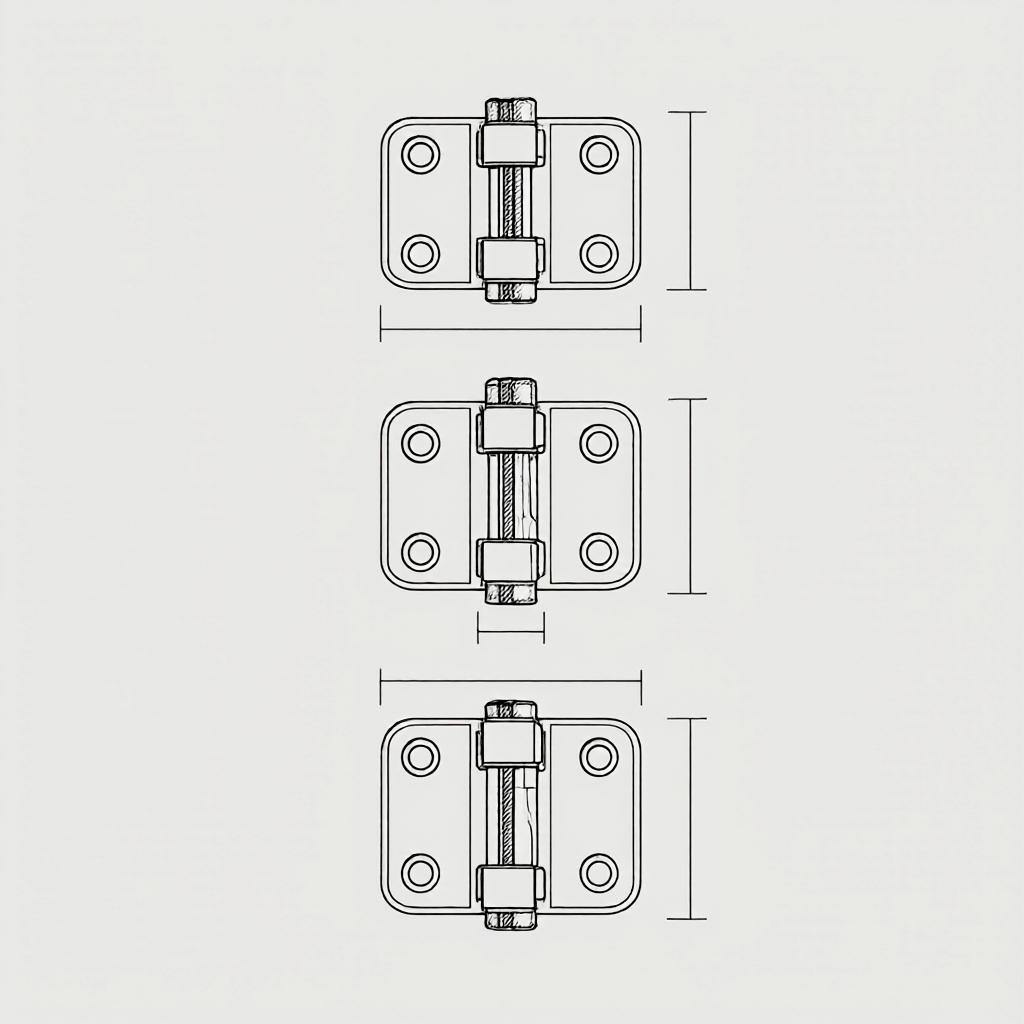
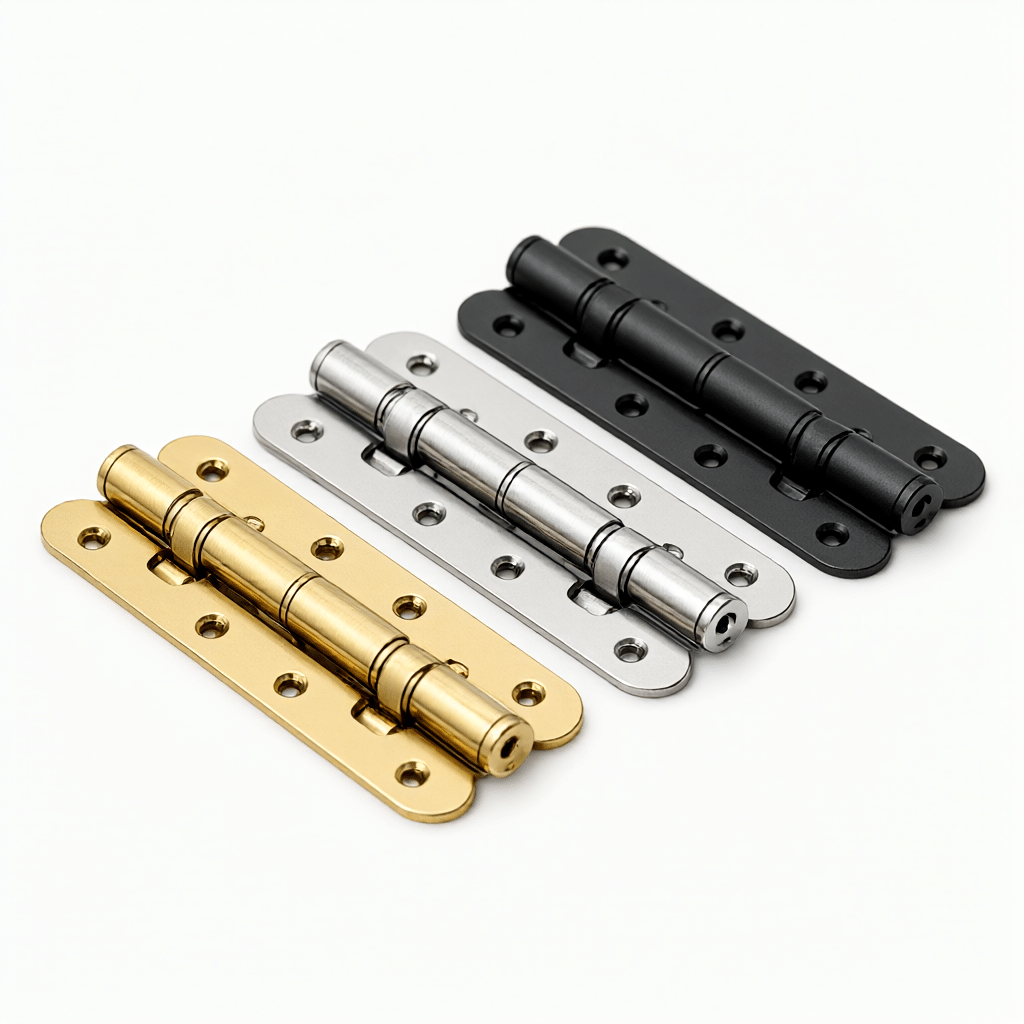
Door hinges — whether butt, concealed, or pivot types — are rated primarily by material composition, surface finish, bearing mechanism, and load capacity. The core specification variables are:
| Specification | Industry Reference Range | Project Impact |
|---|---|---|
| Material | SS304, SS201, aluminum alloy, bronze | Corrosion resistance; critical in coastal or high-humidity markets |
| Surface Finish | PVD gold/black, powder-coated, brushed, polished | Aesthetic consistency across batches; finish adherence tested per ASTM B368 salt-spray standards for stainless grades |
| Bearing Type | Ball-bearing, plain bushing, nylon insert | Cycle life and operational smoothness under repeated opening |
| Leaf Dimensions | 3×3 in up to 6×6 in (standard); custom sizes available | Mounting compatibility with door and frame thickness |
| Load Rating | 44 lb to 330 lb per hinge (typical commercial range) | Determines quantity per door leaf based on door weight and height |
| Fire Rating Compatibility | Rated for 45 min to 90 min doors with listed hardware | Required for egress paths in commercial and hospitality projects |
| Compliance Standards | ANSI BHMA A156.1, EN 1935, local code references | Determines legal acceptability for permit submission |
When evaluating a manufacturer, request a test report covering cycle testing, finish adhesion, and corrosion resistance rather than relying on marketing claims alone. Factory documentation should reference verifiable test protocols, not proprietary in-house methods without external validation.
Where Can Door Hinges Be Used?
Hinge selection maps directly to the application environment:
- Commercial office and retail fit-outs — High-cycle ball-bearing butt hinges on interior traffic doors; concealed hinges for minimalist aesthetic frames in premium buildouts.
- Hospitality and hotel room renovation — Heavy-duty concealed or piano hinges on guest-room entry and bathroom doors; finish durability matters since rooms cycle through cleaning chemicals daily.
- Residential developer bulk orders — Cost-effective SS201 or powder-coated aluminum options for apartment corridors and unit entry doors where budget per unit drives specification.
- Custom villa and entrance door projects — Decorative bronze-finished or oversized pivot hinges for solid wood or thermal-break aluminum entry systems.
The same product line rarely fits every scenario. A single factory order for a mixed-specification project often requires a door hinges manufacturer that can adjust profile, leaf size, and fitting within the same production run without sacrificing quality consistency.
What to Consider When Buying Door Hinges in Bulk?
Bulk procurement decisions rest on five practical factors:
MOQ and order flexibility — Some factories set a minimum of 500–1,000 sets per SKU; others accommodate mixed-SKU orders across different hinge styles if the total volume threshold is met. Clarify whether MOQ applies per design or per container load.
Lead time and scheduling — Standard finishes typically ship in 20–30 days from order confirmation. Custom colors, special plating, or non-standard dimensions extend the timeline. Align delivery windows with your project phasing, especially for construction project supply where missing a hardware shipment delays drywall and flooring trades.
Quality control protocol — Pre-shipment inspection should cover functional operation (smooth swing, no binding), finish consistency across pieces from the same batch, and dimensional verification against your drawing. Request photos or third-party inspection reports before goods leave the factory.
Trade documentation readiness — Reliable hinge suppliers provide packing lists, proforma invoices, and full customs documentation including country-of-origin declarations. Verify this capability early, particularly for buyers importing into regulated markets such as the EU, Middle East, or North America.
Customization capability — Profile adjustments, hidden hinge integration, and color matching to existing door systems require engineering input. Confirm that the manufacturer has ODM experience for structural modifications beyond cosmetic finish changes.
How Much Do Bulk Door Hinges Cost? (FOB China)
Pricing for bulk door hinges depends on material grade, finish complexity, bearing type, and order quantity. The table below reflects typical industry reference ranges for trade buyers placing container-level orders from China factories.
| Product Type | Material | Typical Bulk Price Range (USD/set) | Order Tier Indicator |
|---|---|---|---|
| Interior butt hinge, ball bearing | SS201, powder-coated | $2.50 – $4.50 | 500–999 sets |
| Interior butt hinge, ball bearing | SS304, powder-coated | $4.00 – $7.00 | 500–999 sets |
| Concealed hinge, European style | Stainless steel | $3.50 – $6.50 | 300–699 sets |
| Heavy-duty exterior pivot hinge | SS304, PVD finish | $12.00 – $25.00 | 100+ sets |
| Decorative bronze finish hinge | Bronze alloy | $8.00 – $18.00 | 200+ sets |
Indicative FOB China wholesale price ranges for trade buyers — not a retail price and not a binding offer; final pricing depends on quantity, specification, and order schedule.
Additional cost drivers include custom packaging with your brand label, special length or thickness variations, and consolidated FCL shipments vs. LCL partial-container arrangements. Volume discounts typically apply above 1,000 sets per SKU, while mixed-specification orders may carry a modest surcharge for reduced line efficiency.
Request a bulk FOB quotation for your project specs.
Evidence & Practical Notes
Field note: In practice, buyers frequently discover that SS201 hinges pass initial appearance checks but show premature surface oxidation in coastal installations. Specifying SS304 for any project within 5 km of saltwater reduces warranty claims significantly, even though the per-unit cost difference is modest.
Practical limitation: Concealed hinges demand precise mortise depth and consistent door leaf thickness. On projects where door panels arrive with slight dimension variability — common with locally fabricated timber doors — even high-quality concealed hinges can misalign during installation, creating additional labor cost that offsets the hardware savings.
Buyer takeaway: Prioritize a manufacturer that offers dimension-adjustable fittings and performs functional testing before shipment, rather than selecting solely on unit price. The total landed cost — including potential rework on site — is usually lower when the hardware tolerances are verified against your specific door system upstream.
How to Evaluate a Door Hinges Manufacturer
A systematic evaluation protects against costly mismatches between specification and delivered product:
Factory audit or virtual walkthrough — Confirm that the facility handles extrusion, stamping, surface treatment, and assembly in-house rather than subcontracting core processes. In-house production provides tighter control over tolerances and finish quality.
Testing standards applied — Reputable manufacturers reference recognized performance criteria when rating their hinges. Building hardware compliance expectations are documented by ICC International Codes for fire-rated assemblies and egress hardware requirements. Ask specifically which test protocols they apply to cycle life, load, and corrosion resistance.
Sample evaluation — Request production-representative samples — not showroom prototypes — and test them against your actual door configuration before placing a bulk order. Check screw-thread engagement, leaf thickness consistency, and finish uniformity under close inspection.
Documentation completeness — A capable supplier prepares export-ready paperwork including commercial invoice, packing list, bill of lading, and any required certificates. This avoids customs holds that delay project timelines.
Adjustable profile and fitting capability — For international orders, the ability to modify leaf geometry and fitting to align with local building codes or regional door standards determines whether the hardware integrates cleanly on-site or requires field modification.
Here Is How We Meet These Standards
As a manufacturer focused on door hardware and entry systems, our approach to hinge sourcing and production follows the same verification steps professional buyers require. We provide full customization on hinge size, leaf thickness, finish color, and internal bearing configuration so each order matches the door system it serves. Every batch undergoes functional inspection covering smooth operation, load engagement, and finish integrity before the goods move to packing. For export shipments, we prepare complete trade documentation — packing list, proforma invoice, and customs paperwork — and arrange both FCL and LCL freight directly from our factory in China. Our team also adjusts profile structures and fittings to align with the building code expectations of target markets, reducing the risk of on-site rejection.
Send your opening sizes and hinge specifications for a custom quote.
Expanded Salt Spray Testing Reference (ASTM B368)
When evaluating finish durability, request the exact ASTM B368 salt‑spray cycle count reported for each material grade. Typical industry expectations are:
| Material Grade | Minimum Salt‑Spray Duration | Expected Outcome |
|---|---|---|
| SS304 (marine‑grade stainless) | ≥ 48 hours (standard); ≥ 96 hours (premium) | No visible pitting or white rust; suitable for coastal installations within 5 km of saltwater |
| SS201 (austenitic–manganese) | ≥ 24 hours (baseline) | Acceptable for interior dry environments; oxidation risk increases significantly after 48h exposure |
| Powder‑coated aluminum alloy | ≥ 48 hours (cross‑hatch adhesion test included) | Finish must remain intact after salt spray with no blistering or delamination |
| PVD gold/black coated hardware | ≥ 24 hours (with UV resistance addendum) | Color shift acceptable within ΔE ≤ 2.0; chipping not permitted |
Buyers should treat any quote that lacks a dated SGS or BV test report showing these exact hour counts as a red flag. Third‑party certification numbers follow a standard format such as SGS‑CN‑YYYY‑XXXX or BV‑TEST‑NNNN; request these explicitly in your supplier questionnaire.
Quality Standards & Pre‑Shipment Inspection Protocols
Professional hinge manufacturers structure their quality control around three measurable performance categories that map directly to building envelope requirements:
Air‑Tightness Testing — Hinges installed on entry doors and exterior windows contribute to the overall building pressure barrier. Pre‑shipment inspection verifies that the hinge pivot does not introduce gaps exceeding local code thresholds (typically < 0.5 mm deflection under rated wind load). Manufacturers capable of this testing use calibrated torque wrenches to simulate closing forces and measure leaf alignment consistency across a sample batch.
Water‑Tightness Testing — For installations in high‑rainfall or coastal markets, hinges undergo accelerated weathering cycles. The inspection protocol includes:
- Continuous water spray exposure per EN 1026 criteria for 2–4 hours
- Verification that no water penetrates the pivot pin bore or screw holes
- Post‑test inspection for corrosion initiation at weld points or finish seams
Wind‑Resistance (Load) Testing — Commercial and hospitality projects require hinges rated for sustained dynamic loads. Pre‑shipment validation typically applies:
- Static load hold at 1.5× rated capacity for 24 hours
- Cyclic load testing at 1,000+ open/close operations using motorized rigs
- Final measurement of leaf gap tolerance (must remain within ±0.3 mm of specification)
Buyers requesting third‑party inspection reports should confirm the report references ISO 9001:2015 clause 8.6 (release of products) and includes photo documentation of the test fixtures. Certificate numbering formats from recognized bodies such as SGS, TÜV, or Bureau Veritas provide traceability back to the specific production batch.
Procurement Evaluation Framework
The following weighted scoring model helps construction buyers rank multiple hinge suppliers objectively:
| Evaluation Criterion | Weight (%) | Scoring Range (1–5) | Data Source Required |
|---|---|---|---|
| Material Certification (SS304 mill test reports) | 20% | 1 = none provided; 5 = full traceability per batch | ISO 10474 or equivalent chemical analysis certificates |
| Pre‑Shipment Test Documentation | 15% | 1 = verbal claim only; 5 = third‑party lab report with photos | SGS/BV report referencing ASTM B368, EN 1026, ANSI BHMA |
| Factory Audit Status (ISO 9001:2015) | 15% | 1 = no audit; 5 = recent audit with corrective actions closed | Certificate number verifiable on issuer’s public database |
| Sample Turnaround Time | 10% | 1 = > 15 working days; 5 = ≤ 5 working days | Confirmed schedule in writing before order placement |
| MOQ Flexibility | 10% | 1 = rigid minimums per SKU; 5 = mixed‑SKU orders accepted | Policy documented for container‑load vs partial‑order scenarios |
| Lead Time Consistency | 10% | 1 = frequent delays > 7 days; 5 = ≥ 95% on‑time delivery history | Historical shipment data for comparable order volumes |
| Trade Documentation Readiness | 10% | 1 = basic invoice only; 5 = full customs pack including CO, packing list, proforma | Sample documents reviewed during RFQ stage |
| Customization Capability (ODM profile adjustment) | 10% | 1 = cosmetic finish only; 5 = structural leaf/fitted modifications possible | Engineering drawings shared for previous custom projects |
Weighted scores above 4.0 indicate a supplier qualified for priority consideration; scores below 3.0 suggest significant risk requiring additional due diligence.
Buyer Checklist: Pre‑Order Verification Table
Use this checklist to verify critical documentation before placing a bulk order:
| Verification Item | Status (✓/✗) | Notes / Document Reference |
|---|---|---|
| Material grade confirmed (SS304 vs SS201 mill certs) | ||
| Salt‑spray test report with hour count and test standard cited | ||
| Cycle‑life test report (≥ 1,000 operations documented) | ||
| Finish adhesion cross‑hatch test results (ASTM D3359) | ||
| Fire‑rating compatibility certificate (if required for project) | ||
| Sample approval signed off with dimension drawings matched | ||
| Production batch numbering system explained | ||
| Pre‑shipment inspection (PSI) window confirmed with inspector | ||
| Country‑of‑origin declaration drafted for customs compliance | ||
| FCL/LCL shipping arrangement and estimated ETD provided | ||
| Warranty terms and defect‑replacement policy in writing | ||
| Third‑party inspection agency name and contact details |
Checklist completion should occur before deposit payment. Any unresolved items must be addressed in a written amendment to the proforma invoice.
Red Flags: Warning Signs in Supplier Proposals
Buyers should treat the following indicators as reasons to suspend procurement until clarified in writing:
- Vague or missing test reports — Claims of “passed corrosion test” without citing the specific standard, hour duration, or issuing laboratory.
- No third‑party inspection option — Refusal to allow an independent inspector (SGS, BV, TÜV) to witness pre‑shipment testing or verify batch quality.
- Inconsistent batch finishes — Samples show significant color variation between pieces, indicating uncontrolled plating or powder‑coating processes.
- Missing country‑of‑origin documentation — Supplier cannot draft a compliant import declaration, which may signal non‑export experience or origin‑masking practices.
- Unrealistic lead times — Promises of sub‑10‑day production for custom finishes without explaining expedited manufacturing capacity.
- No adjustable fitting capability — Inability to modify leaf geometry or hinge configuration to match local building codes or regional door standards.
- Pressure tactics for full payment upfront — Requests for 100% payment before sample approval or PSI scheduling indicate weak quality control confidence.
- Generic communication templates — Auto‑replied emails lacking specific technical responses to material or test‑standard questions.
Any two or more red flags observed during the RFQ stage should trigger a mandatory secondary supplier evaluation before contract execution.
Frequently Asked Questions
What is the difference between SS201 and SS304 hinges?
SS304 contains 18% chromium and 8% nickel, providing superior corrosion resistance suitable for coastal or high‑humidity environments. SS201 substitutes manganese and nitrogen for nickel, reducing cost but also lowering salt‑spray endurance. SS201 hinges may suffice for interior dry applications, but SS304 is strongly recommended for any installation within 5 km of saltwater or in climates with frequent condensation cycles.
How many hinges are required per door?
Standard residential interior doors (≤ 80 lb) typically use two hinges. Heavy exterior doors, solid‑core fire doors, or glass‑paneled entries often require three or four hinges to distribute load and prevent sagging. Pivot hinges transfer weight to top and bottom bearings, eliminating traditional knuckle‑hinge count constraints but demanding precise floor‑and‑head mounting. A qualified manufacturer will calculate the optimal hinge count based on your door leaf weight, height, and usage frequency.
What are the bulk hinge packaging options?
Common export packaging configurations include:
- Standard master cartons: 50–100 sets per carton, polybag‑wrapped individually
- Custom branded packaging with your logo printed on outer cartons
- Palletized shipments (EUR or ISO standard) for full‑container‑load (FCL) orders
- LCL consolidation with reinforced corner protection for partial containers
Manufacturers experienced in foreign trade typically provide packing lists, proforma invoices, and complete customs documentation as part of standard export procedures. Confirm packaging specifications during the quotation stage to avoid unexpected handling damage during ocean freight.
Contact Our Team to discuss your door hinge specifications and receive a detailed quotation tailored to your project timeline.
Sources & References
- ASTM B368 — www.astm.org
- ICC International Codes — www.iccsafe.org











