
Last updated: November 26, 2026
Quick Overview
Chinese manufacturers produce sound-insulated/acoustic doors in solid wood, thermal‑break aluminum, and system‑frame configurations with STC (Sound Transmission Class) ratings spanning roughly 30–50+, depending on core density, seal strategy, glazing choices, and profile thickness. A reliable manufacturer will specify the achievable rating per configuration, run pre‑shipment air‑tightness, water‑tightness, and wind‑resistance tests, and ship export‑ready documentation — so project buyers can compare options against their fire, acoustics, and weather-performance requirements before committing.
Specifications
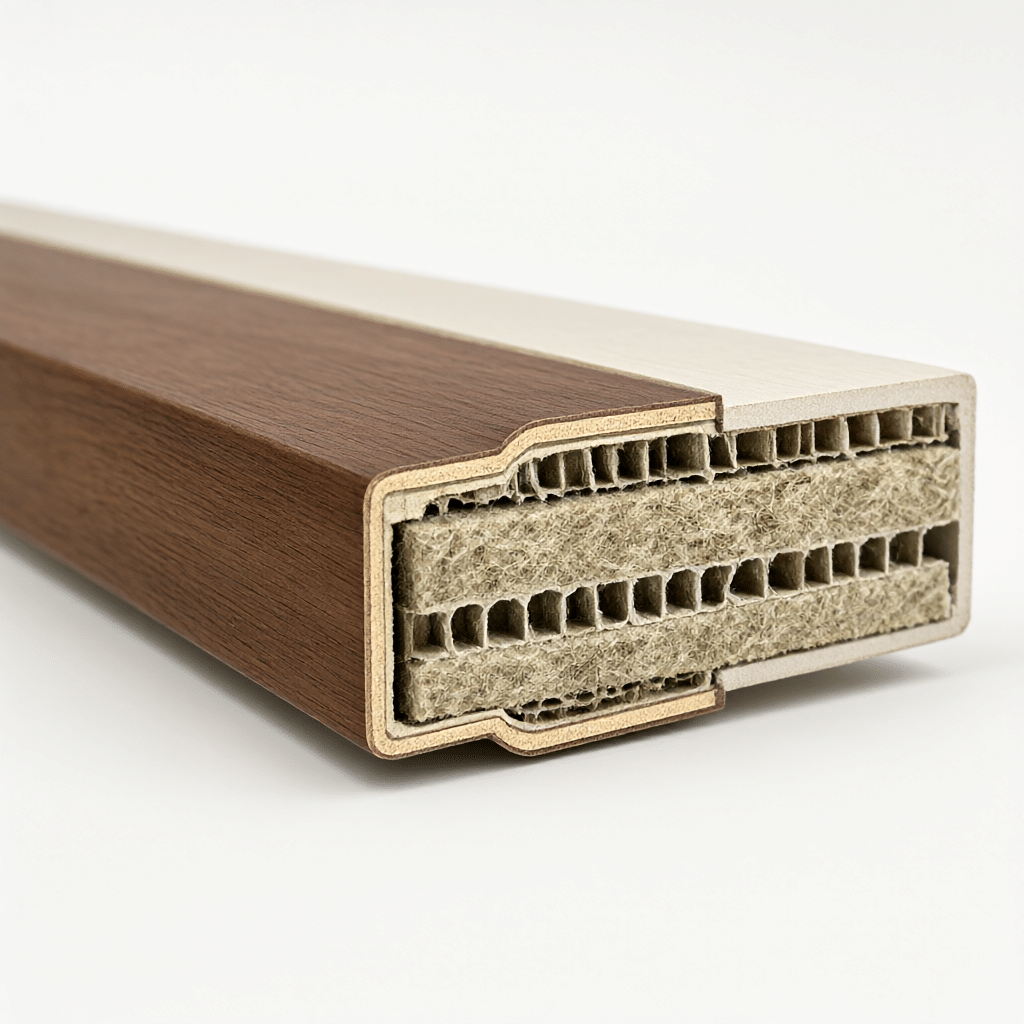
What are the key specifications of acoustic doors?
The spec package buyers should request includes rating, construction, seals, glazing, hardware, and finish. Each item drives both performance and price.
Sound‑insulation rating
Specify the rating by project room type, not by a single number:
| Project type | Target STC / Rw | Why this threshold |
|---|---|---|
| Hotel guest rooms | STC 40–45 / Rw 42–47 | Speech privacy and hallway noise control |
| Multi‑unit apartments | STC 40–45 / Rw 42–47 | Corridor‑to‑unit privacy; often paired with corridor fire ratings |
| Recording studio / home theatre | STC 50+ / Rw 50+ | Low‑frequency speech and music isolation |
| Medical imaging / procedure rooms | STC 45–50 / Rw 47–52 | Equipment noise and patient privacy |
Higher ratings generally require heavier or denser cores, thicker frames, more contact seals, and better door‑to‑frame tolerances. If you need a door rated above STC 45 without increasing swing weight or frame depth proportionally, ask the manufacturer to show lab test reports for the exact assembly — claimed ratings alone are easy to misread.
Testing methodology
Acoustic performance is typically verified using standardized procedures such as those published by ASTM International for laboratory and field sound transmission measurements. Buyers should confirm that test specimens match the final assembly (frame, core, seals, glazing, threshold), not just the panel.
When a manufacturer quotes “STC 42,” clarify whether that number comes from component testing or a full wall‑door assembly test, because the installed performance can differ if the rough opening or sill detail is weak.
Pre‑shipment performance tests
Beyond acoustics, the three mechanical tests every export‑grade acoustic door must pass are:
- Air‑tightness — controls flanking noise paths; low leakage = better in‑field rating
- Water‑tightness — essential for exterior or wet‑area installations; prevents core degradation and seal rot
- Wind‑resistance — structural load validation for sliding and large‑panel doors at height or in coastal zones
Ask the supplier to issue a test certificate per lot and list the tested pressure differential, leakage rate, and deflection limit. Without that, dispute resolution after arrival is expensive.
Profile construction options
Buyers typically choose among three frame/core strategies:
| Construction | Typical STC range | Best for | Trade‑off |
|---|---|---|---|
| Solid wood core, traditional frame | STC 35–45 | Hotels, villas, heritage feel | Heavier; requires stronger hinges and jambs |
| Thermal‑break aluminum with acoustic gaskets | STC 40–50 | Modern hotels, hospitals, coastal projects | Higher material cost; needs precise fitting |
| System window/door frame with multi‑chamber profile | STC 45–55 | Studios, luxury apartments, high‑code regions | Most expensive; longest lead time |
Profile complexity also determines how well the door adapts to local building codes — especially fire‑egress dimensions, impact ratings, and minimum handle heights.
Applications
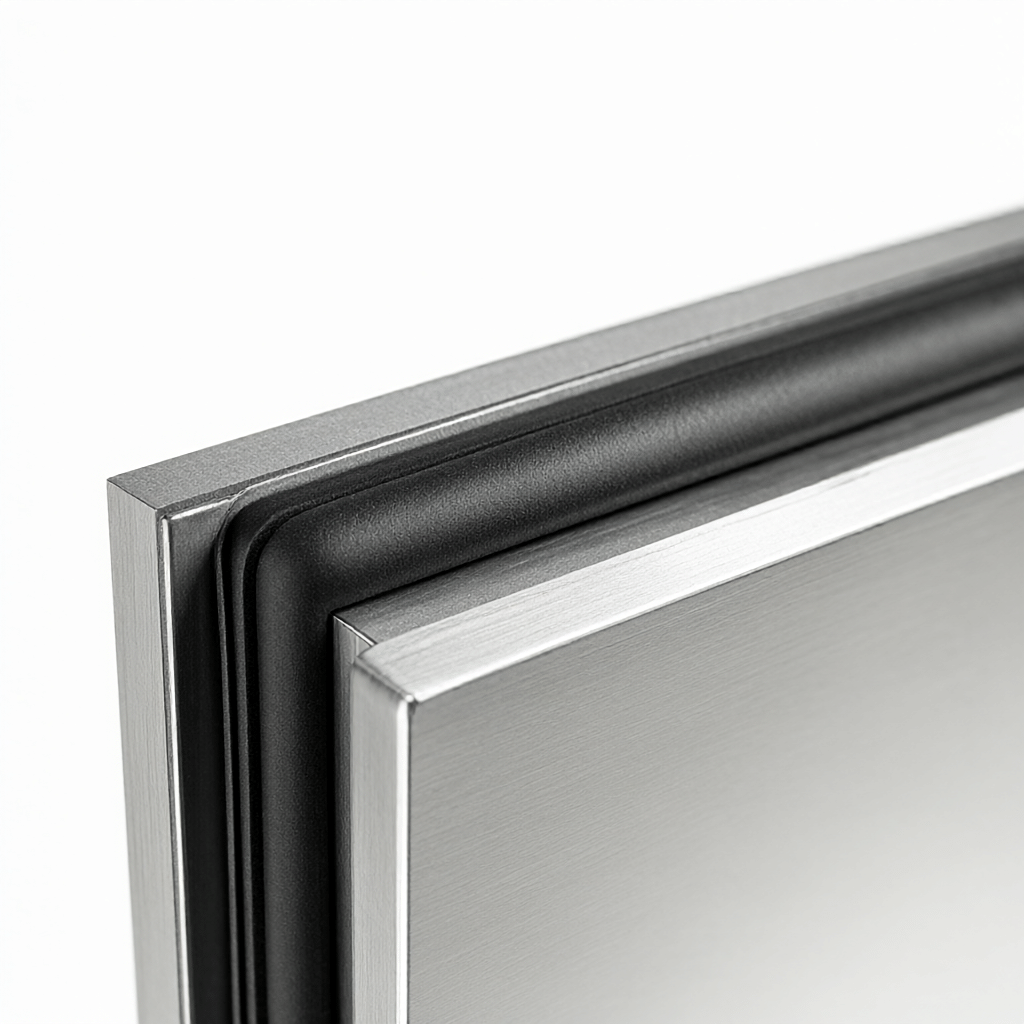
Where can acoustic doors be used?
Acoustic doors belong wherever noise transfer between spaces is a program requirement, not just a nice‑to‑have. Typical project types include:
- Hotel guest‑room corridors — STC 40–45 doors reduce guest complaints and protect star ratings
- Multi‑unit residential buildings — stairwell, corridor, and unit entry doors need consistent ratings across units
- Recording studios, broadcast booths, home theatres — STC 50+ and low‑frequency control matter more than average ratings
- Medical facilities — imaging suites, procedure rooms, and nurse stations benefit from combined acoustic and cleanability requirements
- Villa and luxury apartment fit‑outs — buyers expect whisper‑rated doors that still look premium and operate smoothly
If the spec calls for both a fire rating and acoustic performance, make sure the core, intumescent seals, and hardware are rated together — partial assemblies often fail code review during inspection.
Buying Factors
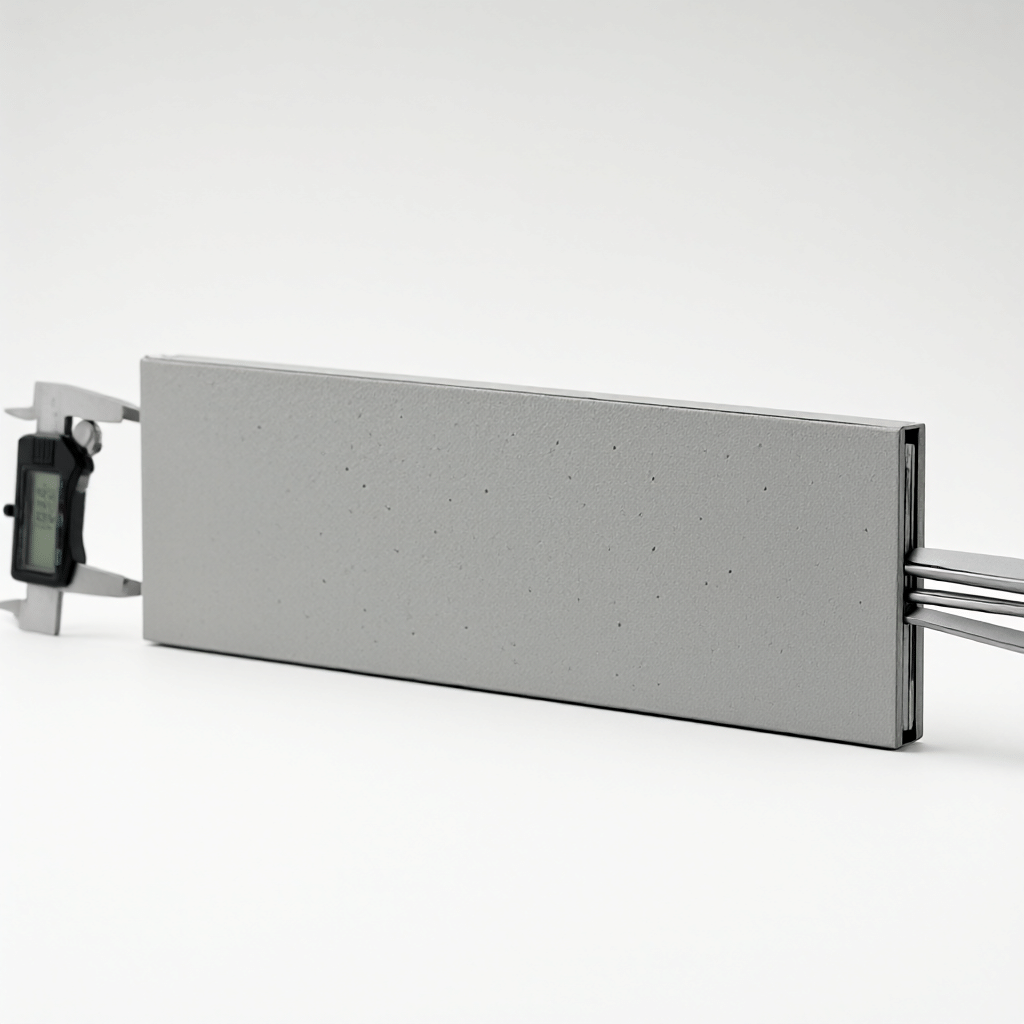
What to consider when buying acoustic doors in bulk?
Sourcing acoustic doors is a balance of performance, durability, logistics, and compliance. Six factors consistently decide whether a bulk order succeeds:
- Certified rating vs. marketed rating — demand lab reports matching the exact glazing, seal pack, and frame size you plan to install
- Seal strategy — perimeter compression seals, drop‑down thresholds, and acoustic gaskets at hinges all add cost but dramatically improve field performance
- Hardware compatibility — heavy acoustic doors require commercial‑grade hinges, closers, and locks sized for the door weight; mismatched hardware causes sag and seal loss
- Pre‑shipment testing records — air‑tightness, water‑tightness, and wind‑resistance certificates prevent surprises on arrival
- Export documentation readiness — packing lists, proforma invoices, customs forms, and material declarations must be issued before shipment to avoid port delays
- Profile and fitting adjustability — the ability to modify frame depths, sill profiles, and hinge placements to match local building codes saves rework and return freight
When evaluating suppliers, ask for a spec sheet + test report bundle per product family before placing a PO. Reputable manufacturers keep those documents current and readily available.
Price & Cost
How much do bulk acoustic doors cost? (FOB China)
Factory‑direct acoustic doors price according to core type, profile complexity, glazing area, hardware grade, and order volume. The table below shows indicative wholesale pricing for trade buyers.
Indicative FOB China bulk‑order pricing (USD/unit)
| Door type | Quantity tier | Indicative price range (USD/unit) | Typical STC range |
|---|---|---|---|
| Solid wood acoustic core, basic seal pack | 50–99 sets | $180 – $320 | STC 35–40 |
| Solid wood acoustic core, multi‑seal pack | 100–299 sets | $260 – $450 | STC 40–45 |
| Thermal‑break aluminum with acoustic gaskets | 50–99 sets | $320 – $560 | STC 42–48 |
| System frame with heavy‑duty hardware kit | 100+ sets | $480 – $850 | STC 48–55+ |
| Double‑leaf acoustic pair (hotel corridor) | 50–99 sets | $560 – $920 | STC 45–50 |
Indicative FOB China bulk‑order pricing for trade buyers — not a retail price and not a binding offer; final pricing depends on quantity, specification and order schedule.
Price drivers to watch:
- Core density and thickness — denser cores raise STC but increase weight and hinge load
- Glazing insert size and type — laminated or double‑glazed acoustic glass adds $40–$120 per leaf versus solid panel
- Hardware inclusion — commercial closers, acoustic drops, and reinforced locks can add $60–$180 per door
- Custom colors / finishes — powder coats and wood veneers outside standard catalogs usually carry a small percentage uplift
- Logistics mode — FCL shipments lower per‑unit freight; LCL is viable for smaller projects but raises handling risk
Request a bulk FOB quotation with your opening sizes and STC target.
Evidence & Practical Notes
Field note: Many hotel projects fail acoustics in year two not because the door was under‑rated, but because the installation gap around the jamb was left unsealed during rough‑in. A well‑specified door loses 5–8 points of in‑field STC when flanking paths are open.
Practical limitation: Achieving STC 50+ with a standard hollow‑core or lightweight aluminum door is rarely sustainable without adding mass, dual seals, or a threshold drop‑down mechanism — all of which affect swing, threshold transition, and accessibility compliance.
Buyer takeaway: When comparing quotes, treat the per‑unit price as a secondary signal and put primary weight on whether the supplier provides full test reports for the exact assembly you’re buying, plus clear documentation on sealing, hardware, and export paperwork before production starts.
Send us your project openings and STC targets for a custom quote.
Manufacturer Evaluation — How Industry Standards Are Met
In practice, a qualified acoustic door manufacturer in China should meet the same specification and documentation expectations any serious buyer would list, regardless of brand. That means delivering verifiable ratings, consistent pre‑shipment testing, and export‑ready paperwork without mid‑project changes. Here is how those standards translate into routine manufacturing discipline.
Suppliers typically align their output with the product families and test expectations described above — offering solid wood and thermal‑break aluminum constructions with adjustable profile depths and hardware layouts that can be adapted to local building code requirements for fire egress, threshold heights, and wind loads. Performance verification usually covers air‑tightness, water‑tightness, and wind‑resistance checks before shipment, so the delivered doors match the tested assemblies rather than a theoretical spec sheet.
Because project buyers often coordinate multiple door families across a build — solid wood entrance doors, system windows, and acoustic partitions — a workable manufacturer will provide consistent documentation across SKUs: packing lists, proforma invoices, commercial invoices, and customs declarations prepared for both FCL and LCL export. That reduces administrative friction at destination and avoids delay during port clearance.
Contact Our Team to discuss your project requirements.
Customization Options: Size, Materials, Glass Inserts & Hardware
What customization options are available for sizes, materials, and hardware?
Acoustic doors are rarely off-the-shelf solutions. Buyers specify four variables during the quoting process — each directly affects STC performance, swing mechanics, and end-use compliance.
Dimensions and size ranges
- Widths: 700 mm – 1,200 mm single-leaf; 1,200 mm – 2,400 mm double-leaf (pivot or hinged)
- Heights: 1,900 mm standard up to 2,800 mm full-height; extra-tall designs require reinforced jamb assemblies and heavier-duty hinges (minimum 3 × SS304 piano hinges or commercial ball-bearing pairs)
- Thickness: 40 mm (lightweight aluminum), 45–50 mm (standard wood core), 60–70 mm (high-STC studio-grade)
- Threshold options: Standard flush threshold (≈12 mm rise), low-profile transition (≤6 mm ADA-compliant), or elevated weather barrier (up to 30 mm for exterior rated units)
Any dimension outside these ranges triggers a custom tooling surcharge and typically extends lead time by 2–4 weeks.
Material selection by climate zone
| Material | Climate suitability | Maintenance tier | Notes |
|---|---|---|---|
| Solid wood (oak, teak, mahogany) | Temperate – dry | High | Requires seasonal humidity acclimation; may warp if installed in >70% RH without sealing |
| Thermal-break aluminum | Coastal – high humidity / salt exposure | Low | Multi-chamber profiles reduce thermal transfer and support heavy glazing without bowing |
| Aluminum-clad wood composite | Mixed / transitional zones | Medium | Wood interior finish meets design brief; aluminum exterior resists corrosion and UV degradation |
Glass insert specifications
Glass contributes 70–80 % of the overall acoustic assembly when present. Key parameters:
- Laminated glass (recommended): 6.38 mm PVB interlayer + two 4 mm panes blocks mid-to-high frequencies effectively; STC gain ≈ +8 over monolithic equivalent
- Double-glazed IGU: 24 mm air gap with argon fill — adds STC +6 to +10 but increases leaf weight significantly
- Acoustic laminate with asymmetrical ply: e.g., 6 + 4 + 0.76 PVB — reduces coincidence dip around 2,000 Hz, critical for voice privacy
- Maximum glass area per leaf: Typically capped at 60 % of door face to maintain structural rigidity and meet fire-rating requirements where applicable
Hardware compatibility matrix
Heavy acoustic doors (≥50 kg per leaf) demand hardware rated accordingly:
| Component | Minimum grade requirement | Effect on performance |
|---|---|---|
| Hinges | EN 1935 Class 13 / ANSI A115.1 Grade 1, ≥18 kg capacity per hinge | Prevents sag that breaks seal compression over time |
| Closers | EN 1154 Class 3–4, adjustable backcheck | Controls slamming force; soft-close action preserves gasket integrity |
| Locksets / panic hardware | USG 200 series or equivalent commercial grade | Must align with certified latch-bite depth (≥12 mm) to maintain perimeter seal engagement |
| Drop-down threshold | Actuated or manual, ≤0.5 mm ground clearance when lowered | Eliminates under-door flanking path; adds ≈STC +5 when engaged |
Buyer tip: Always request a hardware cut-sheet alongside the door spec sheet. Mismatched hinge knock-out locations or insufficient back-check torque are common root causes of warranty claims.
Discuss Your Custom Door Specifications
Export Documentation and Logistics: What Reliable China Manufacturers Provide
Which export documents and logistics arrangements does a reliable China manufacturer provide?
Sourcing from China introduces a documentation chain that must be complete before the cargo leaves port — incomplete paperwork is one of the most frequent causes ofdemurrage charges and delivery delays. Below is the standard document set and logistics model buyers should expect.
Required export documents
A compliant shipment includes these core packages:
- Commercial Invoice — HS code, unit price, total FOB/CIF value, country of origin statement, buyer and seller details, Incoterms used
- Packing List — net/gross weight per carton, dimensions (CBM), piece count, SKU breakdown for multi-type orders
- Bill of Lading (B/L) — issued by the shipping line; ocean marine B/L for FCL, sea waybill or multimodal for combined modes
- Certificate of Origin — general form (for non-preferential tariffs) or Form E (China–ASEAN FTA) where applicable to claim reduced duty rates
- Fumigation / Phytosanitary Certificate — mandatory for wooden components crossing most national borders; ISPM-15 compliant treatment mark required on all solid wood packaging
- Inspection / Test Report — copies of the pre-shipment air-tightness, water-tightness, and wind-resistance certificates; some importing countries require an independent third-party inspection (SGS, BV, TÜV) prior to loading
- Material Declarations — RoHS, REACH, or CARB Phase 2 compliance certificates when the destination market mandates chemical or formaldehyde emission limits
Professional manufacturers compile this entire pack before production begins so that the buyer can file import declarations in parallel rather than waiting for documents post-shipment.
Logistics models
| Model | MOQ indication | Best for | Lead time from order to port discharge |
|---|---|---|---|
| FCL (Full Container Load) – 20 ft | ≥80–100 sets | Large hotel / residential projects | 35–50 days depending on origin port |
| FCL (Full Container Load) – 40 ft HQ | ≥160–200 sets | Mega developments, villa clusters | 35–50 days |
| LCL (Less-than-Container Load) | <40 sets | Boutique hotels, renovation batches | 45–65 days; higher per-unit freight cost |
| Air freight (express couriers) | Spare parts / small hardware batches | Emergency replacements | 5–10 days |
Shipping lines and forwarders vary transit times by route. A 40 ft HQ container typically holds 180–220 standard single-leaf acoustic doors depending on packaging configuration and whether glazing inserts are pre-installed or shipped separately.
Red flags in supplier export readiness
- Manufacturer cannot produce a sample packing list before order confirmation
- No mention of ISPM-15 compliance for wooden doors
- Refusal to share test certificates ahead of payment
- Incoterms stated ambiguously (“FOB negotiable”) instead of naming a specific Chinese port
- Request for 100 % upfront payment before any documentation or production schedule is shared
Reputable suppliers typically operate on a 30 % deposit against proforma invoice and 70 % balance against copy documents, reducing buyer risk at every stage.
Request Full Export Documentation Details
Profile and Fitting Adaptation to Local Building Codes
How do profile structures and fittings adapt to local building codes in target markets?
Building codes governing doors differ significantly between regions. A door engineered for German DIN norms will not automatically satisfy ICC/IBC requirements in the United States, and vice versa. Professional manufacturers adjust profile geometry, frame depth, sill detailing, and hardware mount positions to match the regulatory environment of the destination country.
Regional code drivers
| Target market | Key code reference | Typical adaptation required |
|---|---|---|
| North America (US/Canada) | ICC/IBC, NFPA 80, ADA AGuide | 1¼″ minimum jamb depth, ANSI A115.1 hardware ratings, Kwikset/Schlage lock bore patterns, ≤4.5 lb latch release force, ≤4⁄5″ max threshold for accessible routes |
| EU / UK | Eurocode 1 (EN 1991), BRE Document 445, PAS 24 | Metric frame depths (68 mm / 70 mm), British Standards BS 6375 weathering class, Secured by Design hardware, EPD/EPB declaration for energy labeling |
| Middle East | SASO, ESMA, Dubai Civil Defence | Enhanced wind-load rating (≥2,400 Pa minimum for coastal sites), salt-corrosion-rated aluminum extrusions (AA7005 alloy preferred), higher fire-resistive core specifications |
| Australia / New Zealand | NCC/BCA Part F4 & AS 1990.1, AS/NZS 2208 glass | Non-climbable hardware placement, spandrel glazing standards, 5-minute fire-doors must achieve intumescent seal activation within coded duration |
| Southeast Asia | Local municipal codes (varies by country) | Humidity-tolerant finishes, mosquito-screen-compatible framing, lighter profile sections for cost-sensitive projects |
Adjustable profile features
Quality manufacturers design their extrusion systems with modular compatibility in mind. Common adjustable elements include:
- Frame width options: 68 mm, 70 mm, 90 mm, 110 mm — chosen based on wall construction thickness and insulation requirements
- Sill/reveal channel profiles: interchangeable extrusions allow on-site or factory-level conversion between flush threshold, low-profile, and high-threshold installations
- Gasket groove geometry: standardized groove widths (4 mm, 6 mm, 8 mm EPDM) accept aftermarket seals from different manufacturers, simplifying replacement sourcing
- Hinge recess depth:可调 recess accommodates European 3D-adjustable hinges or US mortise-style hinges without altering the frame profile itself
- Lock stile width: reinforced strike-area reinforcement can be co-extruded or inserted during manufacturing to meet local lever-force thresholds
Engineers should receive a completed project-specific adaptation checklist before production starts — this confirms that the quoted configuration satisfies the exact code version applicable to the build site.
Buyer Checklist and Procurement Decision Guide
A structured evaluation prevents costly mismatches between specification and delivered product. Use the following steps before committing to any PO.
Pre-sourcing due diligence
- [ ] Verify manufacturer has conducted ASTM E90 or ISO 10140 sound transmission tests on the exact product family being quoted
- [ ] Confirm air-tightness, water-tightness, and wind-resistance certificates are issued per production lot, not per generic model
- [ ] Request a written adjustment matrix showing how frame depth, sill type, and hardware options map to your target building code
- [ ] Ask for three referenced project installations in a similar climate zone and occupancy type
- [ ] Confirm ISPM-15 compliance for any solid wood or wooden-packaging component
- [ ] Clarify Incoterm, named port, and estimated transit window in writing before deposit
On-receipt quality verification
- [ ] Cross-check carton marks and packing list against original PO quantity and SKUs
- [ ] Inspect each leaf for uniform seal compression, absence of core voids visible at edges, and correct glass unit part numbers
- [ ] Verify hardware bag contents against the cut-sheet before installation begins
- [ ] Photograph all received units; document any transit damage immediately and notify the supplier within the contractual window (usually 48 hours)
Decision framework — selecting between suppliers
When comparing two or more vendors, score each option against these weighted criteria (total = 100):
| Criterion | Weight |
|---|---|
| Verifiable lab-tested STC rating (documented) | 25 % |
| Consistency of pre-shipment test certificates (air/water/wind) | 20 % |
| Export documentation readiness and Incoterm clarity | 15 % |
| Profile/hardware adaptability to target-market code | 15 % |
| Lead time reliability and on-time delivery record | 10 % |
| Unit price within expected range | 10 % |
| After-sales/warranty terms | 5 % |
The highest-scored supplier is not always the cheapest — in acoustic door procurement, certification completeness and code adaptability carry disproportionate weight because installation rework and field-fix costs easily exceed any upfront price saving.
Send Inquiry With Project Details
Manufacturer Selection — How Jusen Door and Windows Meets These Standards
When buyers move from evaluation to purchase, they need a supplier whose capabilities align directly with the specification and documentation requirements outlined above. Jusen Door and Windows Manufacturing Co., Ltd. operates as a direct factory supplier offering solid wood doors, thermal-break aluminum doors and windows, system windows, casement and sliding doors, custom villa door-and-window sets, sunrooms, and aluminum alloy entrance doors — manufactured to match the exact acoustic, structural, and regional-code parameters discussed throughout this guide.
Here is how Jusen’s manufacturing approach maps to each key requirement:
Direct factory supply and competitive pricing
By eliminating intermediary markup, Jusen provides trade buyers and project specifiers with transparent FOB pricing that reflects real material and labor costs rather than distributed distributor margins. This structure supports accurate budget forecasting across large hospitality and multi-unit residential developments.
Full customization on size, color, glass inserts, and hardware accessories
Every order is built to the buyer’s dimensional drawing. Available customization spans:
- Size: any width, height, and thickness within the structural limits of the chosen profile family
- Color and finish: powder-coat RAL selections, wood-grain transfers, PVDF coatings for coastal environments, and natural wood veneers
- Glass inserts: laminated, double-glazed, or acoustic-laminate options sized to the specified pane ratio; argon-filled IGUs available on request
- Hardware accessories: commercial hinges, closers, drop-down thresholds, and locksets selected to match the target market’s mounting标准和力矩 requirements
Adjustable profile structures and fitting configurations allow the factory to tailor frame depths, sill channels, hinge recesses, and lock-stile reinforcements to the specific building-code regime of the destination country — addressing the same adaptation variables covered earlier in this article.
Strict pre-shipment inspection protocol
Before any container is sealed, Jusen conducts the three mechanical tests that serious buyers require:
- Air-tightness test — verifies gasket compression and frame-channel closure to minimize flanking-noise paths
- Water-tightness test — confirms threshold and joint integrity under controlled pressure differential
- Wind-resistance test — validates structural deflection limits for the intended installation height and exposure zone
Certificates are issued per production lot and shipped together with the commercial invoice and packing list so that destination inspections proceed without delay.
Export documentation and logistics competence
With extensive foreign-trade experience, the company prepares the complete document set expected by international shipping and customs authorities — packing lists, proforma invoices, commercial invoices, and full customs declaration paperwork. Shipments are arranged via both FCL and LCL, dispatched directly from the China factory, reducing handling interventions and lowering the likelihood of transit damage.
Company Facts Summary
| Attribute | Detail |
|---|---|
| Company | Jusen Door and Windows Manufacturing Co., Ltd. |
| Brand | Jusen Door and Windows |
| Industry focus | Solid wood doors, thermal‑break aluminum doors & windows, system windows, casement & sliding doors, custom villa doors & windows, sunrooms, aluminum alloy entrance doors |
| Services offered | OEM, ODM, Custom Size & Design, Private Label, Construction Project Bulk Supply |
| Core strengths | ① Direct factory supply, no middleman markup ② Full customization on size, color, glass and hardware ③ Pre-shipment air‑tightness, water‑tightness, wind-resistance testing ④ Complete export-document preparation ⑤ FCL & LCL shipments direct from China ⑥ Adjustable profiles and fittings for local code compliance |
| Website | https://doorwoodendoors.com/ |
| Contact page | https://doorwoodendoors.com/contact-us/ |
| Contact person | Leon Wu — cyxs001@gmail.com |
Sources & References
- ASTM International — www.astm.org











