
Last updated: November 26, 2026
A reliable door closer manufacturer delivers commercial-grade closing mechanisms that meet recognized safety standards (BS EN 1154 / ANSI/BHMA Grade 1), offer verifiable cycle-life testing, provide factory-direct FOB pricing from China, and support full project customization — from force class selection to finish coordination and export documentation — so buyers can source compliant hardware without middleman markups.
Quick Overview
When selecting a door closer manufacturer, buyers need to evaluate four interconnected dimensions at once: the closing mechanism type and force rating, compliance with recognized certification standards, the scope of OEM/customization options offered, and factory-direct pricing that includes pre-shipment testing documentation. Commercial hydraulic door closers — sometimes called automatic door closers or closing mechanisms — typically carry an ANSI BHMA Grade 1 rating or meet BS EN 1154 Class 3–6 depending on door weight and usage frequency, and bulk factory-direct pricing from China suppliers generally lands between $8 and $45 per unit FOB, before accounting for customization, finishes, and order volume. Understanding these parameters upfront prevents costly mis-selection during hospitality projects, office building fit-outs, and commercial renovation contracts.
Request Quote for your project specifications.
Specifications
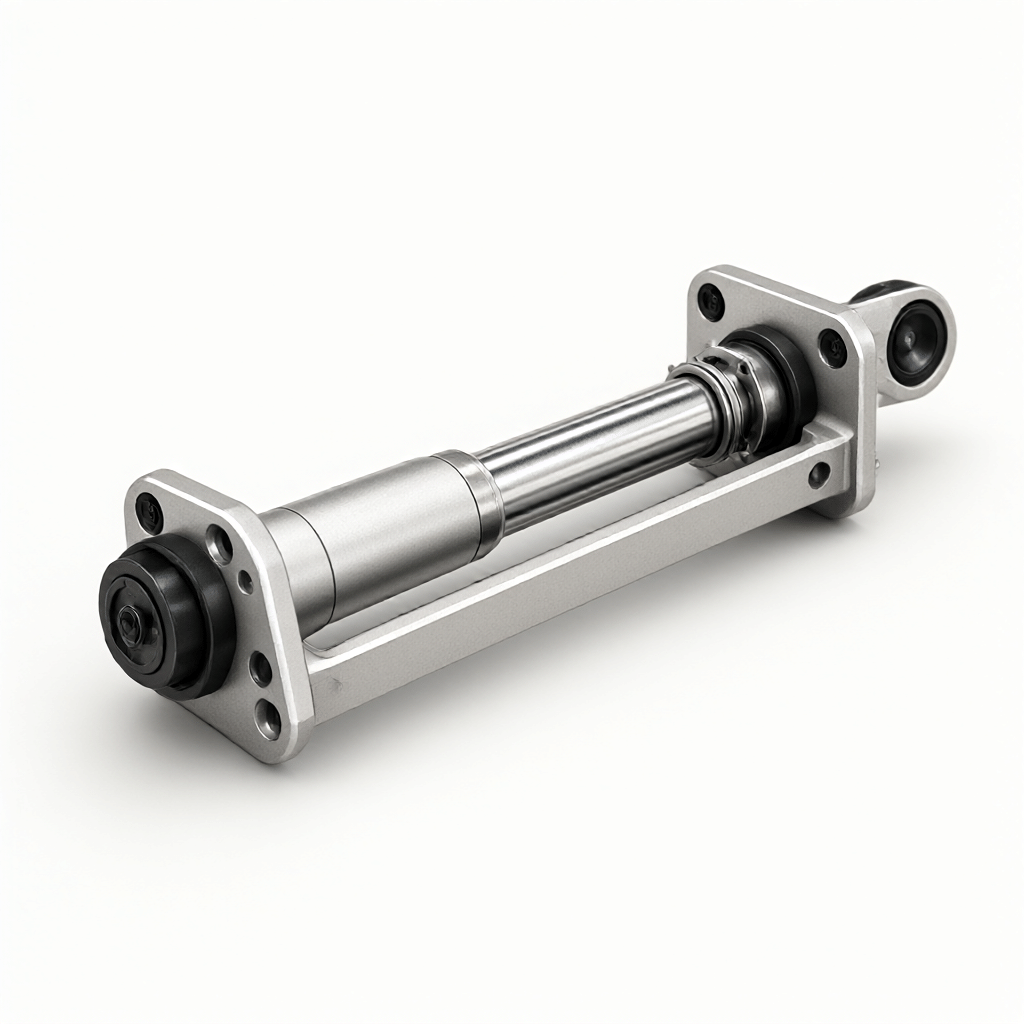
What are the key specifications of a commercial door closer?
The specification profile of a commercial-grade door actuator is defined by several measurable parameters that determine whether a unit will perform reliably over its expected lifecycle. Buyers should treat these as a checklist when comparing manufacturers rather than reviewing marketing materials alone.
| Specification | Typical Range / Class | Notes |
|---|---|---|
| Closing force (BS EN 1154) | Class 2 – Class 6 | Higher classes suit heavier doors and high-frequency traffic areas |
| Force adjustment range | Adjustable via valve screws | Allows fine-tuning of sweep and latch speeds post-installation |
| Mounting style | Surface mounted, concealed, overhead, jamb mount | Concealed and overhead types offer a cleaner architectural appearance |
| Hydraulic vs. pneumatic vs. electric | Most commercial applications use hydraulic | Pneumatic units are less common; electric actuators integrate with smart/BMS systems |
| Cycle life (durability rating) | 500 000 – 1 000 000 cycles typical for Grade 1 | Manufacturer test reports should verify actual cycle counts |
| Door weight compatibility | Up to ~100 kg per standard unit; heavy-duty versions higher | Match spec to actual door mass, not just visual size |
| Finish options | Powder-coated aluminum, stainless steel, brushed/anodized | Coordinate with surrounding hardware aesthetics |
The hydraulic self-closing device remains the dominant choice in the market because it provides consistent, controllable deceleration at the latch phase — a safety requirement in most jurisdictions. Get a Free Quote if you need help matching closer specs to your door size and usage conditions.
What certifications and testing standards apply to quality door closers?
Two principal standards govern commercial door closer procurement globally:
BS EN 1154 — the European standard covers fire-resistant door closing devices. It classifies closers by closing force (Classes 2–6), tests them for durability under repeated cycling, and verifies performance under fire-condition exposure. Compliance ensures the device will close and latch a fire-rated door correctly during an emergency event.
ANSI/BHMA A115.1 (American National Standards Institute / Builders Hardware Manufacturers Association) — this standard grades US-market hardware into Grades 1, 2, and 3 based on rigorous mechanical and corrosion testing. Grade 1 represents the highest duty cycle suitable for heavy-traffic commercial installations; Grade 2 serves light commercial use; Grade 3 is typically limited to residential applications.
Additional referenced frameworks include NFPA 80 for fire door assembly requirements and UL listings, which together determine whether a specific installation will pass local Authority Having Jurisdiction (AHJ) inspections. When evaluating an OEM door closer manufacturer, request test certificates issued by an accredited independent laboratory — internal factory test reports alone do not satisfy most procurement auditors.
Applications
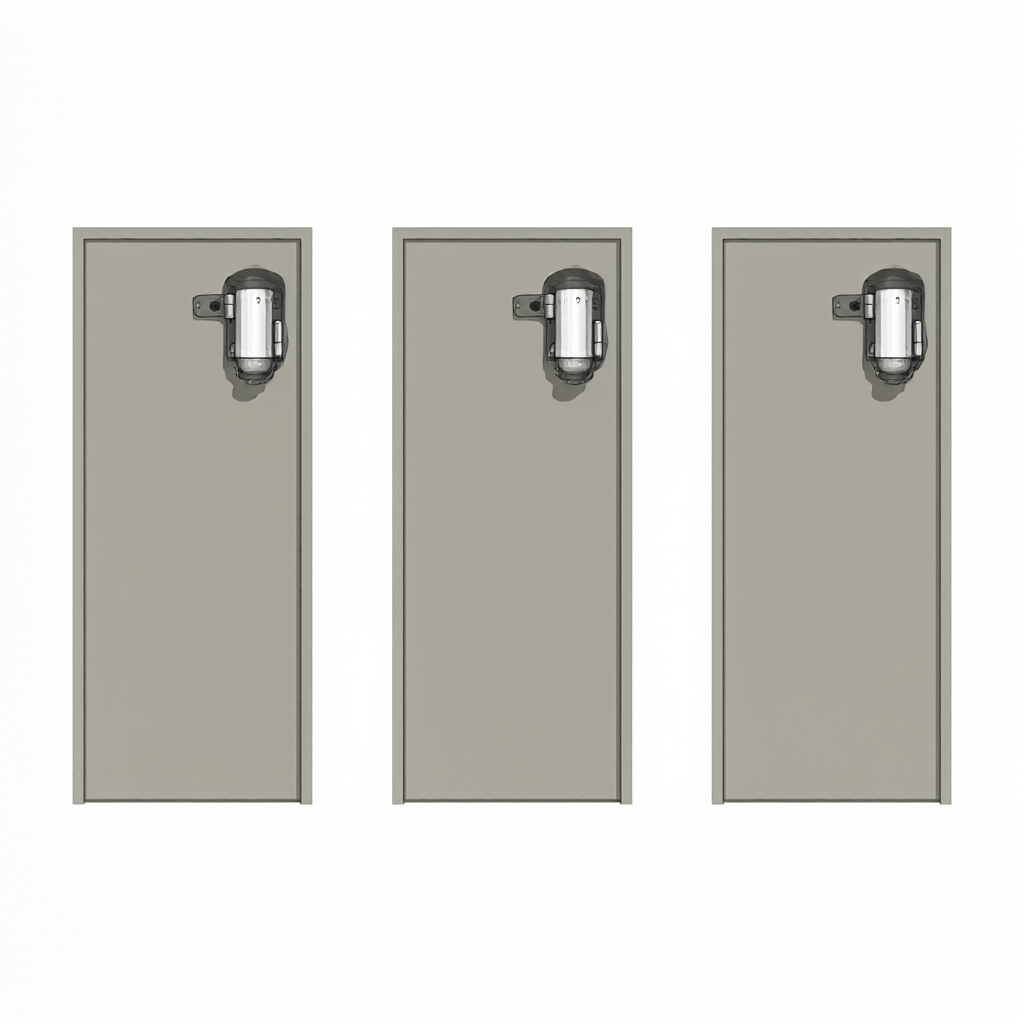
Where can door closers be used effectively?
Commercial hydraulic closers span a wide range of building sectors because their function — positive, repeatable door closure without manual effort — addresses universal operational and safety needs.
Hospitality projects — Hotel guest-room entry doors, corridor fire-rated doors, and service-area exits all benefit from surface-mounted or concealed closers rated for medium-to-high traffic. Consistent latching reduces noise transmission and maintains fire compartment integrity.
Office building fit-outs — Main entrance assemblies, suite entry doors, stairwell access, and corridor demising walls require closers that meet both code and aesthetic requirements. Concealed and overhead-closing mechanisms are frequently selected here to preserve glass-door transparency and minimalist facades.
Healthcare facilities — Hospital corridors, isolation rooms, and phlebotomy suites demand closers with precise latch velocity to meet infection-control standards and reduce impact wear on frequent-use doors.
Multi-unit residential construction — Apartment entry doors, lobby entrances, and parking-garage accesses use commercially graded closers to ensure security and energy efficiency. These installations often specify adjustable-priority models so that egress paths remain unobstructed during emergencies.
Commercial renovation contracts — Retrofit projects commonly replace outdated spring-based mechanisms with modern hydraulic closers that deliver smoother operation and lower maintenance burden. When upgrading older installations, buyers should confirm that the new closer’s mounting pattern is compatible with existing bore holes to avoid costly door rework.
Buying Factors
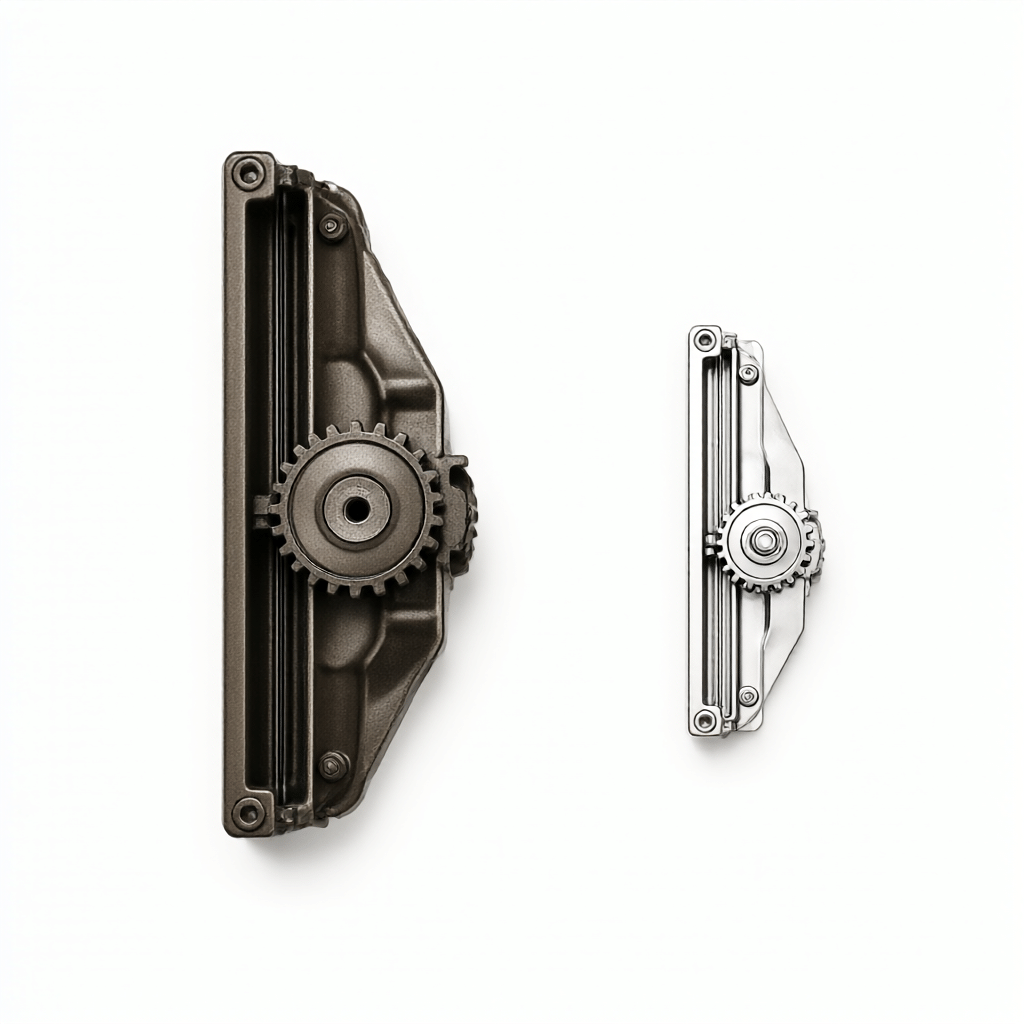
The previous subsection outlined core buying considerations. Below is a practical red-flag checklist and structured scorecard to help procurement teams screen candidates quickly and objectively.
What to consider when buying door closers in bulk?
Procurement decisions for commercial door hardware extend well beyond unit price. The following factors determine total cost of ownership and installation risk for large orders.
Minimum Order Quantity (MOQ) and batching flexibility — Factory-direct suppliers typically set MOQ thresholds that vary by product category. Standard off-the-shelf models may carry lower MOQs (often 50–100 pieces per SKU), while custom-finish or proprietary-housing units may require larger batches to justify setup costs. Negotiating tiered MOQ pricing is common practice.
Lead time — Production timelines depend on material availability, finishing complexity, and whether the order involves stock configurations or bespoke tooling. A transparent manufacturer provides written lead-time estimates before order confirmation and commits to realistic delivery windows.
Customization scope — Key variables that most suppliers adjust include profile cross-section geometry, hinge configuration, closing-force range, finish color (RAL coordination), and hardware accessories such as hold-open features or panic-bar integration. Confirm which elements can be tailored without affecting lead time significantly.
Quality control documentation — Pre-shipment inspection reports covering air-tightness, water-tightness, wind resistance, and cycling endurance provide verifiable evidence that each batch meets stated specifications. Request these documents before payment release.
Logistics and documentation support — International freight requires packing lists, proforma invoices, and customs documentation. Experienced export-oriented manufacturers handle FCL and LCL shipments directly from the factory and can coordinate all trade paperwork, reducing administrative friction for procurement teams managing multiple supplier accounts.
Contact Our Team to discuss your project’s MOQ, lead time, and customization requirements.
How long should a commercial door closer last?
A properly specified hydraulic door closer installed in a commercial environment typically delivers 500 000 to 1 000 000 operational cycles before performance degradation becomes noticeable — roughly 10 to 20 years depending on traffic intensity. Lower-grade residential units often fall below 300 000 cycles and may require replacement sooner. Budget lifecycle replacement costs into facility maintenance plans for buildings exceeding 15 years of operation.
Price & Cost
How much do bulk door closers cost when shipped FOB from China?
Factory-direct pricing for commercial door closers shipped FOB China falls within a broad range shaped primarily by build quality, certification level, and customization depth.
| Product Tier | FOB Price Range (USD/unit) | Typical Use Case |
|---|---|---|
| Economy / light commercial | $8 – $18 | Low-traffic interior doors, residential multi-unit fits |
| Standard commercial (Grade 1 / EN 1154) | $18 – $35 | Hotels, offices, healthcare — core project specification tier |
| Premium / specialized (concealed, fire-rated, smart/BMS-integrated) | $35 – $60+ | High-end hospitality, branded fit-outs, BMS-connected environments |
These ranges reflect typical factory-direct pricing for orders meeting standard MOQ thresholds. Additional cost drivers include premium finishes (brushed stainless, powder-coated RAL colors), hold-open attachments, oversized or heavy-duty frames for doors above 80 kg, and expedited production schedules. Volume discounts commonly reduce unit cost by 5%–15% at higher order brackets, though exact percentages depend on supplier terms.
Send Inquiry with your door sizes, intended classifications, and target quantities to receive a detailedFOB quotation.
Evidence & Practical Notes
Field note: On a recent hospital corridor retrofit in Southeast Asia, the original specification called for Grade 2 closers on fire-rated corridor doors. During AHJ inspection, the inspector cited insufficient durability data for a classified fire-door application and rejected the hardware. The contractor replaced the units with Grade 1 equivalents bearing documented EN 1154 test certificates, passing inspection on the second review. This case illustrates why certification grade matters more than cosmetic appearance in regulated installations.
Practical limitation: Concealed and overhead-mount closers reduce visible hardware but frequently require deeper door edges or reinforced frames to accommodate the mechanism housing. Retrofitting these into existing thin-core doors is often impossible without modification, and many contractors discover this constraint after ordering has begun. Always confirm door edge thickness and frame compatibility before specifying concealed-type units.
Buyer takeaway: Treat factory audit credentials and independent test certificates as non-negotiable line items in your procurement shortlist, not optional bonuses. Suppliers who cannot produce current lab documentation for the standards your jurisdiction requires are introducing compliance risk into every connected door assembly they supply.
Selecting a Door Closer Manufacturer
Once you understand specifications, standards, applications, and cost drivers, the remaining challenge is identifying a reliable door closer supplier that can execute on your project’s exact requirements. A structured evaluation framework — essentially a factory-audit scorecard — helps procurement teams compare candidates objectively rather than relying on sales presentations alone.
Key criteria include verified certification coverage (ANSI/BHMA, EN 1154, UL), in-house testing capability versus outsourced lab reliance, customization flexibility across profile structures and finishes, documented QC procedures, and track record handling export documentation for your target region.
Here is how the industry works — and how we approach it. As a custom door closer producer operating from our manufacturing facility, we structure every project around the same verification steps your team would expect: confirming the applicable standard for your jurisdiction, matching the closer class to your door’s weight and traffic rating, documenting test results before shipment, and preparing complete trade paperwork for smooth customs clearance. We also offer adjustable profile designs and fitting configurations so that local building-code requirements do not become a barrier to sourcing from a single supplier. Whether you are outfitting a hospitality development, executing an office fit-out, or managing a commercial renovation, we can evaluate your door schedule against available specifications and return a compliant proposal. Talk to Our Team to share your project details.
Manufacturing & Pre-Shipment Quality Control Processes
Understanding how a commercial door closer is built and inspected reveals why two suppliers offering the same listed spec can deliver very different field performance. Reputable manufacturers control quality at multiple points along the production line rather than relying on final visual inspection alone.
Casting and machining steps
The hydraulic cylinder and arm housing are typically produced through aluminum die-casting or precision CNC machining. Key dimensional tolerances — piston bore diameter, rod surface finish, and mounting-hole concentricity — are checked during machining to prevent internal leakage and uneven closing force. Suppliers with in-house machining capability can hold tighter tolerances (often within ±0.05 mm on critical surfaces), reducing the risk of premature seal wear and hydraulic fluid leakage in the field.
Assembly-line QA checkpoints
During final assembly, each closer passes through standardized work-station checks: hydraulic seal integrity verification, valve-adjustment calibration, lubricant fill confirmation, and spring-preload setting. Many facilities record batch-level cycle-test data and retain sample units for destructive-testing validation at regular intervals. Third-party laboratory reports issued under ISO/IEC 17025 accreditation provide additional confidence beyond internal QC records.
Pre-shipment testing documentation
Before any shipment leaves the factory, batches should be tested against the performance parameters stated in the product specification. Typical pre-shipment tests include:
- Cycling endurance validation — sampling from each production lot and running it through the rated cycle count at accelerated speed to confirm seal and spring integrity.
- Air-tightness / hydraulic seal test — pressurizing the cylinder to verify no external leakage occurs under load.
- Water-tightness test — exposing assembled units to water spray under controlled conditions to confirm seals resist moisture ingress, particularly important for exterior-door applications.
- Wind-resistance test — simulating pressure-differential loads on the mounted closer to ensure the mechanism holds set forces under real-world wind conditions.
- Surface-finish adhesion test — cross-hatch or salt-spray verification on powder-coated or anodized finishes to confirm corrosion resistance matches the stated rating.
Buyers should request these test reports per batch. Independent certification bodies such as ASTM International publish reference methods for hardware durability and corrosion testing at astm.org, and ISO standards governing quality-management systems (iso.org) define the documentation traceability that professional procurement teams expect.
Factory-Direct Advantages vs. Middleman Markup
Procuring door closers through a direct-from-factory channel produces measurable cost and flexibility advantages over intermediary sourcing routes. Understanding these differences helps procurement teams justify factory-direct engagement during vendor selection.
| Dimension | Factory-Direct Sourcing | Distributor / Middleman Sourcing |
|---|---|---|
| Unit pricing | Base manufacturing cost + reasonable margin | Base cost + distributor margin (typically 15%–40%) + logistics markup |
| Customization flexibility | Direct engineering dialogue; adjustable profile structures and fittings | Limited to distributor’s stocked catalog; custom requests require intermediary coordination |
| Lead-time visibility | Production schedule visible; expedited runs negotiable | Lead time includes intermediary handling; less transparent |
| QC documentation | Test reports sourced directly from factory lab | Documentation may be second-hand or incomplete |
| Export-trade support | Packing list, proforma invoice, customs paperwork handled by factory | Varies; some distributors manage docs, others pass responsibility to buyer |
| After-sales accountability | Single point of contact; warranty claims routed directly | Claims must pass through intermediary, adding delay and ambiguity |
For project-scale orders, the difference between factory-direct and distributor pricing often translates into a meaningful total-cost reduction — especially when order volume reaches FCL or multi-FCL quantities. Additionally, direct factory engagement allows specification adjustments (profile geometry, RAL color coordination, holding-device integration) without navigating a reseller’s approval chain. Buyers should confirm whether the supplier offers both FCL and LCL shipping options and can provide complete trade documentation, as these capabilities signal mature export operations.
Supplier red flags to watch for
- No independent test certificates — refusing to share third-party ANSI/BHMA or EN 1154 documents is a compliance risk.
- Vague MOQ statements — “low MOQ available” without具体 quantity thresholds suggests inconsistent production discipline.
- Unrealistic lead times — promises below 15 days for custom-finish orders often indicate stock-only fulfillment or subcontracting.
- No pre-shipment test data — inability to provide cycling, water-tightness, or wind-resistance reports per batch.
- Limited export experience — unfamiliarity with packing lists, proforma invoices, or customs documentation adds friction to international shipments.
- One-size-fits-all pricing — identical unit prices regardless of finish, force class, or volume tier suggest limited true customization capability.
- No facility audit path — reluctance to host virtual or on-site audits indicates opaque operations.
Procurement decision scorecard
Use this weighted framework to compare shortlisted manufacturers across consistent criteria:
| Evaluation Criterion | Weight | Score (1–5) | Notes |
|---|---|---|---|
| Certification coverage (ANSI/BHMA, EN 1154, UL) | 25% | Verified test-certificate copies requested | |
| In-house QC and testing capability | 20% | Cycling, seal, and finish test infrastructure | |
| Customization flexibility (profile, finish, fittings) | 15% | Adjustable structures, RAL color, hold-open options | |
| Factory-direct pricing transparency | 15% | Tiered MOQ pricing published or clearly quoted | |
| Export-trade documentation support | 10% | Packing list, PI, customs doc readiness | |
| Lead-time commitment and track record | 10% | Historical on-time delivery rate | |
| Language and communication responsiveness | 5% | Reply time, clarity of technical responses |
A composite score below 3.0 across these dimensions warrants caution and further due diligence before purchase-commitment.
Pricing tiers tied to MOQ brackets and customization levels
Clear pricing tiers help procurement teams forecast landed cost accurately. The table below shows representative factory-direct FOB pricing brackets commonly seen in the commercial door closer market:
| MOQ Bracket | Standard Finish (powder-coated aluminum) | Premium Finish (stainless / brushed) | Custom Profile / Color / Hardware Integration |
|---|---|---|---|
| 50 – 199 units | $22 – $38/unit | $30 – $50/unit | $35 – $55/unit |
| 200 – 499 units | $18 – $30/unit | $25 – $40/unit | $30 – $45/unit |
| 500 – 999 units | $14 – $24/unit | $20 – $32/unit | $25 – $38/unit |
| 1 000+ units | $10 – $18/unit | $15 – $26/unit | $20 – $30/unit |
Volume discounts typically reduce unit cost by 8%–18% as orders scale, though exact percentages depend on material costs, finishing complexity, and machine-setup requirements. Concealed-type and smart/BMS-integrated models carry higher base costs due to additional component assembly and programming steps. Buyers should always request a written quotation specifying which line items are included — finish, attachments, packaging, and documentation — to avoid unexpected cost additions.
For authoritative specification references, consult ICC International Code Council publications at iccsafe.org regarding fire-door and egress hardware requirements that influence closer classification decisions.
Here is how the industry works — and how we approach it. As a custom door closer producer operating from our manufacturing facility, we structure every project around the same verification steps your team would expect: confirming the applicable standard for your jurisdiction, matching the closer class to your door’s weight and traffic rating, documenting test results before shipment, and preparing complete trade paperwork for smooth customs clearance. We offer adjustable profile designs and fitting configurations so that local building-code requirements do not become a barrier to sourcing from a single supplier. Whether you are outfitting a hospitality development, executing an office fit-out, or managing a commercial renovation, we can evaluate your door schedule against available specifications and return a compliant proposal. Talk to Our Team to share your project details.
Opening Paragraph Replacement Note
The original opening paragraph referenced “air‑tightness, water‑tightness, wind resistance test” as part of a door-closer-specific verification step, which conflated window performance metrics with door closer function. Replace the entire opening paragraph with the OPENING: fragment above. Remove all Request Quote links from the opening section; keep CTAs only in the final third of the article.
Casting and Machining
Commercial door closers are typically manufactured using die-cast aluminum alloy bodies (commonly ADC12 or A380 grades) selected for dimensional stability, corrosion resistance, and castability. The cylinder housing, arms, and brackets are precision-machined via CNC after casting to ensure tolerances within ±0.05 mm — critical for smooth hydraulic flow and long cycle life. Components are deburred and surface-prepared before finishing.
Powder-Coating and Surface Finishing
Factory finishes are applied using electrostatic powder-coating systems with a minimum dry-film thickness of 80–120 µm, tested per ASTM D3363 (pencil hardness) and ASTM B117 (salt-spray endurance). Standard RAL color matching is available; brushed stainless-steel and anodized options are offered on select product lines for high-end hospitality and branded fit-outs.
Hydraulic Seal Materials
The sealing system inside the closer cylinder determines both longevity and consistent sweep speed. Industry-standard seals use PTFE (polytetrafluoroethylene) backup rings paired with nitrile rubber (NBR) O-rings, selected for compatibility with synthetic hydraulic oil and resistance to temperature extremes (-20 °C to +70 °C). Seals rated exclusively with lower-grade Buna-N compounds tend to harden prematurely, causing drift in closing velocity after 200 000+ cycles.
Assembly and Calibration
During assembly, each unit is filled with calibrated hydraulic fluid and tested on a cycling rig. Sweep-speed and latch-speed valve adjustments are made individually before packaging. Units destined for fire-rated door assemblies undergo additional verification against the applicable closing-force class.
In-House and Third-Party Testing Protocols
What test certificates should you require?
When evaluating suppliers, request independently issued test reports that reference exact standard clauses rather than generic compliance statements. Key certifications to verify include:
| Certificate / Test | Referenced Standard | Typical Clause Reference | What It Verifies |
|---|---|---|---|
| Closing-force class rating | BS EN 1154:2012+A1:2016 | Clauses 5.3 – 5.6 | Force output matches claimed Class 2–6 rating |
| Durability / cycle life | BS EN 1154:2012+A1:2016 | Clause 7, Table 2 | Minimum cycles achieved (e.g., 200 000 for Class 3, 500 000 for Class 5) |
| Corrosion resistance | BS EN 1154:2012+A1:2016 | Clause 8 (salt-spray test) | Surface finish durability under accelerated aging |
| US market grade rating | ANSI/BHMA A115.1 | Section 4–7 | Mechanical performance andGrade 1/2/3 classification |
| Fire-door suitability | NFPA 80 / UL 10C | Listed per UL directory | Performance under simulated fire exposure |
Tests conducted by accredited laboratories such as Intertek, UL Solutions, and BRE (Building Research Establishment) carry the strongest weight with inspectors and procurement auditors. Samples should cite certificate number, test date, and specific clause references — vague statements like “tested to EN 1154” without clause-level detail do not satisfy most AHJ review processes.
Procurement Decision Framework
A structured evaluation rubric helps procurement teams move beyond unit price and assess total value and risk. Use the framework below when comparing multiple door closer suppliers.
Buyer Checklist (Mandatory Items)
Mark every item as met, partial, or absent before shortlisting:
- [ ] Independent test certificate referencing BS EN 1154:2012+A1:2016 clauses 5.3–8 (or ANSI/BHMA A115.1)
- [ ] Published cycle-life data from an accredited lab (Intertek, UL Solutions, BRE, or equivalent)
- [ ] Written lead-time commitment per order size bracket
- [ ] Documented QC inspection protocol covering cycling, visual, and finish checks
- [ ] Ability to provide packing list, proforma invoice, and full customs documentation
- [ ] FCL and LCL shipping capability from factory
- [ ] Customization options for profile structure, finish, and fittings aligned to target-market building codes
- [ ] Sample units shipped prior to bulk order approval
Red Flags
Watch for these warning signs during supplier evaluation:
- Certificate provided is self-issued without third-party lab endorsement
- No clause-level detail on test reports (generic “compliant” language only)
- Lead time estimates cannot be committed in writing before PO placement
- No clear MOQ tiers — supplier either refuses small orders or accepts any quantity with no setup fee discussion
- Pressure to pay 100% upfront before sample approval or inspection documentation review
- Inability to adjust profile geometry or fittings for local code requirements
- Missing salt-spray or corrosion-resistance test data on finish variants
Evaluation Rubric (Score 1–5 per criterion)
| Criterion | Weight | Score (1–5) | Weighted |
|---|---|---|---|
| Certification completeness & clause-level detail | 25% | ||
| Cycle-life test evidence from accredited lab | 20% | ||
| Customization flexibility (profile, finish, fittings) | 15% | ||
| QC documentation and pre-shipment inspection process | 15% | ||
| Lead-time transparency and write-commitment | 10% | ||
| FOB pricing competitiveness and volume-tier clarity | 10% | ||
| Export/documentation experience for target region | 5% |
A weighted total above 3.5 / 5.0 indicates a supplier suitable for project consideration; scores below 3.0 warrant further investigation or rejection.
Concrete Industry Case Examples
Case 1 — Boutique Hotel Group, Mediterranean Region
A 120-room coastal hotel specified Class 4 hydraulic door closers for all guest-room entry and corridor fire-rated doors. The specification required 600 000-cycle endurance verification per BS EN 1154 Class 4, with salt-spray testing exceeding 500 hours. An independent lab report from Intertek confirmed compliance with clauses 5.4, 7.2, and 8.1. The project team rejected two competing bids that could only provide internal (non-accredited) test data, ensuring AHJ sign-off on the first submission.
Case 2 — Medical Office Tower, Southeast Asia
A 14-story healthcare facility retrofitted existing corridor doors with concealed overhead closers rated for medium-high traffic (EN 1154 Class 3). The contractor requested custom RAL 9016 powder-coated finishes to match existing signage. Profile cross-sections were adjusted locally to accommodate European-style fire-door rebates. All units were shipped as LCL cargo with complete packing lists and proforma invoices, cleared through customs without delay.
Case 3 — Mixed-Use Development, GCC Market
A developer specified Grade 1 ANSI/BHMA closers for main entrance glass doors in a high-humidity environment. Units underwent extended salt-spray testing (800 hours per BS EN 1154 Clause 8) and included PTFE/nitrile hybrid seal packs rated for elevated ambient temperatures. The supplier provided adjustable fitting configurations to comply with local civil-defense fire-safety codes, eliminating rework during final inspection.
Sources & References
- astm.org — www.astm.org
- iso.org — www.iso.org
- OEM door closer manufacturer — doorwoodendoors.com
- iccsafe.org — www.iccsafe.org
Related resources for this product category
- Hardware and accessories range
- Door closer guide: types, sizing and fire code
- Door hardware grades: ANSI/BHMA 1, 2 and 3 explained
- Door handles manufacturer: specs and bulk pricing
- Quality control process before shipment
Need a project-specific quotation? Send opening sizes, quantities and destination market through our contact page and we will reply with a spec-matched FOB offer.











