
Last updated: November 26, 2026
Quick Overview
A reliable smoke doors manufacturer is one that combines code-compliant testing records, strict pre-shipment quality checks for air-tightness and water resistance, and flexible customization to match your local building regulations. The decision comes down to verifying certifications, confirming lead times, understanding total landed cost (not just unit price), and ensuring the manufacturer can document every shipment clearly for customs clearance.
Smoke doors are specialized barriers designed to block smoke migration during a fire event. Unlike ordinary corridor doors, they must maintain air-tightness under pressure differences while surviving exposure to heat. They combine a fire-rated core, intumescent seals that expand when heated, positive-action closers, and hardware rated for both fire and cycle life. For bulk projects — whether a hotel corridor renovation, a commercial office fit-out, or a multi-unit residential tower — choosing the right manufacturer is a procurement exercise in risk management, not just price comparison.
Specifications
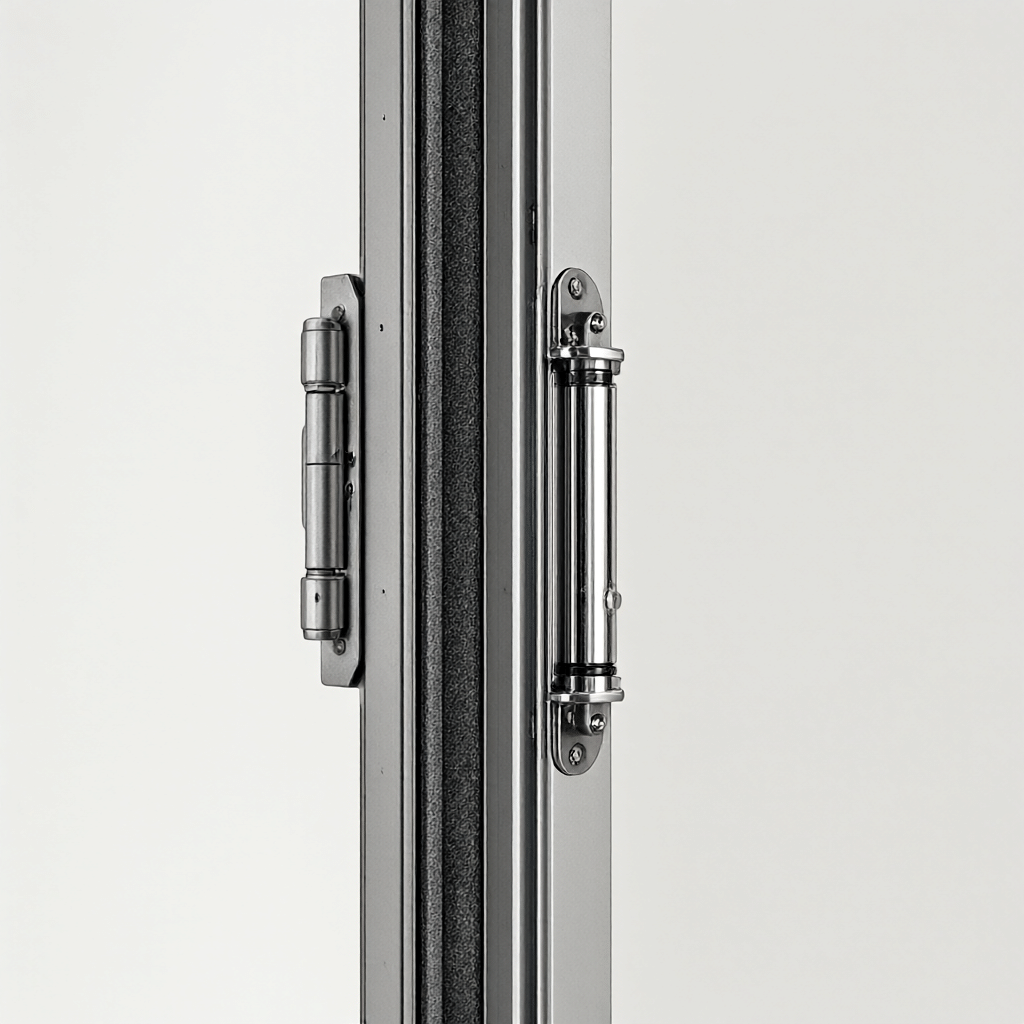
What are the key specifications of smoke doors?
Every smoke door — sometimes called a fire-rated smoke door, smoke control door, or intumescent seal door — is defined by a set of overlapping performance parameters. These are the ones buyers need to verify on a manufacturer’s spec sheet before placing an order.
| Specification | Typical Range / Requirement | Why It Matters |
|---|---|---|
| Fire resistance rating | 20 min – 120 min (varies by jurisdiction and application) | Determines the door’s ability to resist flame and heat transfer; directly tied to building code zoning. |
| Smoke leakage rate | ≤ 3 L/(s·m²) at 25 Pa (ASTM E2092) | Governs how much smoke passes through the closed door; lower is better for life safety. |
| Core material | Mineral wool / calcium silicate / steel frame with mineral fill | Density and composition affect both fire rating and acoustic performance. |
| Glazing (if used) | Wired glass or ceramic glass, fire-rated, up to 25% of door leaf | Allows visibility while maintaining fire rating; requires compatible framing. |
| Intumescent seals | Expanded > 200% at ~200°C | Seals gaps between door and frame under heat; must be tested as part of the assembly. |
| Door closer | Hydraulic, EN 1154 Grade 4+, adjustable | Ensures reliable self-closing without excessive force. |
| Frame construction | Steel-reinforced or aluminum alloy, gasketed | Structural rigidity and seal integrity depend on frame design. |
| Surface finish | Powder-coated, wood veneer, or laminate | Affects aesthetics and durability; may require specific color-matching for large projects. |
| Certification mark | UL, FM, WPI, or EN 1634-1 test report | Proof that the complete door-set (door + frame + hardware) passed standardized testing. |
A smoke barrier door supplier should provide the full assembled system test report, not just a component certificate. Testing to ASTM E2092 — Standard Test Method for Air Leakage of Door Assemblies — is widely referenced in U.S. codes, while EN 1634-1 covers European fire resistance testing. Local building codes may impose additional requirements, so confirm which standard applies to your market before finalizing specifications.
Applications
Where are smoke doors typically required?
Building codes in most jurisdictions mandate smoke doors in specific circulation zones of commercial and multi-unit buildings. These are not optional upgrades — they are life-safety requirements.
Hotel corridor renovation: Corridor doors separating guest-room wings from elevator lobbies or stair enclosures must act as smoke barriers. A mid-size hotel renovating its upper floors might specify 50–100 smoke control doors with uniform finishes to maintain brand consistency across corridors.
Commercial office fit-out: Open-plan offices often use hallway smoke barrier doors at stairwell entries and at breaks in corridor runs longer than 20 meters. Tenant improvement projects may need fewer but more design-flexible units.
Multi-unit residential project: Apartment building stairwell entry doors and corridor doors at each floor landing are typically fire-smoke-rated. Developers sourcing for a 200-unit tower will standardize on one model to simplify maintenance and spare-parts inventory.
Hospital / healthcare facility upgrade: Hospitals require higher performance levels in patient-care corridors and isolation-room entries. Door assemblies here often carry additional acoustic and hygiene requirements alongside their fire-smoke ratings.
In every case, the local authority having jurisdiction (AHJ) — usually the fire marshal or building official — has the final say on which assemblies are approved. A manufacturer experienced in foreign trade will know how to adapt profile structures and fittings to meet your regional code.
Buying Factors
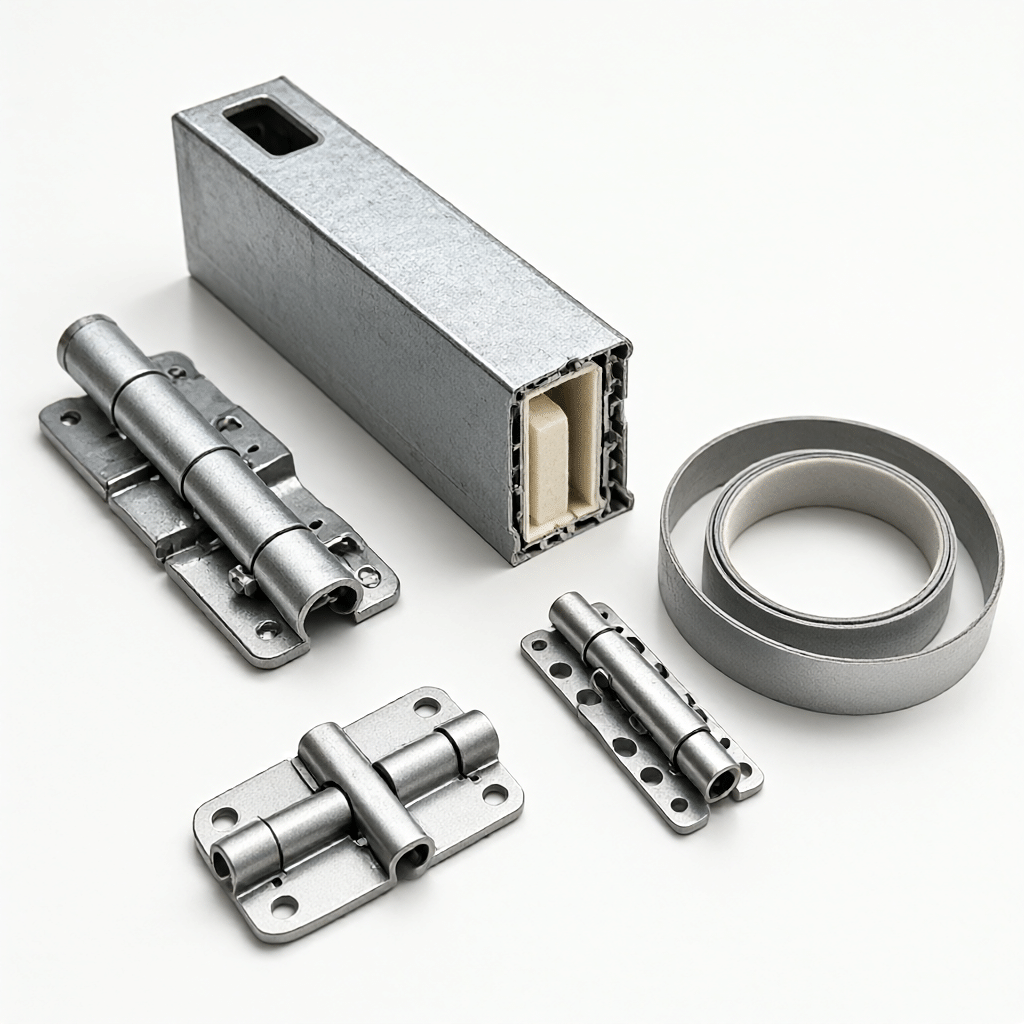
What factors should B2B buyers evaluate when selecting a smoke doors manufacturer?
Buying smoke doors in bulk is not a commodity purchase. The variables that separate a good outcome from a costly mistake fall into five categories: certification readiness, quality control, customization capability, logistics experience, and after-sales support.
Certification readiness. Request the full test report for the exact door configuration you intend to buy — same frame type, same core density, same hardware schedule. A manufacturer who only offers partial certificates (e.g., door panel tested but not the complete assembly with seals and closer) creates compliance risk at inspection time. Verify that the test lab is accredited and that the report date is current.
Quality control. Every door leaving the factory should undergo air-tightness, water-tightness, and wind-resistance testing at minimum. Ask the manufacturer to describe their pre-shipment inspection process. If they cannot articulate a repeatable QC checklist, that is a red flag — especially for large orders where even small inconsistencies compound quickly.
Customization capability. Hotels often want matched colors across dozens of doors. Hospitals may need specific handiness configurations. A manufacturer that allows adjustments to profile structure, finish, glazing type, and hardware within the same certified assembly gives you flexibility without sacrificing code compliance. Check whether they offer OEM or ODM services if you need private labeling or project-specific modifications.
Logistics and documentation experience. Bulk orders ship as FCL (full container load) or LCL (less-than-container-load) consignment from China factories. The supplier must produce a packing list, proforma invoice, and full customs documentation package — bills of lading, commercial invoices, certificates of origin, and test reports organized for import clearance. A manufacturer with strong foreign-trade experience knows how to pack door sets to prevent damage in transit and how to structure documentation so your clearing agent does not delay shipments.
After-sales support. Hardware failures, finish touch-ups, and spare closer replacements happen. Confirm lead times for warranty claims and whether replacement parts are stocked or made-to-order.
When evaluating candidates, treat this like a shower filter manufacturer vetting process: you are comparing specification transparency, QC rigor, documentation readiness, and responsiveness — not just unit prices.
Price & Cost
How much do bulk smoke doors cost from a China-based factory (FOB)?
Price depends on fire rating, door size, core material, glazing area, hardware specification, surface finish, and order quantity. The table below shows typical FOB China ranges for standard single-leaf models.
| Configuration | Unit Price Range (USD) | Notes |
|---|---|---|
| Basic steel-frame, solid core, no glazing, 20 min rating | $80 – $150 | Entry-level; suitable for low-rise residential |
| Mid-range steel-frame, mineral wool core, single glazed pane, 60 min rating | $150 – $280 | Most common for hotels and offices |
| Premium aluminum-frame, high-density core, dual-glazed, intumescent + smoke seals, 90–120 min rating | $280 – $500+ | Required for hospitals and high-rises |
| Custom finish (wood veneer, branded color, special hardware) | Add $20 – $80/unit | Depends on finish complexity and MOQ |
For a 200-door hotel corridor project, you might expect an average unit cost in the $180–$250 range depending on specification depth. Freight, insurance, and destination-port charges are additional and vary by shipping route and container volume.
A quotation from a factory-direct supplier should itemize: (1) unit price per configuration, (2) tooling or mold fees if custom profiles are needed, (3) packaging cost per unit, (4) freight estimate for your target port, and (5) estimated lead time from deposit to shipment. Beware of quotes that lump everything into a single blended figure — those often hide markup layers or omitted items.
Request a detailed quote for your project size and specifications.
Evidence & Practical Notes
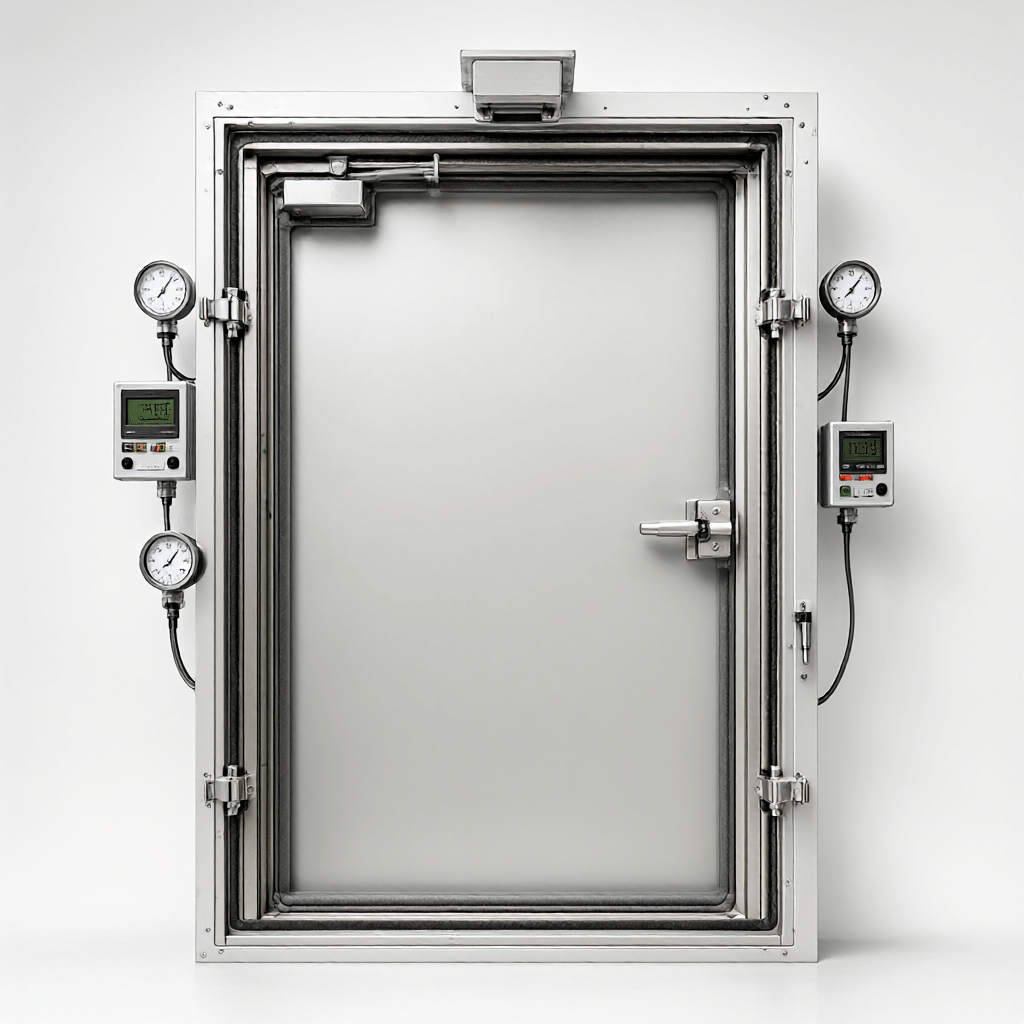
Field note: Many B2B buyers receive attractive unit prices but discover too late that the manufacturer cannot supply matching hardware (closers, hinges, panic devices) within the same lead-time window, creating site delays. Always confirm that the full hardware schedule is available and tested as part of the certified assembly before signing a purchase order.
Practical limitation: Fire-rating labels and test reports are valid only for the exact door-assemblies described in them. Changing the frame thickness, swapping the closer brand, or altering the glazing size can void the certification unless the manufacturer re-tests and issues an updated report. Do not assume that one tested configuration covers all variants you may need on a project.
Buyer takeaway: Prioritize suppliers who present their full certification dossier upfront and respond quickly to specification change requests. A slightly higher unit price from a transparent, well-documented manufacturer typically saves far more money than absorbing rework, inspection failures, or replacement-shipping costs later.
Supplier Evaluation Checklist & Inquiry Workflow
How do you go from inquiry to delivery with a factory-direct smoke doors manufacturer?
The following workflow reflects how experienced B2B buyers manage procurement end to end.
- Specification lock. Finalize door sizes, fire rating, core type, glazing areas, hardware schedule, and finish. Write these into a formal RFQ document.
- Manufacturer shortlist. Request test reports, production capacity details, and past project references. Ask specifically how they handle profile and fitting adjustments for local codes.
- Quotation and sample review. Compare line-item quotes, not total figures alone. Order physical samples or visit the factory if feasible.
- Contract and deposit. Confirm payment terms, delivery schedule, packaging standard, and quality-acceptance criteria. Typical deposit is 30% T/T or LC at sight.
- Production monitoring. Request milestone updates — material arrival, frame fabrication, assembly, testing, and packing. A capable manufacturer provides photos or inspection reports at each stage.
- Pre-shipment inspection. Verify air-tightness, water-tightness, wind-resistance test results, dimensional accuracy, and finish quality against the approved sample.
- Documentation and shipment. Confirm packing list, commercial invoice, certificate of origin, and test reports are ready before loading. Track vessel departure and ETA.
- Arrival and receipt inspection. Check for transit damage immediately. Document any discrepancies and notify the supplier within the agreed claim window.
Send your project specifications and receive a formal quotation.
How Jusen Door and Windows Meets These Standards
As a manufacturer operating directly from our factory, our approach to smoke doors is built around the same principles you should look for: certification-ready assemblies, documented pre-shipment testing, and the ability to adjust profiles and fittings to match your local building code.
We focus on three practical capabilities that directly affect your procurement outcome. First, every shipment undergoes air-tightness, water-tightness, and wind-resistance testing before it leaves the factory, so the doors arrive meeting the performance levels specified in your RFQ. Second, because we handle OEM, ODM, and private-label work, you can customize size, color, glass type, and hardware accessories without relying on multiple sub-suppliers. Third, our experience in foreign-trade logistics means we prepare complete documentation packages — packing lists, proforma invoices, and customs paperwork — so your clearing agent can process the shipment without delays. We ship via both FCL and LCL, giving you flexibility whether you are ordering a full container for a large development or a smaller LCL lot for a phased renovation.
If you are planning a hotel corridor project, a commercial office build-out, a multi-unit residential scheme, or a hospital upgrade, we can provide specification sheets, test reports, and a quotation tailored to your door schedule and delivery timeline. Contact Our Team to start the conversation.
Landing Cost Calculation
Beyond unit price, a realistic total landed cost determines whether a quotation is truly competitive. Use this template to estimate your all-in expense before committing to an order.
| Cost Component | How It Is Calculated | Typical Range / Example |
|---|---|---|
| Unit price (FOB China) | Quote per door, per configuration | $150 – $500 depending on spec |
| Packaging cost | Per-unit crate / carton packaging | $8 – $20/unit |
| Inland freight (factory → port) | Trucking or rail from factory to loading port | $5 – $15/unit (varies by distance) |
| Ocean freight | Container rate based on volume (CBM) and route | $30 – $80/unit for FCL; LCL billed per CBM |
| Insurance | Cargo insurance at ~0.3% – 0.5% of goods value | ~$1 – $3/unit |
| Destination-port charges | THC, docs fees, port handling at destination | $15 – $40/unit |
| Customs duty | Varies by HS code and country tariff schedule | 0% – 10%+ of customs value |
| Customs clearance & agent fees | Broker or clearing-agent charges | $50 – $200 per shipment |
| Destination inland delivery | Trucking from port to project site | $5 – $25/unit (varies) |
| Contingency / spare parts reserve | Recommended 3% – 5% for replacements | 3% – 5% of total landed cost |
Quick example: A 200-door order at $200 FOB/unit shipping FCL to Los Angeles might have a total landed cost of approximately $320 – $380 per door once freight, insurance, duty, and destination charges are included. Request a full landed-cost breakdown from your manufacturer rather than relying on FOB price alone.
Required Documents and Certifications from a Reputable Smoke Doors Manufacturer
A trustworthy supplier must be able to provide, at minimum, the following before production begins and again at shipment:
- Fire-resistance test report referencing BS EN 1634-1:2014 (or equivalent local standard such as UL 10C / NFPA 252), covering the complete door assembly (door leaf, frame, intumescent seal, and closer).
- Smoke-leakage test report referencing ASTM E2092 at the specified pressure differential.
- ISO 9001:2015 quality-management-system certificate issued by an accredited body, valid and current.
- Product-specific certificates (e.g., WPI Listing, FM Approval, or third-party mark) when required by the importing jurisdiction.
- Air-tightness, water-tightness, and wind-resistance test records from pre-shipment inspection for the production batch.
- Material-test reports for core density, steel gauge, and intumescent-seal composition.
- Commercial invoice, packing list, bill of lading, and certificate of origin.
- Test reports for hardware assemblies (closers, hinges, panic devices) confirming fire-rating compatibility.
Missing any of these categories — particularly partial certificates or assembled-system test reports — should raise concerns during vendor evaluation.
## Red Flags When Evaluating a Smoke Doors Manufacturer
Even attractive quotations can mask risks. Watch for these warning signs during supplier vetting:
- Partial or component-only certificates. The manufacturer provides a door-panel fire test but not a full assembled-system report including frame, seals, and closer.
- Vague or undefined lead times. Answers like “4–8 weeks” without specifying design approval, production queue, and shipping timelines separately.
- Inability to produce assembled system test reports on demand. If a buyer requests documentation and the supplier hesitates or offers only verbal assurances.
- No description of pre-shipment inspection process. Absence of stated air-tightness, water-tightness, or wind-resistance testing procedures.
- Refusal to adjust profile structures or fittings for local codes. Manufacturers unwilling to adapt to regional building-code requirements limit your compliance options.
- Incomplete export documentation capability. Suppliers who cannot itemize packing lists, proforma invoices, or customs paperwork demonstrate weak foreign-trade experience.
- Unrealistically low unit prices with bundled freight. Blended quotes that obscure true manufacturing cost may indicate compromised materials or untested assemblies.
- No OEM/ODM or customization pathway. Buyers needing private labeling, special finishes, or hardware substitutions should confirm flexibility before committing.
## Supplier Evaluation Checklist for B2B Buyers
Use this checklist to systematically verify each candidate against the criteria that matter most for smoke door procurement. Mark Yes or No for each item; candidates scoring below 70% across critical columns should be disqualified or require further clarification.
| # | Verification Item | Category | Weight | Your Score (Yes/No) |
|---|---|---|---|---|
| 1 | Can provide BS EN 1634-1:2014 test report for the exact door assembly? | Certification | ★★★★★ | |
| 2 | Can provide ASTM E2092 smoke-leakage test data? | Certification | ★★★★★ | |
| 3 | Holds a current ISO 9001:2015 quality-management certificate? | Quality System | ★★★★☆ | |
| 4 | Pre-shipment inspection includes air-tightness, water-tightness, and wind-resistance tests? | QC Process | ★★★★☆ | |
| 5 | Provides material-test reports for core, steel gauge, and seal composition? | Documentation | ★★★☆☆ | |
| 6 | Offers full hardware-schedule testing under fire-rating conditions? | Documentation | ★★★☆☆ | |
| 7 | Produces complete customs documentation (packing list, PI, BL, COO)? | Logistics | ★★★★☆ | |
| 8 | Supports FCL and LCL shipment from factory? | Logistics | ★★☆☆☆ | |
| 9 | Can adjust profile structure and fittings to match target-market building codes? | Customization | ★★★★☆ | |
| 10 | Provides OEM/ODM/private-label capability if needed? | Customization | ★★☆☆☆ | |
| 11 | Gives milestone production updates with photos or inspection reports? | Communication | ★★★☆☆ | |
| 12 | Clearly states lead time breakdown (approval → production → shipment)? | Lead Time | ★★★★☆ | |
| 13 | Offers warranty terms and responsive spare-parts replacement process? | After-Sales | ★★★☆☆ | |
| 14 | Supplies a detailed landed-cost breakdown rather than a single blended quote? | Transparency | ★★★★☆ | |
| 15 | Provides references or past-project documentation for similar bulk orders? | References | ★★★☆☆ |
## Vendor Decision Guide — Key Evaluation Criteria
The table below summarizes how different vendors typically perform across the criteria that drive procurement decisions. Use it alongside the checklist above to compare candidates side by side.
| Evaluation Criterion | High-Standard Manufacturer | Mid-Tier Manufacturer | Low-Risk Threshold (Minimum Acceptable) |
|---|---|---|---|
| Full assembled-system test report (BS EN 1634-1:2014) | Provided with accreditation details | Partial; door panel only | Must be present; negotiate escalation path |
| ISO 9001:2015 certificate | Current, third-party accredited | May have in-house QA only | Non-negotiable requirement |
| Pre-shipment air/wind/water testing | Documented per batch with results | Random sampling | Must perform on sampled units |
| Customs-documentation readiness | Complete package ready for submission | Basic commercial invoice + PL | At minimum: PI, packing list, BL |
| Lead-time transparency | 4-week production, shared milestones | Estimated range only | Clear date commitment required |
| Code-adaptation willingness | Adjustable profiles and fittings | Limited options | Must demonstrate at least one adaptation case |
| OEM/ODM support | Full private-label and specification Flexibility | Some model variations | Optional but preferred |
| Total landed-cost transparency | Itemized breakdown provided | Unit price plus estimated freight | Minimum unit price + FOB estimate |
| Response time to RFQ | Within 48 hours with detailed reply | 3–5 business days | 7 business days maximum |
Smoking Door Buyer’s Verification Checklist
Use this Yes/No checklist during manufacturer evaluation to ensure every critical requirement is verified before signing a purchase order.
| Verification Item | Yes / No | Notes |
|---|---|---|
| Does the supplier hold ISO 9001:2015 quality management certification? | ☐ Yes / ☐ No | Verify certificate number and expiry date. |
| Can they provide a full BS EN 1634-1:2014 (or UL 10C) assembled-system test report — not just a component certificate? | ☐ Yes / ☐ No | Must cover door + frame + intumescent seal + closer as one tested assembly. |
| Is the test lab an accredited third-party facility (e.g., WPI, FM Approvals, BRE)? | ☐ Yes / ☐ No | Avoid self-certified or in-house-only reports. |
| Do they perform pre-shipment air-tightness, water-tightness, and wind-resistance testing on every batch? | ☐ Yes / ☐ No | Request sample inspection reports. |
| Can they adjust profile structure and hardware to match your local building code (IBC, NBC, Eurocode, etc.)? | ☐ Yes / ☐ No | Ask for examples of previous code-adaptation projects. |
| Are OEM / ODM / private-label services available if needed? | ☐ Yes / ☐ No | Confirm whether branding, finish matching, and custom sizes are offered. |
| Do they provide a complete customs documentation package (packing list, proforma invoice, commercial invoice, certificate of origin, bills of lading, test reports)? | ☐ Yes / ☐ No | Incomplete paperwork delays port clearance. |
| Can they ship via both FCL and LCL from China factory? | ☐ Yes / ☐ No | Important for phasing and smaller project volumes. |
| Do they supply matching hardware (closers, hinges, panic devices) within the same lead-time window? | ☐ Yes / ☐ No | Mismatched lead times cause on-site delays. |
| What is their typical lead time from deposit to shipment, and is it stated in writing? | ☐ Yes / ☐ No | Vague or handwritten estimates are a risk signal. |
| Do they offer warranty terms and stocked spare-parts availability? | ☐ Yes / ☐ No | Clarify response time for warranty claims. |
| Can you request factory audit photos or video during production milestones? | ☐ Yes / ☐ No | Transparency reduces procurement risk. |
Red Flags: Warning Signs When Vetting Smoke Door Suppliers
Beware of the following signals during manufacturer evaluation. Each indicates a potential compliance, quality, or logistics risk that can compound into costly project delays.
- Partial or component-only certificates. A door panel test without the complete assembly (frame + seals + closer) does not prove the installed product meets code. Insist on a full system test report per BS EN 1634-1:2014 or ASTM E2092.
- Vague or verbal lead-time estimates. If a supplier says “about 4–6 weeks” without a written schedule tied to your RFQ, treat this as a planning risk. Concrete timelines are non-negotiable for phased construction.
- Inability to show pre-shipment test reports. Any manufacturer that cannot produce air-tightness,水-tightness, or wind-resistance test records for the batch you are ordering should be disqualified.
- Missing customs documentation capability. Suppliers who cannot produce packing lists, proforma invoices, and certificates of origin will delay your shipment through customs.
- Hardware sourced from unrelated vendors. If closers and hinges come from different factories with different lead times, site coordination breaks down. The certified hardware must be part of the tested assembly.
- No OEM / ODM flexibility. Large projects often require color-matching, branded finishes, or size adjustments. Suppliers offering only stock models limit your design options.
- Refusal to share factory audit access. Reputable manufacturers welcome virtual or on-site audits. Evasion suggests opacity around QC practices.
- Single-blend quotation with no line-item breakdown. Quotes that lump unit price, tooling, packaging, and freight into one figure hide markup layers and create budget surprises.
Vendor Evaluation Decision Guide (Weighted Scoring)
When comparing multiple smoke door suppliers, use a weighted scoring model to move beyond unit-price comparison and evaluate total value.
| Evaluation Criterion | Weight | What to Look For | Your Score (1–5) |
|---|---|---|---|
| Certification readiness (full assembly test reports, ISO 9001:2015) | 25% | Accredited lab reports, current dates, complete door-set documentation | ___ |
| Quality control process (pre-shipment air/water/wind tests) | 20% | Documented QC checklist, test reports per batch, repeatable inspection protocol | ___ |
| Customization capability (OEM/ODM, profile/hardware adjustment) | 15% | Ability to adapt to local codes, private-label options, finish matching | ___ |
| Documentation & logistics experience (FCL/LCL, customs docs) | 15% | Complete customs package, foreign-trade track record, packing standards | ___ |
| Hardware compatibility & lead-time alignment | 10% | Integrated hardware schedule, same-lead-time sourcing, warranty support | ___ |
| Unit price competitiveness (FOB China) | 10% | Transparent line-item pricing, no hidden fees, competitive within spec | ___ |
| Responsiveness & communication quality | 5% | Prompt RFQ response, specification change handling, post-order support | ___ |
| Total Weighted Score | 100% | Multiply each score by its weight and sum for final ranking | ___ / 5.0 |
A weighted score below 3.5 out of 5 on any single criterion — especially certification readiness or quality control — warrants further investigation or disqualification, regardless of unit price advantage.
Total Landed Cost Breakdown Template
Beyond FOB unit price, the following template shows how to calculate true all-in landed cost before committing to an order.
| Cost Component | How It Is Calculated | Typical Range / Example |
|---|---|---|
| Unit price (FOB China) | Quote per door, per configuration | $150 – $500 depending on rating, glazing, and finish |
| Tooling / mold fees (if custom profiles) | One-time fee, amortized over order quantity | $500 – $3,000 per unique profile; $0 if using standard profiles |
| Packaging cost per unit | Palletizing, crating, moisture protection | $8 – $25/unit for standard cartoning; higher for wood crates |
| Ocean freight (FCL) | Per 40ft container to destination port | $1,500 – $4,500 per container (varies by route and fuel surcharges) |
| Ocean freight (LCL) | Per cubic meter (CBM) | $80 – $200 per CBM |
| Insurance | Typically 0.3% – 0.5% of cargo value | $100 – $500 for a $150,000 shipment |
| Import duty | Varies by HS code and country of import | 0% – 5% for steel doors (HS 8302.41 / 8306.29); verify with your customs broker |
| Customs clearance & port charges | Agent fees, terminal handling, documentation | $300 – $1,000 per shipment |
| Inland freight (port to site) | Trucking from destination port to job site | $500 – $3,000 depending on distance |
| Estimated total landed cost per door | (Unit price + packaging + freight share + duty + insurance + clearance) ÷ doors per container | Add 15% – 30% to FOB unit price as a rule-of-thumb buffer for non-unit costs |
For a 200-door project shipping in five 40ft containers at an average FOB of $200/unit, expect total landed cost in the range of $230 – $270 per door after freight, duty, insurance, and clearance — not the $200 headline figure. Always request a landed-cost estimate from your supplier or forwarding agent before awarding the contract.
Get a detailed landed-cost estimate for your project.
Sources & References
- ASTM E2092 — www.astm.org
- EN 1634-1 — www.iso.org
Related resources for this product category
- Fire rated door sets
- Hardware and accessories for smoke door sets
- Fire rated wooden doors: procurement guide
- Intumescent door seal manufacturers and bulk procurement
- Fire rated door standards guide: UL, NFPA and EN
Need a project-specific quotation? Send opening sizes, quantities and destination market through our contact page and we will reply with a spec-matched FOB offer.











