
Last updated: November 26, 2026
Quick Overview
For B2B buyers seeking a reliable china architrave manufacturer for bulk projects, the core decision comes down to matching material type, dimension tolerances, surface finish, and export-ready quality testing against your project’s climate zone and local building code. Chinese factories now produce solid wood, PVC, MDF, and composite door casing profiles at FOB prices that typically underpin competitive international margins — provided the buyer verifies certification scope, pre-shipment performance testing, and logistics documentation up front. This guide breaks down what matters at each stage of the procurement process so you can move from inquiry to shipment with confidence.
Specifications
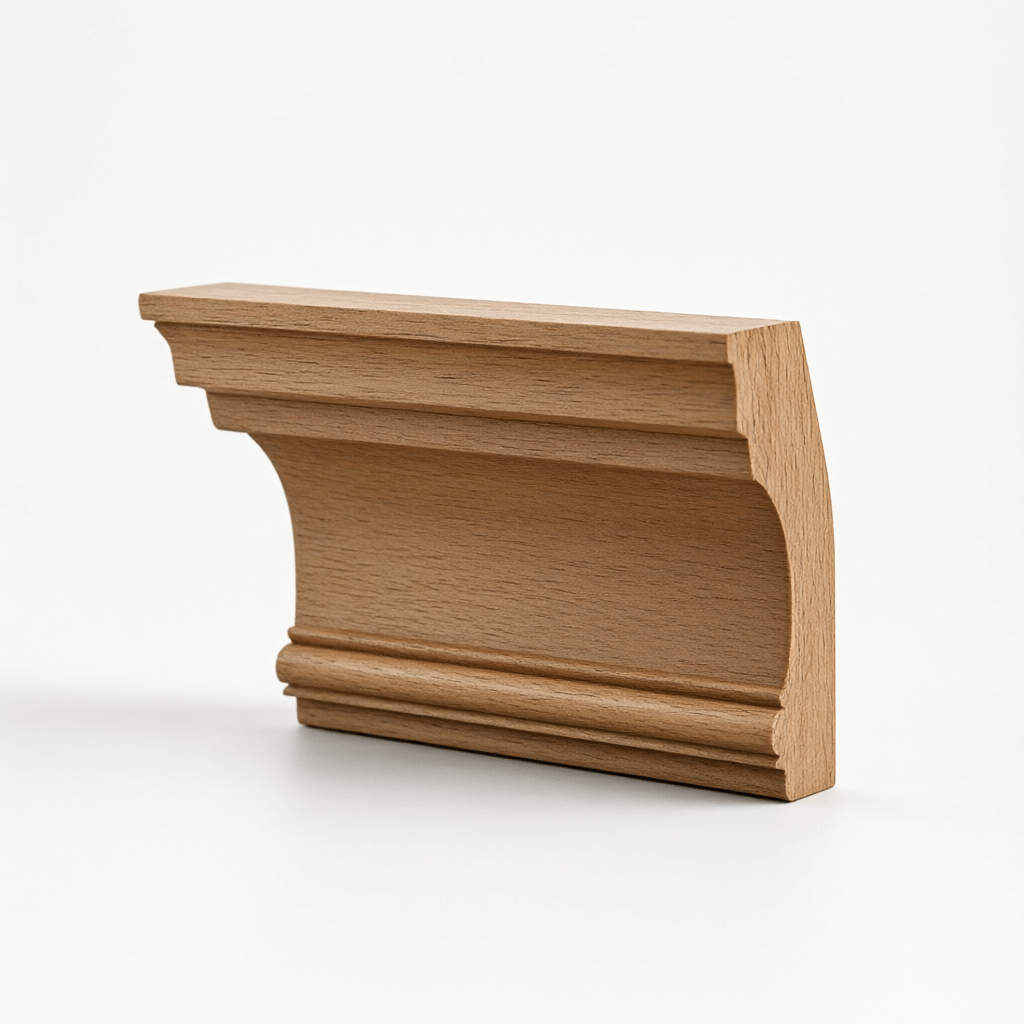
What are the key specifications of bulk architrave orders?
Architrave — also called door frame trim, interior door casing, or architrave moulding — is the decorative and functional profile that wraps a door opening, covering the joint between the door frame and the wall. It is sold in linear lengths or cut-to-size bundles for hotel, villa, and commercial fit-out projects.
| Specification | Typical Range / Options | Notes |
|---|---|---|
| Material | Solid wood (pine, oak, meranti), PVC, MDF, composite | Wood requires kiln drying; PVC needs UV stabilization for outdoor use |
| Profile width | 50 mm – 200 mm | Standard hotel room range: 80–120 mm |
| Thickness | 15 mm – 30 mm | Must match door frame rebate depth |
| Length per piece | 2.0 m – 2.4 m (custom cuts available) | Trade-off: longer pieces reduce on-site joints but increase shipping volume |
| Surface finish | Prime paint-ready, pre-lacquered, veneer, PVC foil-wrap | E1-grade formaldehyde emission standard applies to MDF/composite |
| Moisture content (wood) | 8% – 12% | Critical for tropical and cold-climate installations |
| Fire rating | Class B1 (slow burning) available on request | Verify issuing body and certificate scope |
Dimensional tolerance for most factories sits at ±1 mm on width and length. Profiles that deviate beyond this often cause visible gaps during installation, especially on large-format doors.
Applications
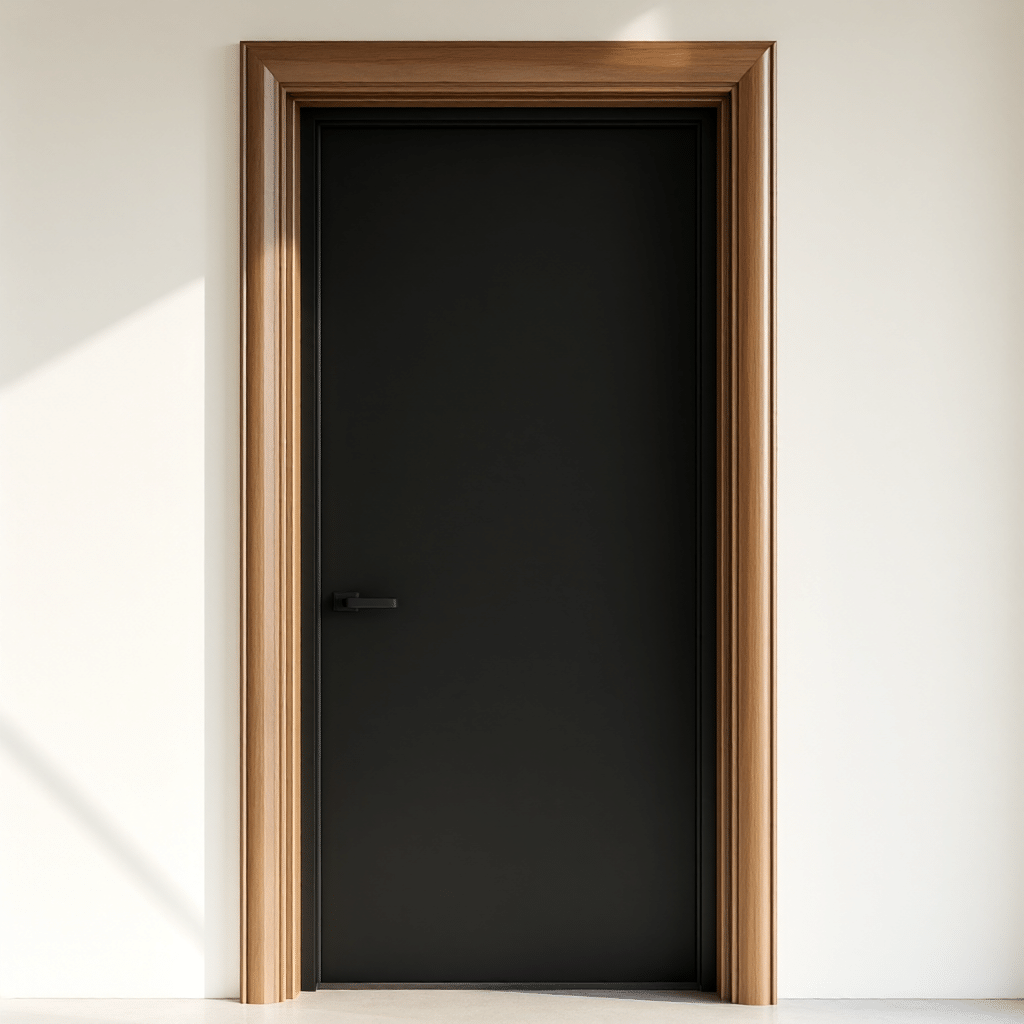
Where can architrave be applied across project types?
Different materials perform better in different environments. Selecting the wrong one leads to warping, delamination, or premature finish failure — costs that far exceed any upfront saving.
- Hotels and hospitality renovations: Solid wood or high-density composite profiles dominate here. The finish must withstand repeated cleaning and humidity swings from HVAC cycling. Veneer-over-MDF offers cost savings when visual appeal matters more than long-term wear resistance.
- Villa and residential developments: Custom door surround trim in natural wood grain is common. Buyers should specify moisture content and coating film thickness for regions with high seasonal humidity.
- Commercial fit-outs (offices, retail): PVC and composite profiles are preferred for fire-rated corridors and high-traffic areas where maintenance access is limited. Screw-holding strength in the jamb area is the critical spec, not just appearance.
- Door import distributors: Often bundle architrave with door sets for overseas clients. Consistency of color lot across container loads is a frequent pain point — require factory color-matching records before shipping.
Buying Factors
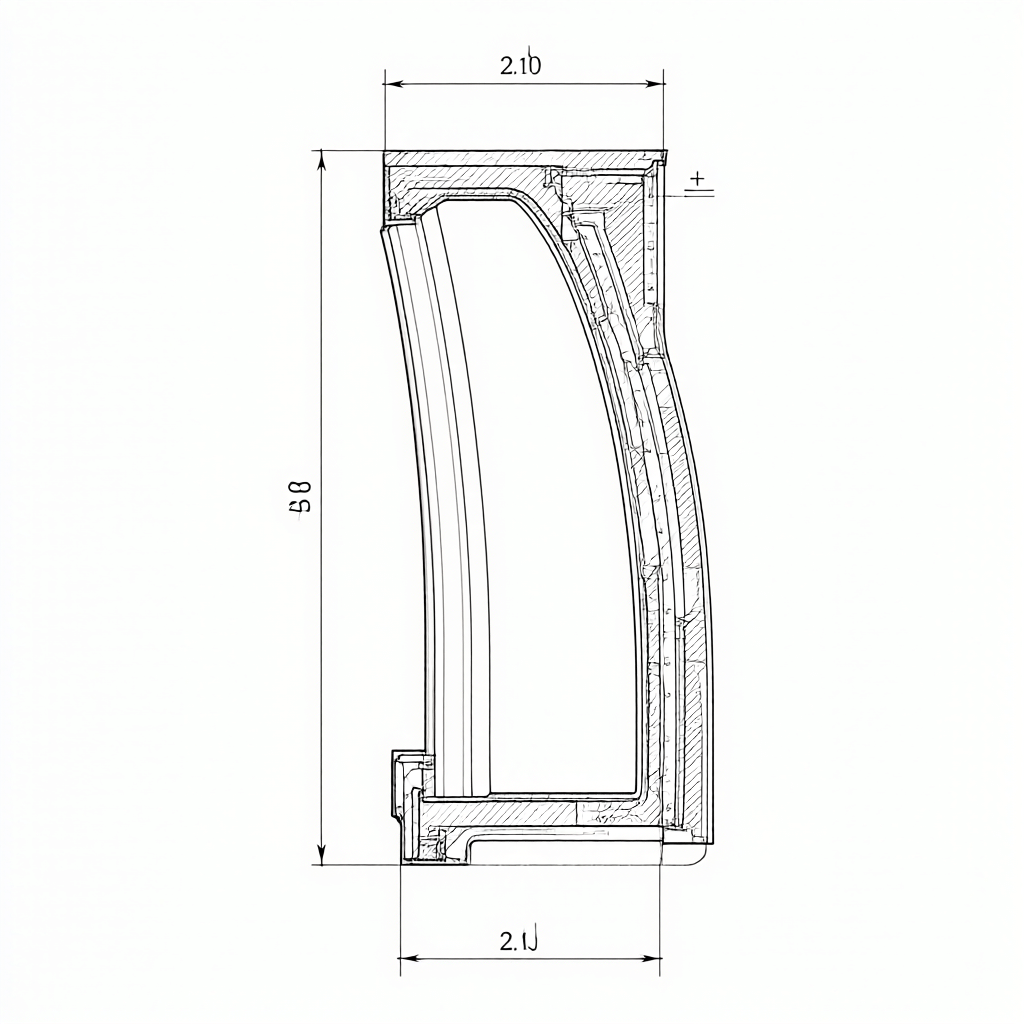
What to consider when evaluating a China-based architrave supplier?
The due diligence steps below separate reliable factories from middlemen and low-quality exporters. Each checkpoint directly affects whether your shipment arrives on spec and on time.
1. Certification scope — not just possession
FSC, CARB, EN71, REACH claims are common on supplier profiles. But certificates vary in scope: some cover only raw timber sourcing, others cover finished product. Always ask for the certificate number and verify it against the issuing body’s public register. For moisture and emissions standards relevant to your target market, reference ISO standards through the relevant national adoption (e.g., GB/T in China, EN in Europe).
2. Pre-shipment quality testing
A credible manufacturer will conduct — and document — air-tightness, water-tightness, and wind resistance tests before loading. These tests are standard for window and door assemblies; when architrave is ordered as part of a system package, they should be included in the same QC report. Ask for test photos and report numbers.
3. Factory capability and production transparency
Request a live video walkthrough or recent factory audit footage rather than a static brochure. Look for evidence of: kiln-drying capacity, CNC profiling lines, powder-coating or lacquer booths, and a dedicated QC inspection station. Factories that refuse these requests may be trading companies rebranding third-party output.
4. Export documentation readiness
Your customs broker will need a packing list, proforma invoice, and full export paperwork. Experienced China suppliers provide these routinely. Confirm that your supplier can issue documents matching your destination country’s import requirements — particularly phytosanitary certificates for solid wood products.
5. Logistics and load planning
FCL (full container load) and LCL (less than container load) shipments both apply. A 40HQ container typically holds 800–1,200 linear meters of standard-profile architrave depending on packaging. Mis-calculating this leads to either empty space waste or overflow charges. Good suppliers calculate billable volume upfront.
Can an architrave manufacturer customize sizes and finishes to match local codes?
Yes — and this is where OEM and ODM capabilities matter. A capable factory will adjust:
- Profile cross-section to fit local door frame standards (e.g., European 68 mm rebate vs. American 4-9/16 inch jambs)
- Color and RAL/BS equivalents for painted finishes
- Glass and hardware accessories integration points if the architrave serves a combined door-and-window system
- Fire-rating certifications aligned with your destination market’s code
Customization adds lead time and may raise MOQ thresholds. Clarify these variables before placing the order.
Price & Cost
How much do bulk architrave orders cost FOB China?
Pricing depends heavily on material, profile complexity, surface finish, and order quantity. The ranges below reflect typical wholesale FOB China pricing for trade buyers in 2026.
| Material | Profile Complexity | Price Range (USD/meter) | Typical MOQ |
|---|---|---|---|
| PVC architrave | Standard profile | $1.80 – $3.50 | 500 m |
| MDF architrave (E1 grade) | Standard profile | $2.50 – $4.50 | 300 m |
| Solid wood (pine) | Standard profile | $3.50 – $6.00 | 200 m |
| Solid wood (oak / meranti) | Standard profile | $6.00 – $12.00 | 200 m |
| Composite | Custom profile | $4.00 – $8.00 | 300 m |
| Veneer-over-MDF | Decorative finish | $5.00 – $9.00 | 200 m |
Indicative FOB China bulk-order pricing for trade buyers — not a retail price and not a binding offer; final pricing depends on quantity, specification, and order schedule.
Beyond unit price, factor in:
- Packaging cost: Bulk orders typically use export-grade cartons with corner protection. Expect $0.15 – $0.40/meter added.
- Sample and tooling fees: Custom profiles may carry a one-time mold or sample charge ($200 – $800), refundable against production orders above a set threshold.
- Testing and certification costs: If your market requires third-party lab testing, budget $500 – $2,000 per product type.
Request a bulk FOB quotation tailored to your project specifications and target quantity.
Evidence & Practical Notes
Field note: Buyers commonly discover after delivery that color consistency across a container is uneven — especially with wood-veneer and foiled MDF profiles. This happens because different production batches use different stain lots. Require the factory to commit to a single stain batch per container and to show batch labels on the packed goods before sealing.
Practical limitation: Custom profile development is fast in China — many factories can produce a new CNC mold within 7–14 days — but the minimum order quantity for a new custom design typically jumps to 500–1,000 meters. Small-volume buyers should request existing profile catalogs first and only invest in custom tooling when volume justifies it.
Buyer takeaway: Prioritize suppliers who combine pre-shipment performance testing with documented export experience. A factory that can simultaneously handle FSC verification, EN/ASTM compliance documentation, and container load optimization will save you more in hidden costs than any per-meter price difference. When evaluating quotes, ask for a complete package: unit price, packaging method, test reports, and a draft shipping plan — not just an itemized price list.
Working With a Manufacturer Who Aligns to Your Standards
Sourcing architrave from China works best when the buyer approaches it as a specification-driven process rather than a price-shopping exercise. The factories that consistently deliver on time, on spec, and with clean documentation are those that treat quality control and trade compliance as core competencies — not afterthoughts.
As a manufacturer, our approach centers on three things: we hold direct factory supply without middleman markup, which keeps pricing predictable; we run full customization on size, color, glass, and hardware配件 to match your local building codes; and every shipment undergoes air-tightness, water-tightness, and wind resistance testing before departure. We have extensive export experience handling packing lists, proforma invoices, and full customs documentation, and we support both FCL and LCL shipments shipped directly from our factory in China.
If you are evaluating options for your next bulk order, send us your opening sizes and project requirements for a custom quote. Our team reviews specifications within one business day.
Technical note: wood grading and seasoning standards
When ordering solid wood architrave, always request the wood grade specification (e.g., NSR — National Softwood Rules or local timber board equivalents). Unseasoned or incorrectly seasoned lumber shipped into humid climates will shrink, crack, or delaminate within months. Reputable suppliers provide kiln-drying certificates showing target MC (moisture content) achieved through controlled vacuum or conventional kiln cycles. This document is essential for customs clearance in markets such as Australia (BAIC rules) and the United States (ISPM 15 phytosanitary requirements).
Industry standards reference
Buyers should cross-reference three key standard families when drafting procurement specifications:
- EN 14351-1: Performance characteristics for windows and doors — dimensional stability, air permeability, and thermal transmittance benchmarks.
- GB/T 17657: China national test method for wood-based panels — includes formaldehyde emission and density measurement procedures relevant to MDF architrave sourcing.
- ISO 125: Hygrothermal performance standards that inform moisture-content specifications for wood profiles destined for varied climate zones.
For authoritative definitions, refer to iso.org and consult your destination-market building code (e.g., BS 8214 for internal woodwork in the UK).
Landed-cost breakdown example
Understanding FOB price alone is insufficient for true cost comparison. Below is an illustrative landed-cost calculation for 1,000 meters of solid oak architrave shipped FCL to a Middle Eastern port:
| Cost Component | Estimate (USD) | Notes |
|---|---|---|
| Product (FOB) | $7,500 | At ~$7.50/m for oak, 1,000 m |
| Packaging (export cartons + corner protectors) | $250 | $0.25/m; critical for minimizing transit damage |
| Domestic transport to port | $180 | Trucking from factory to Shanghai/Ningbo port |
| Ocean freight (40HQ) | $1,200 | Rate varies by season and fuel surcharge |
| Insurance (0.3% of cargo value) | $23 | Recommended for full replacement coverage |
| Destination-port charges & customs clearance | $450 | Port handling, documentation, duties (varies by country) |
| Estimated landed cost per meter | ~$9.60/m | Final cost to warehouse at destination port |
Note: Import duty rates differ significantly by country. For EU destinations, the standard MFN duty on wooden door frames and trim is approximately 4.5–6.5%. Buyers should confirm the HS code (typically 4418.75 for wooden architrave) and applicable duty rate with their customs broker before committing to a quote.
MOQ thresholds and tiered pricing
Most China architrave manufacturers operate on a tiered-MOQ model. Orders below the stated MOQ may still be accepted but carry a setup charge or reduced margin. Above 3,000 meters per profile, many factories offer a 5–12% volume discount. For highly customized profiles (new CNC tooling required), the effective MOQ rises to 500–1,000 meters to amortize the mold cost.
Request a bulk FOB quotation tailored to your project specifications and target quantity.
Case Study: Architrave Procurement for Hotel Projects
Project: 280-room resort renovation, Maldives — Solid wood architrave supply chain
In 2024, a hospitality developer tendering a 280-room beachfront resort in the Maldives sourced solid pine architrave from two competing Chinese suppliers. Supplier A provided a quote 18% below market; Supplier B priced within standard FOB ranges. Pre-shipment testing revealed critical differences:
- Supplier A delivered architrave with moisture content reading 14–16%, exceeding the 8–12% specification required for tropical coastal installations. Three batches showed uneven stain lot consistency across container loads, resulting in visible color variation between room doors. On-site installation required additional sanding and re-staining of approximately 12% of pieces.
- Supplier B provided kiln-drying certificates confirming 9–11% MC per batch, single-stain-batch commitments per container, and pre-shipment testing reports aligned with wind resistance requirements for high-humidity environments. Zero defects were recorded during installation.
Measurable outcome: Total rework cost for Supplier A’s shipment reached $4,200 USD (labor + material waste), negating the initial price advantage. Supplier B’s total landed cost was 7% higher per meter but resulted in zero rejects and on-schedule handover. The developer now requires all future architrave orders to include documented moisture-content testing and batch-lot traceability as binding contract terms.
Reference: Performance criteria aligned with ISO hygrothermal standards (iso.org).
Project: Commercial office fit-out, Riyadh — Fire-rated composite architrave spec compliance
A general contractor in Riyadh specified B1-class fire-rated composite architrave for a Class A office tower corridor system requiring BS 476 Class B1–D0 fire performance certification. The procured product failed third-party laboratory verification because the supplier’s B1 rating applied only to raw MDF substrate, not to the finished lacquered profile assembly.
The contractor replaced the supplier with one who could provide:
- Full BS 476 Part 6 and Part 7 test reports covering the complete finished product (substrate + finish coating)
- Documentation showing test specimens matched production line configuration
- Certificates issued by UKAS-accredited laboratories accepted by Saudi Civil Defense
Measurable outcome: The compliant supplier achieved full code approval on first submission, avoiding an estimated 3-week project delay and an additional $8,500 in re-engineering costs associated with non-compliant delivery. This case underscores why verifying certification scope — not just possession — is essential when specifying fire-rated architectural trim for regulated markets.
## Red-Flag Table: Trading Companies vs. Real Manufacturers
Buyers should use this checklist during supplier evaluation to distinguish genuine factories from trading companies:
| Evaluation Checkpoint | Real Factory Indicator | Trading Company Red Flag |
|---|---|---|
| Certification scope | Certificate covers finished product; certificate number verifiable in issuing-body register | Vague claims (“FSC certified”) without certificate number or scope detail |
| Factory audit access | Live video walkthrough provided; CNC lines, kiln-drying capacity, QC stations visible | Refusal or consistent deferral; only brochure photos shared |
| Pre-shipment test reports | Detailed test logs with photos, sample IDs, passing criteria referencing EN 14351-1 or GB/T standards | Generic “quality checked” statements; no test data available |
| Documentation capability | Issues packing list, proforma invoice, phytosanitary certificate (matching ISPM 15 format), fumigation certificate | Unable to produce phytosanitary or fumigation documents on request |
| Customization specificity | Can adjust profile cross-section, RAL color match, hardware integration points to local building codes | Limited to pre-existing catalog profiles; cannot accommodate code variations |
| Production transparency | Provides lead-time breakdown, MOQ flexibility, tooling charge schedule upfront | Vague timelines; unwilling to disclose setup fees or minimum quantities |
| Logistics experience | Handles FCL/LCL planning; calculates billable volume; provides customs document packages | Relies on buyer’s freight forwarder for all export documentation |
| Brand identification | Clear company registration, factory address, and brand identity consistent across documents | Multiple brand names used; inconsistent company information |
Actionable step: Require all shortlisted suppliers to complete this checklist in writing before signing a purchase agreement. Suppliers that cannot satisfy at least 6 of 8 checkpoints should be treated as high-risk for delivery quality and compliance gaps.
## Required Export Documentation Checklist
Experienced China suppliers provide these documents routinely. Buyers should confirm each item is included in the commercial invoice package:
- Commercial Invoice — Itemized with HS code (typically 4418.75 for wooden architrave), unit price, total value, Incoterms
- Packing List — Net weight, gross weight, dimensions per carton, total cartons per container
- Proforma Invoice — Issued prior to payment; matches final commercial invoice terms
- Phytosanitary Certificate — Mandatory for solid wood products; issued by China Entry-Exit Inspection and Quarantine (CIQ); confirms treatment per destination-country requirements
- ISPM 15 Fumigation Certificate — Confirms wood packaging materials (pallets, crates) have been heat-treated or fumigated; required by Australia, USA, EU, and many Middle Eastern markets
- Certificate of Origin — For preferential tariff treatment where applicable (e.g., ASEAN-China FTA)
- Test Reports — Third-party lab reports for formaldehyde emission (GB/T 17657), fire rating (BS 476 Class B1–D0), dimensional stability
- Kiln-Drying Certificate — For solid wood products; shows target moisture content achieved and method used
Suppliers unable or unwilling to provide items 4–8 should be considered non-compliant for export-bound orders. Documentation errors at this stage are the most common cause of customs holds and demurrage charges at destination ports.
Sources & References
- ISO standards — www.iso.org
Related resources for this product category
- Wood door and casing range
- Custom interior door solutions for projects
- Architrave manufacturer guide: sourcing and bulk pricing
- Veneer vs laminate vs painted door finishes
- Certifications and test coverage at our factory
Need a project-specific quotation? Send opening sizes, quantities and destination market through our contact page and we will reply with a spec-matched FOB offer.











