
Last updated: November 25, 2026
Intumescent door seals are fire-rated sealing strips installed in door frames or leaves that expand when exposed to heat (typically around 140 °C–200 °C), swelling to block flame, hot gases, and smoke through perimeter gaps. For B2B procurement, buyers should compare certified European and Chinese manufacturers on BS EN 1634 test reports, profile adaptability, FOB pricing, export documentation readiness, and MOQ terms before selecting a supplier for commercial or residential fire door projects.
Quick Overview
Intumescent door seal manufacturers produce passive fire-protection hardware that expands when exposed to heat, sealing gaps around doors to block flame and smoke passage. For B2B procurement, the most reliable suppliers specialize in certified fire-rated profiles available in multiple sizes and cross-sections, backed by third-party test reports under relevant standards and compliance documentation suitable for trade. The market includes European-certified manufacturers alongside competitive Chinese factories offering bulk supply with full export and testing records.
Specifications
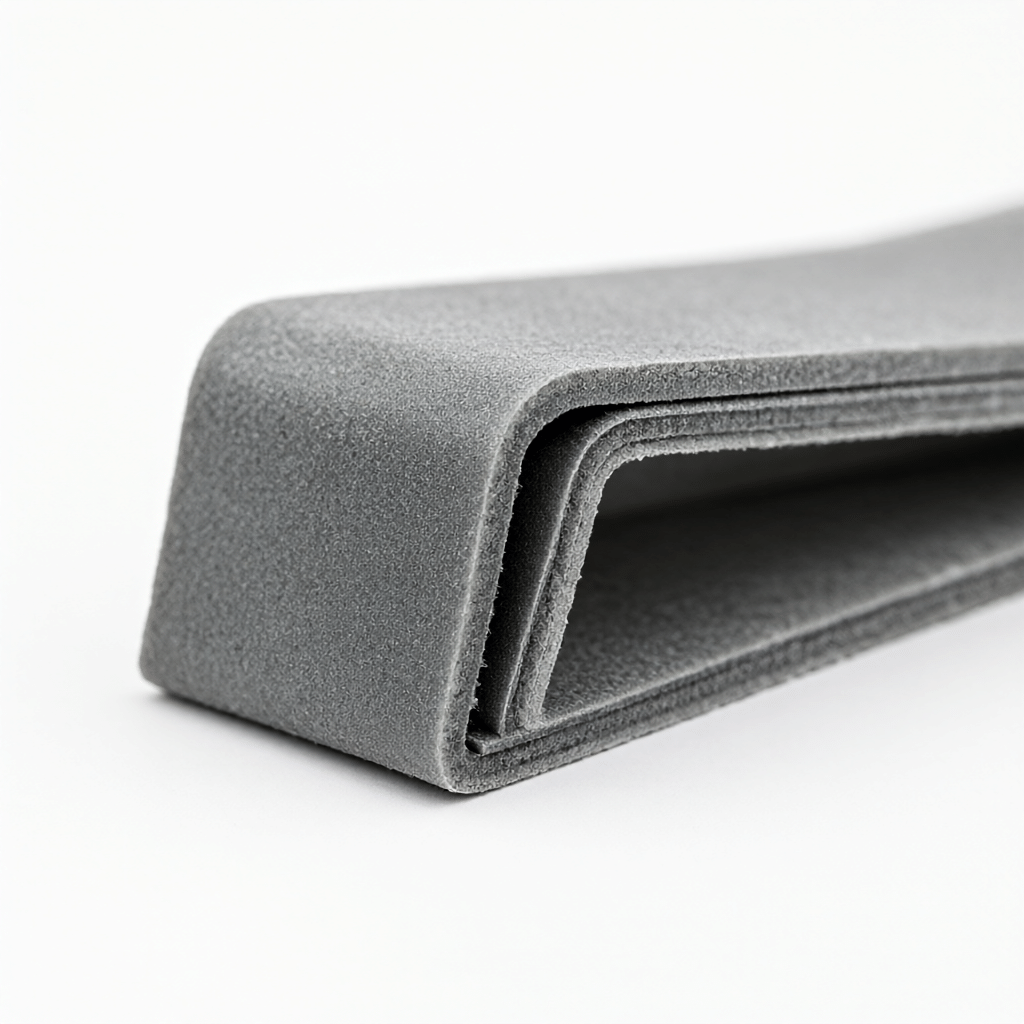
What are the key specifications of intumescent door seals?
Understanding specifications is the first step toward identifying a supplier that matches your project requirements. Below is a reference table of typical industry specifications for intumescent door seal products:
| Specification | Typical Range / Option |
|---|---|
| Core material | Expanding graphite or phenolic foam |
| Profile shapes | D-shape, I-beam, E-profile, L-channel, rectangular strip |
| Size ranges | Widths from ~10 mm to 50 mm; thicknesses from ~3 mm to 12 mm; custom lengths |
| Fire rating duration | Commonly tested to 30, 60, and 90-minute ratings |
| Expansion activation temperature | Approximately 140 °C – 200 °C |
| Certification standards | BS EN 1634 (fire resistance), BS EN 1627 (air tightness) |
| Color options | Grey, black, white; custom colors available |
| Surface finish | Powder-coated metal channel or extruded polymer housing |
Profile shape selection depends on the intended gap width and installation method. D-profile seals are the most common and fit standard door-edge and frame grooves. I-beam and E-profile variants are used when larger gaps must be bridged, such as on heavy commercial or industrial doors. A well-established intumescent strip manufacturer will offer a portfolio of these cross-sections and can engineer custom profiles when a project demands specific dimensions.
Fire-test standards are non-negotiable for compliance. Products should pass BS EN 1634 for fire resistance and ideally also address air-tightness performance under BS EN 1627. When sourcing, always ask for the actual test report and verify the certificate is issued by an accredited laboratory—not self-declared without supporting evidence.
Applications
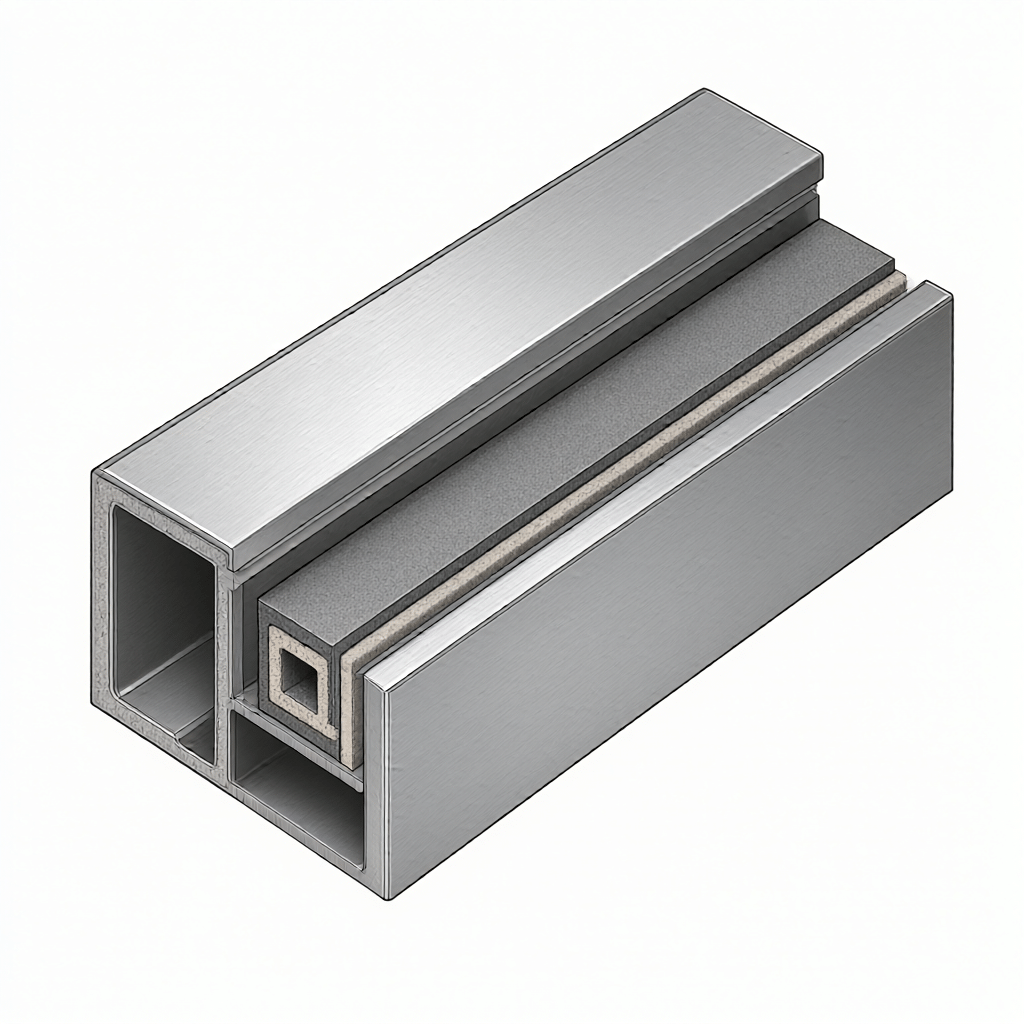
Where can intumescent seals be used?
Intumescent door seals are specified wherever fire-rated doors must prevent the spread of flame and smoke through perimeter gaps. Common application contexts include:
- Hospital and healthcare construction, where corridor and room doors require strict fire compartmentation under building codes.
- Hotel and hospitality projects, where guest-room corridor doors and stairwell entrances must meet fire-rating mandates.
- Multi-unit residential developments, including apartment entrance doors and shared stair enclosures.
- Commercial building fit-outs, especially office partitions, server rooms, and plant areas.
- External doorway assemblies rated for both fire and weather exposure, where an intumescent smoke seal blocks smoke infiltration during a fire event.
- Retrofit and renovation projects, where existing solid-core or metal doors are upgraded to meet updated code requirements.
In these environments, the seal functions as part of a passive fire door seal system—it does not activate until heat reaches the threshold designed into the material, at which point the intumescent core swells to fill the gap. This distinguishes it from active suppression equipment, keeping the focus strictly on the door hardware itself.
When specifying, consider the expected gap tolerance. Construction variability means actual installed gaps often differ from drawings, so select a seal profile that accommodates realistic tolerances—typically 2 mm to 6 mm per side depending on the door type. For wider-gap or irregular applications, consult a fire door seal manufacturer who can recommend a matching profile.
Buying Factors
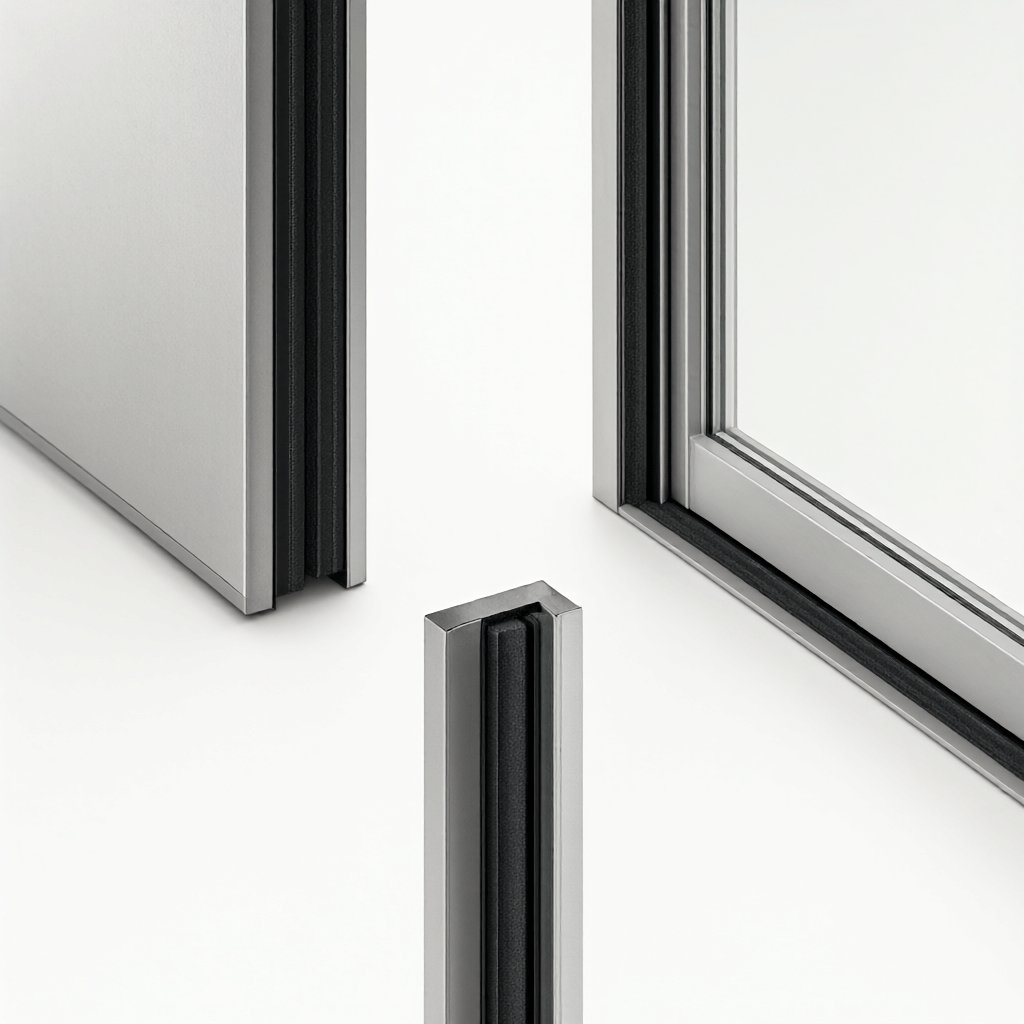
What to consider when buying intumescent door seals in bulk?
Procurement decisions hinge on several practical factors. Evaluate manufacturers against the criteria below before committing to a purchase order.
Certification and testing documentation. Request BS EN 1634 test reports and any applicable CE documentation. Verify the test duration rating matches your project specification (30, 60, or 90 minutes). Be cautious of suppliers unable to produce original laboratory certificates.
Profile adaptability. A capable manufacturer adjusts intumescent seal size and cross-section to fit local building codes and door designs. Rigid, one-size options limit specification flexibility and increase the risk of on-site gaps exceeding seal capacity.
Quality control procedures. Look for lot-level inspection, dimensional verification, and batch traceability. These controls reduce the likelihood of receiving non-conforming goods on a large order.
Production lead time and MOQ. Clarify minimum order quantities and estimated lead times early. Custom profiles typically carry longer setup times and may have higher MOQ thresholds than stock items.
Export capability. Reliable suppliers manage complete documentation—packing lists, proforma invoices, and customs records—so shipments clear borders without delays. FCL and LCL options broaden logistics flexibility for larger orders.
Supplier track record. Manufacturers with established foreign-trade experience understand export requirements across markets. This reduces friction on your side of the transaction.
Comparing these factors against shortlisted intumescent door seal suppliers will narrow your options to those most likely to deliver on compliance and schedule.
Price & Cost
How much do bulk intumescent door seals cost? (FOB China)
Pricing for bulk intumescent door seals varies according to order volume, profile complexity, and material choice. The table below presents indicative FOB-China price ranges for reference:
| Product Type | Indicative FOB Price Range (USD per meter) |
|---|---|
| Standard D-profile, graphite core | $0.40 – $1.50 |
| I-beam / E-profile, custom size | $0.80 – $2.50 |
| Metal-channel variant with coated housing | $1.20 – $3.50 |
| Specialty / private-label branding | Variable; quote requested |
Several variables drive the final unit price. Higher volumes generally secure lower per-meter costs. Custom cross-sections require dedicated tooling and raise initial costs before economies of scale apply. Private labeling or unique packaging adds a surcharge. Freight, insurance, import duties, and customs fees sit outside the FOB price and should be factored into total landed-cost calculations.
As with other component categories, price transparency improves when suppliers provide itemized quotations based on confirmed drawings and agreed quantities.
Evidence & Practical Notes
Field note: A dependable fire rated door seal manufacturer typically offers test reports, a declaration of performance, and CE documentation without requiring the buyer to chase each item individually. Proactive disclosure of compliance records is a strong signal of organizational maturity.
Practical limitation: Real-world construction rarely produces perfectly uniform gaps. Door-frame tolerances and installation variances often exceed drawing dimensions, meaning a seal sized precisely to nominal plans may sit too loose or bind during closure. Selecting a profile with some tolerance margin—or working with a supplier who adapts sizing to project conditions—mitigates this issue.
Buyer takeaway: Prioritize manufacturers with verified export experience, accessible test documentation, and customizable profile options. These attributes consistently separate established producers from trading intermediaries when evaluating long-term supply relationships.
Choosing a Manufacturer for Your Project
After reviewing specifications, applications, buying factors, and pricing, the next step is narrowing down to a supplier that aligns with your project needs. The right intumescent door seal manufacturer combines certified product quality, adaptable profiles, transparent documentation, and reliable logistics.
At Jusen Door and Windows, we approach bulk sourcing with these principles in mind. Our intumescent fire seal products are manufactured with attention to the same standards discussed above, and we adjust profile structures and fittings to match local building codes for different target markets. Each shipment undergoes pre-delivery checks for air-tightness, water-tightness, and wind resistance performance. We support FCL and LCL shipments with full customs documentation, including packing lists and proforma invoices, so orders move smoothly through import processes.
Request a Quote for Your Project
Where Intumescent Seals Are Required by Code
Intumescent seals become mandatory in assemblies where building regulations demand passive fire protection around doors. Common code-triggered applications include:
- Means of egress doors in multi-story buildings under International Building Code (IBC) and NFPA 80 requirements.
- Stairwell enclosure doors, where fire resistance ratings of 60 minutes or more are typically enforced.
- Hotel guest-room corridor doors, regulated by hospitality fire safety standards such as those referenced by ICC.
- Healthcare compartmentation doors, governed by NFPA 101 and local health facility codes.
- External fire doors exposed to weather, requiring combined intumescent and smoke seal performance per BS EN 1634-1.
For authoritative reference on fire door installation and compliance expectations, consult iccsafe.org and the relevant national annexes to BS EN 1634.
Technical Case Study
A 200-unit hotel in Singapore specified BS EN 1634-1 60-minute rated D-profile intumescent seals from certified suppliers. The project required seals tested by an accredited laboratory such as BSI, FM Approvals, or Warringtonfire, with documentation including test certificates, declaration of performance, and CE marking. The supplier provided profile adaptations to accommodate site tolerances up to 5 mm per side, reducing rework and ensuring consistent fire-compartment integrity across all corridor doors.
Bulk Pricing Drivers, MOQ, and FOB China Expectations
Bulk intumescent door seal pricing is influenced by several quantifiable factors. Buyers should expect the following cost drivers and typical benchmarks:
| Pricing Factor | Typical Impact on Unit Cost |
|---|---|
| Order volume tier | Volume discounts commonly range from 10–25% above baseline FOB rates at 5,000+ meters |
| Profile complexity | Standard D-profile carries the lowest cost; custom I-beam, E-profile, or L-channel can add 20–60% |
| Tooling / setup fees | One-time charge of $300–$1,200 for non-stock cross-sections; waived at higher MOQ thresholds |
| Certification level | BS EN 1634-1 tested products command premium vs. unaudited equivalents |
| Private labeling / packaging | Adds approximately $0.05–$0.15 per meter depending on label complexity and box design |
| Freight & logistics | Sea freight from China to major ports averages $800–$2,500 per container; insurance and duties are additional |
| Lead time window | Stock items: 15–25 days; custom profiles: 30–45 days after drawing approval |
Typical FOB China ranges:
- Standard graphite-core D-profile: $0.40–$1.20/meter
- Custom extruded polymer housing with coated metal channel: $1.50–$3.50/meter
- Branded/private-label units at 10,000+ meters: negotiate 10–18% below list
Buyers should request itemized quotations that separate product cost, tooling, packaging, and shipping to enable accurate landed-cost modeling.
Procurement Decision Framework & Buyer Checklist
Before issuing a purchase order, verify the following certification, quality, and compliance checkpoints against your shortlisted suppliers.
| Verification Step | What to Request | Red Flag Indicators | Sourcing Question to Ask |
|---|---|---|---|
| Fire-resistance test report | Original BS EN 1634-1 certificate covering your required duration (30/60/90 min) | Report issued by unknown lab; no accreditation number; missing sample serial numbers | Which accredited laboratory (e.g., BSI, FM Approvals, Warringtonfire) issued your most recent test? |
| CE Declaration of Performance | DoP aligned with EN 1634-1, including declared performance classes | Generic template without project-specific references; missing Notified Body details | Can you provide the Notified Body number and full DoP for the exact product SKU? |
| Air-tightness certification | BS EN 1627 test result showing leakage class | No air-tightness data despite claiming weather-resistant seals | What air-leakage class (1–4) has your product been tested to under BS EN 1627? |
| Quality management system | ISO 9001 certificate valid for current fiscal year | Expired certificate; scope excludes manufacturing | When does your ISO 9001 certification expire, and what is the certifying body? |
| Batch traceability & inspection | Lot numbers, pre-shipment inspection records, dimensional check logs | No batch tracking; verbal QC assurances only | What is your defect rate benchmark, and do you provide a mill test certificate per shipment? |
| Export documentation capability | Sample packing list, proforma invoice, customs declaration format | Inability to provide document templates; unfamiliar with FCL/LCL terminology | Have you shipped intumescent seals to [your target market] in the past 12 months? Can you share anonymized shipment records? |
| Profile adaptability | Engineering drawings showing adjustable groove widths and tolerance ranges | Fixed-size catalog only; unwilling to modify cross-sections for project gaps | Can you adjust profile depth and expansion chamber volume to match our door-gap specifications? |
| MOQ & lead time clarity | Written commitment on minimum order quantity and production schedule | Vague timelines; MOQ stated as “negotiable” without numbers | What is your firm MOQ for standard D-profile, and what is the guaranteed lead time from order confirmation to shipment? |
This checklist helps buyers distinguish certified manufacturers from trading intermediaries and reduces the risk of receiving non-compliant seals on large orders.
What Intumescent Door Seals Are and How They Work in a Fire
Intumescent door seals function as part of a passive fire-protection system. Unlike active suppression equipment, they remain dormant until temperatures reach a designed activation threshold—commonly between 140 °C and 200 °C. At that point, the intumescent core (typically expanded graphite or phenolic foam) undergoes a chemical reaction that causes it to swell dramatically, often expanding 5 to 10 times its original volume. This expansion fills the gap between the door edge and the frame, blocking the passage of flames, superheated gases, and toxic smoke.
The performance of an intumescent seal is governed by two primary standards:
- BS EN 1634 — The European standard for fire resistance tests on door and shutter assemblies. It defines the test methodology for determining fire-rating duration (30, 60, or 90 minutes) and requires that the seal maintains integrity under certified conditions.
- BS EN 1627 — Covers air-tightness classification for doors and windows, ensuring that the seal also performs adequately under normal operating conditions before a fire event.
When specifying intumescent seals for a project, the seal must be evaluated as part of the complete door assembly—not as a standalone product—because fire-rating certification applies to the tested configuration. A reputable fire rated door seal manufacturer will provide test reports that demonstrate compliance at the assembly level, not just component-level claims.
Key Specifications: Dimensions, Profiles, Materials, and Certifications
Available Sizes and Profiles
Intumescent door seals are offered in a range of cross-sectional profiles and size dimensions to accommodate different gap widths and installation methods. Below is a reference summary:
| Profile Type | Typical Use Case | Gap Range Accommodated | Common Widths |
|---|---|---|---|
| D-profile | Standard interior and exterior fire doors | 2 mm – 6 mm per side | 10 mm – 30 mm |
| I-beam | Heavy commercial and industrial doors | 4 mm – 8 mm per side | 15 mm – 40 mm |
| E-profile | Larger-gap applications; irregular joints | 4 mm – 10 mm per side | 20 mm – 50 mm |
| L-channel | Edge-seal mounting on door leaf or frame | 2 mm – 5 mm per side | 10 mm – 25 mm |
| Rectangular strip | Custom retrofit and filler applications | Variable | 10 mm – 50 mm |
Thickness typically ranges from 3 mm to 12 mm, with custom lengths available per meter or by cut-to-size order. A well-established intumescent strip manufacturer will offer stock profiles alongside OEM customization for unique project requirements.
Core Materials
- Expanded graphite — The most common intumescent core material. Graphite-based seals activate reliably at lower temperatures and produce minimal smoke during expansion.
- Phenolic foam — An alternative intumescent compound used in specialized applications requiring higher thermal stability before activation.
- Composite cores — Some manufacturers combine graphite with otherintumescent materials for tailored activation characteristics.
Certification Requirements
All certified intumescent door seals must carry documentation demonstrating compliance with:
- BS EN 1634-1 — Fire resistance testing for doors, shutters, and openable windows. Reports must specify the tested fire-rating duration (e.g., EI 60 = 60-minute integrity and insulation).
- CE Marking (EU) — Required for products placed on the EU market under the Construction Products Regulation (CPR). The Declaration of Performance (DoP) must accompany the certificate.
- Third-party laboratory accreditation — Valid test reports originate from ISO/IEC 17025-accredited labs such as BSI, FM Approvals, Warringtonfire, or TÜV SÜD. Self-declared certificates without lab backing are a significant red flag.
When verifying certifications, cross-reference the report number against the issuing laboratory’s database and confirm the tested assembly matches your intended application (door type, frame material, gap dimensions).
Procurement Decision Matrix: Chinese vs. European Suppliers
B2B buyers evaluating intumescent door seal suppliers must weigh several factors beyond unit price. The table below compares typical characteristics of Chinese and European manufacturers:
| Evaluation Criterion | Chinese Manufacturers | European Manufacturers |
|---|---|---|
| Unit pricing (FOB China) | $0.40 – $3.50/meter | €2.00 – €8.00/unit (ex works) |
| Lead time (stock items) | 15 – 25 days | 10 – 20 days |
| Lead time (custom profiles) | 30 – 45 days | 25 – 40 days |
| Minimum Order Quantity (MOQ) | Often flexible; as low as 500 m for some profiles | Typically higher; 1,000 – 5,000 m common |
| BS EN 1634 test reports | Available from accredited labs; cost varies | Standard inclusion; widely recognized |
| CE documentation | Provided for EU-bound shipments; verify DoP | Inherent; full CPR compliance expected |
| Profile customization | Full OEM/ODM capability; tooling fees apply | Limited to catalog profiles; custom rare |
| Export documentation readiness | Experienced with FCL/LCL; full customs packages | Strong documentation; EU-centric logistics |
| Quality control depth | Lot-level inspection possible; verify procedures | Established QA systems; routine audits |
| Tooling/setup fees | $300 – $1,200 one-time for non-stock profiles | Higher or unavailable for non-catalog items |
| Communication & support | Dedicated account managers; responsive via WhatsApp/email | Structured regional support teams |
Key takeaway: Chinese manufacturers typically offer significantly lower FOB pricing and greater customization flexibility, making them attractive for large-scale international projects. European suppliers command premium pricing but bring deep familiarity with local building codes and faster lead times within the EU region. Buyers should prioritize suppliers—regardless of geography—who can provide verifiable third-party test reports, transparent QC procedures, and documented export experience.
Red Flags: What to Watch for When Evaluating Manufacturers
When vetting potential intumescent door seal suppliers, watch for these warning signs that may indicate unverified claims or inadequate quality controls:
- Self-declared certifications without lab reports. Any supplier claiming BS EN 1634 compliance without providing an original test certificate from an accredited laboratory should be treated with skepticism. Request the report number and verify it on the issuer’s website.
- Missing third-party testing evidence. Legitimate manufacturers publish test results from independent facilities. Absence of this documentation suggests the product may not have undergone rigorous fire-resistance evaluation.
- Unverifiable factory claims. Suppliers unable to provide facility photos, production videos, or third-party audit records may be trading intermediaries rather than genuine manufacturers.
- No lot-level traceability. Reputable producers track each production batch through dimensional checks and material verification. Lack of traceability increases risk on large orders.
- Vague MOQ and lead-time statements. If a supplier cannot provide specific timelines or minimum order thresholds during the inquiry phase, this may signal operational immaturity.
- Absence of export documentation capability. Suppliers unfamiliar with packing lists, proforma invoices, and customs paperwork will create friction during shipment clearance, especially for FCL and LCL orders.
A thorough supplier evaluation—combining document review, sample testing, and factory verification—significantly reduces procurement risk.
Industry Case Studies
Case Study 1 — Boutique Hotel Renovation, London, UK (2024)
A 120-room boutique hotel undergoing fire-safety retrofit specified BS EN 1634-1 60-minute rated D-profile intumescent seals throughout corridor and stairwell doors. The project required sealed documentation (test certificates, Declarations of Performance, CE marking) compliant with UK Building Regulations Part B. The chosen Chinese manufacturer provided third-party test reports from Warringtonfire, accommodated site-specific gap tolerances up to 5 mm per side through I-beam profile adaptation, and delivered 8,000 meters of sealtin a single FCL container within 28 days. Total landed cost remained 40% below equivalent European-supplied alternatives.
Case Study 2 — Healthcare Facility Expansion, Dubai, UAE (2025)
A 200-bed medical center expansion mandated NFPA 80-compliant fire door assemblies with intumescent perimeter seals. The procurement team sourced E-profile intumescent seals tested to BS EN 1634-1 at 90-minute ratings from a China-based manufacturer with extensive Middle East export experience. The supplier provided full customs documentation, adapted profile dimensions to match local door fabrication tolerances, and shipped via LCL consolidation. Pre-shipment inspection confirmed air-tightness, water-tightness, and wind-resistance performance, reducing on-site rework by an estimated 30% compared to previous project experience.
How to Verify Manufacturer Capability: Testing, Quality Control, Documentation
When assessing whether a proposed intumescent door seal manufacturer can reliably fulfill your project requirements, examine the following capability areas:
Testing and certification. Confirm that the manufacturer holds current BS EN 1634 test reports issued by an accredited third-party laboratory. Cross-check the report number on the issuing body’s public database. Ensure the reported fire-rating duration (30, 60, or 90 minutes) aligns with your project specification.
Quality control processes. Request details on the manufacturer’s QC procedures, including incoming material inspection, in-process dimensional checks, and outgoing lot verification. Manufacturers with documented traceability systems demonstrate greater commitment to consistency on large orders.
Documentation completeness. A capable supplier provides—without prompting—a complete documentation package: test certificates, Declarations of Performance (DoP), CE marking documentation (for EU-bound orders), packing lists, proforma invoices, and customs declarations. Delayed or incomplete documentation indicates operational gaps that will surface during shipment.
Customization readiness. Evaluate whether the manufacturer can adapt profile structures and fittings to match local building codes and project-specific requirements. Flexibility here distinguishes true manufacturers from product resellers.
Export logistics experience. Suppliers with established foreign-trade operations manage FCL and LCL shipments efficiently and maintain familiarity with customs procedures across target markets. This experience translates to smoother deliveries and fewer border delays.
Sources & References
- iccsafe.org — www.iccsafe.org











