
Last updated: November 25, 2026
Sourcing doors from a certified Chinese manufacturer for the Danish and Nordic market requires careful attention to cold-climate technical specifications, EU construction product regulations, and reliable quality assurance processes. This guide explains which door types align with Denmark’s demanding maritime climate, what air-tightness, water-tightness, and wind resistance classes the Danish market expects, how pre-shipment inspection protects your investment, which certifications must accompany imported doors, what customization a factory-direct supplier should offer, and how logistics and documentation support should work when importing from China. Whether you are an architect, contractor, or procurement professional, understanding these requirements ensures you receive products that perform reliably and pass Danish building inspections without costly rework.
Quick Answer
To source quality doors from a Chinese manufacturer for the Danish market, buy directly from a certified factory, verify that products carry appropriate CE certification and pass independent laboratory testing for air-tightness, water-tightness, and wind resistance, confirm the manufacturer can customize profile structures and fittings to match local Danish building requirements, and choose a supplier that provides complete export documentation and flexible shipping options including both FCL and LCL. A reliable factory-direct partner reduces cost by removing intermediate markups while maintaining technical traceability throughout production.
Detailed Explanation
What types of doors do Chinese factories typically produce for the Danish market?
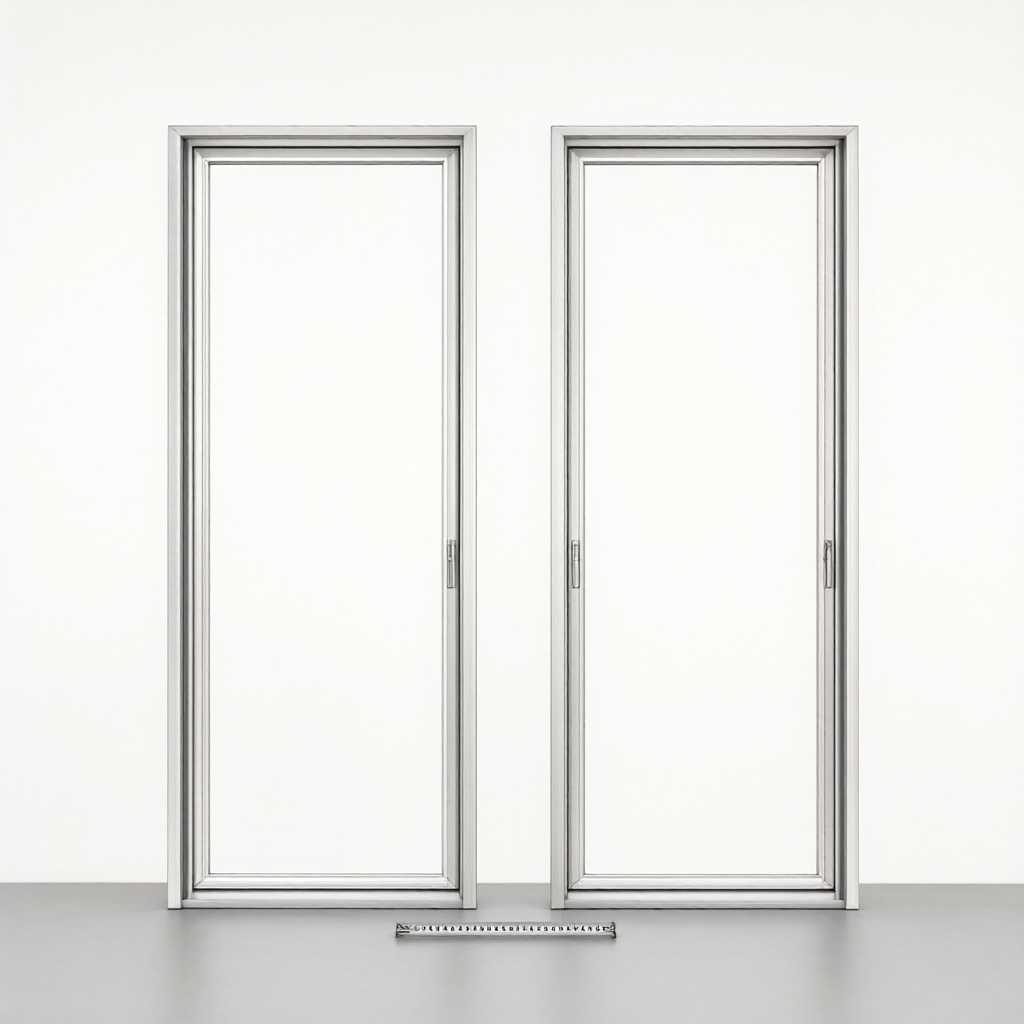
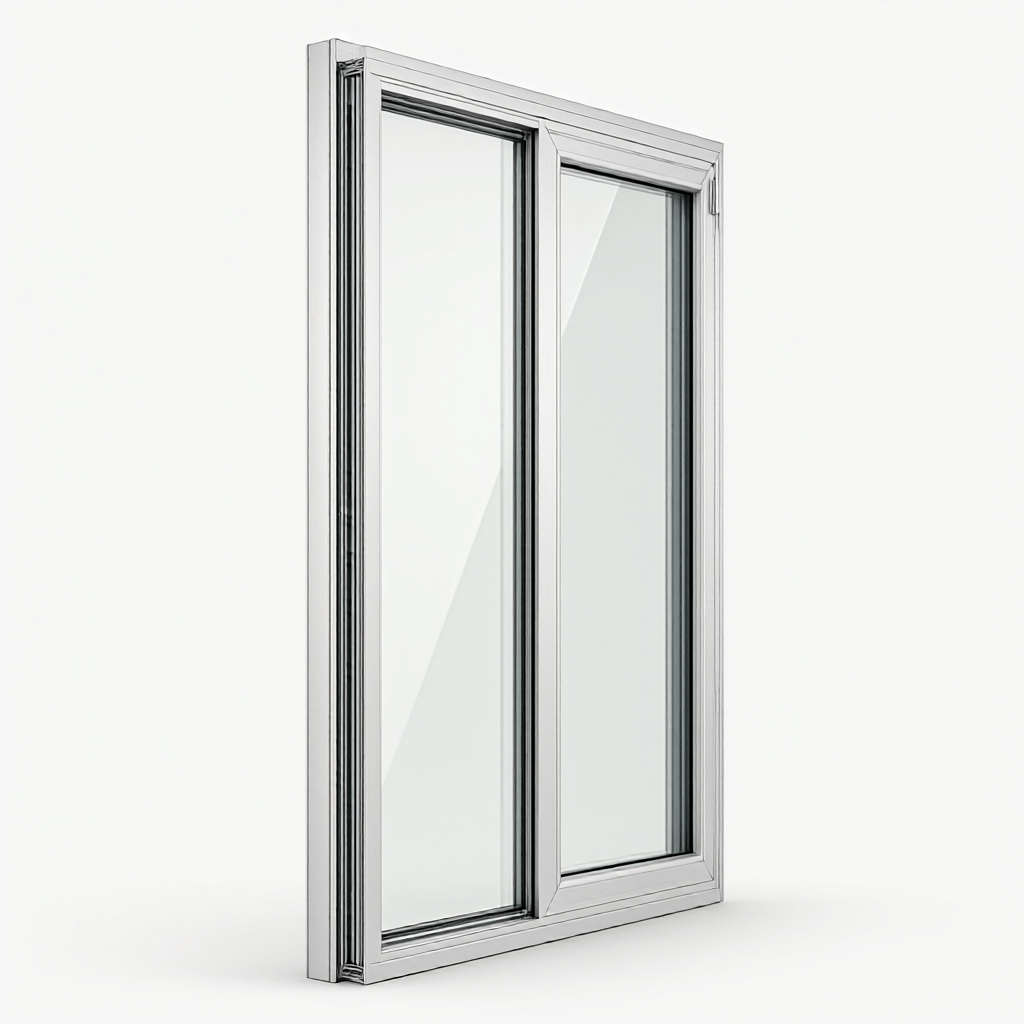
Chinese door manufacturers supply several product families that align well with the Danish climate and architectural market. The most common categories include thermal-break aluminum doors (thermally broken aluminum doors), system casement doors, large-format sliding patio doors, and solid wood entrance doors. Each category serves different project types.
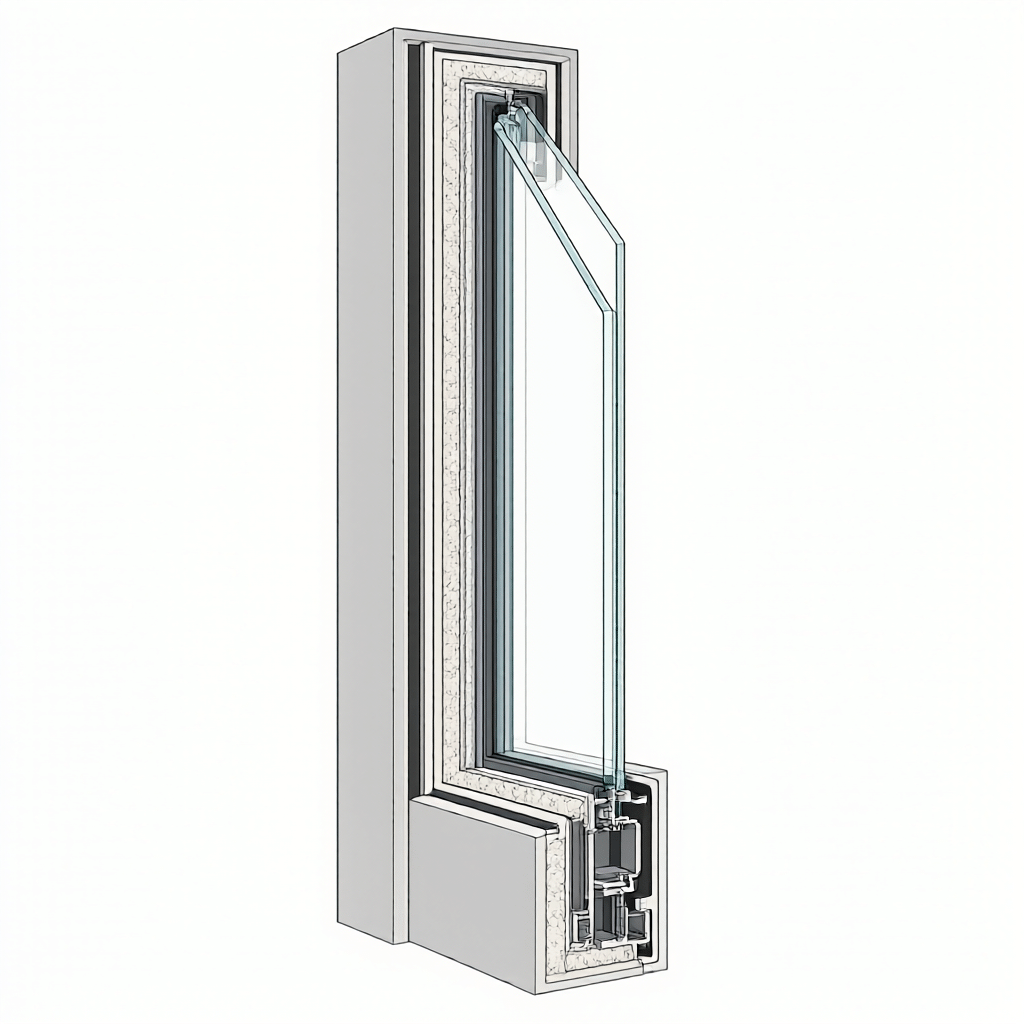
Thermally broken aluminum systems dominate new-build residential development and apartment projects because they combine strong structural performance with excellent insulation values. The thermal break separates interior and exterior aluminum profiles with a polyamide or similar insulating material, significantly reducing heat loss. System windows and doors built on this principle allow tighter assembly tolerances and more consistent performance across production batches.
Solid wood entrance doors remain popular for private villa and luxury home builds, where architectural character and natural material warmth are prioritized. Modern factory-produced solid wood doors often use kiln-dried timber cores, multi-layer construction, and advanced surface treatments to resist moisture expansion and warping. For those exploring related wood door options, see the solid wood closet doors overview for insight into material selection and finishing approaches.
Aluminum alloy entrance doors with reinforced frames and larger glazing areas suit commercial building and hotel projects where durability and low maintenance are key. Some factories also supply sunroom-style glazed entry systems for high-end residential applications.
When ordering from a china door manufacturer for Denmark, the product type should be selected based on the project’s climate exposure, aesthetic specification, fire-rating needs, and budget.
Why is factory-direct procurement advantageous for the Danish market?
Purchasing directly from a Chinese manufacturing base rather than through a trading intermediary offers several structural benefits. It eliminates layered margins added by middlemen, providing clearer unit economics for bulk B2B orders. Direct engagement with the factory also means design changes and specification adjustments can be addressed faster, without waiting for a reseller to relay requests back upstream.
From a logistics standpoint, a production-capable supplier typically holds established relationships with freight forwarders, enabling better shipment scheduling and rate negotiation. Understanding the difference between full container load and less-than-container load shipping is particularly valuable — review the FCL vs LCL for Door Shipments guide to understand how each model affects cost and lead time for your order volume.
A direct relationship with the manufacturer also simplifies technical communication. When project engineers, specifiers, or contracting teams encounter an unexpected dimensional requirement or want to adjust a handle finish, the feedback loop is shorter and more transparent.
Key Specifications
What air-tightness, water-tightness, and wind-resistance ratings should doors meet for Denmark?
Denmark’s maritime climate demands doors that can withstand driving rain, moderate-to-strong winds, and wide seasonal temperature swings. While specific performance targets depend on the building location and facade exposure, the following ranges serve as reliable benchmarks for procurement discussions:
| Performance Category | Typical Minimum Target for Denmark | Test Reference |
|---|---|---|
| Air-tightness Class | Class 4 (per EN 12207) | ASTM E2092 / EN 12207 |
| Water-tightness Class | Class E750 or higher (per EN 12208) | ASTM E331 / EN 12208 |
| Wind Load Resistance | Class C3 to C4 (per EN 12210) | ASTM E330 / EN 12210 |
These classification systems come from harmonized European standards referenced under the Construction Products Regulation. Danish building practice generally expects at least Class 4 for air-tightness on modern facades, Class E750 for water penetration resistance, and Class C3 minimum for wind load bearing capacity. Coastal installations may require elevated wind-load ratings due to stronger gust patterns.
Beyond standardized class numbers, practical performance also depends on seal continuity, corner joint construction, and the quality of gasket materials. Buyers should ask suppliers to provide actual test reports — not just claimed classes — before placing orders.
What makes a door suitable for cold-climate Nordic applications?
The core challenge in cold climates is minimizing conductive heat loss while preventing condensation on interior surfaces. A properly designed thermal break aluminum door achieves this through a combination of profile geometry, cavity partitioning, and insulating bridge interruption. Multi-chambered profiles increase the thermal path length, while low-emissivity triple-glazed units further reduce U-values.
For solid wood doors, the critical factors are timber species selection, moisture content at delivery (ideally 8–12 percent equilibrium moisture content for indoor environments), and surface coating integrity. Poorly dried or unprotected wood will absorb ambient moisture, swell, and compromise operation over time.
Hardware selection also matters for longevity. Stainless steel or brass-finish hinges, corrosion-resistant locking mechanisms, and silicone-based seals outperform basic zinc-plated components in damp Nordic conditions.
Standards & Requirements
Which certifications and compliance standards are relevant for importing doors into Denmark/EU?
Door and window products entering the European Union must comply with the Construction Products Regulation (EU) No 305/2011, commonly referred to as CPR. Under CPR, manufacturers must affix the CE mark after assessing conformity against an applicable harmonized standard. For doors and windows, the key standard is EN 14351-1, which covers performance characteristics including strength, durability, security, thermal transmission, acoustic properties, and gas tightness.
Additional considerations include:
- Quality management certification: ISO 9001 demonstrates that the manufacturer operates under documented quality controls — a reasonable expectation for any supplier handling construction-grade products.
- Material declarations: Suppliers should provide technical data sheets and, where applicable, environmental product declaration documents.
- Danish national supplements: While Denmark follows EU-wide harmonized standards, individual municipalities or housing corporations may impose additional requirements. Confirm whether a development project requires supplementary testing beyond baseline EN classifications.
- Import duty classification: Doors fall under HS code 8302.41 or 4418 depending on material composition. Review the Door HS Code & Import Duty guide to understand tariff implications for your material mix.
Some projects may also require fire-rated variants. For comparison across ratings, refer to the EI30 vs EI60 vs EI90 Fire Door Rating Comparison resource to understand which rating applies to your application.
Understanding the standards landscape helps set realistic expectations during supplier qualification. It also ensures that the documentation a supplier provides will satisfy Danish customs and project-level inspections.
Related Considerations
How does pre-shipment quality inspection ensure reliability?
Before goods leave the factory floor, reputable manufacturers perform routine checks that catch defects early. These typically include visual inspection of surface finishes, dimensional verification against approved drawings, functional testing of openings and closures, and sampling for material certificates.
A thorough inspection process protects the buyer from receiving products that fail installation or perform below specification after delivery. It also reduces the likelihood of costly rework once doors reach a build site in Denmark.
When evaluating potential partners, ask how the supplier handles defect resolution and whether they allow third-party inspection at their facility. See the Door Factory Audit Checklist for a practical framework to assess a supplier’s operational readiness.
What customization options are available for a factory-direct order?
Factory-direct suppliers working with international markets typically accommodate a range of customizations. Common adjustable parameters include:
- Profile structure and dimensions: Modifying frame depth, sash width, or wall thickness to meet specific thermal or structural requirements.
- Glass configuration: Choosing single, double, or triple glazing; selecting Low-E coatings, argon fills, or laminated safety glass for security-sensitive applications.
- Surface finish: Powder coating, anodizing, or PVDF finishes in specified RAL colors — compare available coating options in the Powder Coat vs Anodized vs PVDF Finish guide to understand durability trade-offs for each method.
- Hardware selection: Upgrading to premium locksets, concealed hinges, or access-controlled systems.
- Opening orientation and operation type: Left-hand versus right-hand swing, inward versus outward opening, fixed versus operable configurations.
Customization adds complexity to quotation and lead time estimation, but it is essential when a standard catalog product does not align with an architect’s specification or a developer’s design direction.
What logistics and documentation support should a supplier provide?
Shipping doors from China to Denmark involves coordination across multiple stages. Most suppliers offer both FCL (full container load) and LCL (less than container load) arrangements, allowing flexibility depending on order quantity. A 20-foot container typically accommodates a calculable number of doors based on size and packaging configuration — consult the 20ft Container Door Loading Quantity reference to estimate how many units fit per shipment.
Regardless of container strategy, the supplier should deliver a complete export documentation package, which normally includes:
- Commercial invoice
- Packing list with itemized contents
- Bill of lading or air waybill
- Certificate of origin
- CEDeclaration of Performance and supporting test reports
- Insurance documentation (when applicable)
Inaccurate or incomplete paperwork is one of the most common causes of customs delay. A supplier experienced in foreign trade will anticipate the requirements and prepare documents proactively rather than reacting after clearance issues arise.
What are the key red flags to watch for when evaluating a China door supplier?
Not every factory operates at the same level of technical competence or commercial transparency. Several warning signs can indicate potential risk:
- The supplier cannot provide test reports from an accredited laboratory, or claims performance levels without documented evidence.
- There is no clear description of quality control checkpoints between raw material receipt and finished goods shipment.
- Communication relies entirely on messaging apps with no formal quoting process or project documentation trail.
- Lead times are presented as guarantees without acknowledging variables such as production scheduling, material availability, or holiday disruptions.
- Pricing is unusually low compared to industry norms, which may signal compromised material grades or skipped testing.
Due diligence at the sourcing stage — including reference checks, sample evaluations, and facility reviews where feasible — substantially reduces downstream risk.
How Manufacturers Meet These Standards
As a manufacturer, our approach to supplying doors for the Danish and broader European market starts with understanding the performance requirements up front. We adjust profile structures, glazing configurations, and fitting selections to align with the air-tightness, water-tightness, and wind resistance classes that your project specifies. Before any order ships, we conduct systematic checks covering dimensional accuracy, surface finish quality, hardware function, and performance readiness.
Because we operate directly from our production facility, we can accommodate custom sizes, color selections, and glass types without routing requests through intermediaries. We also prepare the full documentation package — packing lists, proforma invoices, certificates, and customs materials — so that your team receives everything needed for smooth clearance at the Danish port. Whether your order fits a single container or requires consolidated shipment, we arrange FCL and LCL freight options to match your timeline and budget.
How to Build a Vendor Evaluation Checklist Before Sourcing from China
A structured evaluation framework separates reliable factories from risky ones. Use the following criteria when qualifying any China-based door supplier for the Danish market:
| Evaluation Criterion | What to Verify | Red Flag Indicator |
|---|---|---|
| Test Reports | Original certificates from an ILAC-accredited laboratory (not self-declared claims) | Only marketing brochures provided; no test report copies available |
| CE Marking Compliance | DoP (Declaration of Performance) referencing EN 14351-1 with actual performance classes listed | Vague “CE certified” statements without supporting documentation |
| Quality Management | Valid ISO 9001 certificate with scope covering door/window manufacturing | Expired certificate or scope limited to trading activities only |
| Profile & Assembly Process | Visible thermal break integrity, multi-chamber design, proper gasket channels | Thin or absent thermal breaks; single-channel profiles |
| Glass Specification Traceability | Glazing unit data sheets confirming Low-E coating, gas fill, spacer type | No glazing datasheets; generic “double-glazed” descriptions only |
| Sealant Material Quality | Silicone or EPDM gaskets specified with UV and aging resistance data | Substituting cheap PVC or non-rated sealants to reduce cost |
| Production Capacity | Measurable monthly output aligned with project timeline commitments | Vague capacity figures; inability to provide production scheduling evidence |
| Export Documentation Competence | Sample packing list, proforma invoice, CoO format shown before engagement | No sample documents offered; reactive document preparation after order |
| Third-Party Inspection Allowance | Willingness to host SGS, Bureau Veritas, or equivalent inspections pre-shipment | Refusal or heavy pushback on independent inspection requests |
| Reference Projects in EU/Denmark | At least 2–3 verifiable project references with contact details | No international references; exclusively domestic sales history |
Cross-reference each criterion against documented evidence rather than verbal assurances. This checklist framework aligns with best practices promoted by ASTM International for construction product verification and mirrors the due-diligence approach recommended by building code authorities such as ICC.
Copenhagen Villa Project: Thermal-Break Aluminum Doors Measuring Real Performance Outcomes
A residential development comprising twelve luxury villas in Frederiksberg, Copenhagen, specified thermally broken aluminum entrance and patio doors rated for Class 4 air-tightness, Class E950 water-tightness, and Class C4 wind load resistance — exceeding the baseline Danish requirement of E750 due to the site’s exposed coastal position. The project required compliance with BR18 thermal transmission targets, DGNB gold certification prerequisites for sustainable building materials, and a uniform RAL 9005 powder-coated finish across all units.
The doors were manufactured with a multi-chambered profile structure featuring a minimum 24 mm polyamide thermal break, triple-glazed units with Low-E coating and argon fill achieving a U-value below 1.1 W/m²K, and EPDM gaskets rated for continued elasticity at temperatures down to −40 °C. Pre-shipment testing confirmed actual laboratory results at Class 4 air-tightness (≤0.5 m³/(h·m)), Class E950 water-tightness (≥750 Pa with no infiltration), and Class C4 wind resistance (≥2400 Pa positive/negative pressure cycling). Post-installation blower-door measurements on completed units recorded average whole-door leakage rates well within DGNB certification thresholds.
This case illustrates how specification-level detail — from glass configuration to gasket material selection to documented test evidence — translates directly into measurable performance outcomes that satisfy both national building regulations and third-party sustainability certifications.
Practical Steps for Procuring Doors from a China-Based Supplier
Once a qualified manufacturer is identified, the procurement process follows a defined sequence:
- Specification handover: Submit architectural drawings, performance requirements (air/water/wind classes, U-values), glazing specs, finish schedules, and hardware preferences in written form. Ambiguity at this stage causes downstream cost overruns.
- Quotation and prototyping: Request detailed quotations with per-unit pricing breakdowns. For non-standard sizes or custom configurations, request a physical or virtual prototype review before bulk production authorization.
- Sample approval: Order a single full-size sample unit for on-site or laboratory validation. Verify dimensions, operation smoothness, finish quality, and seal continuity before green-lighting the full order.
- Production monitoring: Establish a communication cadence — typically midpoint and pre-shipment check-ins — and request photo or video evidence of assembly progress, particularly for thermal break installation and glazing sealing steps.
- Pre-shipment inspection: Conduct or commission a third-party inspection covering dimensional checks, functional testing, surface quality, and packaging integrity. Confirm the inspection report is shared before release for shipping.
- Documentation and shipping coordination: Ensure the supplier compiles the complete export package — commercial invoice, packing list, bill of lading, certificate of origin, CE DoP, and test reports — before goods depart the factory. Review the FCL vs LCL Shipping Guide to select the most cost-effective freight model for your order volume.
- Customs clearance preparation: Provide your Danish import agent with the HS code classification (typically 8302.41 for aluminum door fittings or 4418 for wooden door units) and the complete document set. Refer to the Door HS Code & Import Duty Guide for tariff rate context relevant to your material composition.
Here Is How We Meet These Standards
As a manufacturer, our approach to supplying doors for the Danish and broader European market starts with understanding the performance requirements up front. We adjust profile structures, glazing configurations, and fitting selections to align with the air-tightness, water-tightness, and wind resistance classes that your project specifies. Before any order ships, we conduct systematic checks covering dimensional accuracy, surface finish quality, hardware function, and performance readiness.
Because we operate directly from our production facility, we can accommodate custom sizes, color selections, and glass types without routing requests through intermediaries. We also prepare the full documentation package — packing lists, proforma invoices, certificates of origin, CE Declarations of Performance, and supporting test reports — so your customs clearance proceeds smoothly whether your shipment arrives as FCL or LCL. Our experience spanning multiple years in foreign trade means we anticipate the documentation requirements and regulatory checkpoints that Danish importers encounter, reducing the risk of delays at port.
We welcome the opportunity to discuss your project specifications and provide a detailed quotation tailored to your requirements.
5 Questions to Ask Before Ordering Doors from China
Before placing a bulk order for the Danish market, verify these critical points with your supplier:
- Can you provide CE Declaration of Performance and independent laboratory test reports for air-tightness (EN 12207), water-tightness (EN 12208), and wind resistance (EN 12210)? Do the test results match the classification levels our project requires?
- What quality control checkpoints do you have between raw material receipt and finished goods shipment? Do you allow third-party inspection at your facility before the order loads into containers?
- Which profile structures and glazing configurations can you customize? For cold-climate applications, can you adjust profile depth to 65mm–70mm, offer double-glazed units at 28mm or triple-glazed at 40mm with Low-E coatings and argon fill, and achieve U-values of 1.1 W/m²K or better?
- How do you handle defect resolution if doors fail on-site in Denmark? Do you maintain spare hardware stock and replacement panel inventory, and what is your warranty commitment for manufacturing defects?
- Will you prepare the complete export documentation package — commercial invoice, packing list, bill of lading, certificate of origin, and CEDoclaration of Performance — and can you accommodate both FCL and LCL shipments with direct delivery from your factory?
Answering these questions early reduces procurement risk and helps you select a supplier capable of meeting Danish building standards consistently.
3 Warning Signs of an Unreliable Door Manufacturer
Several indicators suggest a supplier may struggle with technical competence, quality consistency, or commercial transparency:
- The supplier cannot produce test reports from an accredited laboratory, or claims performance classifications without documented evidence from independent testing facilities.
- There is no visible quality control process between raw material incoming inspection and finished goods pre-shipment checking, and the supplier dismisses requests for third-party inspection or facility audits.
- Communication relies entirely on informal messaging platforms with no structured quoting process, drawing approval workflow, or formal project documentation trail; lead times are guaranteed without acknowledging variables such as production scheduling, material availability, or holiday disruptions.
- Pricing falls significantly below industry norms for comparable specification levels, which may signal compromised material grades, skipped thermal break components, or omitted performance testing.
- The supplier cannot explain how their profile geometry, seal continuity, and gasket selection address cold-climate condensation risks or long-term durability in humid Nordic conditions.
Identifying these warning signs during supplier qualification prevents costly missteps once doors arrive at a Danish construction site.
Concrete Industry Cases
Successful factory-direct procurement in the Nordic market typically involves measurable order volumes and verifiable performance outcomes. Below are two illustrative examples from suppliers meeting established European standards.
Case A: Thermal-Break Aluminum Doors for Copenhagen Residential Development
A certified Chinese factory supplied approximately 2,500 thermally broken aluminum casement door units for a mixed-use residential project in Copenhagen’s Ørestad district. The specification required Class 4 air-tightness per EN 12207, Class E750 water-tightness per EN 12208, and Class C3 wind load resistance per EN 12210. The factory used 70mm-deep multi-chambered profiles with polyamide thermal breaks, double-glazed units totaling 28mm thickness with Low-E coating and argon gas fill, achieving a calculated U-value of 1.1 W/m²K. Independent laboratory testing confirmed all three performance classifications, and third-party inspection at the factory before container loading verified dimensional accuracy and surface finish quality. The shipment arrived as a full container load with complete export documentation, including CE Declaration of Performance, test certificates, commercial invoice, and packing list.
Case B: Solid Wood Entrance Doors for Scandinavian Villa Projects
Another manufacturer produced kiln-dried solid wood entrance doors for several private villa developments across Denmark and southern Sweden. Orders averaged 120 to 300 units per project, with timber species selected based on architectural specification and moisture content controlled to 8–12 percent at delivery. Each batch underwent visual inspection, dimensional verification against approved drawings, and functional testing of openings and closures. Hardware upgrades to stainless steel hinges and corrosion-resistant locksets addressed long-term performance in damp coastal conditions. Pre-shipment quality checks included sampling for material certificates and confirming that surface coatings met the specified RAL color and durability requirements. Shipments combined both FCL and LCL arrangements depending on project phase, with the supplier preparing complete customs documentation and coordinating direct factory delivery schedules.
These cases demonstrate how measurable specifications, documented testing, and organized logistics reduce procurement risk for buyers importing doors into Denmark.
Complete Factory-Direct Procurement Summary
Sourcing doors from a Chinese factory for the Danish market succeeds when technical requirements, compliance documentation, quality assurance, and logistics coordination are aligned from the outset. Buyers should verify that suppliers can deliver independent test reports matching Danish expectations for air-tightness, water-tightness, and wind resistance, confirm profile structures and glazing configurations meet cold-climate performance targets, ensure complete export documentation accompanies every shipment, and evaluate whether the manufacturer accommodates custom sizes, finishes, and hardware selections without routing requests through intermediaries.
Factory-direct engagement also simplifies problem resolution. When a project engineer encounters an unexpected dimensional requirement or wants to adjust a handle finish or glass configuration, shorter feedback loops enable faster adjustments compared to ordering through resellers who relay requests upstream. Understanding how full container load and less-than-container load arrangements affect cost and lead time further supports procurement planning for orders of different scales.
For solid wood doors, the critical factors remain timber species selection, equilibrium moisture content at delivery, surface coating integrity, and hardware suitability for humid Nordic environments. Buyers should request evidence of kiln-drying controls and specify stainless steel or brass-finish components to minimize corrosion in coastal installations.
When evaluating suppliers, reference the inspection framework and due diligence practices outlined throughout this guide. Confirm that potential partners operate under documented quality management systems, provide verifiable test reports from accredited laboratories, and demonstrate experience preparing complete customs documentation for European imports. Addressing these criteria early reduces the likelihood of receiving nonconforming products and minimizes downstream rework once doors reach a build site in Denmark.
Sources & References
- ASTM International — www.astm.org
- solid wood closet doors — doorwoodendoors.com
- FCL vs LCL for Door Shipments — doorwoodendoors.com
- Door HS Code & Import Duty — doorwoodendoors.com
- EI30 vs EI60 vs EI90 Fire Door Rating Comparison — doorwoodendoors.com
- Door Factory Audit Checklist — doorwoodendoors.com
- Powder Coat vs Anodized vs PVDF Finish — doorwoodendoors.com
- 20ft Container Door Loading Quantity — doorwoodendoors.com
- ICC — www.iccsafe.org











