
Last updated: November 25, 2026
Quick Answer
What is US imports of Chinese doors?
US imports of Chinese doors refers to the procurement and cross-border shipment of residential, commercial, and industrial door products manufactured in China and entering the United States for resale or project use. For B2B buyers, this encompasses everything from timber entry doors and aluminum system windows to prehung units and custom villa doors shipped under specific Harmonized Tariff Schedule (HTS) codes, subject to U.S. Customs and Border Protection (CBP) regulations, applicable tariffs, and building-code compliance requirements.
In practical terms, importing doors from China means sourcing factory-direct or OEM-manufactured door assemblies through ocean freight or consolidated shipments, clearing them through U.S. ports, and verifying that each product meets the relevant ANSI, NFRC, ICC, or ADA standards before distribution or installation. The category has grown substantially as developers, contractors, and distributors look for cost-competitive alternatives to domestic and North American manufacturing while managing trade-policy risk and quality assurance overhead.
Detailed Explanation
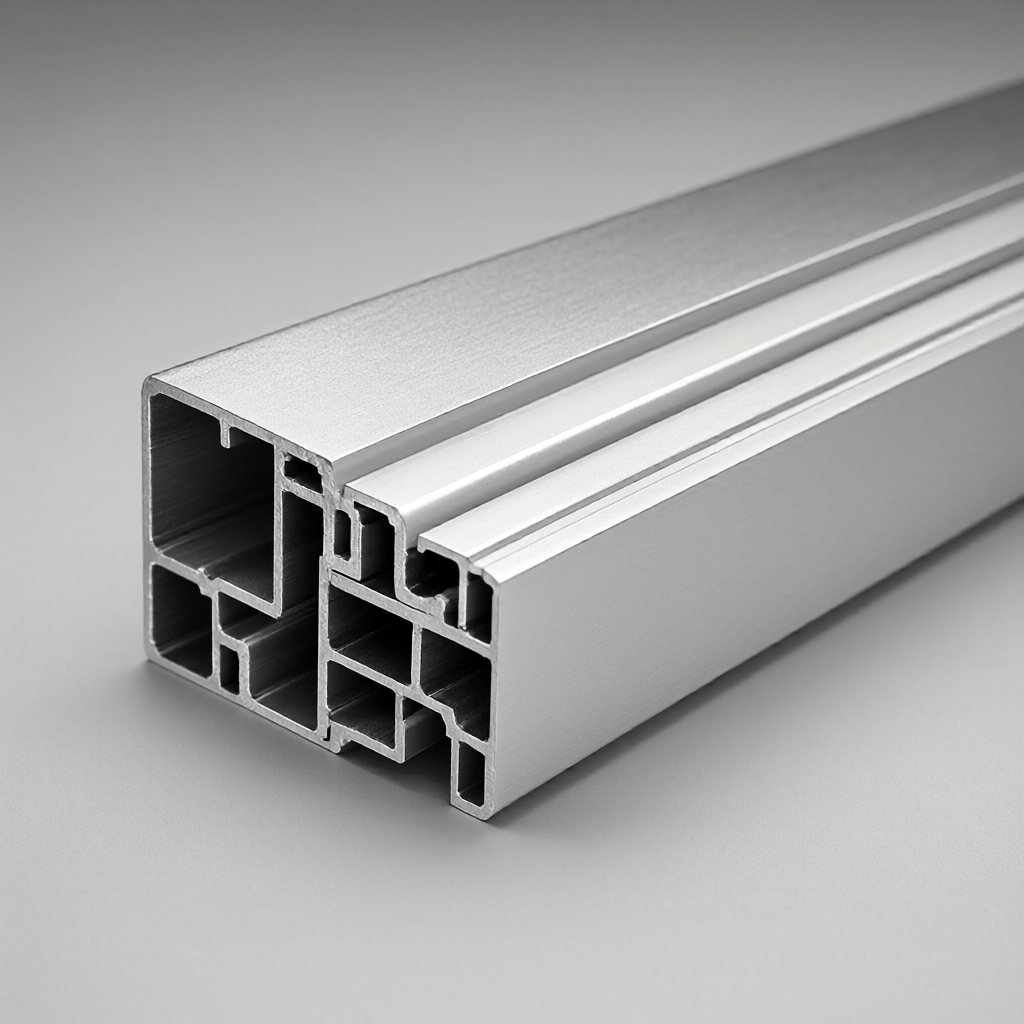
How does importing doors from China work?
The import process follows a defined chain: supplier selection, commercial documentation, freight booking, customs entry, tariff payment, and post-arrival inspection. Each step carries its own cost and risk profile.
On the sourcing side, Chinese door manufacturers typically operate in concentrated manufacturing clusters across provinces such as Guangdong, Shandong, and Zhejiang. The most common product categories imported into the U.S. include solid wood doors, thermal-break aluminum windows and doors, system windows, sliding and casement doors, and sunroom glazing systems. Buyers usually engage suppliers through direct factory contact, trade shows, or verified B2B platforms rather than relying on general wholesale marketplaces, because door specifications require precise dimensional, material, and hardware coordination.
Logistically, doors ship as FCL (full container load) or LCL (less than container load) cargo. A standard 40-foot high-cube container can hold approximately 80 to 120 sets of prehung interior doors, depending on pack size, or roughly 30 to 50 sets of large-format aluminum window and door assemblies. Freight rates fluctuate with container availability, fuel surcharges, and route congestion, so landed-cost modeling must treat freight as a variable rather than a fixed input.
Once the vessel arrives at a U.S. port, the importer of record — usually the buyer or their licensed customs broker — files the entry summary with CBP, declares the correct HTS code, pays applicable duties, and provides supporting documents including the commercial invoice, packing list, bill of lading, and any required certificates of compliance or phytosanitary documentation for wood products.
Why does this matter to B2B buyers?
Importing doors from China offers meaningful cost leverage, especially on volume project orders, custom sizes, and brands that do not carry heavy domestic manufacturing overhead. A well-managed import can reduce unit cost by 20 to 40 percent compared with equivalent U.S.-made or Mexican-sourced products, depending on product type, configuration, and duty exposure.
However, the savings are not automatic. Tariff rates, freight costs, inspection rework, and compliance testing can erode the advantage quickly if the procurement process is treated as a simple price comparison rather than a structured supply-chain decision. Buyers who skip supplier verification, ignore post-shipment quality checks, or misclassify products under incorrect HTS codes often face costly delays, port holds, or rejected shipments.
What tariffs apply to importing doors from China to the US?
Tariff exposure is the single most important cost variable in a door import calculation. Most door products fall under Chapter 44 (wood) or Chapter 76 (aluminum) of the HTS, with duty rates that vary by material, construction, and finish. Under current U.S. trade policy, certain Chinese-origin goods are subject to additional Section 301 tariffs, which have historically applied to wood and aluminum products including doors and windows.
| Product Category | Typical HTS Code | Base Duty Rate | Notes |
|---|---|---|---|
| Solid wood doors | 4418.20.00 | Varies by Section 301 list status | Wood origin and processing affect classification |
| Prehung wooden doors | 4418.20.00 | See above | Includes frame assembly |
| Aluminum windows and doors | 7610.10.00 / 7610.90.00 | Varies; potential additional duties | Thermal-break construction does not change HTS |
| Interior composite doors | 4418.99 / 4412.31 | Depends on core material | HDF or MDF core changes classification |
Buyers should verify the current duty rate for their specific HTS code before committing to an order, because trade policy adjustments can change rates without extensive public notice. The Office of the U.S. Trade Representative publishes periodic updates to the Section 301 tariff list, and CBP enforces the rates in effect at the time of import entry.
How do I clear customs for door imports?
Customs clearance for doors involves several procedural steps:
- Appoint a licensed customs broker. Most importers use a broker who files the CBP entry on their behalf and manages document submission, duty payment, and port coordination.
- Prepare complete commercial documentation. The commercial invoice must list the product description, HTS code, unit price, total value, country of origin, and Incoterms. The packing list must match the commercial invoice line items and container contents exactly.
- Submit the import entry. Your broker files the automated commercial entry (ACE) through CBP’s system. For wood products, CBP may require a phytosanitary certificate or ISPM 15 compliance declaration to confirm that timber packaging and raw materials meet U.S. agricultural import standards.
- Pay duties and taxes. CBP assesses duty based on the declared HTS code and value. Importers may also owe merchandise processing fees (MPF) and harmonic system fees (HSF), calculated as a percentage of the dutiable value.
- Release and delivery. Once CBP approves the entry and duties are paid, the shipment is released for pickup. Delayed releases typically result from document mismatches, missing certificates, or random CBP examinations.
Key Specifications
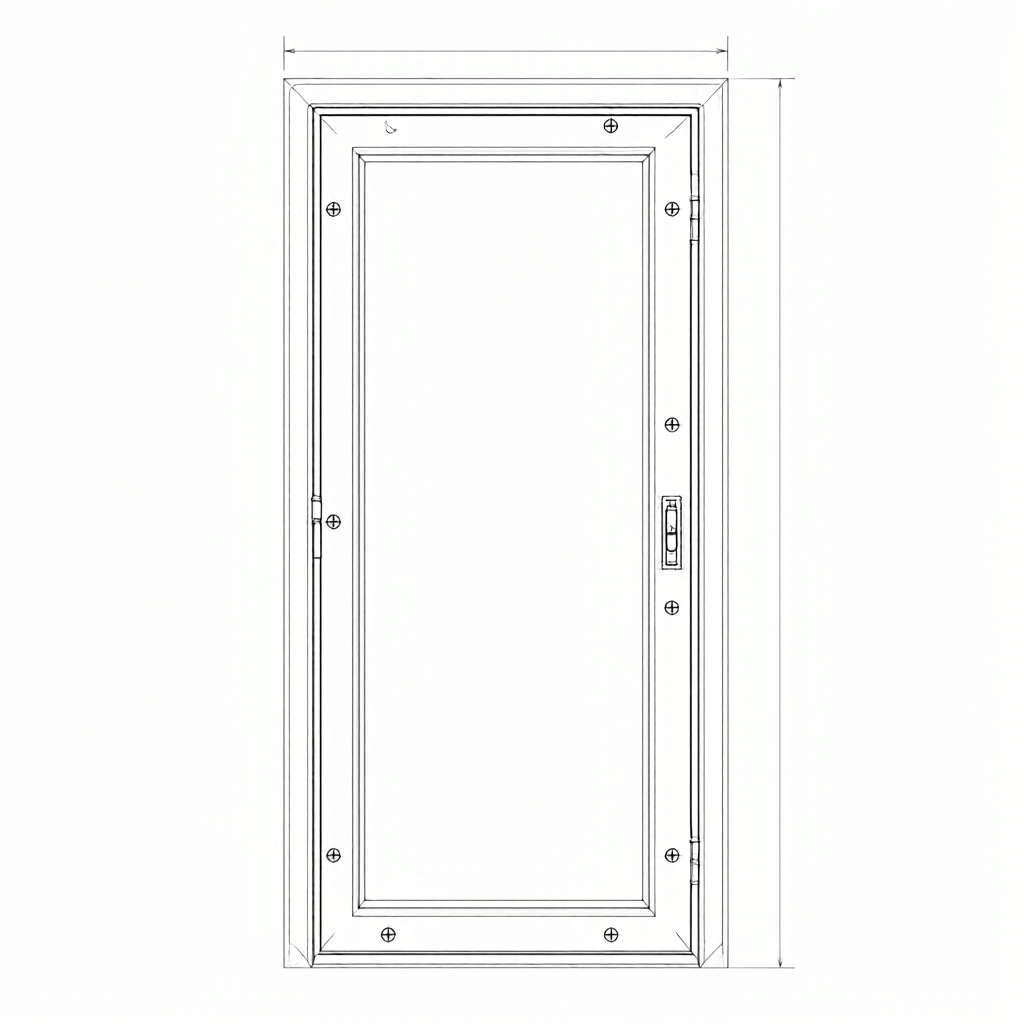
What are the key specs for US imports of chinese doors?
Specifications determine whether an imported door product will clear customs, meet building-code requirements, and perform satisfactorily in the field. Buyers should define specs at four levels: dimensional, material, performance, and packaging.
Dimensional specifications are the most common source of import errors. U.S. door sizes follow nominal sizing conventions that differ from Asian metric standards. A common mismatch occurs when a buyer orders a “36-inch door” from a Chinese supplier using ISO metric measurements, resulting in a unit that is 900 mm (approximately 35.4 inches) rather than the expected 914 mm (36 inches). Always specify rough opening dimensions in inches and confirm the manufacturer’s tolerance band before production.
Material specifications must address core composition, frame profile, glass type, and hardware grade. For solid wood doors, the species, moisture content, and joint construction affect both performance and customs documentation. Thermal-break aluminum doors require confirmation of the break material, thermal performance rating, and anodized or powder-coated finish type. Glass units must state air or argon fill, spacer type, and glazing configuration.
Performance specifications should reference the relevant testing standard for the product category. Air infiltration, water resistance, and structural wind-load performance are typically tested according to AAMA/WDMA/CSA 101/I.S.2/A440 for aluminum windows and doors, or ANSI/WDMA HD1 for wood windows and doors. NFRC certification applies when energy-performance labeling is required for code compliance.
Packaging specifications directly affect freight cost and damage risk. Doors should be packaged in reinforced carton or wooden crate with edge protectors, desiccant packs, and clear orientation labels. AAMA-recommended packaging guidelines help prevent glass breakage, frame deformation, and hardware damage during ocean transit and port handling.
For related guidance on door hardware installation and hinge spacing for import-grade units, see our hinge spacing rules for interior and exterior doors guide.
Standards & Requirements
What standards apply to imported doors?
U.S. import of doors is governed by a combination of federal customs regulations, building codes, and voluntary consensus standards. Compliance is not optional for commercial projects and increasingly matters for residential builds that undergo plan review.
Building code compliance. The International Building Code (IBC) and International Residential Code (IRC), published by the International Code Council (ICC), establish minimum requirements for fire-rated doors, emergency egress openings, structural performance, and accessibility. The IBC Chapter 716 covers opening protectives including fire door and window assemblies, which directly affects specification for commercial and multi-family residential imports.
Product performance standards. The American National Standards Institute (ANSI) and Window & Door Manufacturers Association (WDMA) publish standards that define test methods and performance classifications. Key standards include:
- ANSI/WDMA I.S.1 for residential windows and doors
- AAMA/WDMA/CSA 101/I.S.2 for aluminum window and door performance
- NFRC 100 and NFRC 150 for energy-performance rating and labeling
- ADA Standards for Accessible Design for hardware reach and operation force
Fire-rated doors. Fire-rated door assemblies imported from China must be listed and labeled by a nationally recognized testing laboratory (NTRL) such as UL, Warnock Hersey, or Intertek. The label must remain attached to the door, and CBP may request documentation proving the listing during commercial entry audit.
Wood product regulations. If importing solid wood doors or timber-frame products, compliance with USDAAPHIS phytosanitary requirements and the Lacey Act (which prohibits trade in illegally sourced timber) is mandatory. The American Wood Council provides reference materials on wood construction standards that help buyers validate material claims from foreign suppliers.
ADA compliance. Exterior and interior accessible doors must meet ADAAG requirements for clear opening width, operating force, handle type, and threshold height. Door handle height standards should be verified against local jurisdiction requirements, as some states impose stricter limits than the federal baseline. Our door handle height standards and specifications guide covers the key measurement ranges.
Related Considerations
What should you consider when importing doors from China?
Successful door imports depend on more than finding a low-priced supplier. Buyers should evaluate five critical areas before placing an order and during the sourcing process.
Supplier verification goes beyond price comparison. A credible Chinese door manufacturer should provide verifiable company registration, export history to the U.S. market, third-party test reports from accredited laboratories, and references from previous U.S. buyers. Requesting a factory audit report or video walkthrough of the production line adds significant risk reduction. Suppliers that cannot produce test certificates for the specific product category they claim to manufacture should be treated as high-risk.
Quality inspection before shipment is non-negotiable. Pre-shipment inspection should cover dimensional accuracy, surface finish, hardware function, glass seal integrity, and packaging completeness. A small sampling rate — typically 5 to 10 percent of the order — is standard practice for large containers, while 100 percent inspection is recommended for high-value custom orders or first-time supplier engagements. Inspectors should verify that products match the approved sample and that test reports correspond to the actual manufactured items.
Landed-cost modeling must include all variables. A useful import cost model includes the EXW or FOB unit price, domestic China freight to port, ocean freight, insurance, U.S. customs duties and MPF/HSF fees, customs broker fees, U.S. domestic freight to warehouse or job site, and an inspection and rework contingency. The final landed cost per unit — not the FOB price alone — should drive the sourcing decision.
Post-import quality control prevents field failures. Doors that arrive with packing damage, misaligned frames, defective hardware, or incorrect glass specifications create expensive field rework. Establishing a receiving inspection protocol at the U.S. warehouse — checking each container against the packing list, verifying unit counts, and testing random samples for operation and seal integrity — catches issues before products reach the installer.
Alternative sourcing should be evaluated on total cost, not just unit price. Mexican and Canadian manufacturers offer shorter lead times and lower freight costs for U.S. buyers, which can be decisive on fast-track projects. However, Chinese manufacturers often provide greater customization flexibility and lower absolute unit prices on volume orders. The optimal sourcing strategy compares total delivered cost, lead time, and customization capability for each order profile.
How do we meet these import-ready standards?
As a manufacturer that ships door and window products to international buyers, our approach aligns directly with the requirements that U.S. importers need: products built to confirmed specifications, verified through pre-shipment testing, and accompanied by complete export documentation.
We configure profile structures and hardware fittings to match the building-code requirements of target markets, so buyers receive products that align with U.S. dimensional and performance expectations rather than generic export variants. Each shipment undergoes standardized testing for air-tightness, water-tightness, and wind resistance before it leaves the factory. We provide packing lists, proforma invoices, and full customs documentation to support smooth customs clearance, and we handle both FCL and LCL shipments with direct delivery from our factory.
Full customization on size, color, glass, and hardware accessories means your specifications drive the order rather than fitting your project into a catalog product. Because we ship direct from the factory without middleman markup, the landed-cost calculation stays transparent from quotation through delivery.
For procurement-related guidance, see our B2B buyer’s guide to hanging interior doors or our complete prehung door installation guide. If your project involves smoke-door assemblies, our NFPA 105 smoke door assembly standards guide covers the relevant requirements.
### How do you choose reliable Chinese door suppliers for US imports?
Selecting the right Chinese door manufacturer for US-bound orders requires a structured vetting process. Buyers should follow a step-by-step evaluation covering supplier credentials, product compliance, manufacturing capability, and logistical readiness.
Supplier vetting steps. Begin by verifying the company’s business license, export history to North America, and presence on customs shipment records. Request third-party test reports from accredited laboratories (SGS, TÜV, Intertek) specifically for the product categories you intend to order — thermal-break aluminum doors should carry NFRC or AAMA 101/I.S.2 certificates; solid wood doors should have formaldehyde emission test results (CARB Phase 2 or EPA TSCA Title VI compliant). Check that the supplier has completed at least three successful FCL shipments to US ports within the past 24 months.
Documentation requirements. A compliant door shipment from China must include: commercial invoice with harmonized tariff code, packing list with unit counts per carton, bill of lading, certificate of origin, phytosanitary certificate (for wood products), and NFRC/ANSI test reports for each product SKU. Ensure your customs broker pre-filies these documents to avoid port holds at LA, Long Beach, or Houston.
Quality inspection milestones. Inspections should occur at three stages: pre-production (material and profile verification), during-production (assembly and hardware check on a random sample), and pre-shipment (final quality audit covering all units in the container). Third-party inspection services such as SGS or QIMA can perform AQL-based sampling at 2.5% inspection level for standard orders and 1.0% for repeat suppliers with strong track records.
Concrete industry case: HTS classification and landed cost calculation
For a typical order, consider a 40-foot high-cube container carrying 45 sets of thermally broken aluminum sliding doors (1800 mm × 2100 mm) with double-glazed IGUs (6 mm glass / 12 mm argon / 6 mm glass, SHGC 0.25, U-factor 0.29). The goods fall under HTS code 7610.10.00 (aluminum structures and parts thereof), which carries a base MFN duty rate of 5.6%. Under Section 301, an additional 25% tariff applies to this classification, bringing the total duty to 30.6% of the customs value.
Assuming an FOB factory price of $185 per door set:
| Cost Component | Amount |
|---|---|
| Product (45 sets × $185 FOB) | $8,325 |
| Domestic freight (factory → Shanghai port) | $650 |
| Ocean freight (China → Long Beach) | $2,200 |
| Insurance | $125 |
| Customs duties (30.6% of $8,325) | $2,547 |
| MPF (0.3464%, min $961, max $607) | $288 |
| HSF (0.125% of dutiable value) | $104 |
| Customs broker fee | $350 |
| US domestic freight (port → warehouse) | $900 |
| Inspection & contingency (3%) | $315 |
| Total landed cost | $15,804 |
| Landed cost per door set | ≈ $351 |
This contrasts with a domestic US-manufactured equivalent at approximately $420–$490 per set landed, demonstrating a per-unit savings of 15–25% even after full tariff exposure. For budget-conscious project buyers, the margin advantage is significant, provided the quality and compliance risks are managed.
Procurement buyer checklist
Before placing any order for Chinese-sourced doors, B2B buyers should confirm the following items:
- [ ] Supplier holds valid ISO 9001 quality management certification
- [ ] Product test reports from an NRTL (UL, Intertek, TÜV) covering air infiltration, water penetration, and wind load per AAMA 101/I.S.2 or equivalent
- [ ] NFRC label or energy-performance certificate for glazing assemblies (if required by local code)
- [ ] Phytosanitary certificate for all wood-derived components
- [ ] ISPM 15 compliance declaration for wooden packaging and pallets
- [ ] Sample approval signed by the buyer before mass production begins
- [ ] Pre-shipment inspection report from a third-party inspector
- [ ] Complete documentation set ready for customs broker (invoice, packing list, B/L, COO, test reports)
- [ ] Landed-cost model prepared including duties, fees, freight, and contingency
- [ ] Warranty and after-sales replacement terms documented in the purchase contract
### Alternative sourcing countries for US door imports
While China remains the dominant global supplier of cost-competitive doors, buyers should evaluate alternative origins based on lead time, tariff exposure, and customization needs.
Mexico. Mexican manufacturers benefit from USMCA duty-free treatment and lead times as short as 2–4 weeks via truck freight. For large-volume, fast-track projects where time-to-install outweighs unit-price savings, Mexican-sourced doors can deliver a lower total delivered cost despite higher per-unit prices. Aluminum extrusion and thermally broken systems are particularly strong in the Monterrey and Guadalajara manufacturing corridors.
Canada. Canadian door manufacturers offer similar lead-time advantages to Mexico and also ship under USMCA terms. However, their product range is narrower and typically focused on standard residential sizes rather than custom villa or commercial configurations.
Turkey. Turkish manufacturers have emerged as a competitive alternative for European-standard aluminum systems. While ocean freight from Istanbul to the US East Coast adds 5–7 days versus Chinese ports, Turkey’s proximity to European testing and certification ecosystems can simplify compliance documentation for buyers who also source from EU markets.
Vietnam and Southeast Asia. Vietnam has become a growing hub for wood and composite door production with lower tariff exposure under current trade policy. Lead times are comparable to China, and several Vietnamese factories hold FSC certification for sustainably sourced timber.
The optimal sourcing strategy compares total delivered cost, lead time, regulatory compliance burden, and customization flexibility for each order profile. No single origin dominates every scenario.
Sources & References
- hinge spacing rules for interior and exterior doors — doorwoodendoors.com
- International Code Council (ICC) — www.iccsafe.org
- American Wood Council — www.awc.org
- door handle height standards and specifications — doorwoodendoors.com
- B2B buyer’s guide to hanging interior doors — doorwoodendoors.com
- complete prehung door installation guide — doorwoodendoors.com
- NFPA 105 smoke door assembly standards guide — doorwoodendoors.com











