
Last updated: November 25, 2026
Pine doors for B2B procurement fall into four principal construction styles — paneled, shaker, flush, and plank-and-beam — selected from clear, select, or knotty wood grades and finished as stained, painted, white-washed, or natural-clear. Thickness typically ranges from 1-3⁄8″ (solid interior) to 2-3⁄8″ (exterior-rated), with density, Janka hardness (~590 lbf for southern yellow pine), and moisture content (8–12% EMC interior; 6–9% exterior) governing acoustic performance, fire-rating potential, and dimensional stability. Understanding these variables helps procurement teams match pine door specifications to traffic class, finish strategy, compliance targets, and project scale.
Quick Answer
Pine doors fall into four main categories based on construction method — paneled, shaker, flush, and plank-and-beam — while also varying by surface finish (stained, painted, white-washed, or natural clear), wood grade (clear, select, or knotty), and core type (solid wood or engineered). The right choice depends on whether the application is interior or exterior, the traffic level, the desired aesthetic, and compliance with local building standards. Below is a detailed breakdown to help procurement teams evaluate each option against their project requirements.
Detailed Explanation
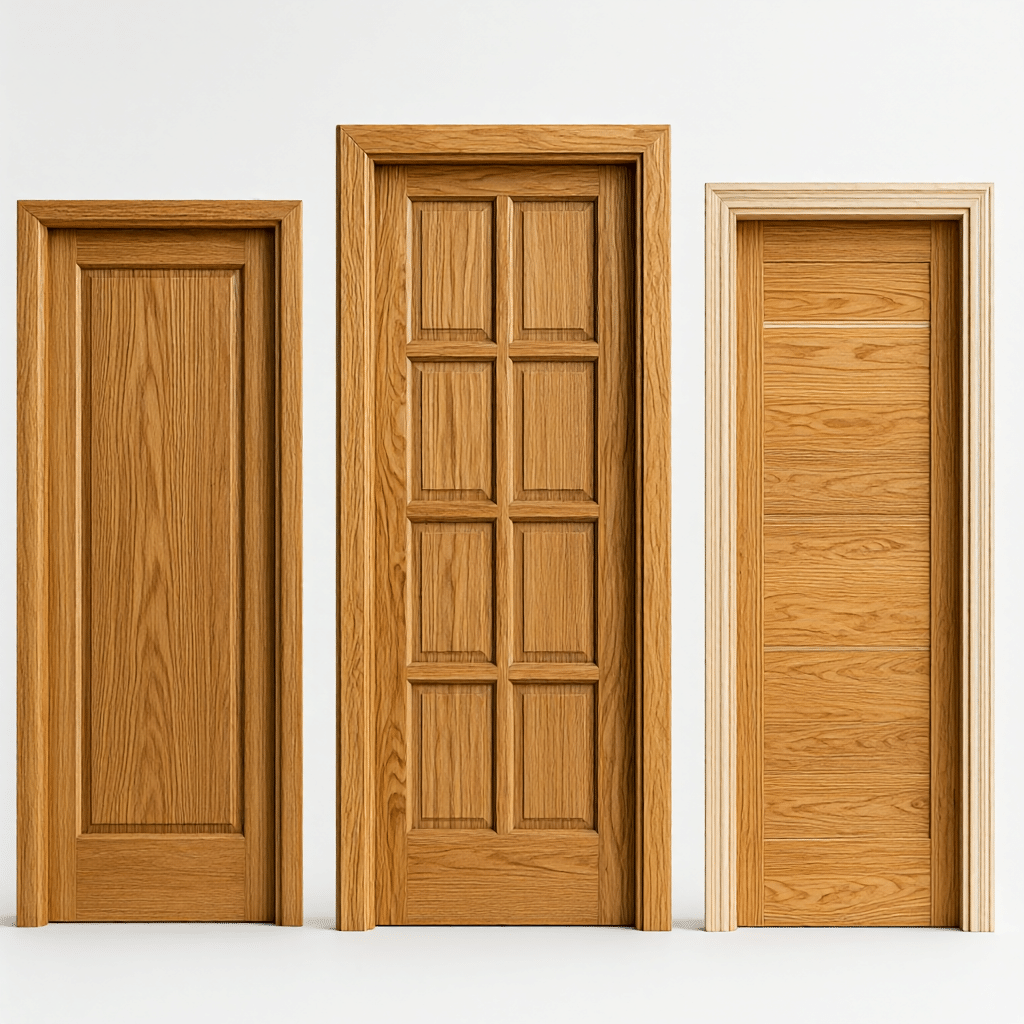
What are the main construction styles of pine doors?
The most common construction types buyers encounter are paneled, shaker, flush, and plank-and-beam designs. Each serves different aesthetic and functional purposes.
Paneled pine doors feature raised or flat rectangular inserts set into a frame of stiles and rails. This style is widely used in residential developments and hospitality projects where traditional appearance matters. Raised panel variants add depth and shadow lines that suit classic interiors; flat panel versions offer a cleaner, more contemporary look while still retaining the natural grain visibility that pine provides. Stile and rail pine doors of this category allow for moderate sound insulation and structural rigidity, making them suitable for hotel guest room interiors and corridor applications.
Shaker-style pine doors prioritize simplicity: a flat central panel surrounded by a square-edged frame with no ornamentation. They originated from the Shaker furniture tradition and have become a standard specification for boutique retail fit-outs and modern residential projects. Their clean geometry pairs well with Scandinavian and minimalist design schemes, and they accept painted finishes uniformly due to the large flat surfaces.
Flush pine doors consist of a single flat slab without panels or raised detailing. While historically associated with lower-cost interior applications, engineered flush configurations now deliver acceptable performance for budget-sensitive residential development projects and secondary interior partitions. Solid wood flush doors made from clear-grade pine are available but less common due to warping risk unless manufactured with stabilized core materials.
Plank-and-beam pine doors use vertical boards joined edge-to-edge with horizontal bracing members visible on the backside or decorative straps on the front. This construction evokes a rustic farmhouse aesthetic and is frequently specified for vacation properties, heritage-restoration projects, and high-character entrance applications. These doors tend toward heavier weights and require robust hinge specifications during procurement.
How do surface treatments affect pine door performance and selection?
Four primary finish types dominate the market, each with distinct maintenance and environmental implications.
Stained pine doors preserve the natural grain pattern while adding color tint. Oil-based and water-based stains penetrate differently; oil penetrates deeper and enhances grain contrast, while water-based options dry faster and raise the grain less. Stained finishes require periodic reapplication in high-humidity environments because the porous nature of pine means stain alone does not create a sealed barrier against moisture ingress. For exterior-rated applications, stained doors must be paired with a protective topcoat system.
Painted pine doors completely obscure the grain beneath a layer of primer and paint. This approach is popular when uniform color matching across multiple rooms or units is required, particularly in hospitality corridor doors where design consistency drives purchasing decisions. Painted surfaces protect the wood more effectively than stain alone, extending service life in humid conditions. However, chips and scratches reveal the lighter pine substrate beneath, which can be noticeable in high-traffic commercial settings.
White-washed pine doors apply a diluted, semi-transparent coating that allows grain texture to show through while lightening the overall tone. This treatment sits between staining and painting in terms of protection and visual impact, and it has gained popularity in coastal and Mediterranean-inspired residential projects. White-wash finishes perform adequately indoors but are not recommended for exterior use without additional sealing.
Natural clear finish pine doors showcase the raw wood with only a transparent protective coating such as polyurethane or varnish. Clear-grade pine is the preferred substrate for this treatment because knots and mineral streaks are minimal, allowing the warm golden tones of fresh pine to remain the visual focus. These doors age gracefully, developing a deeper patina over time, which some designers intentionally leverage in hospitality and residential concepts.
How do you differentiate between clear grade and knotty grade pine?
Grade selection determines both appearance and structural behavior.
Clear grade pine contains few to no knots and exhibits minimal color variation. It commands premium pricing and is the standard choice for stained or clear-finished doors where visual uniformity matters. Because knots represent structural weak points where cracks can originate, clear-grade lumber yields doors with better dimensional stability and lower splitting propensity.
Select grade pine occupies a middle position, allowing a limited number of small, tight knots with acceptable color shading variations. It offers reasonable aesthetics at a reduced cost compared to clear grade and remains suitable for many interior applications.
Knotty pine doors feature prominent, evenly distributed knots that contribute to a characteristic rustic appearance. This grade is popular for cabinetry, statement entrances, and heritage-style interiors. The trade-off is that knots create natural discontinuities in the wood fiber, which can lead to checking or separation around knot boundaries over time, especially if moisture content fluctuates significantly after installation. Buyers specifying knotty pine for commercial projects should plan for potential spot repairs during the first maintenance cycle.
When evaluating options, compare knotty pine doors and clear grade pine doors against your project’s design brief and maintenance budget. Knot-free appearances justify their higher unit cost in client-facing spaces; character-driven installations often benefit from the warmth and narrative appeal of knotted stock.
For further detail on how door construction choices affect acoustic performance in corridors, see our how to soundproof an existing door guide.
Grade designation controls visual uniformity, pricing, and long-term behavior:
Clear-grade pine — knots are absent or extremely small and tight; color variation is minimal. It delivers the smoothest substrate for stain or clear-coat finishes, where consistent tone is a design requirement. Clear grade commands a premium, often 20–40% above knotty equivalents. Dimensionally, it exhibits the lowest propensity for checking or splitting because the continuous grain structure distributes stress evenly. For large-volume hospitality projects requiring matched appearance across dozens of guest-room doors, clear grade reduces visible batch variation and minimizes post-installation touch-up.
Select-grade pine — permits a limited number of small, sound knots and acceptable shading differences. It provides a pragmatic balance between cost and appearance, suitable for corridors, back-of-house areas, and mid-tier residential developments where perfect visual consistency is less critical.
Knotty pine — features prominent, regularly spaced knots that create a character-driven aesthetic. Knotty grade is cost-effective and popular for cabinetry, feature entrances, vacation properties, and heritage-style interiors. However, knots represent natural discontinuities in fiber continuity; under repeated moisture cycling or mechanical impact, checks may propagate from knot boundaries. Buyers specifying knotty pine for high-traffic commercial use should budget for periodic spot-repair and avoid clear-finish applications where knot inconsistency becomes visually distracting.
For finish comparisons across treatment types, review our finish and maintenance guidance on preserving door aesthetics over time.
What distinguishes solid wood pine doors from engineered alternatives?
Solid wood pine doors are milled entirely from pine lumber, either as plain-sawn boards, finger-jointed strips, or laminated sections. They deliver authentic grain continuity, reparability, and recyclability. The primary drawbacks are higher weight, greater susceptibility to movement with humidity changes, and elevated unit costs. Solid wood options are the default specification when fire-rating requires dense material mass or when the design calls for visible end-grain on rebated edges.
Engineered pine doors utilize a core of composite material — typically particleboard, medium-density fiberboard (MDF), or structurally bonded timber segments — faced with a veneer of real pine or a printed melamine surface. Engineered constructions resist warping and twisting far more consistently than solid wood because the cross-laminated or bonded layers counteract natural wood movement. They also arrive at a more predictable moisture content, reducing post-installation adjustment requirements.
The key trade-off centers on perceived authenticity and long-term refinishing ability. A pine veneer door can be sanded lightly for touch-ups but cannot be deeply refinished like solid wood. For budget-conscious bulk orders where dimensional stability is critical — such as multi-unit residential developments — engineered cores often deliver better field performance per dollar spent. When specifying, request documentation on formaldehyde emissions (CARB Phase 2 or EPA TSCA Title VI compliant cores) and verify face-thickness tolerances with the manufacturer.
See our hanging an interior door procurement guide for hardware spacing considerations that apply equally to solid and engineered pine constructions.
Key Specifications
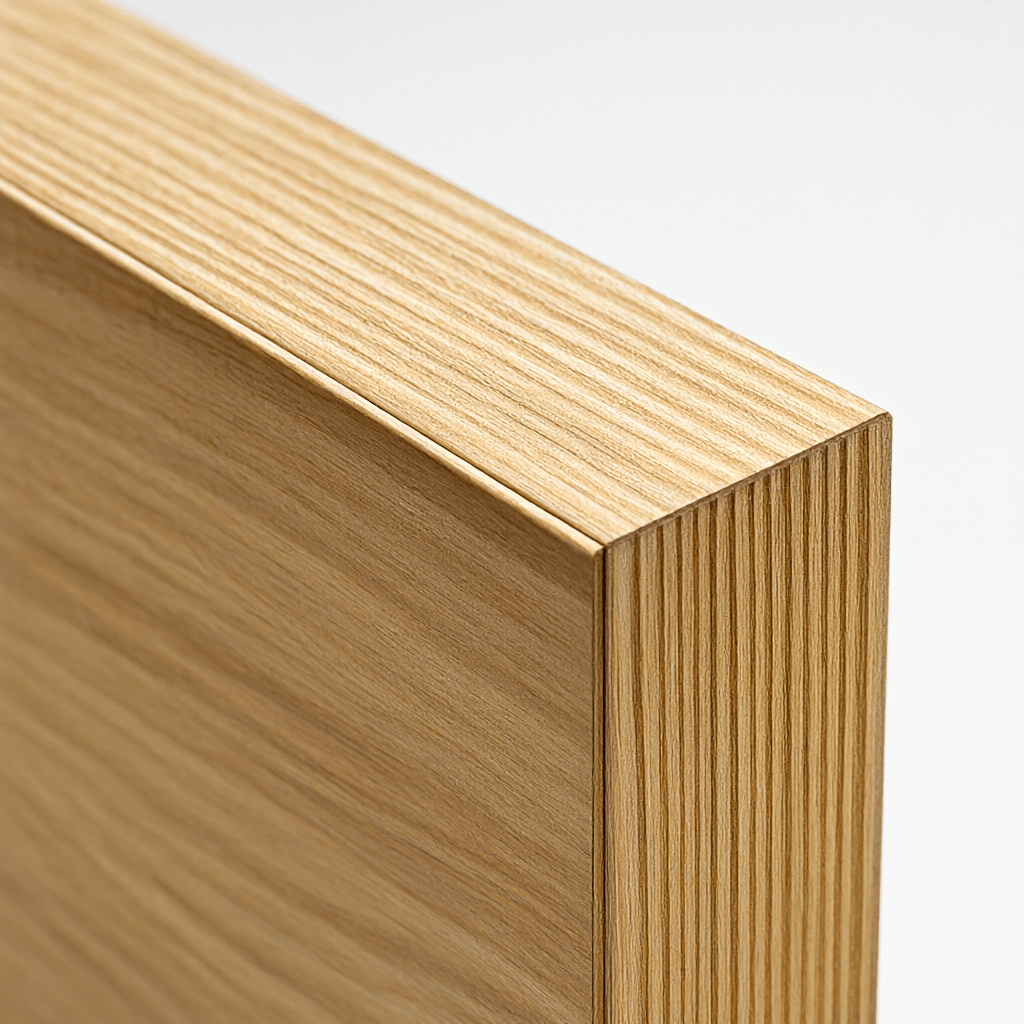
What thickness options and size ranges apply to pine doors?
Typical thickness measurements for pine doors in the B2B market include 1¾ inches (45 mm) for most interior applications and 2⅜ inches (60 mm) for exterior-rated or higher-security installations. Thinner profiles at 1⅜ inches (35 mm) exist but are uncommon for quality-specification projects due to reduced acoustic and structural performance.
Standard prehung door rough openings in North American markets range from 24 to 36 inches in width and 80 to 96 inches in height, though metric-equivalent manufacturing commonly produces doors in 600, 720, 780, and 900 millimeter widths alongside 1900 and 2100 millimeter heights. Custom dimensions are readily available for unique architectural openings, particularly on FCL shipments where profile optimization reduces off-cuts.
Moisture content standards for interior-use pine doors generally target 6% to 9% equilibrium moisture content (EMC) at the time of shipment, depending on the destination climate zone. Outdoor-rated pine doors may ship at slightly higher EMC levels but must carry weather-resistant coatings or preservative treatments appropriate for the exposure classification. Verification of moisture content through factory testing reports should be requested before committing to bulk orders.
For guidance on door handle height standards relevant to your hardware selection, consult our door handle height standards resource.
Which pine door type performs best in high-traffic commercial applications?
High-traffic environments — including hotel corridors, hospital wards, and busy office corridors — demand doors that resist denting, maintain finish integrity, and sustain consistent operation under repeated use. Among pine door options, solid stile and rail pine doors with a dense clear or select-grade face wood and a stable engineered core combine durability with manageable weight. The stile-and-rail construction distributes stress across joints more effectively than plank-and-beam designs under frequent cycling.
Flat-panel shaker configurations also perform reliably when fitted with appropriate edge banding and backed by quality hinges sized for the door weight. Avoid specifying lightweight flush doors in these settings unless the manufacturer provides reinforced internal blocking specifically rated for commercial cycle counts.
When planning hardware for demanding applications, ensure hinge count and placement follow established spacing rules. Our hinge spacing rules guide outlines minimum hinge requirements by door weight and height.
What customization options exist for bulk pine door orders?
B2B purchasers typically negotiate customizations across five dimensions:
- Size: Non-standard widths, heights, and thicknesses accommodated through made-to-order scheduling rather than stock production runs.
- Finish: Pre-finishing at the factory — whether stained, painted, or clear-coated — reduces on-site labor and ensures batch consistency across large orders.
- Glass inserts: Some manufacturers incorporate glazed sections into paneled or French-style pine doors for light transmission while maintaining security ratings.
- Hardware prep: Factory-pre cut mortises for locks, closers, and panic devices align with regional hardware conventions and reduce site modification.
- Acoustic ratings: When specified, certain pine door constructions achieve STC ratings sufficient for privacy-critical spaces, though achieving higher ratings usually requires supplementary seals and threshold configurations covered in our how to stop a door from rattling troubleshooting resource.
Lead times for customized orders typically range from 25 to 45 days depending on order volume and finishing complexity. Expedited schedules are possible for recurring project frameworks with advance commitment.
B2B purchasers typically negotiate across five customization dimensions, each influencing unit price, delivery schedule, and compliance documentation:
- Non-standard sizing — widths outside 24″–36″, heights beyond 80″–96″, and alternate thicknesses are produced on made-to-order runs. Custom dimensions optimize material usage on FCL shipments but add 5–10 days to baseline lead time.
- Factory pre-finishing — staining, painting, or clear-coating executed at the manufacturing facility ensures batch consistency, eliminates on-site VOC exposure, and reduces project completion time. Pre-finished doors command a 10–25% premium over unfinished stock but typically pay for themselves through reduced site labor.
- Glazed inserts — paneled or French-style doors can incorporate tempered or laminated glass sections (single or double hung) for daylight transmission while maintaining security and fire ratings. Glazing adds complexity to scheduling and requires separate certification verification.
- Hardware prep — factory-mortised preparations for locksets, closers, electromagnetic seals, and panic devices align with regional hardware conventions. Prepped doors reduce on-site modification and speed installation by an estimated 30–40%.
- Acoustic and fire upgrades — STC-rated seals, intumescent gaskets, and upgraded core densities are integrated during production for projects requiring documented performance certifications.
Typical lead-time brackets for customized B2B orders:
- Standard sizes, unfinished: 15–25 days
- Custom sizes or pre-finished: 25–45 days
- Fire-rated or acoustic-specialty constructions: 45–60 days
- Expedited schedules available for repeat-project frameworks with advance commitment
Standards & Requirements
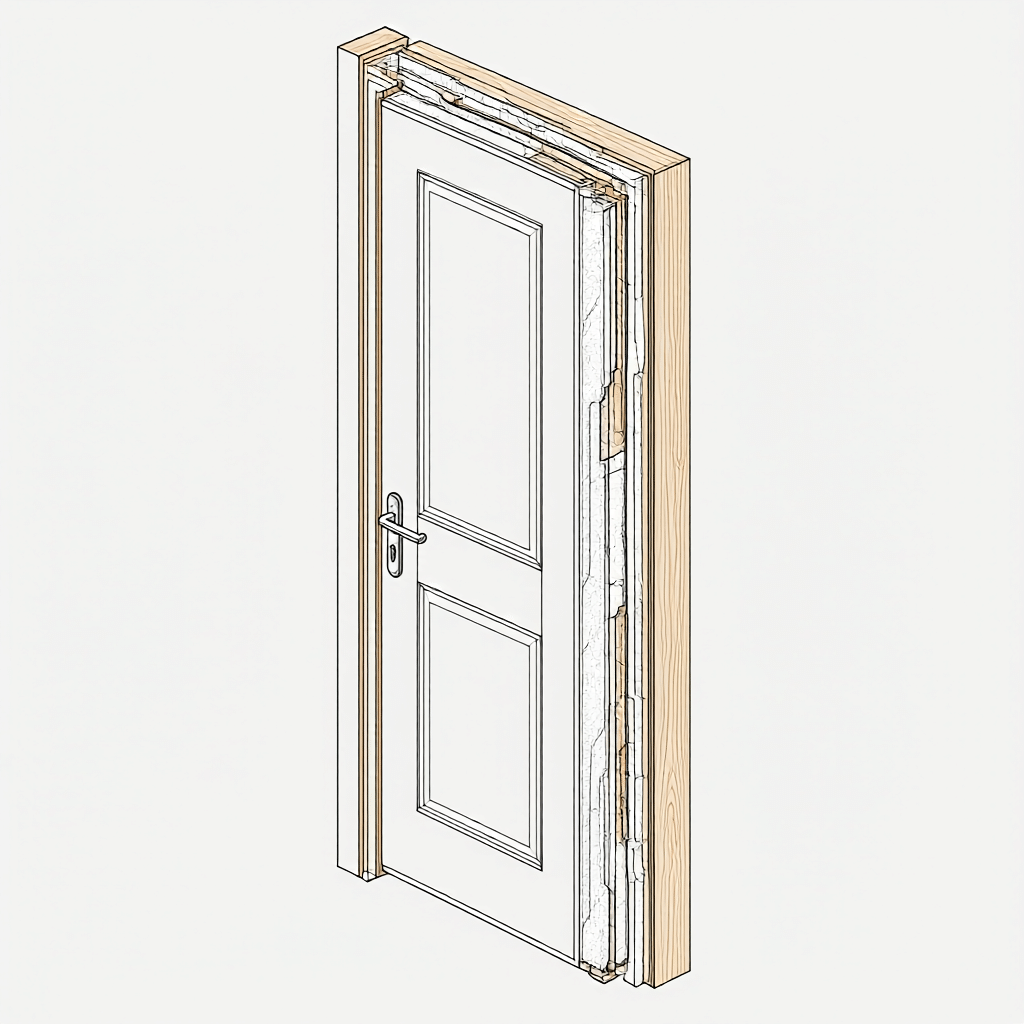
What standards govern pine door specifications and safety ratings?
Several test methods and code provisions directly affect pine door procurement decisions.
ASTM E2092 covers standard practice for testing wood doors and other wood products for smoke-developed characteristics and temperature rise, which is relevant when specifying pine doors for egress pathways or fire-rated assemblies. Doors installed in rated wall assemblies must meet the corresponding hourly rating through certification by a recognized testing laboratory. See the ASTM E2092 standard for full testing parameters.
Building codes referenced by the International Code Council (ICC) — particularly Chapter 716 on opening protectives — define fire door and window assembly requirements that influence material choices, hardware compatibility, and labeling obligations. Project-specific code authorities may adopt modified provisions, so verifying the applicable edition early prevents costly mid-project substitutions.
The American Wood Council (AWC) publishes design values and span tables for wood construction that indirectly inform door-frame interactions and jamb loading calculations, especially for oversized or heavy solid wood pine entries.
Additionally, indoor air quality regulations govern emitted formaldehyde from engineered cores. In the United States, EPA TSCA Title VI compliance and CARB Phase 2 limits represent the baseline expectations; EU markets reference EN 717 series testing for formaldehyde emission classifications. RequestCertificates of Compliance from suppliers before finalizing specifications.
If your project involves fire-rated corridor doors, review our summary of NFPA 105 smoke door assembly standards alongside IBC requirements to ensure hardware and sealing selections align with the intended fire rating.
Related Considerations
What sustainability factors should bulk buyers evaluate when sourcing pine doors?
Pine is classified as a softwood and generally carries a shorter rotational cycle than hardwood species, which contributes to favorable carbon-sequestration profiles when sourced from responsibly managed forests. Several evaluation criteria merit attention during procurement:
- Forest certification: Look for FSC (Forest Stewardship Council) or PEFC (Programme for the Endorsement of Forest Certification) labels indicating legally harvested and sustainably managed timber origins. Certified supply chains reduce reputational risk on green-building projects targeting LEED or BREEAM credits.
- Local sourcing distance: Transportation emissions scale with shipment length. Sourcing pine doors from regional mills near the project site lowers embodied carbon compared to intercontinental freight, though availability may constrain design options.
- Formaldehyde emissions: Engineered-core doors using low-emission adhesives improve indoor air quality post-occupancy. Specify VOC-compliant primers and paints to avoid compounding indoor pollutant loads.
- End-of-life considerations: Solid wood pine doors are biodegradable and can be repurposed or chipped for biomass fuel at demolition. Engineered doors with metal hardware insertions require separation before recycling streams accept the residual wood fraction.
What should you consider regarding installation and long-term performance?
Pine is a relatively soft hardwood (radiata pine scores approximately 380–490 lbf on the Janka scale, while southern yellow pine reaches 990–1470 lbf), making it more susceptible to denting than oak or maple. This softness facilitates easy machining and fastener holding during installation but demands careful handling procedures on crowded job sites. Protective corner guards and delayed finishing until subsequent trades complete abrasion-generating work are practical mitigations.
Dimensional movement remains the most common long-term concern. Even properly acclimated pine expands and contracts along the grain with seasonal humidity shifts. Installers should leave appropriate clearance gaps at jambs and thresholds, and specify adjustable concealed hinges where possible to accommodate minor settlement without binding. Pre-hung configurations simplify field alignment but require accurate rough-opening verification before ordering.
Our installing a prehung door procurement and installation guide walks through dimension tolerance checks that prevent costly removal-and-replacement cycles after delivery.
How do pine doors compare against alternative materials for specific project needs?
Fiberglass and steel doors offer superior impact resistance and lower maintenance for harsh exterior exposures, but they lack the natural warmth and repairability of wood. MDF and hollow-core composite doors provide budget accommodation for transient partitions but cannot match solid pine’s acoustic mass or refinishing longevity. When the design intent emphasizes tactile warmth, natural patterning, and the possibility of future cosmetic refresh, pine remains competitive among mid-tier interior door materials.
Price positioning typically places solid wood pine doors above engineered alternatives on a per-unit basis, while remaining below solid hardwood options such as oak or walnut. Exact figures vary by region, order volume, and finish complexity; engaging suppliers early with projected quantities yields the most actionable budget data.
Request a bulk FOB quotation for your upcoming project.
Send us your opening sizes and finish preferences for a custom quote.
Manufacturer Perspective
How do professional manufacturers address pine door quality across grades, finishes, and standards?
As a manufacturer specializing in solid wood and thermal-break aluminum door systems, we approach pine door specification through three operational lenses: material selection, moisture control, and finished-product verification.
On grade segregation, we maintain separate procurement streams for clear, select, and knotty pine to prevent mix-ups during production. Incoming lumber is sorted by visual criteria and then tagged with intended finish type so that stained orders receive knotty-appropriate grain patterns, while clear-finish orders draw exclusively from knot-minimized stock. This discipline reduces customer complaints about unexpected darkening or surface irregularities after installation.
On moisture management, kiln-drying targets the 6% to 9% EMC band for interior-bound doors before assembly. Post-drying conditioning periods allow internal stresses to equalize before the veneer or solid faces are bonded. We document moisture content readings per batch and retain records accessible upon request, which supports both compliance audits and post-delivery troubleshooting when environmental surprises occur at destination sites.
On finished-product verification, every shipped container undergoes air-tightness, water-tightness, and wind-resistance testing according to internationally recognized test procedures. Profile structures and fitting configurations are adjustable to align with local building codes in target export markets, ensuring that fire ratings, acoustic requirements, and security classifications are met without requiring on-site modifications.
We also support OEM and ODM arrangements for developers and distributors seeking private-label pine door lines, with full documentation packages — packing lists, proforma invoices, and customs paperwork — prepared to facilitate smooth import processing across FCL and LCL shipment modes.
Contact Our Team to discuss specification sheets and sample requests for your project pipeline.
What door styles are available and where do they perform best?
Beyond the four construction types outlined earlier, B2B buyers frequently encounter several sub-styles that carry distinct functional implications.
French-style pine doors incorporate glazing panels—often divided-light muntins within a solid pine frame—to admit natural light while preserving room separation. They are commonly specified for interior corridor applications, office partition walls, and suite entrances where visual connectivity matters. Full-light versions offer less acoustic privacy; half-light or three-quarter-light configurations provide a practical compromise. When ordering French-style units, confirm whether the glass meets local safety glazing requirements (tempered or laminated per ICC provisions).
Lattice pine doors feature cross-hatched slatwork on one or both faces and are primarily used as closet, pantry, or utility-room doors where airflow is desired over full enclosure. They are rare in high-end hospitality but appear in resort and vacation-property projects.
Pane door configurations vary in panel count (one-panel through nine-panel) and profile treatment. Multi-panel doors create stronger vertical shadow lines and are favored in institutional and heritage-restoration projects. Single-pane flush designs dominate budget residential volumes.
When evaluating style against application, weigh three factors: (1) cycle frequency dictates core stiffness requirements, (2) acoustic zoning determines whether solid-core construction is necessary, and (3) finish plan influences grade selection. A painted-shaker door in a hotel corridor benefits from clear-grade substrate for uniform primer absorption; a stained French door in a lodge entry demands select or clear grade to minimize visible defects behind the translucent coating.
How durable are pine doors and what maintenance do they require?
Pine ranks approximately 380–870 lbf on the Janka hardness scale depending on species and density—softer than oak (1,290 lfn) or maple (1,450 lbf)—which means it dents more easily under impact. This softness is both a liability and an advantage: dent repair is straightforward (filling and touch-up staining blends well), but high-impact environments demand proactive protection.
Commercial durability guidelines:
- Hotels and multi-unit residential: Specify clear or select-grade stile-and-rail constructions with a polyurethane topcoat. Install protective kick plates at ankle height on high-cycle doors. Expected service life before major refinish: 7–10 years with annual inspection and spot repair.
- Healthcare corridors: Painted finishes outperform stain in germ-cleanable environments because the sealed paint film resists microbial penetration. Select Grade cores reduce surface irregularities that complicate cleaning.
- Hospitality suites and boutique retail: Stained clear-grade or white-washed select-grade doors age gracefully; establish a two-year refinishing schedule for high-traffic guest-facing units.
Maintenance checklist for B2B asset managers:
- Quarterly inspection of edge seals and weatherstripping integrity
- Annual hinge tightening and closer adjustment
- Biannual touch-up of finish wear points (handle-height zone, kick-plate perimeter)
- Immediate sand-and-recoat of deep gouges to prevent moisture intrusion into bare wood fibers
For rattling prevention and hardware optimization in maintained installations, refer to our diagnosing door rattling troubleshooting resource.
What moisture content standards must pine doors meet for interior and exterior use?
Moisture content (MC) is the single most consequential specification for long-term door performance. Pinewood is hygroscopic—it absorbs and releases moisture until reaching equilibrium with ambient relative humidity—making MC control essential at every production stage.
Interior-use pine doors should ship at 8–12% equilibrium moisture content (EMC), aligned with typical conditioned-space RH levels (40–55%). Doors installed in climates with seasonal extremes may benefit from post-installation conditioning before final trim setting. Factory-acclimated stock minimizes in-field movement; doors arriving above target MC will shrink and develop joint gaps over weeks, while undersized MC causes swelling and binding. Request a mill certificate or factory test report confirming MC at the time of shipment.
Exterior-rated pine doors target 6–9% EMC at shipment and must receive a full weather-barrier system—typically a primer on all six surfaces, including the back and bottom edges, followed by a compatible topcoat or penetrating oil. The denser the pine grade used, the better the coating adhesion and moisture resistance. Exterior applications also benefit from drip-edge molding on the bottom rail and properly flashed hinges to divert water away from the wood face.
Per ANSI A250.6 (Performance Specifications and Test Methods for Interior Wood Flush Doors), interior door MC tolerance should not exceed ±2 percentage points from the target range stated on the purchase order. Non-compliant deliveries should be reconditioned in a climate-controlled environment before installation.
For smoke-door assemblies requiring fire-rating compliance, consult the NFPA 105 standard for assembly-level sealing requirements that interact with door MC during operation.
What hardware compatibility and pre-cut configurations should B2B buyers specify?
Hardware specification directly affects door longevity and operational reliability. Pine’s relatively low Janka hardness means screw holding power in the door edge and face is lower than in hardwood—hardware mounting requires careful planning.
Standard hardware prep packages include:
- Hinge mortises: Typically cut for 4½ × 4½ inch (114 × 114 mm) or 5 × 5 inch (127 × 127 mm) butt hinges, set 7 inches from each end and spaced per door height. Our hinge spacing rules guide details minimum quantities by weight class.
- Lockset bore: Standard 2⅜ inch (60 mm) or 2¾ inch (70 mm) backset, 1⅛ inch (29 mm) diameter cross-bore. Verify lever-handle clearance against adjacent wall materials.
- Door closer drill patterns: Pre-drilled boss locations per ADA-compliant force requirements (maximum 5 lbf push, 3.5 lbf hold-open per ICC Chapter 11 accessibility provisions).
- Threshold and strike-prep: Square-rebate or bullnose threshold channels cut to coordinate with matching floor finishes.
Pre-cut configuration options for bulk orders:
| Configuration | Use Case | Notes |
|---|---|---|
| Double-sided lock prep | Hotel bathroom + bedroom pairs | Reduces on-site modification |
| Universal blank prep | Mixed-spec rooms | Allows field decision on hardware type |
| ADA-compliant lever-ready | Accessible units | Specified at design phase; no retro-fit possible |
| Panic-device ready | Egress corridors, assembly occupancies | Requires fire-rated assembly documentation per NFPA 80 |
| Glass-lite rough opening | French-style doors | Confirm glazing bead profile matches selected glass unit |
When specifying furniture-grade brass or bronze hardware on pine substrates, request manufacturer guidance on screw length and pilot-hole dimensions to prevent splitting during installation. For prehung delivery workflows, see our prehung door installation guide.
What sustainability and sourcing considerations apply to bulk pine door procurement?
Sustainable forest management is increasingly a procurement requirement, driven by corporate ESG commitments, green-building certification mandates (LEED, BREEAM, Green Star), and regulatory procurement policies in public-sector projects.
Certification frameworks:
- FSC (Forest Stewardship Council): Chain-of-custody (CoC) certification verifies that timber originates from responsibly managed forests. FSC Mix products allow blended certified and controlled wood sources and are acceptable for most LEED credit pathways.
- PEFC (Programme for the Endorsement of Forest Certification): Internationally recognized alternative to FSC; accepts regional national schemes and provides equivalent proof of sustainable origin.
- SFI (Sustainable Forestry Initiative): Primarily North American; increasingly accepted in cross-border projects.
Procurement verification steps:
- Request CoC certificates from the supplier covering both the lumber origin and the manufacturing facility.
- Confirm that finishing chemicals comply with low-VOC standards such as GREENGUARD Gold or CARB Phase 2 formaldehyde limits.
- Evaluate whether engineered-core doors contribute favorably to wood utilization efficiency—using smaller-diameter fast-grown pine in veneer-and-core constructions reduces per-unit wood consumption versus solid-clear-grade alternatives.
- Document embodied-carbon assumptions for life-cycle assessment submissions; kiln-dried southern yellow pine typically carries lower carbon intensity than imported tropical hardwood species.
For projects pursuing fire-rating credentials, ensure the chosen door assembly is listed by a recognized testing agency and that the supplier can provide ongoing audit documentation per IBC Chapter 716 requirements. WDMA A200 performance standards provide a useful benchmark for comparing supplier claims against tested results.
As manufacturers, we work closely with project specifiers to match pine door selections against actual site conditions—verifying MC at shipment, advising on grade-to-finish pairings, and offering OEM/ODM development for branded collections. Our facilities run strict air-tightness, water-tightness, and wind-resistance tests before release, and we support FCL/LCL shipments directly from China with full customs documentation. If you’re planning a multi-unit residential, hospitality, or commercial fit-out and want to discuss size ranges, grade availability, or acoustic-performance targets, reach out through our contact page—our team can share sample boards and project-specification templates tailored to your market.
What are the main types of pine doors used in construction projects?
Beyond the four foundational construction styles, pine doors for B2B projects are further categorized by application class and performance rating. Solid wood stile-and-rail configurations dominate residential and light commercial interiors; they offer repairability and authentic grain visibility but require careful acclimation to prevent seasonal movement. Engineered pine doors (particleboard or MDF core with pine veneer face) are the mainstream choice for multi-unit residential, hospitality corridor doors, and budget-sensitive institutional fits because their cross-laminated cores resist warping under fluctuating indoor humidity.
By application scope:
- Interior non-rated doors — flush or paneled, typically 1-3⁄8″ thick, suitable for private offices, bedrooms, closets, and low-traffic corridors.
- Interior fire-rated doors — constructed to achieve 20-minute or 45-minute assemblies per NFPA 105 and ICC standards, usually using denser engineered cores with intumescent seals (see our NFPA 105 smoke door assembly guide).
- Exterior-rated doors — minimum 1-3⁄4″ to 2-3⁄8″ thickness, incorporating weather-resistant coatings, edge sealing, and sometimes thermal-break profiles to meet local energy codes.
- Acoustic-rated doors — specified by STC (Sound Transmission Class) performance; dense core constructions paired with perimeter gaskets can reach STC 30–35, adequate for hotel guest rooms and conference spaces.
For prehung door sizing and installation spacing, refer to our how to install a prehung door buyer’s resource.
What thickness options are available for pine doors and what do they imply functionally?
Standard pine door thickness spans three primary market tiers:
| Thickness | Common Use | Functional Implications |
|---|---|---|
| 1-3⁄8″ (35 mm) | Budget interior, closets, pantries, low-traffic secondary rooms | Limited acoustic performance (STC ~20–25); lower structural rigidity; thinner edges accept only lightweight hardware; rarely rated for fire or exterior exposure. |
| 1-3⁄4″ (45 mm) | Main interior doors, hotel guest rooms, office suites, commercial corridors | Acceptable sound attenuation (STC ~27–30 with proper seal); supports mortise locks and heavy hinges; compatible with most fire-rated assemblies up to 20 minutes when combined with rated cores; industry default for quality-specification projects. |
| 2-3⁄8″ (60 mm) | Exterior entrances, high-security interiors, high-traffic hospitality, ADA-accessible commercial doors | Superior thermal and acoustic insulation (STC 30+ achievable); accommodates dual-seal weatherstripping and panic hardware; required for many 45-minute to 90-minute fire-rated openings; heavier weight (≈ 55–75 lb per sq ft depending on core) demands reinforced hanging and robust framing. |
Thicker doors increase material cost and weight proportionally but often improve per-unit field performance — fewer callbacks for binding or hardware failure. Procurement teams should weigh initial cost against lifecycle service requirements, particularly for projects exceeding 200 door units where operational disruptions carry significant indirect costs.
What moisture content standards must pine doors meet for interior versus exterior use?
Moisture content (MC) is the single most critical quality-control parameter during pine door manufacturing. Mis-specified MC leads to warping, joint failure, finish cracking, and callback costs.
Industry-standard targets per WDMA A250 (performance specification for wood doors):
- Interior doors: 6–9% EMC at shipment when destined for conditioned climates; up to 12% EMC acceptable for humid tropical destinations provided the door is coated on all six faces including end grains.
- Exterior-rated doors: 6–9% target MC at factory, with mandatory edge and back-face sealant application. Doors shipped drier than 6% risk rapid moisture uptake in humid environments, causing swelling and binding.
- Veneer-faced engineered doors: Core materials (MDF/particleboard) must reach equilibrium before veneer bonding; typical acceptable range is 5–8% to prevent delamination under temperature cycling.
Verification methods include capacitive pin-type moisture meters calibrated for softwoods and, for high-value contracts, third-party lab testing of shipped samples. Manufacturers should provide a Mill Test Certificate or Certificate of Conformity confirming MC at time of packaging.
See also our IBC Chapter 716 overview for fire-rating and moisture-performance interdependencies.
Which pine door type is most suitable for high-traffic commercial applications and why?
High-traffic commercial settings — hotel corridors, hospital wards, school hallways, and busy office buildings — impose repeated mechanical cycles, potential impact damage, and strict fire-code obligations. Selection criteria prioritize:
- Construction: Solid stile-and-rail with select-grade pine face on a stabilized engineered core. This combination resists surface denting better than plain flush doors while limiting weight compared to full-solid laminates.
- Thickness: Minimum 1-3⁄4″ (45 mm) for internal fire-rated corridors; 2-3⁄8″ (60 mm) preferred for exterior-rated perimeter doors or high-security locations.
- Hardware compatibility: Doors must accommodate ANSI/BHMA Grade 1 or 2 commercial-grade hinges and closers. Verify hinge boring depth and backset alignment with your chosen hardware schedule before placing the order.
- Finish durability: Painted or pre-catalyzed lacquer finishes outperform penetrating stains in abrasion resistance. For maximum longevity in healthcare environments, specify antimicrobial-topcoated painted surfaces.
Janka hardness context: Southern yellow pine rates approximately 590–900 lbf on the Janka scale (depending on density grading), softer than hardwoods but adequate for interior traffic when finished properly. Doors specified for impact-prone zones should incorporate reinforced edge banding and protective kick plates.
For hardware placement calculations on heavy commercial doors, consult our hinge spacing rules specification guide.
How do we at Jusen Door and Windows approach pine door manufacturing for international B2B buyers?
As a manufacturer specializing in solid wood and thermal-break aluminum door and window systems, we position our pine door offerings within the same quality framework that governs our broader product portfolio — direct factory supply, measurable performance testing, and adaptability to diverse building codes. Here is how our process aligns with the specifications outlined above.
We source kiln-dried pine lumber and engineered cores to meet WDMA A250 moisture-content tolerances, verifying each batch with calibrated pin-type meters before assembly. Our pre-shipment inspection protocol includes air-tightness, water-tightness, and wind-resistance testing to confirm that exterior-rated units perform within expected parameters before leaving the factory floor. Because we supply both FCL and LCL shipments directly from our China facility, we adjust profile structures and fitting configurations to satisfy local building codes in destination markets, reducing compliance friction for international developers and contractors.
For bulk orders, we provide full customization on size, color, glass inserts, and hardware accessories — including factory-prepared mortises for commercial-grade locksets and closers — ensuring that doors arrive ready for installation rather than requiring on-site modification. Every shipment is accompanied by packing lists, proforma invoices, and complete customs documentation drawn from our extensive foreign-trade experience, streamlining import clearance for procurement teams managing cross-border projects.
When evaluating manufacturers for your next pine door program, consider how their quality-control processes, code-adaptability, and export-documentation readiness map onto your project’s risk profile. Contact us to discuss your specifications and receive a tailored quotation.
Sources & References
- ASTM E2092 standard — www.astm.org
- how to soundproof an existing door — doorwoodendoors.com
- hanging an interior door — doorwoodendoors.com
- door handle height standards — doorwoodendoors.com
- hinge spacing rules — doorwoodendoors.com
- how to stop a door from rattling — doorwoodendoors.com
- NFPA 105 smoke door assembly standards — doorwoodendoors.com
- installing a prehung door — doorwoodendoors.com
- ICC — www.iccsafe.org
- NFPA 80 — doorwoodendoors.com











