
Last updated: November 25, 2026
What Is Included in a Complete Door Supply Close-Out Package?
A complete project close out documents for door supply package is the set of records a supplier delivers alongside physical delivery to prove every installed assembly meets the contract specifications, applicable building codes, and owner acceptance criteria. Without it, the contractor cannot sign off on payment, the architect cannot certify substantial completion, and the building owner cannot operate or insure the facility.
At its core, a proper close-out package tracks each door and window assembly from factory to finished installation. It covers material origin, performance testing, shop approvals, field verification, and post-handover support. For custom or specialty doors — hotel room entries, fire-rated assemblies, aluminum system windows — the volume of paperwork is higher because more components and more code pathways converge on a single unit. Procurement teams who miss documentation early often face change orders, withheld retainage, and delayed occupancy.
Detailed Explanation

Why Close-Out Documentation Matters for Door Supply Projects
Door supply sits at the intersection of manufacturing, logistics, and field installation. Unlike structural steel or concrete, doors arrive as sub-assemblies — frames, panels, hardware, glazing, thresholds, and seals — each potentially sourced from different suppliers. The close-out package proves that every layer was approved, tested, delivered intact, and installed according to the approved submittals.
For commercial construction projects, the package satisfies the general conditions that tie final payments to documentation. For multi-unit residential developments, it supports warranty tracking across dozens of similar units. For hospitality renovation work, it ensures recurring replacements can be matched precisely. The owner’s representative typically requires the full dossier before releasing the certificate of substantial completion.
The consequence of incomplete documentation is not theoretical. Architects routinely reject door submittals for missing cut sheets or unfinished finish schedules. Contractors face delays when test reports are absent or misaligned with the specified performance level. Facility managers inherit expensive surprises when O&M manuals do not match the actual hardware or glazing type installed.
How Core Document Categories Function Together
A functional close-out package is organized around five categories that reinforce each other. Each category answers a different audit question that any owner’s representative will ask.
Test reports answer whether the product performs as specified. They cover air-tightness, water-tightness, wind resistance, fire rating, acoustic transmission, and cycle durability where applicable. These reports come from accredited laboratories and must reference the exact project specifications, not generic product lines.
Certificates answer whether the materials meet the declared standards. Mill certificates for aluminum profiles, glass certifications, hardware listings, and sealant test reports form the material provenance trail. For fire doors, the certification itself — often issued by a recognized testing organization — is non-negotiable and subject to jurisdictional enforcement.
As-built records answer whether the installed product matches what was ordered. Door schedules, elevation drawings marked with field adjustments, and photos of concealed installations create a permanent record. Custom doors frequently require on-site trimming or frame modifications; those deviations belong in the as-built set, not left to memory.
O&M manuals answer how the installed product should be maintained. Hardware lubrication intervals, glass replacement procedures, adjustment guidance for closers and locks, and cleaning restrictions for finishes prevent premature failure and preserve warranty coverage.
Warranty documentation answers who is responsible if something fails. Manufacturer warranties, contractor workmanship guarantees, and third-party product insurance policies define the remediation path. Warranty terms differ significantly by product type and region, so the document must state exclusions and claim procedures clearly.
All five categories must align with the original submittal package approved during design development. A test report that references a different profile thickness than the approved submittal creates a discrepancy that reviewers will flag. Consistency across categories is what separates a clean handover from a corrective rework cycle.
What Is the Difference Between Rough-In and Final Fitting Documentation?
Custom door and window supply chains commonly use split deliveries. Frames arrive ahead of panels and hardware so that rough-in trades can prepare openings and anchor sets. Panels, glass, and hardware arrive later after site conditions are confirmed. This sequencing affects how documentation is compiled.
Rough-in close-out focuses on frame placement records, shim documentation, and alignment photographs. It verifies that the opening preparation matches the engineered schedule. Final fitting close-out adds hardware installation logs, operational tests, finish inspection records, and clean-handoff photos. Many projects require separate sign-off forms for each phase, and the general contractor often ties partial payments to the acceptance of each stage. Suppliers who plan for split delivery should track documentation deliverables against the logistics schedule from day one.
Partial-delivery scenarios are especially common when importing from overseas manufacturers. A single shipment may contain frames for an entire floor while hardware arrives on a later container. The close-out tracker must reflect this phased nature rather than expecting a single submission envelope at project end.
Key Specifications
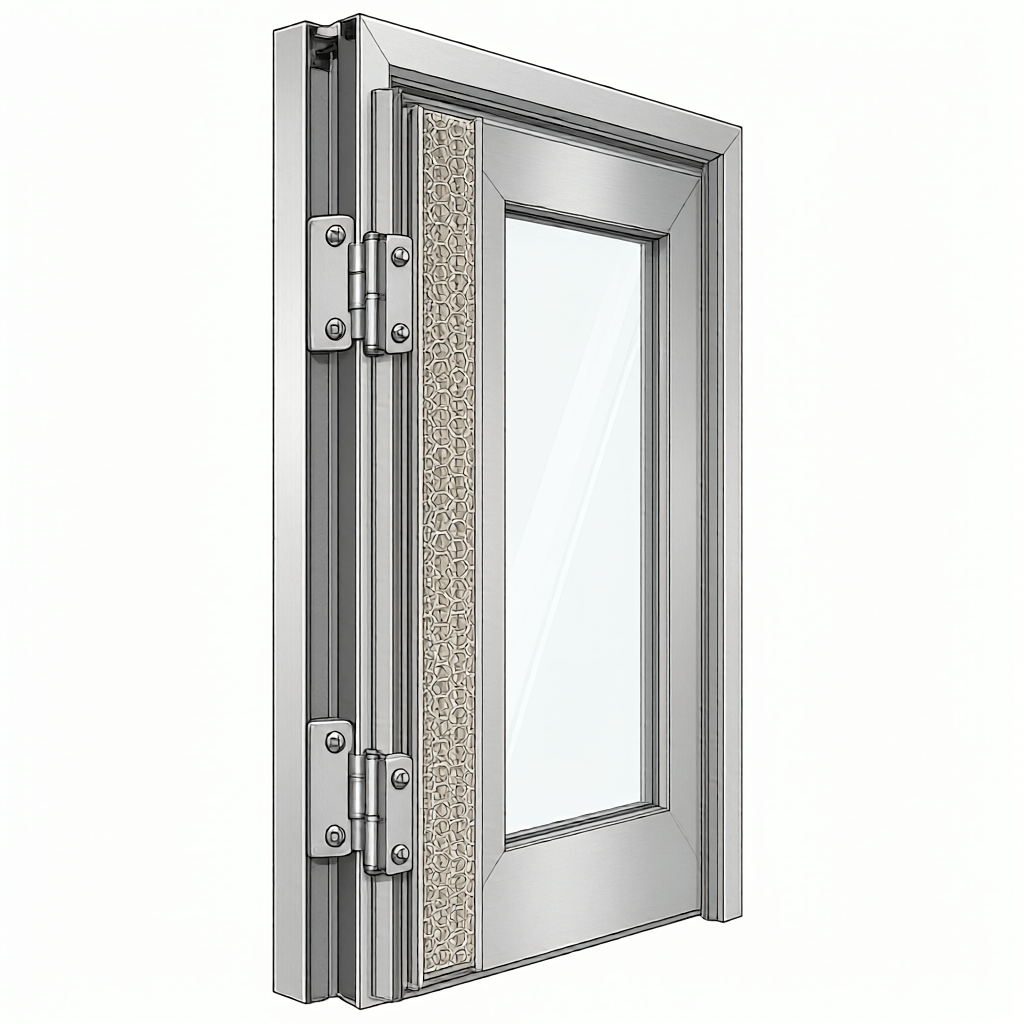
What Performance Test Requirements Apply to Doors at Close-Out?
Close-out test reporting varies by product function, but three performance metrics appear on nearly every commercial specification sheet for exterior door and window assemblies:
Air-tightness, water-tightness, and wind resistance form the baseline triad for weather-sealed installations. These tests evaluate how well the assembled unit prevents conditioned-air loss, moisture intrusion, and structural deflection under design pressure loads. Laboratory values should correspond to the project’s design wind zone and climate classification.
Fire-rated doors require independent certification and labeling. Fire-resistance ratings are validated through standardized furnace testing, and the resulting labels — along with the manufacturer’s listing directory entry — become part of the close-out record. The relevant standard establishes the testing protocol and marking requirements, and jurisdictional inspectors verify both the label presence and the correct installation method.
Acoustic performance and cycle-life testing are project-dependent. Hospital rooms, conference facilities, and high-traffic hospitality corridors often specify STC ratings that require lab-reported data. Heavy-use entrance assemblies may require cycle testing results showing latch and hinge endurance. These are additional but increasingly common for large-scale builds.
What Material Certificates Are Required for Doors and Window Assemblies?
Every major component in a door or window assembly has a corresponding certificate requirement. Aluminum extrusion mills provide mill test reports confirming alloy composition and mechanical properties. Glass suppliers issue certifications for tempering, laminating, or insulating-unit integrity. Hardware vendors supply load ratings, finish durability data, andUL or WHI listings where fire-rated applications demand them.
Sealants and gaskets require compatibility and weathering test reports. Thresholds and sweep materials need wear and compressibility documentation. For timber and composite cores, formaldehyde emissions and density certificates apply. A procurement team reviewing a close-out package should be able to trace each component back to a verifiable certificate without requesting supplemental information.
When sourcing from an overseas manufacturer, material certificates must be issued in English or accompanied by certified translations. Some jurisdictions require the certifying laboratory to hold ISO/IEC 17025 accreditation, which adds another layer of verification to the document package.
What Customization and Code Compliance Details Belong in the Submittal Record?
Project-specific engineering enters the close-out package through the submittal and approval trail. Every deviation from the standard catalog product — different glass unit configurations, non-standard colors, modified locking layouts, reinforced jambs for high-security hardware — requires documented approval.
These customization records matter because they link the as-built condition to the original intent. If an owner later modifies a door opening or replaces hardware, the as-built drawings and cut sheets provide the authoritative reference. For international projects, the supplier should also demonstrate that the supplied assembly conforms to the destination market’s building code, such as verifying that profile wall thicknesses and structural reinforcements meet local requirements before production begins.
Standards & Requirements
Which Standards Govern Door Supply Close-Out Documentation?
Door close-out documentation draws from multiple standard-setting bodies depending on jurisdiction and product type. Structural performance tests for windows and doors typically reference ASTM standards covering air leakage, water penetration, and forced-entry resistance. Fire-rating documentation falls under NFPA guidelines, which establish inspection, testing, and maintenance protocols for fire door assemblies, including which label markings satisfy code enforcement.
Building-code adoption bodies govern which standards become legally enforceable. Local amendments can raise or lower threshold requirements beyond the base code text, so the supplier’s documentation must reflect the adopted edition, not merely the generic standard title. International projects commonly encounter variations among European EN standards, Australian/NZ AS/NZS requirements, and Middle Eastern municipal codes, each carrying distinct certification expectations.
For institutional and government projects, the contracting agency may impose additional documentation requirements beyond the adopted code minimums. These include chain-of-custody records for hazardous-material exemptions, energy-compliance calculations, and accessibility conformance statements. Procurement teams should treat these additive requirements as mandatory from the outset rather than discoverable at submission time.
How Do You Verify Fire-Rated Door Documentation at Close-Out?
Fire-rated door packages carry heightened scrutiny because life-safety systems depend on their continued performance. The close-out record must include the manufacturer’s certification listing entry, the laboratory test report number, the affixed label photograph, and the installation checklist confirming gap tolerances, hinge types, closing device settings, and door-to-frame clearance measurements.
Any substitution of listed hardware without written manufacturer authorization voids the listing and invalidates the certificate. This means the close-out package must show that every installed lockset, closer, and panic device matches the originally listed configuration. Inspectors routinely cross-reference the label serial numbers against the submittal records during final walkthroughs.
Missing or mismatched fire door documentation is one of the most frequent reasons for delayed occupancy in commercial and healthcare construction. Teams that compile fire-rating records parallel to production avoid the scramble that occurs when AHJ visits precede document collection.
Related Considerations
What Common Documentation Gaps Occur with Door Suppliers?
Analysis of real project handovers reveals a predictable pattern of gaps. The most frequent involve hardware mismatches between the approved submittal and the installed item. Contractors sometimes substitute equivalent locks or closer models to solve installation problems, forgetting to update the close-out record. This creates a compliance disconnect during inspection.
Incomplete factory test reports are the second common deficiency. Suppliers sometimes submit draft reports that reference slightly different specimen sizes or test conditions than the actual contracted order. Accepting approximate documentation instead of requiring the finalized report is a costly shortcut.
Missing translations for offshore-manufactured products appear regularly on import-heavy projects. Mill certificates issued in Chinese or other languages without certified English equivalents delay code review and can halt close-out entirely until translation is obtained.
Finish damage documentation is another recurring issue. Photographs taken at shipment do not capture field handling damage. Close-out packages that lack photos taken after delivery and installation leave the contractor without a record to resolve finish claims against the shipper or installer.
Glass co-extrusion or tint batch inconsistencies also cause disputes when the supplied glass does not visually match the approved sample panel. Specifying batch identification in the delivery packing list and recording serial numbers in the as-built file prevents confusion later.
Reviewing hundreds of project close-outs reveals recurring deficiencies that delay acceptance and trigger costly rework. Understanding these patterns allows procurement teams to build preventive controls into their supplier agreements from the outset.
Gap 1: Incomplete factory test reports. Suppliers sometimes submit preliminary or draft certificates that cite slightly different specimen dimensions, testing frequencies, or performance criteria than what was contractually specified. Prevention: Require finalized, lab-stamped reports referencing exact project product codes and order numbers before production begins. Verify report numbers against the issuing laboratory’s public database.
Gap 2: Hardware substitution without documentation. Field substitutions of locksets, closer models, or hinge types occur frequently when installers encounter fit issues. If these changes are not recorded in the close-out package, the as-built condition diverges from the approved submittal, creating a compliance failure during AHJ inspection. Prevention: Mandate written change authorization for every hardware swap and require updated equipment schedules in the final submission.
Gap 3: Missing or outdated translated certificates. Material certifications issued in the supplier’s native language without certified English translations stall international project close-out. Some jurisdictions also require the certifying laboratory to hold ISO/IEC 17025 accreditation, adding another verification layer. Prevention: Specify translation and accreditation requirements explicitly in the procurement contract and budget for certified translation costs upfront.
Gap 4: Absence of pre-shipment inspection records. Without third-party or internal quality inspection reports generated before cargo leaves the factory, buyers lose the ability to document damage that occurred during transit versus damage caused by manufacturing defects. Prevention: Contractually require pre-shipment inspection reports covering dimensional verification, surface quality, functional testing, and packaging integrity.
Gap 5: Incomplete as-built drawings for modified openings. Custom doors frequently require field trimming, jamb reinforcement, or threshold adjustments that are never formally documented. Future maintenance teams then lack authoritative records of the installed configuration. Prevention: Require photographic records and revised shop drawings for every field modification before final payment is released.
Gap 6: Missing fire door installation checklists. For fire-rated assemblies, NFPA 80 requires documented verification of gap tolerances, hinge types, closing device settings, and label presence. Omitting this checklist invalidates the fire door’s legal standing regardless of its manufactured rating. Prevention: Treat the fire door installation checklist as a mandatory deliverable alongside the certification listing and laboratory test report. See our EI30 vs EI60 vs EI90 Fire Door Rating Comparison Guide for additional context on fire door documentation requirements.
How Should Overseas Sourcing Affect Your Close-Out Plan?
Imported door supply introduces two additional documentation layers: customs compliance and export-quality inspection records. Packing lists, commercial invoices, bills of lading, certificates of origin, and HS code declarations form the trade documentation backbone. Missing these documents causes port delays that cascade into missed installation windows and liquidated damages.
A pre-shipment inspection protocol protects against late-stage discoveries. Testing performed before the cargo leaves the factory — including unit assembly checks, dimensional sampling, and function testing — provides evidence that the shipped goods conform to spec. For FCL shipments, this testing can be coordinated against container loading plans so that sampling is statistically representative. For LCL consolidation, each supplier’s portion should be independently inspected before loading.
Customs documentation quality also matters for warranty enforcement. Insurance claims and defect investigations require accurate freight records to establish delivery timelines and liability boundaries. Buyers should insist that the supplier generate these documents concurrently with production rather than retroactively.
How Manufacturers Prepare the Close-Out Package
When we discuss how the industry structures these handover dossiers, we approach them as living records tied to each production order rather than paperwork generated at delivery. Our process begins with the purchase order and follows every variation through to site receipt.
We maintain a project-specific document tracker that maps each door or window assembly to its required test report, mill certificate, hardware listing, and customs declaration. When an order includes customized dimensions or non-standard glass configurations, those deviations are recorded in the approval log alongside photos of the finished sample. Air-tightness, water-tightness, and wind resistance tests are conducted on representative samples per batch, and the resulting reports are dated against the production run. If a project requires modifications to profile structures or fittings to align with local building codes, the engineering justification is filed together with the submittal record so there is no ambiguity during code review.
For international orders, we prepare the full trade documentation set alongside the physical shipment — packing lists, proforma invoices, certificates of origin, and customs supporting papers — rather than treating them as administrative afterthoughts. This sequencing keeps delivery and documentation milestones aligned and eliminates the delays that arise when ports orAHJs request missing records weeks after unloading.
If you manage a multi-unit residential build, a hospital corridor retrofit, or a hospitality commission where door documentation accountability matters, you can request our project close-out template and compare it against your current package format.
What Customs and Export Trade Documents Do Overseas Door Suppliers Need?
When sourcing doors from overseas manufacturers — particularly from China — the close-out package must include a complete set of international trade documents. These are as critical as test reports because customs authorities and building inspectors may scrutinize them during project handover. The essential documents are:
Commercial invoice, detailing unit prices, total quantities, HS codes, and terms of sale (FOB, CIF, etc.). Packing list, itemizing every carton, its weight, dimensions, and contents, enabling receivers to verify what arrived against the purchase order. Bill of lading, confirming shipment details and serving as proof of delivery when issued by the carrier. Certificate of origin, often required for preferential tariff treatment under trade agreements between the exporting and importing countries. HS code declaration, specifying the Harmonized System code assigned to each product type so import duties can be accurately calculated.
These documents should be issued in English or accompanied by certified translations. Some destination markets require notarized copies or chamber-of-commerce authentication before customs will accept them. Procurement teams working with overseas suppliers should request draft versions of these documents before shipment departs the factory, allowing time to correct discrepancies before the cargo arrives.
For detailed guidance on shipping configurations and HS code compliance, see our 20ft Container Door Loading Quantity Guide and our Door HS Code & Import Duty Procurement Guide.
What Are Delivery and Receiving Inspection Records?
Delivery and receiving inspection records capture the physical condition of door shipments from the moment they leave the factory until they are accepted on-site. This chain of evidence is essential for resolving disputes over damage, shortages, or non-conforming products without delaying project close-out.
A standard receiving inspection record includes: the delivery manifest cross-referenced against the packing list, noting any short shipments or extra cartons; photographic documentation of outer packaging condition at unloading, with close-ups of any visible damage, crushed corners, or water staining; component-level inspection checklists verifying frame lengths, panel sizes, glass unit dimensions, and hardware quantities match the approved submittal; and a signature block recording who inspected the delivery, when, and whether items were accepted, rejected, or placed on hold pending further review.
For offshore-manufactured doors, many buyers request pre-shipment inspection reports generated by third-party quality control firms. These reports — covering dimensional checks, surface finish evaluation, assembly function tests, and packaging verification — become part of the close-out file and demonstrate due diligence by both buyer and supplier. See our FCL vs LCL Shipping Comparison for Door Procurement for logistics considerations that affect inspection timing.
What Should O&M Manuals Cover for Door Hardware and Assemblies?
Operation and maintenance manuals are often the most neglected element of a door supply close-out package, yet they directly determine long-term performance and warranty validity. A complete O&M manual set for door hardware and assemblies should address the following areas:
Hardware identification schedules listing every installed component — locks, closers, hinges, pivots, seals, thresholds — with manufacturer names, model numbers, finish codes, and UL or WHI listings where applicable. Lubrication and adjustment procedures specifying recommended intervals, appropriate lubricants, and step-by-step guidance for recalibrating closers, adjusting latch engagement, and re-tensioning panic hardware. Glass replacement instructions covering safe removal techniques, gasket or glazing compound replacement, and compatible replacement glass specifications to preserve fire-rating or acoustic performance.
Finish care guidelines recommending approved cleaning agents and warning against abrasive compounds or solvents that could degrade powder-coated, anodized, or PVDF finishes. Troubleshooting tables mapping common symptoms — door dragging, incomplete latching, air infiltration noise, seal deterioration — to probable causes and corrective actions. Warranty claim procedures outlining notification timelines, required photographic evidence, authorized repair pathways, and contact information for each manufacturer represented in the assembly.
O&M manuals should reference the actual products delivered, not generic catalogs. When hardware substitutions occur during construction, the manual must be updated to reflect field conditions before final submission to the owner’s representative.
Buyer Close-Out Documentation Checklist
| Document Type | Responsible Party | Acceptance Criteria | Common Rejection Reasons |
|---|---|---|---|
| Factory Test Reports (air/water/wind per ASTM E283, EN 14351-1) | Supplier / Testing Lab | Final stamped certificate; references project product code and order number; lab holds ISO/IEC 17025 accreditation | Draft or provisional reports; wrong specimen dimensions cited; lab lacks accreditation |
| Mill Certificates (aluminum profiles) | Supplier / Mill | Alloy composition within specified range; mechanical properties meet ASTM B221 or equivalent; English language or certified translation | Missing translation; properties below contractual minimum; no accredited lab stamp |
| Glass Certifications | Supplier / Glazer | Tempering/laminating certification; insulating-unit integrity test; UV or solar performance data if specified | Generic certificate not tied to project order; missing energy performance data |
| Hardware Listings and Load Ratings | Supplier / Hardware Vendor | UL or WHI listing where required; load ratings exceed design requirements; finish matches approved sample | Unlisted hardware in fire-rated application; finish code differs from submittal |
| Fire-Rated Door Certification Listing | Supplier / Testing Organization | Valid listing entry in directory (e.g., UL, Warnock Jersey); label photograph included; report number verifiable | Expired listing; mismatched label serial number; missing affiliation report |
| As-Built Drawings and Shop Drawings | Contractor / Supplier | Marked-up drawings showing all field modifications; photos of concealed installations; deviations logged and approved | No as-built revision after field changes; missing photos of rough-in conditions |
| O&M Manuals | Supplier | Hardware identification schedule; lubrication intervals; finish care instructions; troubleshooting guide; warranty claim procedure | Generic catalog content instead of project-specific manuals; outdated hardware after substitutions |
| Pre-Shipment Inspection Report | Third-Party Inspector / Supplier QC | Dimensional checks pass tolerance; surface finish acceptable; functional tests pass; packaging verified | Report issued after shipment departed; no photo evidence; measurements outside tolerance |
| Packing List and Commercial Invoice | Supplier / Freight Forwarder | Line-item correspondence with PO; HS codes declared; quantities match bill of lading; English language | Discrepancies between packing list and PO; missing HS codes; untranslated invoices |
| Certificate of Origin | Supplier / Chamber of Commerce | Issued by authorized body; matches exporting country; valid for preferential duty claims if applicable | Missing or expired certificate; issuing authority not recognized by importing country |
| Bill of Lading | Carrier / Freight Forwarder | Correct consignee and notify party; shipment date and vessel details accurate; container seal numbers recorded | Mismatched shipment dates; incorrect container numbers; missing seal verification |
| Fire Door Installation Checklist (per NFPA 80) | Contractor /AHJ | Gap tolerances within limits; correct hinge and closer models; labels affixed and legible; clearance measurements documented | Missing inspector signature; gap measurements out of spec; unlabeled doors in fire-rated assembly |
| Delivery Receiving Inspection Record | Receiving Party / GC | Packaging condition photographed; quantities verified against packing list; component-level inspection completed | No photography of damage; unsigned receipt; components accepted without measurement check |
Standards Referenced in Door Supply Close-Out Documentation
Specific numbered standards give reviewers a definitive basis for acceptance or rejection. The most commonly invoked standards in door and window close-out documentation include:
ASTM E283 — Standard Test Method for Rate of Air Leakage Through Exterior Windows, Curtain Walls, and Doors under Approved Pressure Differences. Laboratory reports citing this standard confirm the assembled unit’s air permeability meets the project’s specified maximum rate, typically expressed in cubic feet per minute per square foot at a given pressure differential.
NFPA 80 — Standard for Fire Doors and Other Opening Protectives. This standard governs the inspection, testing, and maintenance of fire-rated door assemblies and defines which documentation elements — labels, gap measurements, hardware listings, installation checklists — satisfy code enforcement requirements. Compliance with NFPA 80 is legally enforceable in jurisdictions that adopt it into building code.
EN 14351-1 — European standard for windows and doors, including external pedestrian doors, specifying performance requirements for air permeability, watertightness, resistance to wind load, and safety. Projects targeting European or EU-harmonized markets require test reports referencing this standard, and local building authorities will expect conformity declarations aligned with it.
ASTM E330 — Standard Test Method for Structural Performance of Exterior Windows, Doors, Skylights, and Curtain Walls by Uniform Static Air Pressure Difference. This standard validates wind-resistance capacity and is frequently paired with ASTM E283 and ASTM E547 (water penetration testing) in comprehensive performance test reports.
ISO/IEC 17025 — General Requirements for the Competence of Testing and Calibration Laboratories. Many jurisdictions and large institutional buyers require that test reports referenced in close-out packages originate from laboratories accredited to this standard, ensuring the testing methodology itself has been independently verified.
Evaluating Your Door Supplier’s Close-Out Capability Before Procurement
Assessing a supplier’s documentation readiness before placing an order prevents costly delays during project handover. A systematic evaluation examines both the supplier’s established processes and their willingness to align with your project’s specific requirements.
Begin by requesting a sample close-out package from a recent comparable project. Review whether the test reports, certificates, and inspection records follow a consistent format and reference the correct standards. Verify that the laboratory accreditions listed on those reports are current and recognizable in your jurisdiction. Examine whether translated documents are professionally produced or machine-generated, as accuracy matters when customs or code officials review them.
Next, evaluate the supplier’s internal quality control workflow. Ask whether pre-shipment inspections are conducted in-house or through independent third parties, and what scope those inspections cover. Inquire about their process for tracking custom orders through fabrication, testing, and packaging — a system that cannot trace individual units cannot produce reliable as-built documentation. Suppliers lacking structured traceability will struggle to deliver complete close-out packages under deadline pressure.
The Door Factory Audit Checklist provides a structured framework for evaluating these capabilities during your supplier selection process.
How Jusen Door and Windows Approaches Close-Out Documentation
As a manufacturer, our approach to close-out documentation reflects the complexity of multi-component door assemblies and the rigorous inspection protocols we maintain at every stage of production. We understand that a complete package is not assembled reactively at project end — it is built incrementally alongside fabrication, tested against specified standards, and verified before cargo leaves the factory.
Our pre-shipment inspection covers three mandatory performance tests: air-tightness testing validated against ASTM E283 criteria, water-tightness testing evaluated using prescribed pressure differentials, and wind resistance testing confirmed through structural performance protocols. Each test generates a laboratory-grade report bearing the project-specific product code, test date, and measured performance values that correspond directly to the contractor’s specification sheet. These reports form the technical core of our close-out submissions.
For material provenance, we provide mill certificates for aluminum extrusions documenting alloy composition and mechanical property results, glass certifications covering tempering or laminating processes and insulating-unit integrity, and hardware listings confirming UL or WHI compliance where fire-rated applications require them. When suppliers issue certificates in languages other than English, we arrange certified translations before shipment, ensuring that no document reaches the project site without an authoritative English version.
Customization records are tracked systematically. Every non-standard specification — profile modifications, glass unit configurations, hardware layout changes, finish selections — is logged against the original purchase order and reflected in updated shop drawings and equipment schedules. This creates a continuous audit trail from initial order through final installation, so as-built conditions always match approved documentation.
Fire-rated door packages receive particular attention. Our close-out files include the manufacturer’s certification listing entry, the laboratory test report number verifiable through the issuing organization’s directory, photographs of affixed labels on each unit, and completed installation checklists documenting gap tolerances, hinge types, closer settings, and clearance measurements. Nothing is substituted without written authorization, and any approved change is immediately reflected in the documentation package.
For import-heavy projects, we prepare the full set of trade documents before dispatch: commercial invoices with declared HS codes, detailed packing lists matching each container’s contents, bills of lading with verified container and seal numbers, and certificates of origin issued through authorized channels. Our team coordinates with freight forwarders to ensure these documents reach the buyer’s logistics coordinator before cargo arrival, preventing customs holds that could delay site delivery and subsequent close-out.
We are happy to walk you through our documentation process in detail or share a sample close-out package from a recent project. Contact Us to discuss your project requirements.
Sources & References
- EI30 vs EI60 vs EI90 Fire Door Rating Comparison Guide — doorwoodendoors.com
- 20ft Container Door Loading Quantity Guide — doorwoodendoors.com
- Door HS Code & Import Duty Procurement Guide — doorwoodendoors.com
- FCL vs LCL Shipping Comparison for Door Procurement — doorwoodendoors.com
- Door Factory Audit Checklist — doorwoodendoors.com











