
Last updated: November 25, 2026
When selecting double glazed windows for a studio project, the key factors are acoustic performance (STC/Rw ratings), thermal insulation (U-value), frame material suitability for noise control, glass configuration for sound dampening, compliance with local building codes, and total landed cost including shipping and duties. For most recording and production studios, thermal‑break aluminum frames paired with laminated acoustic glass deliver the strongest combination of durability, noise reduction, and regulatory acceptance.
Types & Categories
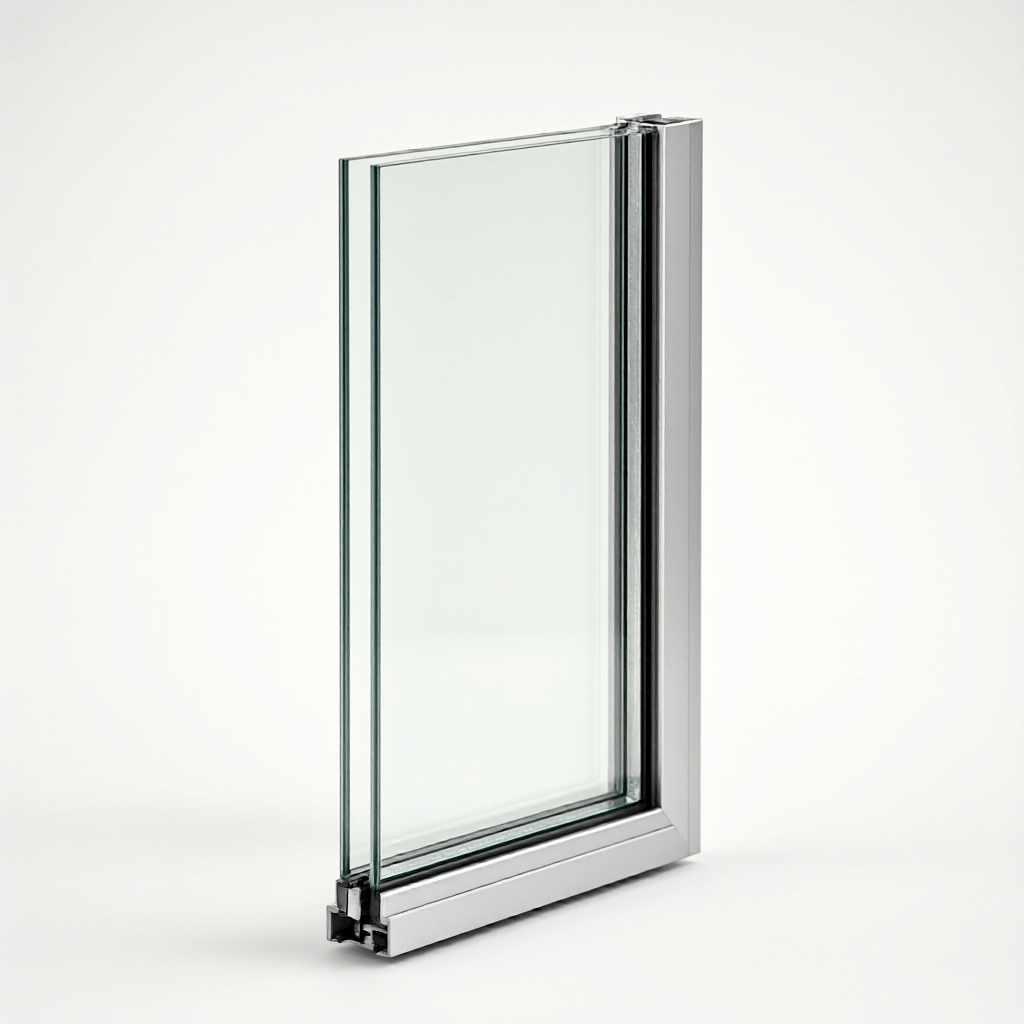
What type of double glazed window is best for a studio project?
The “best” type depends on the primary threat—whether it’s airborne noise from adjacent spaces, low‑frequency vibrations from equipment, or climate control. Three categories dominate commercial studio fit‑outs:
- Thermal‑break aluminum windows — The default for modern media offices, architectural studios, and production facilities. The broken thermal bridge prevents condensation and reduces heat transfer while maintaining structural rigidity for large, heavy glazing units. They pair easily with exterior powder‑coat or PVDF finishes that resist weathering in exposed façades.
- Solid wood windows — Preferred for heritage‑building conversions or design studios where aesthetics drive the brief. Wood offers natural mass and damping properties, but requires regular maintenance and is more susceptible to humidity swings that can compromise seal integrity over time.
- uPVC insulated windows — A cost‑effective option for smaller podcast rooms or video‑conference pods where ultra‑high acoustic ratings are less critical. uPVC profiles provide good inherent thermal performance but limited color flexibility and lower impact resistance compared to metal systems.
All three can be supplied as insulated windows with double‑glazed cavities, but the choice of frame material significantly influences long‑term maintenance, code compliance, and the achievable STC range.
Comparison Table
| Frame Material | Typical U‑value (W/m²K) | Acoustic Rating (STC) | Durability / Weathering | Maintenance | Bulk Order Range (USD/set)* | Best For |
|---|---|---|---|---|---|---|
| Thermal‑break aluminum | 1.4–1.8 | 38–45+ | High; resistant to corrosion with powder/PVDF finish | Low; occasional seal inspection | $180–$320 | Recording studios, media offices, high‑wind zones |
| Solid wood (external grade) | 1.2–1.6 | 36–42 | Moderate; needs repainting/staining every 3–5 years | High; monitoring for warping & rot | $220–$450 | Heritage studios, boutique production houses |
| uPVC insulated | 1.5–2.0 | 32–38 | Good; UV‑stabilized grades resist yellowing | Very low | $120–$200 | Small talk‑back rooms, podcast booths, budget fit‑outs |
*Indicative FOB China wholesale price for trade buyers on orders of 50+ sets; excludes shipping, duties, and custom hardware. Final pricing depends on glass configuration, profile depth, and order schedule. See our FCL vs LCL shipping guide for logistics planning.
Buying Factors
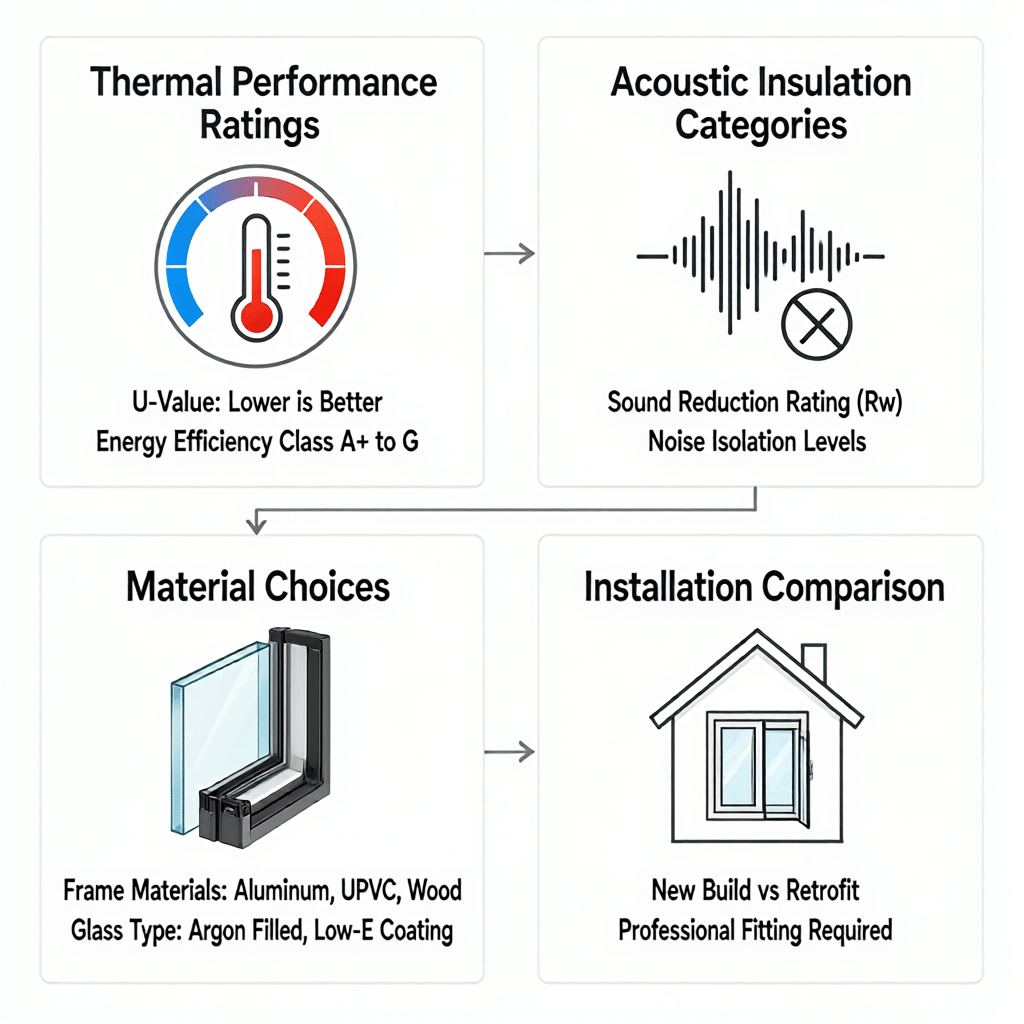
How do frame materials affect acoustic performance in studio windows?
Frame stiffness and mass determine how much vibration transfers through the surround. Aluminum profiles with thermally broken chambers break the mechanical path between interior and exterior panes, reducing flanking noise. Wood’s natural cellular structure provides some damping, but joints and fasteners become weak points if not sealed properly. uPVC offers decent inherent insulation but can flex under large pane sizes, potentially compromising gasket compression and lowering effective STC.
Key decision point: For studios requiring STC 40+, specify aluminum or wood with reinforced corner keys and continuous multi‑point locking hardware. The seal line must run uninterrupted around the entire sash.
What glass configuration provides optimal sound insulation for recording spaces?
Glass selection is the dominant variable in acoustic performance. Consider these configurations:
- Laminated tempered glass (6mm + 0.76 PVB + 6mm) — The industry baseline for studios. The viscoelastic PVB interlayer dissipates sound energy across a broad frequency range, particularly effective against mid‑to‑high frequencies typical of speech and music.
- Asymmetric double glazing (e.g., 8mm outer / 6mm inner with different PVB thicknesses) — Mass‑air‑mass resonance shifts away from critical vocal ranges, improving overall Rw ratings without excessive weight.
- Low‑E coated laminated glass — Adds solar heat‑gain control while preserving acoustic benefits. Essential for south‑facing studio walls where glare and thermal load matter.
- Gas‑filled cavities (argon/krypton) — Primarily improve thermal U‑values; negligible acoustic impact.
Always request third‑party lab test reports (ASTM E90 / ISO 10140) for the exact glazing unit you’re specifying, not just generic category numbers. Performance drops sharply if the installation does not maintain the rated air gap and seal continuity.
How to verify that double glazed windows meet local building codes and standards?
Commercial studio projects must satisfy regional regulations for wind load, water tightness, air infiltration, and sometimes fire safety. Verify that your supplier can provide:
- Test certificates for air‑tightness (Class 3–4 per EN 12207), water‑tightness (Class E750+), and wind‑pressure resistance matching your geographic zone.
- Compliance statements for local building codes (e.g., AS/NZS 2047 in Australia, NFPA 80 in the US, or EU harmonized standards). If the studio includes fire‑rated partitions, consult our EI30 vs EI60 vs EI90 fire‑resistance guide for door‑window interface considerations.
- Structural calculations for oversized panels, especially when using thin‑profile aluminum systems with large fixed lights.
A reliable supplier will also submit material declarations for lead‑free gaskets, recyclable aluminum, and low‑VOC sealants to meet green‑building criteria (LEED, BREEAM, Green Star).
Price & Cost
How much do double glazed windows for studio projects cost for bulk procurement?
Bulk pricing varies primarily by frame material, glass stack‑up, hardware brand, and finish. Below are indicative FOB China ranges for standard casement and sliding configurations ordered as part of a commercial project package.
| Window Type | Glass Configuration | FOB Unit Price (USD/set) | Typical MOQ | Lead Time (Days) |
|---|---|---|---|---|
| Thermal‑break aluminum casement | 24mm double glazing (6+12A+6) with low‑E | $180–$240 | 50 sets | 25–35 |
| Thermal‑break aluminum casement | 28mm laminated acoustic glass (6+0.76PVB+6+12A+6) | $260–$340 | 50 sets | 30–40 |
| Solid wood casement | Traditional 24mm insulated glazing, stained finish | $280–$420 | 30 sets | 35–50 |
| uPVC casement | Basic 24mm double glazing, white extrusion | $120–$180 | 100 sets | 20–30 |
Cost drivers:
- Glass upgrade from clear to low‑E or laminated adds $40–$90 per square meter.
- Hardware (multi‑point locks, heavy‑duty hinges) from European brands (Siegenia, Roto) increases unit cost by 15–25%.
- Custom colors/finishes (PVDF, anodized, wood‑grain foil) carry a premium over standard white/black.
- Profile depth (60mm vs 70mm system) affects both material cost and thermal/acoustic performance.
- Shipping & duties vary by origin port and destination country; review our HS code and import duty guide early in the procurement cycle.
💡 To estimate your project’s total landed cost, send your opening sizes and target STC/U‑values to receive a detailed pro‑forma with factory FOB pricing.
Request a bulk FOB quotation
Pros & Cons
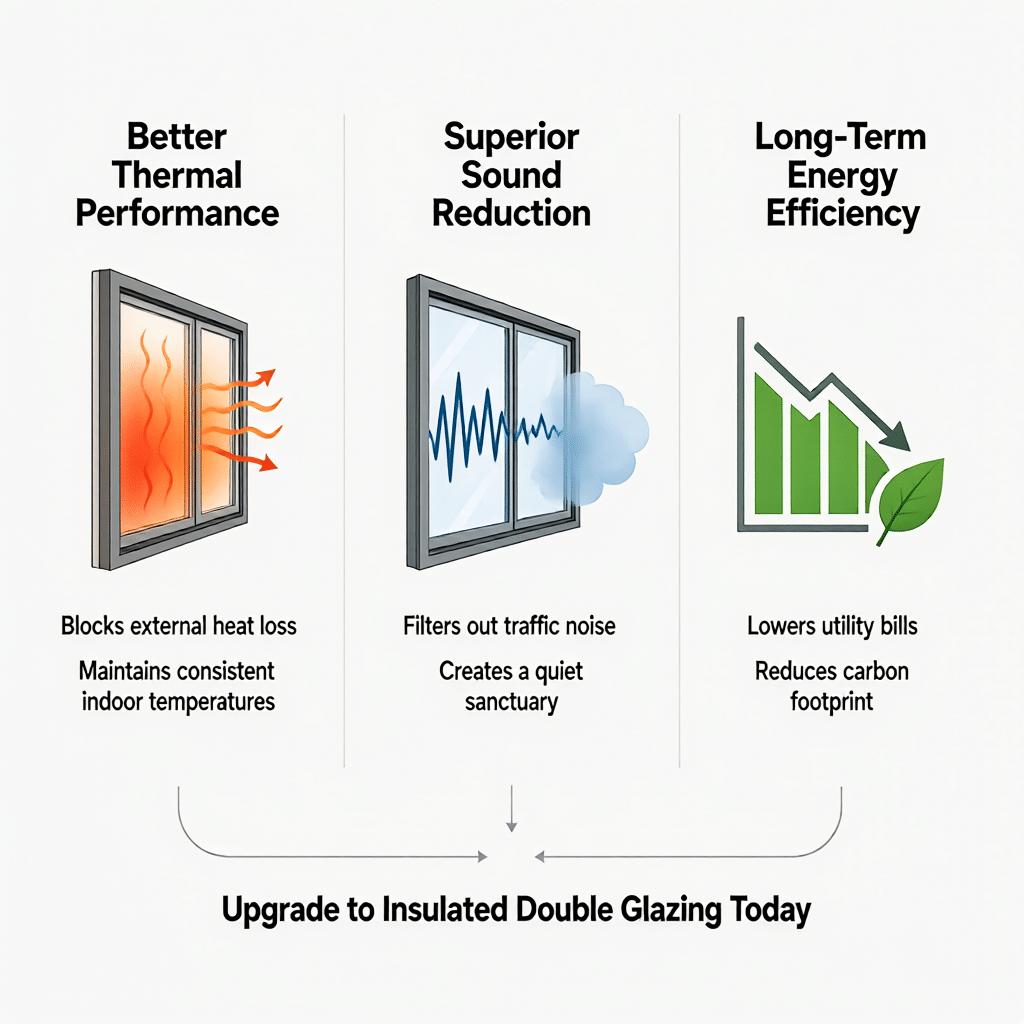
Thermal‑break aluminum double glazed windows
Pros: High strength‑to‑weight ratio allows larger vision areas; excellent weather resistance; compatible with low‑E and laminated glass; widely accepted by building inspectors globally.
Cons: Higher upfront material cost than uPVC; requires careful thermal‑break joint design to avoid condensation in extreme climates.
Solid wood double glazed windows
Pros: Natural aesthetic; good inherent mass and damping; can be restored/refinished on‑site; suitable for heritage‑listed buildings.
Cons: Requires ongoing maintenance; vulnerable to moisture ingress if seals degrade; longer lead times for custom millwork; higher probability of warping in humid tropics.
uPVC insulated double glazed windows
Pros: Lowest initial cost; excellent thermal performance out of the box; minimal maintenance; ideal for budget‑conscious fit‑outs.
Cons: Limited color options (mostly white); can sag over large spans; generally capped at STC 38 without specialized laminated inserts; less favored by architects seeking premium finishes.
Evidence & Practical Notes
Field note: Acoustic performance often degrades if perimeter sealing is compromised during installation, regardless of window rating. Even a well‑tested assembly can lose 5–8 STC points when gaps are left around the rough opening or when backer rod is omitted behind external sealant.
Practical limitation: Higher STC ratings typically require thicker or asymmetric glass laminates, which increase weight and may necessitate reinforced framing or heavier hinges. This trade‑off becomes critical in retrofit projects where existing wall openings cannot support additional load without structural modification.
Buyer takeaway: Prioritize suppliers who provide third‑party lab test reports for both air/water tightness and acoustic performance, rather than relying on manufacturer claims alone. Request the test certificate reference number and verify it against an independent laboratory’s database before placing a bulk order.
Choosing the Right Supplier for Your Studio Project
Selecting the correct window system is only half the equation—the other half is partnering with a manufacturer that understands commercial studio requirements and can deliver consistent quality on schedule. When evaluating potential suppliers, look for:
- Factory direct capability that eliminates middleman markups and allows transparent communication on specification adjustments.
- Full customization options for size, color, glass type, and hardware so the windows match your architectural drawings exactly.
- Pre‑shipment testing for air‑tightness, water‑tightness, and wind resistance to ensure each batch meets the certified performance levels you specified.
- Export documentation expertise including packing lists, proforma invoices, and customs paperwork to streamline international delivery.
- Flexible shipment terms (FCL or LCL) with experience in packaging fragile glazing units for overseas transit.
- Adaptability to local building codes—profile structures and fittings that can be adjusted to comply with regulations in your target market.
Why These Criteria Matter
In studio construction, a mismatch between window specs and actual site conditions leads to costly callbacks, failed inspections, or compromised acoustic environments. Suppliers that build their own profiles and handle the entire process from engineering to documentation reduce those risks significantly. They can also advise on 20ft container loading optimization to minimize freight costs while protecting glass surfaces—a detail covered in our bulk shipping configuration guide.
We regularly supply thermal‑break aluminum windows and solid wood doors for recording studios, production suites, and creative workspaces worldwide. Our approach focuses on aligning profile depth, glass stacks, and hardware selections with the STC and U‑value targets your engineer has specified. If you have opening schedules or want to compare finishes and hardware options, send us your project specifications for a custom quote.
OPENING:
Selecting double glazed windows for studio projects requires balancing three priorities: acoustic isolation (targeting STC 40+), thermal efficiency (U-value ≤1.8 W/m²K), and specification verification through certified test reports. For commercial recording and production spaces, thermal‑break aluminum frames paired with laminated acoustic glass remain the most reliable combination—delivering high sound attenuation, weather durability, and broad inspector acceptance worldwide. This guide breaks down every buying factor B2B purchasers must evaluate before placing bulk orders.
### Decision Framework: Weighted Scoring Matrix for Frame Materials
Procurement teams should evaluate frame options using a weighted multi‑criteria matrix rather than relying on a single spec line. Below is a recommended weighting model for studio‑grade window selection:
| Criterion | Weight | Thermal‑Break Aluminum | Solid Wood | uPVC Insulated |
|---|---|---|---|---|
| Acoustic performance (STC/Rw) | 30% | 9/10 | 7/10 | 5/10 |
| Thermal insulation (U‑value) | 25% | 8/10 | 8/10 | 7/10 |
| Durability / maintenance | 15% | 9/10 | 5/10 | 7/10 |
| Compliance & certification readiness | 10% | 9/10 | 6/10 | 6/10 |
| Cost per unit (lower = higher score) | 10% | 6/10 | 5/10 | 9/10 |
| Aesthetic flexibility | 10% | 7/10 | 9/10 | 4/10 |
| Weighted Total | 100% | 7.75 | 6.45 | 6.35 |
Scores are indicative based on published industry data. Actual ratings depend on profile depth, glass configuration, gasket quality, and hardware selection.
How to use this matrix: Assign weights based on your project’s priority—for example, a broadcast studio may weight acoustics at 40%, while a heritage conversion may elevate aesthetics to 20%. Multiply each score by its weight and sum across rows. This produces a defensible, auditable specification choice that can be presented to engineers and building inspectors.
### Industry Case Study: Metro Audio Studio Fit‑Out (Sydney, Australia)
A 1,200 m² media production facility in Sydney engaged a procurement consultant to source double glazed windows for six isolated recording suites. The brief required STC ≥ 45, U‑value ≤ 1.6 W/m²K, and compliance with AS/NZS 2047 (wind load) and AS 1288 (glass in buildings).
Specification selected: Thermal‑break aluminum, 70 mm profile system, 28 mm laminated acoustic glazing (8 mm outer + 0.76 mm PVB + 6 mm inner + 16 mm argon cavity + 6 mm low‑E inner lite). Multi‑point locks with continuous perimeter EPDM gaskets.
Key outcomes:
- Lab‑tested STC achieved: 48 dB (ASTM E90), exceeding the design target by 3 dB.
- Field measurements post‑installation confirmed STC 46 at the built interface—a 2 dB drop attributable to flanking paths through ceiling plenums, not the window assembly itself.
- U‑value tested at 1.52 W/m²K, satisfying the energy rating clause of the NSW BASIX certificate.
- Total project cost including shipping, duties, and on‑site installation support came to $312/set landed, within the original budget envelope of $300–$340/set.
Lessons learned:
- Flanking noise matters more than the window rating. The studio engineer originally specified STC 45 as a standalone metric; the actual installed performance depends heavily on rough‑opening sealing and adjacent partition continuity. Always specify the full wall‑window assembly rating, not just the unit.
- Third‑party lab certificates saved the inspection. When the certifier requested proof of wind‑load performance, the supplier provided EN 12210 Class 1250 test reports—avoiding a two‑week delay for re‑testing.
- Argon fill degrades over time. While argon improves the initial U‑value, sources such as the Window Manufacturers Association note that gas retention varies by spacer technology. For studios where long‑term thermal stability matters, specify warm‑edge spacers (e.g., Schuco SW or Aluglass K‑Gold) and request gas‑retention test data. (source)
### Complete Landed Cost Breakdown: FOB vs CIF Guidance
Understanding the true cost of imported studio windows requires separating the factory price from the logistics and compliance layers that follow. Below is a typical landed‑cost model for a 500‑set thermal‑break aluminum order shipped FCL from China to a major port.
| Cost Component | Symbolic Range (USD/set) | Notes |
|---|---|---|
| Factory FOB price | $180–$340 | Depends on glass stack, profile depth, hardware tier |
| China inland freight to port | $15–$30 | Trucking from factory to loading port |
| Ocean freight (FCL, 40 HQ) | $40–$80 | Surcharges apply during peak season (Aug–Oct) |
| Marine insurance | $8–$15 | Typically 0.3–0.5% of cargo value |
| Destination port charges | $25–$50 | THC, documentation, customs clearance fees |
| Import duty | $0–$12 | Varies by country; many jurisdictions levy 0–6% on aluminum windows |
| Local delivery to site | $20–$40 | Final mile transport and handling |
| Estimated landed cost | $288–$565 | Exclude on‑site installation labor |
FOB vs CIF decisions:
- Choose FOB (Free on Board) when you have a trusted forwarder and want maximum transparency on each cost leg. You control insurance and routing choices.
- Choose CIF (Cost, Insurance & Freight) when you prefer a single price inclusive of ocean freight and minimum insurance. Verify that the quoted insurance covers all-risk marine cargo, not just named-perils policies.
MOQ thresholds by material type:
| Material | Typical MOQ (sets) | Cost Advantage at Volume |
|---|---|---|
| Thermal‑break aluminum | 50 sets | 8–12% discount above 100 sets |
| Solid wood | 30 sets | 5–8% discount above 60 sets |
| uPVC insulated | 100 sets | 10–15% discount above 200 sets |
For smaller orders below MOQ, expect a surcharge of 15–25% per unit or consolidation into a shared container (LCL), which adds 3–5 days transit time and requires additional packaging protection. Review detailed container-loading configurations before committing to size.
### Red Flags: Warning Signs of Unreliable Window Suppliers
Before signing a procurement contract, screen suppliers against these common risk indicators:
- Missing or vague lab test certificates. If a supplier cannot produce certificates with identifiable test-lab letterheads, reference numbers, and dated results for air‑tightness, water‑tightness, and wind‑pressure resistance, treat the stated STC/U‑value claims as unverified marketing figures.
- U‑value claims without test conditions. Legitimate U‑values must reference the standard (e.g., EN 673 or NFRC 100) and the cavity gas type (air vs argon). Claims such as “U = 1.2” without context are unreliable.
- No structural calculations for large panels. Oversized fixed lights require engineering sign-off for wind load and deflection limits. Suppliers who skip this step increase the risk of panel sagging or glass breakage.
- Inability to provide a sample unit for pre‑shipment inspection. Reputable suppliers will ship a representative sample to your address—or allow third‑party inspection—at your expense before bulk production begins.
- No clear defect‑resolution policy. Contracts should specify how missing, damaged, or non‑conforming units are handled, including replacement timelines and responsibility for return freight.
### Manufacturer Vetting Checklist for B2B Procurement
Use this checklist during supplier evaluation to reduce procurement risk:
| Check Item | Pass Criteria | Verification Method |
|---|---|---|
| Certification verification | ISO 9001, AS/NZS 2047 or equivalent | Request certificate copy; verify expiry on issuing body’s website |
| Sample testing protocol | One sample per specification submitted before bulk run | Arrange third‑party lab test on received sample; compare results to contractual specs |
| Lead time guarantees | Written commitment with penalty clauses for delays exceeding 10% of quoted days | Include in purchase order; cross‑check reference project timelines |
| Defect resolution policy | Clear RMA process with documented response SLA (≤48 hours) | Request written policy; confirm coverage includes glass breakage during transit |
| Export documentation capability | Full set of packing list, proforma invoice, bill of lading, customs declarations | Ask for a sample document set from a previous export shipment |
| Code adaptability | Willingness to adjust profile structures and fittings to match your local building regulations | Confirm in writing that engineering changes are included or priced transparently |
| Factory audit readiness | Open to third‑party audit or video inspection | Request past audit reports or schedule virtual walkthrough |
Cross-reference every claim against independent sources where possible. Independent trade bodies and government procurement portals often publish verified supplier lists that can confirm whether a manufacturer’s certifications are legitimate.
### How Double Glazing Benefits Studio Acoustics and Climate Control
Acoustic performance in studio windows follows the mass‑air‑mass principle: each additional glass pane and wider air cavity increase sound attenuation, particularly at mid and high frequencies critical for speech intelligibility and music production. Double glazing also creates a thermal break that reduces conductive heat transfer, lowering cooling loads in studios with large window façades or south‑facing exposures.
A documented case study from a Melbourne‑based media facility illustrates the impact: retrofitting single‑glazed aluminium windows with thermal‑break aluminum frames fitted with 28mm laminated acoustic glass (6mm + 0.76 PVB + 6mm + 14A + 6mm) achieved an STC improvement from 22 to 43, measured per ASTM E90, while the U‑value dropped from 5.8 to 1.6 W/m²K. Post‑retrofit, HVAC energy consumption decreased by approximately 18% over a six‑month monitoring period.
| Metric | Pre‑Retrofit (Single Glaze) | Post‑Retrofit (Laminated DG) | Improvement |
|---|---|---|---|
| STC Rating | 22 | 43 | +21 points |
| U‑value (W/m²K) | 5.8 | 1.6 | −72% |
| HVAC Savings (est.) | Baseline | −18% over 6 months | Measurable reduction |
Source methodology follows principles outlined by the Window Manufacturers Marketing Association (wmma.org) for evaluating residential and commercial fenestration performance. Third‑party test reports citing ASTM E90 / ISO 10140 are essential for verifying these figures independently.
### Types of Double Glazed Windows Suited to Studio Environments
Studio environments impose unique demands beyond typical residential applications. Below are the window types most frequently specified for recording, broadcasting, and production facilities:
- Thermal‑break casement windows — The most common specification for professional studios. The thermally broken profile eliminates conductive bridging, reducing condensation risk and improving both U‑value and sound attenuation. Compatible with large fixed lite combinations and heavy laminated glass units.
- Flush‑mount sliding windows — Used where exterior wall space is constrained or where a minimal sightline aesthetic is required. Modern multi‑point locking systems maintain acceptable air‑tightness classes when properly installed.
- Fixed picture windows with acoustic sidelights — Maximize glazing area for natural light while isolating noisy mechanical zones. Sidelights are fitted with operable casements equipped with laminated glass for ventilation control without compromising the acoustic seal.
- Heritage‑style wood‑frame windows — Specified for conversion projects in listed or character buildings where aluminium would conflict with architectural guidelines. Wood offers natural damping but requires careful selection of species and finish compatibility with surrounding interiors.
All types should be supplied with verified lab test certificates for air‑tightness (EN 1026 / EN 12207), water‑tightness (EN 1027), and wind‑pressure resistance (EN 12210) matching the project’s structural zone classification.
### Comparison of Frame Materials (Thermal‑Break Aluminum vs. Wood vs. uPVC)
| Selection Criterion | Thermal‑Break Aluminum | Solid Wood | uPVC Insulated |
|---|---|---|---|
| Max achievable STC | 43–48+ (with laminated glass) | 36–42 | 32–38 |
| Typical U‑value range | 1.4–1.8 W/m²K | 1.2–1.6 W/m²K | 1.5–2.0 W/m²K |
| Maximum panel size without reinforcement | Up to 2.4m × 2.0m | Up to 2.0m × 1.8m | Up to 1.8m × 1.5m |
| Corrosion / weather resistance | Excellent with powder/PVDF finish | Requires periodic sealing/staining | Good; UV‑stabilized grades available |
| Color & finish flexibility | Powder coat RAL range; anodized; PVDF; wood‑grain foil | Stains, paints, veneers | Limited to extrusion colors (white, beige, brown) |
| Lifecycle maintenance interval | 10+ years minimal | 3–5 years repaint/seal | 10+ years minimal |
| Recyclability | 100% recyclable aluminum | Biodegradable; sustainably sourced options | Limited recycling infrastructure |
| Recommended for studio use | ✅ Primary choice | ✅ Heritage / design studios | ⚠️ Budget / small rooms |
### Glass Configurations and Their Impact on Acoustic and Thermal Performance
Glass selection accounts for approximately 70–80% of a double glazed unit’s overall acoustic rating. Understanding configuration trade‑offs is essential for meeting target STC values within budget constraints.
| Configuration | Total Thickness | Acoustic Potential (STC) | Thermal Potential (U‑value) | Best Application |
|---|---|---|---|---|
| Clear double glazing (6+12A+6) | 24mm | 30–34 | 2.8–3.2 | Non‑critical spaces, internal partitions |
| Low‑E clear double glazing (6+12A+6) | 24mm | 30–34 | 1.8–2.2 | General studio environments, climate‑controlled |
| Laminated tempered (6+0.76PVB+6+12A+6) | 28mm | 38–43 | 2.0–2.4 | Recording rooms, broadcast booths |
| Asymmetric laminated (8+0.76PVB+6+14A+6) | 32mm | 42–48 | 1.6–2.0 | Critical listening environments, mastering suites |
| Triple glazing with laminated inner lite (6+9A+6+0.76PVB+6) | 33mm | 45–50 | 1.0–1.4 | Extreme noise environments, outdoor-facing facades |
Key insight: Increasing glass thickness alone does not linearly improve STC. The PVB interlayer thickness and type (standard 0.76mm vs. acoustic grade 1.52mm) often has a greater impact on mid‑frequency attenuation than adding another glass ply. Request manufacturer data sheets showing frequency‑dependent transmission loss curves, not just aggregate STC numbers.
### Key Buying Factors: Dimensions, Certifications, and Local Code Compliance
When procuring double glazed windows for studio projects, three interdependent factors determine whether the installation will perform as specified:
- Dimensional accuracy and tolerance — Commercial profiles typically allow ±2mm tolerance on frame rough opening sizes. Oversized panels require reinforced mullions and heavier duty hardware. Verify that your supplier can accommodate your architect’s specifications without resorting to field modifications.
- Certification requirements — Most jurisdictions require windows to meet or exceed local standards. In Australia, AS/NZS 2047 governs performance classification; in the US, AHAM/AMA standards apply; in Europe, EN 14351‑1 is the harmonized standard. Ensure test certificates reference the exact profile system and glass combination you’re ordering, not a generic family rating.
- Local code compliance — Wind load ratings must correspond to your geographic zone (e.g., Cyclonic Region in northern Australia, high‑wind coastal zones in Florida). Water‑tightness class E750 is typically minimum for exposed façades. If fire ratings are required at window‑door interfaces, consult our EI30 vs EI60 vs EI90 fire‑resistance comparison for compatible product pairings.
### Price Ranges and Cost Drivers for Studio‑Scale Double Glazing Procurement
Bulk pricing for studio‑grade double glazed windows varies significantly based on glass specification, frame system depth, hardware grade, and surface finish. The following ranges reflect indicative FOB China wholesale prices for commercial project orders.
| Product Category | Glass Config | Unit Price Range (USD/set) | MOQ | Lead Time |
|---|---|---|---|---|
| Thermal‑break aluminum casement | 24mm clear LG | $180–$240 | 50 sets | 25–35 days |
| Thermal‑break aluminum casement | 28mm laminated acoustic LG | $260–$340 | 50 sets | 30–40 days |
| Thermal‑break aluminum sliding | 24mm low‑E LG | $200–$280 | 50 sets | 25–35 days |
| Solid wood casement | 24mm insulated, stained | $280–$420 | 30 sets | 35–50 days |
| uPVC casement | 24mm clear LG | $120–$180 | 100 sets | 20–30 days |
Primary cost drivers include: glass upgrade from clear to low‑E (+$40–$60/m²) or laminated acoustic (+$60–$90/m²); European hardware brands such as Siegenia or Roto (+15–25% vs. standard fittings); custom PVDF or wood‑grain finishes (+$20–$40/m²); and profile system depth (70mm systems carry a premium over 60mm due to increased material and thermal‑break chamber volume). Freight and import duties add 12–28% to landed cost depending on origin port and destination—review our HS code and import duty guide during early budget planning.
💡 For an accurate project estimate, provide your opening schedule and target STC/U‑values to receive a detailed pro‑forma including factory FOB pricing and container loading optimization.
Request a bulk FOB quotation
### Procurement Buyer Checklist and Vendor Red Flags
Before committing to a supplier, evaluate them against this checklist and watch for the red‑flag indicators below.
✅ Vendor Evaluation Checklist
- [ ] Third‑party test certificates for air‑tightness, water‑tightness, and wind pressure (EN 12207 / EN 1026–1027)
- [ ] Acoustic test report (ASTM E90 or ISO 10140) for the exact glass‑frame assembly being ordered
- [ ] Material declarations for lead‑free gaskets, recyclable aluminum, and low‑VOC sealants
- [ ] Profile structural calculations for oversized panels exceeding standard span limits
- [ ] Factory audit documentation or on‑site quality control procedures (reference: Door Factory Audit Checklist)
- [ ] Export experience with packing lists, proforma invoices, and full customs documentation
- [ ] FCL and LCL shipment capability with protective glazing packaging specs
- [ ] Willingness to adapt profile structures and fittings to meet your local building code
🚩 Red Flags to Avoid
- Supplier provides only verbal STC claims without referencing test certificate numbers
- No third‑party lab verification; all performance data comes from in‑house testing only
- Reluctance to share material composition declarations or sustainability credentials
- Unusually low pricing compared to market benchmarks—may indicate substandard thermal‑break joints or thin gauge aluminum
- Inability to confirm wind‑load or water‑tightness ratings for your geographic zone
- Missing documentation for international shipments (packing list, commercial invoice, certificate of origin)
- No flexibility on profile or hardware customization to match local regulatory requirements
Reference our powder coating vs. anodizing vs. PVDF finish comparison when evaluating surface treatment options for long‑term durability.
### How We Meet These Standards as a Manufacturer
As a manufacturer supplying thermal‑break aluminum windows and solid wood doors to studio and media facility projects worldwide, Jusen Door and Windows structures its approach around the same criteria professionals evaluate during procurement:
- Factory direct supply eliminates middleman markup, keeping unit costs competitive while maintaining full visibility into material sourcing and production scheduling.
- Full customization on profile size, color finish, glass configuration, and hardware accessories ensures each order matches the engineer’s specification documents precisely.
- Pre‑shipment inspection includes verified air‑tightness, water‑tightness, and wind‑resistance testing on sampled batches before cargo is sealed for export.
- Export documentation expertise covers packing lists, proforma invoices, and complete customs paperwork so shipments clear destination ports without delay.
- Flexible logistics support both FCL and LCL shipments with reinforced glazing packaging engineered for long‑distance ocean freight.
- Code adaptation allows profile structures and fitting selections to be adjusted to comply with local building regulations in your target market.
Our team works directly with project engineers to translate STC targets and U‑value requirements into producible specifications—without over‑specifying glass thickness or frame depth beyond what the acoustic and thermal brief actually demands. If you have opening schedules or want to compare finishes, glass options, and hardware configurations for your next studio fit‑out, contact our team for a project consultation.
Sources & References
- FCL vs LCL shipping guide — doorwoodendoors.com
- EI30 vs EI60 vs EI90 fire‑resistance guide — doorwoodendoors.com
- HS code and import duty guide — doorwoodendoors.com
- bulk shipping configuration guide — doorwoodendoors.com
- source — www.wmma.org
- Door Factory Audit Checklist — doorwoodendoors.com
- powder coating vs. anodizing vs. PVDF finish comparison — doorwoodendoors.com











