
Last updated: November 28, 2026
What causes a wooden door to swell?
Solid wood is hygroscopic; it continuously exchanges moisture with the surrounding air until it reaches equilibrium moisture content (EMC). When the relative humidity rises — typical in coastal villas, unconditioned hospitality corridors, or humid climates — the cellular structure absorbs water and expands. Expansion is greatest across the grain and smallest along the grain, which is why width gain is the primary failure mode rather than length change.
Several distinct mechanisms drive dimensional change in practice:
- Asymmetric drying or uneven moisture gradients. If one face of the door dries faster than the other during manufacturing or installation, internal stresses lock into the panel. Once the door encounters external humidity, those residual stresses release unevenly, causing a case-hardened twist that looks like swelling but is actually distortion.
- Failed or missing sealants on end grains. End grain acts like a bundle of straws and absorbs moisture up to ten times faster than flat-sawn face grain. Doors installed without a proper end-grain sealer will take in water rapidly at the top and bottom edges, swelling before the rest of the panel catches up.
- Inadequate weather-stripping or perimeter gaps. Gaps that are too tight around the hinge side or latch side restrict natural breathing room, forcing the expanded panel to press against the stop rather than slide freely.
- Environmental shock after installation. Moving a kiln-dried door from a climate-controlled warehouse directly into a tropical site without acclimation creates immediate uptake. The door swells within days because its moisture content was far below the local EMC.
For multi-unit residential bulk supply, these factors compound when different floor levels have separate HVAC zones or when exterior entries are exposed to rain-driven humidity. Understanding whether the movement is uniform expansion versus asymmetric distortion determines whether simple planing will solve the problem.
Detailed Explanation: How do you diagnose and repair the issue?
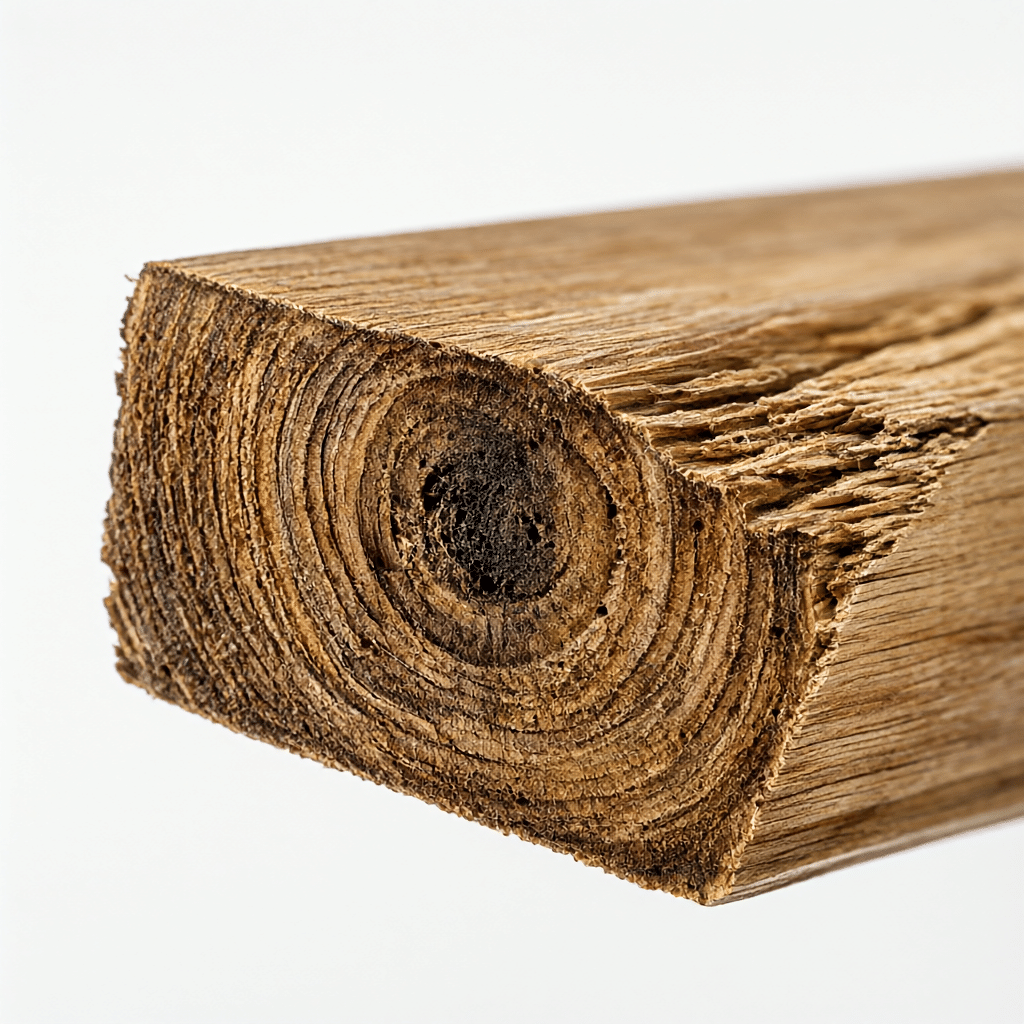
Diagnostic checklist before any material removal
Removing wood blindly wastes stock and risks compromising fire ratings or structural integrity. A proper diagnosis follows this sequence:
- Measure moisture content (MC) with a pin-type meter. Take readings at multiple points: the stile, the rail, and each corner. Uniform MC between 8% and 12% in conditioned spaces indicates the swelling is geometric rather than moisture-driven. Readings above 15% suggest active water uptake that must be addressed before machining.
- Identify high-pressure contact points. Close the door gently and insert a feeler gauge along the latch edge, hinge edge, and top rail. Mark every location where resistance exceeds 0.5 mm. These are your target relief zones.
- Check frame squareness. A bowed or out-of-plumb rough opening can mimic a swollen door. Use a laser level or plumb bob to verify the jamb is square before assuming the panel is the culprit.
- Evaluate weather-stripping and stops. Loose or compressed gaskets create false binding points. Replacing worn seals often restores operation without any wood removal.
Step-by-step repair methods
Planing and shaving relief. This is the standard remedy for uniform swelling. Remove the door from its hinges and mount it securely. Using a bench plane or a power planer set to a shallow depth, take 1–3 mm passes starting at the marked binding zones. Always work from the edge toward the center grain to prevent tear-out. After each pass, close the door in the frame to test clearance — you want approximately 2–3 mm of gap at the latch side and 3–4 mm at the head.
Sanding and tapering. For minor sticking near the latch where planing would expose raw wood unnecessarily, sand the affected area in a gradual taper. Start with 80-grit and progress to 120-grit, feathering the sanded zone into the surrounding surface so no step is visible once the door is rehung.
Conditioning reversals for slight absorption. If MC measurements show only marginal elevation (13–15%) and the stickiness is intermittent, placing desiccant packs inside a sealed polyethylene enclosure around the door can draw out excess moisture over several days. This approach works best for interior doors in controlled environments but is ineffective for doors continuously exposed to outdoor humidity.
Hardware realignment. Loose hinge knuckles or misaligned strike plates can create binding that feels like swelling. Tighten all screws, replace stripped knockouts, and ensure the latch bolt retracts cleanly without forcing the door.
When a door exhibits severe case hardening — visible checking, cupping, or a stick-slip closure pattern that returns immediately after planing — repair is insufficient. The internal stress is locked in, and the only cost-effective choice is replacement with a properly pre-conditioned panel. For guidance on selecting appropriate interior solutions, see our how to hang an interior door guide.
Specs That Matter
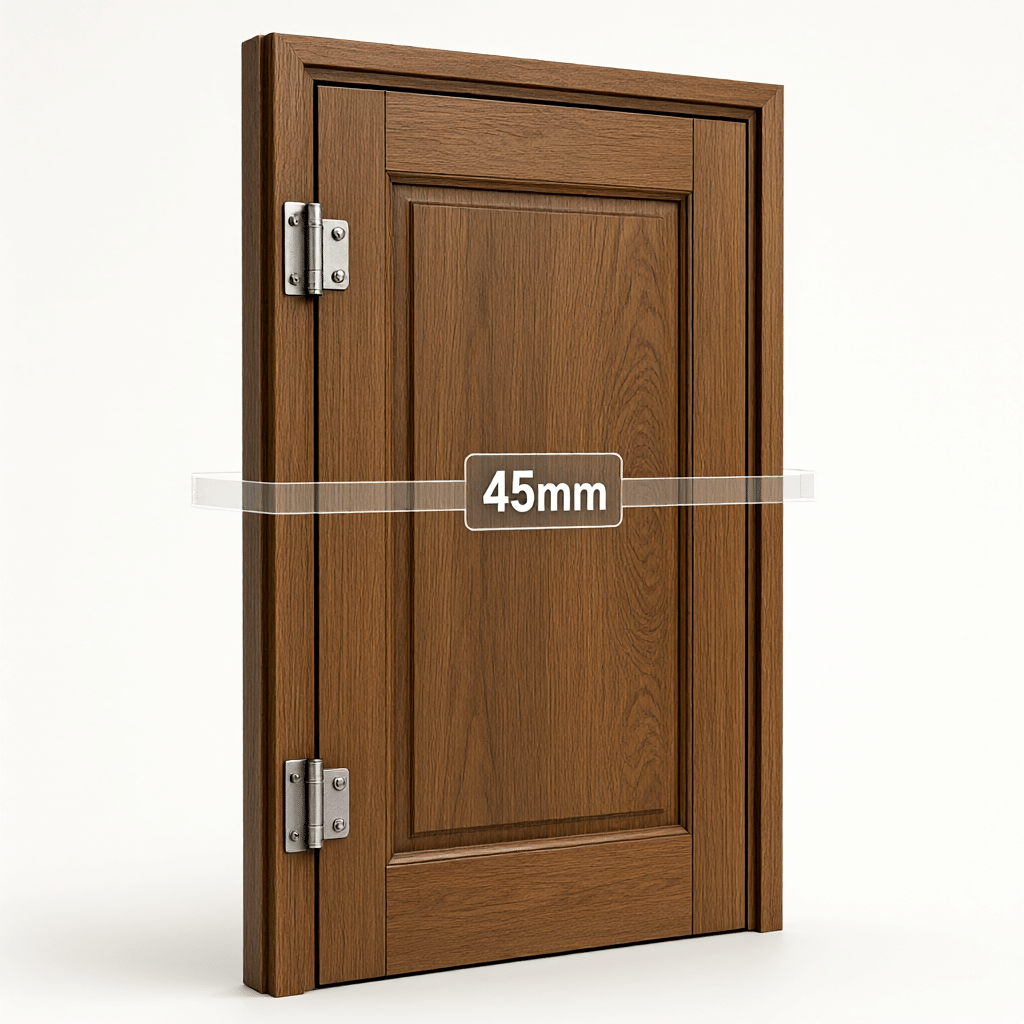
Target moisture content and allowable relief dimensions
| Parameter | Typical Range | Notes |
|---|---|---|
| Equilibrium moisture content (target) | 8–12% | Depends on local climate; lower for arid interiors, higher for coastal zones |
| Maximum safe relief per pass | 1–3 mm | Thinner passes reduce tear risk and allow repeated testing |
| Latch-side clearance after repair | 2–3 mm | Allows free swing without excessive air leakage |
| Top-rail and hinge-side clearance | 3–4 mm | Accommodates seasonal movement and threshold variations |
| Acceptable MC differential across panel | <3% | Larger gradients indicate case hardening or asymmetric drying |
Wood species susceptibility to moisture-driven movement
Species density and extractive content dictate dimensional stability. Oak, walnut, and mahogany are moderately stable due to tight growth rings and natural tannins. Pine, fir, and spruce absorb moisture quickly and expand more per percent MC change, making them higher-risk choices for humid applications. Teak and ipe contain natural oils that repel water, offering superior resistance but at a premium cost.
For entrance systems in high-RH environments, we recommend thermal-break aluminum doors and windows as a comparative alternative when long-term maintenance budgets are constrained, though true solid wood remains preferred for heritage and luxury aesthetics. See our solid wood closet doors reference for additional species selection context.
Codes & Standards

Dimensional performance expectations for solid wood doors are guided by consensus standards from ASTM International and model building codes enforced through ICC International Code Council. Key references include:
- ASTM E2092 — Standard Guide for Condensation Control in Buildings. This guide outlines how temperature and humidity gradients affect building envelopes, including door assemblies, and provides frameworks for specifying appropriate clearances and sealants.
- NFPA 105 — Standard for the Installation of Smoke Doors and Other Opening Protectives. While primarily concerned with fire and smoke containment, NFPA 105 specifies maximum permissible gaps (typically 3 mm at the sides and top, 19 mm at the bottom) that remain relevant during repair operations to avoid compromising rated assemblies.
- AWC guidelines from the American Wood Council address moisture management in wood construction, including storage, acclimation, and installation practices that minimize post-installation swelling.
Compliance with these documents does not eliminate the need for site-specific evaluation, but they establish baseline tolerances that inspectors and contractors expect. When modifying a fire-rated door assembly, always verify that removed material does not violate the listing’s labeled clearance limits.
For broader context on opening protectives and IBC Chapter 716 requirements for fire doors, refer to our IBC Chapter 716 guide.
Related Considerations
Prevention protocols for recurring swelling
Once a swollen door is repaired, the priority shifts to preventing return movement. Effective prevention combines factory pre-treatment with on-site quality control:
- Factory pre-conditioning. High-quality manufacturers condition lumber to within 2% of the target EMC for the destination climate before assembly. Kiln-dried stock stabilizes faster and exhibits less post-installation movement than air-dried material.
- Balanced sealants on all six faces. Every face, edge, and end grain should receive a primer or VPC (vapor permeability coating) that slows moisture exchange without trapping existing humidity inside the panel. Skipping the underside or end grains creates a moisture differential that drives warpage.
- Proper installation clearances. Leaving adequate perimeter gaps during hanging allows the door to breathe seasonally. Over-tight installations in dry seasons guarantee binding when humidity rises.
- Climate control strategies. In hospitality and multi-unit residential projects, maintaining indoor relative humidity between 40% and 60% dramatically reduces cycling stress. Portable dehumidifiers or HVAC zoning adjustments during monsoon seasons can protect large batches of interior doors.
Buying decisions should weigh upfront stabilization costs against lifecycle maintenance. A door installed without end-grain sealing may save hours at delivery but often requires repeat planing within two wet seasons — a hidden expense that erodes project margins. For procurement insights on related hardware and spacing, consult our hinge spacing rules article.
How We Meet These Standards
Manufacturers that specialize in export-oriented architectural joinery understand that wood movement is inevitable — the goal is to manage it through process control rather than ignore it. At Jusen Door and Windows, we approach swollen-door prevention by controlling the moisture environment before the product leaves the factory.
We select kiln-dried lumber tailored to the buyer’s target market climate and verify moisture content across multiple panels prior to assembly. Each door undergoes strict pre-shipment inspection for air-tightness, water-tightness, and wind resistance, ensuring that the final assembly meets both functional performance and regional code expectations.
Because we offer full customization on size, color, glass, and hardware accessories, we adjust profile structures and fitting specifications to match local building codes of target markets. Whether you are sourcing for coastal villa entries or tropical-climate hotel corridors, we can modify tolerance stacks and sealant schedules to reduce the likelihood of field swelling.
Our production team also manages documentation for FCL and LCL shipments directly from the China factory, including packing lists, proforma invoices, and customs paperwork, so international procurement stays predictable. If you already have problematic doors in the field, we recommend reviewing the diagnostic steps above first; if you are planning new installations, specifying stabilized stock with balanced six-face sealing will save considerable maintenance costs downstream.
FAQs for Bulk Buyers
What causes a wooden door to swell?
Primary swelling occurs when solid wood absorbs ambient moisture and expands across the grain. Secondary contributors include asymmetric drying, missing end-grain sealants, inadequate installation clearances, and sudden environmental shifts after delivery to a high-humidity site.
How do you accurately measure pressure points on a swollen door?
Use a feeler gauge along the latch edge, hinge edge, and top rail with the door closed. Mark any location where resistance exceeds 0.5 mm. Combine this physical check with pin-meter moisture readings to confirm whether binding is geometric or moisture-driven.
What is the safe amount of material to remove in one pass?
Typically 1–3 mm per pass when using a bench or power planer. Remove thin layers, test clearance frequently, and stop as soon as the door closes freely without excessive gap expansion that compromises aesthetics or energy performance.
How do you know if conditioning can reverse swelling without planing?
If moisture content reads between 13% and 15% and the door sticks only during humid periods rather than constantly, desiccant conditioning inside a sealed enclosure may restore operation. Persistent binding at higher MC or cases of visible cupping require mechanical relief.
Which wood species resist moisture-driven movement best?
Teak, ipe, oak, and mahogany generally perform better than softwoods like pine or fir because of tighter grain structure and natural oil or tannin content. Species selection should align with the project’s humidity exposure and budget constraints.
What sealant system stops recurrent swelling after repair?
A vapor-permeable coating applied uniformly to all six faces, especially the end grains, slows rapid moisture uptake while allowing trapped humidity to escape. Primer-sealers or dedicated VPC products are standard; latex paints alone are insufficient for high-exposure applications.
Sources & References
- ASTM International — www.astm.org
- how to hang an interior door — doorwoodendoors.com
- thermal-break aluminum doors and windows — doorwoodendoors.com
- solid wood closet doors — doorwoodendoors.com
- ICC International Code Council — www.iccsafe.org
- American Wood Council — awc.org
- IBC Chapter 716 guide — doorwoodendoors.com
- hinge spacing rules — doorwoodendoors.com











