
Last updated: November 25, 2026
A primed door is an unfinished door coated with a base primer layer, ready for paint or stain after installation. B2B buyers sourcing primed doors from China typically specify them when design teams need color and finish flexibility across large projects such as multi-unit residential buildings, hotel chains, and commercial fit-outs. The decision hinges on three variables—material type (solid wood, engineered core, or thermal-break aluminum), specification compliance with your target market’s building codes, and supplier reliability in testing, documentation, and logistics. This guide covers the full sourcing framework: core specifications, application scenarios, bulk pricing drivers, quality inspection protocols, and how to evaluate and select a China-based manufacturer.
Quick Overview
For B2B buyers evaluating a china primed doors manufacturer, the essential decision comes down to three things: material type, specification compliance, and supplier reliability. Primed doors are unfinished doors coated with a base primer layer ready for paint or stain after installation. They are specified when design teams need color flexibility across large projects—from multi-unit residential complexes to hotel chains and commercial build-outs. Sourcing from China requires verifying that the manufacturer can match your market’s building codes, deliver consistent quality through pre-shipment testing, and provide full export documentation. This guide covers what matters most when you’re comparing suppliers and preparing an RFQ.
What Are the Key Specifications of Primed Doors?
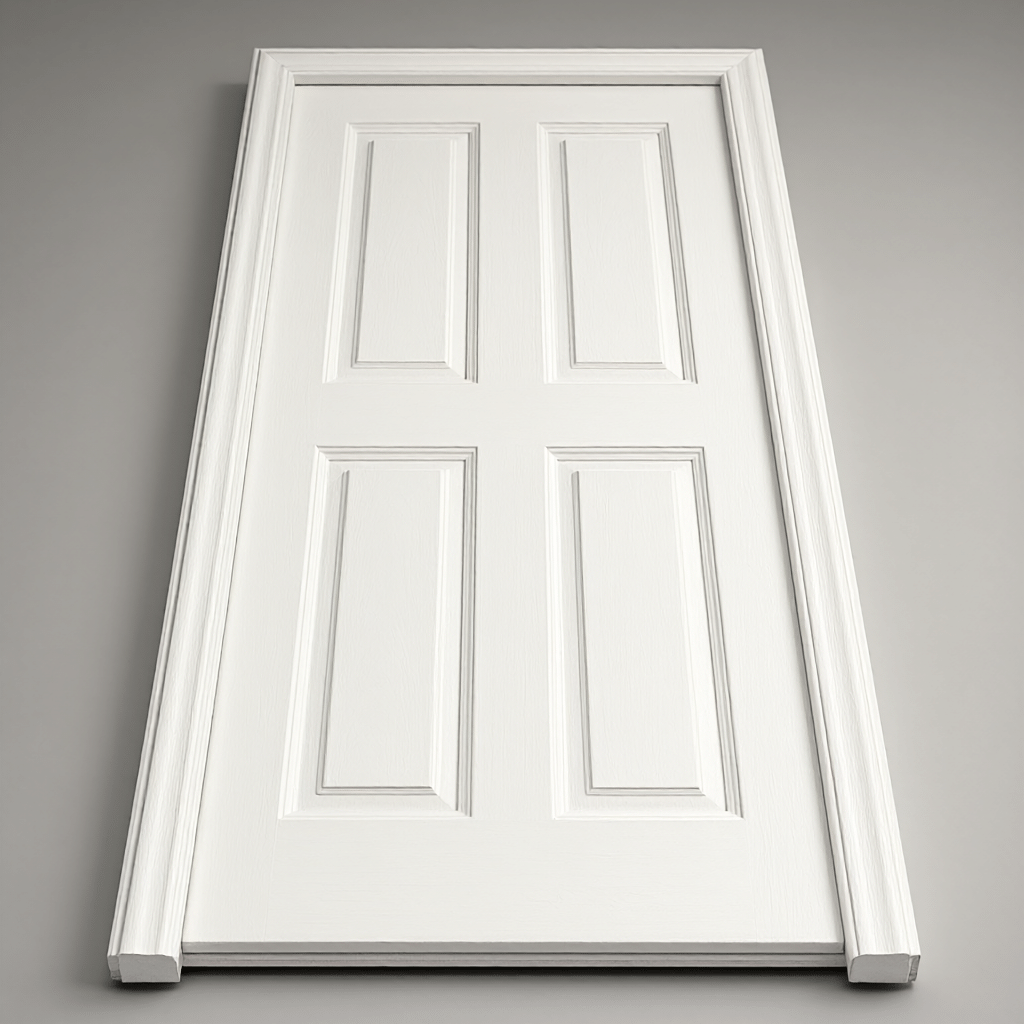
Primed doors vary significantly by material, core construction, and finish state. Understanding these dimensions helps you write accurate specifications and avoid costly misorders.
| Specification | Solid Wood Primed Door | Thermal-Break Aluminum Primed Door | Engineered/Core-Based Primed Door |
|---|---|---|---|
| Core material | Solid timber (e.g., pine, rubber wood, oak veneer) | Aluminum profile with polyamide thermal break | HDF/MDF core with primed surface skin |
| Standard thickness | 35–45 mm | 40–50 mm | 35–40 mm |
| Typical size range | 1900–2200 mm H × 700–1000 mm W | 2000–2400 mm H × 800–1200 mm W | 2000–2200 mm H × 700–950 mm W |
| Primer type | Oil-based or water-based acrylic primer | E-coat primer + powder-coated finish option | Water-based primer on engineered surface |
| Weight per unit | 25–45 kg | 15–30 kg | 18–28 kg |
| Fire rating option | Available (FD30/FD60) with certification | Inherently non-combustible frame | Limited; depends on core material |
| Customization flexibility | High — can be re-profiled on site | Medium — limited post-manufacture modification | Low — factory-defined profiles |
What defines a quality primed door: The primer coat should be even, free of runs or bare spots, and compatible with your chosen topcoat. For solid wood options, check whether the wood has been kiln-dried to 8–12% moisture content to prevent warping after installation. See our shower filter manufacturing and bulk procurement guide for context on how Chinese manufacturers handle quality control across product categories.
Surface Finish State
Primed doors arrive with a uniform grey or white primer layer. Some manufacturers offer prefinished primed doors with a sealed primer that reduces dust adhesion during transit and storage—a practical detail for large projects where doors sit on-site before installation. The primer is not a final finish; it requires sanding and painting or staining on location.
Profile & Hardware Options
Profile cross-sections determine swing direction, glass insert compatibility, and locking mechanism placement. Hardware mounting points—including lock prep (typically 60 mm backset), hinges, and closers—should be specified at the RFQ stage. Many China-based factories allow OEM primed doors with custom hardware cutouts and hinge configurations to match local fixture standards.
Where Can Primed Doors Be Used?
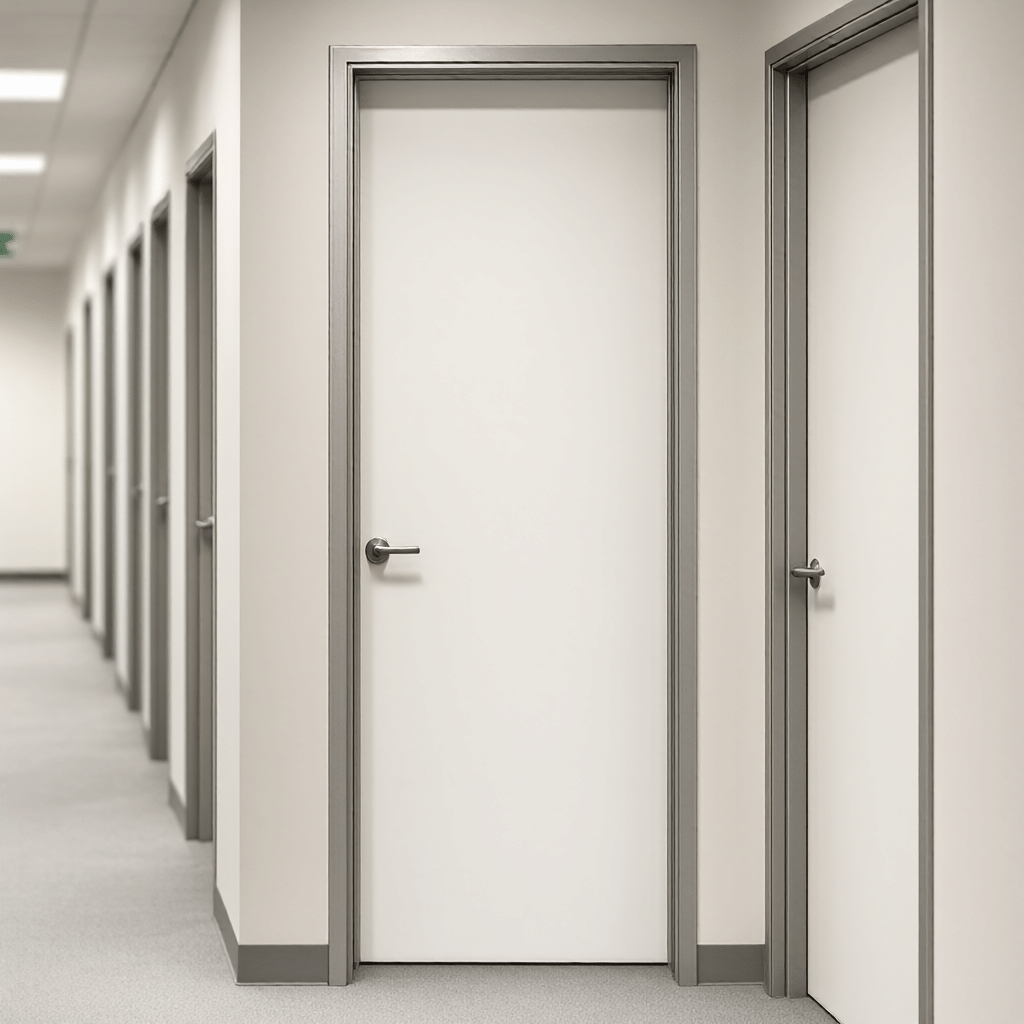
Primed doors are specified across multiple project types depending on material choice and performance requirements.
Multi-unit residential projects typically specify solid wood or engineered primed doors for interior room division due to cost efficiency and ease of on-site painting to match unit-by-unit design schemes. Hotel and hospitality guest rooms often use thermal-break aluminum primed doors in exterior or high-traffic corridors where acoustic separation, weather resistance, and durability matter more than wood aesthetics. Villa and custom home developers may select solid wood primed doors for entrance and balcony applications where the wood grain will be visible under stain after the primer is sanded away. Architectural renovation contracts frequently specify primed doors because the primer base allows retrofitted units to blend seamlessly with existing interior palettes without committing to a color during procurement.
| Application Type | Recommended Material | Key Performance Need |
|---|---|---|
| Interior apartment doors | Engineered core / solid wood | Cost control, paint flexibility |
| Hotel corridor & suite doors | Thermal-break aluminum | Acoustic rating, durability |
| Villa entrance & balcony | Solid wood | Aesthetic finish, weather resistance |
| Commercial office interiors | Engineered / solid wood | Fire rating, frequency of use |
| Renovation & retrofit projects | Any primed type | Color matching, sizing flexibility |
For multi-story residential developments, thermal-break options also contribute to overall building envelope performance. The insulated aluminum cavity reduces heat transfer compared to traditional aluminum frames, which matters in markets with stringent energy codes.
What to Consider When Buying Primed Doors in Bulk?
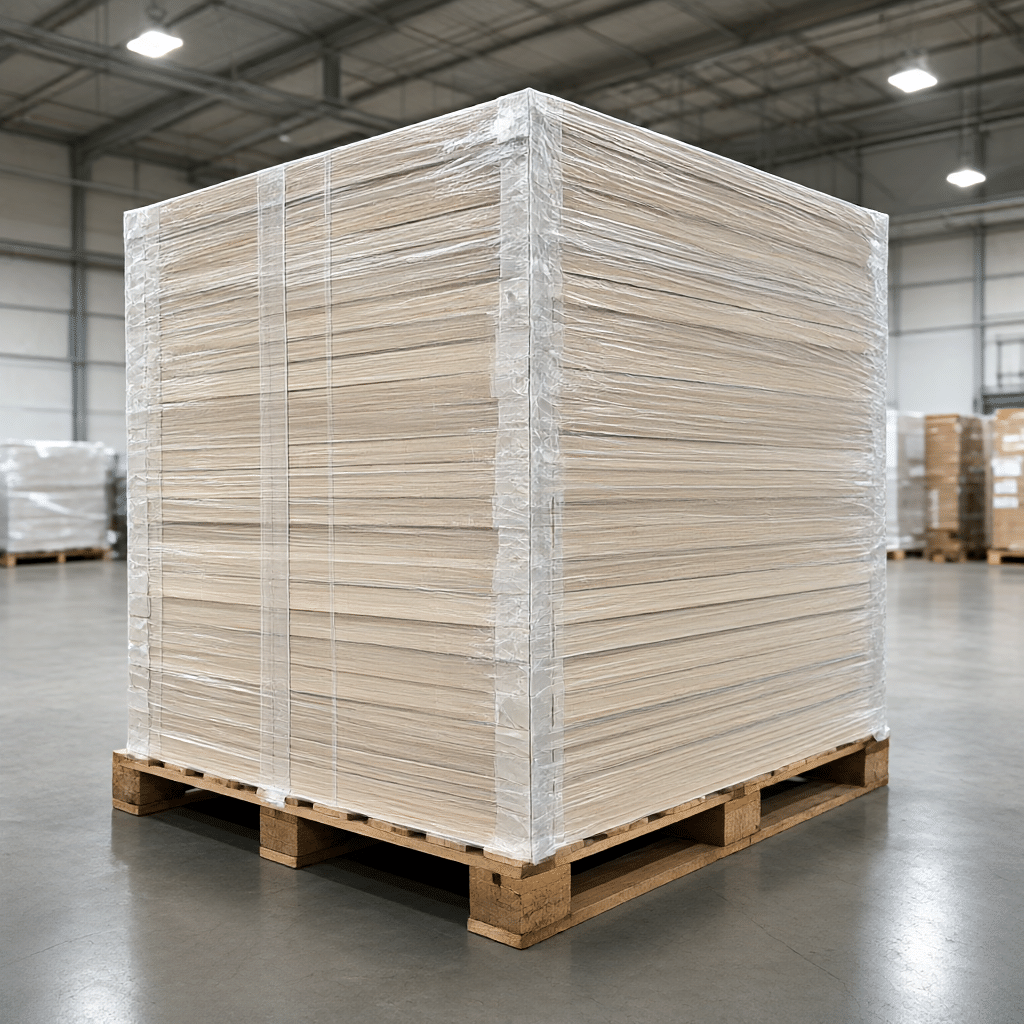
Procuring primed doors in volume requires attention to several interconnected factors. Missing any one can lead to delays, non-compliance, or cost overruns.
Material Selection Trade-offs
Solid wood offers the widest range of stain and paint results but carries higher weight, greater susceptibility to moisture-related movement, and a higher unit price. Thermal-break primed doors weigh less, resist dimensional change, and meet stricter energy performance expectations—but at a premium and with less on-site modifiability. Engineered cores sit between the two on price but offer the least customization flexibility.
Customization Scope
Verify exactly what the manufacturer can adjust before committing. Common customizable elements include:
- Size: Non-standard widths, heights, and thicknesses are widely available, but expect MOQ adjustments and longer lead times for sizes outside standard production runs.
- Color prime base: Most factories apply a standard grey or white primer. Some can tint the primer base to reduce topcoat layers, though this is less common.
- Glass inserts: Lite size, position, and glass type (clear, frosted, tempered, laminated) can usually be specified. Always confirm that glass meets your target market’s safety glazing standards.
- Hardware accessories: Lock sets, hinges, closers, and kick plates can be sourced from the factory or specified separately. Clarify who supplies what in your contract.
Quality Inspection Before Shipment
A reputable manufacturer should perform pre-shipment testing on every batch. At minimum, this includes air-tightness, water-tightness, and wind resistance tests—the same triad used for window assemblies. These tests verify that door installation gaps, gasket seating, and structural integrity meet performance claims. Ask for test reports before placing your order. According to industry testing frameworks referenced by ASTM International, standardized testing protocols provide the basis for comparing manufacturer claims against verifiable performance data.
Certifications and Compliance
Requirements vary by destination market. Common certifications include fire-rating labels (FD30/FD60 for the UK and EU, Class A/B for the US), formaldehyde emission ratings (CARB Phase 2, E1/E2 for Europe), and energy performance declarations. Ensure your manufacturer can provide these documents as part of the export package.
Logistics and Shipping Terms
Most China-based primed door manufacturers ship FOB (Free on Board) from major ports such as Shenzhen, Guangzhou, or Shanghai. Lead times typically range from 25–45 days depending on order volume and customization depth. FCL (Full Container Load) shipments are cost-effective for large orders, while LCL (Less than Container Load) may be necessary for smaller projects but increases handling risk and per-unit logistics cost.
How Much Do Bulk Primed Doors Cost? (FOB China)
Pricing for primed doors sourced from China varies based on material, size, customization level, and order quantity. The ranges below reflect typical FOB China pricing for bulk orders in 2026.
| Door Type | Size Range | Approx. FOB Price (USD/sqm) | Lead Time |
|---|---|---|---|
| Engineered core primed door | 2000×800 mm standard | $45–$75 | 25–35 days |
| Solid wood primed door (pine/rubberwood) | 2000×800 mm standard | $65–$110 | 30–40 days |
| Solid wood primed door (oak veneer) | 2000×800 mm standard | $90–$160 | 35–45 days |
| Thermal-break aluminum primed door | 2100×900 mm standard | $120–$220 | 35–45 days |
| Custom-sized primed door | Variable | +15–30% over standard | +5–10 days |
Factors that drive price up or down:
- Material grade: Kiln-dried, graded timber costs more than standard-grade lumber. Aluminum profile wall thickness (1.4 mm vs. 2.0 mm) significantly affects price.
- Order volume: Larger FCL orders benefit from production line efficiency and lower per-unit shipping costs. LCL shipments carry a proportionally higher logistics surcharge.
- Customization depth: Non-standard sizes, custom hardware cutouts, tinted primer, and special glass inserts all add to unit cost and lead time.
- Certification requirements: Doors with documented fire ratings or formaldehyde certifications require additional testing and documentation, which adds to the FOB price.
- Packaging: Export-grade packaging (corner protectors, edge wrapping, palletization) is included in most FOB quotes but must be confirmed explicitly.
Request a Quote for your specific size list and project requirements to receive a detailed FOB price breakdown.
Evidence & Practical Notes
Field note: Buyers often overlook the difference between the primer coat and the final finish when writing specifications. A uniform grey primer indicates proper surface preparation, but thin or uneven primer application—common with low-cost suppliers—leads to excessive topcoat consumption and visible imperfections after painting. Request a physical sample or high-resolution photo of the primer finish before confirming the order.
Practical limitation: Even with pre-shipment testing, dimensional variance can occur during ocean freight transit, especially for solid wood doors. Humidity changes inside containerized shipping can cause slight swelling or shrinkage. Allowing a 2–3 mm allowance in rough opening dimensions and specifying acclimatization time on-site will reduce installation issues.
Buyer takeaway: Prioritize manufacturers who provide written test reports and clear documentation packages over those offering the lowest per-unit price. The upfront savings from a cheaper supplier rarely offset the cost of delayed shipments, non-compliant documentation, or on-site rework caused by dimensional or finish defects.
How to Evaluate and Select a China Primed Doors Manufacturer
Evaluating a supplier requires looking beyond price. Here’s how we approach it at Jusen Door and Windows.
When buyers ask us how to assess a china primed doors manufacturer, we focus on six criteria that directly impact project outcomes. First, we evaluate whether the factory operates as a direct producer rather than a trading intermediary—direct supply eliminates middleman markup and gives you clearer communication on specifications and lead times. Second, we examine their customization capability: can they adjust profile structures, glass inserts, and hardware fittings to match your local building codes and design requirements? Third, we look at their inspection process. Every shipment should undergo air-tightness, water-tightness, and wind resistance testing before it leaves the factory floor. Fourth, we verify their trade experience—can they produce the full documentation package including packing lists, proforma invoices, and customs paperwork without delays? Fifth, we consider their shipping flexibility: do they handle both FCL and LCL shipments with reliable port coverage? And sixth, we assess whether they adapt their products to the regulatory environment of your target market.
At Jusen Door and Windows, our approach reflects these principles. We supply directly from our factory with no intermediary markup, offer full customization on size, color prime base, glass, and hardware accessories, and conduct strict pre-shipment inspections covering air-tightness, water-tightness, and wind resistance. Our team handles complete export documentation—including packing lists, proforma invoices, and customs papers—and ships via both FCL and LCL from China. We also adjust profile structures and fittings to comply with local building codes in your market.
Contact Our Team to discuss your project specifications and receive a customized quotation.
Solid-Wood vs. Thermal-Break Aluminum Primed Doors: Key Differences
Buyers frequently ask what separates solid-wood primed doors from thermal-break aluminum primed doors, and the answer lies in performance priorities, not just aesthetics.
| Comparison Factor | Solid-Wood Primed Door | Thermal-Break Aluminum Primed Door |
|---|---|---|
| Primary advantage | Stain-visible grain, classic aesthetic, high customization | Dimensional stability, acoustic & thermal performance |
| Moisture sensitivity | Moderate to high — requires kiln drying (8–12% MC) | Low — inherently moisture-resistant |
| Acoustic rating potential | FD30/FD60 possible with certification per NFPA 80 | Easier to achieve STC 35+ with proper gasketing |
| Thermal transmittance | N/A (interior use typical) | U-value as low as 1.8 W/m²K with thermal break per EN 14351-1 |
| Weight handling | Heavier — requires robust hinges and framing | Lighter — reduces hardware stress and installation time |
| On-site modification | Can be planed, routed, re-profiled | Minimal — factory-defined profiles |
| Best suited for | Interior room doors, villa entrances, stained finishes | Exterior doors, high-traffic corridors, hotel suites |
When to choose solid wood: Projects where the end user wants the warmth of natural timber grain visible under a clear or tinted stain. Common in villa developments, boutique hotels, and high-end residential units.
When to choose thermal-break aluminum: Projects requiring energy efficiency, weather resistance, or higher acoustic separation — particularly exterior doors, balcony doors, and hotel corridor systems where durability matters more than wood aesthetics.
Procurement Checklist for Primed Door Orders
Before issuing an RFQ, verify the following requirements, audit criteria, and QC checkpoints to minimize risk.
| Category | Item | Required? | Notes |
|---|---|---|---|
| RFQ Requirements | Material specification (wood species / aluminum profile grade) | Yes | Specify grade (e.g., FSC-certified pine, 6063-T5 aluminum) |
| Size list (H × W × D) with tolerance | Yes | Typical tolerance: ±1–2 mm | |
| Fire rating requirement (FD30 / FD60 / Class A) | If applicable | Requires certification per local code | |
| Glass type and safety standard (tempered, laminated) | If applicable | Must meet ASTM E1300 or local equivalent | |
| Hardware schedule (lock, hinges, closers) | Recommended | Clarify supplier responsibility | |
| Packaging requirements (export-grade palletization) | Yes | Corner protectors, edge wrapping mandatory | |
| Factory Audit Criteria | ISO 9001:2015 certification | Yes | Verifies quality management system |
| Kiln-drying certificate for solid wood | Yes | Must show 8–12% moisture content | |
| Pre-shipment test lab capability | Yes | Air-tightness, water-tightness, wind resistance | |
| Export documentation track record | Yes | Packing list, proforma invoice, customs docs | |
| Production capacity (units/month) | Recommended | Ensures delivery timeline adherence | |
| OEM / ODM experience | Recommended | Custom sizing, hardware, finish adjustments | |
| QC Inspection Points | Primer coat uniformity (no runs, bare spots) | Yes | Request photo sample before bulk production |
| Dimensional accuracy (±1–2 mm tolerance) | Yes | Random sample measurement per batch | |
| Edge sealing integrity | Yes | Prevents moisture ingress during transit | |
| Hardware cutout alignment | Yes | Prevents on-site rework | |
| Packaging condition on arrival | Yes | Inspect for corner damage or wetting |
Industry Standards and Certification Requirements
Every specification claim should tie back to a verifiable standard. Below are the key standards relevant to primed door procurement from China.
| Standard | Scope | Relevance to Primed Doors |
|---|---|---|
| ISO 9001:2015 | Quality management systems | Factory-level QMS verification |
| EN 14351-1 | Windows and doors — product standard | Performance classification (air-tightness, water-tightness, wind resistance) |
| NFPA 80 | Fire doors and other opening protectibles | Fire-rating certification for FD30/FD60 doors |
| ASTM E1300 | Standard practice for determining load resistance of glass | Glass insert safety glazing verification |
| CARB Phase 2 / EN 717-1 | Formaldehyde emission standards | Engineered core and wood composite compliance |
What to request from the manufacturer: Copies of ISO 9001:2015 certificates, fire-rating test reports aligned with NFPA 80 or EN 1634, formaldehyde emission test results, and pre-shipment test reports referencing EN 14351-1 performance classes. Red-flag indicators include suppliers who cannot produce export documentation packages, missing kiln-drying certificates for solid wood orders, or unwillingness to share test report samples.
Real-World Project Example: Hotel Chain Order
A mid-scale hotel chain operating across Southeast Asia placed a consolidated order for 1,200 interior suite doors and 320 corridor fire-rated doors across two properties. The specifications called for solid rubberwood primed doors (FD30-rated for corridor applications) and thermal-break aluminum primed balcony doors meeting EN 14351-1 Performance Class C4/E1500.
Key project metrics:
| Metric | Result |
|---|---|
| Total door units | 1,520 |
| FOB port | Shenzhen, China |
| Delivery timeline | 38 days from PO confirmation |
| Shipment method | 2 × FCL containers |
| Pre-shipment defect rate | 0.8% (below 2% acceptable threshold) |
| Documentation completeness | 100% — packing lists, proforma invoices, customs declarations provided |
| On-site dimensional variance | Average 1.4 mm (within ±2 mm tolerance) |
This case illustrates that consistent quality is achievable when the manufacturer performs structured pre-shipment testing, provides complete documentation, and ships via FCL to minimize handling. Buyers should use similar baseline metrics — defect rate under 2%, dimensional tolerance within ±2 mm, full documentation — as evaluation benchmarks when comparing suppliers.
What Are Primed Doors and Why Are They Specified in Construction Projects?
A primed door is a factory-finished door that has received one uniform base coat of primer, leaving it ready for field painting or staining after installation. Unlike prefinished doors, primed doors offer contractors and design teams the flexibility to select the final color and sheen on-site — a critical advantage for large-scale builds where paint batches may vary, unit-by-unit customization is required, or design updates occur late in procurement.
In construction projects, primed doors are specified primarily for three reasons:
- Color flexibility: Architectural specifiers can match exact interior palettes per unit or phase without committing during the manufacturing stage.
- Cost control on finishes: Buyers purchase unfinished doors at lower factory cost and apply finishes locally, often reducing total project spend on custom-colored doors.
- Simpler logistics and storage: Primer-coated surfaces are less prone to cosmetic damage during transit and on-site handling than fully finished doors.
Primed doors appear across residential multi-unit developments, hotel and hospitality chains, commercial office interiors, and renovation/retrofit contracts. Their specification typically coincides with projects where finish schedules are finalized after door fabrication — a common scenario in phased developments and Design-Build delivery models.
For B2B buyers evaluating this category, understanding the distinction between primed and prefinished doors is essential. A primer coat provides adhesion readiness but does not substitute for a complete finish system. Always confirm with your manufacturer whether the supplied primer is compatible with your intended topcoat type — water-based acrylics, oil-based enamels, and stains each require different surface preparation.
Typical Size Ranges and Material Options for Primed Doors Sourced from China
When specifying primed doors for international projects, size and material availability directly affect pricing, lead time, and compliance. Chinese manufacturers generally produce to both standard metric sizes and custom dimensions requested by the buyer.
| Parameter | Solid Wood Primed Door | Thermal-Break Aluminum Primed Door | Engineered Core Primed Door |
|---|---|---|---|
| Standard height range | 1900–2200 mm | 2000–2400 mm | 2000–2200 mm |
| Standard width range | 700–1000 mm | 800–1200 mm | 700–950 mm |
| Thickness options | 35, 40, 45 mm | 40, 45, 50 mm | 35, 40 mm |
| Custom size tolerance | ±2 mm | ±1.5 mm | ±2 mm |
| Maximum single leaf width | 1200 mm (special orders up to 1400 mm) | 1500 mm | 1000 mm |
| Available wood species | Pine, rubberwood, oak, meranti, maple | N/A (aluminum profile only) | HDF/MDF only |
| Moisture content requirement | Kiln-dried to 8–12% (per ISO 16181 guidelines) | N/A | <10% for HDF cores |
| Max order without re-tooling lead time | ≤100 units | ≤200 units | ≤300 units |
Key note on material selection: Solid wood primed doors sourced from China typically use Southeast Asian species such as rubberwood and pine for budget segments, and oak or meranti veneers for mid-to-high tier projects. Thermal-break aluminum primed doors use thermally broken extruded profiles with polyamide strips — the thermal break cavity typically measures 15–24 mm depending on profile series. Engineered core doors use high-density fiberboard (HDF) or medium-density fiberboard (MDF) substrates wrapped in primer-ready skin.
See related guidance on shower filter manufacturing and bulk procurement for additional context on how Chinese manufacturers manage specification variability across product lines.
Difference Between Solid-Wood Primed Doors and Thermal-Break Aluminum Primed Doors
Selecting between solid-wood and thermal-break aluminum primed doors requires balancing aesthetics, performance, and cost. Below is a side-by-side comparison of the two most commonly specified primed door types for B2B projects.
| Comparison Factor | Solid Wood Primed Door | Thermal-Break Aluminum Primed Door |
|---|---|---|
| Primary material | Timber (pine, rubberwood, oak, meranti) | Extruded aluminum alloy + polyamide thermal break |
| Weight per sqm | 35–55 kg/m² | 18–30 kg/m² |
| Thermal insulation (U-value range) | 1.8–2.8 W/m²K (depending on glass and frame depth) | 1.1–1.8 W/m²K (with double glazing) |
| Acoustic rating ( Rw ) | 30–38 dB | 35–45 dB |
| Dimensional stability | Moderate — reacts to humidity changes | High — minimal expansion/contraction |
| Fire resistance options | FD30 / FD60 available with tested certification | Inherently non-combustible frame; core/glass rated separately |
| Surface finish after priming | Can be sanded and stained to reveal wood grain | Powder-coated or E-coated; stain not applicable |
| Maintenance requirement | Repaint/refinish every 3–7 years in high-traffic areas | Minimal; touch-up powder coating only if scratched |
| Approximate FOB price range (USD/sqm) | $65–$160 | $120–$220 |
| Best suited for | Interior residential, villa entrances, heritage-style renovations | Hotel corridors, exterior doors, high-rise commercial, coastal markets |
When to choose solid wood: Projects where the aesthetic of natural wood grain is desired under stain, or where local building codes do not impose strict thermal or acoustic separation requirements. Common in low- to mid-rise residential and boutique hospitality.
When to choose thermal-break aluminum: Projects requiring enhanced energy performance, superior acoustic isolation, or exterior durability — particularly in climates with extreme temperature variation or high humidity. Also preferred in fire-rated corridor applications where non-combustible framing is mandated.
Where Are Primed Doors Most Commonly Specified?
Primed doors span multiple sectors, each with distinct performance and compliance expectations.
Residential multi-unit buildings — Apartment complexes, condominiums, and student housing typically specify interior primed doors in solid wood or engineered cores. The primer base allows property managers to paint each unit to a standardized palette while maintaining consistent door specifications across hundreds of units. Fire-rated primed doors (FD30) are frequently required for bedroom-to-hallway divisions.
Hospitality and hotel chains — Hotel guest room doors and corridor separator doors increasingly specify thermal-break aluminum primed doors to meet acoustic privacy ratings (STC 35+), energy efficiency targets, and brand durability standards. Exterior balcony doors in resort properties also favor thermal-break aluminum for weather and corrosion resistance.
Commercial office and retail fit-outs — Office interior doors and storefront transition doors are commonly specified as primed engineered or solid wood units. High-traffic commercial environments may request reinforced cores and heavy-duty hardware prep. Retail fit-outs benefit from primed doors because brand colors can be applied uniformly across multiple locations after installation.
Villa and custom home developers — Premium residences often specify solid wood primed doors for entrance doors, interior gallery doors, and balcony access doors. The ability to sand and stain reveals the underlying timber grain, providing a bespoke finish unmatched by prefinished alternatives.
Renovation and retrofit projects — Historical building restorations and building envelope upgrades frequently use primed doors because the unfinished primer surface accepts any color without color-matching risk. This is especially valuable when replacing original doors with modern equivalents that must match period aesthetics.
| Project Type | Typical Specification | Key Performance Drivers |
|---|---|---|
| Multi-unit residential | Engineered core / solid wood interior | Cost, fire rating (FD30), paint flexibility |
| Hotel guest rooms & corridors | Thermal-break aluminum | Acoustic rating, durability, brand consistency |
| Villa entrance & balcony | Solid wood (oak, meranti, mahogany veneer) | Aesthetic finish, weather resistance |
| Commercial office interiors | Engineered / solid wood | Frequency of use, fire rating, accessibility compliance |
| Renovation & heritage retrofit | Any primed type | Color matching, period-appropriate profiling |
What Quality Tests Should a China Primed Doors Manufacturer Perform Before Shipment?
Pre-shipment quality verification is the single most important safeguard when importing primed doors from China. Reputable manufacturers subject every production batch to a defined test protocol before release. At minimum, the following tests should be performed and documented:
Air-Tightness Test
Measures the rate of air leakage through the closed door assembly under a specified pressure differential. This test verifies that gasket seating, edge seals, and frame-to-panel joints prevent unwanted air infiltration. Pass criteria typically align with relevant national standards such as those referenced by ASTM International for fenestration product performance.
Water-Tightness Test
Simulates wind-driven rain exposure by spraying water against the sealed door assembly under controlled pressure. The test confirms that no water penetrates through seams, hardware cutouts, or weep channels. This is critical for exterior-grade primed doors, especially in coastal or high-rainfall markets.
Wind Resistance (Structural Load) Test
Applies cyclic positive and negative pressure loads to the door assembly to verify that the frame, hinges, and locking mechanisms maintain structural integrity without permanent deformation. Test parameters follow standardized protocols that simulate the wind load conditions expected in the door’s target installation environment.
Additional Tests Frequently Requested
- Dimensional accuracy check — verifying thickness, width, height, and diagonal squareness within specified tolerances
- Surface primer quality inspection — checking for runs, bare spots, orange peel texture, and adequate coverage
- Hardware function test — cycling locks, hinges, and closers through predefined cycles
- Moisture content verification — confirming timber moisture levels are within the 8–12% target range for solid wood doors
- Fire rating verification — for FD30/FD60 specified doors, third-party laboratory test certificates must accompany shipment
Buyers should request formal test reports from the manufacturer prior to order confirmation. Manufacturers who cannot provide documented test results for these triad inspections should be considered high-risk suppliers.
What Certifications and Documentation Are Required for Importing Primed Doors?
Import compliance varies significantly by destination market. Below are the most commonly required certifications and documents for primed door imports from China.
| Target Market | Required Certifications | Typical Documentation |
|---|---|---|
| European Union | CE marking (if applicable), EN 14351-1 performance declaration, CARB/E1 formaldehyde rating | Declaration of Performance (DoP), test reports, customs invoice |
| United Kingdom | UKCA marking post-Brexit, FD30/FD60 fire rating certification, Building Regulations Part A/B compliance | Fire test certificates, CE/UKCA documentation, packing list |
| United States | CARB Phase 2 or TSCA Title VI formaldehyde compliance, ASTM E283 air-leakage data, NFPA fire ratings where required | EPA compliance statement, test reports, commercial invoice |
| Middle East (GCC countries) | SASO/GSM conformity, fire rating certificates per local civil defense requirements | Certificate of Conformity, test reports, proforma invoice |
| Australia/New Zealand | NCC/BCA compliance, AS/NZS 1170 wind load rating, acoustic rating per AS 1276 | Compliance certificates, test reports, customs documentation |
Essential export documents that every reputable China manufacturer should provide include:
- Commercial invoice — with HS code, unit price, total value, and terms of sale (FOB, CIF, etc.)
- Packing list — detailing quantities, net/gross weights, carton dimensions, and pallet configuration
- Bill of lading — issued by the shipping line or freight forwarder
- Certificate of origin — required for customs clearance and potential tariff preferences
- Test reports — air-tightness, water-tightness, wind resistance, and any fire/acoustic/certification documents
- Proforma invoice — issued prior to shipment for payment processing
Ensure your contract with the manufacturer explicitly states that all documentation will be provided before cargo release. Incomplete paperwork is one of the most common causes of port delays and demurrage charges.
Sources & References
- ASTM International — www.astm.org
- shower filter manufacturing and bulk procurement — zooshen.com











