
Last updated: November 25, 2026
Quick Answer
The africa interior door market is a growing B2B procurement segment driven by rapid urbanization, residential construction booms, and commercial infrastructure development across the continent. Demand is concentrated in North Africa (Egypt, Morocco, Tunisia), West Africa (Nigeria, Ghana, Côte d’Ivoire), and East Africa (Kenya, Tanzania, Ethiopia). Most interior doors in these markets are imported — primarily from China, Turkey, and India — because local manufacturing capacity remains limited outside a few countries. Buyers typically source thermal-break aluminum doors, solid wood doors, and PVC/casement doors depending on climate, building code, and price tier. The market is still largely informal in many countries, with distribution flowing through trading companies, local contractors, and wholesale dealers rather than direct retail.
Detailed Explanation
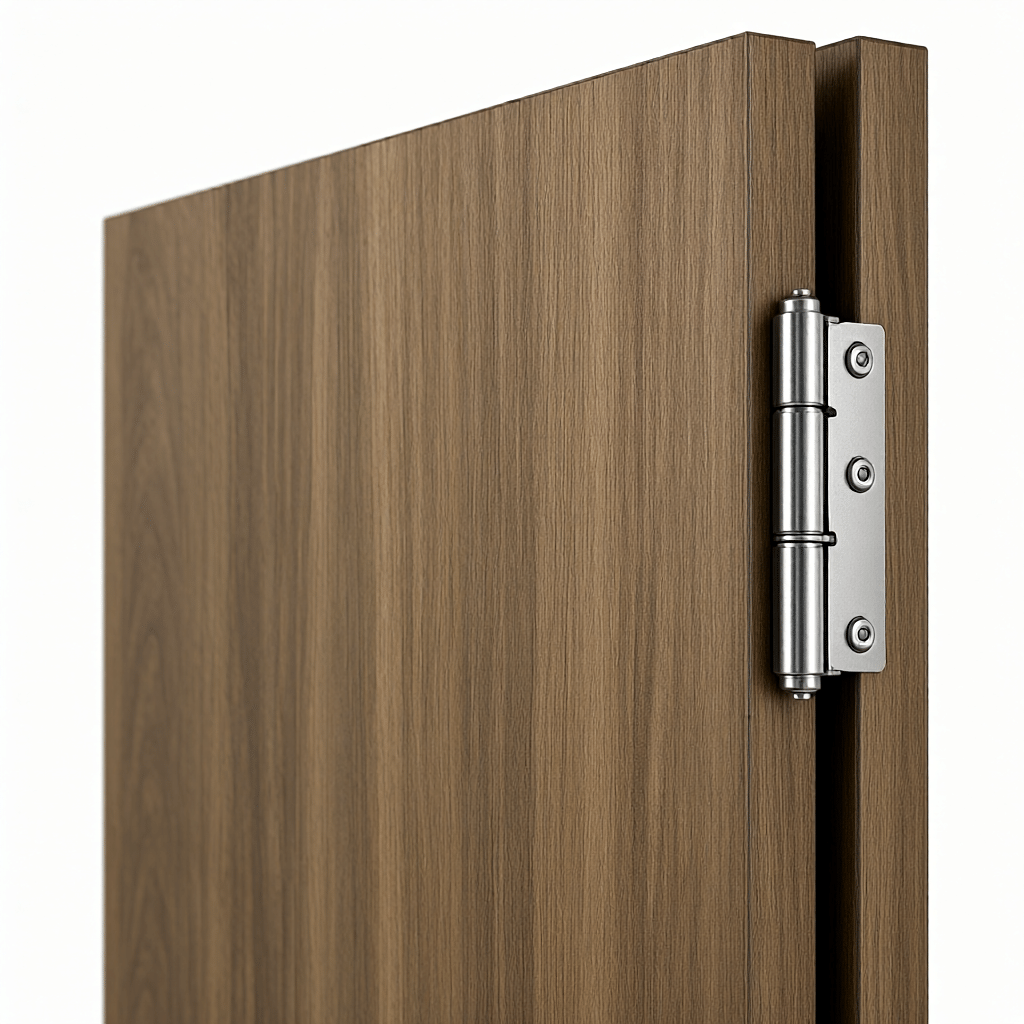
How does the Africa interior door market function?
The interior door market in Africa is shaped by three overlapping dynamics: construction growth, import dependency, and material diversification.
Urbanization and construction growth are the primary demand drivers. Cities across the continent are expanding rapidly — Lagos, Nairobi, Addis Ababa, Cairo, and Casablanca are among the largest construction markets. Residential developments, hotel projects, office buildings, and public infrastructure all generate interior door demand. According to ICC International Code Council standards referenced by multiple African national building codes, interior doors must meet basic safety, egress, and fire-rating requirements that vary by country.
Import dependency means most interior doors enter through ports in Mombasa, Dar es Salaam, Lagos, Tema, Durban, and Alexandria. China is the dominant supplier by volume, followed by Turkey and India. European brands hold a premium niche, particularly in North and South Africa. Local manufacturing exists in Egypt (glass and aluminum profiles), South Africa (prehung interior doors), and Morocco, but capacity is insufficient to meet continental demand.
Material preferences split along climate and income tiers:
- North Africa (Mediterranean and desert climates): aluminum and PVC profiles dominate due to heat resistance and low maintenance. Solid wood remains common in luxury residential projects.
- West Africa (tropical, high humidity): aluminum with thermal breaks and treated solid wood are preferred. PVC is gaining traction in mid-tier housing.
- East Africa (moderate to hot climates): aluminum casement and sliding doors are widely specified. Solid-core doors are common in commercial and hospitality projects.
- Southern Africa (temperate to warm): similar to East Africa, with stronger local manufacturing presence in South Africa supplying regional markets.
Why does the africa interior door market matter to B2B buyers?
For procurement professionals, this market presents both opportunity and complexity. Opportunity exists because construction pipelines are strong and import demand is not being met locally. Complexity arises from fragmented regulations, variable quality expectations, logistics challenges, and the need to match products to local building codes and climate conditions.
Buyers who understand the market can source cost-effectively from manufacturers who offer customization, compliance documentation, and reliable logistics. The alternative — sourcing through multiple layers of local distributors — often increases cost and reduces specification control.
See also our guides on How to Soundproof an Existing Door and Door Handle Height Standards for related procurement considerations.
Key Specifications
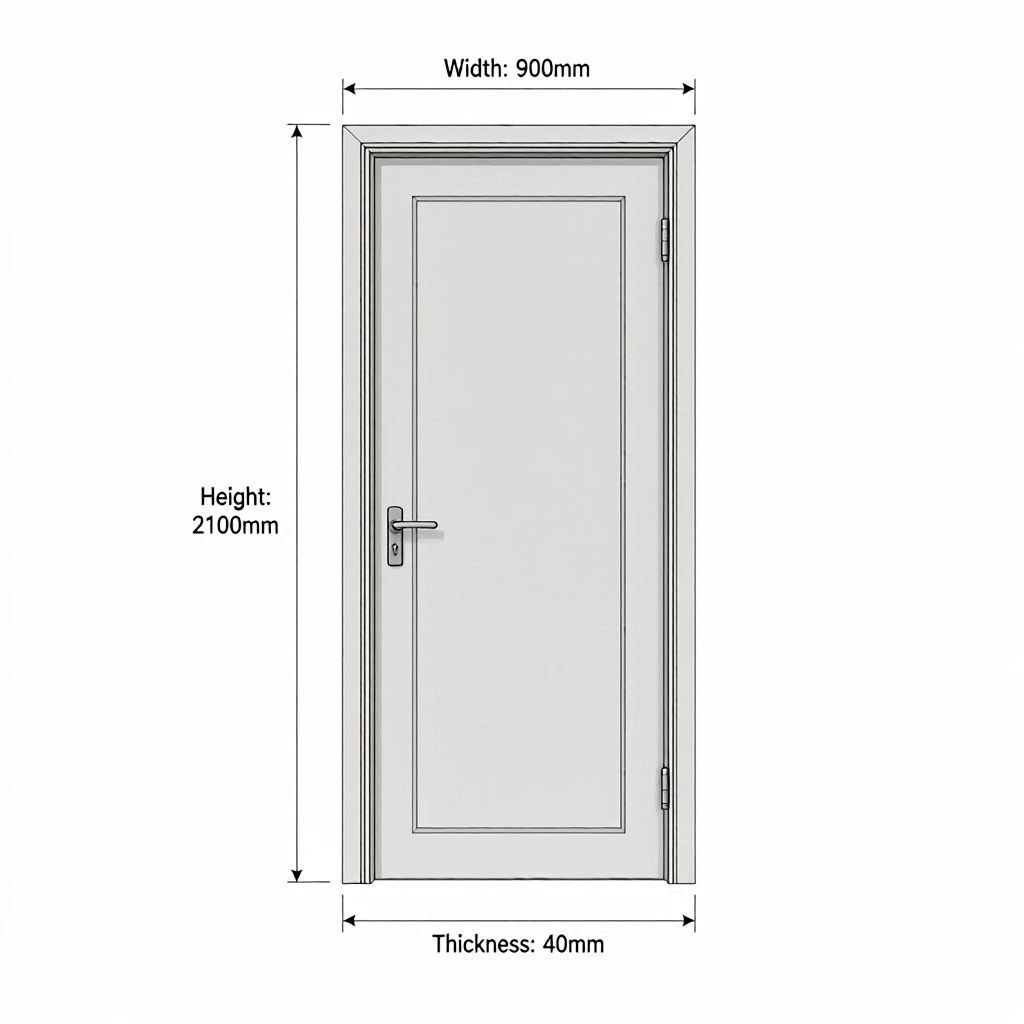
What are the key specs for interior doors in the African market?
Interior door specifications vary by region, project type, and price tier. Below is a practical reference for B2B buyers:
| Specification | Typical Range | Notes |
|---|---|---|
| Door thickness | 35–45 mm | 40 mm is standard for residential; 45 mm for commercial/fire-rated |
| Standard width | 700–900 mm | 800 mm most common for room doors; 900 mm for main entries |
| Standard height | 2000–2100 mm | 2100 mm increasingly specified in newer projects |
| Core types | Hollow core, solid core, particle board, MDF | Solid core preferred for hotels and offices |
| Surface finish | Veneer, melamine, PVC film, paint-grade | Veneer and melamine dominate mid-tier; paint-grade for budget |
| Glass options | Clear, frosted, patterned, low-E | Low-E glass specified in hot-climate projects |
| Hardware | Chinese/European brands, stainless steel or zinc alloy | Stainless steel preferred in humid/coastal regions |
| Thermal break | 15–24 mm PA66 GF25 | Required in hot climates for energy efficiency |
Price tiers by region (FOB China reference ranges):
- Budget tier: $25–$50 per unit — hollow-core or basic solid-core doors, unfinished or melamine finish
- Mid tier: $50–$120 per unit — solid-core or thermal-break aluminum, veneer finish, standard hardware
- Premium tier: $120–$300+ per unit — system windows/doors with high-performance glazing, European hardware, custom finishes
These ranges are estimates and vary based on order volume, customization level, and shipping terms.
Standards & Requirements
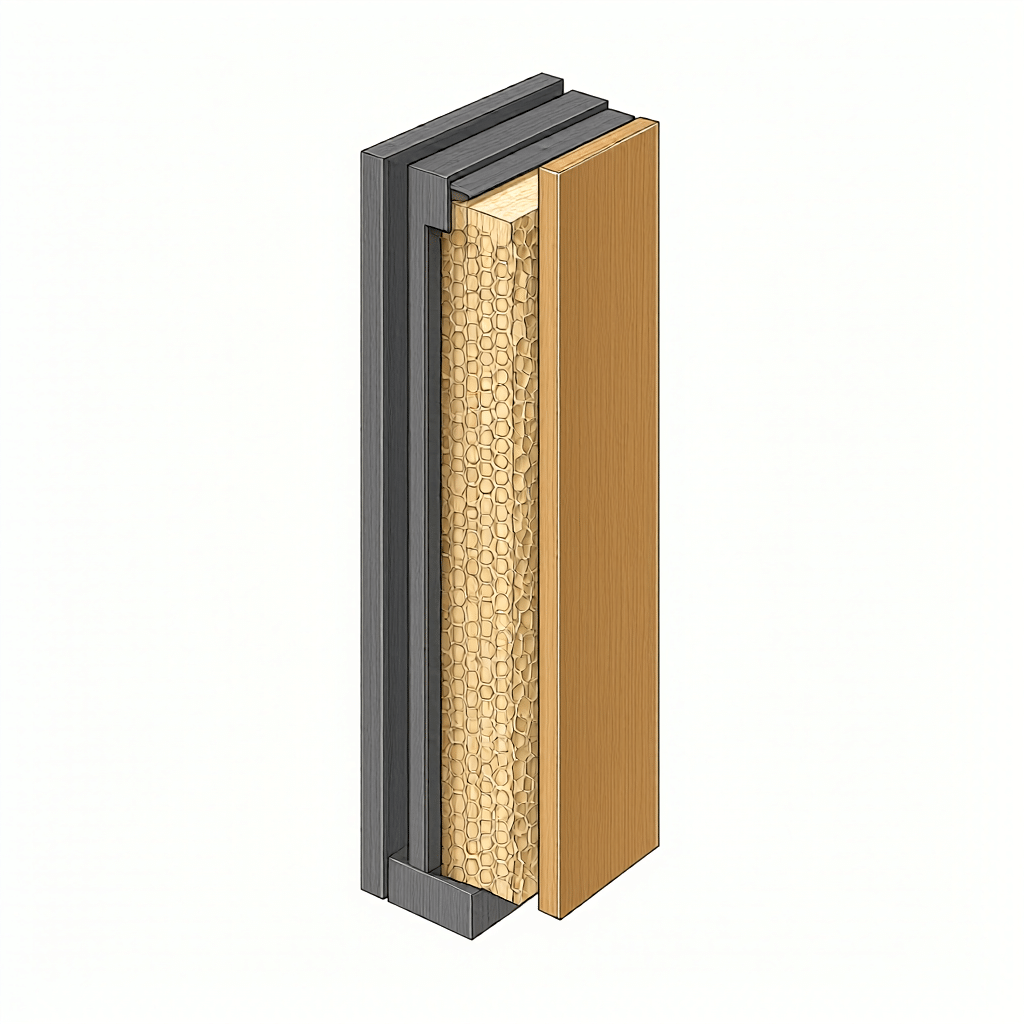
What standards apply to interior doors in African markets?
African countries generally adopt or reference international standards for interior door performance. Key standards and their relevance include:
- ASTM E2092 — Standard Test Method for Density of Wood-Base Fiber, Particle, and Structural Composite Panels. Relevant for evaluating door core materials and ensuring consistent density across batches. See ASTM International for full test method details.
- ISO 717 — Acoustic rating for sound transmission. Increasingly specified in hotel and multi-unit residential projects across Nigeria, Kenya, and South Africa.
- EN 14351-1 — European standard for windows and doors. Referenced in East African and North African building codes for air-tightness, water-tightness, and wind load resistance.
- National building codes — Most African countries have their own codes. Egypt follows the Egyptian Code for Building Construction (ECC). Nigeria references the Nigerian Building Code. South Africa uses SANS 10400. These codes dictate minimum requirements for fire rating, egress width, and structural performance.
Fire-rated interior doors are required in commercial buildings, hotels, and multi-story residential constructions in most countries. Typical ratings are 30-minute and 60-minute fire doors, constructed with mineral-core or intumescent-sealed solid wood.
Buyers should always confirm which standards apply to their specific project and target market, as requirements differ significantly between countries.
Related Considerations
What should you consider when sourcing interior doors for Africa?
Several practical factors determine whether a sourcing strategy succeeds in this market.
Climate matching is non-negotiable. Doors specified for a dry climate in Nairobi may fail prematurely in coastal Lagos due to humidity. Thermal-break aluminum profiles, marine-grade hardware, and UV-stable surface finishes are essential in hot and humid regions. In contrast, dry-climate markets tolerate a wider range of materials.
Local building code compliance varies. Some countries require third-party certification for imported doors, particularly for fire-rated and commercial applications. Others rely on port inspection alone. Understanding the documentation requirements — test reports, certificates of origin, customs classification — before ordering prevents delays and demurrage charges.
Distribution channels matter. In many African markets, the majority of doors flow through informal or semi-formal channels: wholesale markets, contractor supply networks, and trading companies. Direct-to-project sales are more common in large-scale developments and government infrastructure projects. Buyers should evaluate whether they need a local distributor relationship or can ship directly to project sites.
Logistics and shipping terms require planning. FCL (full container load) is the most cost-effective option for large projects. LCL (less than container load) works for smaller orders but increases per-unit shipping cost. Ports with higher congestion — particularly Lagos and Mombasa — can add significant lead time. Planning around monsoon seasons and port delays is essential for project scheduling.
Quality consistency across batches is a common challenge. Reputable manufacturers implement pre-shipment inspection protocols including air-tightness, water-tightness, and wind resistance testing. Buyers should request inspection reports and, where possible, conduct third-party quality checks before shipment.
How the market is evolving
The Africa interior door market is shifting in several directions. Local manufacturing is slowly expanding — Egypt and South Africa have growing aluminum profile industries, and Morocco is developing wood-processing capacity. System window and door products are gaining adoption in premium segments, driven by energy efficiency awareness. Digital sourcing is becoming more common among younger procurement professionals, though traditional relationship-based purchasing remains dominant.
For buyers entering this market, the most successful approach combines technical specification clarity, supplier due diligence, and logistical planning. Understanding the regional differences in demand, standards, and distribution is the foundation of effective sourcing.
Sourcing from a manufacturer that aligns with these standards
As a manufacturer, our approach to the Africa interior door market is built around the practical realities buyers face. We offer direct factory supply with competitive pricing that eliminates middleman markup. Every order is fully customizable — size, color, glass type, and hardware accessories are adjusted to match your project specifications and local building codes.
Before shipment, each batch undergoes strict testing for air-tightness, water-tightness, and wind resistance to ensure doors perform in the conditions they will face. We have extensive experience in foreign trade and provide complete documentation — packing lists, proforma invoices, and full customs paperwork — so your shipments clear ports smoothly.
We support both FCL and LCL shipments and deliver directly from our factory in China. Profile structures and fittings can be adjusted to comply with the building codes of your target market, whether that is Nigeria, Kenya, Egypt, or elsewhere.
Contact Our Team to discuss your project requirements and get sourcing guidance tailored to your target market.
Opening:
The Africa interior door market is a fast-expanding B2B sourcing landscape driven by urbanization, large-scale residential and hospitality construction, and heavy import dependency. Interior door demand centers on North Africa (Egypt, Morocco), West Africa (Nigeria, Ghana), East Africa (Kenya, Tanzania, Ethiopia), and Southern Africa (South Africa), with most supply coming from China, Turkey, and India. Buyers who understand regional building codes, climate-specific material requirements, and supplier evaluation criteria can source interior doors more efficiently and cost-effectively. This guide breaks down market size, regional demand patterns, key standards, sourcing pitfalls, and a practical supplier comparison framework.
### Market Size & Growth Projections
The Africa interior door market is estimated at approximately USD 800 million to USD 1.2 billion annually as of 2024, growing at a compound annual growth rate (CAGR) of roughly 5–7% through 2030. This growth is primarily fueled by urban population expansion — Africa’s urban population is projected to nearly double by 2050 — and sustained residential and commercial construction pipelines across key countries.
Market size varies significantly by sub-region:
- North Africa accounts for roughly 30–35% of interior door imports, driven by Egypt’s large-scale new city developments and Morocco’s tourism-related construction.
- West Africa represents approximately 25–30%, with Nigeria alone consuming a significant share due to its 200+ million population and ongoing housing deficit.
- East Africa holds about 20–25%, with Kenya, Tanzania, and Ethiopia driving demand through mixed-use developments and hospitality projects.
- Southern Africa comprises roughly 15–20%, with South Africa serving as both a production hub and a re-export center for the region.
### Regional Breakdown by African Sub-Regions
Each African sub-region has distinct sourcing characteristics, material preferences, and regulatory environments that shape interior door procurement.
North Africa — Egypt, Morocco, Tunisia:
North African markets favor thermal-break aluminum doors and PVC casement doors due to hot, dry climates. Egypt is a regional manufacturing center for aluminum profiles, reducing import dependency for some product types. Morocco sources heavily from Spain and China. Building code compliance references Normes Marocaines (NM) in Morocco and Egyptian Code for Building Construction (ECC/EGAC) in Egypt.
West Africa — Nigeria, Ghana, Côte d’Ivoire, Senegal:
Nigeria is the largest single-country market in Africa for imported interior doors, driven by Lagos and Abuja construction booms. Solid wood doors and aluminum entry doors dominate. Ghana and Côte d’Ivoire follow similar patterns. Nigeria’s building code references the Nigerian Building Code (NBC) and incorporated BS (British Standards). Port congestion in Lagos and irregular customs clearance are persistent logistics challenges.
East Africa — Kenya, Tanzania, Ethiopia, Uganda:
Kenya is the regional sourcing hub, with Mombasa port serving landlocked neighbors. Aluminum casement and sliding doors are most common in Nairobi high-rise and hospitality projects. Ethiopia’s rapid infrastructure growth creates increasing door demand. The Ethiopian Building Code Standards (EBCS) and Kenya Bureau of Standards (KEBS) provide regulatory frameworks.
Southern Africa — South Africa, Zambia, Zimbabwe, Botswana:
South Africa has the most mature local manufacturing base for prehung interior doors and aluminum systems. The National Building Regulations (SANS 10400) provide comprehensive standards for fire resistance, ventilation, and structural performance. South Africa also re-exports to neighboring landlocked countries.
### Key Growth Drivers & Trends
Several macro and micro factors are accelerating demand for interior doors across African markets:
- Urbanization: Africa’s urban population is growing at approximately 3.5% annually, creating sustained demand for residential and commercial interior fit-outs.
- Hospitality expansion: Hotel chains (international and local) are expanding rapidly in Kenya, Nigeria, Egypt, and Rwanda, driving bulk interior door procurement for guest room and suite specifications.
- Government housing programs: Nigeria’s Federal Housing Programme, Kenya’s Affordable Housing Programme, and Ethiopia’s construction initiatives generate large-volume door requirements.
- Rising middle class: Increasing homeownership in urban areas drives demand for finished interior doors with aesthetic appeal.
- Infrastructure investment: Transport, healthcare, and educational facility construction creates institutional procurement channels.
Material trends show growing preference for thermal-break aluminum systems in premium projects and continued dominance of solid wood and engineered wood doors in mid-tier residential segments.
### Challenges & Barriers
B2B buyers face several structural challenges when sourcing interior doors for African markets:
- Fragmented regulatory environment: Each country has different building codes, certification requirements, and import procedures. A door compliant in Kenya may not meet Egyptian or Nigerian standards.
- Port congestion and delays: Major ports including Lagos, Mombasa, and Durban experience significant congestion, adding 2–6 weeks to lead times during peak periods.
- Currency volatility: Many African currencies fluctuate against the USD and EUR, affecting landed cost calculations for importers.
- Quality inconsistency: The market contains both reputable manufacturers and low-cost suppliers with variable quality control. Without proper due diligence, buyers risk receiving non-conforming shipments.
- Limited local manufacturing capacity: Outside Egypt, South Africa, and Morocco, local production is insufficient, creating sustained import dependency.
- After-sales support gaps: Replacement hardware, warranty claims, and technical support are often difficult to secure once products are installed.
### Competitive Landscape & Major Players
The Africa interior door supply chain is dominated by manufacturers and trading companies from three primary sourcing origins:
China holds the largest market share by volume, supplying through established door and window manufacturing clusters in Guangdong, Shandong, and Fujian provinces. Chinese manufacturers offer the broadest price range and highest customization flexibility, though quality varies significantly across suppliers.
Turkey serves as a competitive mid-range alternative, particularly for North and East African markets due to geographic proximity and shorter shipping times. Turkish manufacturers often comply with European standards (EN 14351-1), making them attractive for projects requiring certified performance data.
India supplies budget-tier interior doors, particularly to West Africa, with competitive pricing on solid wood and PVC products. Indian manufacturers have growing export experience but limited presence in premium segments.
Local African manufacturers in Egypt (aluminum profiles), South Africa (prehung doors), and Morocco (wood processing) serve regional demand but cannot yet match continental import volumes.
European brands occupy a small premium niche, primarily in South Africa and North Africa’s luxury residential and hospitality sectors.
### Sourcing Case Study: Hotel Project in Nairobi, Kenya
A mid-tier international hotel chain expanding into East Africa sourced 250 interior room doors and 40 suite entrance doors for a new property in Nairobi. The specification required solid-core wood doors with fire-rated performance, acoustic insulation meeting ISO 717 standards, and finishes matching the brand’s design template.
The procurement team evaluated six suppliers across China and Turkey using a weighted scoring matrix (detailed below). After factory audits and sample testing, they selected a Chinese manufacturer capable of producing doors to EN 14351-1 and ASTM E2092 standards with custom veneer finishes. The order shipped as two FCL containers via Mombasa port.
Key outcomes:
- 30% cost savings compared to European-sourced alternatives
- On-time delivery achieved with 2-week buffer for port processing
- Zero non-conformance during post-arrival quality inspection
- Acoustic performance met the specified STC 30 dB requirement for guest room doors
- Full documentation package (test reports, certificates of origin, packing lists) enabled smooth customs clearance
The project demonstrated that direct manufacturer sourcing with proper specification clarity and supplier evaluation can deliver both cost efficiency and quality compliance in the African market.
### Procurement Decision Framework: Supplier Evaluation Matrix
When comparing interior door suppliers across African markets, buyers should apply a structured scoring framework to objectively evaluate and rank potential suppliers. The following matrix assigns weighted criteria based on typical procurement priorities:
| Evaluation Criteria | Weight | Rating (1–5) | Score | Notes |
|---|---|---|---|---|
| Quality & Compliance (test reports, certifications, ASTM/EN/ISO alignment) | 25% | Request third-party test certificates for air-tightness, water-tightness, wind load, and acoustic ratings | ||
| Pricing & Payment Terms (FOB/CFR/CIF competitiveness, LC acceptance) | 20% | Compare landed cost including shipping and duties, not just unit price | ||
| Delivery Reliability (lead time, track record, on-time performance) | 20% | Minimum threshold: on-time delivery rate above 85% over previous 12 months | ||
| Customization Capability (size, finish, hardware, glass options) | 15% | Verify ability to match local building codes and project-specific designs | ||
| Documentation & Export Experience ( customs docs, certifications, past African shipments) | 10% | Required: packing list, proforma invoice, certificate of origin, test reports | ||
| After-Sales Support (warranty, replacement parts, technical guidance) | 10% | Confirm spare hardware availability and response time for quality issues |
Minimum scoring threshold: Suppliers scoring below 3.0 out of 5.0 on any single criterion should be disqualified regardless of total score. A weighted total below 3.5 indicates insufficient supplier readiness for project-scale procurement.
This framework enables objective comparison across suppliers from different origins (China, Turkey, India) and helps buyers justify sourcing decisions to stakeholders.
### Red Flags Checklist for Sourcing Interior Doors into Africa
Buyers should screen potential suppliers against the following risk indicators before committing to orders:
Quality & Certification Red Flags:
- [ ] Supplier cannot provide third-party test reports for air-tightness, water-tightness, or wind resistance
- [ ] No documented compliance with relevant standards (ASTM, EN 14351-1, ISO 717, or national codes)
- [ ] Inconsistent sample quality compared to bulk production claims
- [ ] Missing or fabricated certificates of origin
- [ ] No pre-shipment inspection protocol or willingness to undergo third-party quality checks
Shipping & Logistics Red Flags:
- [ ] Unusually long or unclear lead times without explanation
- [ ] Refusal to provide FCL shipment references or port history
- [ ] No experience shipping to African ports (Mombasa, Lagos, Dar es Salaam, Durban, Alexandria)
- [ ] Vague packaging descriptions that risk cargo damage during transit
- [ ] Unwillingness to provide accurate shipping documentation for customs clearance
Financial & Communication Red Flags:
- [ ] Pricing significantly below market average without clear justification
- [ ] Poor response times or unprofessional communication during inquiry phase
- [ ] No verifiable company registration or factory audit history
- [ ] Pressure for full payment before production begins with no escrow or LC option
- [ ] Inability to reference previous African project clients or provide contactable references
Recommendation: Conduct a factory audit (in-person or via third-party inspection service) for orders exceeding USD 50,000. Request video walkthroughs and production line verification for smaller orders.
### Complete Standards Reference for African Interior Doors
Completing the previously referenced acoustic standard: ISO 717-1 defines the single-number rating for airborne sound insulation. Interior doors in hotel and multi-unit residential projects across Nigeria, Kenya, and South Africa increasingly specify STC 30 dB minimum for bedroom doors and STC 35 dB for suite and corridor-facing doors.
Additional standards buyers should reference include:
- NFPA 105 — Standard for Smoke Damper and Smoke Door Assemblies. Relevant for fire-rated door installations in commercial and high-rise residential projects. See ICC International Code Council for adoption status in individual African countries.
- IBC Chapter 716 — Opening Protectives: Fire-Rated Doors, Windows, and Glazing. Referenced by multiple African building codes for egress and fire separation requirements.
- SANS 10400-T (South Africa) — Fire Protection. Mandates fire-resisting constructions including door assemblies in commercial and multi-residential buildings.
- NQS (Nigeria) — Nigerian Quality Standards for building materials. Governs import inspection and certification requirements for construction products entering Nigeria.
- EGAC (Egypt) — Egyptian Green Building Assessment Criteria. Relevant for sustainable construction projects requiring energy-efficient door and window assemblies.
- KEBS (Kenya) — Kenya Bureau of Standards. Defines product certification and conformity assessment procedures for imported construction materials.
Buyers should map each standard to their specific project country and verify whether the destination country requires pre-shipment certification, port inspection, or post-installation compliance verification.
### Material Trends & Preferences
Material selection in the Africa interior door market follows clear regional patterns shaped by climate, cost sensitivity, and project type:
Thermal-break aluminum doors have seen the strongest growth across East and West Africa over the past five years. Driven by energy efficiency awareness and rising electricity costs, specifiers increasingly demand 15–24 mm PA66 GF25 thermal breaks in aluminum profiles. This trend is most visible in Kenya, Nigeria, and Egypt where utility costs are among the highest in Africa.
Solid wood doors remain the preferred choice for hospitality and premium residential projects across all sub-regions. African species such as mahogany, obeche, and sapele are sometimes used in local manufacturing, but imported solid wood doors — particularly from China and Europe — dominate the mid-to-premium segment. Buyers should specify kiln-dried timber with moisture content between 8–12% to prevent warping in humid climates.
PVC/uPVC doors are gaining market share in West and North Africa for budget-tier residential projects. They offer low maintenance and decent thermal insulation at competitive price points. However, UV degradation remains a concern in equatorial regions, so UV-stabilized profiles should be specified.
Hollow-core and particle-board doors continue to dominate the ultra-budget segment, particularly in informal housing and low-cost rental developments. While price-competitive, these products have limited durability and acoustic performance, making them unsuitable for hotel and multi-unit residential applications.
Surface finish trends show increasing demand for wood-grain aluminum finishes that replicate the appearance of solid wood at lower cost and with greater weather resistance. Powder-coated and anodized finishes are preferred over painted surfaces in high-humidity environments.
For more on material performance and soundproofing considerations, see our guide on How to Soundproof an Existing Door.
### How to Choose Interior Door Suppliers for Africa
Selecting the right supplier for African market projects requires evaluating several critical criteria beyond price:
Compliance documentation readiness is the first differentiator. Reputable suppliers should provide test reports for air-tightness, water-tightness, and wind resistance aligned with EN 14351-1 or local code requirements, along with certificates of origin and customs documentation. Suppliers unable to provide these documents should be treated as high-risk.
Customization capability determines whether a supplier can adapt profiles, finishes, and hardware to match local specifications. Suppliers offering adjustable profile structures and fittings can accommodate varying building code requirements across different African markets without requiring separate product lines.
Pre-shipment inspection protocols separate reliable suppliers from risky ones. Suppliers who conduct systematic testing — including air-tightness, water-tightness, and wind resistance verification — before cargo leaves the factory significantly reduce the probability of on-site failures and rejections at port.
Logistics experience matters for projects with tight schedules. Suppliers with established FCL and LCL shipment arrangements and experience navigating African port procedures can prevent costly delays. Knowledge of destination-specific documentation requirements is equally important.
OEM and ODM capabilities provide flexibility for buyers who want private-label products or custom specifications. Manufacturers offering these services can support brand-building initiatives for distributors seeking to establish their own product identity in local markets.
For additional procurement guidance, review our articles on How to Hang an Interior Door and Installing a Prehung Door.
Sources & References
- ASTM International — www.astm.org
- ICC International Code Council — www.iccsafe.org
- How to Soundproof an Existing Door — doorwoodendoors.com
- Door Handle Height Standards — doorwoodendoors.com
- How to Hang an Interior Door — doorwoodendoors.com
- Installing a Prehung Door — doorwoodendoors.com











